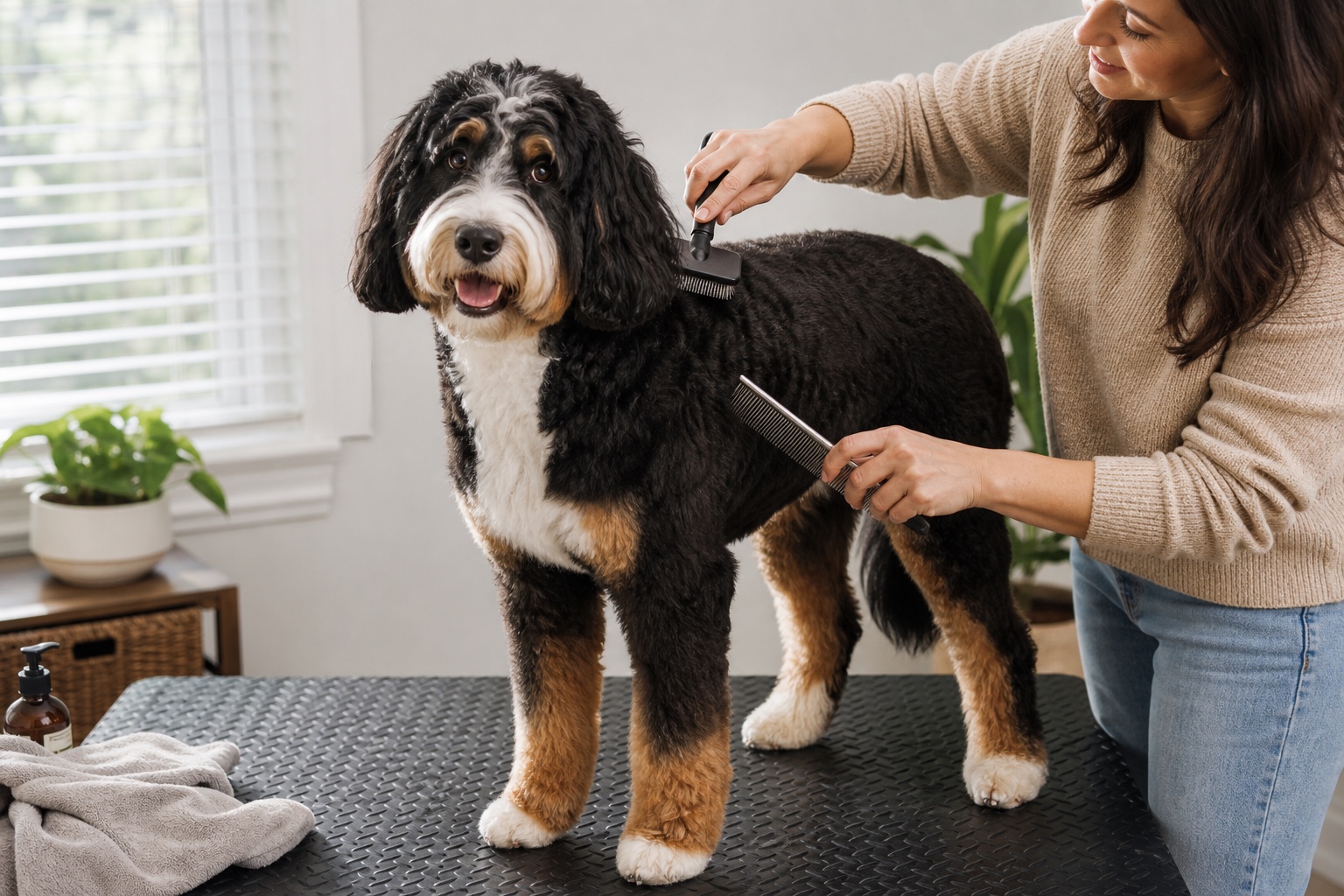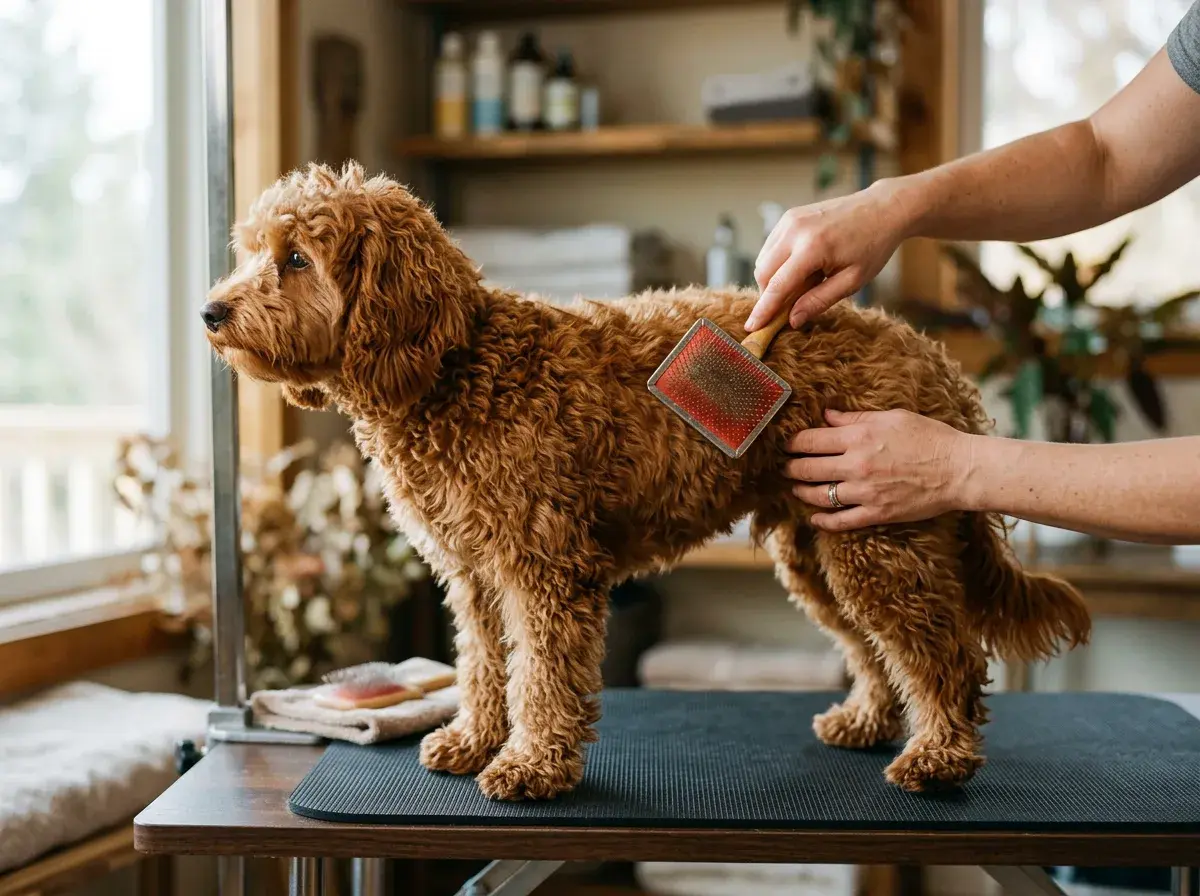
A curious nose. A very waggy welcome.
If you’ve ever looked at doodle puppies and thought, “Why does this litter have three different coat types and five different labels,” you are not alone. Those little generation codes like F1, F1B, F2, and multigen are meant to be helpful. But in the real world, they can feel like a secret handshake.
Let’s decode what these terms actually mean, what they can and cannot tell you about coat and shedding, how they relate to size, and the exact questions worth asking any breeder before you fall in love with a puppy photo.
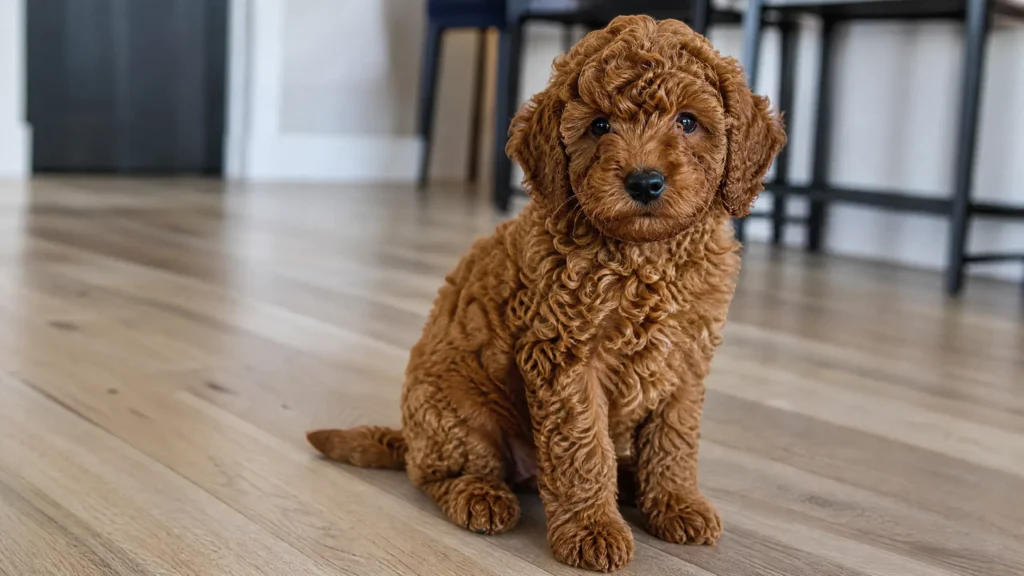
What “F” means in doodle generations
In doodle breeding, F usually stands for filial generation, which is a way to describe how many generations removed a puppy is from the original purebred pairing.
One important note right up front: these terms are not governed by one universal kennel-club standard, so you will see them used inconsistently from breeder to breeder. Think of them as shorthand, not a certification.
- F1 means first generation, typically a purebred Poodle crossed with another purebred dog (like a Golden Retriever, Bernese Mountain Dog, Labrador, Cocker Spaniel, and so on).
- F2 means second generation, typically doodle to doodle (often F1 to F1).
- “B” (as in F1B) usually means backcross, often breeding a doodle back to a purebred Poodle.
Important sniff-test: these labels describe parentage, not guarantees. Genetics do not read the label.
F1 doodle: often 50% and 50% on paper
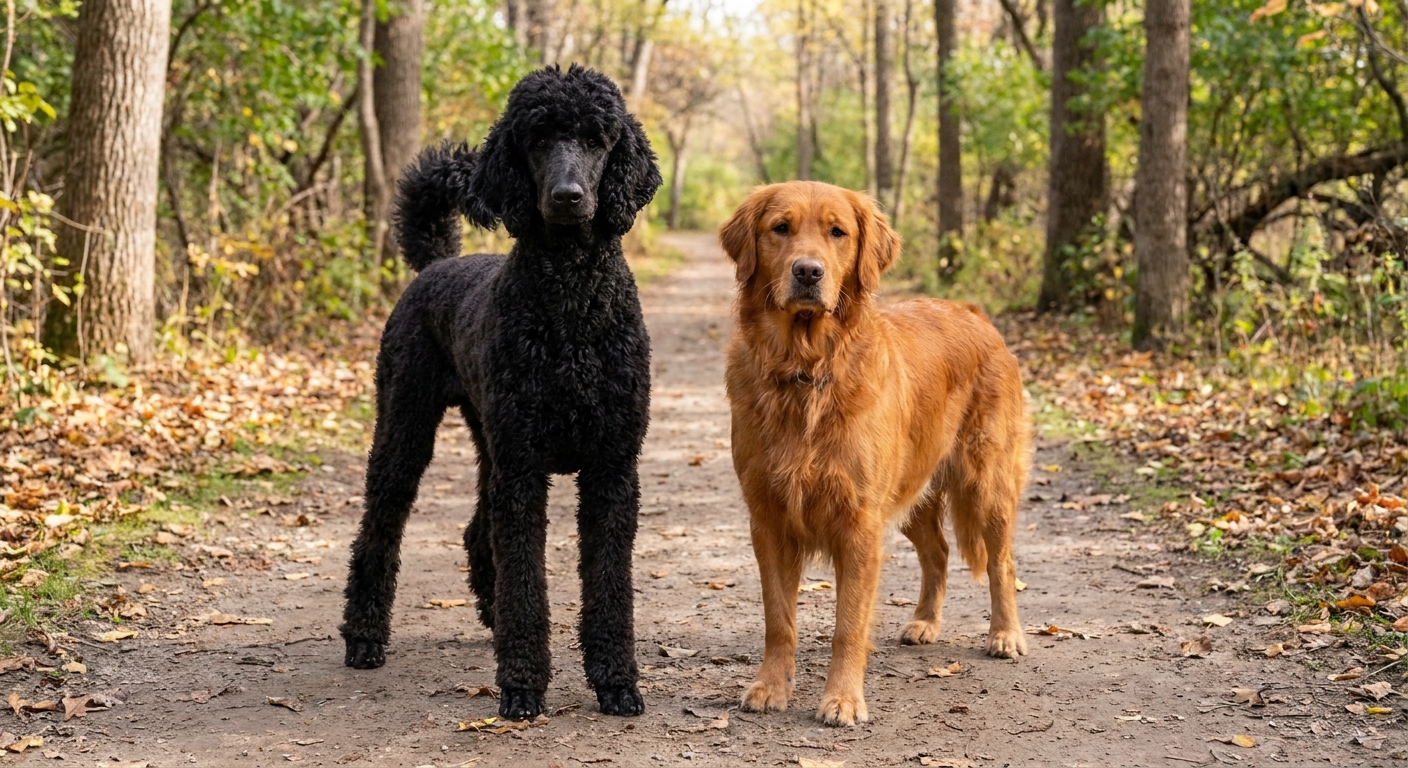
An F1 doodle is most often a purebred Poodle bred to a purebred non-Poodle. In that typical setup, the puppies are roughly 50% Poodle and 50% the other breed on paper. Think of it as the original starting point.
What an F1 label can suggest
- Coat: Wide range. You can see straighter, wavy, or curlier coats depending on which genes show up.
- Shedding: Often lower than the shedding parent, but not reliably “non-shedding.” Some F1s shed noticeably.
- Size predictability: Somewhat predictable if the parents are similar in size and structure, less predictable if they are not.
Common coat types in F1 litters
Many doodle people talk about “straight,” “wavy,” and “curly,” but those words are not strict science. They are useful for describing what you see and what grooming might be like.
- Straighter coats may shed more and can be easier to brush.
- Wavy coats are common and often have moderate grooming needs.
- Curly coats may shed less but can mat faster if not brushed thoroughly.
Real-world coat note: two F1 littermates can look similar at 8 weeks and end up with noticeably different coats by about 12 to 18 months as the adult coat comes in.
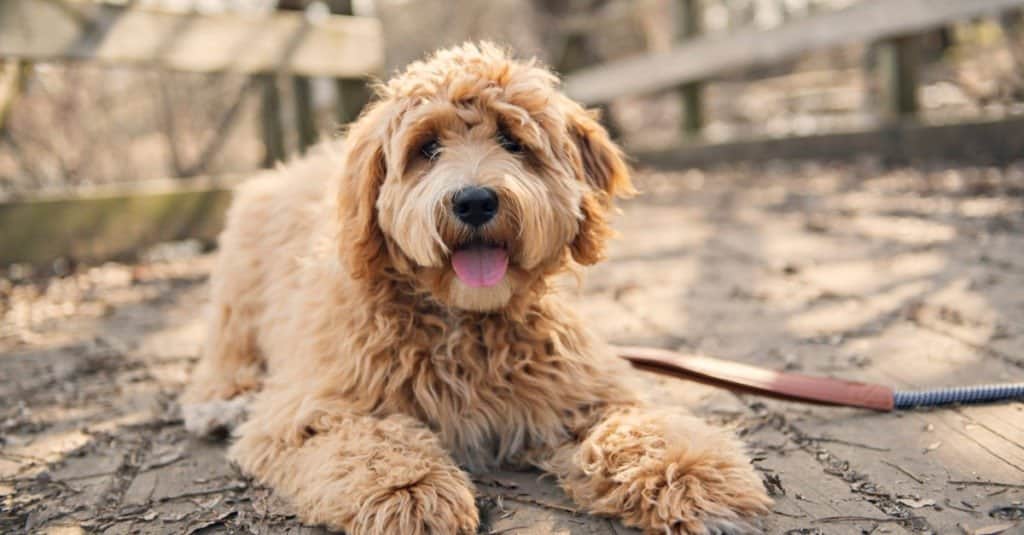
F1B doodle: usually a backcross to Poodle
F1B is commonly used for a puppy produced by breeding an F1 doodle back to a purebred Poodle. In that common setup, the puppy is roughly 75% Poodle and 25% the other breed on paper.
There are variations, though. Some breeders use “F1B” for other backcross setups, so you should always ask what the parents are.
What an F1B label can suggest
- Coat: Often curlier or more consistently “Poodle-like” than many F1s, but still not guaranteed.
- Shedding: Often lower shedding than an F1, but still not a promise of allergy friendliness.
- Size predictability: Can be more predictable if the Poodle parent’s size is well known and the doodle parent’s adult size is established.
Grooming reality check
F1B coats can be wonderful, but they frequently come with higher grooming needs. Lower shedding does not mean low maintenance. It often means the hair stays on the dog, and tangles stay on the dog too.
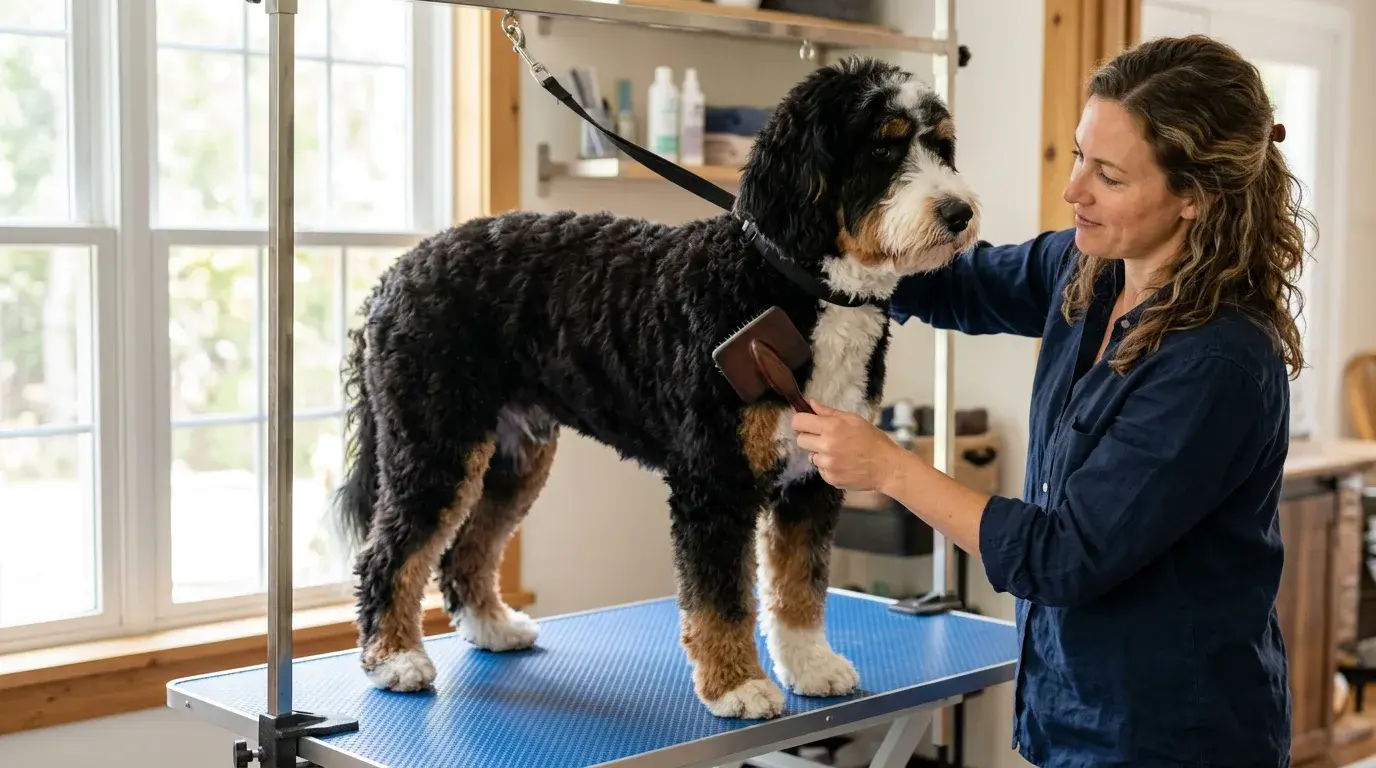
F2 doodle: doodle to doodle, often more variety
F2 typically means an F1 doodle bred to another F1 doodle. That is second generation.
Why F2 can be less predictable
When you breed two mixed-breed dogs together, you can see more variety because puppies may inherit different combinations of coat, shedding tendencies, size, and structure traits.
- Coat: Can range from straighter coats to very curly coats in the same litter.
- Shedding: Can vary widely, even among siblings.
- Size predictability: Often less predictable than a first-generation cross, especially if the parents are different sizes or lines.
One nuance worth keeping: variability is not destiny. If a breeder has a consistent program and selects for specific traits over time, later generations can become more predictable, even though F2 litters can still surprise you.
That does not make F2 “bad.” It just means you should treat the label as a starting clue, not a final answer.
Multigen doodle: later generations, bred for consistency
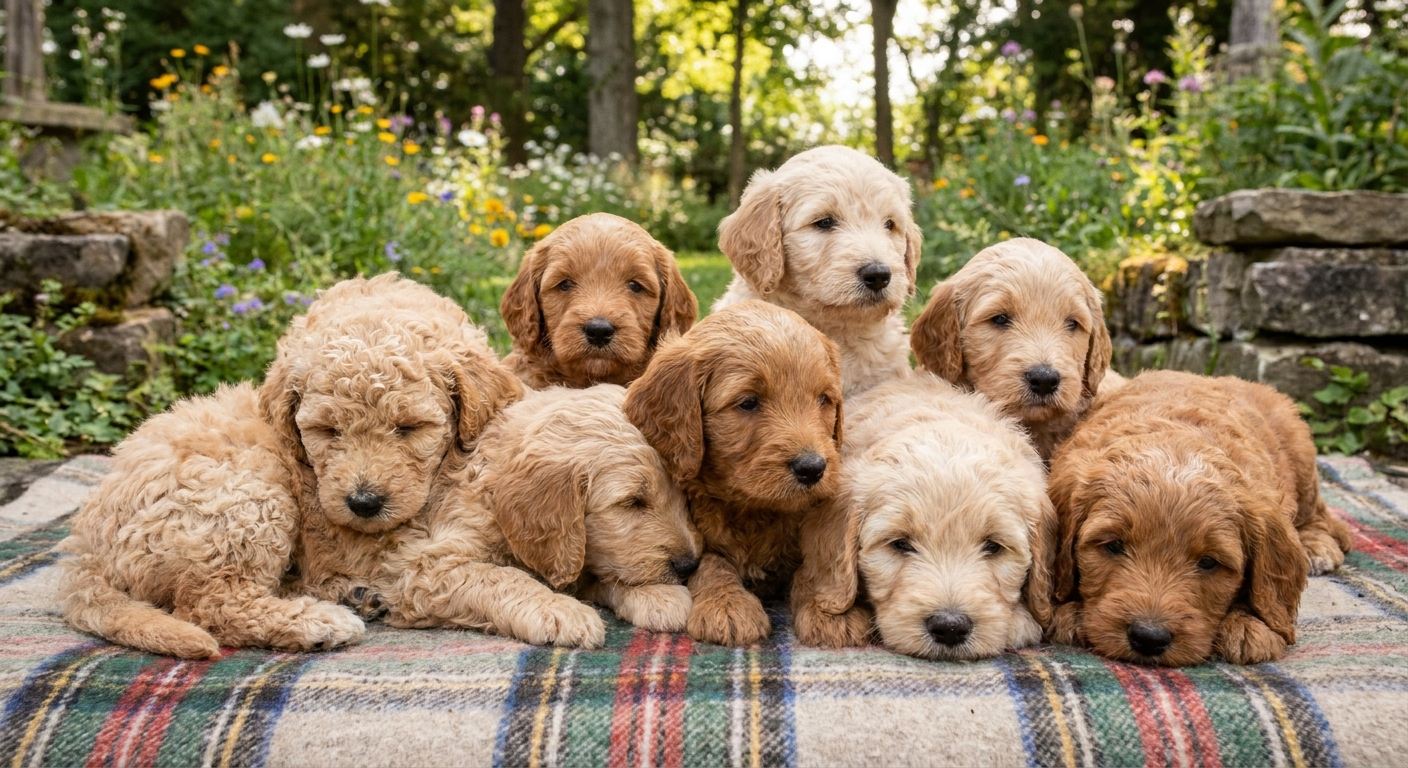
Multigen usually means multiple generations of doodle-to-doodle breeding after the first crosses. There is no single universal cutoff, but many people use multigen to mean third generation or beyond, or simply “not F1 or F1B.”
What multigen can suggest
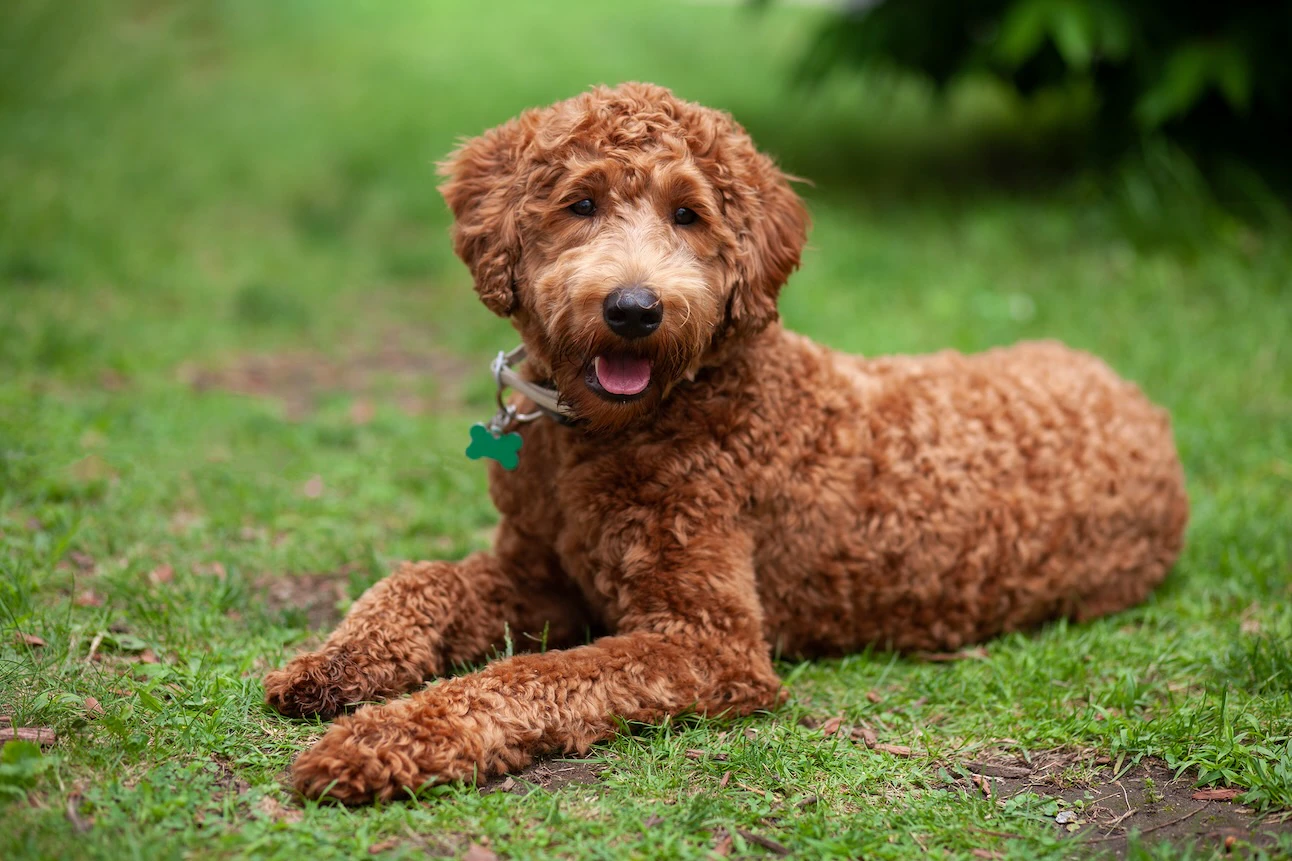
- Coat: Some breeding programs aim for more consistency, often wavy to curly coats, but results still vary.
- Shedding: Some lines may be lower shedding on average, but “non-shedding” is still not a guarantee.
- Size predictability: Can improve if a breeder has several generations of adult dogs with documented weights, heights, and body types.
Multigen is a broad label. Two multigen doodles from different breeders can be very different in predictability and temperament because what matters most is the specific dogs used, not just the word on the listing.
Other labels you might see
Doodle listings love extra letters. Here are a few you may run into:
Reverse F1B
You may see reverse F1B used for an F1 doodle bred back to the non-Poodle breed (for example, an F1 Goldendoodle bred back to a Golden Retriever). Breeders may do this to lean into traits from the non-Poodle side. Coat and shedding outcomes can shift accordingly, so ask for parent details and adult offspring examples.
F2B, F3, F3B, and beyond
F2B is commonly used to mean an F2 doodle backcrossed to a Poodle. F3 often means third generation doodle to doodle. You will also see “F3B” and similar. The letters matter less than the clear explanation behind them, so ask the breeder to spell out the pairing in plain language.
Coat, shedding, and allergies
I am going to plant my puppy paws firmly on this: no doodle generation can promise a hypoallergenic dog. “Hypoallergenic” is not a regulated guarantee, and reactions are individual. People can react to dander, saliva, urine proteins, and environmental allergens tracked in on fur.
What the generation label can help with
Generation labels can hint at probabilities, especially around coat texture:
- More Poodle influence often increases the chances of a curlier coat.
- Curlier coats often shed less, but they may mat more without routine brushing.
Better than guessing: testing and real-life proof
If low shedding is important in your household, focus on what is measurable and observable:
- Ask about genetic coat testing the breeder uses (and request to see results). Look for tests that report coat-type markers like curl and furnishings, which can be associated with lower shedding in some lines, but do not treat any test as a shedding or allergy guarantee.
- Ask to meet the dam and sire, or see recent videos in natural lighting.
- Ask for photos of adult dogs from prior litters with notes on coat change, grooming needs, and shedding in everyday life.
How generations relate to size
Size is influenced by genetics, nutrition, and growth patterns, but genetics is the big anchor. Generation labels alone do not tell you “this puppy will be 42 pounds.”
What helps more than the label
- Parent size: Mature weight and height of both parents, not just “mini” or “standard.”
- Line consistency: Adult sizes in prior litters from the same pairing or same lines.
- Breeding goals: Some breeders select for a tighter size range, others prioritize other traits.
One extra detail worth sniffing out: doodle listings sometimes use “mini” and “medium” loosely. Ask for measured shoulder height and mature weights of parents, plus the range of adults from similar pairings.
Why labels get confusing
Even when everyone means well, doodle generation terms can get messy because:
- Different people use the same label differently. One breeder’s “multigen” may be another breeder’s “F3” or “F4.”
- Backcrosses can be described in multiple ways. You might see “F1B” used without clarifying whether the backcross is to a Poodle or to the other breed.
- Some labels are marketing shorthand. “Teddy bear coat” and “non-shedding guaranteed” can be vibes, not genetics. Treat hard-sell promises as a reason to ask harder questions, not hand over a deposit faster.
- Not all doodles are the same mix. A Goldendoodle, Bernedoodle, and Sheepadoodle can all be “F1B,” but the non-Poodle breed influences coat, size, and temperament in different ways.
If a label is not paired with clear parent information, it is just a sticker on the kennel door.
What to ask a breeder
If you only bring one list with you, make it this one. A good breeder should be able to answer clearly, and they should welcome questions.
Generation and parentage
- What are the exact breeds of the dam and sire?
- What are the generations of the parents (F1, F1B, multigen), not just the puppies?
- Are either parents registered with a recognized national kennel club or breed club (for example, AKC in the United States, the Canadian Kennel Club, or The Kennel Club in the UK), and can you share documentation?
Coat and shedding expectations
- What coat types have shown up in previous litters from these lines?
- Do you do genetic testing for coat traits (such as curl and furnishings), and can I see the results? How do you interpret them without overpromising on shedding?
- At what age do you see the most noticeable coat change in your puppies?
Size and temperament
- What are the adult weights and heights of both parents?
- What is the adult size range of past puppies from similar pairings?
- How do you match puppies to homes (temperament testing, observation notes, lifestyle fit)?
Health and raising practices
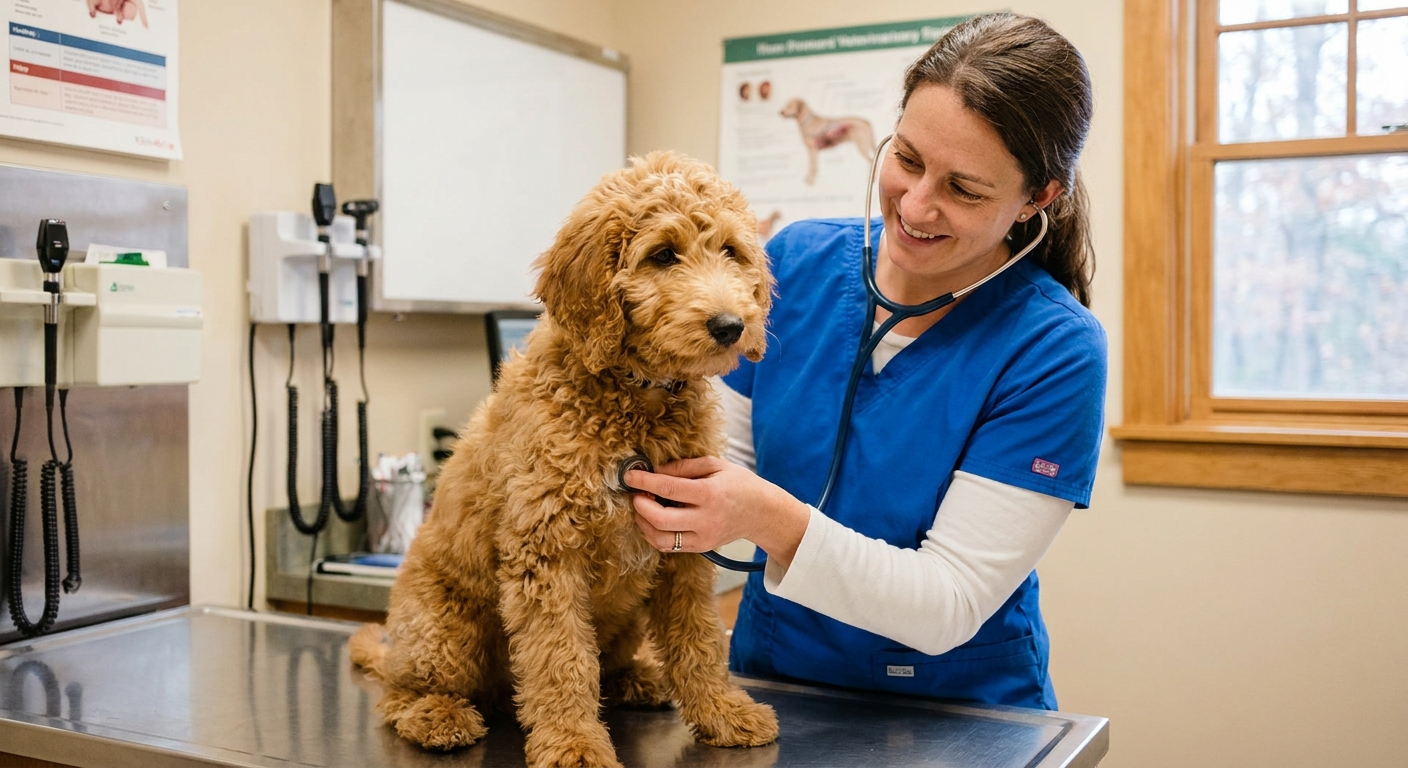
- What health testing have the parents had, and can I see the results? Common examples include orthopedic screening (hips and elbows), eye exams (such as CAER), and cardiac screening. The right list depends on the parent breeds, so I also like to ask what the breeder follows for each breed’s recommended tests.
- What is your vaccination and deworming schedule before pickup?
- How are puppies socialized (sound exposure, grooming handling, crate introduction, car rides)?
Quick cheat sheet
- F1: Poodle x other purebred. Often a wide range of coats and shedding levels. Ask to see adult coats from past litters.
- F1B: Usually F1 doodle x Poodle. Often higher odds of curlier coats and lower shedding, with higher grooming needs.
- F2: Often F1 x F1. Often more variability across siblings. Expect more range and rely on parent info, testing, and past adult offspring.
- Multigen: Multiple generations of doodle breeding. Can be more consistent in some programs, but the term is broad. Ask how many generations and what traits they select for.
FAQ
Is F1B always better for allergies?
No. F1B can increase the chances of a curlier, lower-shedding coat, but allergies are not just about shedding. If allergies are a serious concern, consider spending time with adult dogs from the breeder’s lines and talk with your healthcare professional about your situation.
Can an F1 doodle be non-shedding?
Some F1 doodles shed very little, but it is not consistent across all F1s. You are more likely to get a reliable answer by looking at the specific parents, prior adult offspring, and coat testing if available.
What does “F1BB” mean?
Breeders commonly use F1BB to mean an F1B doodle bred back to a Poodle again. In other words, even more Poodle influence than F1B. Always ask the breeder to spell out the parent breeds and generations rather than relying on the shorthand.
Does multigen mean the coat is guaranteed to be curly?
No. Multigen can mean a breeder is selecting for certain coat traits, but there can still be variation. Ask to see adult dogs from the same line and request coat details on past puppies.
The best takeaway
Generation labels are like trail markers. They point you in a general direction, but they do not tell you what the weather will be like on the hike.
If you want the most accurate picture of coat, shedding, and adult size, focus on the specific parents, health testing, adult offspring results, and clear, consistent breeder answers. That is how you find the doodle that fits your home, your allergies, your grooming comfort level, and your couch space.