Bringing home a designer mix puppy should feel exciting, not stressful. Unfortunately, puppy scams and careless breeding practices are common online, especially when a mix is in high demand. The good news is that you can protect yourself with a simple, repeatable process.
Below is a practical checklist you can use to screen listings, confirm a puppy is real and healthy, and understand the paperwork you should expect. This is educational information, not legal advice. If anything feels off, slow down and get a veterinarian’s input before you commit.
Quick safety checklist
If you only read one section, make it this one. A safe purchase usually includes verification, health documentation, and a written contract.
- Verify the puppy live by video call, not just recorded clips.
- Confirm the breeder’s identity and location using independent sources.
- Ask for parent health testing proof that matches the breed mix risks.
- Review vaccination and deworming records and understand what is age-appropriate.
- Use safe payment methods and avoid high-pressure deposit demands.
- Get a contract that spells out health guarantees, return policy, and what happens if you cannot keep the puppy.
- Expect a realistic timeline for pregnancy, whelping, weaning, and socialization.
Scam red flags to watch for
Scammers are getting better at looking “legit,” but the patterns are still there. If you see several of these at once, walk away.
Payment traps
- “Deposit first, questions later.” Ethical breeders expect questions. Scammers hate them.
- Unusual payment requests like gift cards, wire transfers, crypto, or “friends and family” style payments with no buyer protection.
- “Shipping included” deals that sound too good to be true, especially for very young puppies.
- Sudden extra fees for crates, insurance, “papers,” or last-minute delivery changes.
- Refusal to provide a detailed receipt showing amount paid, date, puppy ID, and what the payment covers.
Listing and communication red flags
- Price is far below market for the region and mix, especially with immediate availability.
- They cannot answer basic questions about temperament, feeding routine, or the parents.
- Copy-and-paste language that does not match the puppy photos or the claimed mix.
- They will not talk on the phone or avoid live video completely.
- They push urgency like “five buyers waiting” or “pay today or the puppy is gone.”
Photo and video red flags
- Only perfect studio photos can be a red flag when combined with other signs, especially if there are no normal day-to-day photos or videos.
- Photos do not match across the litter in lighting, background, or setting.
- They refuse a custom video showing today’s date spoken out loud and a simple action you request.
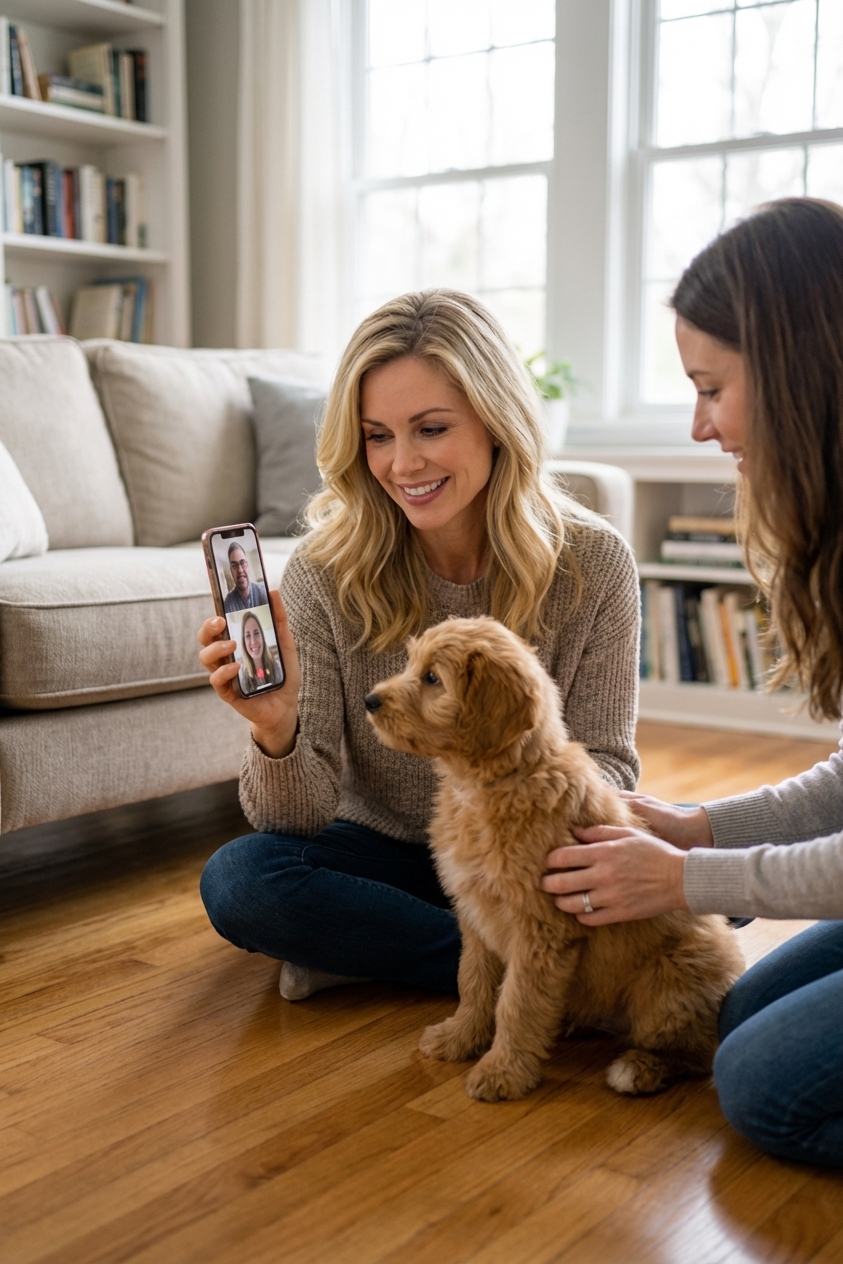
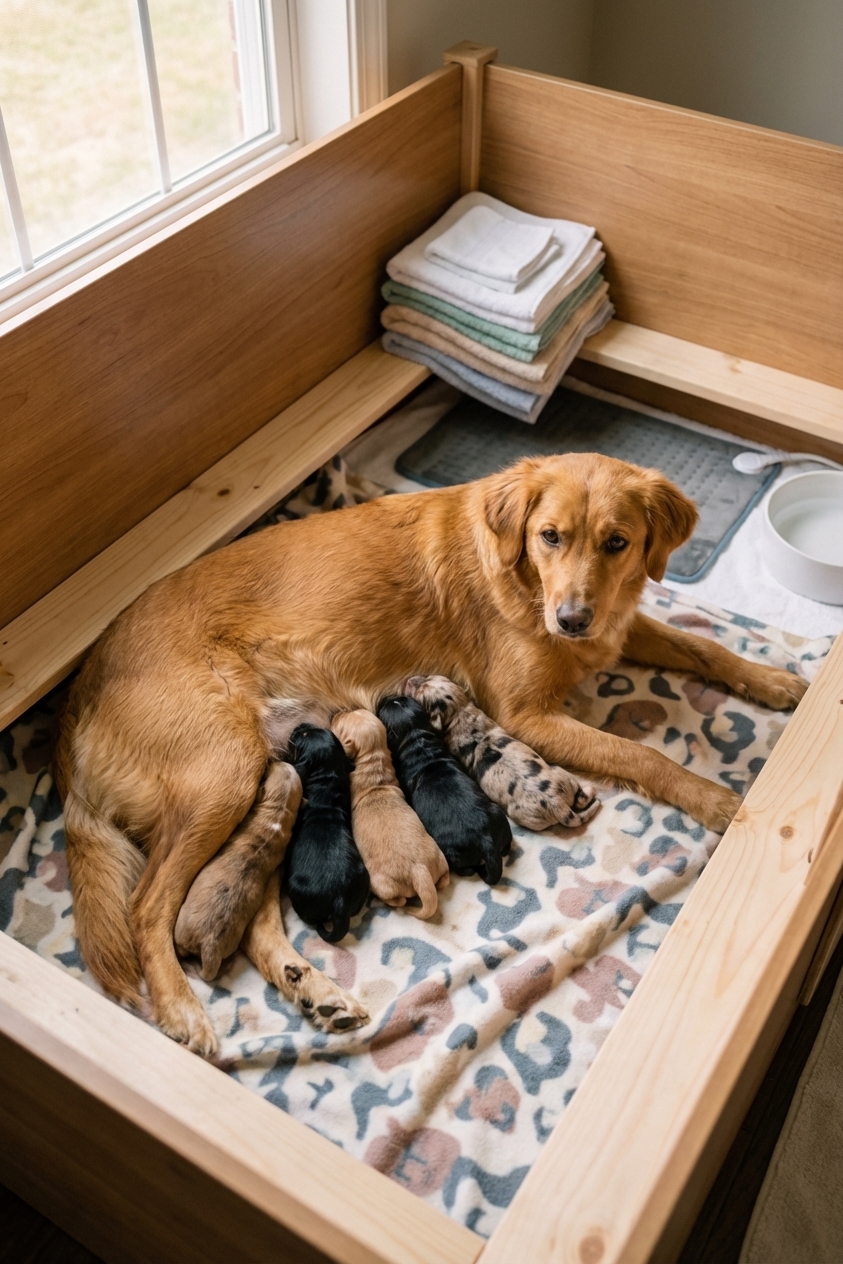
Tip: You can politely ask for a quick live video showing the puppy with the mother, plus a close-up of the puppy’s face and full body while the breeder calls the puppy by name. Real breeders can usually do this easily. Scammers cannot.
How to verify the puppy and breeder are real
Verification is about reducing risk in layers. One “green flag” is great, but you want several.
Do a live video call
- Ask to see the puppy moving (walking, playing) to assess general energy and coordination.
- Ask to see the puppy with littermates to confirm it is part of a real litter.
- Ask to see the dam (mom). For many ethical programs, the dam is on-site. If not, ask why and what home she is in.
- Request a quick scan of the environment: a clean, safe area with water, bedding, and normal dog supplies.
Confirm identity and location
- Search the breeder’s name, phone number, and email plus the words “scam”, “complaint”, and “review”.
- Check if the address maps to a real residence or kennel. Be cautious if it points to an empty lot or unrelated business.
- Look for a consistent history: past litters, adult dogs, training titles or sport participation, and long-term community presence.
Ask for a vet reference
Many reputable breeders will share the name of the veterinary clinic they use. You can call the clinic to confirm the breeder is a client, though the clinic may or may not be able to confirm due to privacy policies. That is okay. You are simply trying to confirm the relationship exists.
Health records you should expect
As a veterinary assistant, I always tell families this: paperwork does not replace a healthy puppy, but good paperwork is often a sign of good care.
Puppy records (age-appropriate)
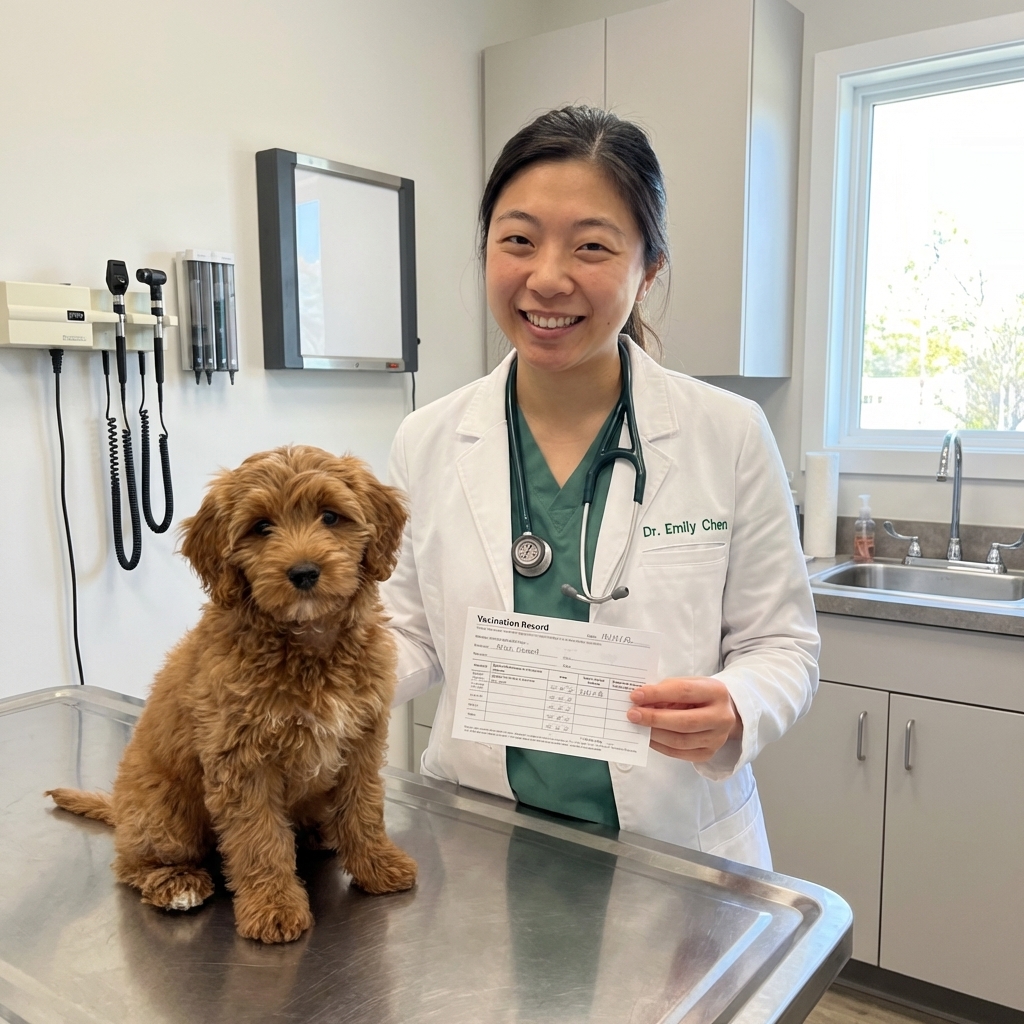
- Vaccination record with dates and product names if available.
- Deworming schedule and what product was used.
- Microchip information if the puppy is chipped.
- Feeding plan including brand, amount, and frequency, plus any supplements.
Reality check: Puppies often start vaccines around 6 to 8 weeks, then continue in a series every 3 to 4 weeks until about 16 weeks (protocols vary by region and risk). If someone claims a very young puppy is “fully vaccinated,” ask for specifics and have your veterinarian review the record.
Parent health testing (not just a vet check)
For designer mixes, you want to know the health risks of both breed lines and confirm the parents were tested accordingly. A basic “vet checked” note is not the same as screening for inherited conditions.
- Ask which tests were done for each parent and what organization or lab provided results.
- Request proof as a report or certificate, not a screenshot with missing identifiers.
- Confirm the results match the exact dog by registered name or microchip number when available.
Health testing varies by mix, but common categories include hips, elbows, patellas, cardiac screening, eye exams, and DNA testing for breed-linked genetic conditions.
How to verify testing
- OFA: Ask for an OFA link or OFA numbers for hips, elbows, patellas, cardiac, and other listed clearances when applicable.
- Eyes: Ask whether eye exams were done through a program like CAER (results may be listed in OFA for some dogs).
- Cardiac: Ask who performed the cardiac evaluation (general practice vs board-certified cardiologist) and what the report says.
Questions to ask breeders (copy and paste)
These questions help you screen for both scams and poor breeding practices. A good breeder welcomes them.
About the puppy
- What is the puppy’s date of birth and current weight?
- What is the puppy eating now, and what is the daily schedule?
- How are you handling socialization (sounds, surfaces, gentle handling, crate exposure)?
- Has the puppy had any vomiting, diarrhea, coughing, sneezing, or skin issues?
- What is the puppy’s current temperament: bold, cautious, cuddly, independent?
About the parents
- May I see the mother and, if possible, the father?
- What are the parents’ ages, weights, and temperaments?
- What health testing was completed for each parent and can I see the results?
- Have the parents produced any puppies with known genetic or orthopedic issues?
About the home and care standards
- Where are puppies raised: home, kennel building, guardian home?
- If the mother is in a guardian home, who is her primary vet and can you show me how you supervise whelping and early puppy care?
- How do you keep the whelping and puppy areas clean and safe?
- What parasite prevention plan do you follow for the litter?
- Do you limit how many litters you raise at one time?
About support after purchase
- Do you provide guidance on house training, crate training, and grooming needs?
- If I have questions at 10 pm because my puppy has diarrhea, what is your recommendation: call you, call my vet, or emergency clinic?
- Do you have a “return to breeder” policy if I cannot keep the dog?
Paperwork to review before you pay
Ethical breeders typically provide a written agreement. Read it slowly and ask for clarification in plain language. If they rush you, that is a warning sign.
Contract basics
- Buyer and breeder names and contact information.
- Puppy identification (microchip number, litter ID, or unique description).
- Purchase price, deposit terms, and what happens if either party cancels.
- Spay and neuter expectations if sold as a companion puppy.
- Health guarantee details and what documentation is required.
- Return policy or rehoming requirement, ideally “return to breeder” at any age.
Receipts and records
- Receipt showing payment amount, date, and method.
- Copy of vaccination and deworming record.
- Any registration documentation if applicable, explained clearly.
Note: If the contract language feels confusing or high-stakes, consider having a qualified professional review it. This page is not legal advice.
Realistic timelines
Many problems happen when buyers are pressured to move faster than biology allows.
- Pregnancy is about 9 weeks (around 63 days, depending on how timing is measured).
- Early puppy period is fragile. Responsible breeders prioritize warmth, feeding, and monitoring.
- Weaning and social learning take time. Many puppies go home around 8 to 10 weeks, sometimes later depending on the breeder’s program and the puppy’s development.
Some breeds and programs prefer 10 to 12 weeks. Also, local laws may set a minimum transfer age. If someone offers a very young puppy immediately or is willing to meet in a parking lot with no paperwork, treat that as a major red flag.
Safe payment and pickup tips
Payment best practices
- Use a payment method with buyer protection when possible (and avoid “no protection” options within the same app or service).
- Avoid paying the full amount before you have verified the puppy live and reviewed key documents.
- Get every promise in writing: what is included, pickup date, and what happens if the puppy becomes unavailable.
Pickup and transport
- In-person pickup is safest when feasible because you can see the puppy’s living conditions and meet the breeder.
- If transport is needed, ask who is handling it, what the plan is for temperature safety, and what happens if flights or schedules change.
- Be cautious with anyone offering instant, cheap shipping for a very young puppy. Responsible transport planning is rarely “instant.”
Pickup day checklist
- Confirm the puppy matches the one you reserved.
- Receive your paperwork packet before leaving.
- Ask what the puppy ate that morning and request a small amount of the current food.
- Schedule a veterinarian visit soon after bringing the puppy home, especially if this is your first puppy.
First vet visit checklist
If you want a smooth start, bring your paperwork and ask your veterinarian to review it with you.
- Full exam and weight check.
- Review vaccine plan and timing for your region and lifestyle.
- Fecal test and parasite control plan.
- Microchip scan and registration (if microchipped).
- Discuss any coughing, diarrhea, poor appetite, or low energy right away.
Trust your gut: A healthy buying process feels steady. You have time to ask questions. You are not being rushed. You are being supported.
Where to look for reputable sources
If you are unsure where to start, these sources can help you find solid leads and verify claims.
- Veterinarian referrals: Ask local clinics who they see consistently for well-cared-for litters.
- OFA database: Look up parent dogs when you have registered names or OFA numbers.
- National or local breed clubs: Many maintain breeder referral resources and health testing guidance (helpful even for mixes, because you can research each parent breed).
- Rescues and shelters: If your priority is a great companion, you may find a wonderful mixed-breed puppy or young dog through a reputable rescue.
If you suspect a scam
If you think you are dealing with a scam, stop sending money and stop sharing personal information. Save screenshots of messages, receipts, and the listing. If money has already changed hands, contact your payment provider promptly to ask about dispute options.
If you have already brought a puppy home and something seems wrong medically, contact your veterinarian right away. Young puppies can become dehydrated quickly and early care makes a big difference.
You deserve a puppy buying experience that is transparent, kind, and safe. A reputable breeder will never make you feel silly for asking careful questions.