A curious nose. A very waggy welcome.
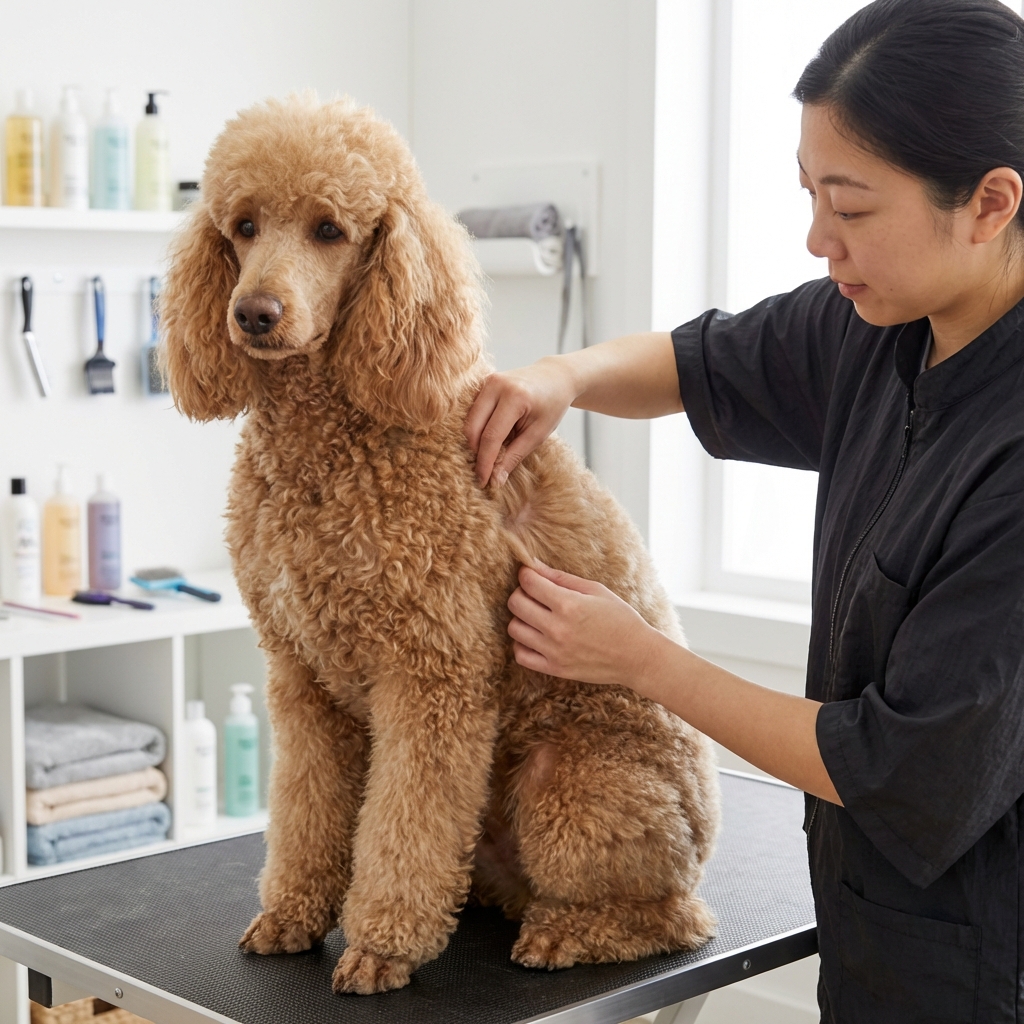
Doodle coats can be fluffy, curly, wavy, or a little bit of everything, and that is exactly why they need a routine. The good news is you do not need a grooming van in your driveway to keep your doodle comfortable. You need the right tools, a repeatable plan, and a special focus on the sneaky mat zones.
First, know what you are grooming
Many doodles have a coat that holds onto loose hair instead of letting it fall out. Some doodles shed quite a bit, especially depending on generation and coat type, but even shedding coats can tangle. When loose hair gets trapped in the coat, it twists together with friction and moisture, which is how mats form.
Your goal at home is simple: separate the coat frequently, keep the skin dry and clean, and never let small tangles turn into felt.
Common doodle coat patterns
- Wavy fleece: Often easier than tight curls, but still mats in friction spots.
- Curly wool: Tends to mat quickly if brushing is inconsistent. Great coat, high maintenance.
- Straighter hair: Can shed more and still tangle, especially if it is fine and soft.
If your doodle has a very soft coat, a very dense coat, or both, plan on more frequent brushing.
Your at-home doodle grooming kit
There are lots of brushes in the world. For most doodle coats, the winning combo is a slicker brush plus a metal comb. If you only pick one, pick the comb too, because it tells the truth about mats.
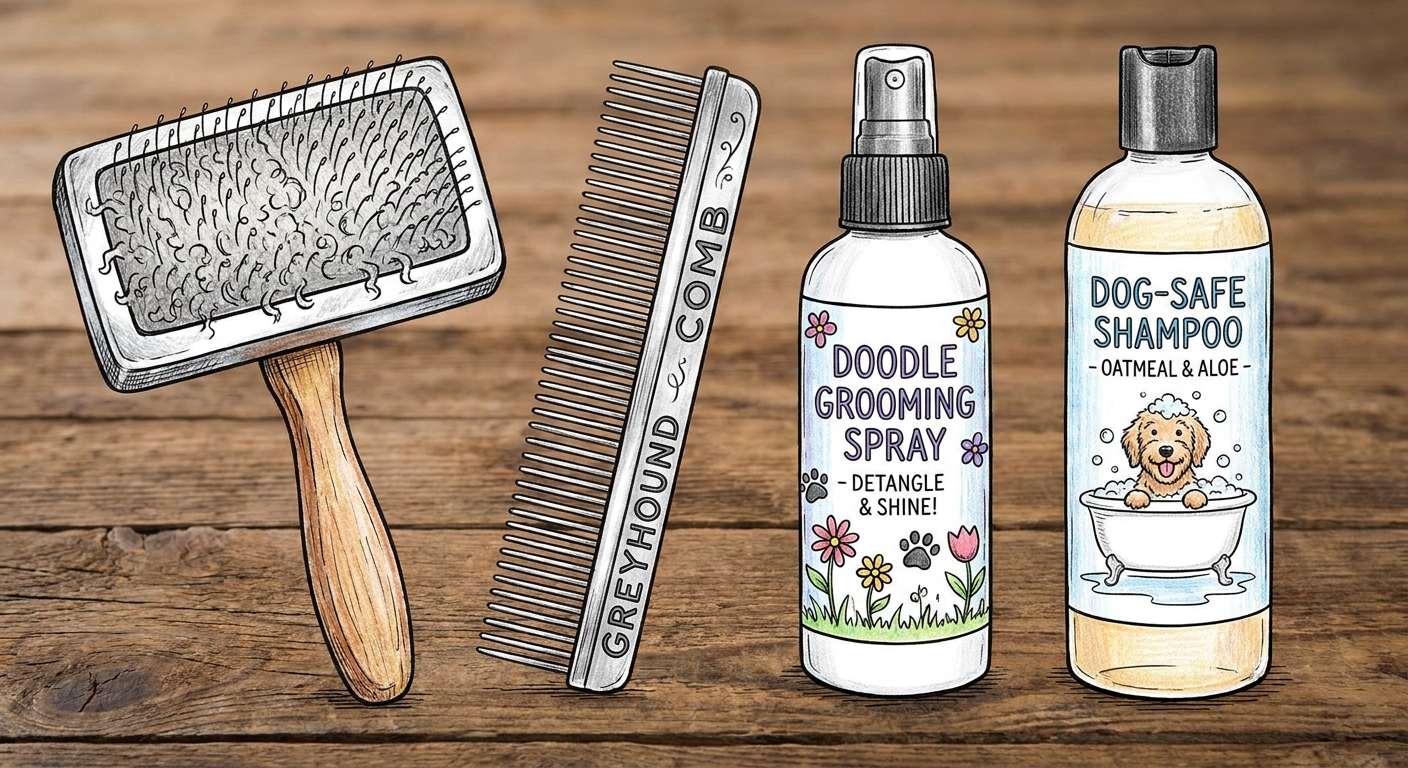
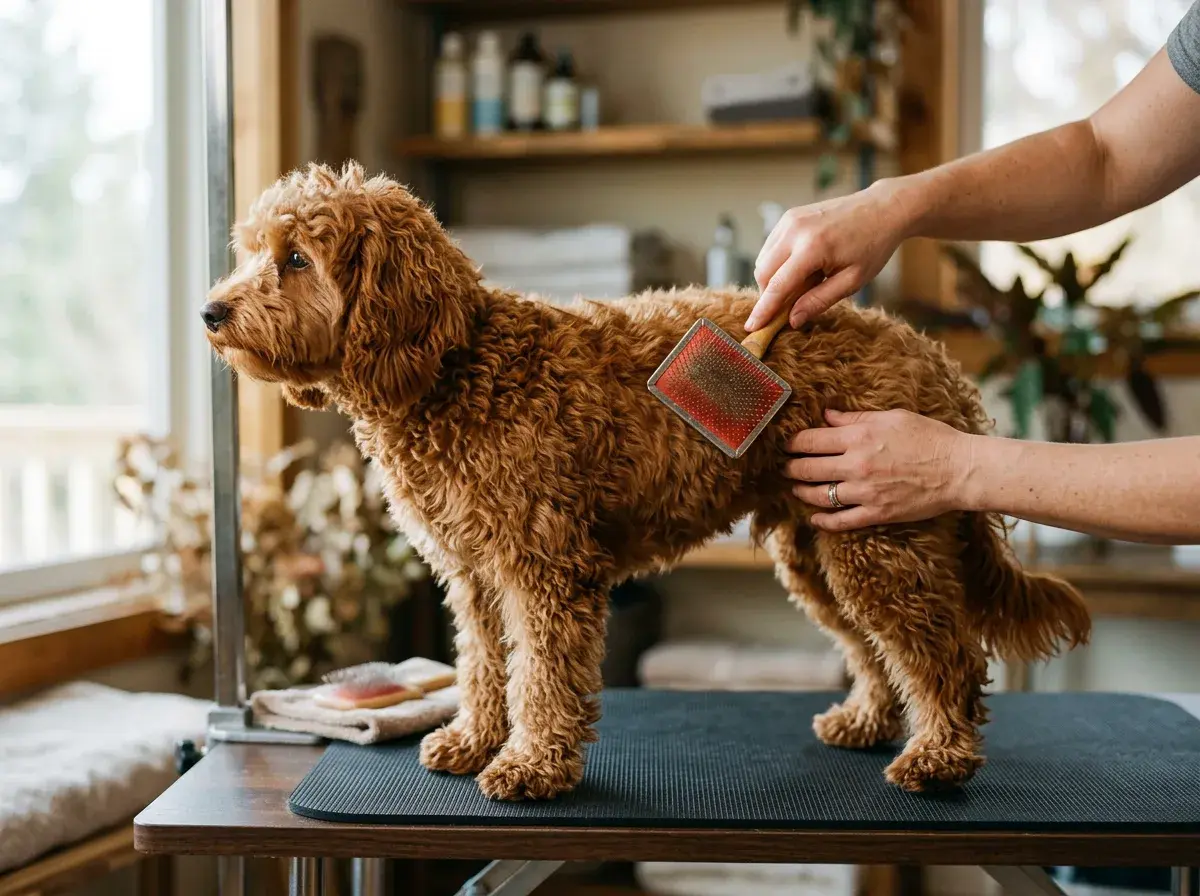
Slicker brush
Look for a quality slicker brush with fine pins. Use it to gently separate the coat in small sections. A slicker gets through fluff fast, but it can also irritate skin if you scrape, so keep a light hand.
Stainless steel greyhound comb
This is your mat detector. After you brush an area, comb-check from skin to ends. If the comb does not glide, there is still a tangle hiding in there. Many doodle parents brush the top layer only, and the comb-check is what catches that mistake.
Detangling or brushing spray
A light mist helps reduce breakage and makes brushing more comfortable. It is especially helpful on dry coats and during coat change season.
Pin brush (optional)
If your doodle has a longer, looser coat, a pin brush can help with gentle daily fluffing. It is not a replacement for a slicker and a comb-check, but it can be a nice add-on for finishing work.
Clippers, scissors, and why caution matters
If you plan to trim at home, use tools made for pets and move slowly. Scissors and mats are a risky mix because mats pull skin upward, and it is easy to cut skin without meaning to. If a mat is tight to the skin, that is usually a professional groom situation.
How often to brush a doodle
Frequency depends on coat type, length, and lifestyle. A doodle who runs through wet grass daily needs more brushing than a couch doodle with a shorter trim. Swimming, rainy climates, and snow days also raise mat risk, because damp coat plus friction is basically a mat invitation.
A simple schedule that works for many doodles
- Light maintenance: Brush and comb-check 3 to 4 times per week if the coat is kept short and you have low mat risk.
- Typical maintenance: Brush and comb-check every other day for medium length coats.
- High maintenance: Daily brush and comb-check for long coats, tight curls, very soft coats, or during puppy coat transition.
If you are seeing tiny knots show up behind the ears or in the armpits between sessions, that is your sign to increase frequency and shorten your brushing intervals.
The brushing method that prevents mats
For doodles, a quick once-over is rarely enough. You want a method that reaches the base of the coat.
Use line brushing
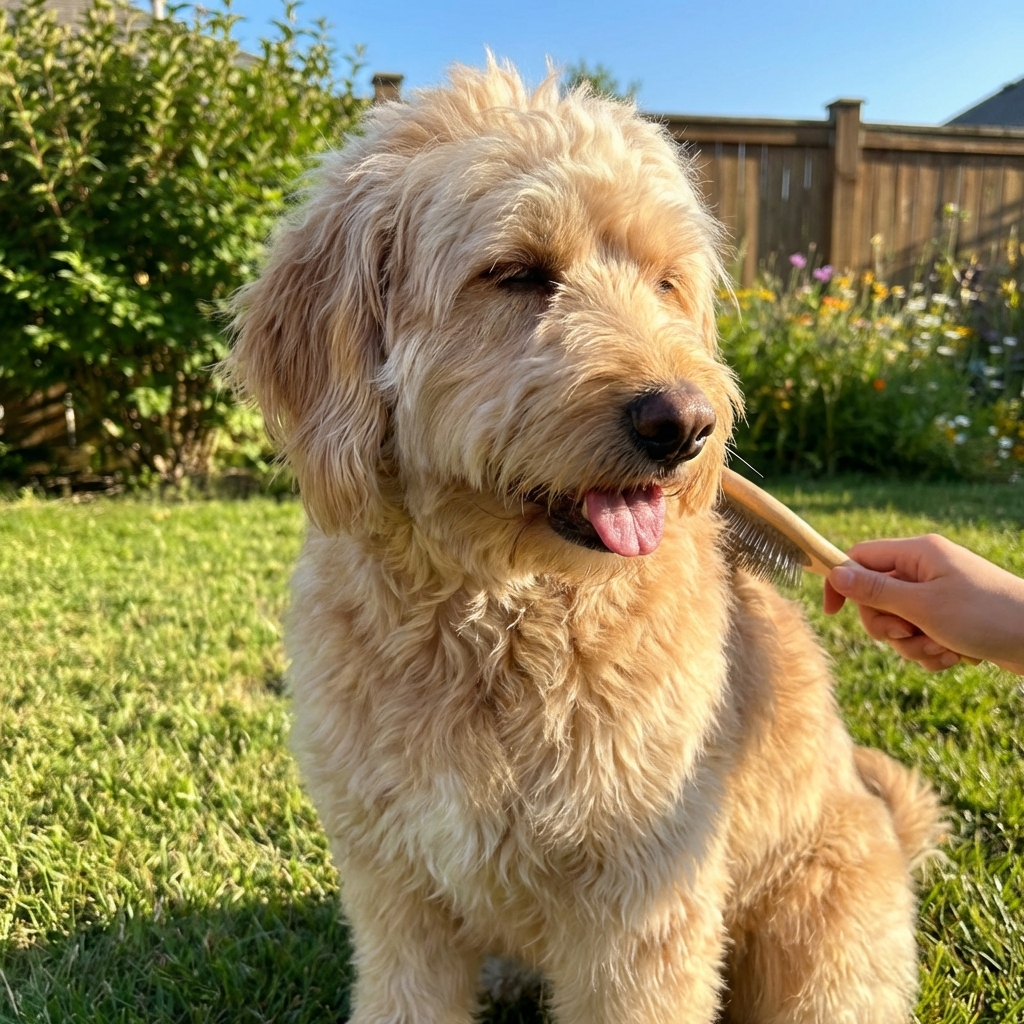
Line brushing means you brush one thin line of coat at a time until you reach the skin, then you move up to the next line. It takes longer than surface brushing, but it is the best home habit for preventing mats.
- Start with a dry or lightly misted coat: If the coat is dusty or staticky, mist lightly with brushing spray for slip.
- Pick a zone: Back leg, chest, or shoulder. Small sections keep it calm and effective.
- Hold the hair: Use your free hand to gently hold hair near the skin to reduce pulling.
- Work from ends toward the skin: Loosen tangles at the tips first, then work closer to the skin. Finish with a few gentle strokes from skin to ends to smooth it out.
- Comb-check: Run the metal comb through that same section from skin to ends. No snag means success.
If the comb cannot get through, the mat is still there. The comb-check is your doodle grooming referee.
Mat hotspots
These are the doodle mat factories. They are warm, high-friction areas, and they get damp from drinking, drool, rain, swimming, and baths.
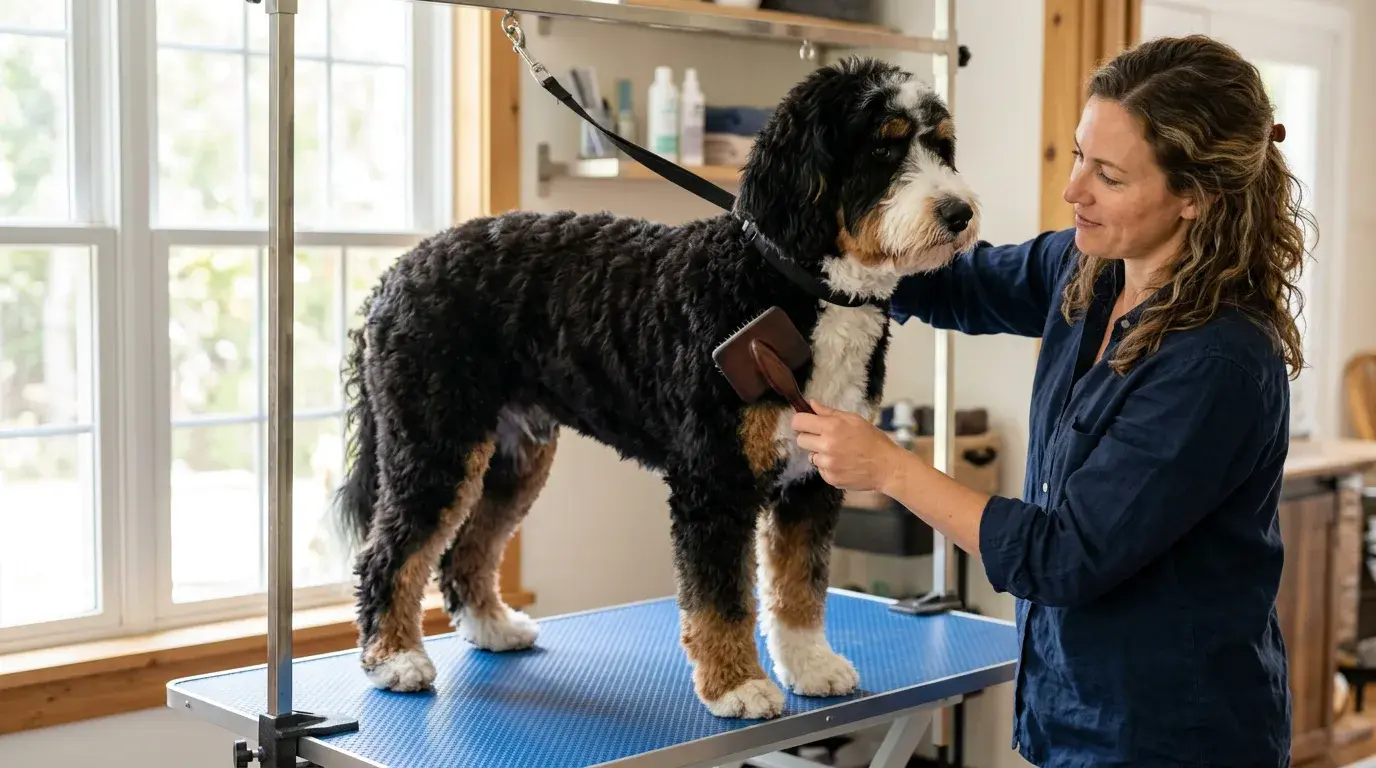
Behind the ears
- Check daily: Lift the ear flap (pinna) and feel for thickened hair at the base.
- Comb from skin outward: Tiny mats often start right at the base of the ear.
- Consider a shorter ear trim: If your doodle mats here constantly, a groomer can keep this area tidier.
Armpits and chest
- Use a small slicker or comb: Space is tight and skin is sensitive.
- Brush with the leg gently extended: This opens the area so you can reach the base of the coat.
- Watch harness rub: Harnesses can cause tangles where straps sit. Comb-check those strap zones often.
Other sneaky spots
- Collar line and under the chin
- Base of the tail and under the tail
- Inner thighs and belly
- Where the leash clips or rubs
Bathing without creating mats
Baths are great, but only if you avoid a classic doodle mistake: getting the coat wet while tangles are still present. Water tightens tangles into mats, and shampoo rubbing can felt them even faster.
Before the bath
- Brush and comb-check first: Do a full comb-check. This is the single biggest mat prevention step.
- Protect ears: Avoid getting water in the ear canal. If your dog is prone to ear issues, ask your vet what is safe for your dog.
- Gather supplies: Shampoo, conditioner if you use one, towels, dryer, cotton balls for ears if needed, and a non-slip mat.
In the bath
- Soak thoroughly: Dense coats need time for water to reach the skin.
- Dilute shampoo when appropriate: Many dog shampoos work better when diluted. Follow label directions.
- Massage, do not scrub in circles: Use your fingers like you are washing a sweater you love. Circular scrubbing can tangle hair.
- Rinse like it is your job: Leftover shampoo can cause itchiness and dullness.
After the bath
Press water out with towels instead of rough rubbing. Rubbing is another friction trigger for mats.
If your doodle has been swimming or out in the rain, the same rules apply: towel press, then dry thoroughly, especially the friction zones and ears.
Drying matters
If you let a doodle air-dry, the coat can twist as it dries and form mats, especially in curls and dense areas. Drying well is part of mat prevention.
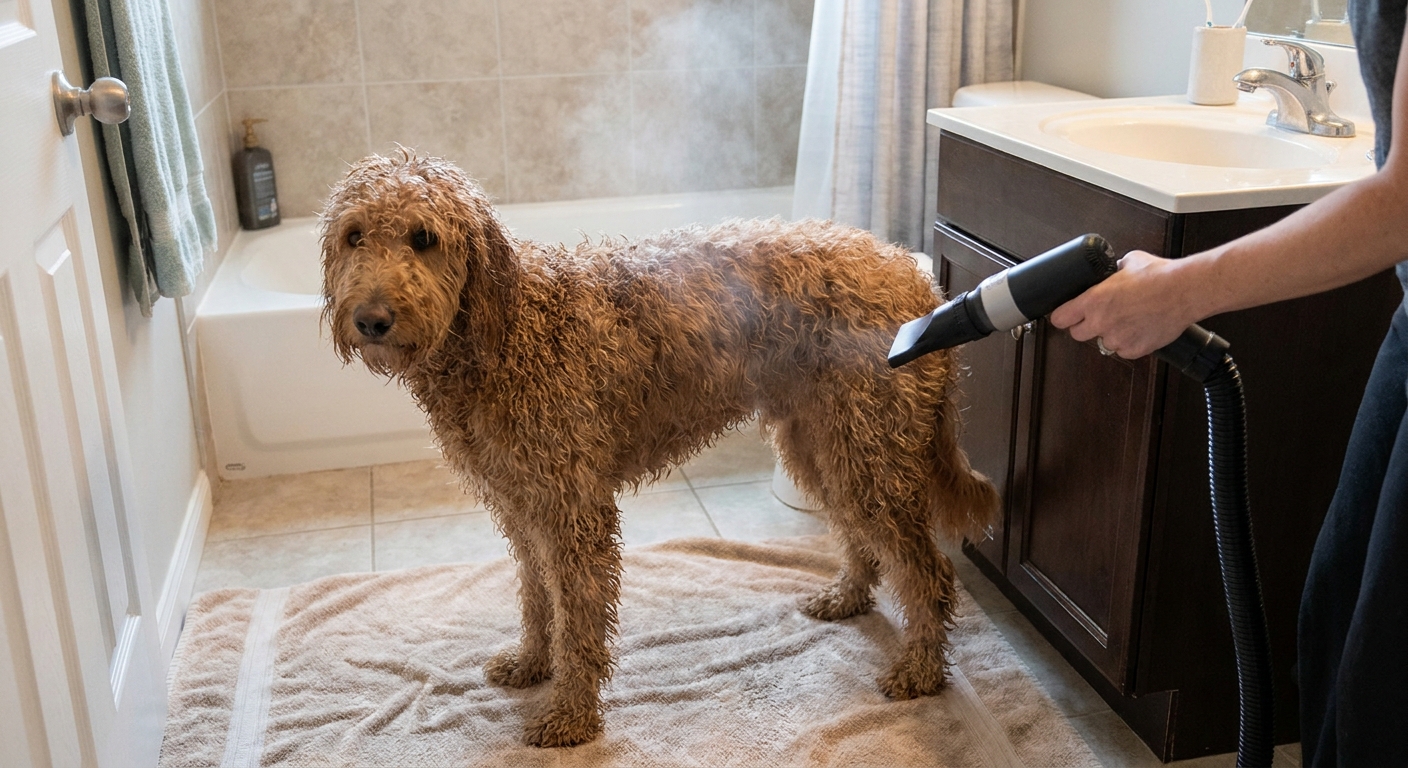
Best practice: blow dry while brushing
- Use a pet-safe dryer if possible: Human hair dryers can get too hot. If you use one, keep it on cool or low heat, hold it a comfortable distance away, keep it moving, and never concentrate airflow on one spot.
- Dry in sections: Aim airflow down the hair shaft while brushing and comb-checking.
- Do not stop while damp: The undercoat near the skin is where mats love to form.
Quick reality check
If your doodle hates the dryer, you can improve things with short sessions, treats, and calm handling. But if drying is always a battle, it can be kinder to schedule professional grooms more often and keep the coat shorter between visits.
A routine you can stick to
Here is a simple rhythm that fits many households. Adjust based on coat length and your doodle’s mat tendencies.
Daily (2 to 5 minutes)
- Quick comb-check behind ears, collar area, armpits, and harness spots
- Wipe face and beard after meals if your doodle gets drippy
- After wet weather or swimming: check and dry friction zones so they do not dry clumpy
Every other day (10 to 20 minutes)
- Line brush one or two body zones, then comb-check
- Check feet and between toes for debris and tangles
Weekly
- Full body brush and comb-check
- Check ears for redness, odor, or gunk and dry the ear flap well after baths
Every 3 to 8 weeks
- Bath and full dry, plus a full comb-check
- Trim around eyes, feet, and sanitary areas if you are comfortable, or leave these for the groomer
Nails: a quick, safe plan
Nails matter because long nails can change how your doodle stands and walks, and scratchy nails make grooming feel like a wrestling match. Many dogs need nail trims every 2 to 4 weeks, but it varies.
- Go slow: Only trim a little at a time, especially on dark nails where the quick is hard to see.
- Use the right tool: A nail grinder or quality clippers both work. Pick what you can use confidently.
- Be prepared: Keep styptic powder on hand in case you nick the quick.
- Practice counts: If nail trims are stressful, practice paw handling and do one nail at a time with treats.
When to book a professional groom
Home grooming is wonderful, but there are moments when a pro is the safest and kindest option.
Consider a groomer if:
- Mats are tight to the skin or widespread
- Your dog is very wiggly for brushing, nails, or drying
- You want a specific haircut style that needs clipper skill
- Ear plucking or ear care has been recommended by your vet, and you want trained help
- You need a reset haircut to get back to a manageable routine
Many doodle families do a combination: at-home brushing for comfort and mat prevention, plus professional grooms on a steady schedule for haircuts and a full tidy-up.
Puppy coat transition
One day your doodle puppy has a fluffy, easy baby coat. Then seemingly overnight, brushing starts snagging everywhere. That is often coat transition, when the adult coat grows in and tangles with the softer puppy coat.
What to expect
- This often happens sometime in the first year, but timing varies widely.
- You may notice more knots at the base of the coat, even if the top looks fine.
- Mats can form fast, especially around ears, collar, and legs.
How to get through it
- Increase comb-checking: The comb-check is your best friend during transition.
- Shorter haircut helps: Many owners choose a shorter trim during this phase to reduce mat risk.
- Keep sessions short and positive: Frequent mini-brushes beat long wrestling matches.
Early signs mats are forming
Mats do not always announce themselves with a big obvious clump. Here are quieter clues:
- The coat feels thicker or spongy close to the skin
- Your brush glides on top but the comb stops underneath
- Your doodle suddenly dislikes being touched in a certain area
- After a walk in damp weather, certain spots dry stiff or clumpy
If you catch tangles early, you can usually work them out gently. If they are already tight and close to skin, it is often safer to have a groomer clip them out.
When to call the vet
Grooming is not just cosmetic. If you notice any of these, it is worth a vet call:
- Hot spots, oozing skin, or scabs under mats
- Strong or foul odor that returns quickly after bathing
- Persistent itching, redness, or flaky skin
- Ear redness, swelling, head shaking, or discharge
Mats can hide irritated skin underneath, so if something smells off or looks inflamed, do not try to battle it with more brushing.
FAQ
Can I use a Furminator-style deshedding tool on my doodle?
Many doodle coats are not a great match for blade-style deshedding tools because they can cut coat and irritate skin if used incorrectly. A slicker and a metal comb are usually safer and more useful for mat prevention. If you are not sure, ask a groomer what they recommend for your doodle’s specific coat.
How do I know if I am brushing all the way to the skin?
Comb-check after brushing. If the comb glides from skin to ends in multiple directions, you are reaching the base. If it snags, there is still a tangle underneath.
Is conditioner helpful for doodles?
It can be. A good dog-safe conditioner can improve slip, reduce breakage, and make drying and brushing easier. The key is rinsing thoroughly, since residue can make some dogs itchy.
My doodle hates brushing. What should I do?
Shorter sessions, high-value treats, and consistency help. Start with the easiest zones, then gradually work toward sensitive areas like armpits and feet. If brushing is always stressful, a shorter haircut plus more frequent professional grooms can be kinder for everyone.
The fluffiest takeaway
Doodle grooming at home is mostly about prevention. Brush in sections, comb-check like a detective, and treat drying as part of the grooming, not an optional extra. Keep a close eye behind the ears and in the armpits, and do not be shy about using a professional groomer as your teammate when mats start winning.