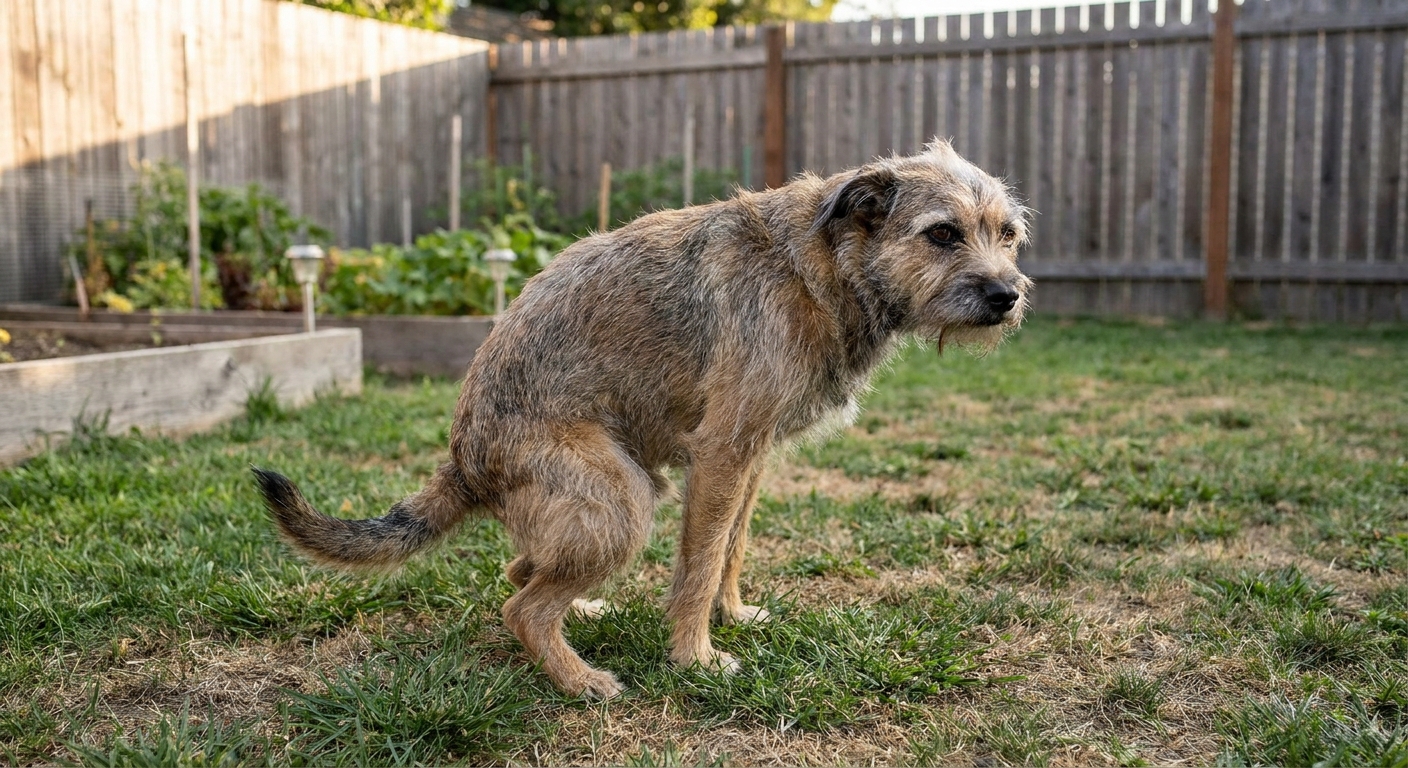
If you are seeing pink or red tissue sticking out of your dog’s anus, it is scary for a reason. This can be a rectal prolapse, meaning tissue from inside the rectum has turned inside out and is now outside the body. It is painful, it can dry out quickly, and it is often linked to straining from diarrhea, parasites, constipation, or other medical problems.
As a veterinary assistant in Frisco, Texas, I want you to hear this clearly: this is a same-day veterinary issue. Your job at home is to protect the tissue, keep your dog from licking, and get help fast.
What rectal prolapse looks like
Rectal prolapse usually appears as a moist, pink to red tube or donut-shaped tissue protruding from the anus. It may look swollen at first and then become more pronounced after your dog strains to poop.
You may hear vets talk about a partial (mucosal) prolapse versus a complete prolapse. From a pet owner perspective, both still deserve prompt evaluation, because swelling and tissue damage can happen quickly.
Common signs you may notice
- Pink, red, or dark red tissue visible outside the anus
- Straining to defecate, squatting frequently, or producing little stool
- Pain, whining, restlessness, or suddenly refusing to sit
- Licking at the rear end
- Diarrhea or constipation history in the last 24 to 72 hours
- Blood or mucus on the tissue or in the stool
The longer the tissue stays out, the more it can swell and dry. In severe cases, it can darken (purple, brown, or black), which can signal tissue damage and is an emergency.
Prolapse vs other rear-end problems
These conditions can all look like “something is wrong back there,” but they are not the same problem and they are not treated the same way.
Rectal prolapse
- Location: Coming through the anus
- Appearance: Pink or red moist tissue, often tubular or ring-like
- Trigger: Often appears or worsens right after straining
Swollen anal gland (anal sac issue)
- Location: Usually a swelling beside the anus, commonly at about the 4 o’clock or 8 o’clock position
- Appearance: A lump under the skin, sometimes red or painful, but not typically a tube of tissue coming out of the anus
- Clues: Scooting, fishy odor, sudden licking, discomfort sitting
Perineal hernia
- Location: A bulge in the perineum, the area next to and behind the anus, not tissue protruding through the anus
- Appearance: Soft swelling on one side (or both sides) of the anus, may look like a “balloon” under the skin
- Clues: Straining, constipation, ribbon-like stool, and sometimes urination issues
- Who is at higher risk: Most commonly older, intact male dogs
If you are unsure, that is okay. The key is this: any tissue protruding from the anus is urgent. Treat it as urgent, keep it protected and moist, and do not attempt to push it back in unless a veterinarian specifically instructs you to.
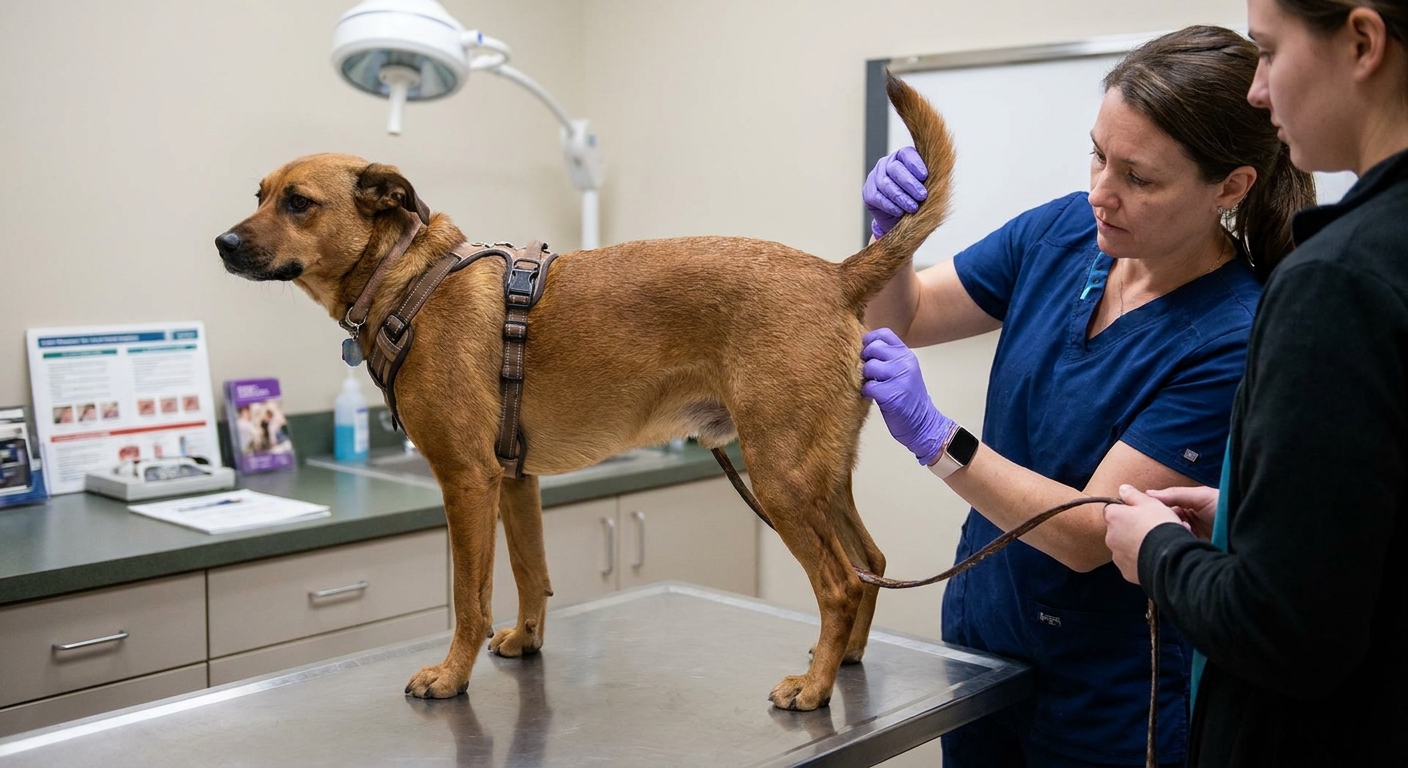
What to do right away at home
Your goal is to prevent drying and trauma to the exposed tissue and get your dog to veterinary care as soon as possible. This is general guidance. Your vet will tailor treatment to your dog’s situation.
1) Keep the tissue moist
Exposed rectal tissue dries out fast, and dryness increases swelling and damage risk.
- Rinse gently with saline if you have it (sterile saline is ideal).
- If you do not have saline, you can use clean, lukewarm water.
- Then cover the area with water-based lubricant (plain KY-type jelly).
- If you do not have lubricant, apply a clean, damp cloth over the tissue for the car ride.
Avoid petroleum products and medicated ointments. Also skip sugar or other “hypertonic” home remedies you may see online. They can irritate tissue and delay proper care.
2) Prevent licking and chewing
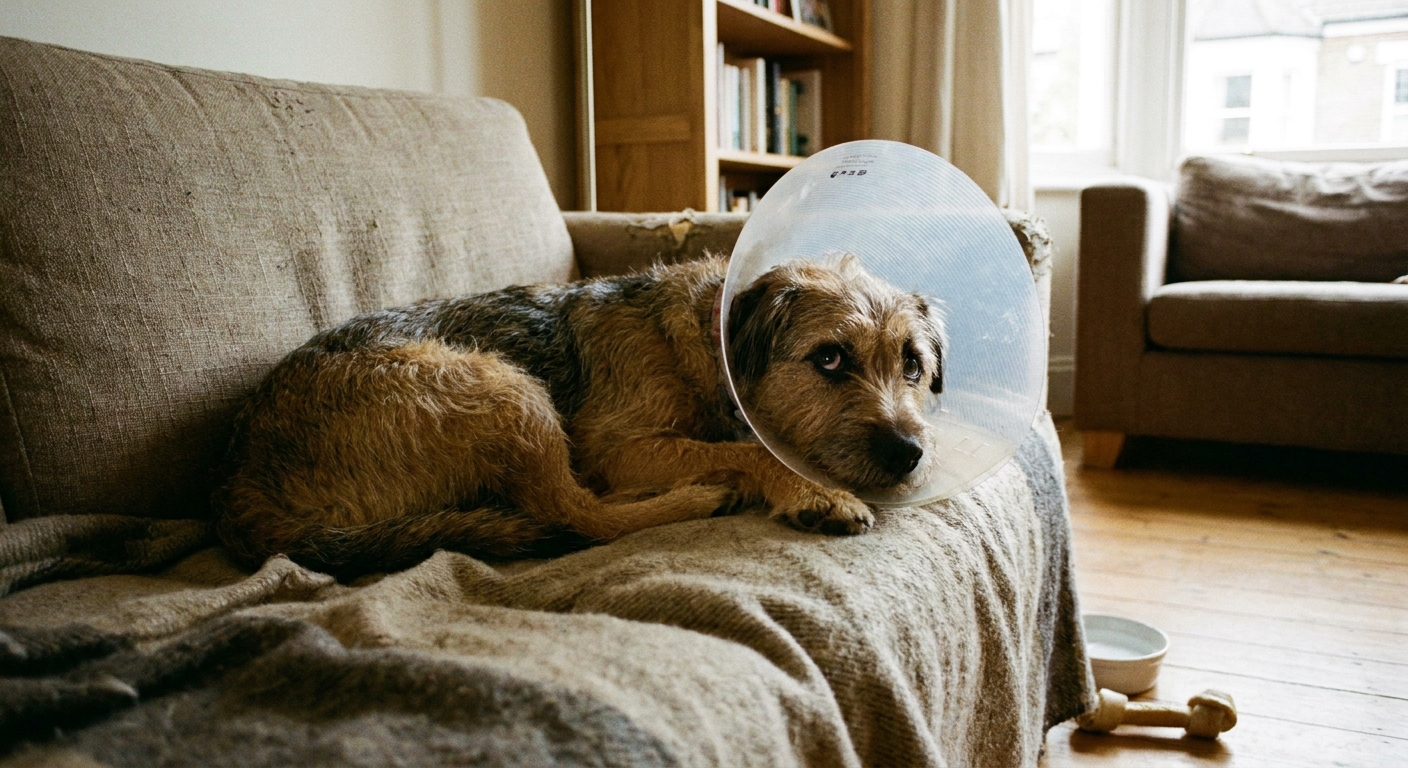
- Use an E-collar if you have one.
- If you do not, a snug cone alternative or close supervision can help, but a true cone is best.
3) Keep your dog calm and limit straining
- Leash walk only for potty needs, no running or jumping.
- Do not let your dog keep squatting and straining repeatedly outside.
4) Do not push it back in unless a veterinarian instructs you to
I know the temptation is strong. But if this is more than mild swelling, or if the tissue is damaged, pushing can tear tissue or trap it, making things worse. Your vet can provide pain control, sedation if needed, and proper reduction techniques.
5) Skip human laxatives and home enemas
When rectal tissue is exposed, adding laxatives or doing an enema at home can increase straining and injury. This needs a medical plan, not a quick fix.
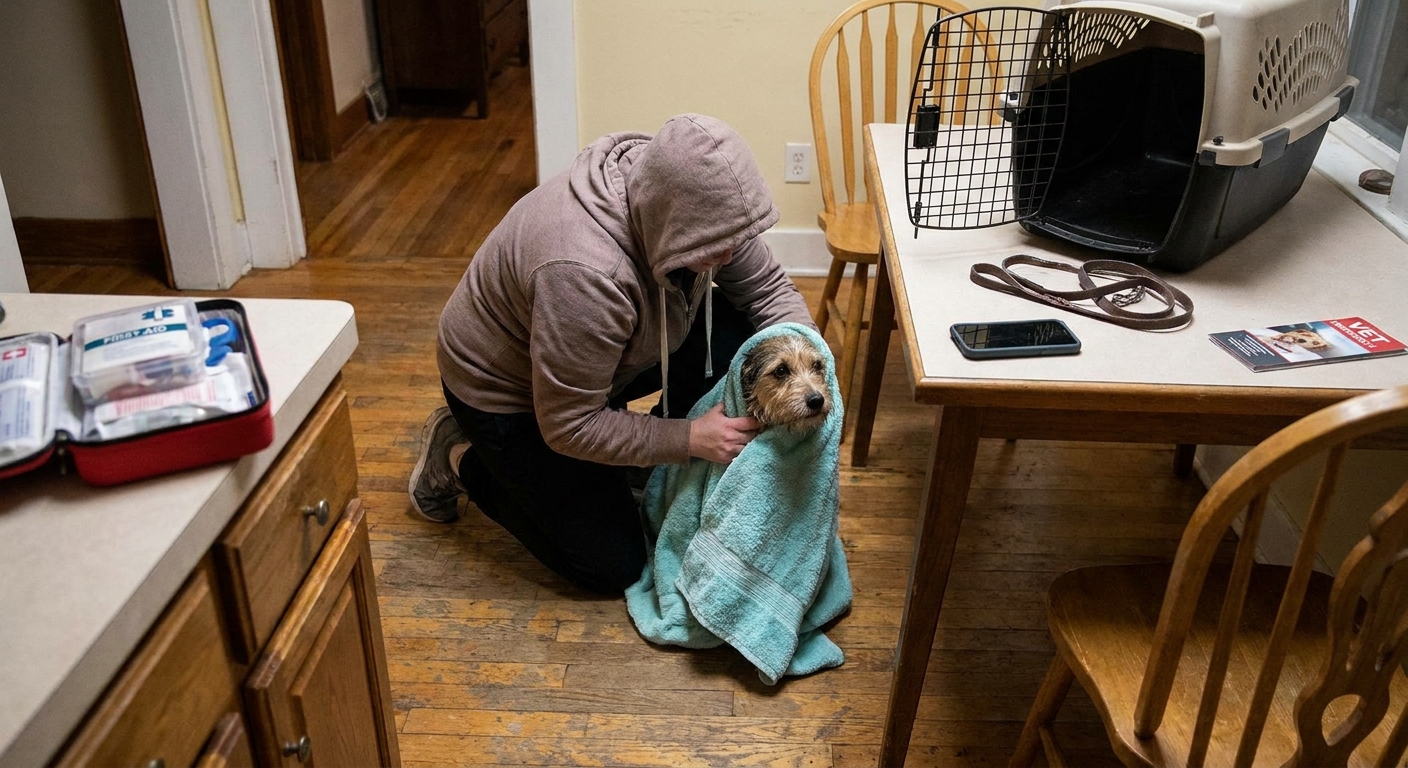
6) Transport tips
- Keep your dog on a leash and use a towel or blanket to help lift and steady them if needed.
- Keep the tissue covered with a damp cloth or lubricant-coated gauze so it stays moist.
- Call the clinic on the way. Ask if they want you to withhold food in case sedation is needed.
Why straining needs same-day care
Rectal prolapse is usually not the primary problem. It is often the result of repeated straining. If your dog keeps straining, the prolapse can worsen and recur even if it is temporarily reduced.
Common causes veterinarians look for
- Parasites and protozoa (especially in puppies): hookworms, whipworms, roundworms, Giardia
- Diarrhea and colitis
- Constipation from dehydration, diet issues, pain, or foreign material
- Rectal or anal inflammation
- Urinary problems that cause straining (especially in males)
- Masses or polyps (less common, but important to rule out)
- After giving birth (in females) due to heavy straining
Same-day care matters because swollen tissue can lose blood flow. The longer it stays out, the higher the chance your dog needs more invasive treatment.
What the vet may do
Exact treatment depends on how long the prolapse has been present, how swollen the tissue is, and what caused the straining in the first place. Your vet’s plan may include:
- Pain relief and sometimes sedation
- Cleaning the tissue and reducing swelling
- Manual reduction (gently placing the tissue back where it belongs)
- A temporary purse-string suture around the anus to help prevent immediate recurrence while still allowing stool to pass
- Fecal testing and deworming if parasites are suspected
- Treatment for diarrhea or constipation (with safe, veterinary-directed meds)
- If tissue is severely damaged: surgery may be necessary
Do not be afraid to ask what they believe caused the straining and what the prevention plan is. Preventing a repeat is a big part of recovery.
When it is an emergency right now
Go to an emergency veterinary hospital immediately if you notice any of the following:
- Tissue turning dark purple, brown, gray, or black
- Heavy bleeding
- Your dog is extremely painful, collapsing, or weak
- Persistent vomiting, a swollen belly, or inability to pass stool
- You suspect a foreign object is stuck (string, cloth, bone fragments)
- Your dog is straining to urinate or cannot urinate
How to lower the risk of recurrence
Once your vet has treated the prolapse, the focus shifts to preventing straining. These are the most helpful, practical steps I see make a difference:
Parasite control and fecal testing
- Keep your dog on a veterinarian-recommended parasite prevention.
- Bring a fresh stool sample when your vet requests one, especially after diarrhea episodes.
Constipation prevention basics
- Encourage hydration. Some dogs drink more from fountains or when water is refreshed often.
- Feed a diet your dog tolerates well. Sudden diet changes can trigger diarrhea and straining.
- Discuss vet-approved fiber options if constipation is recurring.
- Address pain issues (arthritis, back pain) that can make posturing difficult and contribute to constipation.
Monitor bathroom habits
It is not glamorous, but poop tells a story. If your dog is squatting repeatedly, producing tiny amounts, or crying out, it is time to call your vet, not wait it out.
FAQ
Can rectal prolapse heal on its own?
A mild, very short-lived protrusion sometimes reduces on its own, but you still need to address the cause of straining. If tissue stays out, it can swell and become trapped, and that does not “just heal” safely at home.
Is rectal prolapse the same as hemorrhoids?
True hemorrhoids are rare in dogs. When you see tissue protruding from a dog’s anus, a prolapse or another anorectal problem is more likely and should be evaluated by a veterinarian.
My dog has a lump next to the anus, not coming out of it. Is that a prolapse?
A lump beside the anus is more consistent with an anal gland problem or possibly a perineal hernia. Both still need veterinary attention, but they are different from a true rectal prolapse that protrudes through the anus.
What should I bring to the vet?
- A photo of what you saw (yes, it helps)
- A fresh stool sample if your dog has had diarrhea or you suspect parasites
- Any medication list, including supplements
Bottom line
If you see pink or red tissue sticking out of your dog’s anus, treat it as urgent. Keep the tissue moist, prevent licking, limit straining, and get same-day veterinary care. The most important long-term step is finding and treating the reason your dog is straining, whether that is parasites, constipation, diarrhea, or another underlying issue.