I am Shari Shidate, a veterinary assistant in Frisco, Texas, and I want to start with a clear line that can save a dog’s life.
If your dog is repeatedly straining to poop and nothing is coming out, that is not the time for “quick fixes.” That pattern can signal obstipation, which is severe constipation where the colon becomes packed with dry stool and the dog cannot pass it. Obstipation can cause intense pain, dehydration, and vomiting. It can also look like other emergencies that need totally different treatment.
Constipation vs. obstipation
Mild constipation is when a dog is having fewer bowel movements, the stool is harder than usual, but they can still pass something.
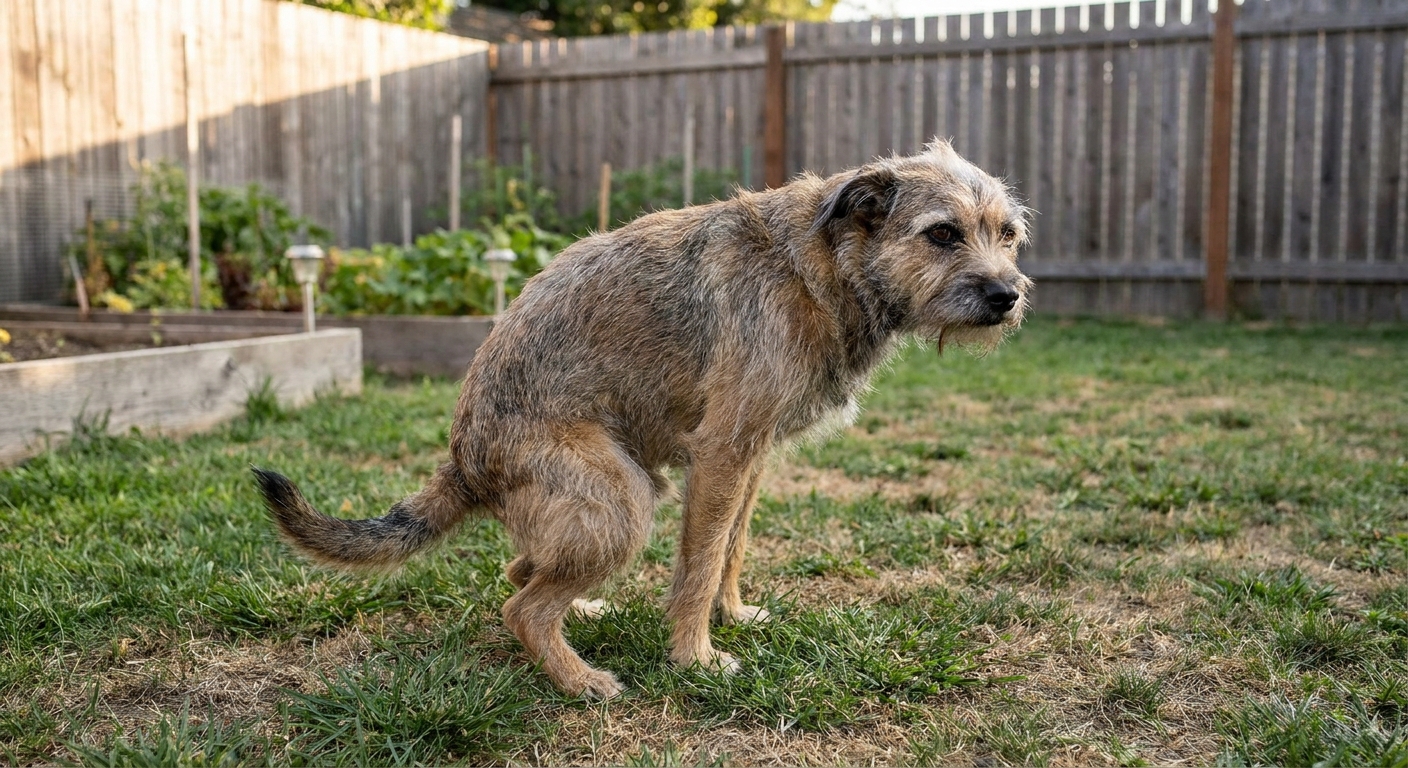
Obstipation is a step beyond constipation. It generally means the colon is so impacted with stool that the dog cannot pass feces at all, even though they are actively trying. The stool becomes progressively drier and harder as water is pulled out of it while it sits in the colon.
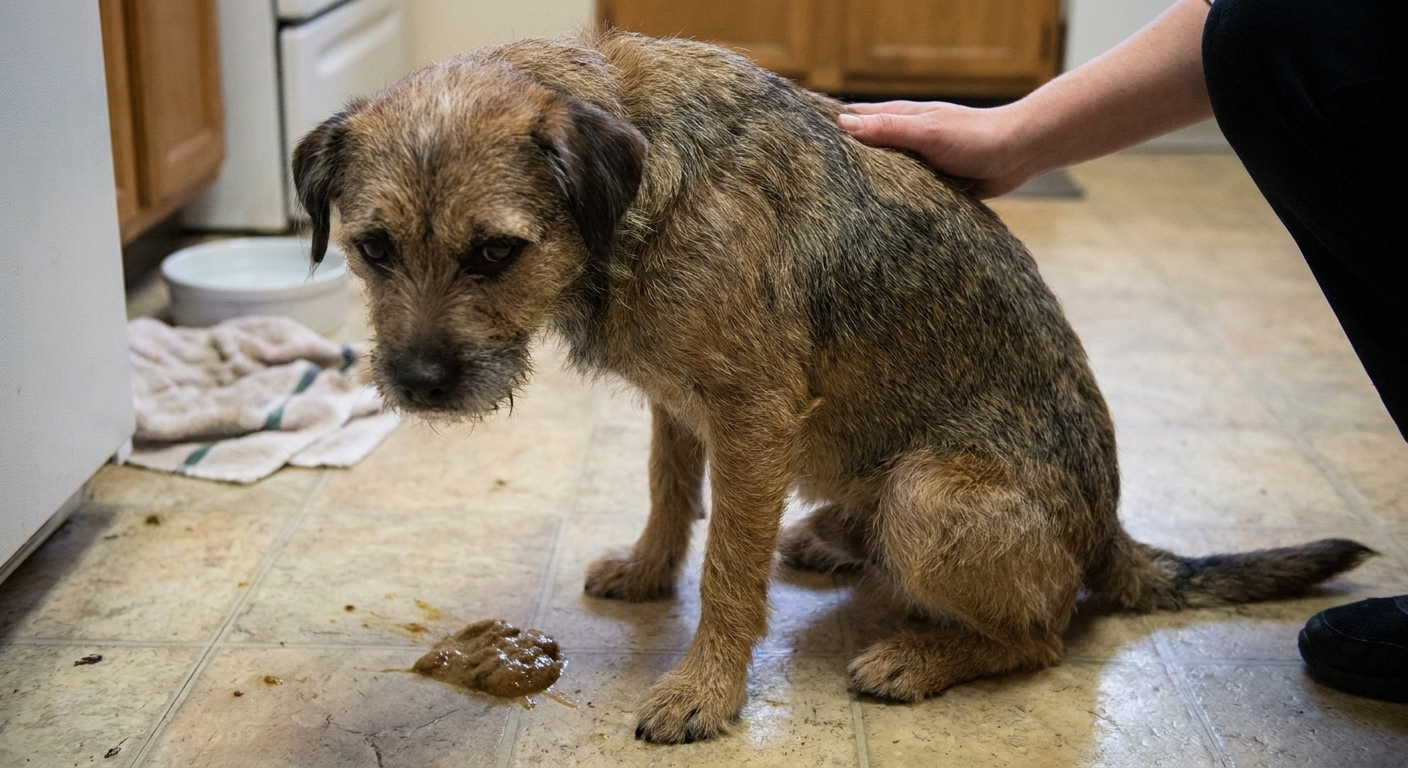
In practice, what owners often notice is this: the dog keeps asking to go outside, squats, strains, maybe cries or trembles, and then nothing happens or only a few drops of mucus come out.
What it can look like at home
Dogs do not read the textbook, so symptoms vary. But these are the patterns that make my “urgent” radar go off.
Classic red flags
- Repeated straining with no stool produced (especially over hours)
- Signs of pain such as crying, shaking, tense posture, reluctance to be touched
- Vomiting, drooling, or repeated gagging
- Swollen, firm, or tight abdomen
- Lethargy or refusing food
- Hunched back or “prayer position” (front end down, rear up)
- Blood (fresh red blood can occur from straining, but it is still a reason to call)
Some dogs with obstipation will also pass only watery diarrhea around the impaction. That can fool people into thinking the dog is not constipated, when the colon is actually plugged.
Also, not every squatting, straining dog is constipated. Tenesmus (the urge to strain) can happen with colitis, severe diarrhea, anal sac infections, rectal pain, or other painful anal and rectal conditions. That is another reason I take “straining with nothing coming out” seriously. You cannot reliably diagnose the cause at home.
Why a packed colon becomes urgent
When stool is stuck, the body keeps pulling water from it. That makes the mass more dehydrated, harder, and more difficult to move. At the same time, the dog can become dehydrated and nauseated, and the colon wall can become inflamed and painful.
Obstipation can become urgent because:
- Pain and stress can be severe and nonstop.
- Dehydration worsens the impaction and can destabilize a sick dog quickly.
- Vomiting increases dehydration and raises the risk of aspiration if the dog later needs sedation.
- Electrolyte imbalances may develop, especially when dehydration and vomiting are present, or in older dogs and dogs with kidney disease.
- Underlying causes can be serious, such as pelvic injury, spinal disease, colon motility disorders, prostate enlargement in intact males, masses, or painful anal and rectal problems.
When to go to the emergency vet
If you are seeing any of the following, skip home remedies and call an emergency clinic or your veterinarian right away:
- Straining and passing nothing, especially if it is persistent or worsening
- Vomiting along with constipation or straining
- A hard, swollen belly, obvious abdominal pain, or collapse
- Weakness, severe lethargy, or refusing water
- Suspected toxin or medication issue (for example, recent opioids after surgery)
- Known foreign body risk (toy, sock, corn cob, bones, etc.)
- Very young, very old, or medically fragile dogs (kidney disease, heart disease, diabetes)
If your dog is straining and producing only small drops, you should still call. That can be obstipation, but it can also be urinary blockage in male dogs, which is an emergency as well.
Why oils or enemas can be dangerous
I understand the temptation. You want relief fast, and the internet makes it sound simple. The problem is that obstipation is not the same situation as mild constipation, and the wrong at-home step can worsen pain or delay the real fix.
Risks with giving oils
Owners commonly reach for olive oil, coconut oil, mineral oil, or “lubricants.” Here is why that can backfire:
- Aspiration risk: If a nauseated dog vomits, oily liquids are easier to inhale into the lungs, which can cause aspiration pneumonia.
- Pancreatitis concern: Adding high-fat foods or oils may increase pancreatitis risk in dogs that are prone to it, especially if more than a tiny amount is given.
- Delay: Lubricants rarely soften a rock-hard impaction fast enough, and waiting can mean a tougher, more expensive emergency later.
Risks with home enemas
Enemas are not benign. In the clinic, we choose products and doses carefully and we monitor the dog. At home, these risks are common:
- Wrong product: Some human enemas contain sodium phosphate, which can cause life-threatening electrolyte disturbances in dogs.
- Rectal injury: Tips and tubing can tear inflamed tissue, especially if a dog squirms or the rectum is already irritated from straining.
- Perforation risk: Rare but devastating, particularly if there is underlying disease or severe inflammation.
- Missing the diagnosis: If the real problem is a foreign body, perineal hernia, painful anal sac disease, or urinary obstruction, an enema is the wrong direction.
If you suspect obstipation, the safest move is to let a veterinary team confirm what is going on and choose the right intervention.
What emergency deobstipation means
Deobstipation is the process of removing impacted stool from the colon safely. In severe cases, it is not just “a laxative.” It can be a same-day, hospital-based procedure.
What the vet team typically does
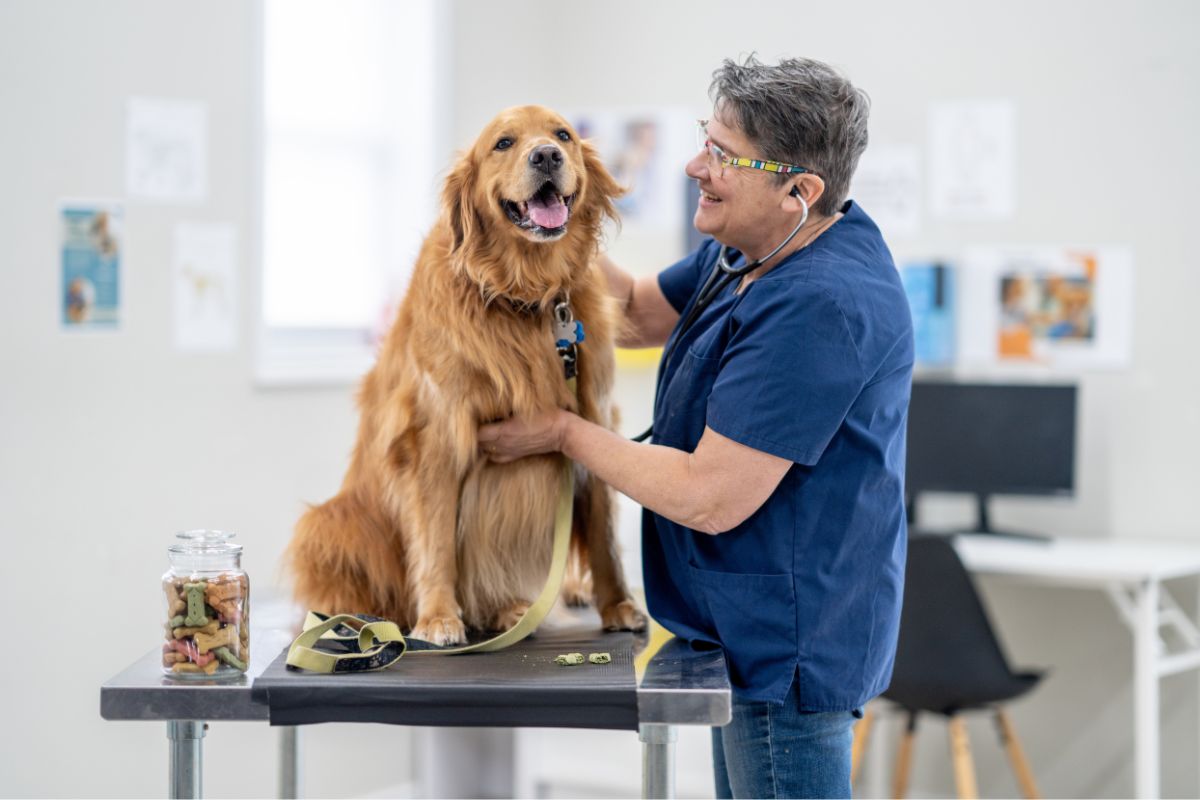
- Exam and history: We ask about last normal bowel movement, diet changes, bone chewing, medications, neurologic signs, and hydration.
- Abdominal palpation and rectal exam: Many impacted colons feel like a firm tube filled with clay or rocks. A rectal exam checks for stool at the pelvic canal, masses, pain, narrowing, or anal gland issues.
- X-rays (radiographs): Often used to confirm a colon packed with feces and to look for pelvic narrowing, enlarged prostate, or a foreign object.
- Bloodwork as needed: Especially if the dog is vomiting, dehydrated, older, or has other health conditions.
- Fluids and pain control: Rehydration helps soften stool from the inside and stabilizes the patient.
- Enemas done correctly: Using veterinary-appropriate solutions and doses.
- Manual removal: In significant obstipation, the veterinarian may need to manually break up and remove stool. This frequently requires sedation or anesthesia to control pain, relax the anal sphincter, and prevent injury.
After relief, the plan often includes stool softeners, motility medications when appropriate, diet adjustments, hydration support, and follow-up to identify why it happened. Depending on severity, some dogs also need hospitalization and monitoring until pain, hydration, and nausea are under control.
Obstipation vs. foreign body
One reason I take unproductive straining seriously is that owners can misread where the problem is. A small-intestinal foreign body is when something like a sock, toy, corn cob, or bones is stuck in the small intestine. That is a different emergency, and it can be life-threatening.
Differences you may notice
- Foreign body: vomiting is often a major symptom and may happen early, but signs can vary, especially with partial obstructions. Appetite often drops, the dog may act painful, and diarrhea can occur.
- Obstipation: the story is often dominated by repeated squatting and straining, small amounts of mucus, and a history of progressively harder stools.
Both conditions can cause belly pain and vomiting. That is why x-rays and a veterinary exam matter. You cannot reliably tell the difference at home, and the treatment is not the same.
Obstipation vs. perineal hernia
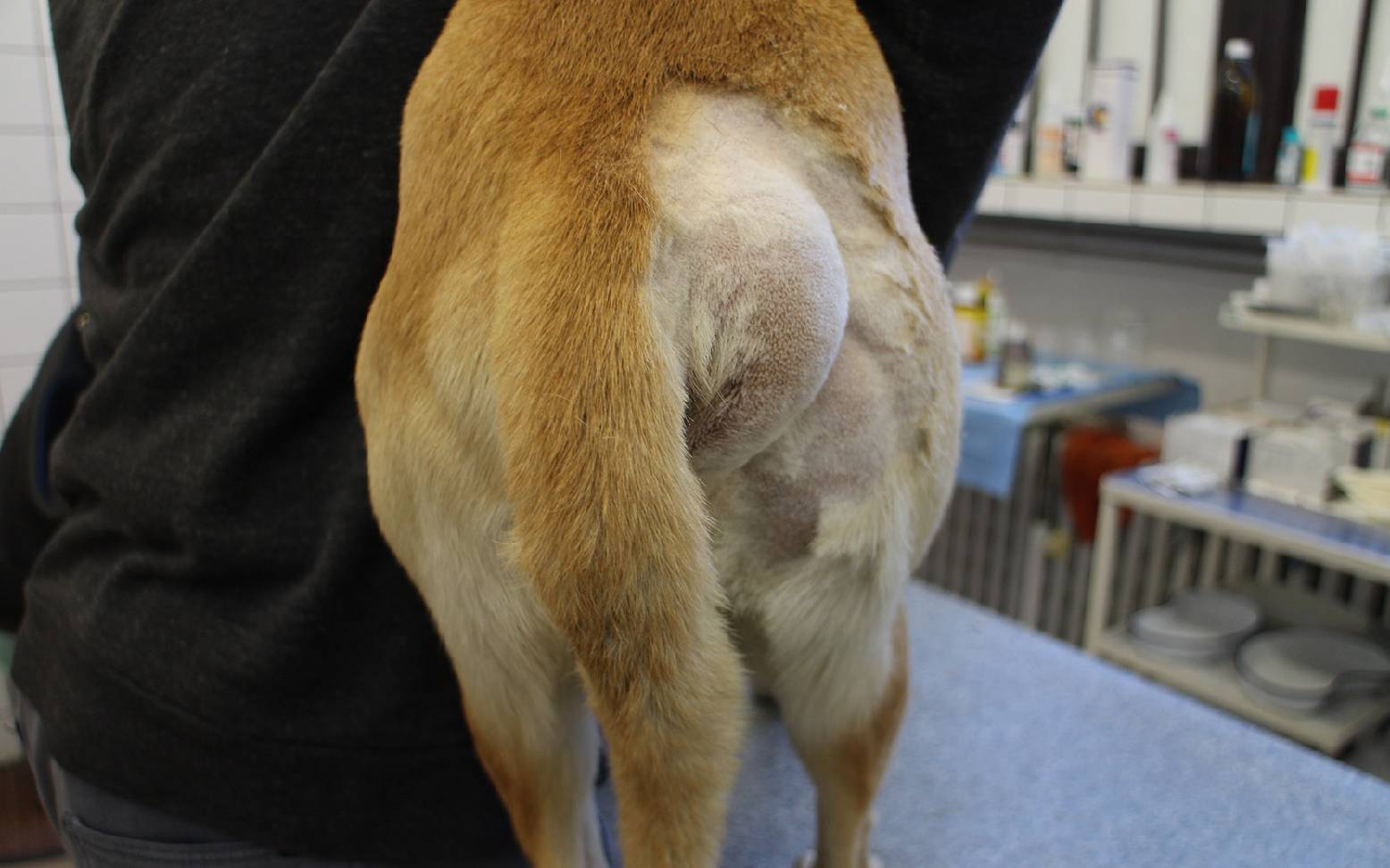
A perineal hernia happens when pelvic muscles weaken and allow abdominal contents to bulge into the area beside the anus. It is seen most often in older intact male dogs, although it can happen in others.
Clues that suggest a perineal hernia
- Visible swelling near the anus (one-sided or both sides), sometimes more obvious when the dog strains
- Difficulty defecating because the rectum is displaced or compressed
- Ribbon-like stool in some cases
- Urinary issues if the bladder is involved, which is an emergency
Perineal hernias are not treated with home constipation remedies. They typically require veterinary evaluation and often surgery. If you see a new lump or bulge near your dog’s rear end along with straining, that is a same-day vet visit.
What causes obstipation?
Sometimes it is as simple as dehydration and not enough fiber. But when constipation becomes obstipation, we always think about an underlying driver.
- Dehydration (not drinking, vomiting, diarrhea, heat exposure)
- Dietary factors (bone ingestion, very low moisture diets, abrupt diet change)
- Medications (especially opioids after surgery, some antihistamines, and other drugs that slow gut motility)
- Pain (arthritis, hip pain, back pain) that makes a dog reluctant to posture and push
- Pelvic canal narrowing after trauma or old fractures
- Neurologic disease affecting the colon and rectum
- Prostate enlargement in intact male dogs
- Masses in or near the colon or rectum
- Megacolon (a chronically enlarged, poorly contracting colon) in some dogs
On the way to the vet
If you suspect obstipation and your dog is uncomfortable, here are safe, helpful steps that do not interfere with emergency care:
- Stop giving home remedies, especially oils, laxatives, or enemas unless your vet specifically instructed you for your dog.
- Prevent further ingestion of bones, chews, toys, or litter.
- Offer water, but do not force it. If your dog is vomiting, remove food and water until a vet advises otherwise.
- Keep your dog calm and avoid long walks. Straining harder does not fix a blockage.
- Call ahead so the clinic can prepare, especially if your dog is vomiting or in visible pain.
If your dog is actively vomiting, has a swollen belly, collapses, or seems distressed, treat it like an emergency transport.
Aftercare and prevention
When a dog has been deobstipated, the goal is to prevent a repeat and figure out the reason it happened.
Prevention steps that often help
- Increase moisture in the diet. Wet food or adding water or broth to meals can help some dogs.
- Vet-guided fiber changes. Some dogs benefit from added soluble fiber, while others need different strategies. Too much fiber can worsen some cases, so make changes with guidance.
- Regular exercise appropriate for your dog’s age and joints.
- Pain management if arthritis or back pain is contributing.
- Medication review with your vet if constipation began after a new prescription.
- Scheduled potty breaks, especially for dogs that tend to “hold it.”
If your dog has repeated episodes, ask your veterinarian about investigating for pelvic narrowing, prostate disease, neurologic problems, or chronic motility disorders.
FAQ
How long can a dog go without pooping before it is an emergency?
Time alone is not the best measure. Some dogs skip a day and feel fine. The emergency pattern is unproductive straining, pain, vomiting, a firm belly, or severe lethargy. If your dog is trying and cannot pass stool, that is urgent even if it has only been hours.
My dog is squatting a lot. Could it be a urinary problem instead of constipation?
Yes. Dogs with urinary obstruction can strain and produce little to no urine, and owners may think they are constipated. This is especially critical in male dogs. If you are not sure whether your dog is trying to pee or poop, treat it as an emergency and get seen.
Will pumpkin fix obstipation?
Pumpkin can help some dogs with mild constipation because of its fiber and moisture. But if the colon is packed and your dog is passing nothing, pumpkin is unlikely to solve it quickly and can delay needed treatment.
Can I use a human enema product if the pet store is closed?
No. Some human enemas are dangerous for dogs, and even “safer” options can injure the rectum if used incorrectly. In suspected obstipation, veterinary care is the safer choice.
The takeaway
Mild constipation can sometimes be managed with vet-approved, gentle changes at home. Obstipation is different. If your dog is straining and passing nothing, acting painful, vomiting, or seems unwell, get help.
The kindest thing you can do is move from guessing to diagnosis. Once your veterinarian knows what is actually happening, they can relieve the impaction safely and help prevent the next one.