If you have ever looked down at your dog’s poop and thought, “Was that a worm?”, you are not alone. As a veterinary assistant, I can tell you this happens all the time, and it can feel alarming. The good news is that most intestinal parasites are treatable. The tricky part is that different parasites can look similar, and some are too small to see at all.
This guide will help you recognize common patterns: what you might see in stool or vomit, the symptoms that tend to travel together, and what your next steps should be. I also want to be very clear up front: photos are not a reliable way to diagnose worms. A fecal test at your vet is usually the most reliable route to the right treatment, and some parasites (like Giardia) may need specific tests or even repeat testing.

Intestinal worms vs heartworm
When people search “types of worms in dogs,” they usually mean intestinal parasites that may show up in poop, like roundworms, hookworms, whipworms, and tapeworms.
Heartworm disease is different. Adult heartworms live in the heart and pulmonary vessels. You typically will not see heartworms in stool. Heartworm is diagnosed with a blood test and prevented with regular preventives prescribed by your veterinarian (often monthly, but some are longer-acting oral, topical, or injectable options).
If you suspect worms because your dog is coughing, getting tired easily, or having trouble exercising, that is a separate conversation to have with your veterinarian. This article stays focused on the parasites you are most likely to notice through stool changes and digestive symptoms.
What worms can look like
Here is a realistic expectation: many dogs with parasites have no visible worms in their stool. Eggs and microscopic stages are often what we detect on fecal testing.
Still, there are some classic “at home” clues:
- Spaghetti-like strands: often associated with roundworms.
- Rice-like grains stuck to fur or in stool: often associated with tapeworm segments. As they dry, they can also look like sesame seeds.
- Black, tarry stool (called melena) or stool with red blood: can be seen with several GI problems. Hookworms are one concern because they feed on blood, but melena has multiple possible causes and should be checked promptly.
- Mucus-coated stool, straining, or frequent small stools: sometimes seen with whipworms or colitis.
Also worth saying out loud: vomiting and diarrhea are not always parasites. Diet changes, toxins, infections, pancreatitis, and other GI diseases can look similar, which is another reason testing and an exam matter.

Common worms in dogs
Roundworms (Toxocara, Toxascaris)
What they are: Roundworms are extremely common, especially in puppies. Puppies can acquire them from their mother, and dogs can pick them up from contaminated environments.
What you might see:
- Long, pale, spaghetti-like worms in stool or vomit
- Sometimes nothing visible at all
Common symptoms:
- Pot-bellied look in puppies
- Diarrhea or soft stool
- Vomiting
- Dull coat, poor growth
Why it matters: Some roundworms are zoonotic, meaning they can affect humans. In people, roundworm exposure can (rarely) cause visceral or ocular larva migrans. Good hygiene and prompt treatment are important.
Hookworms (Ancylostoma, Uncinaria)
What they are: Hookworms attach to the intestinal lining and feed on blood. They can be serious, especially in young puppies, small dogs, or dogs that are already medically fragile.
What you might see:
- Often no visible worms
- Bloody diarrhea in some cases
- Less commonly, black tarry stool (melena), which warrants prompt veterinary assessment
Common symptoms:
- Pale gums, weakness, low energy
- Diarrhea
- Weight loss
Why it matters: Hookworms can cause anemia. They can also penetrate skin in people (cutaneous larva migrans), which is one reason picking up stool promptly matters.
Whipworms (Trichuris vulpis)
What they are: Whipworms live in the large intestine. They can be harder to diagnose because they do not shed eggs consistently.
What you might see:
- Usually no visible worms
- Stool may have mucus or streaks of blood
Common symptoms:
- Intermittent diarrhea that seems to come and go
- Straining, urgency, accidents in the house
- Weight loss over time
Why it matters: Whipworms can mimic other GI diseases. They also commonly cause false-negative fecal tests, so your veterinarian may recommend repeat testing or treatment based on history and symptoms. Treatment and environmental control are both important because eggs can persist in soil.
Tapeworms (Dipylidium, Taenia)
What they are: Tapeworms are usually acquired by swallowing an infected flea (most common) or by eating infected prey animals.
What you might see:
- Small white segments that look like rice grains in stool or stuck near the anus
- Segments may move when fresh
- Segments may dry and look like sesame seeds
Common symptoms:
- Often minimal symptoms
- Scooting or licking at the rear end (but scooting can also be anal glands, irritation, or allergies)
- Occasionally mild GI upset
Why it matters: Treating tapeworms without addressing fleas often leads to repeat infections. Flea control is part of the treatment plan.
Giardia (not a worm)
What it is: Giardia is a microscopic protozoan parasite, not a worm. It is common, especially in higher-risk settings like daycare, shelters, boarding, and dog parks.
What you might see:
- Foul-smelling, greasy, or mucus-like diarrhea
- Often no blood, but stool can vary day to day
Common symptoms:
- Intermittent diarrhea
- Gas, tummy gurgling
- Weight loss in chronic cases
Why it matters: It spreads easily in dog-dense environments. Diagnosis often requires specific testing beyond a basic fecal float, and some dogs need repeat tests because shedding can be intermittent.
Coccidia (not a worm)
What it is: Another microscopic protozoan parasite, often seen in puppies and stressed dogs.
What you might see:
- Watery diarrhea, sometimes with mucus or blood
Common symptoms:
- Diarrhea
- Dehydration, poor appetite
Why it matters: Puppies can get sick quickly from dehydration. Early vet care is smart.
Less common parasites
Depending on where you live and your dog’s lifestyle, there are other parasites that can affect dogs (including some that impact the respiratory tract). If symptoms do not fit the usual patterns or your dog is not improving, your veterinarian may recommend additional testing beyond a routine fecal screen.

Quick pattern matcher
This is not a diagnosis, but it can help you decide how urgently to call your vet and what sample to bring.
- “Rice grains” near the anus or in poop: tapeworm segments are high on the list, especially if fleas are present.
- Spaghetti-like worm in vomit: roundworms are a classic possibility, especially in puppies.
- Black, tarry stool (melena) or pale gums: hookworms are a concern, but melena can have multiple causes. Either way, this deserves prompt veterinary attention.
- Recurring mucus diarrhea that comes and goes: whipworms, Giardia, food sensitivity, or other GI disease. Testing matters here, and repeat testing is sometimes needed.
- Diarrhea after dog park or daycare: Giardia is common, but many infections look similar.
If your dog is a puppy, elderly, pregnant, very small, or immunocompromised, err on the side of calling your vet sooner. Parasites hit these dogs harder.
Why photos are not enough
I understand why people want to compare pictures online. Unfortunately, a lot of things can masquerade as worms:
- Mucus strands
- Undigested food fibers
- Grass
- String, hair, or fabric threads
- Seeds or debris that look like “rice”
Also, many intestinal parasites are diagnosed by finding eggs that are microscopic. That means a dog can have parasites even when you cannot see anything with the naked eye.
What to do next
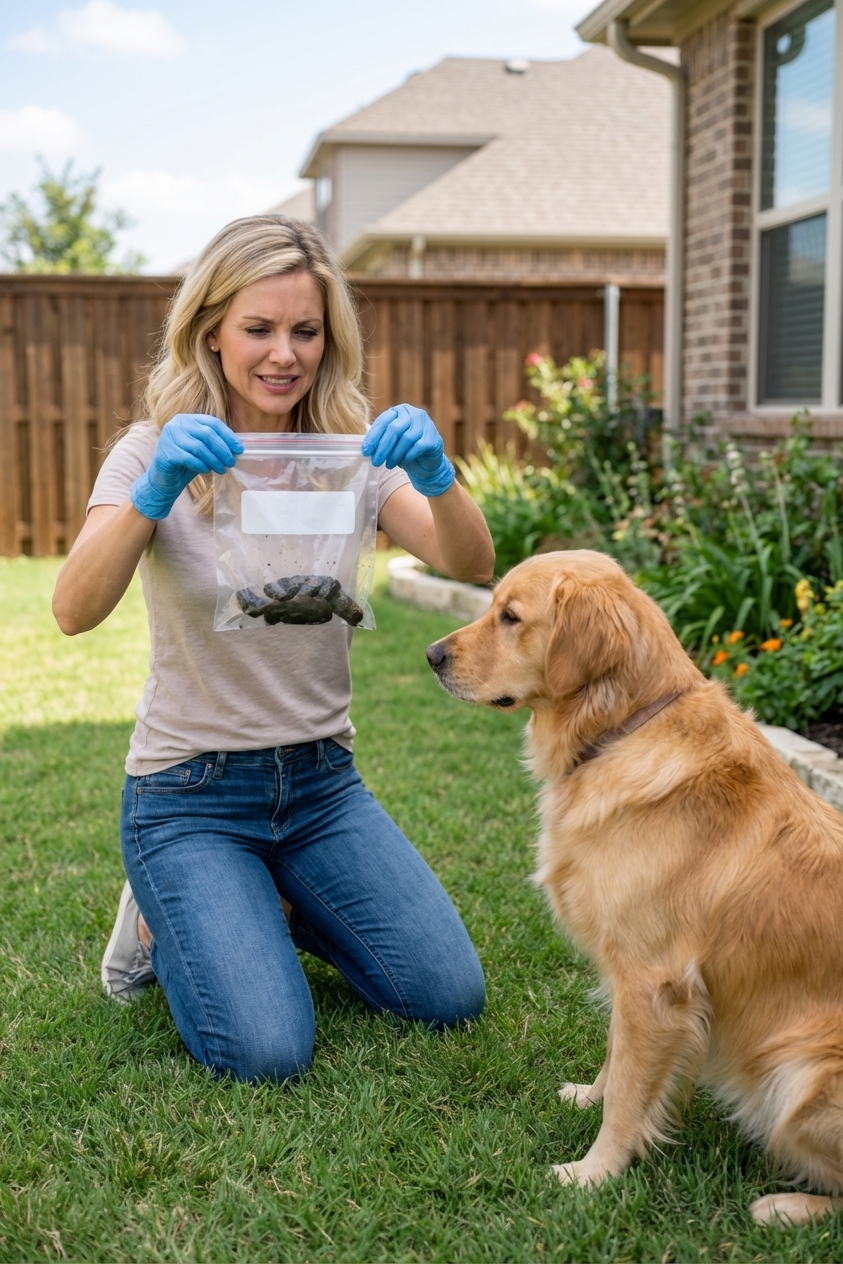
1) Collect a fresh stool sample
- Use a clean bag or container.
- Bring a sample from the same day if possible.
- If you cannot go right away, refrigerate it briefly (do not freeze) and bring it to your appointment.
2) Call your veterinarian
Ask what test they recommend. Common options include a fecal flotation, a fecal smear, and antigen tests (often used for Giardia). Some dogs need repeat testing because certain parasites shed intermittently, and whipworms are a well-known culprit for false negatives.
Also, many veterinarians routinely deworm puppies on a schedule, even if a fecal test is pending or negative, because roundworms and hookworms are so common early in life. Your vet will guide you based on age, risk, and local patterns.
3) Use the right medication
Different parasites require different medications and follow-up. For example, tapeworms typically need a medication that targets tapeworms specifically (praziquantel is a common one), while many common dewormers target roundworms and hookworms. Whipworms and protozoans like Giardia are their own category. Over-the-counter products are not always appropriate, and some can be unsafe if used incorrectly.
4) Prevent re-infection
- Pick up poop promptly in your yard and on walks.
- Wash bedding and clean high-traffic potty areas when your vet advises.
- Flea prevention is key if tapeworm is suspected.
- Regular parasite preventives may cover multiple intestinal worms, depending on the product.

When it is urgent
Please contact your veterinarian right away or seek emergency care if you notice:
- Repeated vomiting or your dog cannot keep water down
- Bloody diarrhea, black tarry stool (melena), or signs of dehydration
- Pale gums, weakness, collapse, or severe lethargy
- A puppy with diarrhea or poor appetite for more than a few hours
- Suspected intestinal blockage (string-like material, belly pain, hunched posture)
Can people catch worms from dogs?
Some parasites are zoonotic, meaning they can infect humans. The risk is higher with poor hygiene, contaminated soil, and accidental ingestion of microscopic eggs.
To be specific, roundworms are a top concern from a public-health standpoint because eggs can persist in the environment. Hookworms can cause skin irritation in people. Dipylidium tapeworm can infect people too, but it is uncommon and usually involves swallowing an infected flea (children are the classic example).
Simple, evidence-based habits help protect your family:
- Wash hands after picking up stool, gardening, or handling a puppy.
- Keep sandboxes covered.
- Prevent fleas.
- Keep dogs on vet-recommended parasite prevention and schedule routine fecal tests.
The bottom line
Parasites are common, and most are very treatable. But the best care comes from matching the parasite to the right medication, and that usually requires testing. If you think you are seeing worms or your dog has suspicious symptoms, collect a stool sample and call your veterinarian. You will feel better having a clear answer, and your dog will feel better faster.