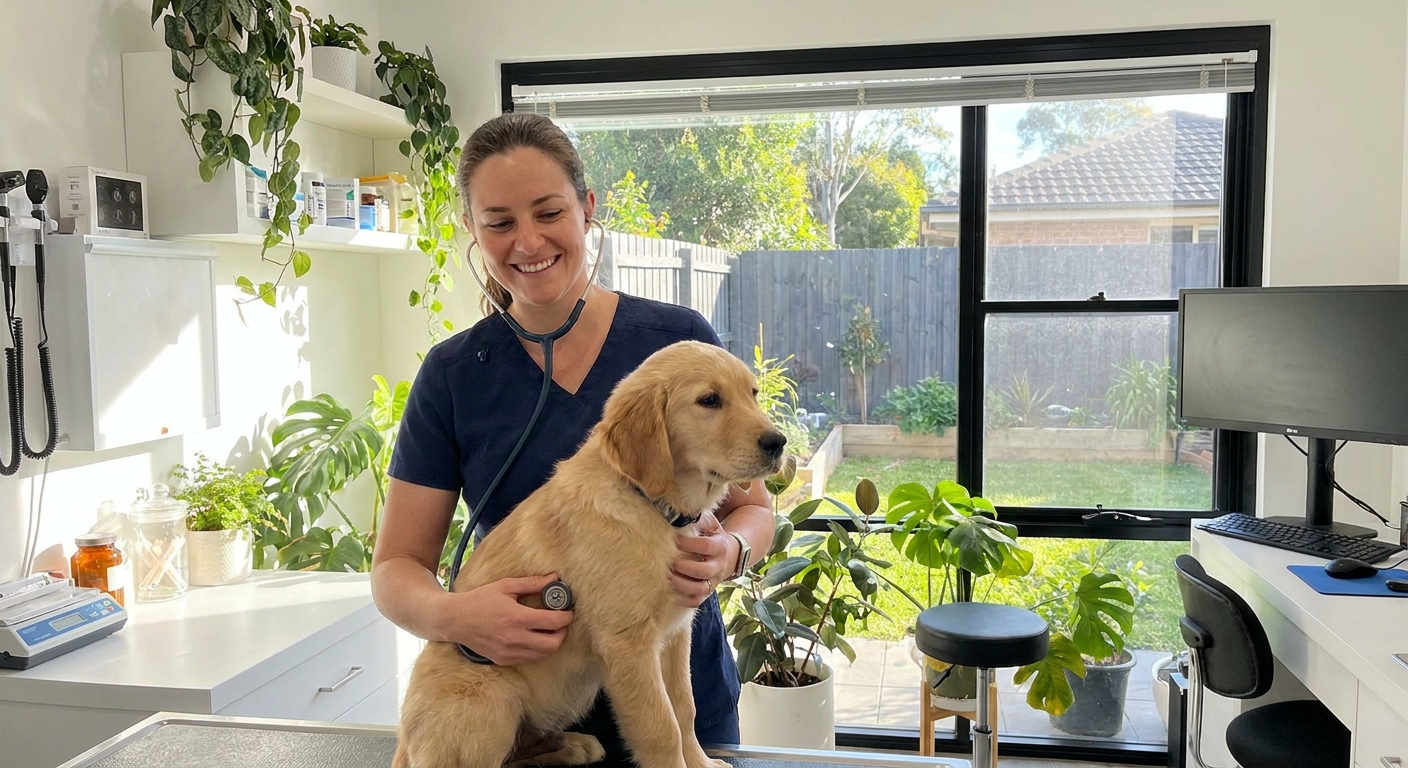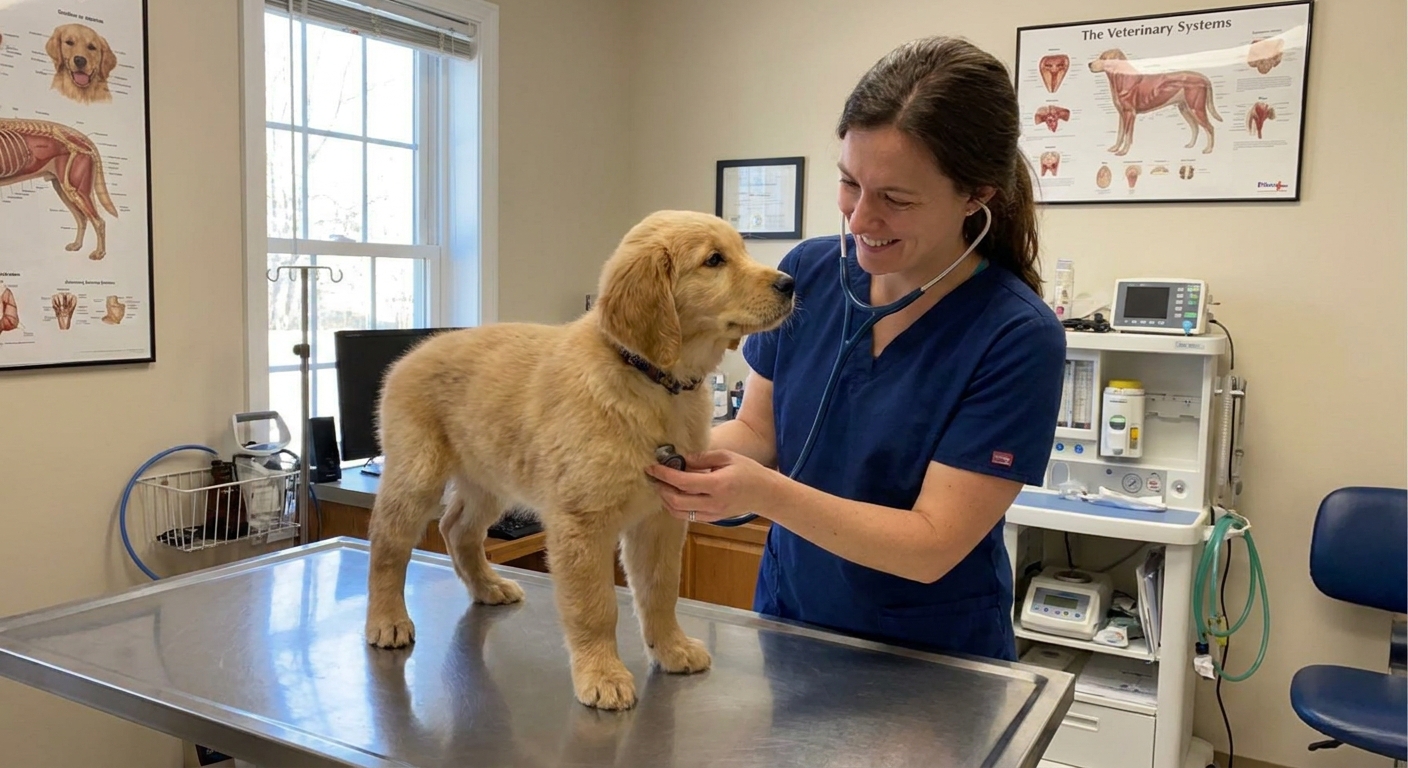
When a veterinarian tells you your puppy has a heart murmur, it can feel like the floor drops out from under you. I have been in the exam room with worried families many times, and I have also seen the relief on their faces later when the murmur fades exactly the way an innocent puppy murmur often does.
So yes, some puppy heart murmurs do go away. The key is figuring out whether your pup has an innocent (physiologic) flow murmur that is likely to resolve with growth, or a murmur that is more likely to be caused by an underlying heart problem and needs a cardiology workup.

What a heart murmur is
A heart murmur is a sound of turbulent blood flow that your vet hears with a stethoscope. It is not a diagnosis by itself. It is a clue.
That turbulence can happen for harmless reasons in puppies, or it can happen because blood is moving through the heart in an abnormal way, such as through a narrowed valve or an abnormal connection. Your veterinarian uses the murmur’s characteristics, your puppy’s age and breed, and your puppy’s overall health to decide what to do next.
One other helpful thing to know is that murmur grades are not perfectly exact. They can vary a bit between listeners and even from one visit to the next depending on heart rate, excitement, and positioning. That is why trends over time matter.
Innocent murmurs
Innocent or physiologic murmurs are common in young puppies. They can occur because puppies have:
- Higher heart rates
- Normal puppy circulation that changes as they grow
- Growth-related changes as the heart and great vessels mature
These murmurs are often described as soft and tend to be heard best over a particular area of the chest. Many are intermittent and easier to hear when a puppy is excited, wiggly, or breathing fast.
When they fade
While every dog is different, innocent flow murmurs often fade as a puppy grows. Many resolve by about 4 to 6 months, but it is not unusual for a benign-sounding murmur to persist longer in some individuals. If your veterinarian is monitoring a suspected innocent murmur, they will tell you what timeframe makes sense for your puppy and when persistence becomes a reason to escalate testing.
That timing matters because many congenital heart conditions are present from birth, but the murmur may become more obvious as weeks go by. Rechecks are how your vet tracks whether the sound is trending in the reassuring direction.

When a puppy may outgrow it
A murmur is more likely to be innocent when it is:
- Low grade (commonly grade 1 or 2 out of 6)
- Systolic (heard when the heart contracts)
- Not associated with symptoms
- Not accompanied by other abnormal findings like weak pulses or poor growth
Age matters
Very young puppies are the classic group where innocent murmurs are heard. Murmurs first detected at an early puppy visit may fade over the next few weeks as long as everything else about the puppy looks healthy.
Breed and risk
Breed can matter, but not in a simple, one-size-fits-all way. Any breed or mix can have an innocent murmur. That said, some breeds have higher rates of inherited heart disease overall, so a murmur in those breeds often earns a lower threshold for cardiology referral.
If you have a purebred puppy, ask your veterinarian whether the breed has known congenital heart risks. For designer mixes, it helps to consider both parent breeds, because inherited risk can come from either side.
When it is less likely to be innocent
As a veterinary assistant, the biggest practical takeaway I share with families is this: an innocent murmur should not make your puppy act sick. A puppy with a murmur who is growing well, playing normally, and breathing comfortably may still need monitoring, but that overall picture is reassuring.
On the other hand, these features raise concern and often justify diagnostics sooner:
- Louder murmurs (often grade 3 or higher)
- Continuous murmurs (heard throughout the heartbeat cycle)
- Diastolic murmurs (heard when the heart relaxes)
- Abnormal heart rhythm noted on exam
- Weak pulses or pulse quality that does not match the heart rate
- Poor weight gain or being the runt despite adequate food
- Exercise intolerance (tiring quickly compared to littermates)
- Fainting or collapse
- Ongoing cough or respiratory noise that does not fit a simple cold. In puppies, cough is often caused by airway infections or irritation rather than heart disease, but it is still a symptom your vet should hear about, especially if it persists or comes with fast or difficult breathing.

Recheck timing
If your veterinarian suspects an innocent murmur, they may recommend a simple, structured plan rather than immediate advanced testing.
Typical schedule
- Recheck at the next puppy visit (often 3 to 4 weeks later), especially if your puppy is still in the vaccine series.
- Repeat exam around 16 weeks (or near the end of the puppy vaccine schedule).
- Another recheck around 6 months if the murmur is still present but the puppy is thriving.
The exact timing varies based on what your vet hears and your puppy’s history. The goal is to confirm the murmur is getting softer or disappearing, not getting louder or more complex.
What to track at home
You do not need special equipment to be helpful. You can:
- Weigh your puppy weekly and watch for steady growth.
- Note energy level and whether playtime stamina improves with age.
- Watch breathing at rest. When your puppy is asleep or truly resting, breathing should be calm and easy. As a general reference, many healthy dogs sleep at under about 30 breaths per minute, but your veterinarian may give you a different cutoff for your individual puppy. If you routinely notice fast breathing at rest, tell your vet.
- Keep a simple symptom log with dates of coughing, fainting, or unusual fatigue.
When to ask for an echo
An echocardiogram (heart ultrasound) is the test that can determine whether structural heart disease is present. It is noninvasive and gives a cardiologist a real-time look at heart anatomy and blood flow. When an echo shows a structurally normal heart and your puppy is otherwise healthy, that is what supports the diagnosis of an “innocent” murmur.
Common congenital conditions a cardiologist may be checking for include patent ductus arteriosus (PDA), pulmonic stenosis, subaortic stenosis, and ventricular septal defect (VSD).
You and your veterinarian might consider referral sooner if:
- The murmur is grade 3 or higher.
- The murmur is continuous or diastolic.
- Your puppy has any symptoms like fainting, weakness, poor growth, or exercise intolerance.
- The murmur is still present at 6 months, especially if it is not clearly getting softer.
- You are planning spay or neuter surgery and your vet wants clarity about anesthesia risk.
Many puppies with soft murmurs still go through routine procedures safely, but pre-op decisions should be individualized. Sometimes the best choice is the one that helps you sleep at night. If you are losing rest over the “what if,” it is okay to ask what diagnostics would be most informative for your individual puppy.
Signs to act on now
If you see any of the following, contact your veterinarian promptly and ask how urgently your puppy should be evaluated:
- Labored breathing or breathing with an open mouth when not overheated
- Blue or gray gums
- Collapse or fainting
- Severe lethargy or sudden unwillingness to play
- Swollen belly or fluid-like distension
- Not eating plus weakness or breathing changes
If your puppy collapses, has blue gums, or struggles to breathe, treat it as an emergency and seek urgent veterinary care.

Common questions
Can excitement make it louder?
Yes. Higher heart rate and excitement can make a soft murmur easier to hear. That is one reason rechecks matter. We want to know what the murmur sounds like over time, not just on one high-energy day.
If it goes away, is my dog in the clear?
If the murmur truly disappears and your dog has no symptoms, that is very reassuring. Still, mention it at future wellness visits. Your veterinarian will keep listening and documenting.
Should I limit exercise?
For most puppies with a suspected innocent murmur who are acting normal, typical puppy play is fine. What I recommend is letting your puppy set the pace. If they tire quickly, stop and rest. Avoid forcing intense exercise, especially in heat.
Can diet or supplements make a murmur go away?
Food quality supports overall health, but a murmur caused by blood flow turbulence or a structural defect is not something supplements can “fix” on their own. If you want to add supplements, do it with your veterinarian’s guidance, especially for puppies.
A gentle takeaway
Many puppies with soft, symptom-free murmurs grow up perfectly healthy, and the murmur fades as their bodies mature. At the same time, a murmur is always worth taking seriously because the earlier a significant heart issue is identified, the more options you and your veterinarian may have.
Your best next step is simple: ask what grade the murmur is, ask when to recheck it, and ask what specific signs would change the plan. You are not overreacting by wanting clarity. You are advocating for your puppy, and that is exactly what a good pet parent does.