I have had more than a few pet parents come in worried because they found a “marble” or “little button” next to their intact male dog’s anus. It is scary, and it is also one of those situations where the location of the bump makes people immediately assume it is an anal gland (anal sac) problem. Sometimes it is. But in intact males, one common possibility is a perianal adenoma, also called a hepatoid-gland tumor.
Here is what I want you to know right away: many perianal adenomas are benign and slow-growing, but you still need a veterinary exam. Things that look similar in the same area can be painful, infected, or malignant. Also, not every hepatoid-area tumor is benign, so it is worth getting a real diagnosis.
What is a perianal adenoma?
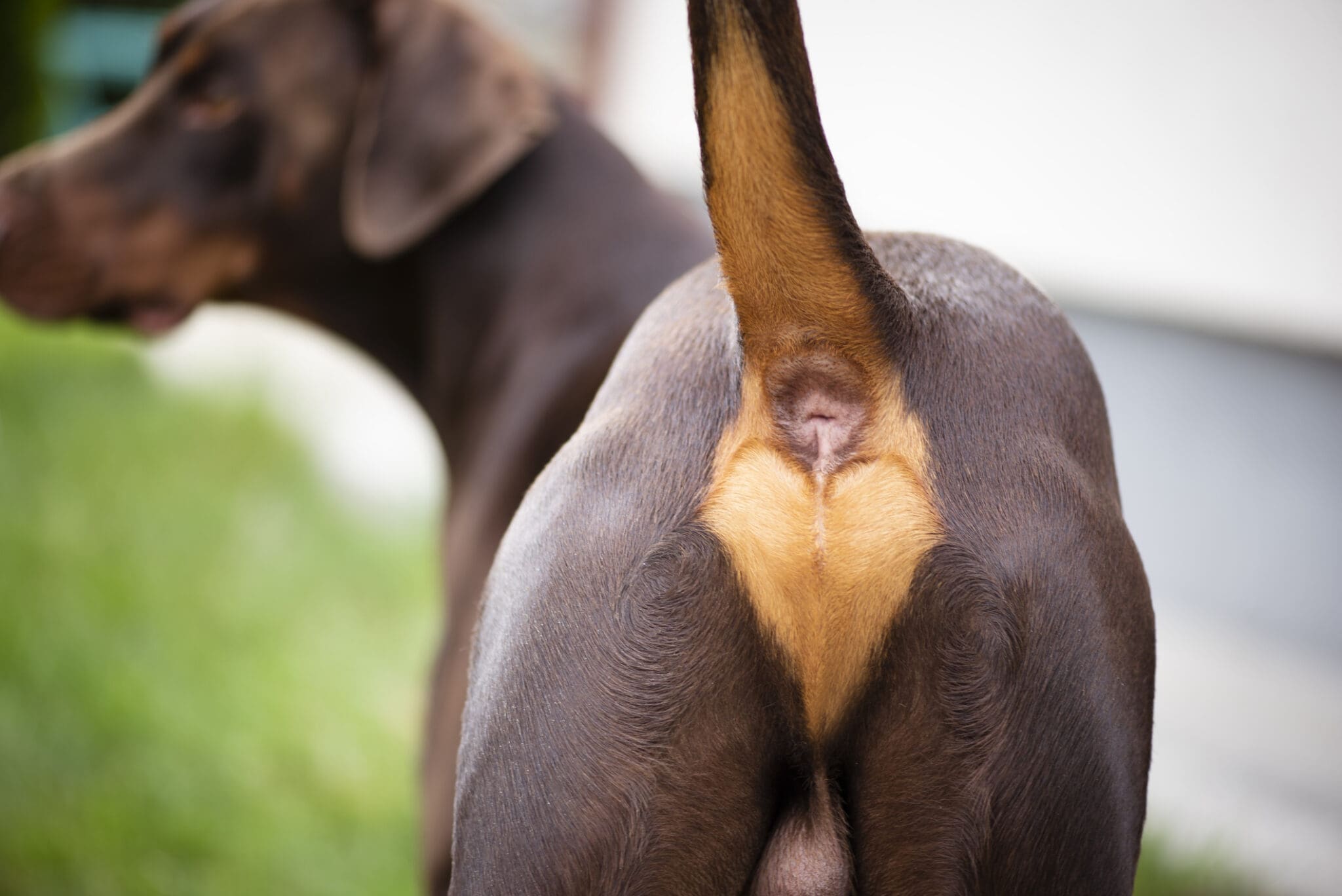
Perianal adenomas are usually benign tumors that arise from hepatoid glands, which are specialized skin glands found most densely around the anus, under the tail, and sometimes along the prepuce (sheath) in males.
These tumors are strongly influenced by male hormones (androgens, especially testosterone). That is why they show up most often in intact male dogs, especially middle-aged to older dogs. Females can develop them too, but it is less common.
What they typically look and feel like
- Slow-growing bump or bumps around the anus or under the tail
- Often firm, round, and raised, like a pea to a grape
- Can be smooth or lobulated (a bit bumpy)
- May ulcerate or bleed if rubbed, licked, or traumatized
- Often not painful at first, unless infected or irritated
Because the area gets moisture, friction, and bacteria, even a benign tumor can become inflamed, ooze, or smell if it breaks open.
Why intact males are at higher risk
Hepatoid glands respond to testosterone. In intact males, that hormone signal stays on, and the tissue can enlarge and form nodules over time.
This hormone link is a big reason neutering is part of the treatment conversation. When testosterone levels drop after neutering, many perianal adenomas shrink, stop growing, or are less likely to recur after removal.
Another practical point from the clinic side: intact older males with testosterone-driven skin changes sometimes also have benign prostatic hyperplasia (BPH). Neutering can help on both fronts, which is one reason your vet may bring it up even if the bump itself looks manageable.
Could it be an anal gland issue instead?
Yes, and this is where location gets confusing. Anal sacs sit at roughly the 4 o’clock and 8 o’clock positions around the anus, slightly under the skin. Problems like impaction or infection can create swelling that looks like a lump.
Anal sac impaction
An impacted anal sac is essentially an anal sac that is not emptying well. The sac fills and thickens, and your dog may feel pressure or itchiness.
- Common signs: scooting, licking the rear, sudden sitting, fishy smell
- What you might see: swelling more to one side, near the anal sac region
- Often uncomfortable, especially when sitting or pooping
A perianal adenoma, on the other hand, is a growth from skin glands and may appear more like a distinct button on the skin, sometimes above or beside the anus rather than directly where the anal sacs sit.
Anal sac infection or abscess
If an anal sac becomes infected, it can turn into an abscess and rupture. This is usually painful and tends to progress faster than a slow tumor.
- Common signs: sudden swelling, pain, yelping, fever, lethargy
- What you might see: red, hot skin and possibly a draining hole near the anus
This is a same-day vet situation.
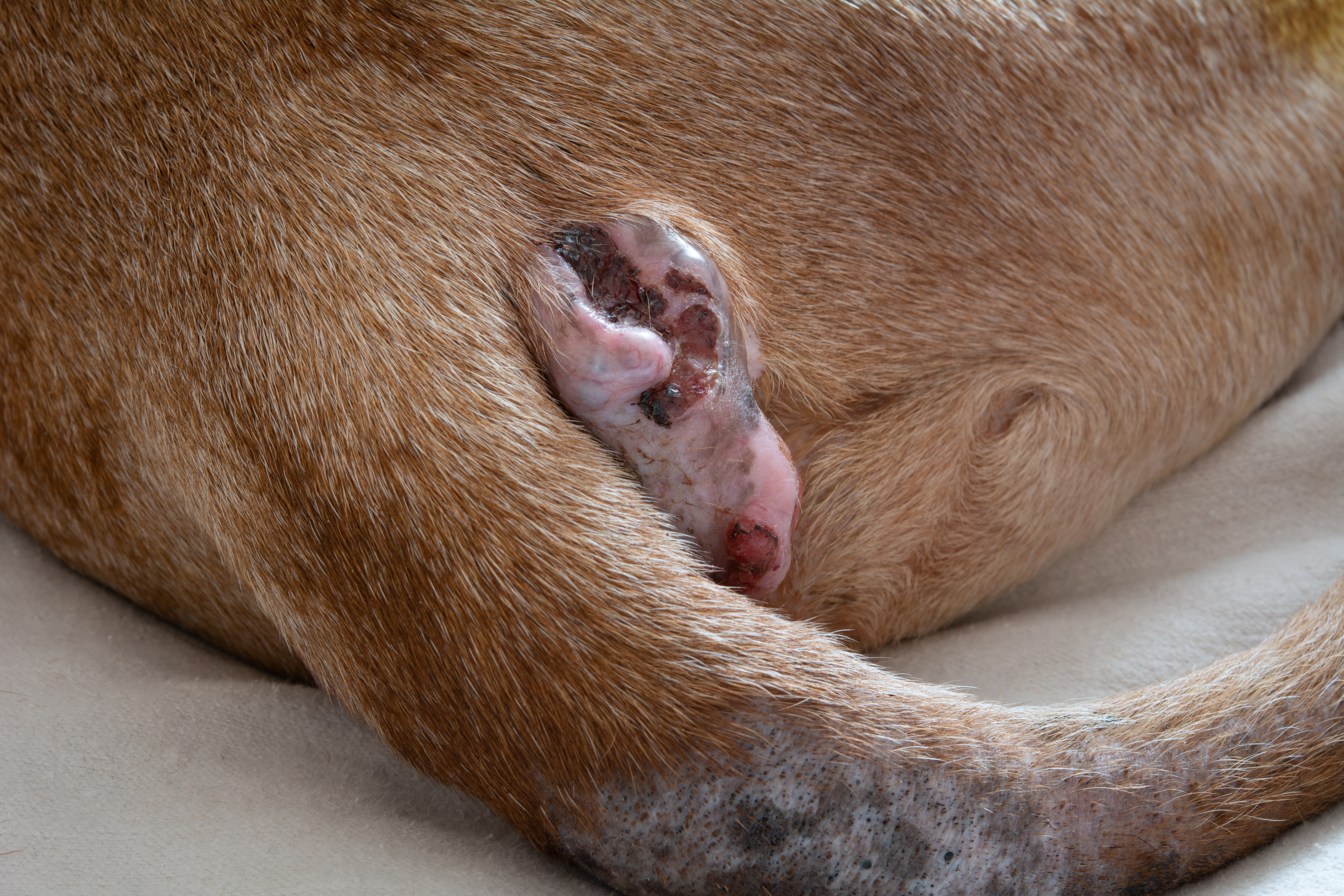
Perianal adenoma vs malignant tumors
One of the biggest misunderstandings I see is this: people hear “perianal adenoma” and assume the whole category of perianal lumps is benign. It is not.
Perianal (hepatoid) adenocarcinoma
Perianal (hepatoid) adenocarcinoma is a malignant tumor that can arise from the same general gland type as benign adenomas. It can look similar on the surface, especially early on. It may be more locally invasive, more likely to ulcerate, and more concerning on biopsy or histopathology.
Anal sac adenocarcinoma
Anal sac adenocarcinoma is another malignant tumor, but it arises from the anal sac glands rather than skin glands. It is less common than benign perianal adenomas, but it is one reason any lump in this area should be taken seriously.
Clues that can raise concern
- A mass that seems deeper and associated with the anal sac region
- More aggressive behavior such as rapid growth or firm fixation to deeper tissues
- Possible systemic effects, including high calcium levels in some dogs with anal sac adenocarcinoma, which can cause increased thirst and urination, decreased appetite, weakness, or vomiting
- Enlarged regional lymph nodes (often the medial iliac or sublumbar nodes) may be found on exam or imaging
The important takeaway is simple: you usually cannot sort this out safely at home. Your vet may recommend a needle sample (fine needle aspirate), a biopsy, and sometimes imaging.
Other look-alikes
Not every bump back there is a perianal adenoma or an anal sac problem. Other possibilities your veterinarian may keep on the list include:
- Skin tags or benign growths such as papillomas
- Cysts (including infected cysts)
- Lipomas (fatty masses), although these are less common right next to the anus
- Mast cell tumors or other skin cancers that can appear anywhere
This is another reason a sample or biopsy is so helpful. “Common” is not the same as “guaranteed.”
How it differs from perianal fistulas
Perianal fistulas are not tumors. They are painful, inflammatory tracts and ulcers around the anus. They can look like open sores, holes, or draining tunnels in the skin.
Typical signs of perianal fistulas
- Multiple draining tracts or ulcerated areas rather than a single button-like lump
- Marked pain, licking, tail held oddly, reluctance to sit
- Blood or discharge around the anus
- Straining to poop because the area hurts
Fistulas require veterinary treatment. They are miserable for dogs, and home treatment often delays relief.
What your vet may do to diagnose it
At the clinic, your vet will usually start with a careful history and a physical exam. Do not be surprised if they recommend a rectal exam. It is one of the best ways to assess the anal sacs and feel for deeper or internal involvement.
Regional lymph nodes are evaluated based on what can be felt on exam and, very often, with imaging. Some nodes are not reliably assessed with hands alone.
Common diagnostics
- Visual and hands-on exam of the skin around the anus and under the tail
- Rectal exam to assess anal sacs and deeper structures
- Fine needle aspirate (cells collected with a needle) when feasible
- Biopsy if the diagnosis is uncertain or the mass looks concerning
- Bloodwork if your dog is sick, or if anal sac adenocarcinoma is a concern
- Imaging (ultrasound, radiographs, or CT) if spread or deeper involvement is suspected
A quick note on sampling: a fine needle aspirate can sometimes be very informative, but in this region it can also come back as inflammation, blood, or not enough cells. When we need a definitive answer, biopsy and histopathology are the gold standard.
If your dog is painful, the clinic may recommend sedation for comfort and safety.
Why large masses can affect pooping
Even a benign lump can become a big quality-of-life issue if it grows in a spot that gets rubbed, infected, or physically interferes with stool passage.
- If the mass is large or positioned in a way that narrows the opening, dogs may develop straining, constipation, or ribbon-like stool.
- If it ulcerates, pooping can become painful, which can lead to stool holding and worse constipation.
This is one reason vets may recommend earlier removal rather than waiting for a bump to “declare itself.”
Treatment: why neutering is often part of the plan
Because perianal adenomas are hormone-responsive, treatment is often a combination of addressing the tumor and addressing testosterone.
Common treatment approaches
- Neutering: reduces hormone stimulation and can shrink existing adenomas and reduce recurrence
- Surgical removal: especially if the mass is ulcerated, bleeding, infected, large, or interfering with bowel movements
- Pathology testing: sending the removed tissue to confirm the diagnosis and rule out malignant look-alikes
- Managing infection: antibiotics, pain relief, and protective measures if the surface is inflamed or open
In some dogs, neutering alone may improve small adenomas. In others, surgery plus neutering is recommended for the best long-term control. Your veterinarian will tailor the plan to your dog’s size, age, overall health, and what the mass looks like.
Older dogs and anesthesia worries
This is a fair worry. Many older dogs do well with anesthesia, especially with modern monitoring and pre-anesthetic bloodwork. If your dog has heart disease, kidney issues, or other conditions, your vet can discuss risk reduction strategies and whether referral to a specialist makes sense.
Changes that need a vet promptly
I always tell families: a slow bump can wait a short appointment window, but certain changes should move you into call today territory.
- Rapid growth over days to a couple of weeks
- Bleeding, ulceration, or a mass that keeps getting traumatized
- New pain when sitting, lifting the tail, or during bowel movements
- Straining to poop, constipation, ribbon-like stool, or crying out
- Swelling that is hot, red, or suddenly larger (possible abscess)
- Drainage of pus or foul-smelling fluid
- Lethargy, fever, decreased appetite
- Increased thirst and urination or vomiting, especially if a malignant anal sac tumor is on the list
If your dog cannot poop, seems severely painful, or you see significant bleeding, treat it as urgent.
What you can do at home
It is completely okay to take a breath and get organized. A little prep helps your vet make faster decisions.
- Take clear photos in good light once a day for a couple of days to document change
- Prevent licking with an e-collar or recovery cone if the area is irritated
- Keep the area clean and dry using a soft, damp cloth to gently wipe away debris, then pat dry
- Do not squeeze the lump and do not attempt anal sac expression if there is a visible mass or pain
- Track poop quality: straining, stool shape, blood, frequency
A quick safety note from the clinic side: please do not apply human creams or essential oils near the anus unless your veterinarian tells you to. Many products sting, trigger licking, or are not safe if ingested.
FAQ
Are perianal adenomas cancer?
Most perianal adenomas are benign. However, malignant tumors can occur in the same general area, including perianal (hepatoid) adenocarcinoma and anal sac adenocarcinoma. That is why sampling and, when needed, biopsy matter.
Will the bump go away after neutering?
Some small adenomas shrink after neutering because the hormone stimulation is removed. Others still need surgical removal, especially if they are large, ulcerated, infected, or causing discomfort.
Can a neutered dog get a perianal adenoma?
It is less common, but it can happen. Vets also consider other growths in that area, so a workup is still important.
Is a perianal adenoma the same thing as an anal gland problem?
No. A perianal adenoma arises from skin glands around the anus. Anal gland problems involve the anal sacs, which sit just inside and to either side of the anus. They are close neighbors, which is why confusion is so common.
The takeaway
If your intact male dog has a firm, slow-growing bump around the anus, a perianal adenoma is one reasonable possibility, and it is often manageable. The key is not guessing at home. Book a veterinary exam so your vet can separate a benign hepatoid-gland tumor from anal sac disease, painful fistulas, or malignant tumors in the same neighborhood.
You are doing the right thing by checking and asking questions. Catching changes early gives your dog the easiest path to relief.