A curious nose. A very waggy welcome.
If your dog just swallowed a peach pit, take a breath, then take action. Peach pits are a two-part problem: the pit itself can cause a blockage, and the kernel inside the pit can release cyanide if it gets chewed or cracked.
Do this right now
- Remove all peach pieces and pits from the area so there is no second bite.
- Figure out what happened: Was the pit swallowed whole, or did your dog crunch it? If you saw chewing, heard cracking, or found broken shell pieces, that matters.
- Note the basics: your dog’s weight, the time it happened, whether it was one pit or more, and whether your dog has a history of gulping objects.
- Call your vet, an emergency clinic, or a pet poison helpline for tailored advice. Tell them it was a peach pit and whether it was chewed.
If you cannot reach your regular vet quickly, call a local emergency clinic. In the US, you can also contact ASPCA Animal Poison Control or Pet Poison Helpline for guidance.
If you can safely do it, take a quick photo of the peach pit from the same fruit or any shell fragments you found. That can help a clinic judge size and risk.
Why peach pits are risky
Risk 1: Blockage
Peach pits are hard, smooth, and the wrong shape for a dog’s digestive tract. A pit can get stuck in the stomach or intestines, especially in small dogs, puppies, and enthusiastic gulpers. Even large dogs are not “safe,” because the pit can wedge in narrow turns of the intestines.
Risk 2: Cyanide risk if chewed
Inside a peach pit is a kernel that contains cyanogenic compounds (such as amygdalin/prunasin) that can release cyanide when crushed and digested. A whole, intact pit is more of an obstruction concern. A cracked pit or chewed kernel raises the toxin concern, and that is one reason vets want to know if chewing happened.
Puppy-scout rule: Whole pit: blockage risk. Chewed pit: blockage risk plus cyanide risk.
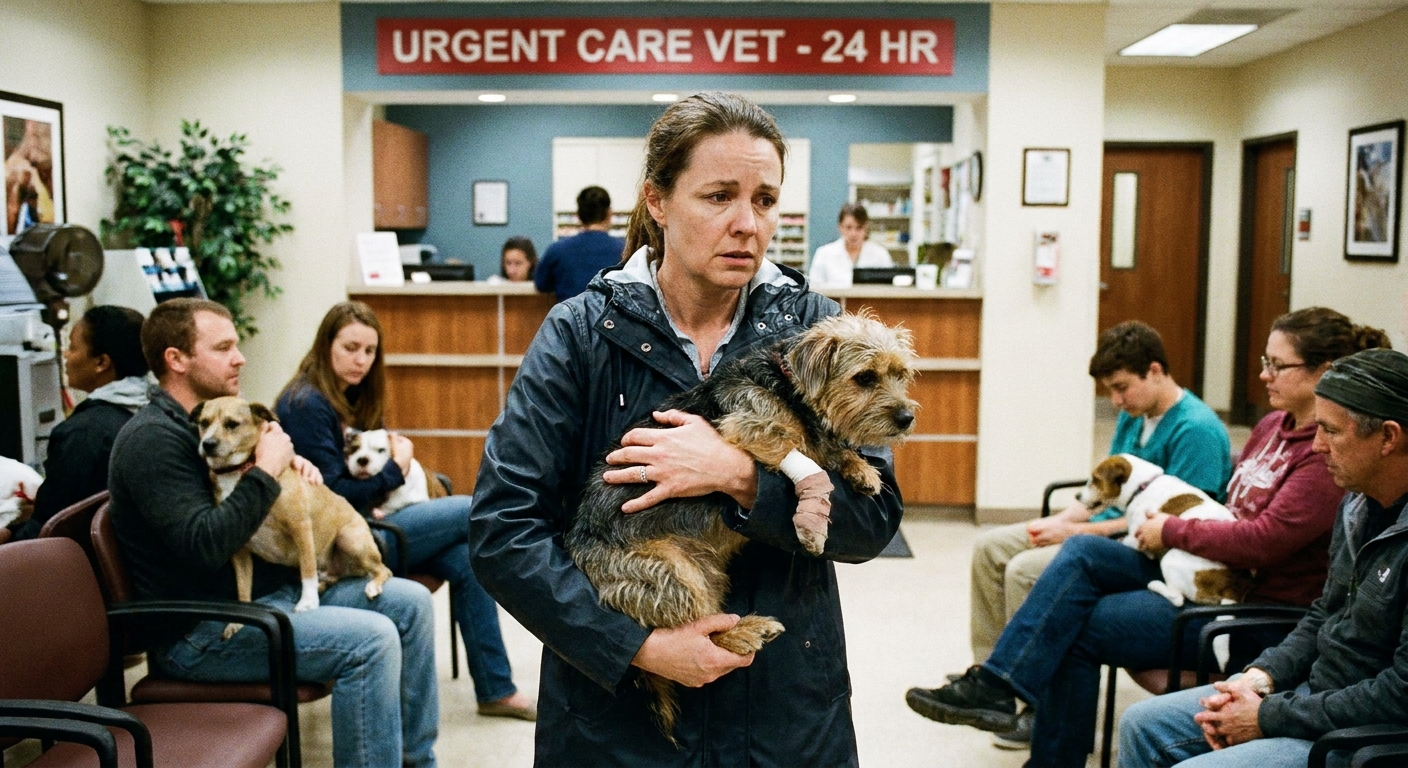
When it is an emergency
Go to an emergency vet now if any of these apply:
- Your dog is choking, gagging repeatedly, or struggling to breathe (especially higher-risk brachycephalic dogs).
- You saw heavy chewing, the pit cracked, or you found sharp shell pieces and your dog seems unwell.
- Repeated vomiting, especially vomiting that will not stop.
- Swollen or painful belly, hunched posture, prayer position, or obvious abdominal tenderness.
- Lethargy, weakness, collapse, or acting “not right.”
- Cannot keep water down or is drooling excessively.
- No stool or straining without producing stool, especially along with vomiting or pain.
- Blood in vomit or stool, or black, tarry stool.
If your dog is a small breed, a puppy, brachycephalic, or has had surgery or prior GI issues, clinics may treat this as more urgent even before symptoms show.
What not to do at home
It is very tempting to try a quick fix. With peach pits, some common home moves can backfire.
- Do not induce vomiting unless a veterinarian specifically instructs you to. Hard objects can cause choking or injure the esophagus on the way back up.
- Do not give hydrogen peroxide “just in case,” unless a veterinarian directs you to. It can cause severe stomach irritation and complications, and it is not appropriate for every situation.
- Do not give oils, butter, or “lubricants.” These do not reliably move a pit along and can trigger stomach upset or pancreatitis in some dogs.
- Do not try to make your dog swallow bread, rice, or huge meals to “cushion” the pit. Overfeeding can worsen vomiting risk and does not remove the obstruction hazard.
- Do not wait for symptoms if your vet advises immediate care. Earlier treatment is often simpler than later treatment.
What your vet may do
What a clinic does depends on your dog’s size, the pit size, whether chewing occurred, and how long ago it happened.
If it was very recent
In some cases, a veterinarian may attempt controlled vomiting or removal, but only when they judge it is safe. If the pit is still in the stomach, a vet may recommend endoscopic removal, which can sometimes avoid surgery.
If it has moved into the intestines
At that point, options can include monitoring with clear instructions, repeated exams, or imaging. If the pit obstructs the intestine, surgery may be needed.
If the pit was chewed
Your vet may focus on both the foreign body risk and cyanide risk. They may advise observation for specific neurologic or breathing changes, and they may recommend diagnostics and supportive care based on symptoms.
Chewed pits can also cause mouth and throat injuries, and sharp shell pieces can irritate or injure the esophagus and GI tract.
Clinics commonly use X-rays and sometimes ultrasound to help locate a foreign object and check for obstruction. Not every pit shows clearly on X-ray, which is another reason symptom tracking matters.
What to watch for next
A dog can look totally fine at first and then develop trouble later. Keep your eyes on:
- Appetite changes and refusing food
- Vomiting or repeated gagging or retching
- Diarrhea or no stool
- Abdominal discomfort, restlessness, or guarding the belly
- Energy level and unusual tiredness
- Drooling or lip smacking
If your veterinarian recommends home monitoring, ask exactly what “normal” eating, drinking, and stool should look like for your dog and when they want an update.

What to have ready
- Your dog’s weight, age, and breed type
- Time of ingestion and whether it was one pit or multiple
- Whether the pit was swallowed whole or chewed
- Any symptoms so far, even mild gagging or drooling
- Any medical history that matters, especially prior GI problems or surgeries
If you are headed to a clinic, bring any pit fragments you found in a sealed bag.
FAQ
My dog swallowed a peach pit whole. Will it pass?
Sometimes a pit passes, but it is not something to assume. The risk depends on your dog’s size, the pit’s size, and your dog’s GI anatomy and history. Because a blockage can become serious quickly, it is best to call your vet promptly even if your dog seems normal.
How long until blockage symptoms show up?
It can vary. Some dogs show vomiting and discomfort within hours. Others may seem fine and then worsen over a day or two as the pit moves and gets stuck. Any vomiting, belly pain, or inability to poop normally after swallowing a pit is a reason to seek care.
Is peach flesh the issue, or the pit?
The urgent concern in this scenario is the pit. Peach flesh can still upset a dog’s stomach in some cases, but the pit is the part that creates the obstruction hazard and the chewed-kernel cyanide concern.
What if my dog chewed the pit into pieces?
That raises two problems: sharp fragments can injure the mouth, throat, and GI tract, and a crushed kernel increases cyanide risk. If chewing happened, contact a vet or emergency clinic right away, even if your dog looks okay.
Bottom line
If your dog ate a peach pit, the safest plan is quick, calm triage: confirm whether it was chewed, call a professional for guidance, and watch closely for red-flag symptoms. Peach pits are small enough to be swallowed and big enough to cause big trouble, which is exactly the kind of “snack” a puppy-scout would vote to keep out of reach.