A curious nose. A very waggy welcome.
If your dog swallowed a stick, my puppy-scout brain has exactly one follow-up question: Swallowed like it went down into the throat and belly, or stuck like it is still blocking the airway?
Because those are two different emergencies. Sticks are extra tricky since they can splinter, poke, and sometimes cause problems hours or days later, even if your dog looked fine at first.

First: Choking or swallowed?
Airway emergency: stuck in the throat
This is a choking first-aid situation, and it needs immediate action and an emergency vet visit. Depending on your dog’s size and what is happening, a veterinarian may advise canine choking first aid such as back blows or abdominal thrusts.
- Struggling to breathe or noisy breathing
- Gums or tongue look pale, gray, or blue
- Pawing at the mouth, panic, sudden collapse
- Unable to vocalize normally
If you see these signs, go to an emergency vet now. If it is safe, you can quickly look in the mouth for a visible piece you can easily remove with your fingers. Do not do a deep sweep and do not push the object farther back.
On the way, keep your dog as calm as possible and do not offer food or water.
Swallowed stick: breathing looks okay
If your dog is breathing comfortably, the stick may have moved into the esophagus or stomach. But quiet breathing does not fully rule out a piece lodged in the back of the mouth, upper esophagus, or even the possibility of aspiration. That is why new coughing, wheezing, or any breathing change after a stick incident is urgent.
Even when it truly goes down, it can still be serious because wood can splinter and puncture tissue.
Why sticks are risky
Sticks are not like soft items. Wood tends to break into sharp fragments. Those fragments can:
- Lodge under the tongue or in gums and cause hidden pain
- Scratch or puncture the throat or esophagus, leading to drooling, gagging, or neck pain
- Puncture the stomach or intestines, which can cause infection in the abdomen
- Create an obstruction if a chunk is large or if multiple pieces were swallowed
- Migrate if a small splinter pierces tissue and shifts over time, sometimes showing up later as vomiting, pain, fever, or an abscess
Same-day vet signs
If your dog swallowed a stick and you notice pain, drooling, or vomiting, that is a strong same-day vet threshold. With sticks, waiting can turn a treatable injury into a bigger problem.
Go to a vet today if you see any of the following:
- Repeated vomiting, or vomiting plus lethargy
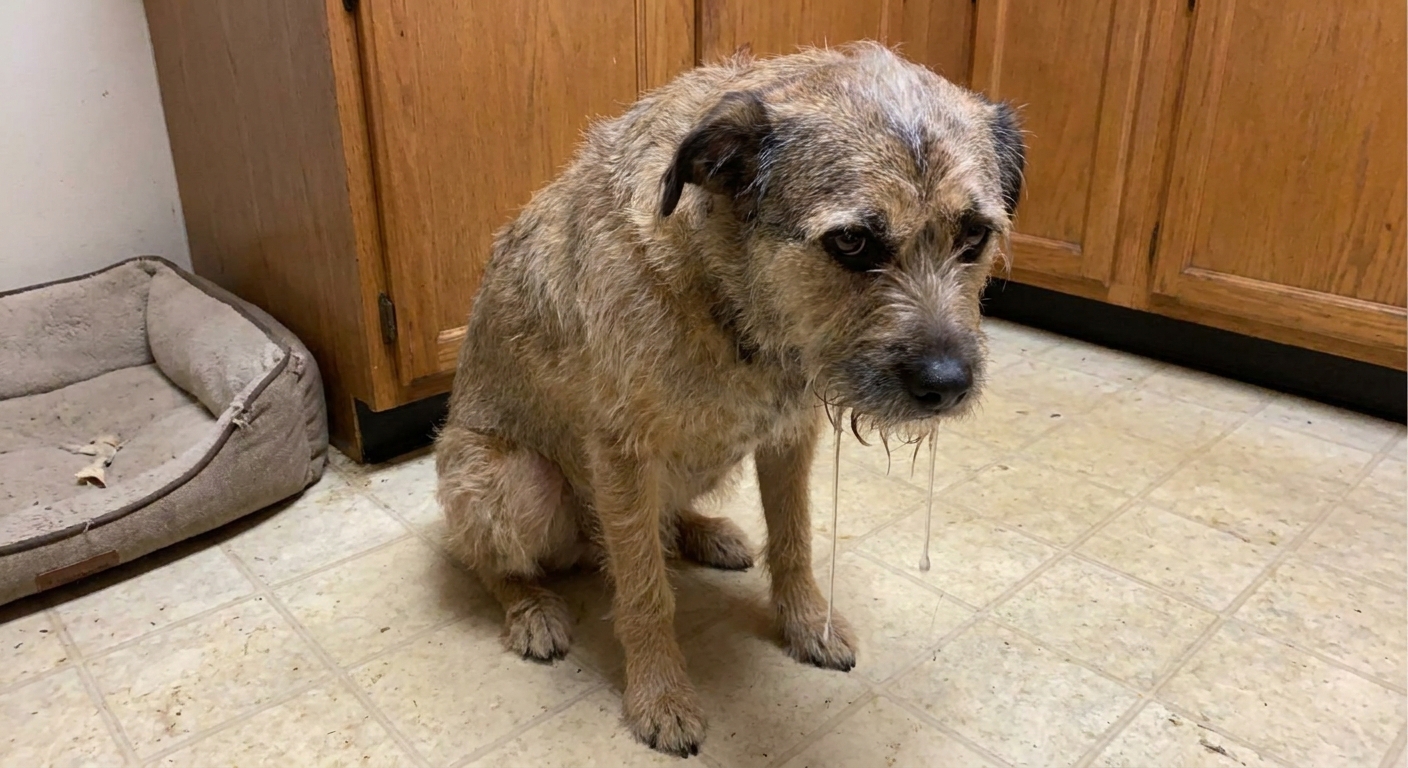
- Drooling that is heavy, sudden, or persistent
- Gagging, retching, or frequent swallowing motions
- Refusing food or water, or trouble swallowing
- Neck pain, head held low, crying when turning the head, or reluctance to move
- Pawing at the mouth, snapping when you touch the face, or acting like something hurts
- Blood from the mouth, in vomit, or black tarry stool
- Bloated belly, tense abdomen, or “prayer position” (front end down, rear end up) that can signal abdominal pain
- Straining to poop, producing little stool, or diarrhea with ongoing discomfort
- Feels feverish or unusually unwell: shivering or trembling, feels hot to the touch, unusually quiet or withdrawn (a thermometer is needed to confirm a true fever)
Puppies, small dogs, seniors, and dogs with prior GI issues should be checked sooner rather than later.
Hidden mouth splinters
One of the sneakier stick problems is a sliver wedged under the tongue or between teeth. Dogs can look mostly normal, then suddenly act sore or weird about eating.
Common clues:
- Drooling
- Bad breath that shows up fast
- Pawing at the mouth
- Chattering teeth or chewing oddly
- Reluctance to take treats
- Yelping when picking up a toy
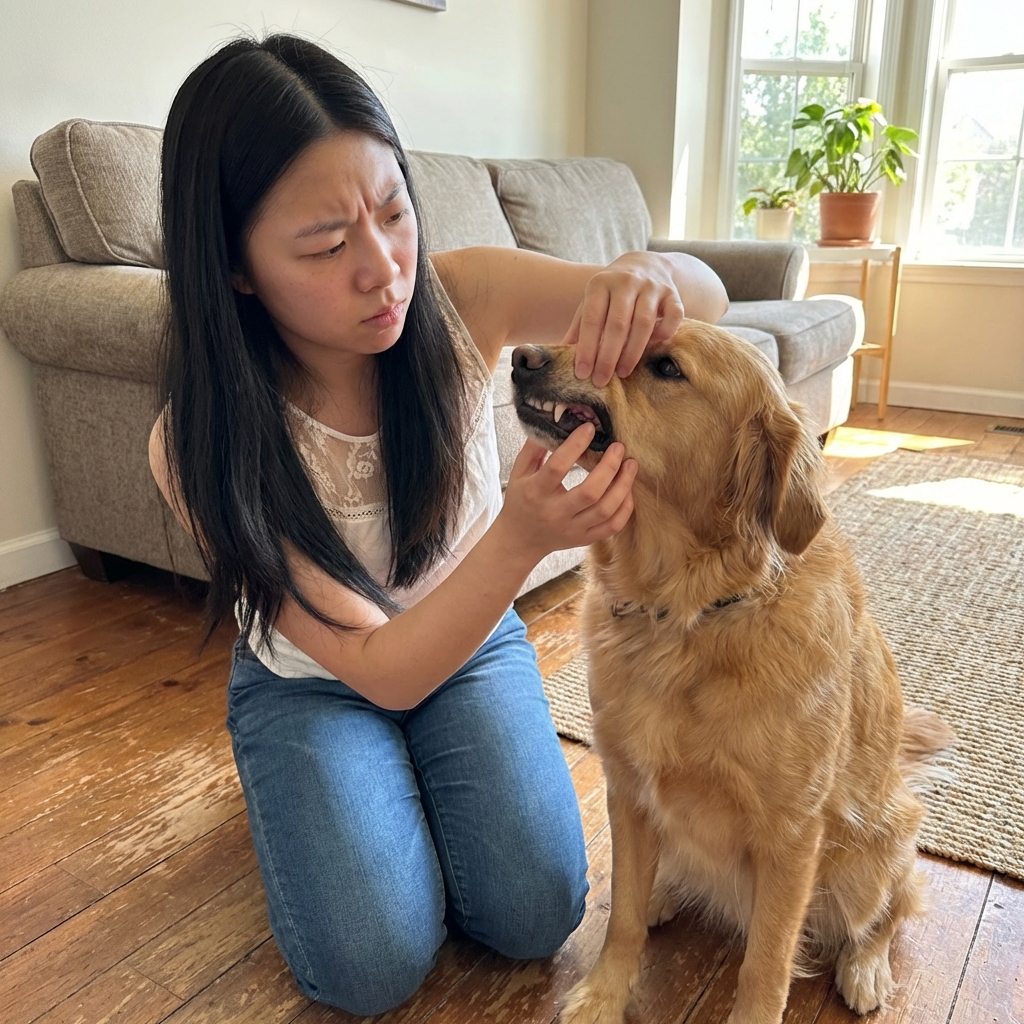
If your dog will allow it safely, you can do a gentle look:
- Use good light.
- Lift the lips and look at gums.
- If they calmly allow it, lift the tongue and glance underneath.
Do not dig around with tools and do not risk a bite. If you suspect a splinter but cannot clearly and easily remove it, a vet visit is the safer choice.
Throat pain and coughing
A stick can scrape the back of the mouth, throat, or esophagus. Sometimes the stick is gone, but the sore spot remains. Other times, a fragment is still embedded.
Signs that suggest throat or esophageal irritation include:
- Gagging or retching without bringing anything up
- Repeated swallowing
- Drooling and lip licking
- Coughing after drinking
- Neck tenderness or stiffness
Also keep an eye out for new coughing, wheezing, or noisy breathing after the incident, which can suggest irritation or aspiration. Because punctures and embedded fragments are possible, same-day vet evaluation is wise for persistent gagging, pain, drooling, or new respiratory signs.
If a stick is sticking out
If you can see a stick or wood piece protruding from your dog’s mouth or throat, it is tempting to pull it out fast. But some pieces are barbed with splinters or are embedded in delicate tissue.
As a rule, do not yank it out unless it is very loose and comes away easily with minimal movement. If your dog is distressed, bleeding, or will not let you look safely, head to an emergency vet and let the team remove it with proper lighting, sedation, and tools if needed.
Puncture risk
Sharp wood can puncture the digestive tract. That can cause inflammation, infection, and severe pain. It can also be hard to diagnose at home because dogs do not come with little warning labels.
Emergency now is the right call if your dog has:
- Severe abdominal pain, tense belly, or repeated vomiting
- Weakness, collapse, pale gums
- Bloody vomit or black tar-like stool
- Swollen abdomen or signs of shock
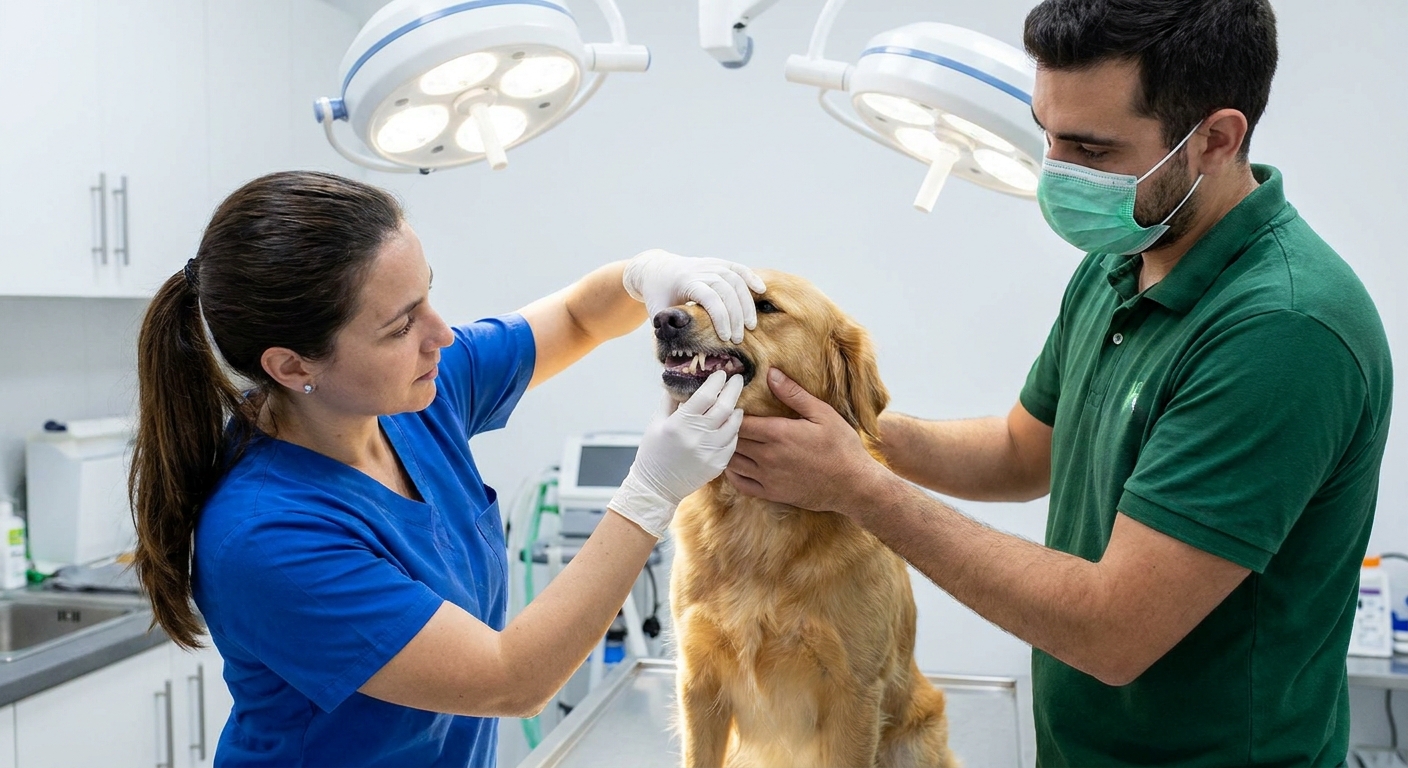
At the clinic, your veterinarian may recommend X-rays, ultrasound, bloodwork, pain control, and sometimes endoscopy or surgery. Wood is often not visible on standard X-rays, so vets may look for secondary signs, use ultrasound, recommend endoscopy, or use other imaging approaches depending on the case.
Delayed vomiting later
This is the part that makes my ears perk up.
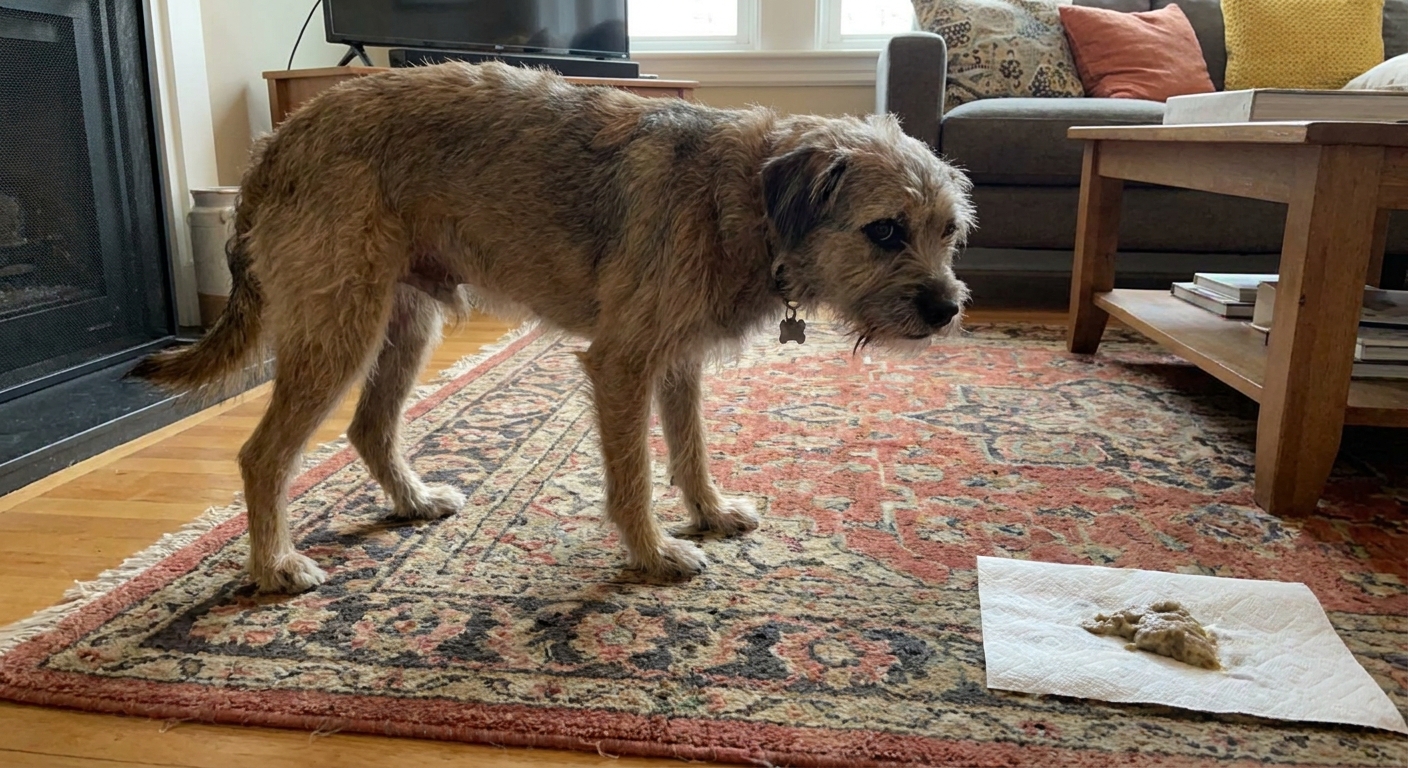
A dog may chew a stick, swallow a small piece, and seem okay. Then later, you see vomiting or discomfort. Sometimes that is because a piece caused irritation as it moved. Sometimes it is because a fragment splintered, got stuck, or punctured and shifted.
Call your vet the same day if vomiting starts within the next few days after the stick incident, especially if:
- Vomiting repeats or your dog cannot keep water down
- Your dog seems painful, lethargic, or stops eating
- There is drooling, gagging, coughing, or belly tenderness
What to do now
If your dog is breathing normally and not in obvious distress, here are practical next steps.
1) End the chewing session
Take away sticks and wood toys for now. You are trying to prevent more splinters, not win a tug-of-war.
2) Do not induce vomiting unless a vet tells you to
With sharp objects, inducing vomiting can cause additional injury on the way back up.
3) Skip “push it through” meals
It is tempting to try bread, rice, or bulky meals. But if there is a puncture, obstruction, or sharp fragment, adding bulk can worsen pain, vomiting, or blockage.
4) Offer small sips of water
If your dog is not vomiting, small amounts of water are reasonable. If your dog vomits water back up, coughs after swallowing, or seems painful when swallowing, call a vet.
5) Watch closely for 24 to 72 hours
Track:
- Appetite and energy
- Vomiting, gagging, or coughing
- Drooling
- Stool frequency and appearance
- Signs of pain when moving or being picked up
If you can estimate it safely, note the size of the stick piece and when it happened. That helps your vet.
6) Be ready with details for your vet
If you call or go in, it helps to share:
- Time since chewing or swallowing
- Approximate size and type of wood (twig, branch, mulch)
- Whether it could have been treated, painted, or from a construction scrap
- Your dog’s current medications and any prior GI history
- When they last ate and whether they have vomited or pooped since
What not to do
- Do not reach deep into your dog’s throat. You can push a fragment farther back or get bitten.
- Do not give human pain medications. Many are toxic to dogs or can worsen stomach injury.
- Do not ignore vomiting. If vomiting is repeated, forceful, or paired with lethargy, pain, drooling, or refusal to drink, treat it as urgent. If it is a single mild vomit and your dog otherwise seems normal, it is still smart to call your vet for individualized guidance because sticks are higher risk than most swallowed items.
- Do not assume “they passed it” just because they pooped. Splinters can still be present or damage can already be done.
How long to pass it?
Normal gut transit time varies by dog, diet, and what was swallowed. In general, many swallowed items move through within about 24 to 72 hours, but that range is not a safety guarantee and it can take longer.
With sticks, timing is not the main concern. The bigger concern is splintering, puncture, and partial obstruction. If your dog swallowed a small piece and stays completely normal, your vet may recommend monitoring. But if any symptoms show up, especially drooling, pain, gagging, coughing, trouble swallowing, or vomiting, treat it as urgent.
Prevent the next time
I love a good outdoor adventure. I just prefer my sticks on the ground, not in the belly.
- Swap stick fetch for safer toys like rubber fetch toys sized larger than your dog’s throat.
- Practice “drop it” using trades, not chasing.
- Supervise chewers and remove shredded pieces early.
- Choose chew options thoughtfully and ask your vet what is appropriate for your dog’s chewing style and teeth.

Quick FAQ
My dog swallowed a stick but seems fine. Should I still call the vet?
If your dog is acting completely normal, calling your vet for guidance is still a good idea, especially if you are not sure how much was swallowed. Call the same day if you notice drooling, pain, gagging, coughing, trouble swallowing, or any vomiting.
My dog is drooling after chewing a stick. Is that an emergency?
Drooling can mean mouth pain, a splinter under the tongue, nausea, or throat irritation. With a recent stick incident, same-day vet evaluation is a smart threshold, especially if drooling is heavy or your dog will not eat.
My dog started vomiting hours or days later. Could it be from the stick?
Yes. Irritation, obstruction, aspiration-related issues, or a migrating splinter can show up later. Vomiting after a stick incident deserves a same-day call, and often a same-day exam depending on severity.
When is it an emergency right now?
Go to an emergency vet now for breathing difficulty, collapse, repeated unproductive retching with distress, severe abdominal pain, significant weakness, or blood in vomit or black tar-like stool.