As a veterinary assistant here in Frisco, Texas, I have seen the same pattern again and again: a dog gets constipated or has soft stool, a well-meaning family grabs a fiber product, and nobody talks about the most important part of fiber supplements.
Water.
Psyllium husk can be a very useful tool for some dogs, but it has to be used carefully, and it is not the right choice for every situation. Let’s walk through what it is, when it helps, when it can hurt, and how it stacks up against pumpkin, Miralax, and lactulose.
What psyllium husk is
Psyllium husk is a plant-based fiber, often called a bulk-forming fiber. In human products you will see it in fiber powders and capsules. In veterinary medicine, it is sometimes used to support stool quality.
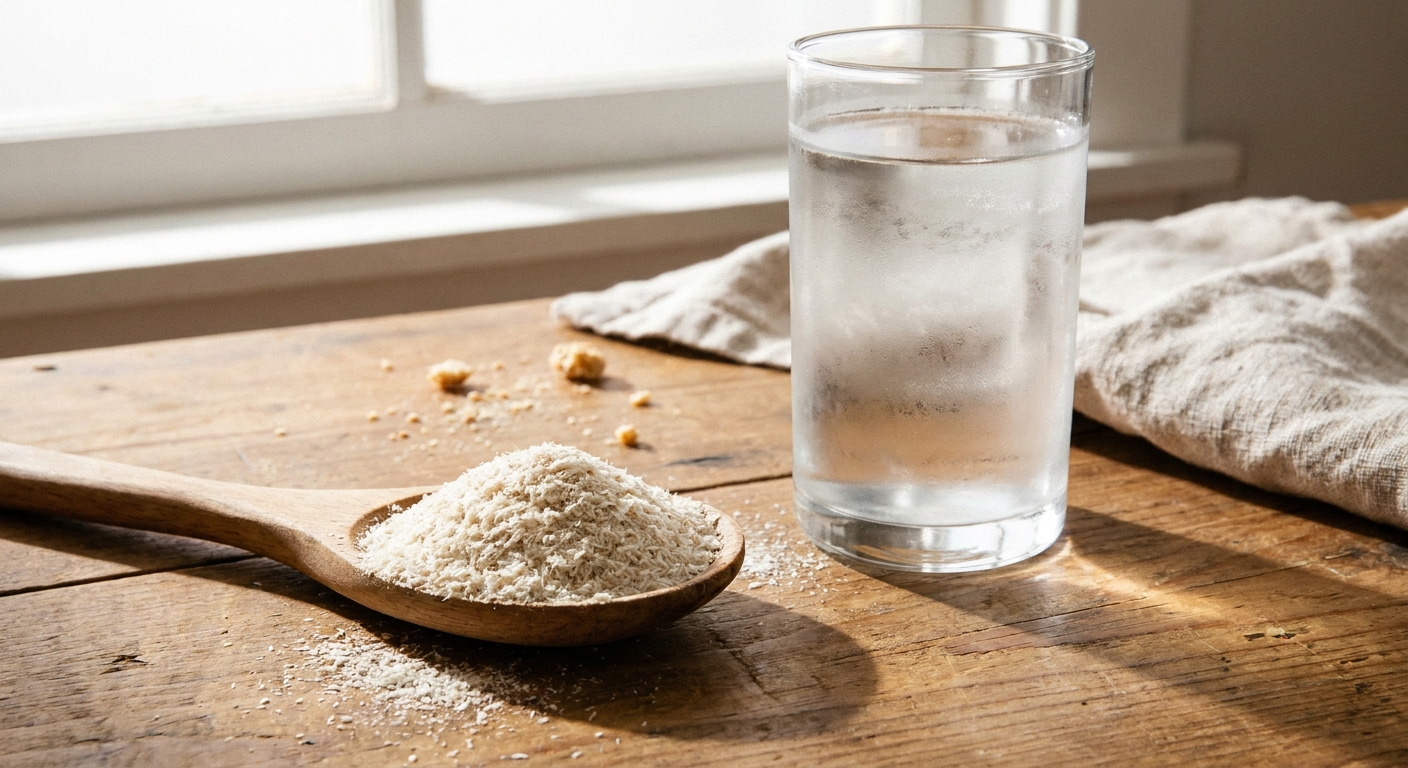
Psyllium is rich in soluble fiber, which forms a gel when it mixes with water. That gel can help in two seemingly opposite scenarios:
- Mild constipation: It can add bulk and hold moisture in the stool, helping it move through the colon.
- Mildly soft stool: It can absorb some extra water in the gut and make stool more formed.
That gel effect is exactly why psyllium can be helpful, and also why it can be risky if it is given without enough water.
Is it safe for dogs?
For many healthy dogs, psyllium husk is safe in small amounts when fully mixed with plenty of water and when the dog can reliably drink normally.
But “safe” depends on the reason your dog is having stool issues. Constipation can be caused by dehydration, diet changes, pain, mobility issues, medications, anal gland problems, intestinal blockage, prostate enlargement in intact males, neurologic disease, and more.
So I think of psyllium as a supportive tool, not a cure for the underlying cause.
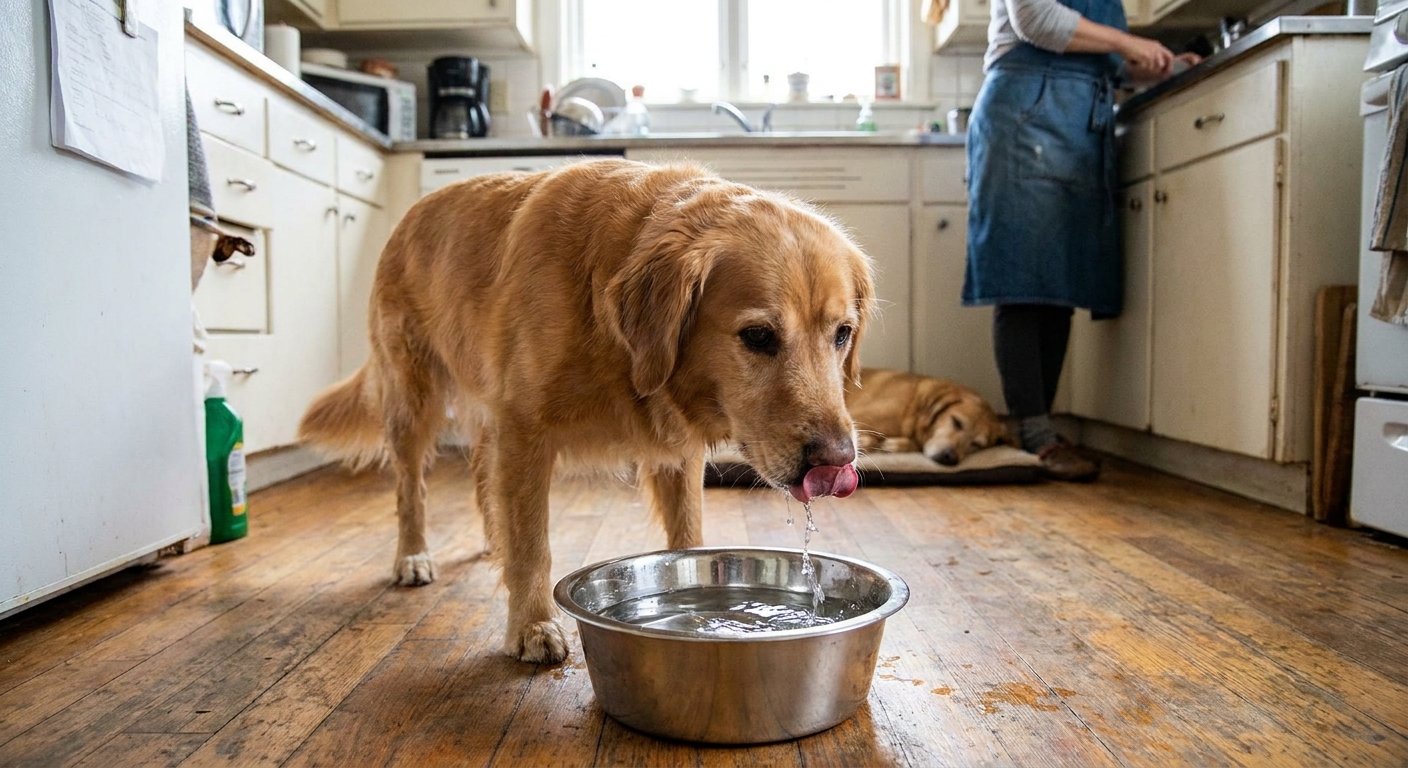
Why water matters
Psyllium swells and thickens when it contacts liquid. If there is not enough water available in the gut, that bulk can work against you.
What can go wrong
- Worsening constipation because the stool becomes bulkier but too dry to pass.
- Choking risk if a dog tries to swallow dry powder or a clump.
- Impaction risk in dogs with poor gut motility or intestinal narrowing, and it can also worsen an existing blockage if one is already present.
Practical tip: If your dog is not drinking well, seems nauseated, or is vomiting, I would not reach for psyllium at home without calling your veterinarian first.
How to give it safely
If your veterinarian recommends psyllium for your dog, the goal is simple: no dry powder, and no guessing on dose.
- Ask your vet for a starting dose, especially for small dogs or dogs with other medical conditions.
- Start low and go slow. Too much fiber too fast can backfire.
- Mix it completely into wet food or a small slurry of water before adding it to food. Avoid letting your dog inhale or gulp dry powder.
- Add extra fluids when you can, like a splash of water mixed into meals. If your vet okays it for your dog, a little low-sodium broth can help with enthusiasm.
- Stop and call your vet if your dog becomes painful, bloated, starts vomiting, or cannot pass stool.
Common side effects when psyllium does not agree with a dog include gas, cramping, and sudden stool changes. Those signs usually mean the plan needs adjusting, not that you should keep increasing fiber.
When it can help
Psyllium is most often helpful when your dog is otherwise bright, eating, and acting normal, and the stool issue is mild.
Common situations
- Mild constipation from a diet that is too low in fiber
- Intermittent soft stool where stool needs more form (after parasites and infection have been ruled out)
- Some colitis cases as part of a broader plan
- Weight management in select dogs, because fiber can increase satiety
If your dog has repeated constipation episodes, I recommend talking with your vet about the “why” behind it rather than treating each episode as a one-off.
When to avoid it
Psyllium is not a great fit for every dog. Avoid giving it unless your veterinarian specifically tells you to in these situations:
- Suspected intestinal blockage or your dog swallowed something (socks, toys, bones, corn cobs)
- Vomiting, repeated gagging, or inability to keep food down
- Significant lethargy, painful belly, hunched posture, or distress
- Dehydration or a dog that is not drinking normally
- History of megaesophagus or swallowing problems (higher choking and aspiration risk)
- Known intestinal narrowing (strictures) or severe motility issues
- Very young puppies unless directed by a vet
Medication timing
Psyllium may interfere with absorption of some oral medications and supplements by trapping them in that gel. Ask your vet or pharmacist about spacing. Many times, separating psyllium and other meds by a couple of hours is suggested, but your dog’s medication list should guide the plan.
Choosing a product
If your veterinarian recommends psyllium, these guidelines help keep things simple and safer:
- Choose plain psyllium husk with no sweeteners or flavorings.
- Check for xylitol or other sweeteners. Xylitol is dangerous for dogs, and flavored versions can include extra additives dogs do not need.
- Skip stimulant laxative blends. Some human “fiber” products include added ingredients that are not appropriate for dogs.
If you are unsure, bring the container to your vet clinic and ask the team to check the ingredient list with you.
Psyllium vs. pumpkin
Both can help stool quality, but they are not identical.
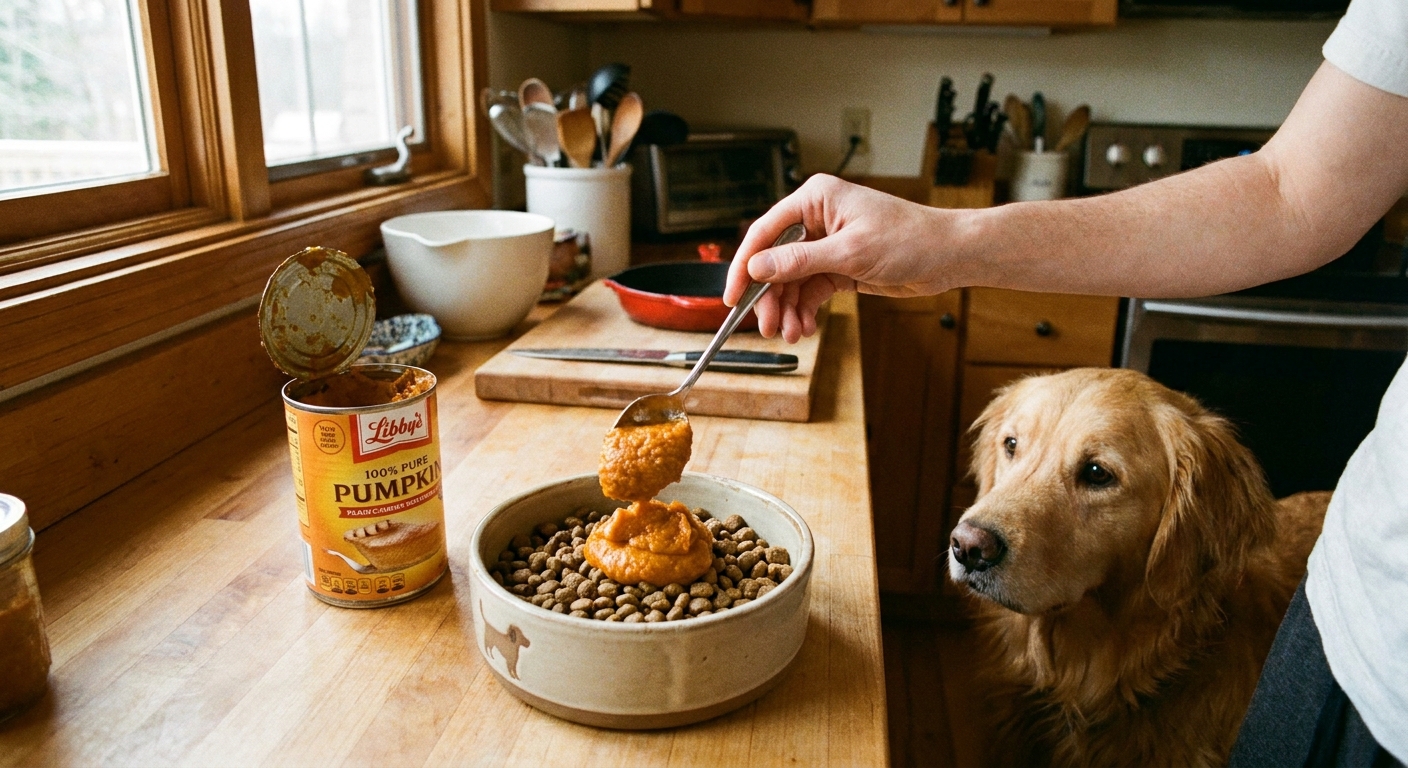
Pumpkin
- Gentle and usually well-tolerated
- Contains water and fiber, so it is less likely to dry things out when used appropriately
- Easy to feed mixed into food
Psyllium husk
- More concentrated fiber and can work well for some dogs who need a stronger fiber effect
- More likely to cause problems if water intake is not adequate or it is not mixed well
In many mild cases, I see families do well starting with pumpkin plus hydration plus extra walks. Psyllium is often the next step when a veterinarian wants more targeted fiber support.
Psyllium vs. Miralax
These work in very different ways.
Miralax basics
Miralax (polyethylene glycol 3350) is an osmotic laxative. It helps by pulling water into the colon, which softens stool. It is commonly used in veterinary medicine, but dosing and appropriateness should come from your veterinarian, especially for small dogs or dogs with other health conditions.
How it compares
- Psyllium adds bulk and forms a gel (fiber approach).
- Miralax increases water content in stool (water shifting approach).
If your dog is straining repeatedly, seems uncomfortable, or is worsening, it is time to call your vet. Home guessing can delay treatment when the issue is something more serious than simple constipation.
Psyllium vs. lactulose
Lactulose is a prescription osmotic laxative that also changes the colon’s environment in a way that can help soften stool. Many veterinarians use it for constipation that needs more consistent medical management, and in some cases beyond constipation as part of broader treatment plans.
Compared with psyllium, lactulose is:
- More medication-like and typically used under veterinary direction
- Often chosen for more significant constipation or when the vet wants predictable stool-softening
- More likely to cause gas or cramping in some dogs
Sometimes vets use fiber and lactulose together, but it should be a guided plan, not a DIY mix-and-match.
When constipation is urgent
Constipation is not always minor. Please do not wait it out if you see any of these red flags:
- Repeated straining with no stool produced
- More than 48 hours without a bowel movement (or much sooner if your dog is uncomfortable)
- Vomiting, especially with a distended or painful abdomen
- Blood in the stool or black, tarry stool
- Severe lethargy, shaking, or obvious pain
- A history of eating foreign objects, bones, or toys
- Your dog cries out, collapses, or cannot get comfortable
If your dog is straining and only producing small drops of urine, that can be a urinary emergency, not constipation. When in doubt, call an emergency clinic.
FAQ
Can I give my dog Metamucil?
Metamucil is a psyllium product, but many versions are flavored or contain additives. Dogs do best with plain psyllium husk when a vet recommends it. Always read the label and check for xylitol or other sweeteners.
Does psyllium work for diarrhea in dogs?
Sometimes it can help firm up mildly soft stool, but diarrhea has many causes, including parasites, dietary indiscretion, pancreatitis, infections, and toxin exposure. If diarrhea is severe, contains blood, includes vomiting, or lasts more than about a day, contact your veterinarian.
How fast does psyllium work?
It varies. Some dogs improve within a day, but for others it can take 24 to 48 hours, depending on the cause and hydration status. If your dog is uncomfortable or worsening, do not keep waiting at home.
Is psyllium safe long-term?
It can be used longer-term in certain cases under veterinary guidance, but long-term constipation or chronic soft stool deserves a medical workup. You want to know you are not masking pain, inflammatory bowel disease, parasites, endocrine disease, or a diet issue that needs adjusting.
Bottom line
Psyllium husk can be safe for dogs, and it can genuinely help some cases of mild constipation or mildly soft stool. The key is using it thoughtfully, with plenty of water, and not using it when there are red flags for dehydration, vomiting, or obstruction.
If you are deciding between pumpkin, psyllium, Miralax, or lactulose, remember this: the best choice depends on why your dog is having stool trouble. When you are unsure, a quick call to your vet can save your dog a lot of discomfort.