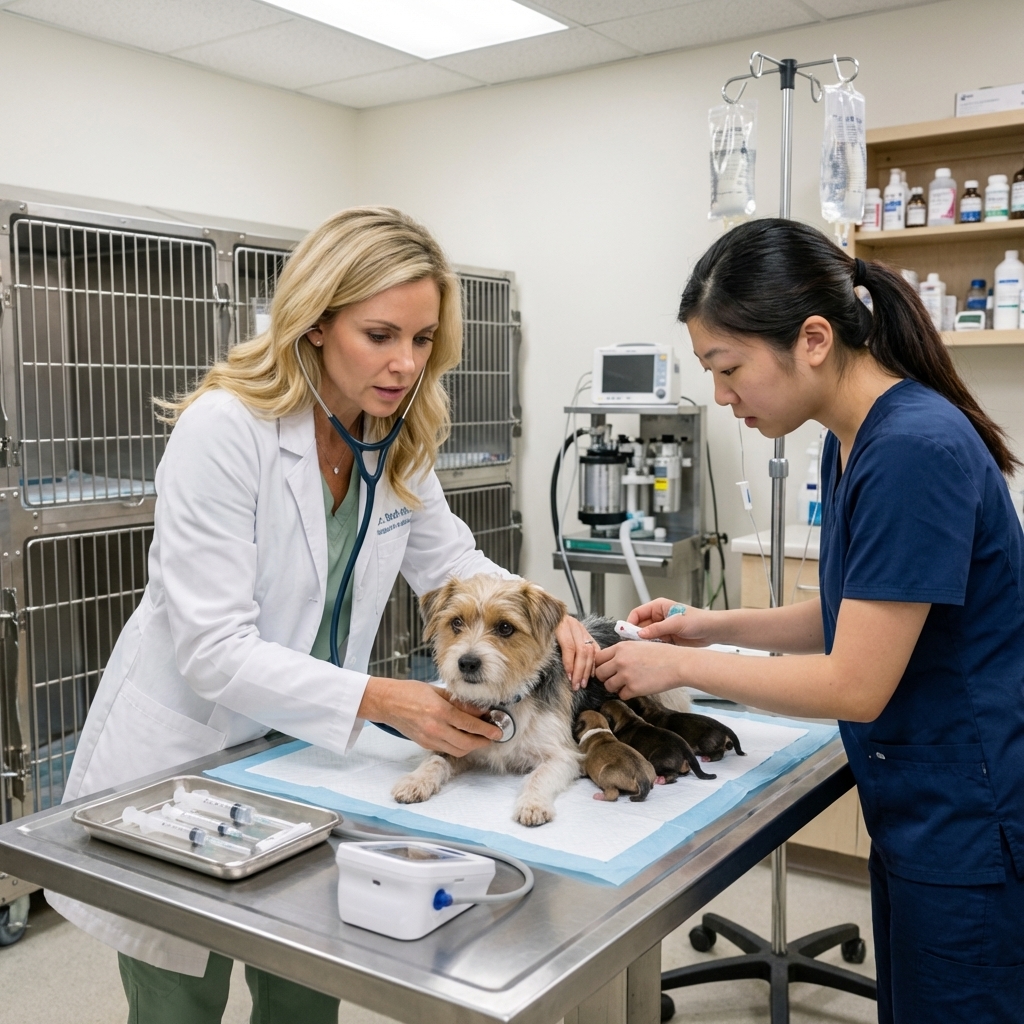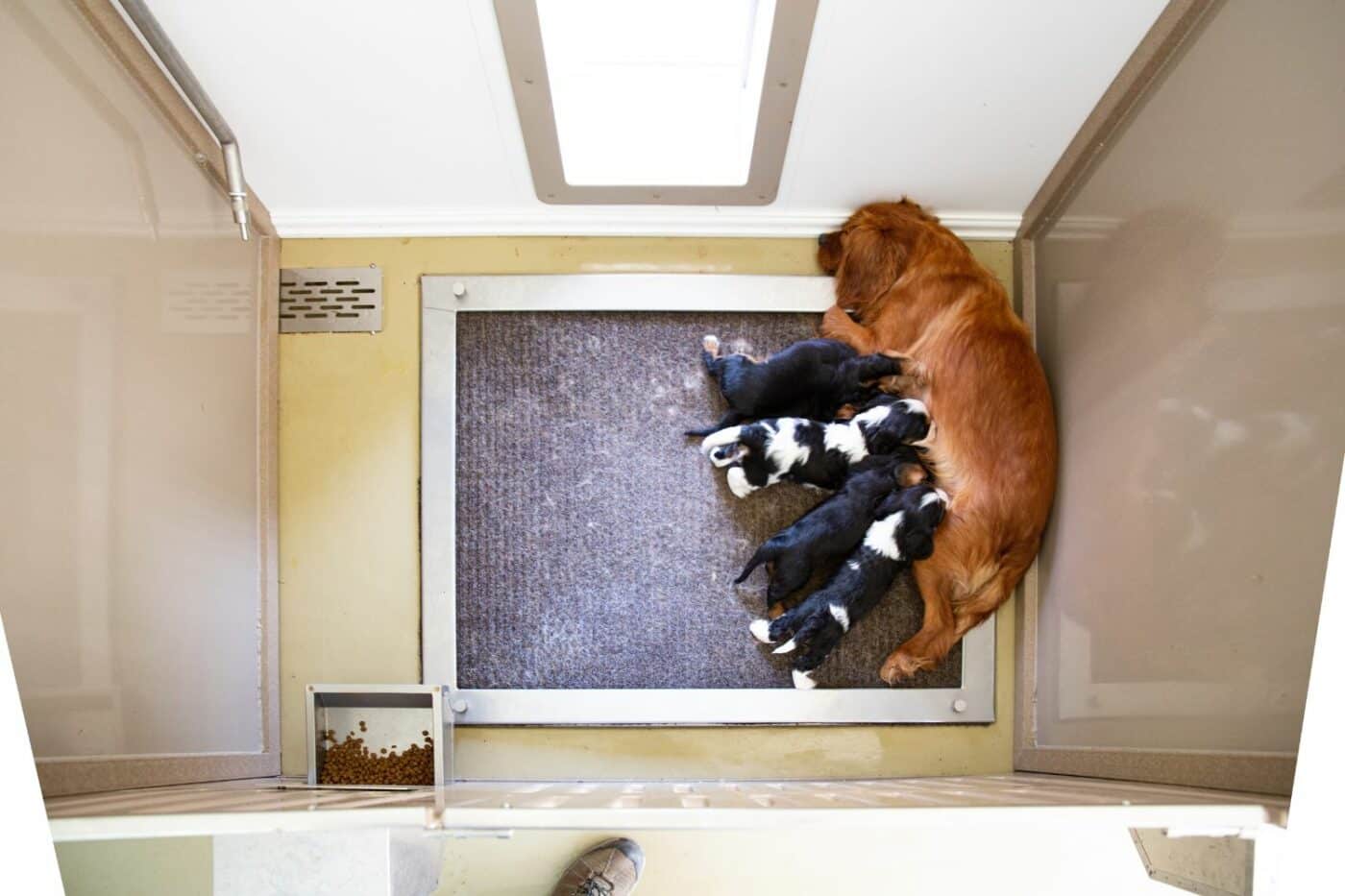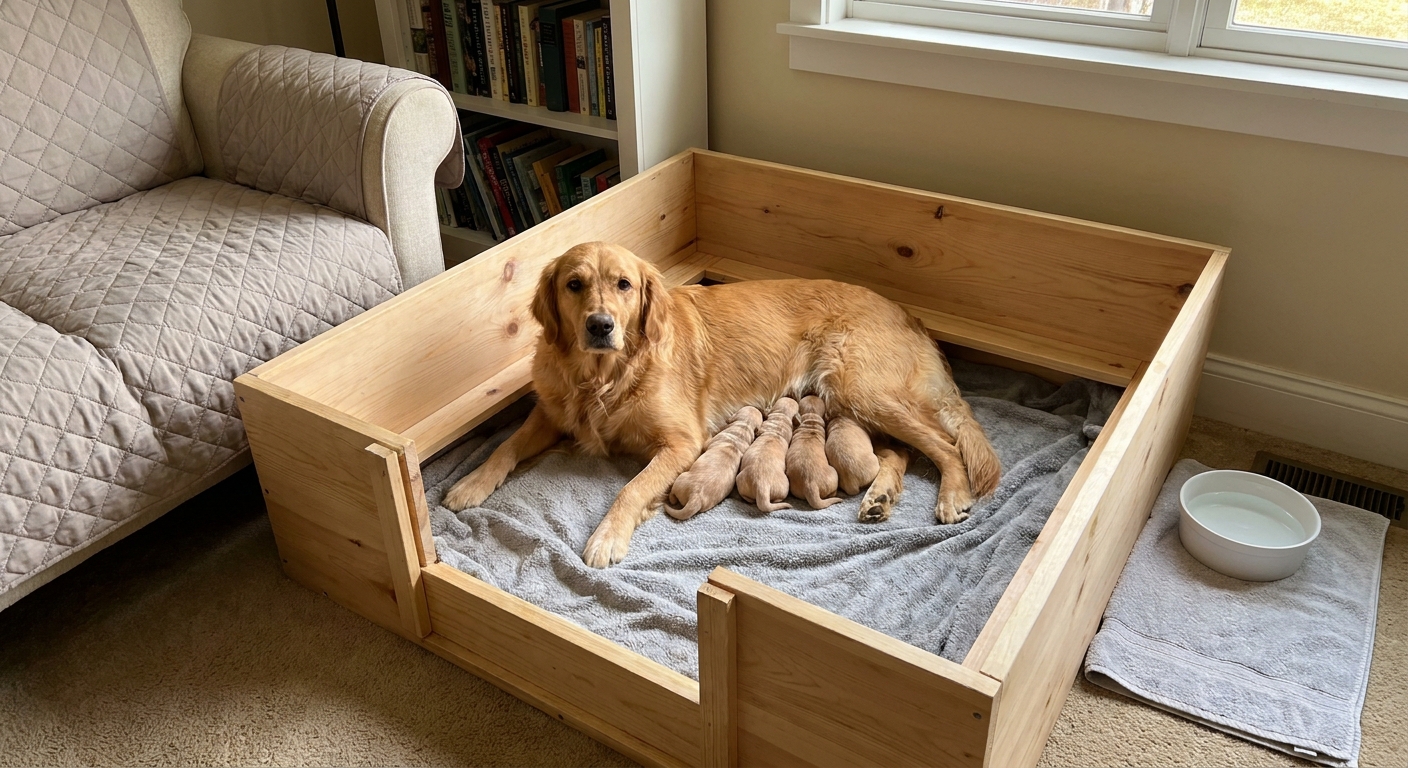
I’m Shari Shidate, a veterinary assistant in Frisco, Texas, and I can tell you this: the hours and days after a dog’s C-section can feel like a blur. You are watching mom, watching puppies, watching the incision, watching everyone breathe, latch, sleep, and wiggle. It’s a lot.
The good news is that most moms recover beautifully with the right setup and close observation. The tricky part is that C-section recovery is not the same as a routine spay recovery, because you also have a litter nursing and a uterus that just went through pregnancy.
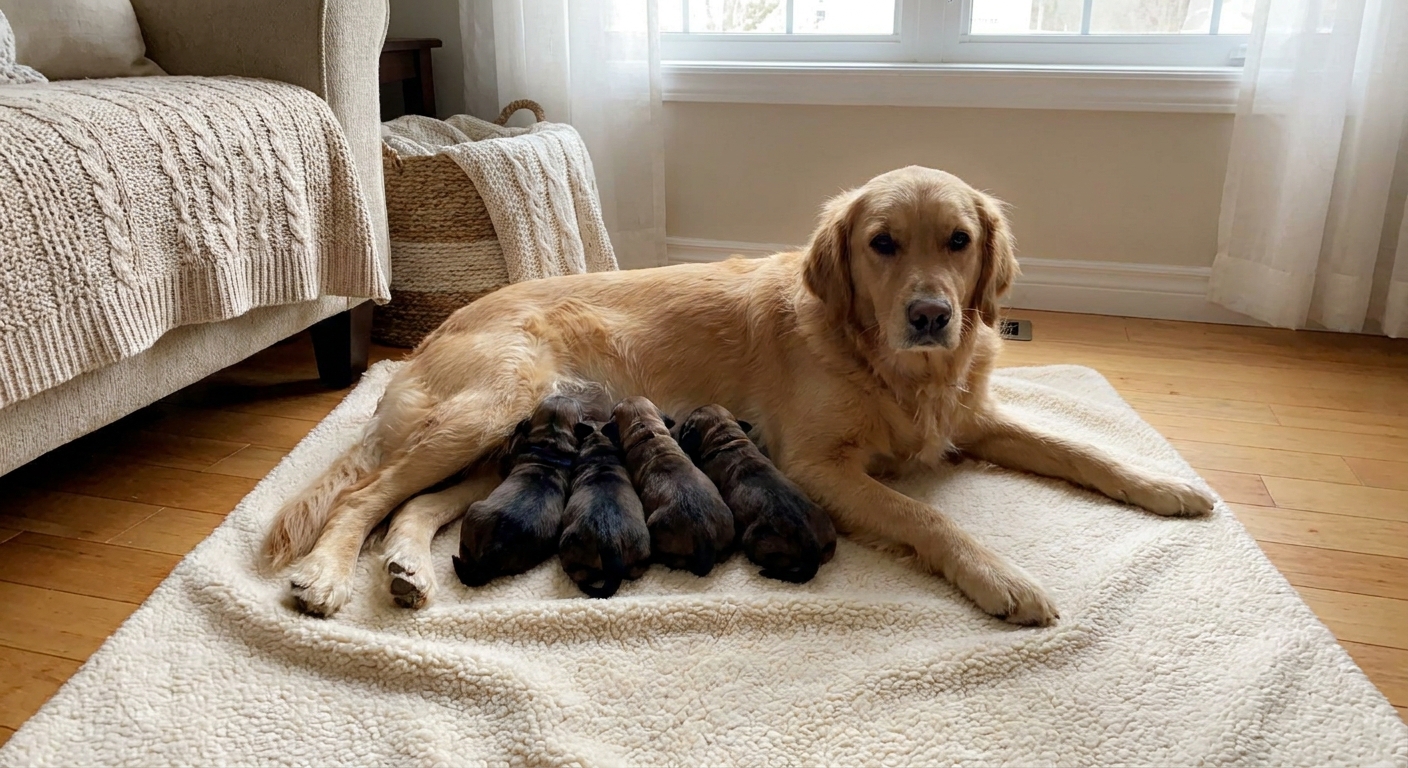
The first 24 hours: what’s normal
Right after surgery, your dog is recovering from anesthesia, abdominal surgery, and the hormonal shift of giving birth. Many moms are still groggy when they go home, and that affects how they interact with their puppies at first.
Common normal signs
- Sleepiness and unsteadiness: She may seem glassy-eyed, weak, or wobbly as the anesthesia wears off.
- Mild incision discomfort: Expect tenderness, a slower walk, and a guarded posture.
- Shivering or panting: This can be from pain, stress, temperature changes, medications, or hormone changes. Mild, short-lived shivering can be normal. Shivering that is ongoing, keeps coming back, or lasts longer than about 1 to 2 hours is a vet call.
- Light vaginal discharge: Many dogs have postpartum discharge called lochia. Reddish-brown is common. A small amount of green or black-tinged discharge can also be seen early postpartum, but it should lessen instead of persisting or becoming foul-smelling.
- Reduced appetite at first: A small meal later that day or the next morning is common. Fresh water is most important right away.
If your dog was sent home the same day, your vet should have given very specific instructions and a recheck plan. If anything feels off, trust your gut and call. Postpartum problems can escalate fast.
How C-section aftercare differs from a routine spay
This is where many families get surprised. A spay patient usually goes home to rest quietly with no puppies climbing on her abdomen and no lactation demands.
After a C-section, you are balancing four goals at once:
- Protect the incision while puppies are constantly rooting and kneading.
- Control pain without using medications that are unsafe for nursing puppies.
- Support milk production and hydration.
- Prevent postpartum complications like metritis, eclampsia, mastitis, and hemorrhage, which are not part of routine spay recovery.
Setting up a safe recovery space for mom and puppies
Your environment matters as much as medication. A calm, clean, warm setup prevents accidents and reduces stress hormones that can interfere with milk letdown.
Whelping area essentials
- Low-stress, low-traffic room: Keep visitors and other pets away for now.
- Non-slip, washable bedding: Use layers so you can peel off soiled bedding quickly.
- Warmth for puppies: Puppies cannot regulate body temperature well. Use a safe heat source that warms part of the box, not all of it, so they can crawl away if too warm. Avoid putting puppies directly on a heating pad unless your veterinarian has recommended a pet-safe setup.
- Dim lighting and quiet: Especially during the first couple of days.
- Easy access for you: You will be checking latches, checking the incision, and weighing puppies.
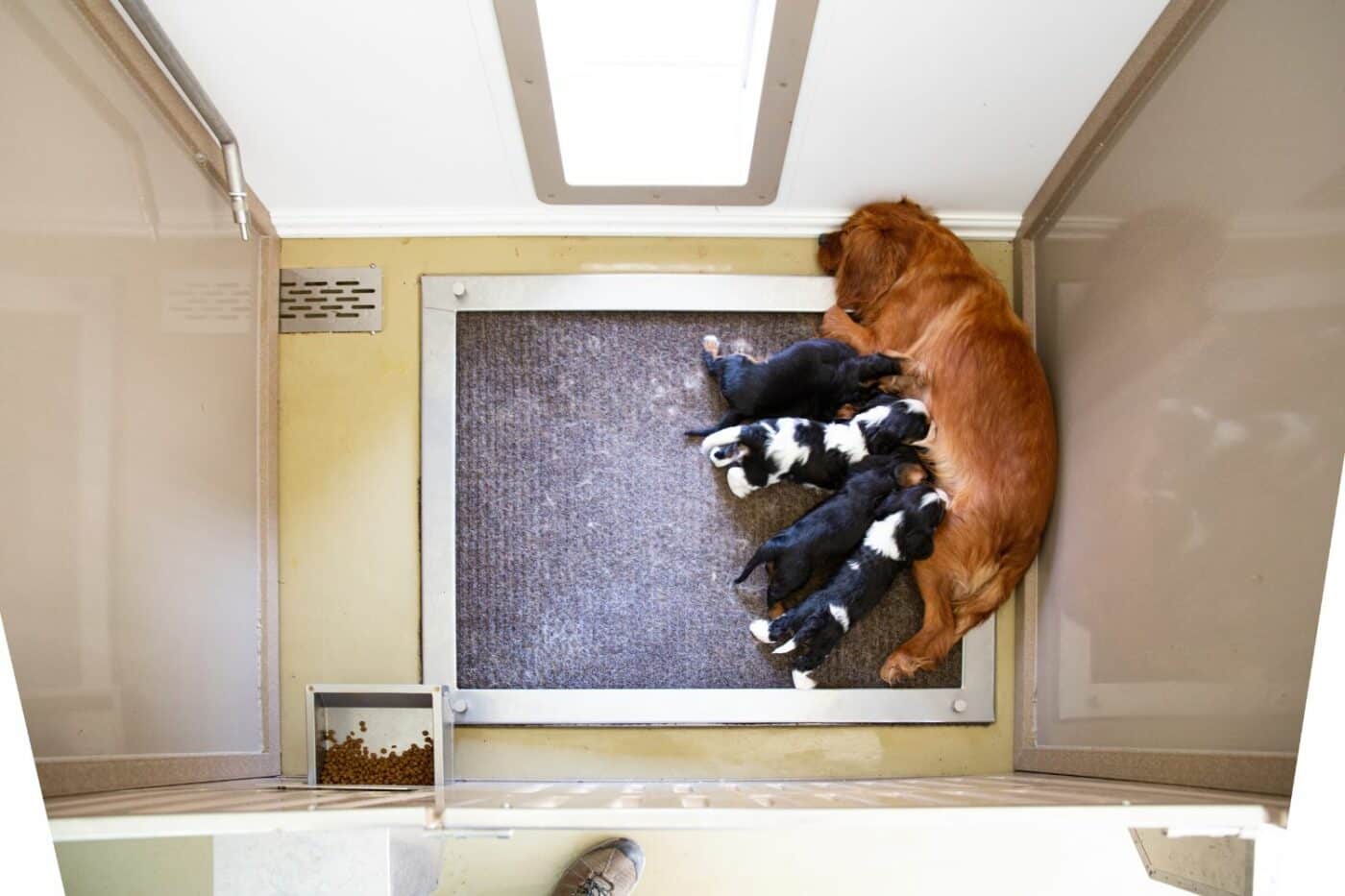
Prevent chilling and accidental squishing
This is a big one in the first day or two, especially if mom is still sedated or unsteady.
- Supervise nursing until mom is steady: Groggy moms can roll or step without meaning to.
- Give puppies a warm “parking spot”: A separate small box or bin next to the whelping area with warm, safe bedding makes it easier to rotate puppies and keep them warm between nursing sessions.
- Check puppies for warmth: Puppies that feel cool, become quiet, or stop wiggling can crash fast. If you suspect a puppy is chilled or weak, call your vet right away.
Incision care while puppies are nursing
Puppies will naturally knead, scratch, and push with their paws while they nurse. That motion is normal and helps stimulate milk flow, but it is also exactly where your dog has stitches.
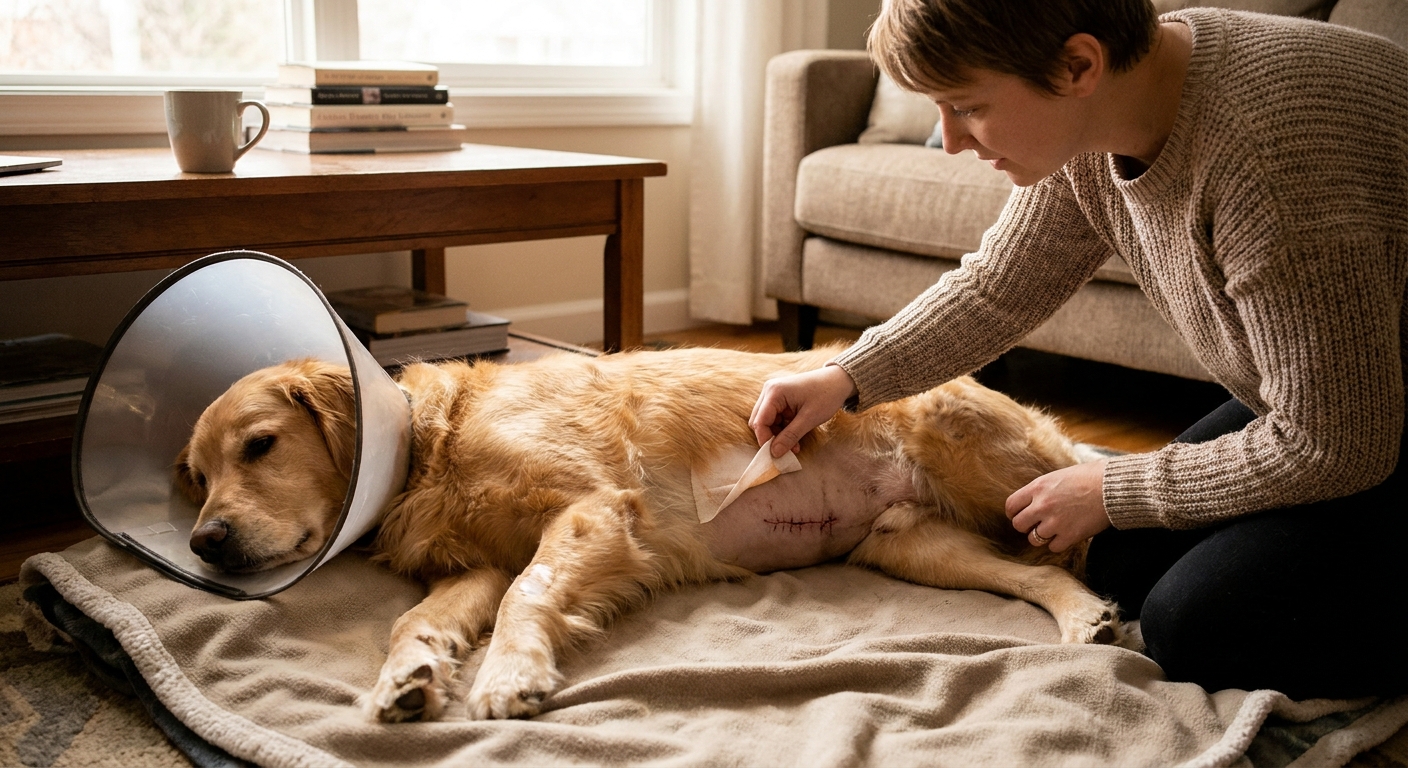
What the incision should look like
A normal healing incision is usually:
- Closed with minimal gaps
- Mildly swollen the first few days
- Pink to light red along the line, not angry red spreading outward
- Dry or with only a tiny amount of clear seepage in the early phase
How to protect the incision from puppy claws
- Trim puppy nails every few days: Newborn nails are sharp. Use a tiny nail trimmer and take just the tips. If you are nervous, ask your vet team to show you.
- Use a soft barrier: A clean, breathable T-shirt or a recovery suit can help in some dogs, but it must not rub the incision or trap moisture. Avoid anything tight.
- Supervised nursing at first: If mom is very tender or restless, you may need to help position puppies and give her breaks.
- Keep bedding very clean: Bacteria plus moisture is the enemy of incision healing.
Should you clean the incision?
Follow your veterinarian’s instructions exactly. In many cases, you should leave the incision alone and simply keep it clean and dry. Avoid ointments, peroxide, alcohol, or home disinfectants unless your vet specifically directs you, because they can delay healing or encourage licking.
Prevent licking and chewing
Licking is one of the fastest ways to turn a normal incision into an infection or a missing stitch situation. If your dog is licking:
- Use an e-collar or inflatable collar if she tolerates it.
- Ask about a properly fitted recovery suit, if appropriate for your dog’s body shape.
- Increase supervision during nursing breaks, because some moms lick when puppies are off of them.
Pain medication that is safe during lactation
Pain control is not optional. A comfortable mom is more likely to eat, rest, produce milk, and tolerate nursing. But you cannot assume the same medications used after a spay are automatically safe for nursing.
Use only what your veterinarian prescribed
Many C-section moms go home with medications chosen specifically for lactation safety. Common categories your vet may use include:
- NSAIDs: Some non-steroidal anti-inflammatory drugs are used postpartum in dogs, but the choice and dose matters. Never combine NSAIDs with steroids.
- Opioid-type pain relievers: Sometimes used short-term after surgery. They can cause sedation in mom and potentially in puppies, depending on the drug and dose.
- Local pain control: Some dogs receive long-acting local anesthetics at the incision site.
Do not give over-the-counter human pain meds. Ibuprofen and naproxen are dangerous for dogs. Acetaminophen can also be dangerous and should only be used if your veterinarian specifically prescribes it with an exact dose and schedule. Do not use leftover medications from another pet.
Watch puppies when mom is on pain meds
If mom is more sedated than expected, puppies may struggle to latch or stay warm. Call your vet if you notice puppies becoming weak or if nursing abruptly drops off.
Feeding and hydration: supporting healing and milk
Milk production is demanding. Nursing moms need extra calories, extra water, and frequent meals.
- Offer water at all times: Place a heavy bowl where she can reach it without stepping on puppies.
- Feed multiple meals per day: Many moms do better with 3 to 4 meals daily at first.
- Ask your vet what diet is best: Many veterinarians recommend a high-quality puppy or growth formulation during lactation because it is calorie-dense and balanced for higher demands.
- Encourage appetite gently: Warm food slightly, add a little water or broth approved by your vet, and keep the room calm.
If she will not eat for more than 24 hours, or she is refusing water, that is a vet call.
How to confirm the puppies are getting milk
This is one of the biggest worries I hear. Here are practical, evidence-based ways to check, without guessing.
1) Listen and watch for effective nursing
- Good latch: The puppy’s mouth is wide, sealed, and you see rhythmic jaw movement.
- Swallowing: You may see tiny pauses or hear soft swallowing sounds.
- Contentment after feeding: A fed puppy usually releases and sleeps, instead of crawling and crying nonstop.
2) Check bellies and behavior
- Round, full belly: After nursing, the abdomen should look gently rounded, not tucked.
- Warmth and energy: Hungry puppies get restless and noisy. Weak, chilled puppies may not cry loudly, which is also concerning.
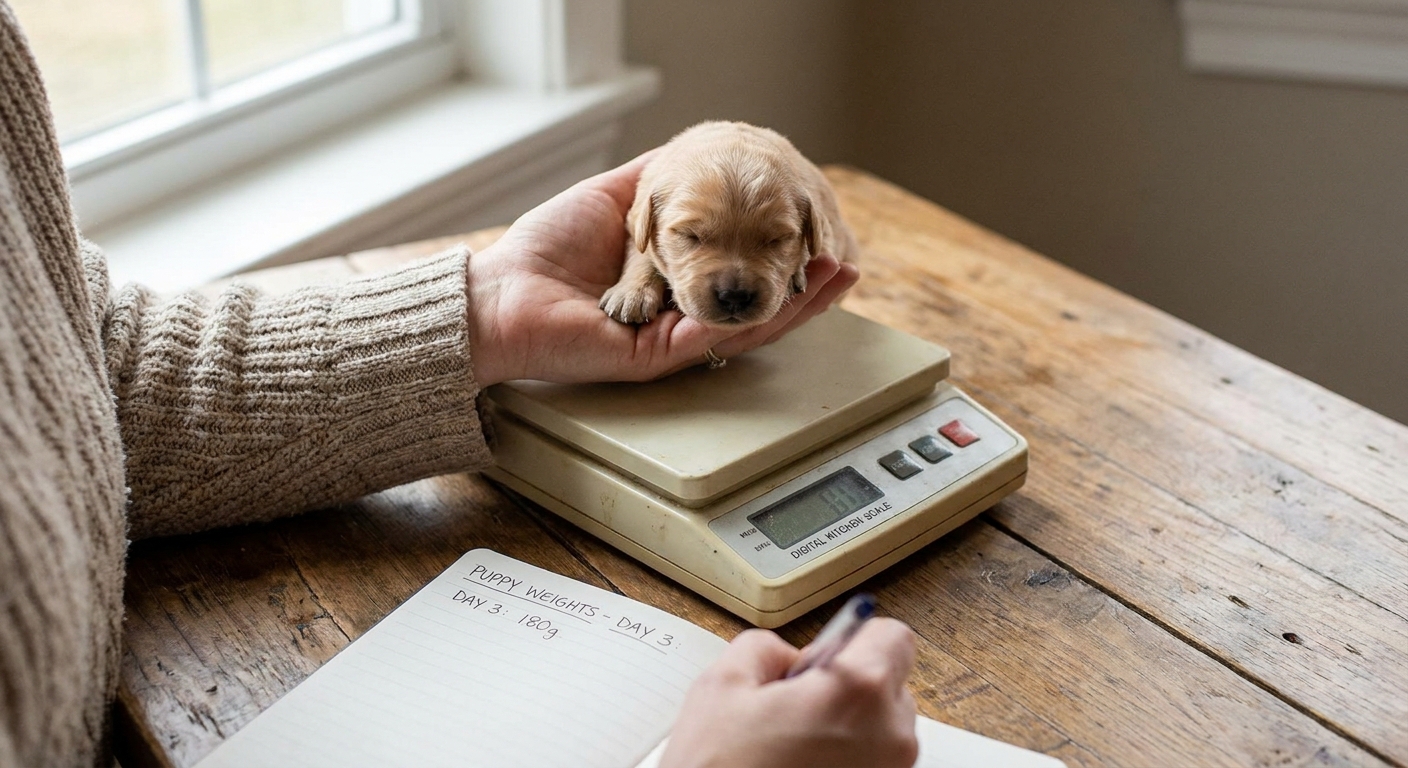
3) Weigh puppies daily, at the same time
This is the most reliable home check. Use a gram scale and record weights. It is not unusual for weights to be a bit variable in the first 24 hours. After that first day, you generally want to see steady daily gains.
Call your vet if a puppy is not gaining, or if weight is flat or down over a 24-hour period after day 1, or if a puppy is consistently being pushed off the nipples.
Helping puppies nurse without hurting mom
Sometimes mom is willing to nurse but uncomfortable. Your job is to set her up so nursing is less painful and less stressful.
Comfortable nursing positions
- Side-lying: Many post-op moms do best lying on their side with puppies lined up along the underside.
- Supported chest-down: Some moms prefer to lie on their chest with a pillow or rolled towel supporting them so the incision is not pressed hard into bedding.
Handling tips
- Move puppies, not mom: Lift and place puppies gently rather than asking mom to stand and turn repeatedly.
- Keep sessions calm and short at first: Frequent nursing is normal, but if mom is panting, trembling, or trying to escape, give her a short break and try again.
- Rotate puppies: This helps weaker puppies get access to better-flow nipples.
What discharge is normal after a C-section?
Some postpartum vaginal discharge is normal as the uterus involutes and clears fluid. You may see:
- Red to reddish-brown discharge that gradually decreases
- A small amount of green or dark discharge early on that fades instead of persisting
Discharge should not be foul-smelling, and it should not become heavier day by day.
Call your vet right away for discharge that is thick or pus-like, has a strong bad odor, becomes suddenly heavy, or is paired with fever, lethargy, or loss of appetite.
Red flags that are not like routine spay recovery
After a spay, we watch for incision problems and general post-anesthesia issues. After a C-section with nursing, you also need to watch for postpartum and lactation emergencies.
Emergency or urgent vet visit signs
- Heavy bleeding from the vulva or incision, or pale gums
- Collapse, extreme weakness, or unresponsiveness
- Fever or feeling very hot to the touch, especially with foul discharge
- Hard, painful, hot mammary glands or milk that looks abnormal, which can suggest mastitis
- Muscle tremors, stiff walking, seizures, or extreme restlessness which can be signs of eclampsia (low calcium), especially in small dogs with heavy milk production
- Sudden refusal to nurse or aggression toward puppies that seems out of character
- Puppies that are constantly crying, failing to gain weight, or becoming weak or cold
- Incision opening, bulging, or any tissue protruding
- Green discharge that persists or any discharge with a strong bad odor
If you are choosing between “wait and see” and “call the vet,” call. Postpartum complications can move quickly, and early treatment is almost always easier on mom and puppies.
Incision problems to watch for
These are reasons to contact your veterinarian promptly, even if mom is otherwise acting okay:
- Increasing redness that spreads beyond the incision line
- Swelling that worsens after day 2 to 3
- Discharge from the incision that is yellow, green, thick, or foul-smelling
- Heat around the incision
- Missing stitches or gaping
- A firm lump under the incision that is growing, which could be a seroma or something more serious
Activity restrictions and potty breaks
Even if your dog wants to be a supermom, her abdominal wall needs time to heal.
- Short leash potty breaks only for the first couple of weeks, or as your vet instructs.
- No jumping on beds or couches. Use ramps or block access.
- No rough play and keep stairs to a minimum.
- Supervised time with puppies if she is stepping on them due to grogginess.
Many veterinarians recheck the incision around 10 to 14 days, but some want an earlier check (often within 3 to 7 days), and some use sutures that do not need removal. Follow your vet’s plan, and go sooner if they request.
When to call your vet about milk supply
Milk supply concerns can be real, especially after a stressful delivery or a long labor before surgery. Call your vet if:
- Puppies are not gaining weight or are crying constantly
- Mom’s mammary glands stay soft and seem empty after nursing
- Mom is dehydrated, not eating, or very stressed
- Mom seems painful when puppies latch
Your veterinarian may assess mom’s hydration, uterine health, pain control, and mammary glands. They may also talk you through safe supplementation if needed.
A quick note on supplementing
I know it is tempting to improvise when you are worried about milk. Please do not give cow’s milk, and do not start supplements, herbs, or medications for milk production without veterinary guidance. If supplementation is needed, your vet can help you choose a puppy milk replacer and show you a feeding plan that keeps puppies safe and prevents aspiration.
FAQ
How long does it take a dog to recover from a C-section?
Most dogs are brighter within 24 to 48 hours, but full healing takes weeks. Incision healing is often 10 to 14 days, while abdominal wall strength continues improving after that. Nursing demands can make the recovery feel longer, because mom is not resting uninterrupted.
Can puppies nurse right after a C-section?
Often yes, but timing depends on how awake and stable mom is, what medications were used, and whether puppies need warming or oxygen support. Your veterinary team may start nursing in the hospital or instruct you how to do it safely at home.
What if mom won’t stay with the puppies?
This can happen due to pain, grogginess, anxiety, or in rare cases poor maternal behavior. Call your vet promptly. In the meantime, keep puppies warm and safe, and do supervised nursing attempts if mom allows it.
Is it normal for a dog to pant after a C-section?
Mild panting can be normal from pain, stress, or medications. Persistent, intense panting, especially with restlessness, tremors, weakness, feeling hot to the touch, or poor appetite, needs veterinary attention.
A gentle closing note
If you’re reading this on very little sleep, I want you to hear this: you don’t have to do it perfectly. You just have to stay observant, keep the environment clean and calm, give the meds exactly as prescribed, and track how mom and puppies are doing day by day.
When something feels different than “normal tired new mom,” it is always okay to call your veterinarian. That phone call can make the difference between a small fix and an emergency.