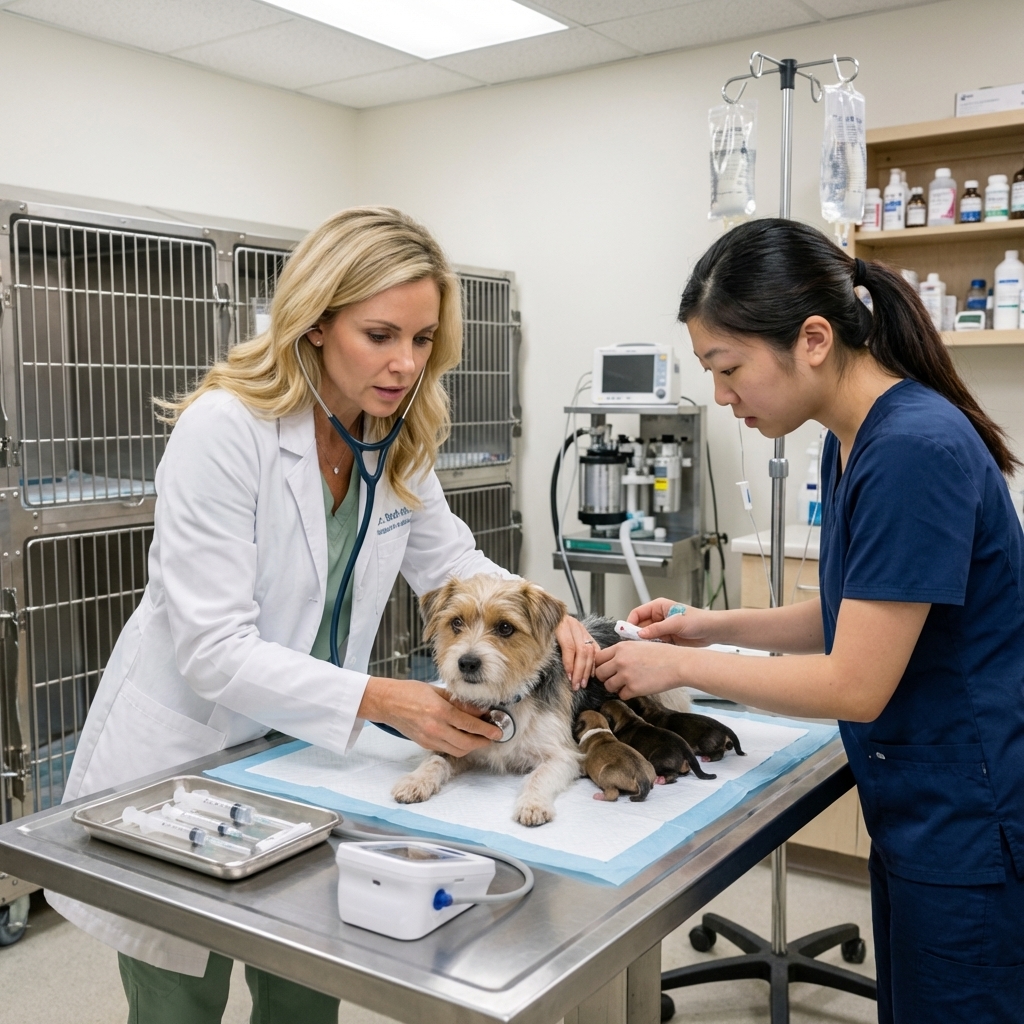
After a dog gives birth, some bleeding and discharge is expected. But I know how it feels to see blood day after day and wonder, “Is this still normal or is something wrong?” As a veterinary assistant here in Frisco, Texas, I’ve seen plenty of worried families in that postpartum window, and the good news is that most moms recover just fine with a little monitoring and rest.
In this article, I’ll walk you through what normal postpartum discharge looks like, how long it typically lasts, and when bleeding can mean a complication like metritis or subinvolution of placental sites. I’ll also separate postpartum discharge from heat bleeding and from pyometra, which is more often discussed in a dog who was not just whelped.
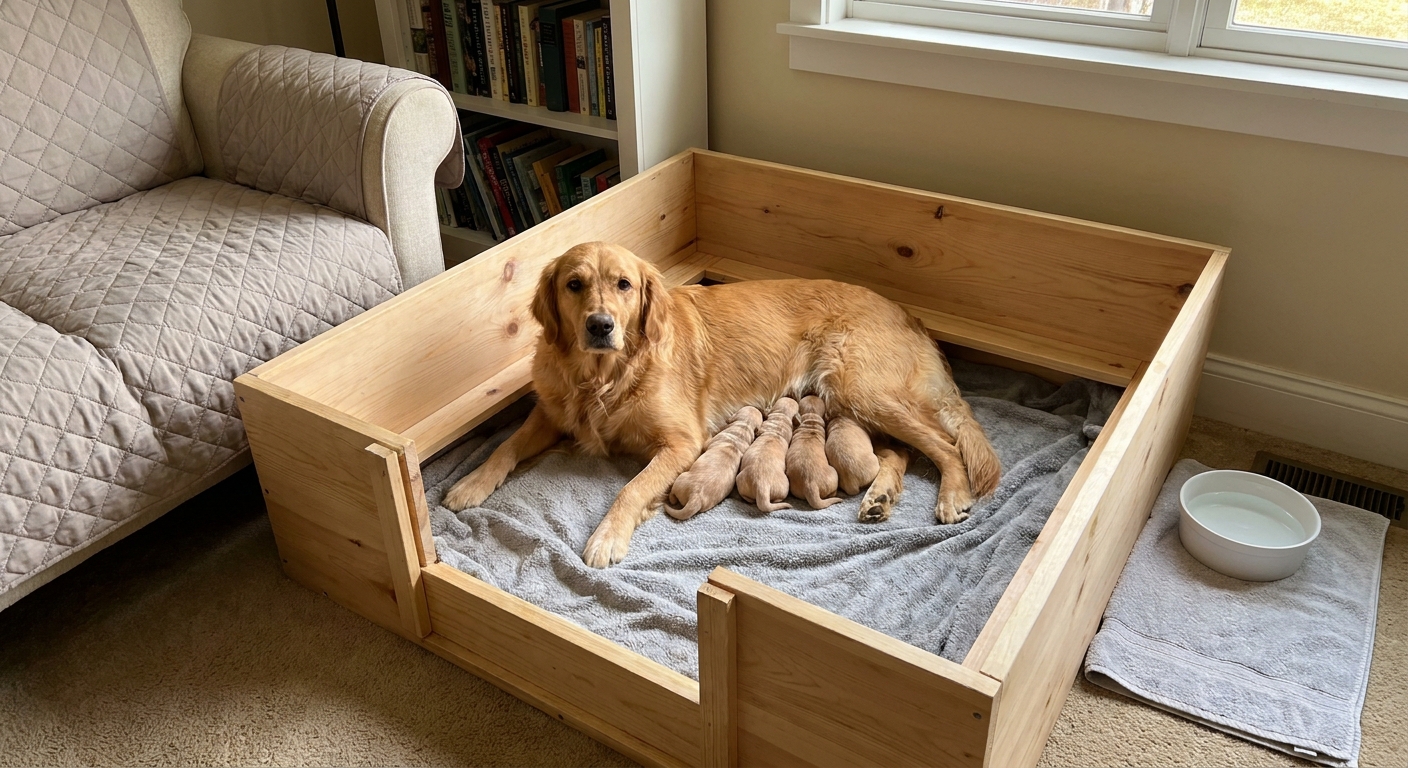
What is normal bleeding after a dog gives birth?
The discharge a mother dog has after whelping is called lochia. It is made up of blood, fluid from the uterus, and leftover tissue as the uterus shrinks back down.
Normal lochia changes over time. What matters most is the overall trend: it should gradually lighten in amount, lose its strong “fresh blood” look, and become less frequent.
One quick smell note: a mild “bloody” or metallic smell can be normal. A foul, rotten, or pus-like odor is not.
Typical lochia timeline
- First day or two: Discharge is often red to red-brown. Small clots can happen. You may also see a green-black fluid (uteroverdin) around the time a puppy is delivered because it is associated with placental separation. If you see profuse green discharge without a puppy, or green discharge that continues and your dog seems unwell, call your vet promptly.
- Days 3 to 7: Often becomes reddish-brown and then more brown. Amount should slowly decrease, not increase.
- Weeks 2 to 3: Usually turns watery brown, tan, or pinkish. Many dogs have only light spotting by now.
- Sometimes up to 4 to 6 weeks: Small amounts of intermittent discharge can still happen as the uterus finishes involution (shrinking back to normal), especially if it has been clearly tapering week to week.
Bottom line: Many dogs are mostly done with lochia by about 2 to 3 weeks, but some have mild, tapering discharge for longer, sometimes up to 6 weeks. If it is not clearly improving over time, that is when I want you to check in with your veterinarian.
What postpartum bleeding is not normal
There are a few patterns that raise concern. These do not always mean an emergency, but they do mean you should talk to your veterinarian promptly.
Call your vet the same day
- Bright red bleeding that is heavy, looks like a steady drip or stream, or repeatedly soaks bedding
- Needing to change towels or pads multiple times in an hour, or blood pooling under her
- Bleeding that gets worse after it had been decreasing
- Large clots or tissue passed repeatedly
- Foul, rotten, or pus-like odor from the discharge
- Thick yellow, creamy, or green discharge after the first couple days, especially if your dog seems unwell
- Fever (normal canine temp is roughly 100 to 102.5 F. Over 103 F is more clearly abnormal, but what matters is the full picture and how your dog looks and acts)
- Low appetite, vomiting, diarrhea, weakness, collapse, or pale gums
- Restlessness, painful belly, or guarding
- Not caring for puppies, seeming confused, or suddenly “not herself”
- Milk supply drops suddenly and puppies cry constantly or fail to gain weight
If your dog is actively hemorrhaging, becomes weak, or has pale gums, treat it as an urgent emergency and go in immediately.
Normal discharge vs metritis
Metritis is a uterine infection that can occur in the days after giving birth, often when bacteria enter the uterus during or after delivery. It is more likely if there was a difficult labor, retained fetus or placental tissue, or lots of internal manipulation.
Signs that point to metritis
- Foul-smelling discharge (this is a big one)
- Dark red-brown to watery bloody discharge that does not taper, or becomes worse
- Fever, lethargy, depression
- Poor appetite
- Reduced milk production and puppies not thriving
- Vomiting or diarrhea in some cases
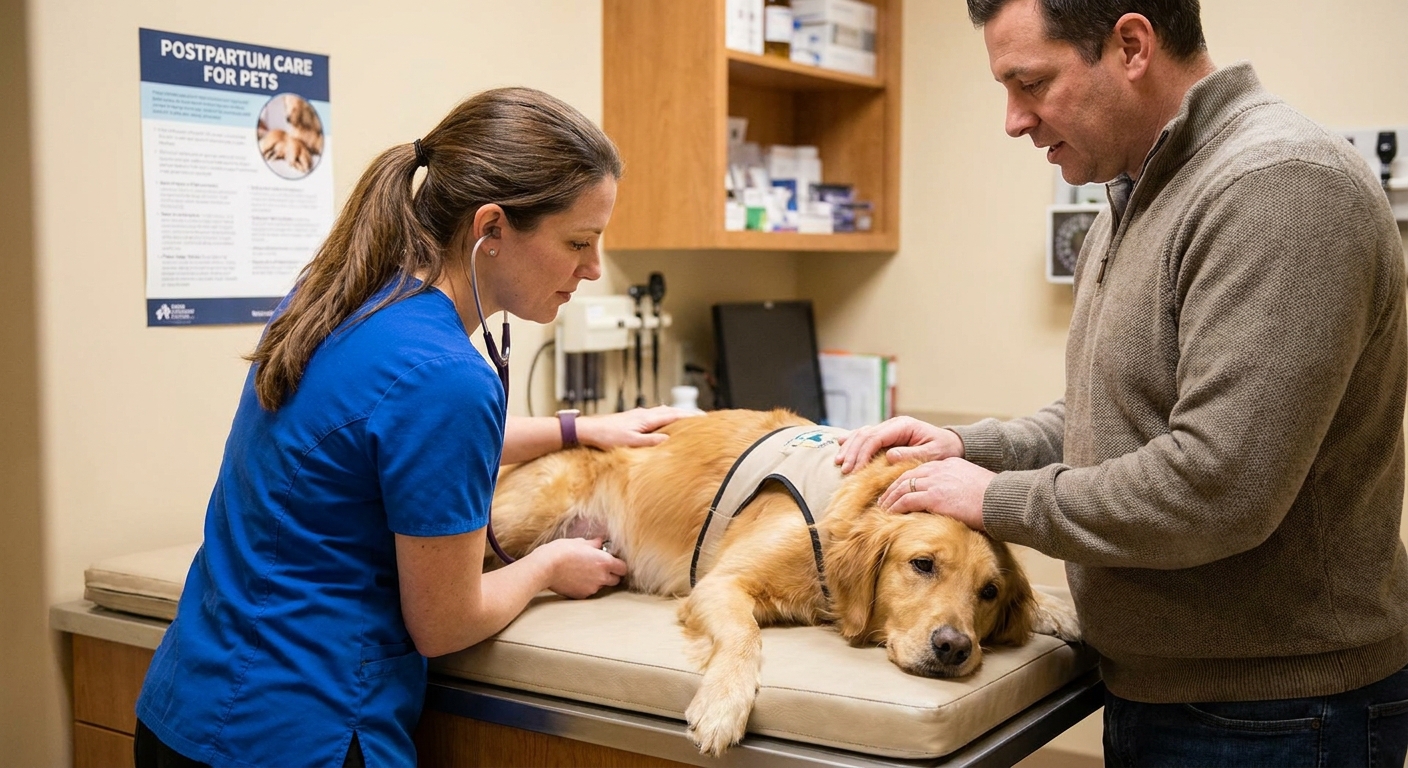
Why quick care matters: Metritis can make mom very sick and can affect nursing puppies. Treatment often includes an exam, and it is common for the vet to recommend ultrasound and sometimes X-rays if retained tissue or a retained puppy is a concern. Your veterinarian will decide the safest approach based on your dog’s condition and whether she is nursing.
Bleeding for weeks: SIPS
If your dog seems bright, is eating, and is caring for her puppies, but she keeps having intermittent fresh red bleeding for weeks, one condition your veterinarian may consider is subinvolution of placental sites, often shortened to SIPS.
What it is: After puppies are born, the placental attachment areas in the uterus should heal and shrink. In SIPS, those sites do not heal normally, and they can continue to ooze blood.
What SIPS often looks like at home
- Bright red spotting or bleeding that persists beyond the expected postpartum window
- Bleeding may be on and off, not constant
- Mom may otherwise act totally normal
- Some dogs can become anemic if bleeding is significant or prolonged
Same-day vet call: If bleeding is still clearly bright red after about 3 to 4 weeks, or if it stops then returns as fresh bleeding, it is worth a same-day call. Your vet may recommend an exam and bloodwork to check for anemia.
Could it be heat bleeding instead?
Heat bleeding (from the estrus cycle) and postpartum lochia can get confused, especially if you did not see the actual whelping or you are unsure of the timeline. But physiologically, a true heat cycle does not typically happen right after giving birth.
Key differences
- Postpartum lochia: Starts immediately after delivery and should taper over days to weeks. Color often shifts from red to brownish to lighter watery discharge.
- Heat bleeding: Happens when a dog is coming into season. Dogs usually have other signs like vulvar swelling and increased interest from male dogs. Many dogs return to heat roughly 4 to 12 months after whelping (it varies by individual and breed), not in the immediate postpartum period.
If you are seeing bleeding months after whelping and there is no recent delivery, that is a different conversation, and your vet may evaluate for heat, urinary tract issues, vaginal problems, or uterine disease.
Do not confuse discharge with pyometra
Pyometra is a serious uterine infection that typically happens after a heat cycle in an unspayed dog. It is most common in a dog who was not just whelped, although it can occur postpartum in rare cases. Practically speaking, any sick, unspayed female with discharge needs urgent veterinary evaluation.
Pyometra can be “open” (discharge present) or “closed” (no discharge, which can be even more dangerous because infection is trapped).
Signs that make me worry about pyometra
- Increased thirst and urination
- Lethargy, weakness
- Vomiting, poor appetite
- Fever sometimes
- Vaginal discharge that can be creamy, yellow, green, or bloody
- Swollen belly or signs of abdominal pain
Important: If your dog was not recently pregnant and you suspect pyometra, this is a same-day emergency. Treatment often involves urgent spay surgery and supportive care.
Other postpartum issues to know
Not every postpartum emergency is a uterine infection, but a few conditions can look similar at first. These are worth having on your radar because early action can protect both mom and puppies.
Retained placenta or retained puppy
If a placenta or puppy is retained, a dog may have discharge that does not taper, a bad odor, fever, abdominal discomfort, or declining appetite and energy. This is one reason vets often reach for ultrasound and sometimes X-rays when postpartum bleeding or illness is not following a normal trend.
Postpartum hemorrhage
Heavy, fresh bleeding right after delivery can be a true emergency (for example, from uterine atony or trauma). If you are seeing rapid blood loss, weakness, or pale gums, go in now.
Mastitis and eclampsia
Mastitis (infected mammary glands) can cause fever, pain, firm hot mammary tissue, and puppies that suddenly struggle to nurse. Eclampsia (low calcium) can cause restlessness, panting, tremors, stiff walking, or seizures. Neither is “normal postpartum tiredness,” and both need urgent veterinary care.
What you can do at home
You do not need to hover, but you do want to keep a simple eye on a few basics. In my experience, catching “off” trends early makes clinic visits calmer and more straightforward.
Simple daily checks
- Track discharge: note color, smell, and whether it is improving week to week
- Check energy and appetite: a good mom may be tired, but she should still eat and respond to you
- Look at gums: healthy gums are pink, not pale or white
- Watch the puppies: steady nursing and weight gain are great signs that mom is doing well
- Take her temperature only if your vet recommends it: done incorrectly, it can stress mom and puppies
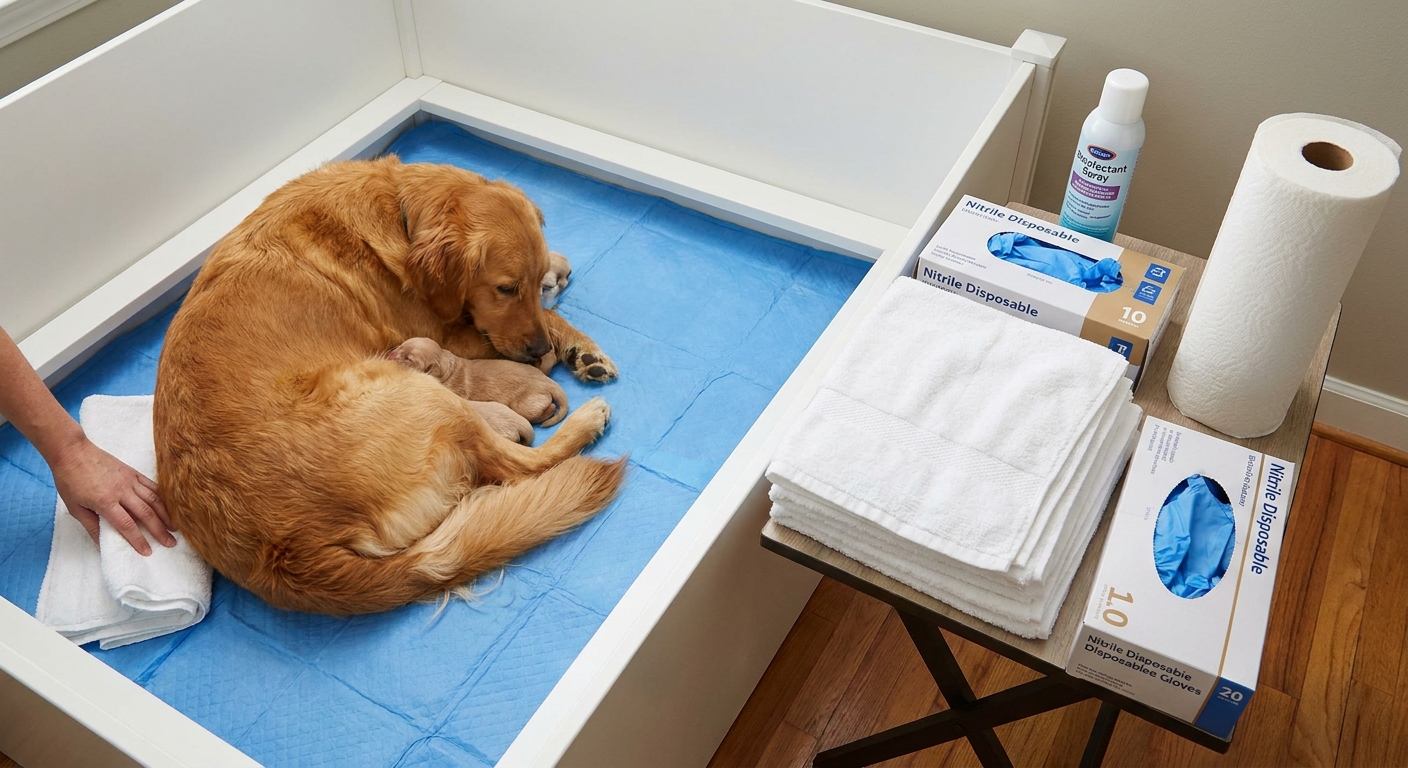
Keep the whelping area clean
- Replace bedding often so you can see trends in discharge
- Use gentle cleaning routines around mom’s rear end if needed, but avoid harsh products
- Limit visitors and stress in the first couple weeks
- Keep nails trimmed (mom and pups) to reduce skin scratches, and if your dog goes outdoors, do not let discharge sit on her coat where flies can be attracted
Please avoid giving human medications for bleeding or pain unless a veterinarian specifically instructs you to. Many over-the-counter medications are dangerous for dogs, especially postpartum.
When bleeding is an emergency
Go to an emergency vet now if you see any of the following:
- Heavy, continuous bright red bleeding
- Weakness, collapse, or trouble standing
- Pale or white gums
- Signs of shock like extreme lethargy, cold feet, fast breathing
- Severe abdominal pain or a swollen, hard belly
- High fever with a sick-looking mom and foul discharge
- Tremors, stiffness, or seizures (possible eclampsia)
If you are ever unsure, call your veterinary clinic. I would much rather a family call “too early” than wait until a preventable problem becomes a crisis.
FAQ
How long is too long for a dog to bleed after having puppies?
If the discharge is clearly tapering and your dog feels well, mild spotting can be normal for about 2 to 3 weeks, and sometimes longer, even up to about 6 weeks. It is “too long” when it stays bright red, becomes heavier, smells foul, or your dog seems sick. Fresh bleeding that persists beyond 3 to 4 weeks deserves a same-day call to your vet to discuss SIPS and other causes.
Is green discharge normal after birth?
Green-black discharge can be normal around the time a puppy is delivered because it is associated with placental fluid. But green discharge that is profuse without a puppy, continues beyond the immediate delivery period, becomes thick, or is paired with fever, lethargy, or a bad smell should be discussed with your vet promptly.
Can a dog get pyometra right after giving birth?
Pyometra is classically linked to the time period after a heat cycle, not immediately postpartum, so it is less typical right after whelping. Postpartum uterine infections do happen, and that is usually discussed as metritis. Either way, a sick postpartum dog needs prompt veterinary care.
What will the vet do for ongoing bleeding?
Your vet will start with a history and exam, then may recommend a vaginal exam, ultrasound, and sometimes X-rays and bloodwork to check for retained tissue, infection, or anemia. Treatment depends on the cause and whether your dog is stable and nursing.