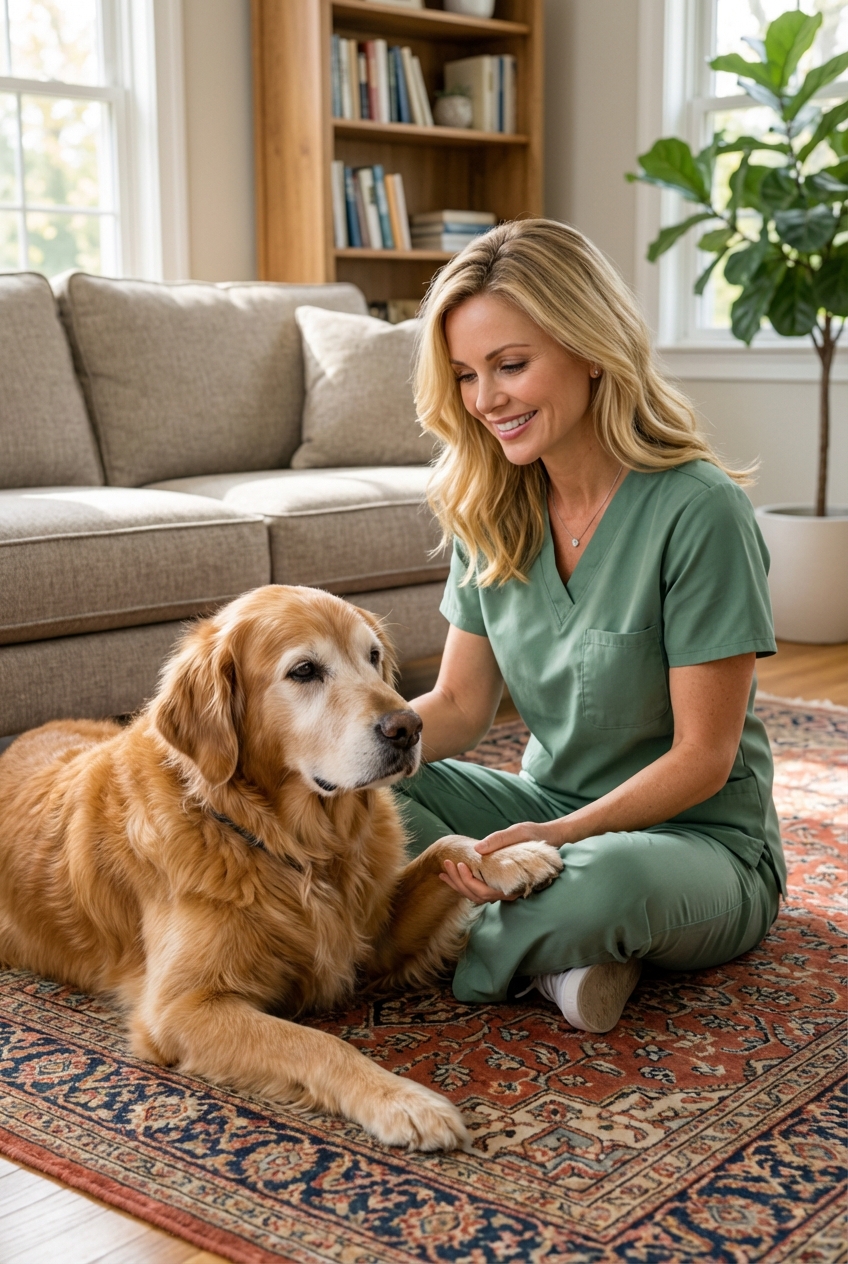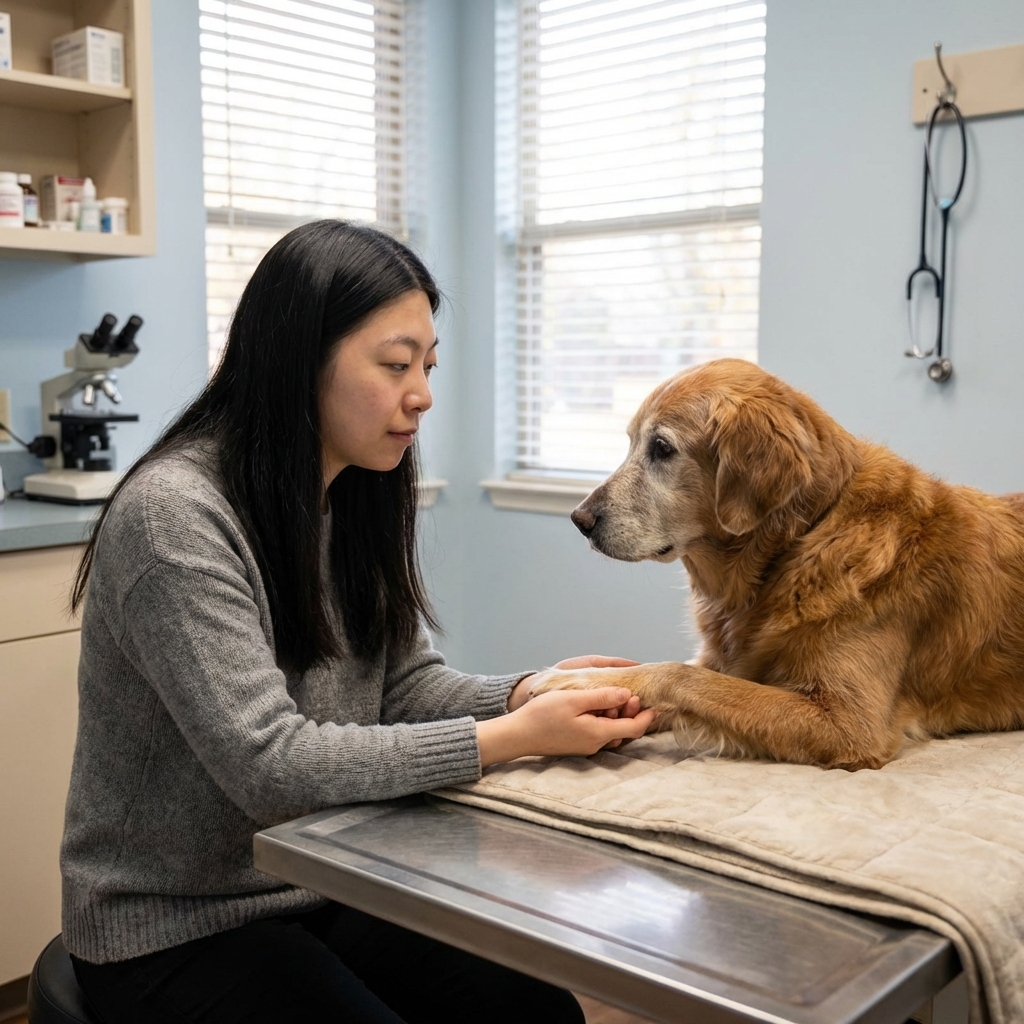
A curious nose. A very waggy welcome.
This is one of those questions that feels simple until you are actually standing in the exam room, holding a leash that suddenly weighs a thousand pounds. Should you stay with your pet during euthanasia?
There is not one right answer. There is, however, a kind answer that fits your pet and your heart. Let’s walk through what you might see and hear, why being present can be comforting for some families and too much for others, and what “staying” can look like in a few different ways.
Your pet comes first
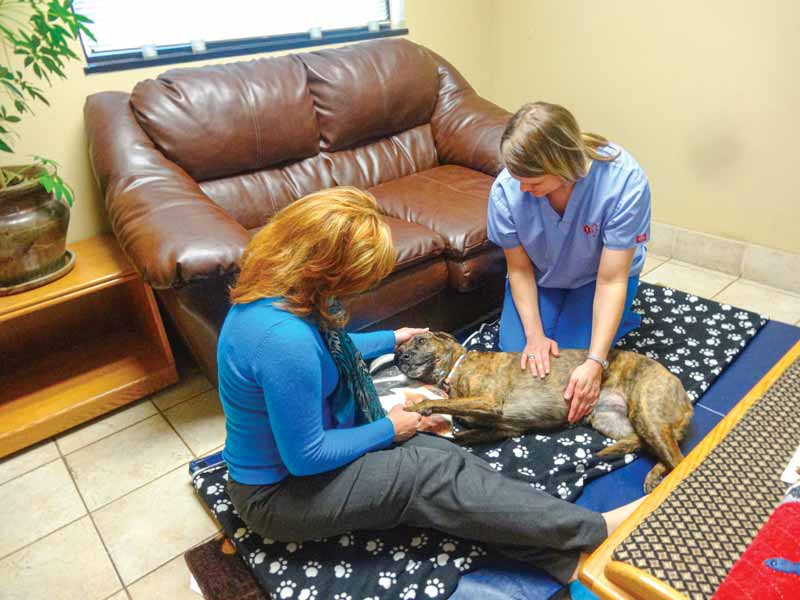
Most pets do best when the room is quiet, familiar, and steady. They take emotional cues from us, especially dogs, and many cats too. If you can be calm or at least softly present, your voice and touch can be grounding.
If you know you will panic, faint, or become very distressed, your pet may pick up on that. That does not make you a bad guardian. It just means your love might need a different shape in that moment.
If you can be a calm anchor, staying can be a gift. If you cannot, choosing a peaceful goodbye beforehand can be a gift too.
What happens during euthanasia
Clinics have slightly different routines, and home euthanasia is its own gentle setup, but many appointments follow a similar rhythm.
1) Settling in
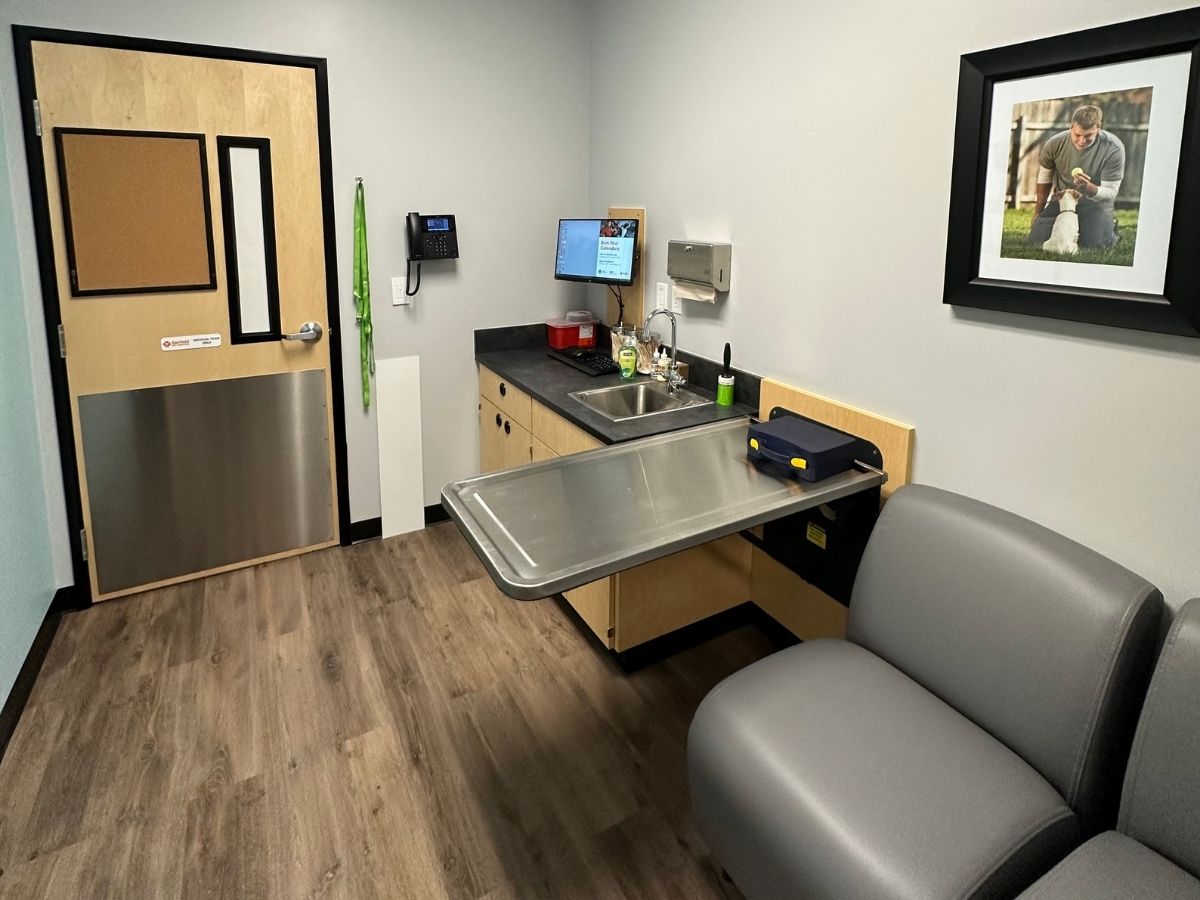
You will usually be brought into a quiet room. Soft bedding or a blanket is common. You might be asked how you want to position your pet, whether you want time alone, and whether you want keepsakes like a paw print.
2) A sedative first (very common)
Many veterinarians give a sedative or anesthetic injection before the final medication. This is meant to reduce anxiety and help your pet become deeply relaxed. It can take a few minutes.
- Your pet may get sleepy, heavy, and less responsive.
- Some pets take a deeper breath or sigh.
- Occasionally, a sedative can sting briefly, depending on the drug and injection site.
3) Placing an IV catheter (sometimes)
Some veterinarians place an IV catheter, usually in a front leg, so the final medication can be given smoothly. In other cases, medication is given by injection without a catheter. You can ask what your clinic typically does.
Sometimes the plan is a two-step route: an injection in the muscle to help your pet relax, then an IV catheter once they are sleepy. If your pet is very sick or has difficult veins, timing and technique can look a little different. It is okay to ask what route your veterinarian expects to use and why.
4) The final medication
The euthanasia solution is typically an overdose of an anesthetic. The goal is a rapid, painless loss of consciousness followed by the heart stopping.
- With an IV injection, many pets become unconscious within seconds to about a minute, but timing can vary.
- The heart stops shortly after.
- The veterinarian listens for the heartbeat to confirm death.
Things that can surprise people
These are common, natural body responses and do not mean your pet is suffering.
- Eyes may stay open. Pets often do not close their eyes after passing.
- A last breath or two. This can look like a deep inhale or a few reflex breaths after unconsciousness.
- Muscle twitches. Small movements can happen as nerves relax.
- Vocalization. Rare, but it can occur with anxiety, discomfort, or medication effects before full unconsciousness.
- Urination or defecation. As muscles fully relax, this can occur.
If you want, you can ask the veterinarian to explain what they are doing as they go, or you can ask for a quiet room with minimal narration. Both are normal requests.
Afterward, many clinics will give you private time with your pet. Then there is usually some paperwork, an aftercare handoff, or a quiet exit. If it helps, ask ahead of time what the flow looks like once your pet has passed.
Why some people stay
Staying can be meaningful for both pet and person, especially when the relationship has been built on companionship and routine.
- Comfort for your pet. Your voice, scent, and touch are familiar. That familiarity can matter most in a strange place.
- Closure for you. Some people need to witness the peacefulness to believe their pet is truly gone and not “waiting” somewhere.
- So your pet is not alone. Many guardians choose to stay for this reason. If you cannot, the team will still be gentle and present.
- It can reduce regret. Many people later feel grateful they stayed, even through tears.
Why some people do not stay
There are also compassionate reasons to step out. Love is not measured in minutes spent in a room.
- Intense anxiety or trauma history. If you know you will spiral or have panic symptoms, that is important information.
- You want to remember your pet differently. Some people prefer their last mental image to be a cozy goodbye at home or in the car.
- Medical squeamishness. Needles, catheters, or normal body reactions can be too much.
- You cannot safely drive afterward. If you will be too distraught to get home, plan support or consider not being present for the procedure itself.
If you are leaning toward not staying, tell the clinic. Many teams will offer an alternative plan, like extra time before, a quiet exit, or a staff member staying close with your pet.
Middle options
This decision is not always a strict yes or no. Here are options that some families find easier.
Stay for the sedative, then step out
You can be present while your pet gets sleepy and relaxed, then leave before the final injection. For some people, that is the balance they need.
Say goodbye, then let the team proceed
You can spend a few minutes cuddling, talking, and offering treats if allowed, then signal when you are ready to leave.
One person stays, one steps out
In a family, one adult may feel strongly about being present while another cannot. That is okay. Decide ahead of time who will do what so no one has to negotiate through tears.
Choose home euthanasia if possible
Home euthanasia can be less stressful for pets who fear the clinic. It also gives you control over the setting, lighting, and who is present. If you think you will want privacy and a softer environment, ask your veterinarian or local hospice services what is available.
How to decide
If your brain feels scrambled, try answering these out loud, or write them down.
- Will my presence soothe my pet, or will my distress scare them?
- Do I need to witness the end for closure, or would that image be harmful for me?
- Can I be physically steady? (No fainting risk, no uncontrolled shaking, able to remain in the room.)
- Do I have support after? A ride, a friend on call, time off work, childcare coverage.
- What will I regret more? Not being there, or pushing myself through something that leaves me emotionally injured.
Also: ask the veterinarian what they recommend for your specific pet and temperament. Some pets are calmer with their person nearby. Some pets settle more easily with minimal emotion in the room. Your vet has likely seen both and can help you think it through.
If you stay
If you choose to stay, you do not have to perform “strength.” You just need to be gentle and predictable.
- Pick a spot and settle. Sit on the floor if that helps your pet feel secure.
- Use a calm voice. Simple phrases, slow and familiar.
- Touch where your pet likes best. Many dogs like chest rubs. Many cats prefer cheek or chin scratches.
- Ask for what you need. Dim lights, fewer people in the room, more time, or for the vet to tell you before each step.
- Let yourself cry if you need to. Tears are normal. If you feel yourself tipping into loud panic or frantic movement, it can be harder for some pets, so it is okay to step out and let the team take over.
Children
Kids can handle hard truths better than confusing ones, but euthanasia is intense. The right choice depends on the child’s age, temperament, and desire to participate.
When it can be okay
- The child is old enough to understand death is permanent.
- The child wants to be there and is not being pressured.
- An adult can focus on the child’s needs while another adult supports the pet.
- You have prepared them for what they might see, including that eyes may stay open and there may be a last breath reflex.
When it is usually better not to
- The child is very young or highly sensitive to medical settings.
- The child is anxious about needles or becomes overwhelmed easily.
- There is not enough adult support in the room.
- The child does not want to be present.
A gentler option
Many families let children say goodbye beforehand. Kids can offer a drawing, a letter, a favorite toy, or a blanket. They can also help with a memorial ritual after, like planting a flower or making a photo corner at home.
If you are unsure, ask your veterinarian how they handle family euthanasia visits. Some clinics can schedule a longer, quieter appointment time.
Other pets
Dogs and cats do notice absence. Some may search, vocalize, or seem unsettled. Letting another household pet see the body afterward may help in some cases, but it is not required, and it does not work the same way for every animal.
When it may help
- Your other pet is closely bonded and tends to look for the one who is gone.
- You can do it calmly at home, where the surviving pet feels safe.
- You can supervise closely and keep the moment quiet and brief.
When to skip it
- Your other pet becomes highly stressed around illness or medical events.
- They guard resources or react unpredictably.
- You are in a clinic setting where your surviving pet is already anxious.
If you do offer a goodbye, keep it simple: allow a brief sniff, speak softly, then move on to a soothing routine like a walk, a meal, or quiet rest.

If you do not stay
If you leave before the final step, consider doing one or more of these to anchor your goodbye.
- Bring a familiar blanket. Your scent can be calming even if you are not present.
- Write down a few words for the vet to say. A simple script like “You are a good dog. You are safe.”
- Ask to be there for the sedative. Let your pet fall asleep with you nearby.
- Schedule a quiet goodbye time. Ten uninterrupted minutes can mean more than trying to white-knuckle the whole procedure.
- Ask about aftercare choices in advance. Deciding cremation or burial details beforehand can reduce the number of painful decisions you have to make while you are raw.
- Ask if you can handle payment and paperwork ahead of time. Many clinics can arrange this, so you are not doing logistics with a broken heart.
Questions to ask the vet
A little information can lower the fear factor. These questions are all fair.
- Will my pet receive a sedative first?
- How long does the sedative take to work?
- What route do you expect to use for the final medication?
- Will you place an IV catheter?
- What reactions might I see that are normal?
- Can I hold my pet? Can they sit on my lap?
- How much time can we have before and after?
- How will you confirm they have passed?
- What are the options for private cremation, communal cremation, or bringing my pet home?
Afterward
Grief after euthanasia can be oddly complicated. You can feel relief and devastation at the same time. You can feel calm for an hour and then collapse in the grocery store aisle. You can question every choice, even when you made the kindest one available.
Some people also feel guilt whether they stayed or not. If that happens, try to return to the core truth: you were making a decision to prevent suffering. That is a heavy, loving job.
If you find yourself unable to function, not sleeping for days, or feeling stuck in intrusive images, consider reaching out to a pet loss support hotline, a grief counselor, or your veterinarian’s recommended resources.
Quick take
Stay if your presence will be a calm comfort to your pet and something you can carry later. If it will overwhelm you in a way that feels unsafe or scarring, choose a loving goodbye beforehand and let the veterinary team provide a peaceful passing.
Either way, you are not abandoning your pet. You are doing your best in a moment that hurts.
FAQ
Do pets know they are being put to sleep?
Pets generally respond to the present moment: stress, calm voices, gentle touch, pain, and anxiety. They do not usually understand euthanasia as a concept, but they do understand comfort and fear. That is why the environment and your energy matter so much.
Is it traumatic to watch?
It can be, especially if you were not told about normal reflexes like eyes staying open or a last breath. Many people also find it peaceful and later feel grateful they stayed. If you are worried about trauma, ask the veterinarian to tell you what you might see before they begin.
Will my pet look at me at the end?
Sometimes. Often, after sedation, pets become very sleepy and less focused. If your pet is awake, they may look toward your voice or relax into your touch. There is no “perfect” final moment. The goal is comfort and peace.
What if I start to panic in the room?
Tell the team. You can step out at any time. Veterinary staff are used to this and can take over comforting your pet. If possible, have a support person with you who can help you make that call.
Should I bring treats or a favorite toy?
Ask your veterinarian first, especially if sedation is planned. Many clinics welcome a comfort item, and sometimes pets can have a special snack beforehand if it is safe for their condition.