A curious nose. A very waggy welcome.
If your vet has mentioned lime sulfur dips for ringworm, you probably have two immediate thoughts:
- How do I do this correctly?
- Is it really going to make my whole house smell like… well, sulfur?
Both are very fair questions. Lime sulfur dips are an old-school, proven topical tool for ringworm in dogs, especially because they help reduce the number of fungal spores on the coat. That matters for your dog’s recovery and for keeping ringworm from spreading around your home.
This page focuses on how lime sulfur dips are used. For identifying ringworm, diagnostic testing, and human contagion guidance, stick with your vet and your other ringworm resources on Designer Mixes.
What a lime sulfur dip does
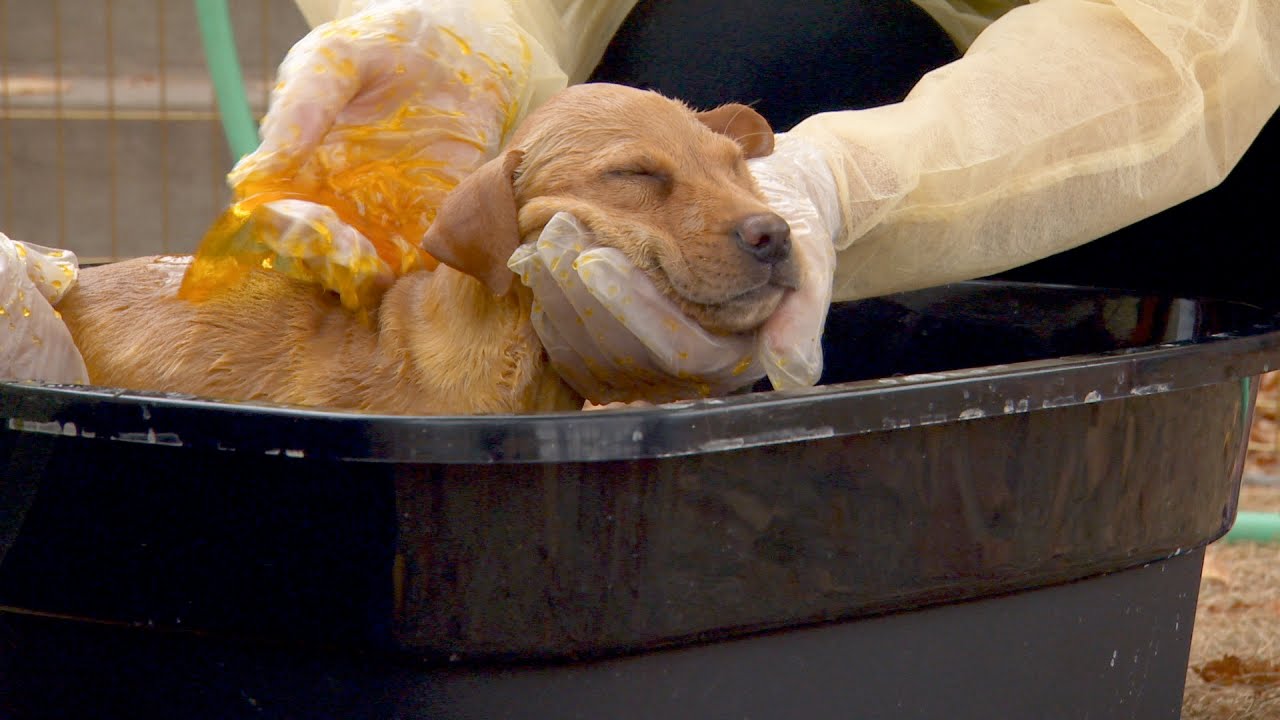
Lime sulfur dip is a topical treatment made from sulfur and calcium compounds. When it is diluted and applied to the coat, it has antifungal activity that helps kill ringworm organisms on the hair and skin surface.
Two important points:
- It treats the coat and skin surface. Ringworm can live in hair shafts and follicles. Topical therapy helps, but it does not always reach every infected hair deep down.
- It helps lower spore contamination. Ringworm spreads through microscopic spores that can cling to fur and shed into the environment. Dips can reduce spore load, which is a big deal when you are trying to get ahead of recurring exposure.
How often are lime sulfur dips used?
Frequency can vary by your dog’s situation and your veterinarian’s protocol. A common approach is:
- 1 to 2 times weekly during the active treatment period
Many veterinarians choose twice weekly at least early on, especially in multi-pet households or more widespread infections. Your vet may adjust the schedule based on skin tolerance, coat type, and how quickly follow-up tests are improving.
Because ringworm treatment plans can be a mix of topical therapy, environmental cleaning, and sometimes oral medication, it is best to follow the schedule your veterinarian gives you rather than improvising.
How to apply a lime sulfur dip
Most veterinary protocols treat this as a true dip or soak where the solution is worked through the coat and left to air-dry.
Before you start
- Pick a washable location like a bathtub, utility sink, or a shower stall.
- Wear old clothes and consider an apron or coveralls.
- Use gloves (nitrile or rubber) to protect your hands.
- Ventilate the room by opening a window or running a fan.
- Protect eyes and mucous membranes, both yours and your dog’s.
- Keep kids and other pets away from the area until your dog is fully dry.
1) Read and follow the label dilution
Lime sulfur concentrates must be diluted. Measure carefully. Stronger is not better and can irritate skin.
If your veterinarian gave you a specific dilution different from the bottle instructions, follow your veterinarian’s directions.
2) Consider a pre-bath
If your dog has heavy dirt, oils, or product buildup, your vet may recommend bathing first, then applying the dip to a clean coat. This helps the dip contact the hair and skin evenly.
Drying is usually not necessary before applying the dip unless your vet says otherwise. Many protocols apply the dip to a damp coat.
3) Ask about trimming if your dog has a long coat
In some cases, veterinarians recommend trimming or clipping to help product contact the skin and to reduce the amount of contaminated hair in the environment. Do not DIY shave your dog with shared clippers if you are not confident. Clippers, blades, and brushes can spread spores. If trimming is needed, ask your vet for the safest plan.
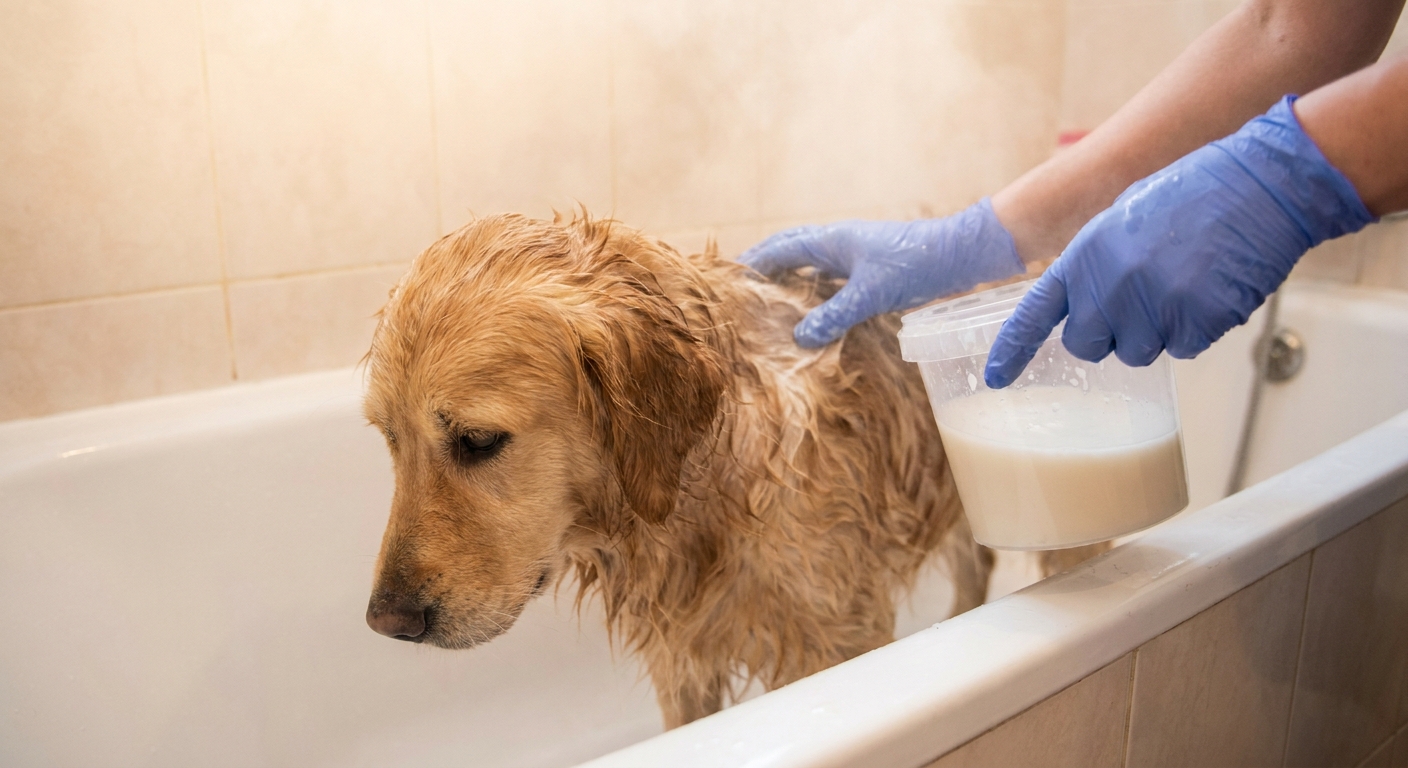
4) Apply the dip to the entire coat
This is the part many people underestimate. Ringworm spores can be scattered beyond the obvious lesions.
- Use a sponge, cup, or squeeze bottle to thoroughly wet the coat.
- Work it down to the skin, especially in thick coats.
- Avoid getting solution into the eyes, nose, or mouth.
- Pay extra attention to areas your dog touches a lot, like feet, legs, tail, and underside, unless your vet has told you to avoid a specific region.
Do you rinse it off?
In many veterinary ringworm protocols, lime sulfur dip is left on and allowed to air-dry, not rinsed off. That longer contact time is part of why it can be effective.
There are exceptions for sensitive skin or special circumstances. If your vet’s directions and the bottle label differ, follow your veterinarian’s directions.
Air-dry tips
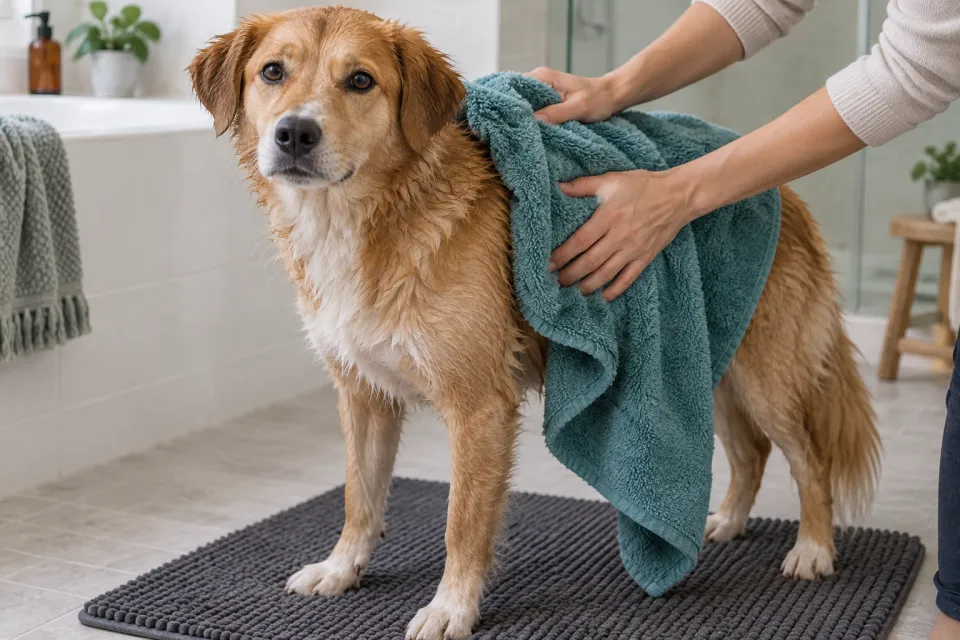
- Do not towel-dry aggressively. Rubbing can spread spores and remove product. If you must blot, use disposable towels or towels you can hot wash right away.
- Use an e-collar if needed to prevent licking while wet.
- Keep your dog warm while drying. Small dogs, seniors, and short-coated dogs can chill.
- Use an easy-to-clean drying zone until fully dry.
The smell and staining
The smell
Yes, it smells like sulfur. Many people describe it as “rotten eggs.” The odor usually fades as the coat dries, but it can linger on bedding and in small rooms.
Ways to make it more tolerable:
- Run a bathroom fan or open a window.
- Dip at a time when your dog can dry in a well-ventilated, easy-to-clean space.
- Wash bedding frequently during treatment.
- Do not add essential oils, shampoos, cleaners, or fragrances to the dip solution unless your vet specifically told you to. Mixing products can irritate skin and can create unexpected reactions.
Staining and coat effects
Lime sulfur can stain fabrics and may discolor porous surfaces. It can also temporarily change how the coat feels, sometimes leaving it a bit dry or rough.
- Protect your floors with towels you do not mind bleaching or staining.
- Avoid upholstered furniture while your dog is drying.
- In light-colored coats, there can be mild temporary discoloration in some dogs.
Safety precautions
Lime sulfur is widely used in veterinary dermatology, but it still deserves respect. Common issues include incorrect dilution, poor ventilation, and letting a dog lick the solution.
Protect your dog
- Prevent licking while wet. Use an e-collar if your dog is determined.
- Avoid eyes, ears, and mouth. If contact happens, flush gently with plenty of water and call your vet for advice.
- Monitor skin. Redness, worsening itch, hives, or obvious discomfort should be reported to your veterinarian. Your dog may need a different protocol.
Protect yourself
- Wear gloves.
- Ventilate. The strong odor can be irritating and may trigger coughing or headaches in sensitive people.
- Wash hands and forearms after application even if you wore gloves.
Keep other pets away while wet
Lime sulfur dips are used in multiple species, including cats, but you should not assume the same product, dilution, or plan is right for every pet. Keep cats and other pets away from wet fur, wet towels, and leftover solution unless your veterinarian is directing treatment for them, too.
Which dogs should avoid dips?
Only your veterinarian can decide what is appropriate for your individual dog, but lime sulfur dips are not a great fit for every situation.
Ask your vet for alternatives or modifications if your dog:
- Has a history of skin sensitivity, severe dermatitis, or reactions to topical products
- Has open, raw, very inflamed skin that may sting or worsen with dips
- Is very young, frail, or medically fragile, where chilling during air-drying or stress from frequent bathing is risky
- Is extremely stressed by bathing and handling, where safety for the humans doing the dip becomes an issue
If your dog has asthma-like breathing issues, or if anyone in your household is sensitive to strong odors, mention that too. Better ventilation plans or alternate topicals can sometimes be used.
Oral antifungals and dips
Ringworm treatment is often a two-front approach:
- Topical therapy (like lime sulfur dips) to reduce spores on the coat and help clear surface infection
- Oral antifungal medication in cases that are widespread, persistent, in multi-pet settings, or where your veterinarian believes systemic treatment is needed
Here is the practical way to think about it:
- Oral medication helps treat infection within keratinizing tissues like hairs and follicles.
- Dips help reduce shedding and environmental contamination, which can speed overall control when you are also cleaning bedding, floors, crates, and grooming tools regularly.
Many veterinarians use both because clearing the dog and clearing the environment are linked. And even when lesions look better, your dog may still be contagious. Your vet may use follow-up testing, such as fungal culture or PCR, to confirm the infection is truly clearing.
If your dog is on oral antifungals, do not add other medicated products without checking with your vet first. “More” can sometimes mean “more irritation,” not “more effective.”
Cleanup and disposal
This is the unglamorous part, but it matters for keeping spores from boomeranging right back at you.
Leftover solution
- Do not store leftover diluted dip unless the product label and your veterinarian specifically say it is okay. In most home routines, it is mixed fresh and the remainder is discarded.
- Dispose of leftover diluted solution according to the product label and your local rules. When in doubt, ask your veterinary clinic what they prefer for your area.
After the dip
- Rinse the tub or sink thoroughly after use.
- Hot wash towels and washable bedding right away.
- Clean grooming tools after each use, and avoid sharing brushes or clippers between pets during an active infection.
Making dip day easier
I am a puppy-scout, so I love a good routine. Your dog will, too.
Set up a simple kit
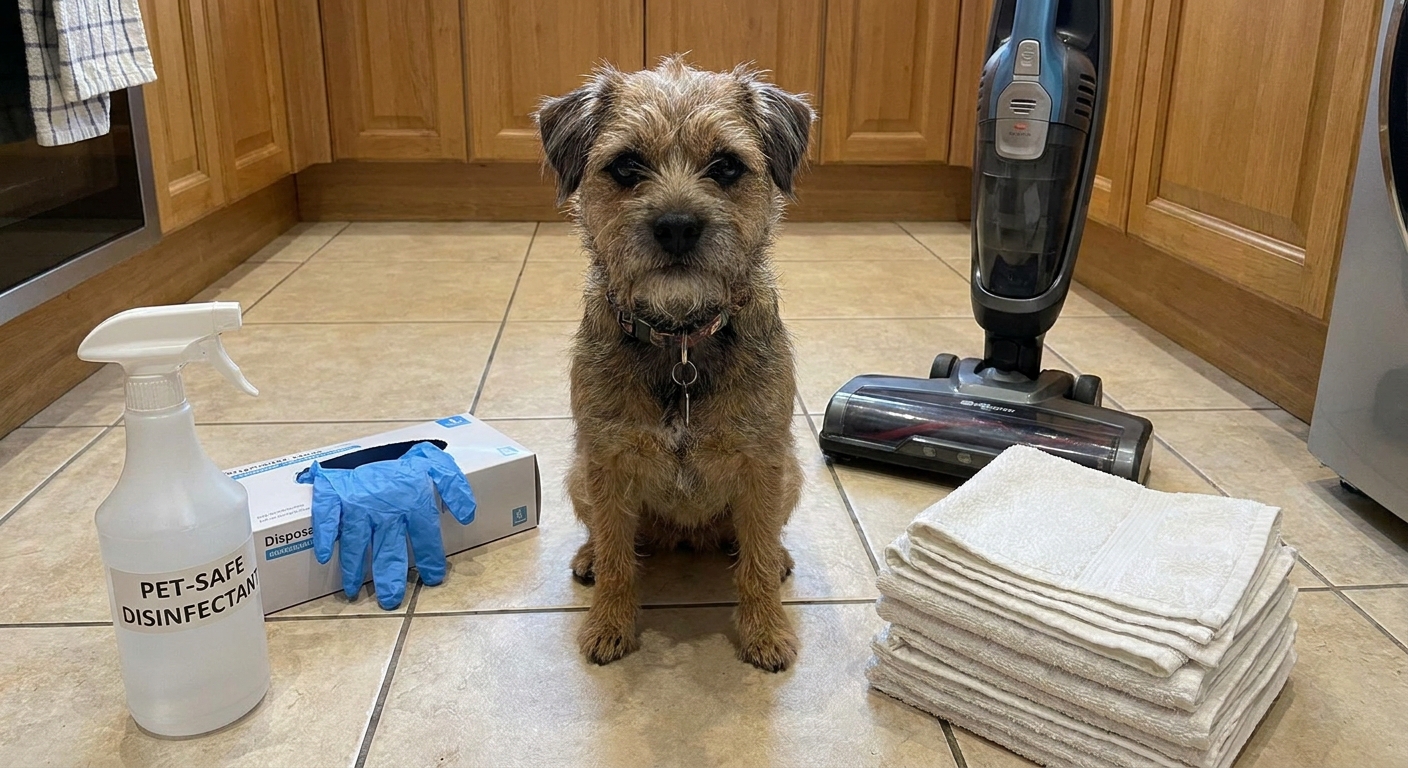
- Gloves
- Measuring cup and mixing container you can dedicate to pet care
- Sponge or squeeze bottle
- Old towels
- E-collar (if needed)
- High-value treats for after
Plan for drying
Pick one easy-to-clean “drying zone” like a bathroom, laundry room, or crate with washable bedding. This helps keep wet dip residue off rugs and furniture, and it helps you contain shedding hairs during treatment.
When to call your veterinarian
Contact your vet promptly if you notice:
- Facial swelling, hives, vomiting, or sudden weakness after a dip
- Severe skin redness, blistering, or intense itching
- Eye exposure that causes squinting or persistent redness
- Your dog licked a lot of solution and is drooling, gagging, or seems unwell
- Lesions spreading despite following the plan
Also call if you cannot realistically complete dips at home. Clinics and groomers sometimes have safer setups for medicated bathing, and your vet may be able to adjust the plan to something you can actually do consistently.
Quick FAQ
Will lime sulfur dip cure ringworm by itself?
Sometimes mild cases can resolve with topical therapy plus environmental cleaning, but many dogs benefit from a combined plan. Your veterinarian will decide whether oral medication is needed based on severity, household risk, and response to treatment.
How long will my dog need dips?
Often several weeks. Treatment typically continues until your veterinarian is satisfied the infection is cleared, which may involve follow-up testing. Do not stop early just because the skin looks better.
Can I use a hair dryer after a dip?
Ask your vet. A dryer can spread hairs and spores around the room and may irritate skin. Air-drying in a contained, ventilated space is commonly recommended.
Can I spot-treat only the ringworm patches?
Ringworm spores can be present beyond obvious circles. Many protocols treat the whole coat to reduce contamination. Your vet may tailor this if lesions are truly localized.