Yes, people can catch ringworm from dogs. I know the name makes it sound like a parasite, but ringworm is actually a fungal infection of the skin, hair, or nails. In a busy household, it can spread quickly because the fungus sheds tiny spores that hitch a ride on fur, hands, clothing, bedding, and even dust.
The good news is that ringworm is treatable in both pets and people. The key is handling two jobs at the same time: getting your dog treated by your veterinarian and doing a solid, consistent cleaning routine at home. In this article, I will focus on the household side and what it means for the humans in the home.
How ringworm spreads
Ringworm spreads through contact with fungal spores. Those spores come from infected hair, skin flakes, and scabs. You can pick them up directly from your dog, or indirectly from contaminated items and surfaces.
Common ways people get ringworm from a dog
- Direct contact: Petting, cuddling, carrying, brushing, or bathing a dog with ringworm.
- Shared soft items: Blankets, dog beds, throw rugs, couch covers, and your own bedding if your dog sleeps with you.
- Grooming tools: Brushes, combs, clippers, nail tools, towels, and grooming tables.
- Environmental spread: Spores can settle in dust, carpet, and upholstery, then transfer to skin through everyday contact.
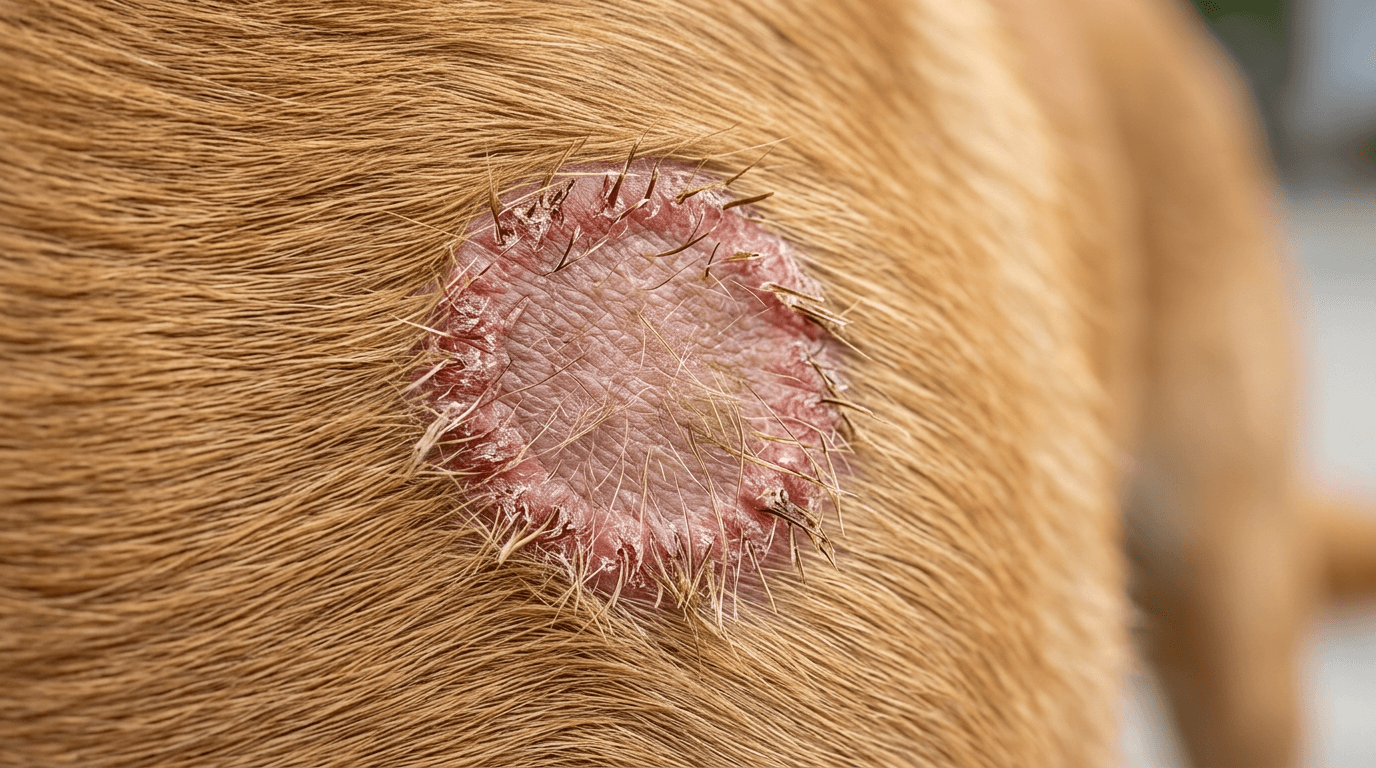
Important detail: ringworm can spread even before you see obvious hair loss or a classic circular lesion on your dog, especially in multi-pet homes and in puppies.

How long spores can live
Ringworm spores are hardy. In the right conditions, some dermatophyte spores can persist in the environment for a long time, including on bedding and furniture. In veterinary settings, we treat ringworm spores as something that can linger for months if cleaning is inconsistent.
In real homes, how long spores stick around depends on how much shedding is happening, how often you vacuum, humidity, sunlight, and whether you are using an effective disinfectant. Practically speaking, you should assume spores can persist for weeks to months without a targeted cleaning plan.
Where spores tend to hide
- Soft surfaces: Dog beds, couches, upholstered chairs, pillows, blankets, curtains.
- Carpet and rugs: Especially high-traffic areas and places your dog naps.
- Cracks and corners: Baseboards, under furniture, HVAC vents where dust collects.
- Car interiors: Seats, floor mats, cargo areas if your dog rides along.
That is why cleaning is not a one-time event. You are trying to reduce spore load steadily over the entire treatment period, plus a little beyond.
What it looks like on people
On people, ringworm often shows up as a red, scaly, itchy patch that may expand outward. The classic look is a ring shape with a more active, raised border and some clearing in the middle, but not every case looks like a perfect circle.
Common symptoms
- Round or oval rash that slowly enlarges
- Itchiness or burning
- Scaly, flaky skin
- Raised edge that looks more irritated than the center
- Sometimes small blisters or a cracked appearance
Where it shows up most often
- Arms and hands (from petting and handling)
- Face and neck (kids especially)
- Torso (if spores get into clothing or bedding)
- Scalp (especially in children, can cause flaky patches and hair breakage)
If you have a suspicious rash and a dog in the home has ringworm, it is worth calling your healthcare provider. Many mild cases respond well to over-the-counter antifungal creams, but scalp involvement and nail involvement often need prescription treatment.
Who is most at risk
Anyone can catch ringworm, but some people are more likely to pick it up or develop more persistent infections.
Higher-risk groups
- Children: More face-to-face contact with pets, more floor time, and less consistent handwashing.
- Older adults: Immune systems can be less resilient with age.
- Immunocompromised family members: People on chemotherapy, long-term steroids, transplant medications, or with immune-related conditions should be extra careful.
- People with broken or irritated skin: Eczema, scratches, shaving irritation, or dermatitis makes it easier for spores to get established.
- Anyone doing most of the pet care: The person bathing, medicating, brushing, and cleaning is exposed the most.
If your household includes someone immunocompromised, talk with your veterinarian and your physician early. Sometimes we recommend stricter containment steps, like limiting the dog’s access to bedrooms and reducing contact until treatment is well underway.

Home cleaning plan
This is the part most families underestimate. Treating the dog is essential, but if the environment stays contaminated, people can keep getting exposed and pets can get reinfected.
Think in two tracks:
- Remove hair and dust first (vacuuming and laundering)
- Then disinfect hard surfaces with products that actually kill ringworm spores
Step 1: Set up a simple containment zone
- Choose an easy-to-clean area for your dog to spend most of their indoor time during treatment, such as a bathroom, laundry room, or a kitchen corner with washable bedding.
- Use machine-washable blankets instead of bulky beds if possible.
- Keep the dog off upholstered furniture if you can. If you cannot, cover the spot with a washable cover and change it frequently.
Step 2: Laundry routine for bedding and clothing
- Wash dog bedding, throws, and any fabrics your dog contacts at least 2 to 3 times per week during active infection. Daily is ideal for high-contact items.
- Use the warmest water that is safe for the fabric, plus regular detergent.
- Dry thoroughly on high heat when fabric allows.
- Wash your own bedding if your dog sleeps on the bed or has been on it since the infection likely started.
- After handling laundry from the sick pet area, wash your hands.
Step 3: Vacuum like it is your job
Vacuuming is one of the biggest ways to lower spore load because spores ride on shed hair and dust.
- Vacuum carpets, rugs, and upholstery daily or every other day during the first two weeks, then several times weekly until your veterinarian confirms your dog is clear.
- Use a vacuum with strong suction. A HEPA filter is a bonus, especially for allergy-prone households.
- Vacuum slowly and thoroughly, especially around baseboards and under furniture.
- Empty the canister outside, or seal and discard vacuum bags promptly.
Step 4: Disinfect hard surfaces
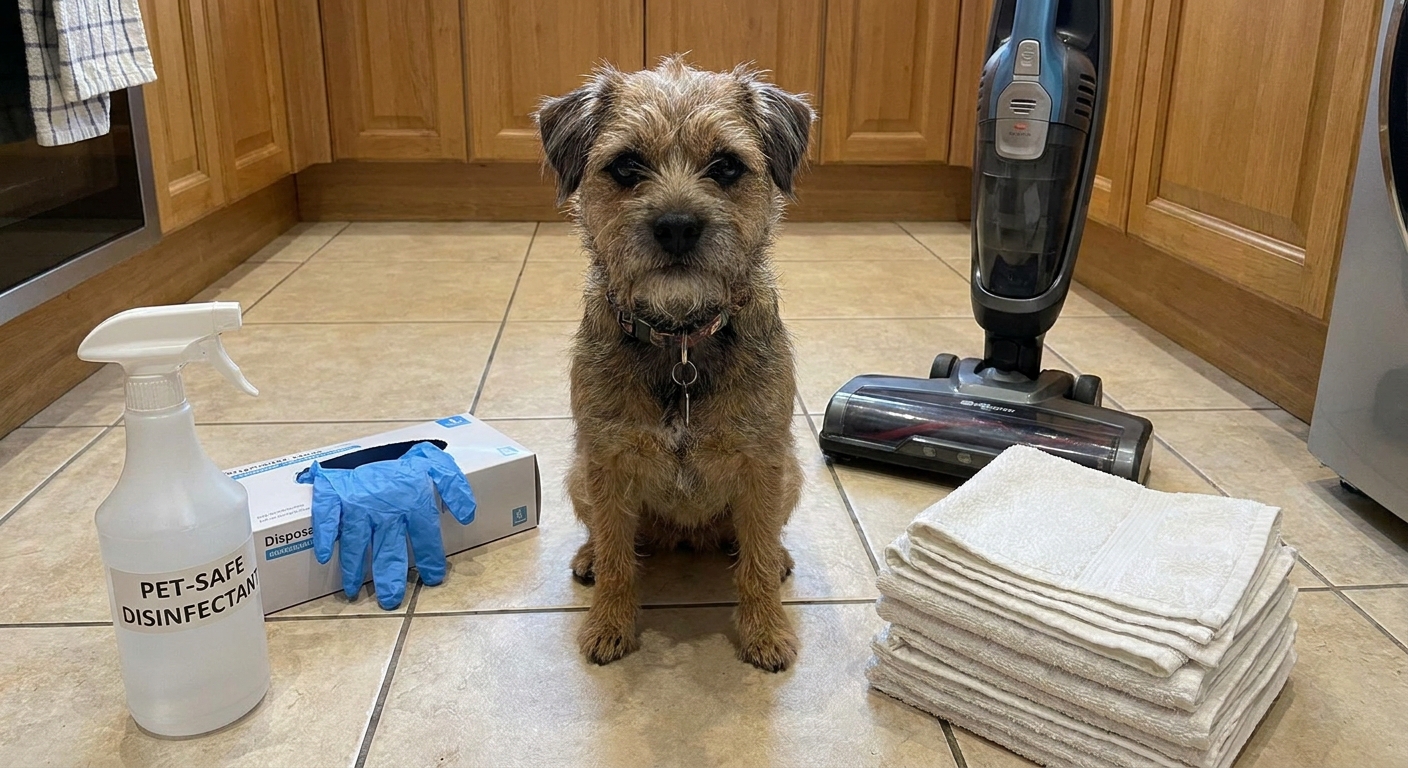
Not every cleaner kills ringworm spores. In veterinary medicine, diluted household bleach is a classic choice because it is effective when used correctly on safe surfaces.
- Hard, nonporous surfaces: floors, crates, plastic carriers, countertops, potty areas, and grooming tools.
- Pre-clean first. Disinfectants work best after dirt and hair are removed.
- Use a dilution and contact time proven to kill dermatophytes, and follow label directions exactly. If your veterinarian gives you a specific protocol, use that.
Bleach safety note: Never mix bleach with ammonia or other cleaners. Ensure good ventilation. Keep pets and kids away until surfaces are dry.
Step 5: Upholstery and carpets
- Keep up with frequent vacuuming.
- Steam cleaning can be a helpful add-on for some items, but it is not a stand-alone solution. It only helps if the material actually reaches fungal-killing temperatures, which many home units cannot guarantee.
- If you use a carpet or upholstery product, check that it is intended for fungal contamination and is safe for pets once dry.
Step 6: Clean and separate pet care items
- Give each pet their own brush, bedding, and towels while ringworm is being treated.
- Disinfect grooming tools after each use.
- Do not share hats, hairbrushes, or towels between family members if anyone has a suspicious rash.
Step 7: Protect yourself during care and cleaning
- Wear disposable gloves for medicating, bathing, lesion care, and cleaning the containment zone.
- Consider long sleeves if your dog likes to climb in your lap or you are handling a lot of bedding.
- Wash hands well after glove removal and after any contact with the dog’s bedding or high-touch surfaces.

Daily habits to reduce spread
Little changes add up fast when ringworm is in the house.
- Handwashing: Wash hands after touching the dog, bedding, toys, or cleaning supplies.
- Cover scratches: Bandage small cuts and avoid letting the dog lick or rub against broken skin.
- Change clothes: If you are doing treatment and cleaning, change clothes afterward and launder regularly.
- Limit face contact: Especially for kids. Try to avoid face kisses and snuggling against the neck until treatment is underway.
- Do not share towels: Use separate towels and washcloths during an outbreak.
When to call a doctor or vet
Call a healthcare provider if
- You develop a spreading, itchy rash that looks ring-shaped or scaly
- The rash is on the face, scalp, hands, genitals, or involves nails
- You are immunocompromised, diabetic, or the rash is worsening despite over-the-counter antifungal use
- A child has scalp scaling, hair breakage, or tender areas on the head
Call your veterinarian if
- Your dog has new lesions, worsening hair loss, or additional pets are showing signs
- You are struggling to control the home environment
- You are not sure whether it is ringworm or another skin issue like allergies, mange, or bacterial infection
Ringworm can mimic other skin problems, and sometimes pets carry it with minimal signs. Confirming the diagnosis and following your veterinarian’s plan makes everything else easier. Also, when it comes to declaring a pet “clear,” many veterinarians rely on rechecks and follow-up testing, such as fungal culture or PCR, not just how the skin looks.
FAQ
Can I catch ringworm from my dog even if my dog has no visible spots?
Yes. Some dogs can carry ringworm with subtle signs, or the early phase can be easy to miss. Spores can still shed, especially in multi-pet households.
Do I need to quarantine my dog?
You do not need to isolate your dog like you would with a severe respiratory virus, but limiting access to bedrooms, couches, and carpeted areas can dramatically reduce how far spores spread. A simple containment zone makes cleaning much more manageable.
How long will ringworm keep spreading in my house?
It can keep spreading as long as there is an active infection shedding spores and the environment is not being cleaned consistently. Most households improve quickly when treatment and cleaning start together, but spores can linger if you stop cleaning too early.
Will sunlight kill ringworm spores?
UV light can help reduce fungal contamination, but it is not reliable enough to be your main strategy. Think of sunlight as helpful support, not a substitute for vacuuming, laundry, and proper disinfection.
Bottom line
People can absolutely catch ringworm from dogs, and it usually spreads through simple everyday contact plus spores left behind on fabrics and surfaces. If your dog is being treated and you commit to a steady cleaning routine, most households can get through a ringworm episode without it turning into a never-ending cycle.