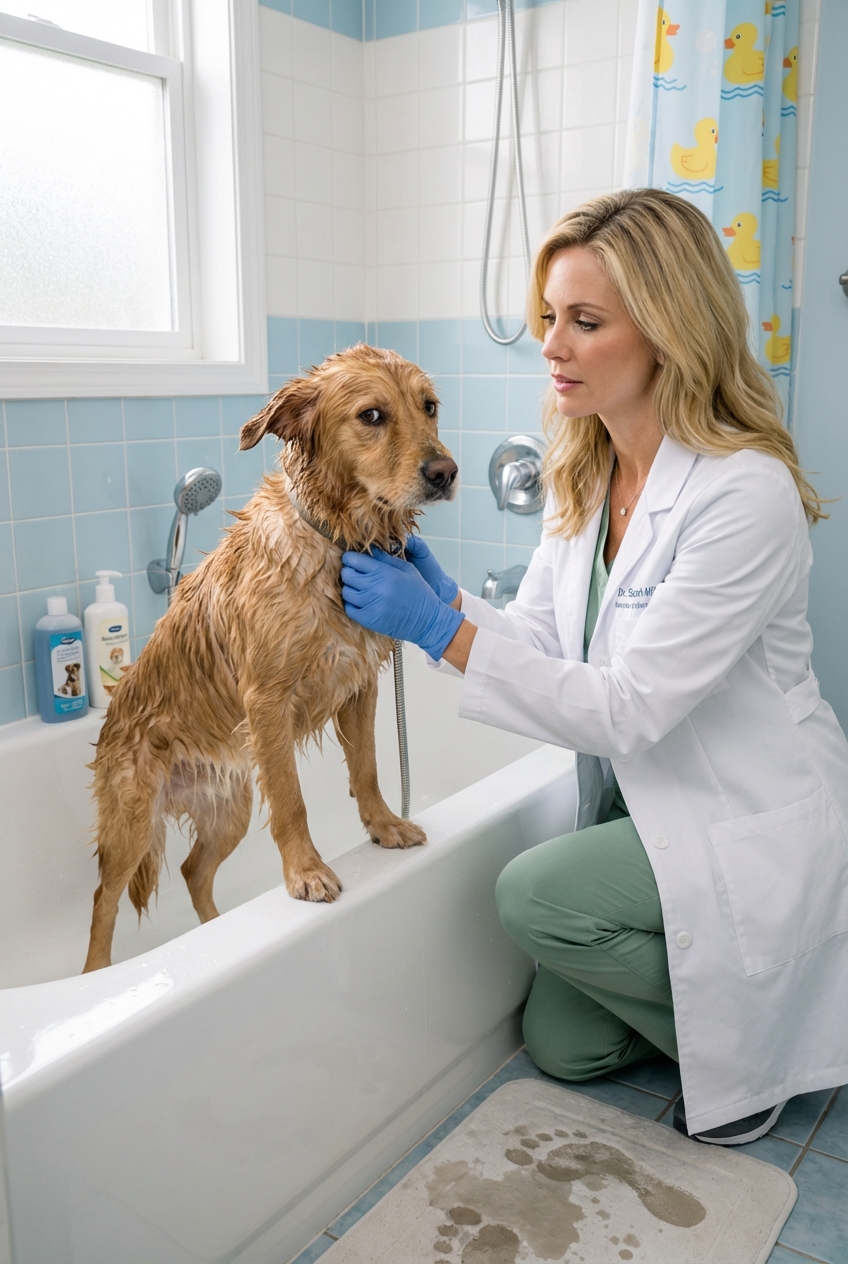
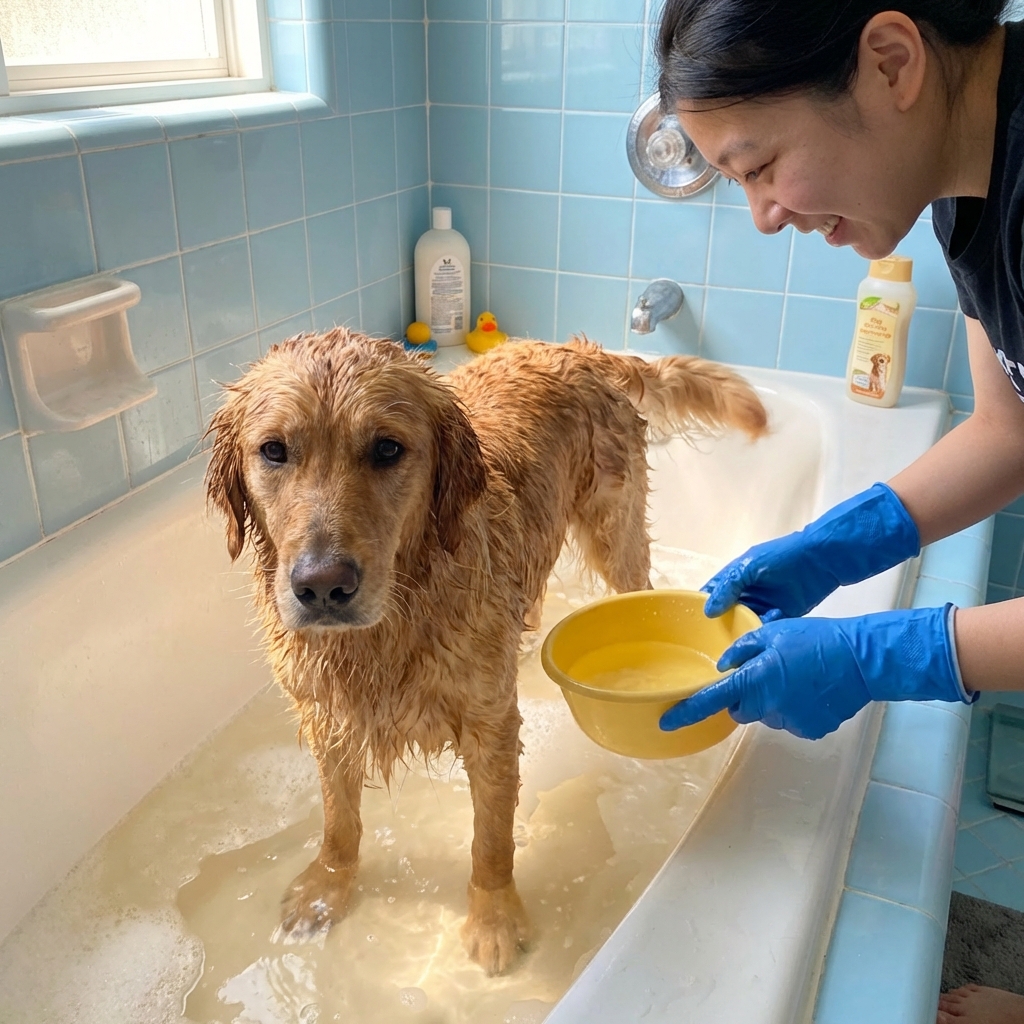
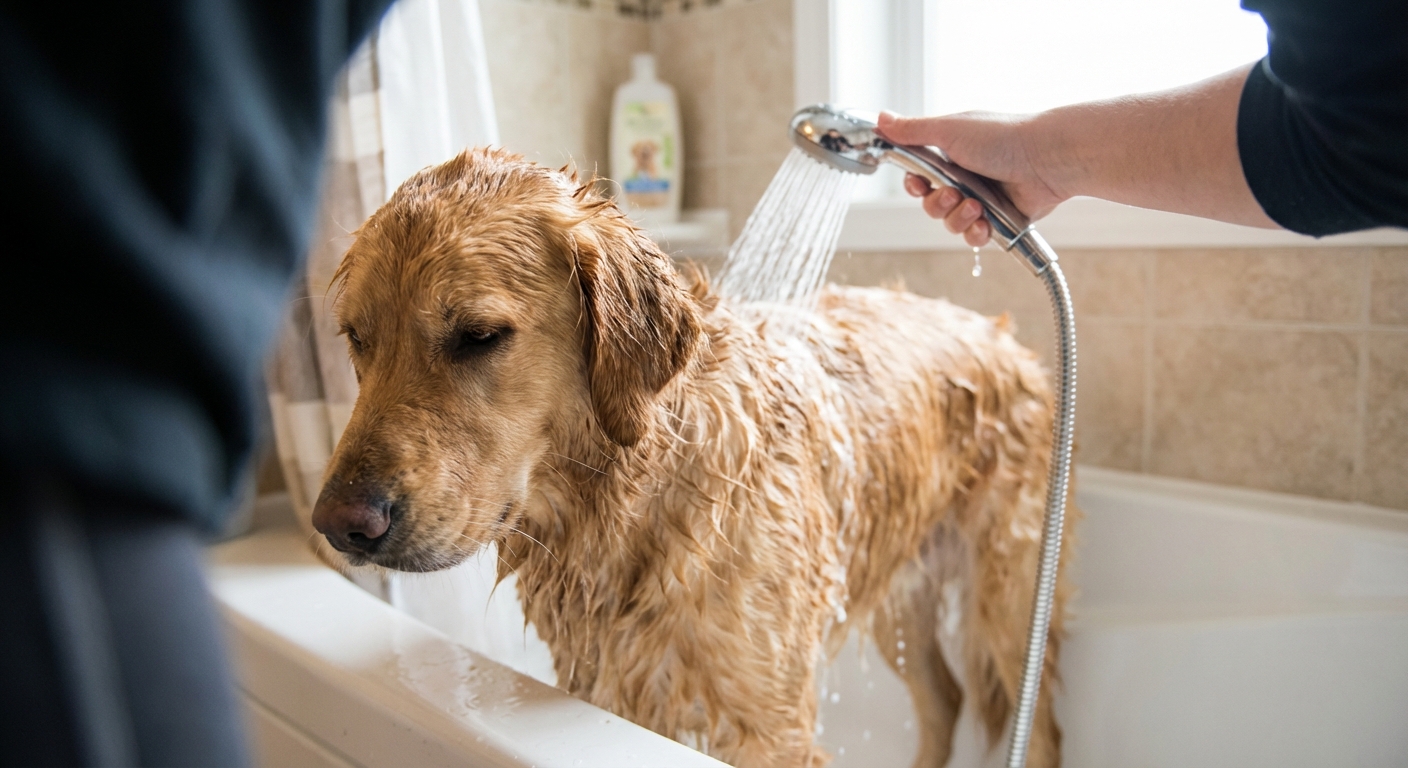
If your dog comes charging inside after meeting a skunk, that smell can feel like it instantly soaks into everything. I have been there as a veterinary assistant, and I promise you this: skunk odor is stubborn, but it is not magical. Skunk spray contains several sulfur-containing compounds, including thiols, plus thioacetates that can convert back into thiols over time. That is one reason the odor seems to “come back.” These compounds cling to fabric fibers and porous surfaces, and they can off-gas more when the air gets warm or humid.
This page is your house-cleanup plan for carpets, laundry, upholstery, and indoor air. If you still need bathing steps for your dog, use a dog-specific de-skunk bath guide from a trusted veterinary source, and keep this page focused on the house and fabrics.
First 15 minutes: stop the spread
The first moves matter because the oils track across flooring and transfer to sofas, bedding, and your hands.
- Keep your dog contained in one easy-to-clean area like a bathroom, laundry room, or garage while you set up. If possible, keep them off carpet.
- Open windows and run fans to push air out. Ventilation will not neutralize sulfur compounds by itself, but it can reduce the intensity in the air while you remove the source.
- Wear gloves and old clothes. Skunk oil transfers easily. If you hug your dog, you will likely be washing what you are wearing.
- Grab and bag porous items that are heavily contaminated: throw blankets, dog beds, collars, harnesses, towels. Put them in trash bags or a lidded bin until you can wash them.
Safety reminder: Do not mix cleaning chemicals. Never combine bleach with ammonia or acids, and keep kids and pets away from treated areas until everything is fully dry.
What not to do
This is the part most people miss. Some cleaners mask odor for a moment, but they do not change the sulfur compounds that cause skunk smell. Other choices can make removal harder.
- Do not put contaminated laundry in the dryer until the smell is truly gone. Heat can make residual odor stronger and can make it harder to wash out on the next round.
- Do not steam-clean carpet right away. Heat and moisture can spread oily residues and may push them deeper.
- Do not use ammonia on fabrics or carpet and never mix ammonia with bleach.
- Skip strong perfume boosters as your main strategy. Scent beads and heavy fragrance detergents can create a skunk-plus-floral situation without fixing the problem.
- Be careful with chlorine bleach. It can discolor carpet and upholstery and is easy to misuse. In real-world home cleanup, it is often more damaging than helpful.
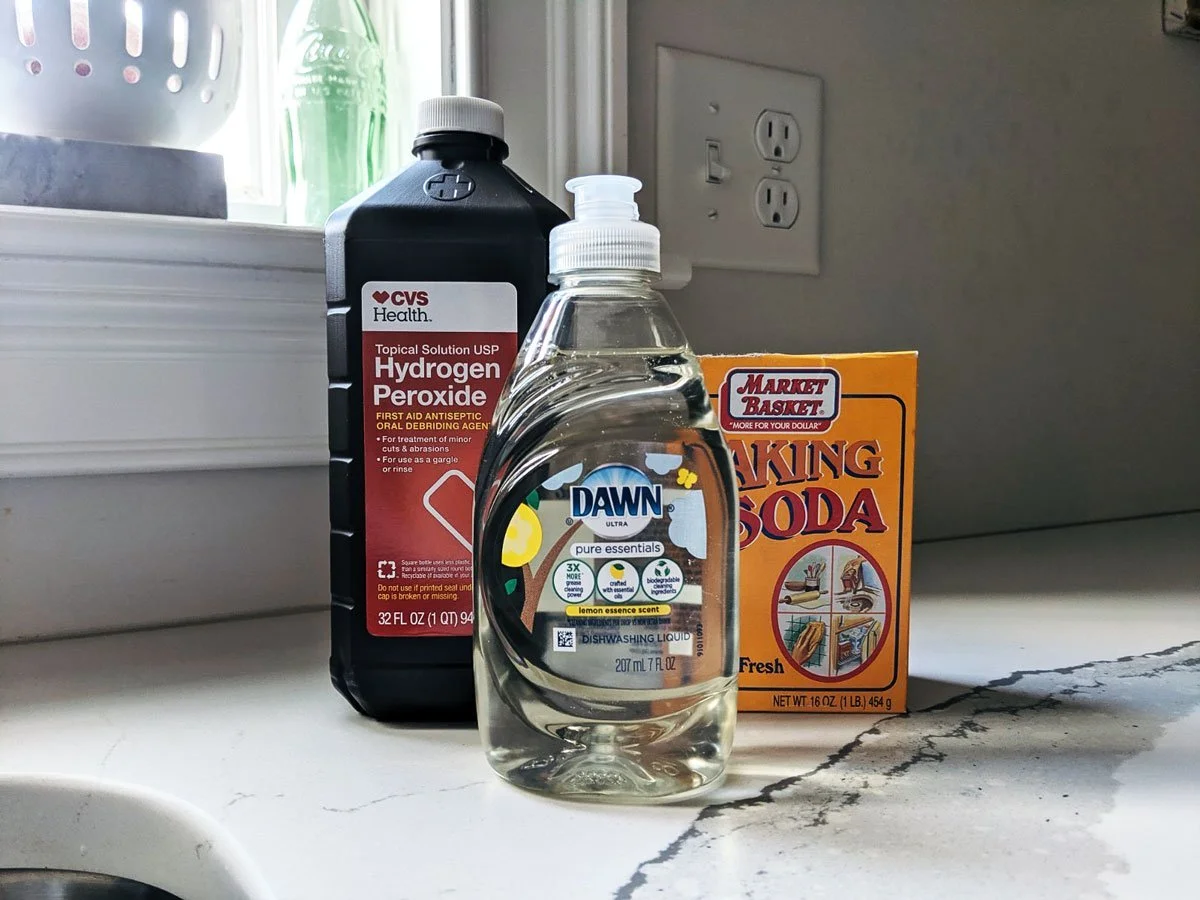
Why peroxide gets recommended: oxidation is one of the more direct ways to change thiols into less smelly compounds. The downside is peroxide can discolor some fabrics and carpets, so spot-testing is not optional.
How to spot-test
Any time you use an oxidizer (like peroxide) or an odor product you have not used before:
- Pick an inconspicuous area (inside a closet edge of carpet, back of a skirted sofa, hidden seam).
- Apply a small amount exactly as you plan to use it.
- Wait 10 to 15 minutes, then blot.
- Check for color change, lightening, stiffness, or dye transfer to your cloth.
Carpet and rugs
Carpet holds onto skunk oil like a sponge. Your goal is to remove as much oily residue as possible, then neutralize what remains.
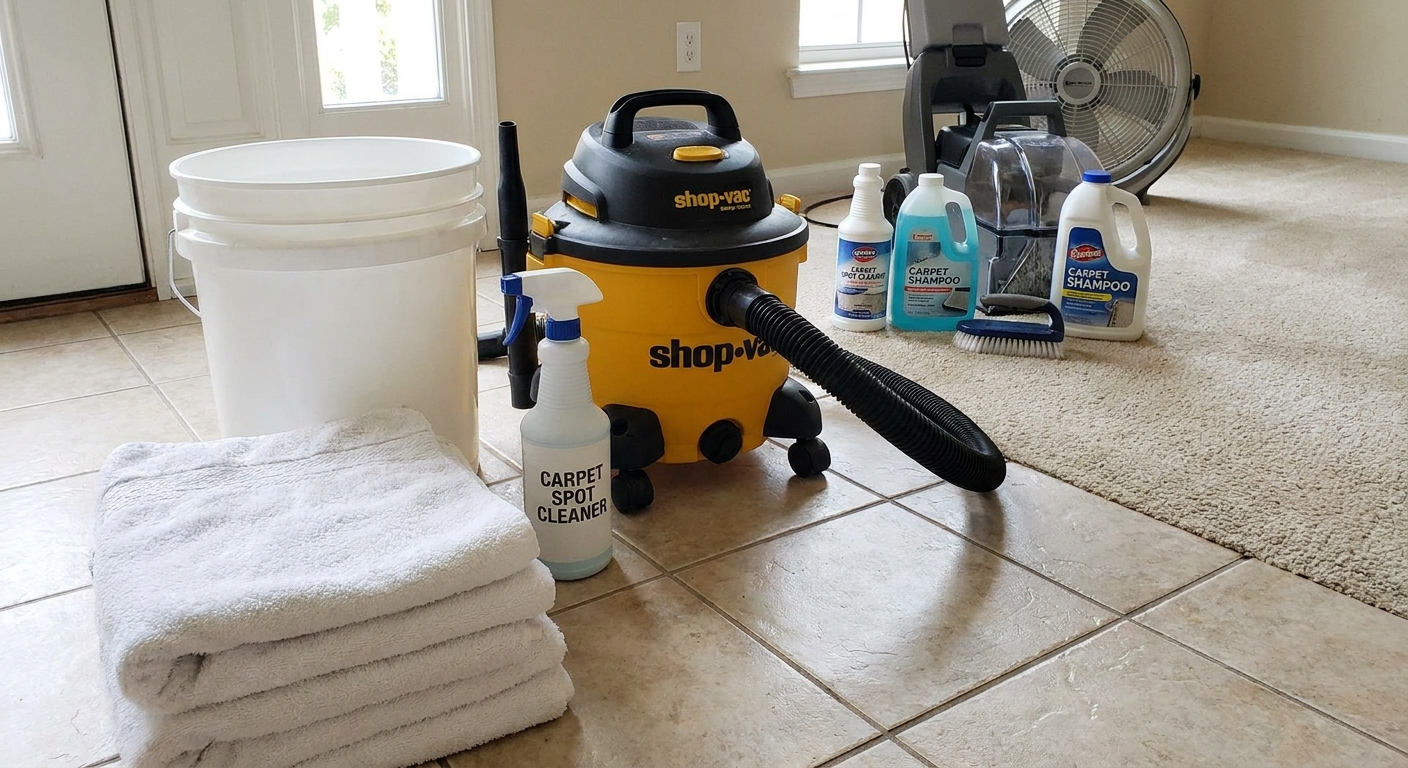
Step 1: Blot, do not rub
- Use paper towels or clean rags to blot up any wet spray or oily residue.
- Work from the outside of the spot toward the center so you do not spread it.
- If you have a wet-dry shop vacuum, it can help lift moisture after blotting.
Step 2: Degrease first
Skunk spray is oily. Before you reach for “odor remover,” loosen the oil.
- Mix a few drops of grease-cutting dish soap into a bowl of warm water.
- Dampen a cloth and dab the area. Avoid soaking the carpet pad.
- Blot with a clean damp cloth to remove soap residue, then blot dry.
Step 3: Treat odor
For skunk odor in carpet, I prefer a carpet-safe peroxide-based pet odor product if your carpet can tolerate it, because oxidation targets the sulfur compounds more directly. Enzyme cleaners can still help with general organic residue and leftover grime, but results vary for skunk spray and you may need multiple applications.
- Peroxide-based carpet product: Spot-test first, then apply per label directions. Do not over-wet.
- Enzyme carpet product: Use one labeled for pet odors and follow dwell-time directions closely. Keep the area slightly damp for the stated time if the label requires it, then extract and dry.
Note on DIY peroxide mixes: I am intentionally not giving a homemade ratio here because carpets, dyes, and backings vary so much. If you want the lowest-risk option, use a product specifically labeled for carpet and follow the label.
Step 4: Rinse and extract
- After the product dwell time, blot with a clean damp cloth (plain water) to lift residues.
- Extract moisture with towels or a wet-dry vacuum.
Step 5: Dry fast
- Run fans and, if you have one, a dehumidifier.
- Keep pets and kids off the damp area until dry.
Delicate rugs
If you have a wool rug, antique rug, or a rug with unknown dyes, stop after blotting and light degreasing and call a rug-cleaning specialist. Aggressive oxidizers can permanently lighten natural fibers and some dyes.
When carpet has to go
Most carpet can be saved, but these are the “replacement is saner” scenarios:
- The carpet pad is saturated and odor returns strongly when the room warms up.
- Skunk spray hit an area repeatedly or soaked through a rug into the pad.
- You have tried degreasing plus two or three treatment cycles and it still reappears after drying.
Hard floors, baseboards, and walls
If your dog brushed along walls or shook near baseboards, a lot of odor can sit at nose level for your pets even after the “big smell” fades.
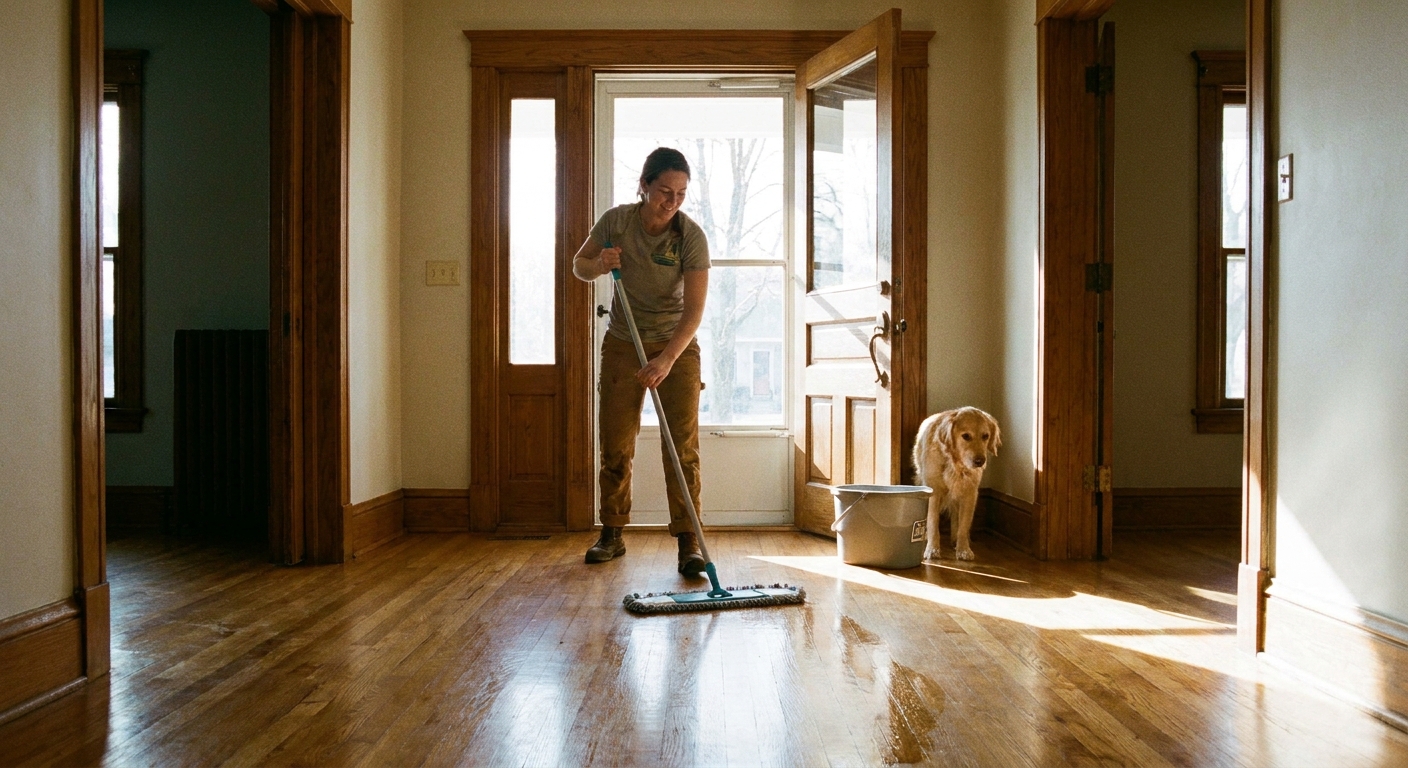
Sealed hardwood, laminate, vinyl, and tile
- Start with warm water plus a small amount of grease-cutting dish soap to lift oil.
- Follow with a clean-water rinse so you do not leave a residue that attracts dirt.
- Dry the floor. Odor can linger in damp grout lines.
Baseboards and painted walls
- Wipe with a microfiber cloth and a mild dish-soap solution.
- Rinse with a clean damp cloth and dry.
- If odor persists, test a small hidden area with a peroxide-based cleaner labeled safe for painted surfaces. For ongoing odor that will not quit, repainting with an odor-blocking primer may help, but only after cleaning thoroughly.
Unsealed wood or porous grout
Porous surfaces can hold sulfur compounds longer. Repeated cleaning and drying cycles may be needed. If the area stays damp, you will keep smelling it.
Upholstery and dog beds
Couches, chairs, and dog beds are frequent culprits because foam and stuffing trap odor. The goal is the same: lift oils, then neutralize, while avoiding over-wetting the cushion core.
Couches and upholstered chairs
- Check the tag for cleaning codes (W, S, WS, X). If it is code X, stick to vacuuming and a dry method, or call a professional.
- Blot and degrease lightly with a small amount of dish soap in water, applied to a cloth, not poured directly on the fabric.
- Use an upholstery-safe odor product and spot-test first. Peroxide-based products can work well on skunk odor, but only if the fabric is colorfast.
- Dry fast with fans. Moisture trapped in cushions can cause mildew plus odor.
Dog beds
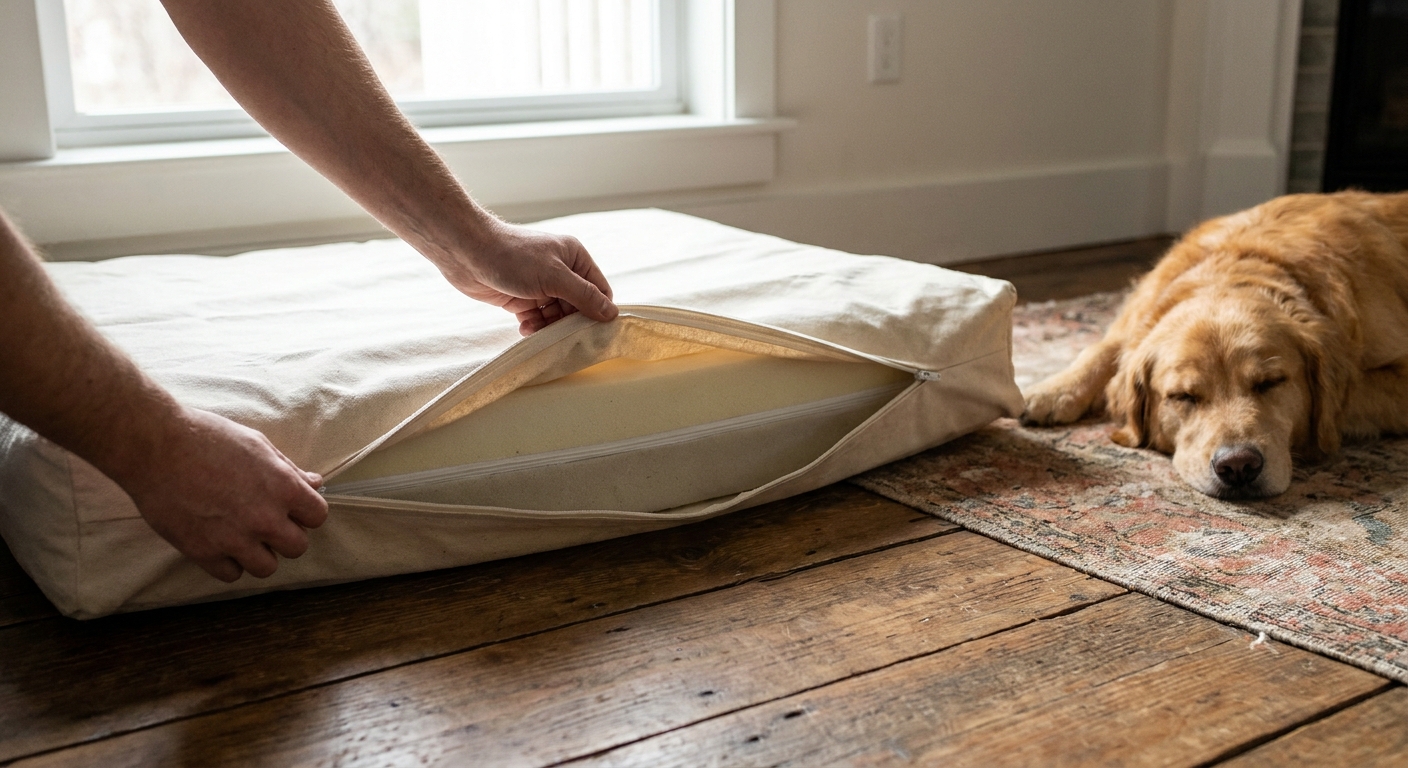
- If the cover is removable, take it off and treat it like laundry (see below).
- If the inner foam smells strongly, it may be faster and cheaper to replace the foam insert than to fight repeated re-odorization.
Leather and suede
Leather and suede hold oils. If they took a direct hit, wipe gently with a damp cloth and a tiny amount of mild soap, then wipe again with plain water and dry. If the smell persists, a leather-cleaning specialist is usually your best next call.
Laundry
Laundry is usually salvageable, but only if you keep heat out of the process until you know you have won.
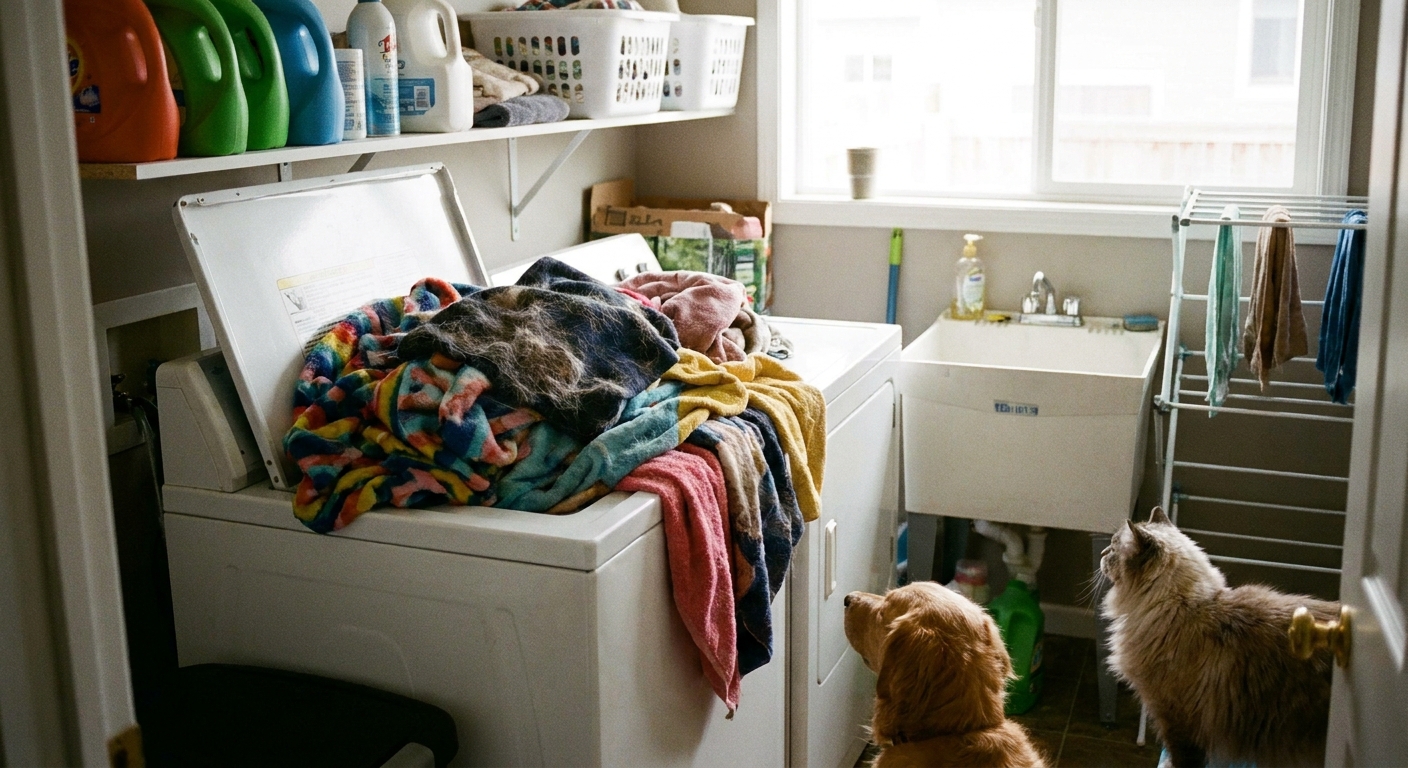
Step 1: Pre-rinse and separate
- Rinse items in cold water first if they are heavily contaminated.
- Wash skunk items separately from your normal laundry.
Step 2: Pre-soak to break up oils
Choose one pre-soak route based on what the fabric can tolerate.
- Dish soap soak: For durable items like towels, add a small amount of grease-cutting dish soap to a tub of warm water and soak 30 to 60 minutes, then rinse well.
- Enzyme detergent soak: Use an enzyme-containing laundry detergent per label directions and soak for 1 to 2 hours.
Step 3: Wash
- Use your normal detergent amount, plus an oxygen bleach (color-safe) if fabric allows.
- Add an extra rinse cycle to flush residues.
- Wash in warm water if the fabric can handle it. Cold is okay, but warm often degreases better.
Step 4: Air-dry and sniff test
- Hang dry or tumble on no heat if your dryer has that option.
- Do a real sniff test when the item is fully dry. If there is any skunk odor left, wash again before using heat.
What to throw away
Not everything is worth saving, especially if it is porous and inexpensive to replace.
- Cheap fleece blankets that are saturated and still smell after two full wash cycles.
- Foam-filled items that cannot be thoroughly washed and dried (some pillows, some dog bed inserts).
- Leather items that took a direct hit and still reek after careful wiping and airing.
Indoor air
Once surfaces are being cleaned, you also want to tackle the airborne odor and the compounds that keep off-gassing.
Ventilation and airflow
- Create a cross-breeze by opening windows on opposite sides of the home.
- Point fans outward in the smelliest room to push air out.
Use activated carbon
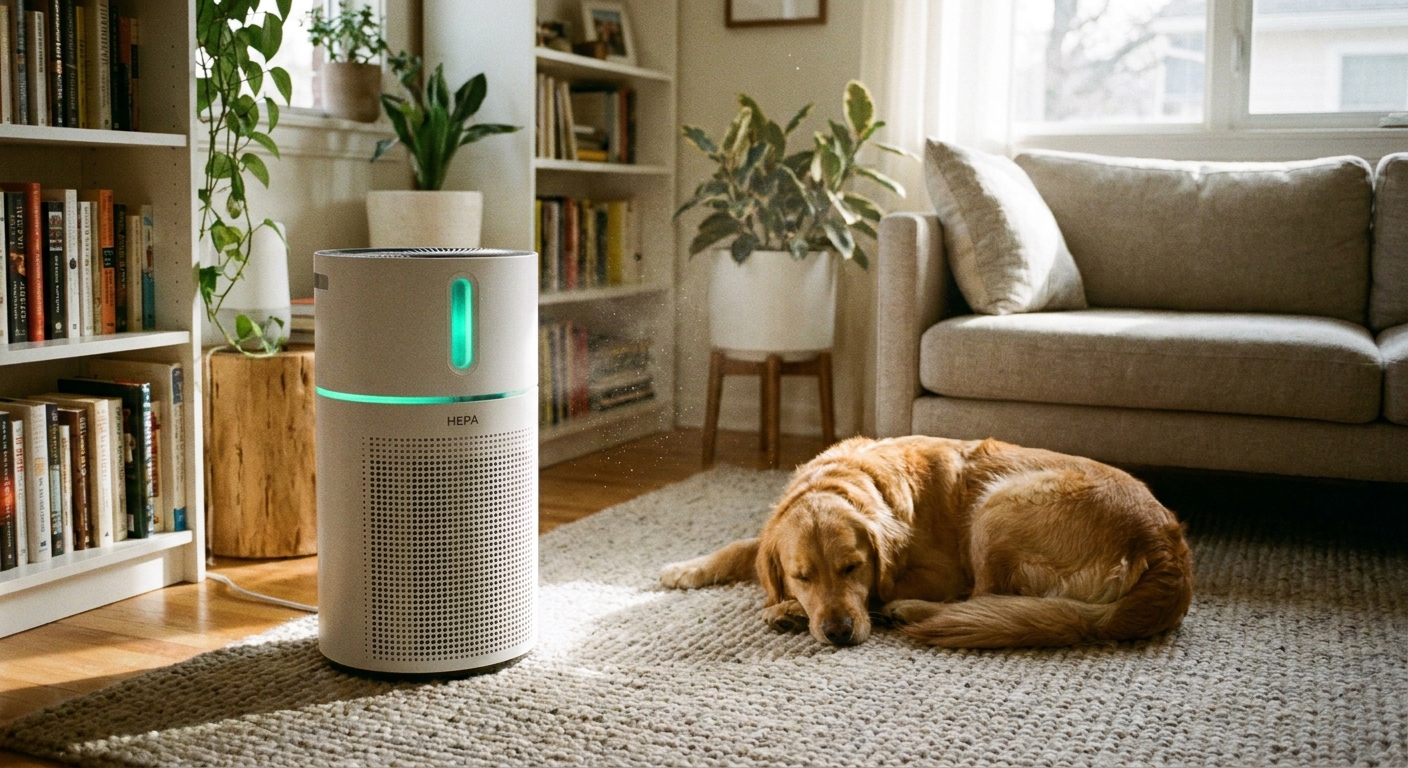
HEPA filters catch particles, but skunk odor is largely a gas-phase problem. An air purifier with activated carbon or a carbon pre-filter can help reduce odor over time, especially in smaller rooms.
HVAC filters and returns
- Swap your HVAC filter soon after the incident, and again in a couple of weeks if the smell was intense.
- Wipe vent covers and cold-air returns where oils and dust can collect.
- If your dog was near a return while wet or freshly sprayed and the odor keeps circulating, lingering smell can be coming from the return area, filter, or nearby surfaces. Duct cleaning is not usually the first step, but if the smell persists after thorough surface cleaning and filter changes, it can be worth an inspection.
Avoid ozone shortcuts
Ozone generators are marketed for odor removal, but ozone is a lung irritant and can be unsafe for people and pets if used improperly. Ozone treatment should only be done in an unoccupied space, followed by thorough ventilation, and it can degrade some materials. If you are considering ozone, hire a trained professional who follows safety protocols.
Rooms and items to target
Entryway and hallway runners
These are usually ground zero for tracked oils. Treat like carpet, and consider removing the runner to clean outside if it is washable or small enough to manage.
Crates, carriers, collars, and leashes
- Hard plastic crates: Wash with dish soap, rinse, dry, then wipe again if odor remains.
- Fabric crates or carriers: Treat like upholstery or washable fabric, depending on labels.
- Nylon collars and harnesses: Soak in warm water with dish soap, rinse well, then air-dry. If odor persists, replacing is often easier.
Cars
If your dog rode in the car after being sprayed, treat the car like a tiny house: remove soft items and wash them, wipe hard plastics with a degreasing cleaner, use an upholstery-safe odor product on seats and carpet, and ventilate aggressively. Odor trapped in seat foam can be surprisingly stubborn.
When to call a professional
If you are still getting hit with waves of odor after cleaning, it usually means there is a reservoir you have not fully removed.
- Carpet pad or subfloor contamination
- Foam cushions saturated inside
- Large-area contamination across multiple rooms
- Delicate rugs or upholstery where aggressive products are too risky
A reputable carpet and upholstery cleaner can do hot water extraction with appropriate detergents and neutralizers once you have removed the bulk of the oils. I would not rush to heat-based treatments before degreasing and spot-treating, especially on carpet.
Quick troubleshooting
- Smell returns when the room warms up: suspect carpet pad, subfloor, or upholstery foam still holding oils.
- Smell is strongest near the door path: focus on runners, edges of carpet, baseboards, and the spot where your dog shook.
- Smell seems to “blow around” the house: change HVAC filters, wipe returns, and keep cleaning the source surfaces.
Quick FAQ
How long does skunk smell last in a house?
If you clean quickly and thoroughly, you can often knock it down in a day or two, with mild lingering odor for a week or so in some homes. If carpet pad, upholstery foam, or HVAC filters are contaminated, it can linger much longer until the source is removed.
Will vinegar remove skunk smell?
Vinegar can help with some odors and can be useful for general cleaning and rinsing, but it does not reliably neutralize skunk sulfur compounds on its own. It is rarely the one-and-done fix for skunk spray in carpet and upholstery.
Why does the smell come back when it rains or gets humid?
Humidity and warmth can increase off-gassing from porous materials. That is a clue that oils remain in carpet pad, fabric backing, or upholstery stuffing.
My simple checklist
- Ventilate and contain the mess
- Bag up porous items for separate washing
- Blot carpet, degrease, then treat odor
- Wash laundry without heat until odor is gone
- Wipe hard floors, walls, and baseboards
- Run carbon filtration if available and replace HVAC filter
Take it one surface at a time. Skunk smell is overwhelming, but with a calm plan, most homes recover beautifully.