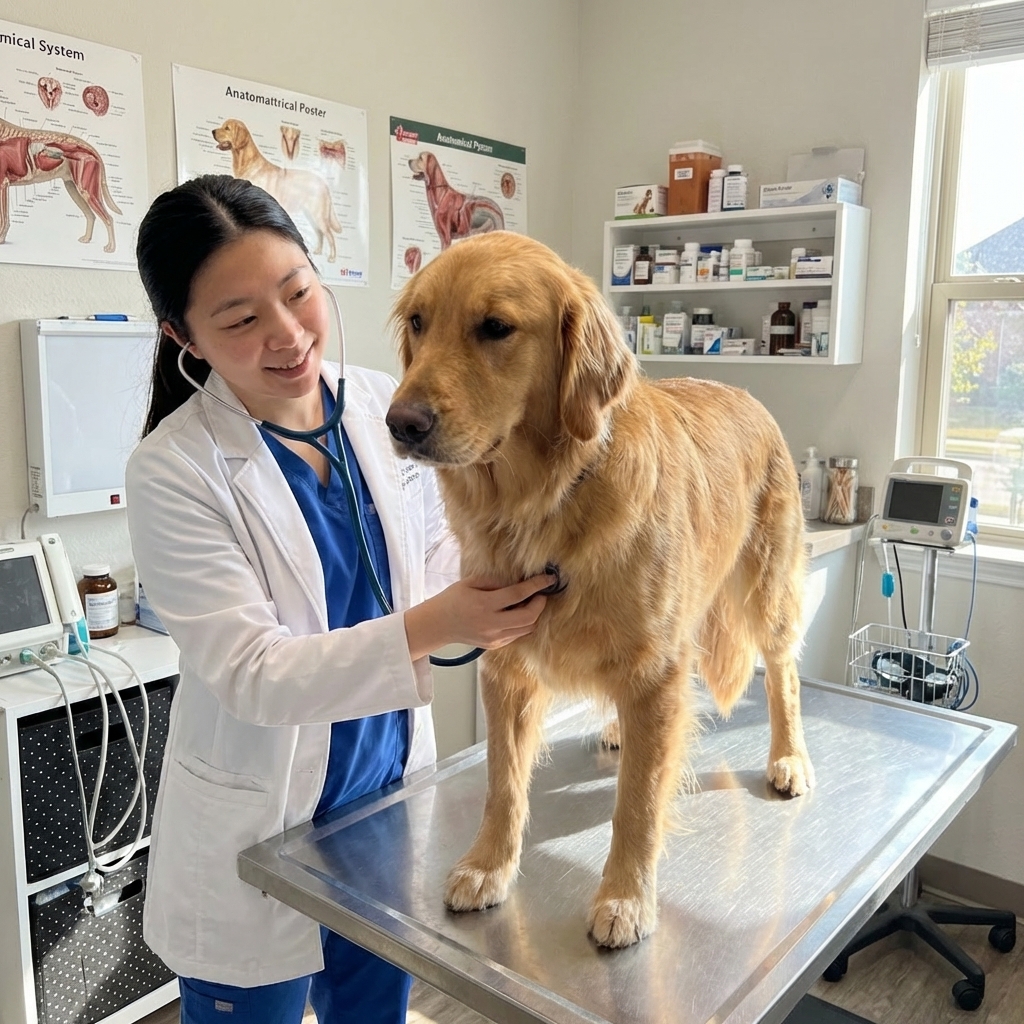
I have had so many worried pet parents ask me, “My vet heard something with the stethoscope. Does that mean my dog has dilated cardiomyopathy?” I totally understand the anxiety. Heart words feel scary.
Dilated cardiomyopathy, usually shortened to DCM, is not just “a heart murmur.” It is a heart muscle disease where the heart becomes weaker and often enlarged, which can make it harder for the heart to pump blood effectively.
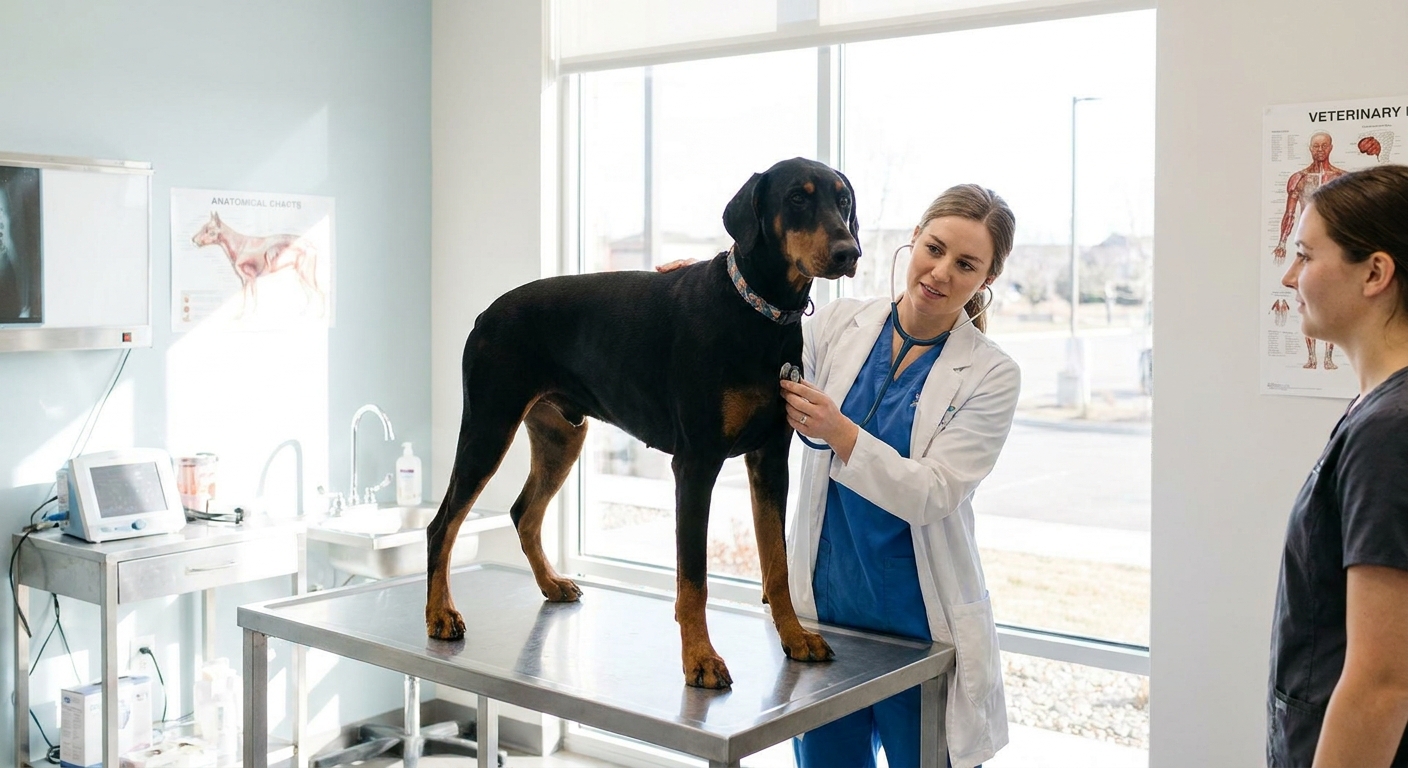
In this article, I’m going to walk you through what DCM is, how it typically progresses, what your veterinarian or veterinary cardiologist is likely to ask you, and why an echocardiogram gives information that listening alone cannot.
What is dilated cardiomyopathy (DCM)?
Dilated cardiomyopathy is a condition where a dog’s heart muscle, especially the main pumping chamber (the left ventricle), becomes dilated and cannot contract as strongly as it should. Over time, the heart’s shape and mechanics change in ways that reduce pumping efficiency.
Think of it like this: a strong heart contracts with purpose and moves blood forward. With DCM, the heart can become more like an over-stretched rubber band that has lost its snap.
Why the heart enlarges
When the heart can’t pump efficiently, the body still needs oxygen and circulation. The heart tries to compensate by enlarging to hold and move more blood. Over time, that compensation can backfire and contribute to worsening function.
The quiet stage
One of the hardest parts of DCM is that it can have an occult (hidden) phase. During this earlier stage, a dog may look totally normal at home. Appetite can be fine. Energy may seem typical. There may be no cough.
Even though a dog looks fine, changes can be happening inside the heart, such as:
- Reduced pumping strength (lower systolic function)
- Enlargement of one or more chambers
- Abnormal rhythms (arrhythmias), sometimes before obvious symptoms
Eventually, if the disease progresses far enough, the weak pumping can contribute to congestive heart failure, where fluid can accumulate. Depending on which side of the heart is most affected, fluid may build up in the lungs and cause breathing changes, and/or in the abdomen and chest space (leading to a pot-bellied look or trouble breathing).
This is also where a simple home tool becomes especially helpful: tracking resting respiratory rate (breaths per minute while your dog is asleep or fully relaxed). Rising resting breathing rates can be an early clue that fluid is building up, even before a crisis.
Common signs at home
Signs vary depending on how advanced the condition is and whether abnormal rhythms are present. Some dogs show subtle changes first.
Possible early signs
- Tiring faster on walks
- Less interest in play
- Slower recovery after exercise
- Restlessness at night or seeming “uncomfortable” lying down
More concerning signs
- Fainting or collapse (often tied to arrhythmias)
- Weakness that comes on suddenly
- Rapid breathing when resting
- Coughing, especially with activity or at night
- Distended abdomen (possible fluid buildup in the belly)
- Reduced appetite or weight loss over time
If your dog collapses, has labored breathing, or you see blue or gray gums, that is an emergency. Don’t wait it out.

Breeds at higher risk
DCM can occur in any dog, but certain breeds are more strongly associated with it. Veterinary cardiologists often have a higher index of suspicion in:
- Doberman Pinschers
- Great Danes
- Irish Wolfhounds
- Newfoundlands
- Saint Bernards
- Portuguese Water Dogs
A few breed notes that are worth knowing:
- Boxers are classically predisposed to arrhythmogenic right ventricular cardiomyopathy (ARVC), which is a rhythm-focused heart muscle disease. Some Boxers can also develop a more DCM-like (dilated, weak-pumping) picture, and a cardiologist will help sort out which pattern fits.
- Cocker Spaniels have had DCM reported in some lines and regions, including cases that may be linked to nutritional factors. It is not as universally emphasized as Dobermans or Great Danes, but it can still be on a cardiologist’s radar depending on the individual dog.
This does not mean a mixed breed or a smaller breed cannot develop DCM. It simply means breed history can change how aggressively a vet screens and how they interpret risk.
What a cardiologist will ask
When you see a veterinary cardiologist, it can feel like a lot of questions at once. Those questions are not “small talk.” They help narrow down whether this is likely DCM, another heart problem, or something outside the heart entirely.
Health history questions
- When did symptoms start?
- Any episodes of collapse, weakness, or “suddenly going down”?
- Changes in stamina, cough, breathing rate, or appetite?
- Current medications and supplements?
- Any other diagnoses, such as hypothyroidism?
Family and breed background
- Breed and age (DCM is often adult-onset)
- Any known heart disease in related dogs?
- Previous screening results, if your dog has been monitored
Diet history questions
Cardiologists commonly ask detailed diet questions, including:
- Exactly what food is fed (brand, formula, and whether it is kibble, canned, fresh, or home-prepared)
- How long your dog has been on that diet
- Treats, chews, toppers, and table foods
- Whether the diet is limited-ingredient or for sensitivities
Those questions help the cardiology team build a full picture. Diet-associated DCM has been reported, and it is still an evolving area. If diet changes or specific nutrients are part of the conversation for your dog, your veterinarian or cardiologist will guide you based on test results.
How DCM is diagnosed
Here is the big picture: symptoms, breed risk, and what your vet hears on exam are the reasons we test, but DCM itself is diagnosed with a combination of physical findings and cardiac diagnostics.
DCM is diagnosed by combining physical exam findings with cardiac testing. Because DCM is a muscle and function problem, tests that evaluate structure and pumping ability are extremely important.
Physical exam and stethoscope findings
On exam, your vet may hear:
- A heart murmur (sometimes due to leaky valves secondary to enlargement)
- An irregular rhythm (arrhythmia)
- Faster-than-normal heart rate
But here is the honest truth: a stethoscope alone cannot confirm or rule out DCM. Some dogs with significant DCM do not have a dramatic murmur. Others may have rhythm changes that are intermittent and not caught in a short visit.
Echocardiogram
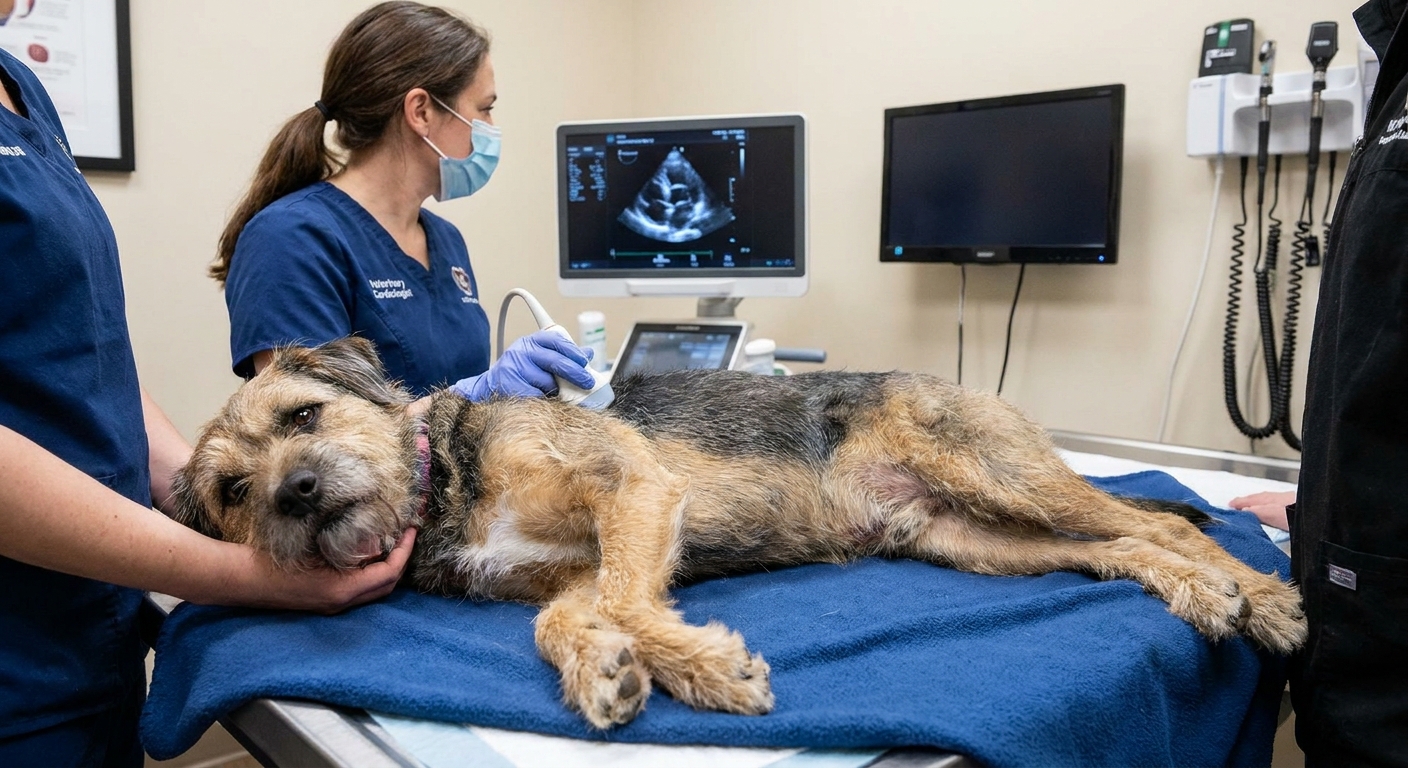
An echocardiogram (cardiac ultrasound) is the test that allows a cardiologist to actually see the heart chambers and measure function in real time.
With an echocardiogram, the cardiologist can evaluate:
- Chamber size (is the left ventricle dilated?)
- Wall motion and pumping strength (systolic function)
- Valve movement and degree of leakage
- Overall heart shape and mechanics
A murmur tells you that turbulent blood flow is present. An echocardiogram can tell you why and whether the muscle itself is failing.
ECG and Holter monitoring
Because DCM can be closely tied to arrhythmias, many dogs also need rhythm evaluation. Your vet may recommend:
- ECG in the clinic to capture rhythm at that moment
- Holter monitor (a wearable 24-hour, sometimes longer, rhythm monitor) to catch intermittent arrhythmias at home
Chest X-rays and bloodwork
Chest radiographs (X-rays) can help assess:
- Overall heart silhouette size
- Changes in the lungs that could suggest fluid buildup
Bloodwork may be used to look for contributing issues and overall health status before starting medications. Some vets may also use cardiac biomarkers (blood tests that can reflect heart strain or injury) as part of the bigger picture, especially for screening and monitoring.
Is DCM the same as a murmur?
No. A heart murmur is a sound your veterinarian hears. It is a clue, not a diagnosis by itself. DCM is a specific disease process that weakens the heart muscle and changes the heart’s structure and performance.
A dog with DCM may have a murmur, especially as the heart enlarges and valves become leaky, but some dogs with DCM do not have a loud murmur early on. And plenty of dogs have murmurs for other reasons that have nothing to do with DCM.
What else can look like DCM?
This is one reason cardiology testing matters. Several conditions can overlap in symptoms or exam findings, including:
- Degenerative mitral valve disease (a common cause of murmurs in small dogs)
- Congenital heart disease (murmurs present from a young age)
- Myocarditis (inflammation of the heart muscle)
- Hormonal or metabolic disease that can affect the heart (including hypothyroidism in some dogs)
- Nutritional factors in a subset of cases, depending on diet history and test results
Your veterinarian or cardiologist is the right person to connect the dots for your dog’s specific situation.
What causes DCM?
DCM can be complex. In many dogs, it is thought to have a genetic component, especially in predisposed breeds. In other cases, DCM-like changes may be associated with underlying issues that your veterinarian will look for.
Depending on the dog, your veterinary team may consider:
- Inherited predisposition
- Other medical conditions that can affect the heart over time
- Diet-associated DCM as a possibility in some cases (an evolving area that requires individual evaluation)
If your dog is diagnosed with DCM, ask your veterinarian what they believe the most likely driver is in your dog’s case, and what monitoring schedule they recommend.
Screening for high-risk dogs
If your dog is in a higher-risk breed (especially if there is family history), ask your vet whether proactive screening makes sense. In many practices, screening in adulthood may include an echocardiogram plus rhythm monitoring (often a Holter) at an interval your cardiologist recommends. The goal is to catch the occult phase, when a dog still looks completely fine at home.
Treatment overview
Treatment depends on the stage of disease and what the testing shows. Some dogs are diagnosed in the occult phase, while others are diagnosed after symptoms begin.
- Occult (preclinical) DCM: some dogs are started on medications to support heart function (pimobendan is a common example in appropriate cases), along with regular rechecks to track heart size, function, and rhythm.
- Congestive heart failure: treatment often includes a diuretic to remove excess fluid, plus other medications to reduce workload on the heart and improve forward flow. Your vet will also talk with you about home monitoring, including resting respiratory rate.
- Arrhythmias: if rhythm problems are significant, an antiarrhythmic medication may be prescribed, guided by ECG or Holter results.
Because DCM is not one-size-fits-all, the best plan is the one based on your dog’s echo measurements, rhythm results, and overall health.
Prognosis
I wish there were a single simple answer here, but prognosis with DCM varies widely. It depends on things like the underlying cause, the stage at diagnosis, whether serious arrhythmias are present, and the dog’s breed.
In some dogs, especially when caught early, careful monitoring and treatment can help stabilize things and improve quality of life. In other dogs, the disease can be more aggressive. Your cardiologist is the best person to give you a realistic outlook for your dog based on testing results.
What to do if you are worried
If you are concerned, you are not overreacting. Early evaluation can make a real difference in how well DCM is managed.
Bring these to your appointment
- A written list of symptoms and when they happen
- Videos of any collapse episodes, coughing fits, or unusual breathing
- Your dog’s full diet and treat list
- Any previous records, X-rays, ECGs, or lab results
At-home observations that help
- Keep notes on exercise tolerance
- Track resting breathing when your dog is asleep or fully relaxed
- Write down episodes of weakness, wobbliness, or fainting
Most importantly, if something feels suddenly worse, especially breathing trouble or collapsing, seek emergency care.
DCM FAQs
Can a young dog get DCM?
It is more common in adult dogs, but age alone does not rule it out. Breed risk and family history matter, and some dogs can show signs earlier than expected.
Does DCM always lead to heart failure?
Not always, and not immediately. Some dogs are diagnosed in the occult stage and can be monitored and treated before severe complications occur. Outcomes vary depending on the cause, the dog’s rhythm, and how advanced the disease is at diagnosis.
If my dog’s vet did not hear a murmur, can it still be DCM?
Yes. DCM can be present without a prominent murmur, especially early. That is one reason cardiologists rely on echocardiograms and rhythm testing when DCM is suspected.
Is DCM contagious?
No. DCM is not an infectious disease you can “catch” from another dog.
Bottom line
Dilated cardiomyopathy is a weak-heart-muscle disease that can be quiet at first, then become serious as the heart struggles to pump effectively and rhythm problems develop. A stethoscope exam is important, but an echocardiogram is what lets a cardiologist measure heart size and function and truly evaluate for DCM.
If you are worried about your dog, trust that instinct and talk with your veterinarian. Getting answers early is one of the kindest things you can do for your pup.