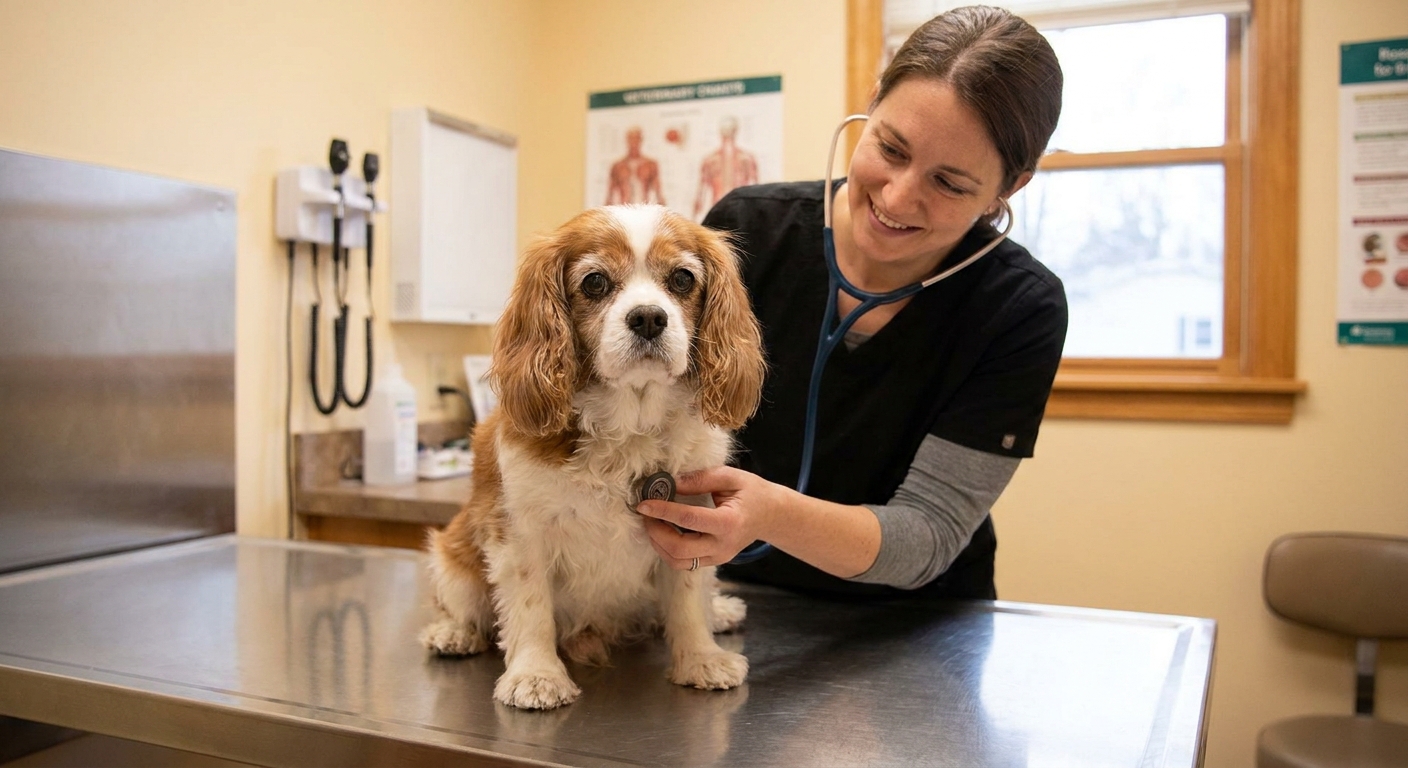
As a veterinary assistant here in Frisco, Texas, I see this scenario all the time: a dog comes in for a routine exam, feels totally fine, and then the veterinarian hears a new heart murmur. One of the most common causes of a new left apical systolic murmur in small-breed adult dogs is myxomatous mitral valve disease, often shortened to MMVD.
The good news is that MMVD usually progresses slowly, and many dogs live comfortably for years with the right monitoring plan. The key is understanding what MMVD is, how it changes over time, and what your vet is looking for when they recommend rechecks, x-rays, or an echocardiogram.
What MMVD is (and what it is not)
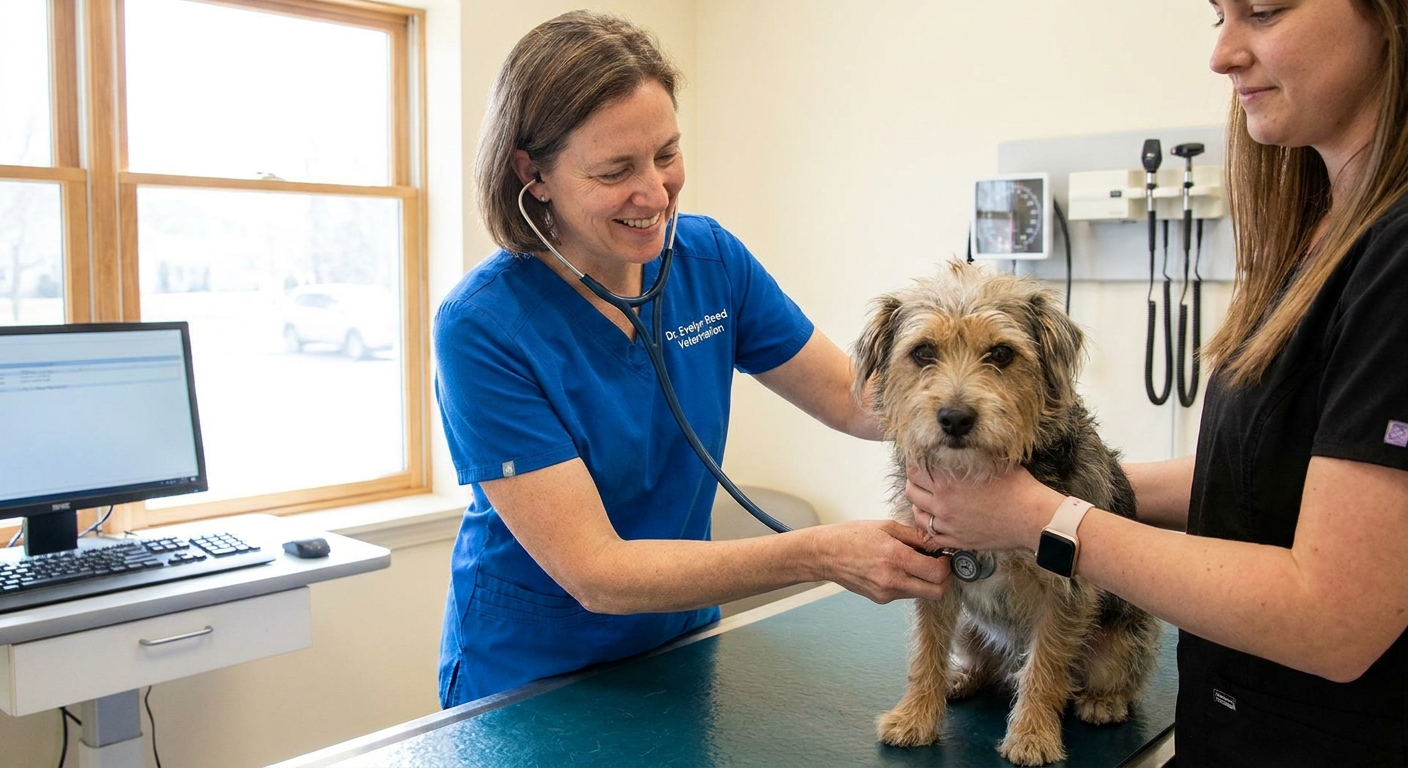
MMVD is a degenerative disease of the mitral valve, the valve between the left atrium and left ventricle of the heart. Over time, the valve tissue becomes thickened and less able to seal tightly. When the valve does not close properly, some blood leaks backward with each heartbeat. That backward flow is called mitral regurgitation.
MMVD is not an infection (like endocarditis) and it is not a congenital defect the dog is born with. It is most often an age-related, degenerative wear-and-tear process influenced by genetics, especially in small and medium dogs.
Why MMVD causes a heart murmur
A heart murmur is a sound created by turbulent blood flow. In MMVD, the turbulence comes from blood leaking backward across the mitral valve during contraction. Many MMVD murmurs are described as:
- Left apical systolic (heard best on the left side near the heart apex)
- “Whooshing” in quality
- Variable in loudness, which does not always perfectly match disease severity
That last point surprises people: a loud murmur can still be early MMVD, and a softer murmur can sometimes coexist with meaningful heart enlargement. That is why vets lean on imaging and measurements, not just the murmur grade.
Which dogs commonly get MMVD
MMVD is especially common in small-breed, middle-aged to older dogs. Cavaliers are well known for it, but they are not the only ones. In general practice, MMVD frequently shows up in breeds and mixes like:
- Miniature Poodles and Poodle mixes
- Chihuahuas
- Yorkshire Terriers
- Dachshunds
- Shih Tzus
- Maltese
- Pomeranians
- Small mixed-breed dogs
Larger dogs can develop mitral regurgitation too, but when a big dog has a murmur, your veterinarian may also consider other causes (including different types of cardiomyopathy). Breed and body size help guide the next best test.
How MMVD progresses
Veterinary cardiology commonly describes MMVD using a staging system that helps separate monitoring from treatment. The stages below are a practical way to think about the disease in real life. One important reassurance: many dogs spend years in the early stages, and some never develop congestive heart failure at all.
Stage B1: Murmur present, heart not enlarged
In this stage, the valve is leaking enough to create a murmur, but the heart has not remodeled significantly. Many dogs feel completely normal.
- Often no symptoms
- Many dogs do not need heart medications yet
- Focus is on baseline measurements and planned rechecks
Stage B2: Murmur plus heart enlargement
Here, the leak has caused enough extra volume workload that the left side of the heart starts to enlarge. This is a very important transition point because evidence supports starting medication in appropriately diagnosed B2 dogs.
- Dog may still appear asymptomatic
- Imaging shows left atrial and left ventricular enlargement
- Many veterinarians and cardiologists commonly start pimobendan in confirmed Stage B2 dogs, based on published evidence. Your vet will decide if it is appropriate for your dog.
Stage C: Congestive heart failure (CHF) due to MMVD
Stage C means the heart can no longer keep up without fluid backing up, most commonly into the lungs, leading to pulmonary edema. This stage requires prompt treatment, because fluid in the lungs is an emergency.
Common signs include:
- Increased resting respiratory rate
- Fast or labored breathing
- Exercise intolerance
- Restlessness, trouble getting comfortable
- Coughing (can happen, but may be mild or even absent in some dogs with pulmonary edema)
This is the stage where medications to control fluid and reduce cardiac workload are typically used long term.
Stage D: Refractory CHF
This means CHF is harder to control with standard medications. Management becomes more complex and individualized, often involving a veterinary cardiologist. I will mention it briefly for completeness, but most owners reading about MMVD are trying to understand the disease earlier than this, which is smart.
How vets confirm enlargement
“Heart enlargement” sounds simple, but in real life it is measurement-based. This is why you might hear your vet say, “The murmur is there, but we need imaging to stage it.”
- Chest x-rays help estimate overall heart size and, just as importantly, check the lungs for pulmonary edema.
- Echocardiogram (heart ultrasound) measures chamber size more directly. Cardiologists often use standardized measurements (for example, left atrial size and left ventricular dimensions) to decide whether a dog truly fits Stage B2.
In our clinic, I often describe it to owners like this: the murmur tells us there is a leak, but imaging tells us whether the heart is adapting quietly or starting to stretch from extra workload.
What an echocardiogram shows in MMVD
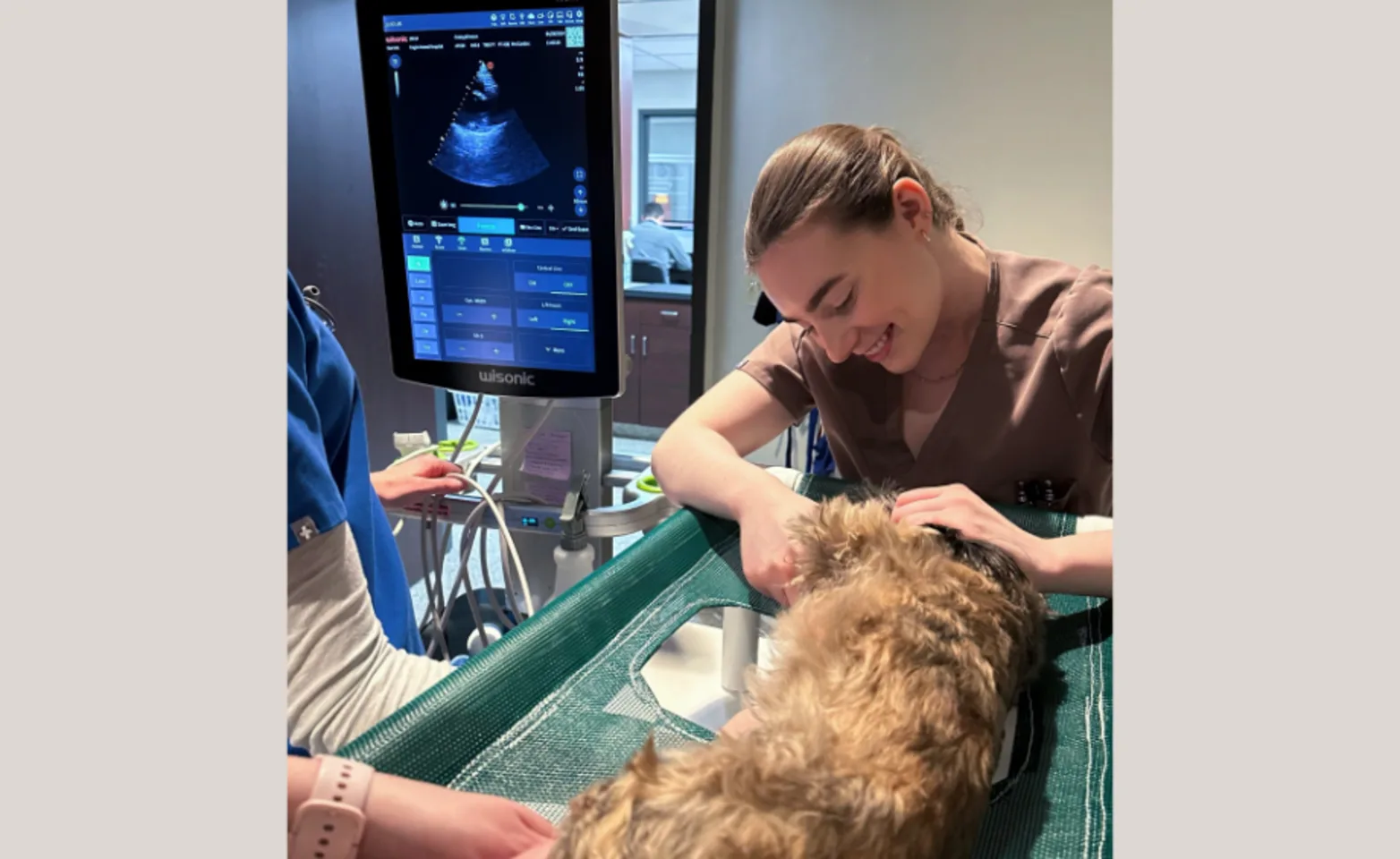
An echocardiogram is an ultrasound of the heart. It is the gold-standard test to confirm MMVD, measure severity, and determine whether the heart has enlarged enough to change your dog’s treatment plan. (In many dogs, MMVD is strongly suspected based on breed, age, and a classic murmur, but the echo is what lets your veterinarian quantify what is happening.)
Common echo findings in MMVD include:
- Thickened, “redundant” mitral valve leaflets (the valve tissue looks lumpy or floppy)
- Mitral valve prolapse in some dogs (valve billows backward)
- Color Doppler evidence of regurgitation (the backward jet of blood is visible)
- Left atrial enlargement as the leak becomes more significant
- Left ventricular dilation (volume overload changes the chamber size)
Those chamber measurements matter. A dog can have a murmur for years with minimal remodeling, and another dog can progress more quickly. Echo data helps your veterinarian tailor follow-up and, when appropriate, start medications at the right time.
Monitoring vs treating CHF
This is one of the most important distinctions I explain to pet parents in the exam room.
Monitoring focuses on catching change early
In Stage B1 and many B2 dogs, you may be in a “watchful and prepared” phase. Monitoring may include:
- Regular physical exams and murmur checks
- Periodic chest x-rays to evaluate heart size and lung fields
- Echocardiograms to measure chamber sizes and regurgitation severity
- Blood pressure checks if your vet is concerned about hypertension
- Resting respiratory rate tracking at home (a simple, powerful tool)
Many clinics recommend counting breaths per minute while your dog is asleep or deeply resting. In my experience, owners do best when they jot the number in their phone notes for a week or two so we can see a trend instead of guessing.
As a general discussion point for many small dogs, a sustained sleeping resting respiratory rate over about 30 to 35 breaths per minute can be a red flag to call your veterinarian, but your vet may set a different target based on your dog and their diagnosis.
Treating fluid in the lungs is urgent
Once a dog develops pulmonary edema, the goal shifts to stabilizing breathing and removing excess fluid. Typical steps in a hospital setting may include:
- Oxygen support
- A fast-acting diuretic to reduce lung fluid (commonly furosemide, as prescribed)
- Chest x-rays to confirm and track response
- Adjusting long-term medications after stabilization (often a combination that may include a diuretic, pimobendan, and other medications your vet selects)
If your dog is breathing hard, cannot settle, or has pale or bluish gums, treat it as urgent and seek veterinary care immediately.
Common questions I hear
Can my dog have MMVD without symptoms?
Yes. Many dogs are diagnosed when the only finding is a murmur. That is why wellness exams are so valuable, especially as dogs reach middle age.
Does a higher murmur grade mean my dog is in heart failure?
Not necessarily. Murmur loudness can correlate with leak severity, but it is not a perfect measure of heart enlargement or CHF. Imaging tells the fuller story.
Will my dog need medicine right away?
Some dogs do not need medication in early MMVD. Others, especially those with confirmed heart enlargement (often Stage B2), may benefit from starting medication such as pimobendan before CHF occurs. This decision should be based on exam findings plus echocardiogram or radiograph measurements.
Is coughing always from heart disease?
No. Small dogs frequently cough from airway issues (like chronic bronchitis or collapsing trachea) that can coexist with a murmur. If your dog coughs, your vet will often recommend chest x-rays and possibly additional testing to separate airway disease from pulmonary edema.
What you can do at home
You do not have to do everything perfectly to make a real difference. Here are practical, vet-approved habits that help.
- Track resting breathing a few times a week, especially if your dog is Stage B2 or higher.
- Keep a lean body condition. Extra weight increases workload on the heart and lungs.
- Maintain gentle, consistent exercise as advised by your veterinarian. Most stable dogs benefit from normal walks, not sudden strenuous bursts.
- Give medications exactly as prescribed and do not stop a heart medication without veterinary guidance.
- Bring updates to rechecks: appetite, energy, cough, breathing rate, and any fainting or weakness episodes.
If you are interested in nutrition changes or supplements, talk with your veterinarian before adding them. “Natural” can still interact with heart medications, and salt content matters for many heart patients.

When to ask for an echo
Not every murmur needs an immediate specialist visit, but an echocardiogram is especially helpful when:
- The murmur is new in a middle-aged or older dog and you want a clear baseline
- Your vet suspects heart enlargement on exam or chest x-rays
- There are symptoms like cough, exercise intolerance, fast breathing, or fainting
- Your dog is being considered for anesthesia (like a dental procedure) and the team wants the best risk assessment
A cardiologist can help confirm the stage, fine-tune medication choices, and set a monitoring schedule that matches your dog’s exact measurements.
How often to recheck
Recheck timing is individualized, but as a general idea:
- Stage B1 dogs often do well with routine rechecks on a schedule your veterinarian sets, plus repeat imaging as recommended.
- Stage B2 dogs are usually monitored more closely, since medication may be started and changes can be more meaningful.
- Stage C dogs often need more frequent check-ins, especially after medication adjustments.
If you are ever unsure what your dog’s next step is, ask your veterinary team, “What stage do you think we are in, and what are we watching for next?” It is one of the clearest questions you can bring into the appointment.
Takeaway
Myxomatous mitral valve disease is a common, often slowly progressive cause of heart murmurs in small-breed adult dogs. The disease typically moves from a quiet leak, to measurable heart enlargement, and only later to congestive heart failure in some dogs.
If you remember one thing, let it be this: monitoring MMVD is about measuring change over time, while treating CHF is about addressing fluid in the lungs right now. With early detection, thoughtful follow-up, and prompt care if symptoms appear, many dogs with MMVD enjoy a happy, active life for a long time.