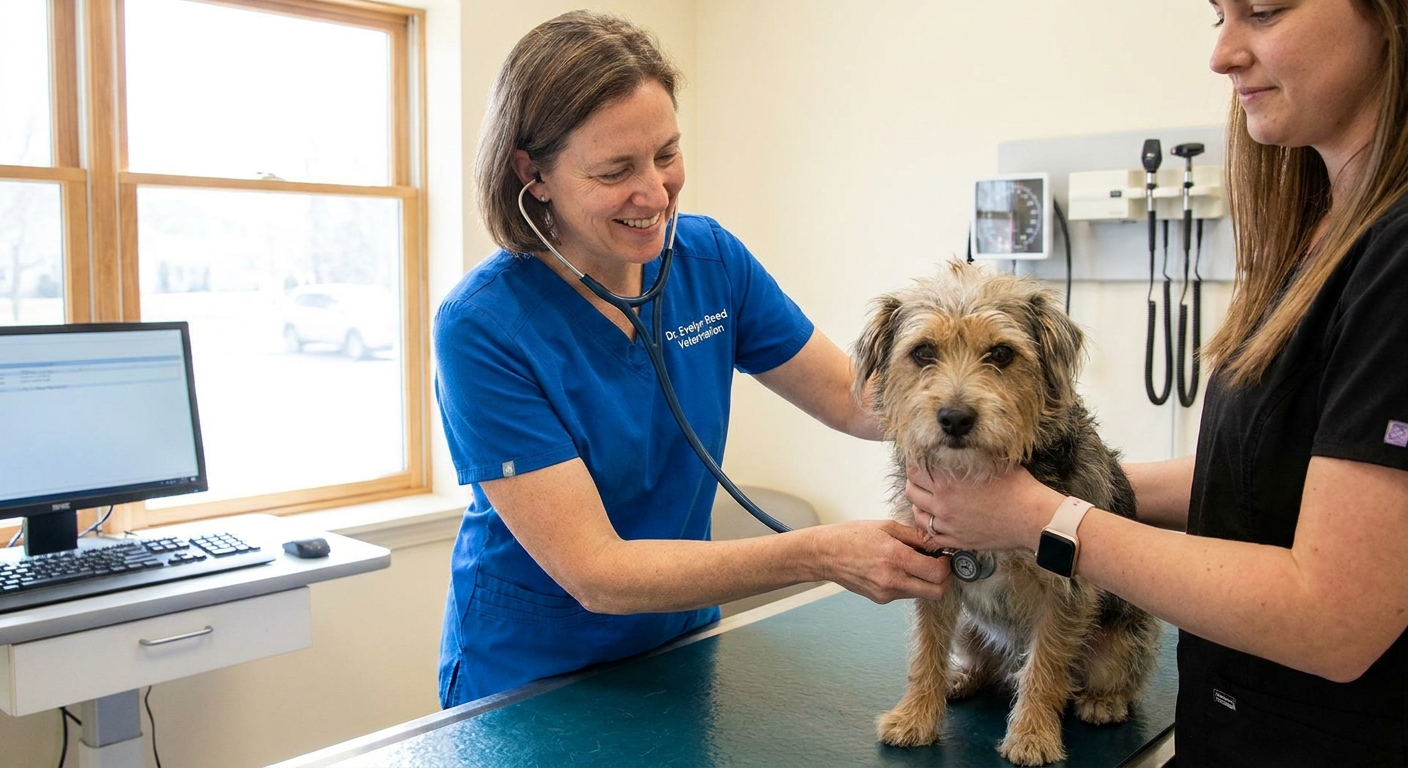
As a veterinary assistant here in Frisco, Texas, one of the hardest conversations I see families wrestle with is this: “My dog feels totally fine. Why are we starting a heart medication now?” If your dog has a heart murmur and your vet is talking about pimobendan, it can feel scary or premature.
But for many dogs with mitral valve disease, pimobendan is not a “last resort” drug. It is often used before coughing, breathing trouble, or fluid buildup happens, specifically when testing shows the heart is already enlarging in a meaningful way. The goal is simple: help your dog feel good longer and delay progression to congestive heart failure.
Why treat a murmur with no cough?
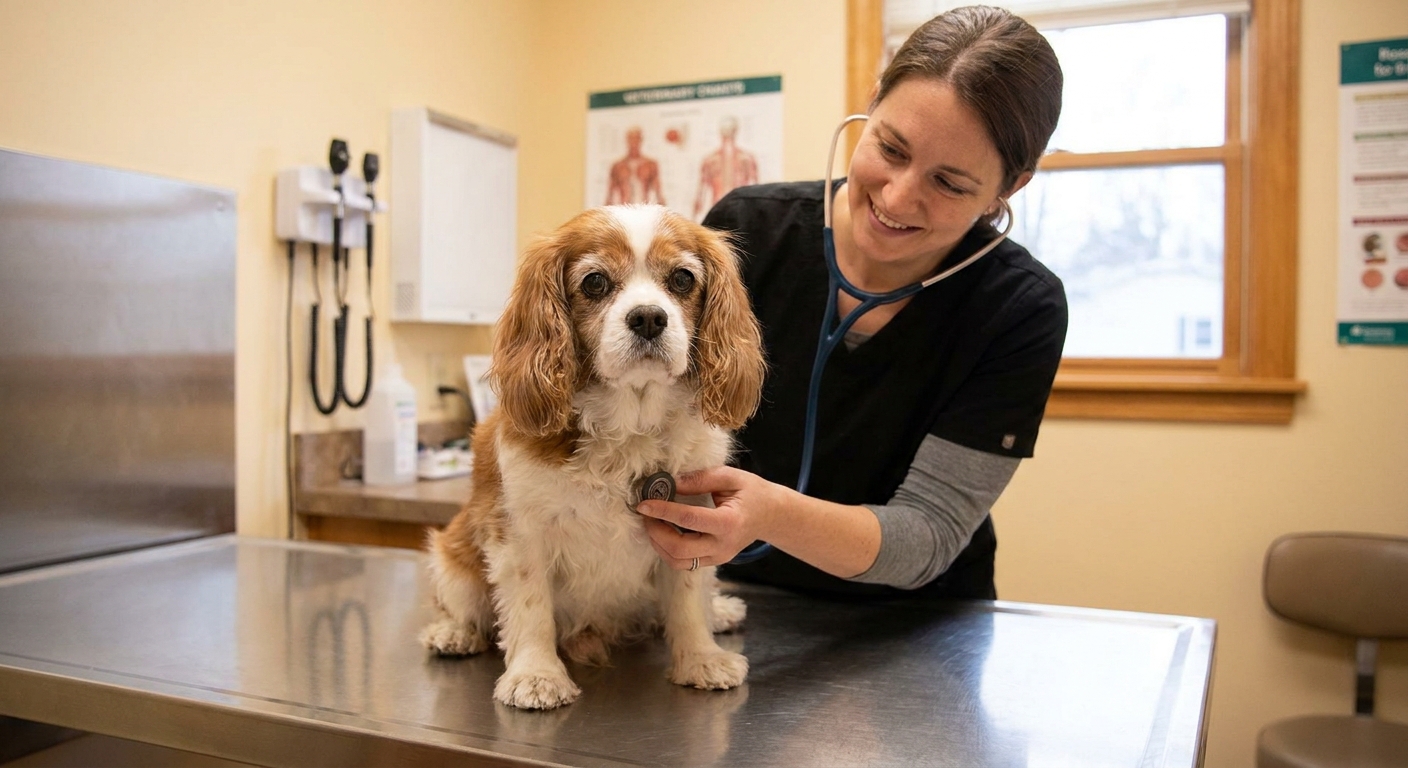
A heart murmur is the sound of turbulent blood flow. In small and medium senior dogs, one of the most common causes is degenerative mitral valve disease (also called myxomatous mitral valve disease), where the valve becomes leaky and some blood moves backward with each heartbeat.
That said, a “new murmur” is not automatically mitral valve disease. Other problems can also cause a murmur, including other valve disease, anemia, congenital issues noticed later, or a non-heart cause. That is why your vet pairs the exam with imaging and sometimes lab work to figure out what is actually going on.
Early on, many dogs have a murmur but no symptoms. That does not always mean the heart is unaffected. Over time, the extra volume the heart has to handle can cause:
- Left atrial enlargement (the receiving chamber stretches)
- Left ventricular enlargement (the pumping chamber dilates)
- Higher pressures backing up toward the lungs (congestion can develop later if the heart can no longer compensate)
Coughing and fluid in or around the lungs tend to show up later, when the heart can no longer keep up. Some dogs benefit from starting pimobendan during the enlargement phase, before they ever develop congestive heart failure.
What pimobendan does
Pimobendan is often described as an inodilator. That means it does two helpful things:
- Helps the heart squeeze more effectively (improves contractility)
- Helps blood vessels relax a bit (reduces the resistance the heart pumps against)
In dogs with the right type and stage of mitral valve disease, this can reduce strain on the heart and help postpone heart failure.
Important note: pimobendan is not “a murmur medicine.” It is a heart function medicine used when the disease has progressed to a point where studies have shown benefit. It is most classically recommended for Stage B2 mitral valve disease (and it is also used in certain cases of dilated cardiomyopathy), but it is not automatically appropriate for every murmur or every kind of heart disease.
When vets start pimobendan
Veterinarians often use a staging system from cardiology guidelines to describe mitral valve disease progression:
- Stage B1: Murmur present, but no significant heart enlargement yet. Dogs feel normal.
- Stage B2: Murmur present and the dog still feels fine, but testing shows clear enlargement of the heart due to mitral valve leakage.
- Stage C: Congestive heart failure has occurred (current or past), meaning fluid buildup in the lungs or chest cavity, or clear signs that require decongesting treatment.
- Stage D: Advanced heart failure that is difficult to control.
Pimobendan is commonly started in Stage B2. This is why your dog can be eating, playing, and breathing normally, and still be a good candidate. The key is that Stage B2 is confirmed with diagnostic testing, not just by how loud the murmur sounds.
How Stage B2 is confirmed
I wish every pet parent knew this part, because it reduces so much confusion: murmur grade alone cannot reliably tell you whether a dog is B1 or B2. Some dogs have a loud murmur with minimal enlargement, and others have meaningful enlargement with a murmur that is not dramatic.
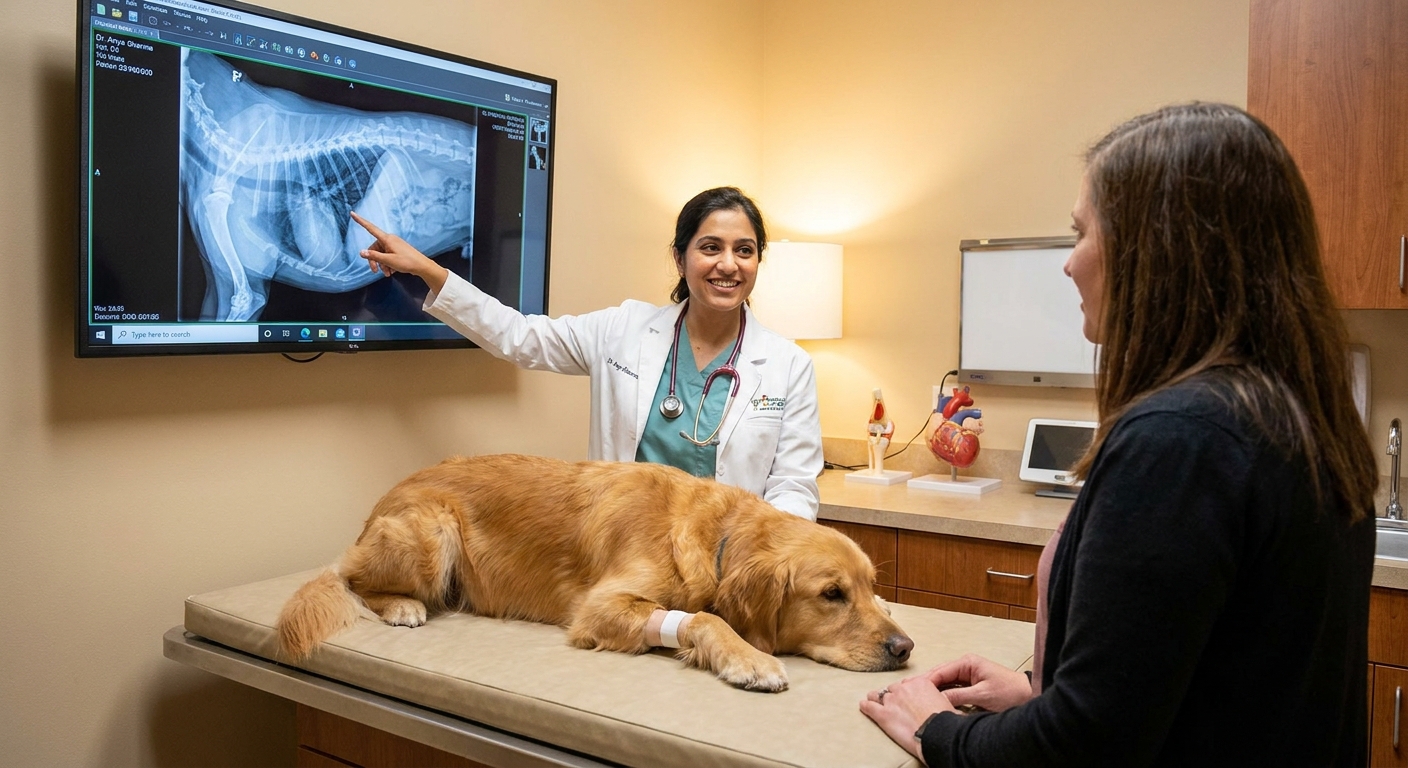
1) Chest X-rays
Chest X-rays help assess:
- Overall heart size
- Whether the left atrium looks enlarged
- Whether there is any sign of pulmonary edema (fluid in the lungs)
Many vets use a measurement called the vertebral heart score (VHS) as one piece of the puzzle. X-rays are very useful, but they do not measure the heart as precisely as an echocardiogram.
2) Echocardiogram
An echocardiogram is the gold standard for staging mitral valve disease. It allows a cardiologist or trained veterinarian to:
- See the mitral valve structure and how it moves
- Measure the size of the left atrium and left ventricle
- Assess the severity of mitral regurgitation (the backward leak)
- Evaluate heart pumping function and other possible heart problems
Stage B2 is typically diagnosed when echo measurements show enlargement consistent with clinically important remodeling from the valve disease. Your vet may mention measurements like LA:Ao (left atrium to aorta ratio) or LVIDDN (a body-size adjusted left ventricle diameter). Those are technical, but the takeaway is straightforward: the heart has gotten bigger from the leak.
If you have access to a veterinary cardiologist, an echo and a cardiology consult can be incredibly helpful. If you do not, many primary care clinics can still do excellent staging and monitoring using the tools available, and can refer when the picture is unclear or the disease progresses.
3) Blood pressure and lab work
Blood pressure and baseline bloodwork are commonly checked because they can influence treatment choices and help your vet monitor safety over time.
4) NT-proBNP
This blood test can support the overall picture of heart strain. It is not a replacement for an echocardiogram, but it can be helpful when paired with imaging and the physical exam.
Why start it before coughing?
Coughing in a dog with mitral valve disease can happen for a few different reasons, including:
- Fluid in the lungs from congestive heart failure
- Airway disease (chronic bronchitis is common in small seniors)
- Effects of an enlarged left atrium that can contribute to irritation or compression of the mainstem bronchi in some dogs
Waiting for a cough can mean waiting until the disease is more advanced, or until a crisis happens. In Stage B2, the heart is working harder even if your dog looks normal. Starting pimobendan at this stage is about buying time before failure develops.
How pimobendan is usually given
Dosing details should always come from your veterinarian, but many dogs take pimobendan twice daily. It is often recommended on an empty stomach (for example, about an hour before meals) to help absorption. If your dog’s schedule or stomach sensitivity makes that tough, ask your vet what timing is best for your situation.
Side effects and cautions
Most dogs tolerate pimobendan very well. When side effects happen, they are often mild. Call your veterinary clinic if you notice:
- Vomiting or diarrhea
- Decreased appetite
- Restlessness or changes in sleep
- Weakness, collapse, or a suddenly “off” episode
Rarely, some dogs can have rhythm issues or other complications, especially if there are other heart conditions in the mix. This is another reason staging and follow-up matter.
What to monitor at home
Once a dog has mitral valve disease, you become an important part of the care team. Here are the at-home checks I find most helpful and realistic for families.
Sleeping respiratory rate
When your dog is asleep or deeply resting (not dreaming, not panting), count breaths for 30 seconds and multiply by 2.
- Many healthy, stable dogs are often around 15 to 30 breaths per minute at rest.
- Your dog’s baseline matters more than chasing a perfect number.
- A consistent upward trend matters more than a single reading.
If you notice your dog’s resting rate is repeatedly higher than normal for them, or you see a sudden jump that persists for more than a day, call your vet. Your vet may want repeat X-rays to look for early fluid changes.
Changes in stamina
- Less interest in walks
- More frequent stopping or lagging behind
- Reluctance to climb stairs or jump onto furniture
Coughing patterns
Keep a simple note on your phone: when it happens, how often, and what it sounds like. A dry hack after excitement can be different from a moist cough with breathing effort.
Breathing effort
Red flags include:
- Breathing with the belly working hard
- Neck stretched out to breathe
- Open-mouth breathing at rest (not heat related)
Appetite, weight, and belly shape
- Sudden weight gain can sometimes indicate fluid retention.
- Weight loss can occur with advanced disease.
- A pot-bellied look can have many causes, but in some heart patients it can relate to fluid buildup in the abdomen.
Fainting or collapse
Any collapse, fainting episode, or sudden weakness warrants prompt veterinary attention.

How meds change in heart failure
This is where a lot of understandable confusion comes from. Pimobendan can be used before heart failure (Stage B2), but once a dog is in congestive heart failure (Stage C), treatment usually expands.
Goals in Stage C
- Remove fluid from lungs or body cavities
- Support circulation and reduce heart workload
- Control secondary problems like high blood pressure or arrhythmias when present
Common medications in Stage C
- Diuretics (most commonly furosemide): These help the body shed excess fluid. They are a cornerstone once fluid buildup occurs.
- Pimobendan: Often continued or started if not already on it, to support heart performance.
- ACE inhibitors (examples include enalapril or benazepril): Used in many cases to reduce some hormonal effects that worsen heart disease over time. Not every dog needs them early, and your vet will decide based on the full picture.
- Spironolactone: Sometimes added for its mild diuretic effect and hormone-blocking properties.
- Antiarrhythmic medications: Used if an abnormal rhythm is detected.
If your dog is Stage B2, the plan is often simpler. Many dogs start with pimobendan and monitoring, then add other medications later if and when heart failure develops.
What to expect after starting
Depending on your dog’s situation, your veterinarian may recommend:
- Recheck visit in a few weeks to assess response and answer questions
- Repeat chest X-rays or an echo on a schedule (often every 6 to 12 months, sometimes sooner)
- Periodic bloodwork, especially if other heart medications are added later
If your dog has vomiting, diarrhea, appetite changes, restlessness, or anything that worries you after starting a new medication, call your veterinary clinic. And even though pimobendan does not typically cause “rebound” problems, you should not stop or adjust heart medications without veterinary guidance unless your vet instructs you to.
Questions to ask your vet
- Is my dog Stage B1 or B2, and what test results support that?
- Do you recommend an echocardiogram now, or are chest X-rays enough at this stage?
- What is my dog’s resting respiratory rate baseline, and what number should prompt a call?
- How often should we recheck imaging and labs?
- Are there activity limits, or can my dog keep doing normal play and walks?
When to seek urgent care
Get veterinary help right away if your dog has:
- Labored breathing or rapid breathing at rest
- Blue, gray, or very pale gums
- Collapse, fainting, or extreme weakness
- A cough that suddenly worsens, especially with breathing distress
The takeaway
Vets start pimobendan for a dog with a heart murmur before coughing or fluid buildup when testing shows the dog has Stage B2 mitral valve disease, meaning the heart has begun to enlarge due to the leaky valve. It is a proactive step intended to slow progression and postpone heart failure, not a sign that your dog is already in crisis.
If you are unsure whether your dog is truly B2, ask what imaging was used to stage the disease and whether an echocardiogram would clarify things. And at home, focus on the simple, powerful monitoring habit that catches trouble early: tracking sleeping respiratory rate.