A curious nose. A very waggy welcome.
If you live with an intact (unneutered) male dog, you might someday notice something small but alarming: a few drops of blood on the floor, extra straining to poop, or stool that looks oddly thin. My puppy-scout brain immediately wants to ask: where is that coming from, and is it an emergency?
One common explanation is benign prostatic hyperplasia, usually shortened to BPH. It sounds scary, but “benign” means non-cancerous. It also does not mean “ignore it.” BPH can cause real discomfort and messy symptoms, and it can look like other problems that need different treatment.
What is BPH in dogs?
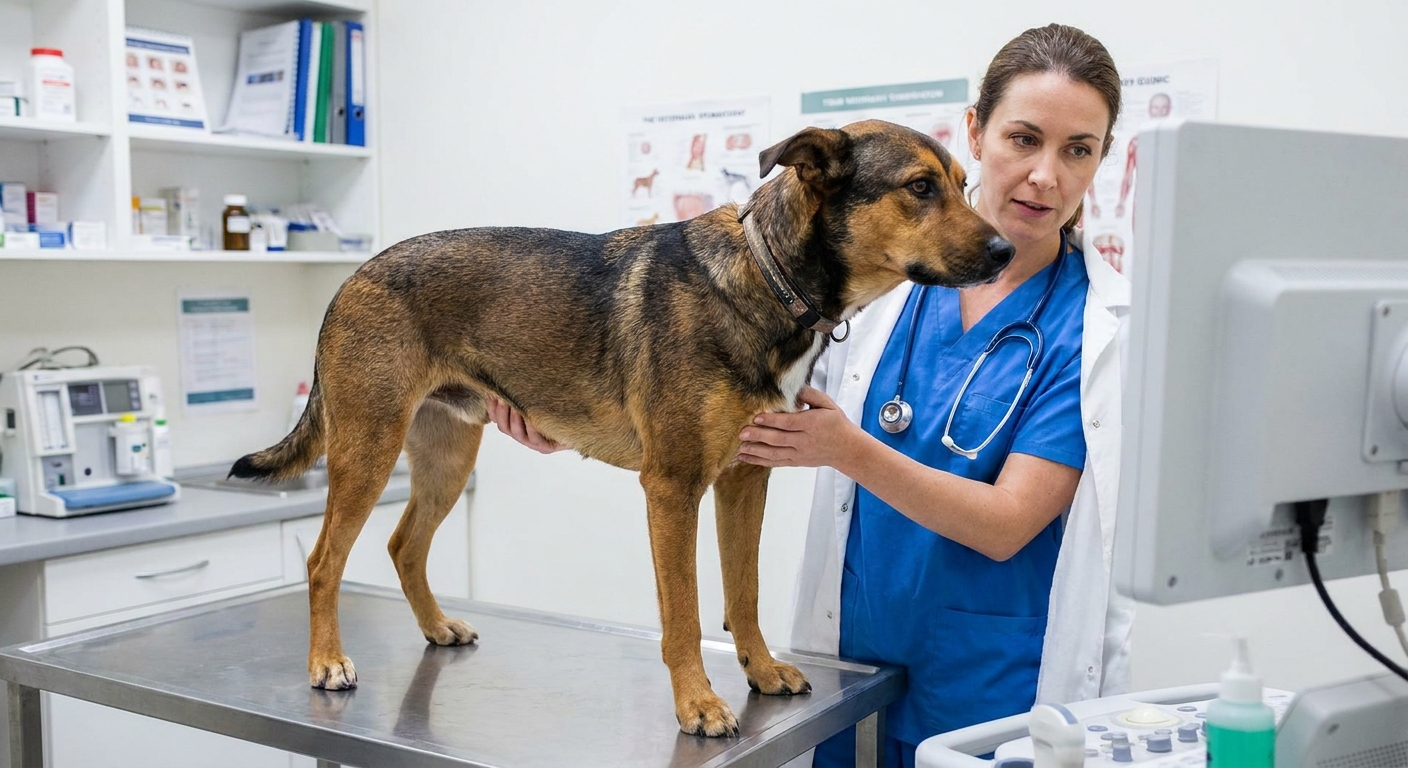
BPH is a hormone-driven enlargement of the prostate gland that happens most often in intact adult and senior male dogs. The prostate sits just behind the bladder and surrounds the proximal urethra, the tube that carries urine out of the body. It is also very close to the colon and rectum.
Because of that location, an enlarged prostate can:
- Press on the urethra, affecting urination (severe blockage from BPH alone is less common, but difficulty can happen)
- Press on the rectum, making pooping harder and changing stool shape
- Leak fluid or blood into the urethra, leading to spotting at the penis or blood-tinged discharge
BPH is very common in aging, unneutered males. Many dogs have enlargement before anyone notices obvious signs.
Signs you might notice
BPH symptoms can be subtle, especially early on. Here are the signs that most often make people pause and call the vet.
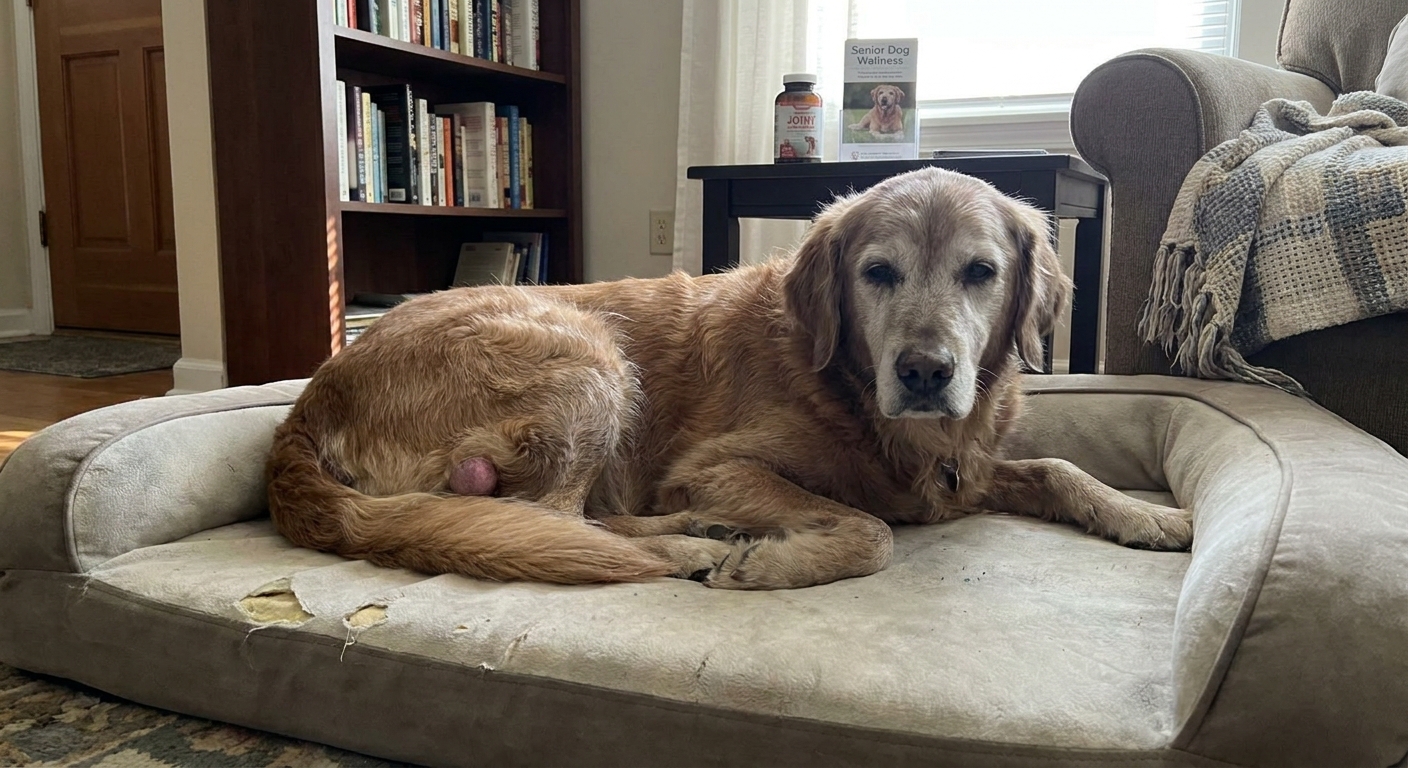
Blood drops or discharge
You might see:
- Small drops of blood where your dog was resting
- Blood-tinged fluid at the tip of the penis
- Red or brown staining on bedding
This can happen without your dog acting sick. It is one reason BPH is so surprising.
Straining to poop or constipation
An enlarged prostate can push against the rectum, which may look like:
- Taking longer to poop
- Squatting repeatedly with little output
- Signs of discomfort while trying to pass stool
Thin or ribbon-like stool
When the rectum gets compressed, stool can come out thin, flattened, or ribbon-like. That specific shape often makes veterinarians think about something pressing on the colon, including an enlarged prostate, a mass, or a perineal hernia.
Urinary changes
Some dogs also show:
- Straining to urinate
- Frequent small urinations
- Dribbling
- Accidents in a previously house-trained dog
Not every dog with BPH has urinary trouble, but it is a big clue when it appears.
Other things it could be
Because “blood drops plus straining” is such a classic BPH story, it is easy to anchor on it. But intact males can have other issues that look similar, including:
- Urinary tract infection or bladder inflammation
- Bladder or urethral stones
- Penile or preputial irritation (small cuts, foreign material, excessive licking)
- Urethral trauma
- Anal sac disease or perianal inflammation that makes pooping painful
- Bleeding or clotting problems (less common, but important to catch, especially if there is bruising or bleeding elsewhere)
This is why the job is not to guess at home. The job is to get your dog checked so the cause is identified correctly.
Is it cancer?
BPH itself is not cancer. It is a benign enlargement linked to hormones produced by the testicles.
That said, blood, straining, and stool changes can overlap with other conditions, including tumors of the prostate or nearby tissues. So even when the most likely answer is benign, it is still worth confirming.
How vets diagnose BPH
Vets usually combine a few pieces of information to sort BPH from look-alike problems.
History and symptom pattern
BPH is most likely when the dog is:
- Intact
- Middle-aged or older
- Not acting systemically ill (often no fever, normal appetite)
Then the symptoms might cluster around spotting or discharge and pooping difficulty.
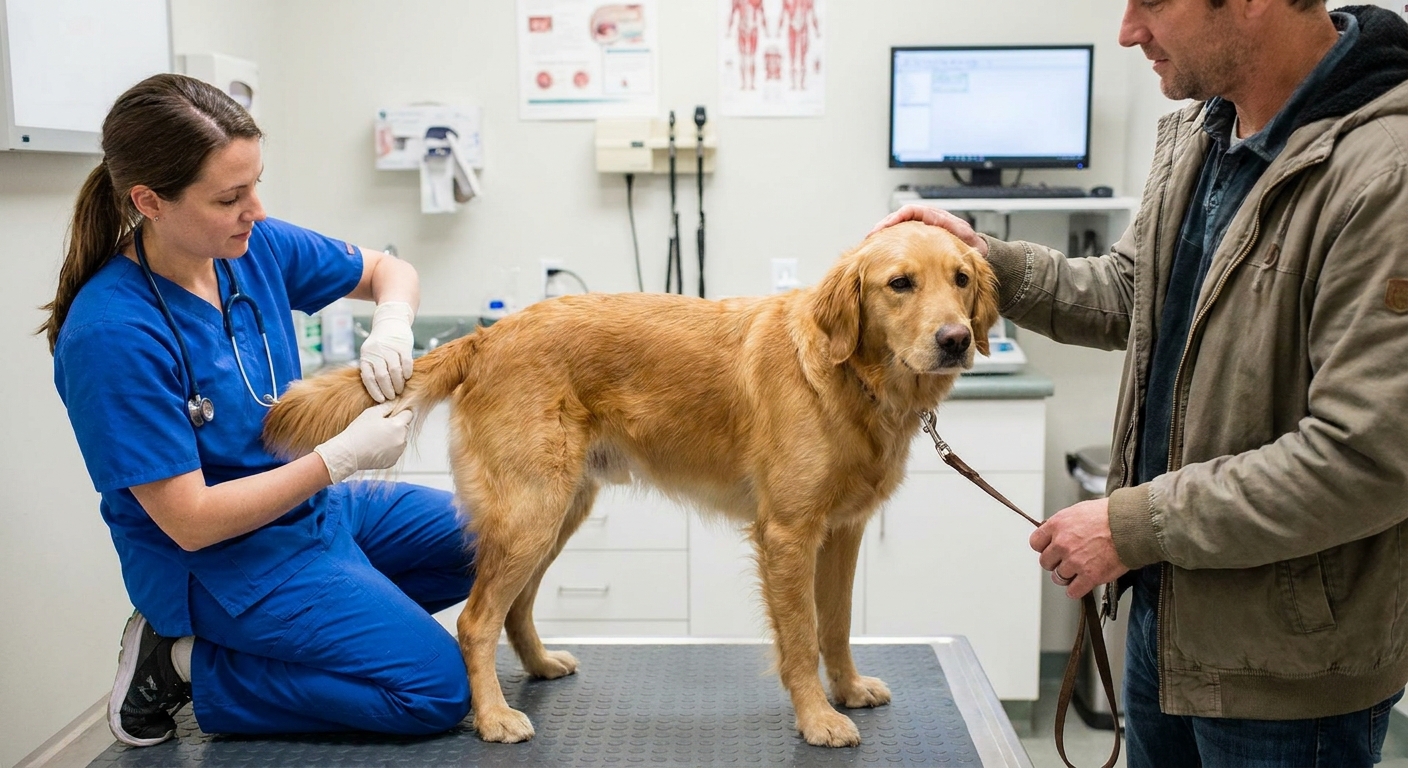
Rectal exam
With a gentle rectal exam, a veterinarian can often feel the prostate and assess whether it is enlarged, painful, irregular, or asymmetrical. This matters because:
- BPH often causes a smooth, symmetrically enlarged prostate
- Infection or abscess can make it painful
- Tumors may feel irregular or firm in an unusual way
Not all dogs tolerate this well, and sometimes the prostate cannot be fully assessed by feel alone, especially in large dogs.
Urinalysis and urine culture
These tests help look for:
- Signs of urinary tract infection
- Blood in the urine (which can come from several places)
- Bacteria that suggest the problem is not simply benign enlargement
Imaging
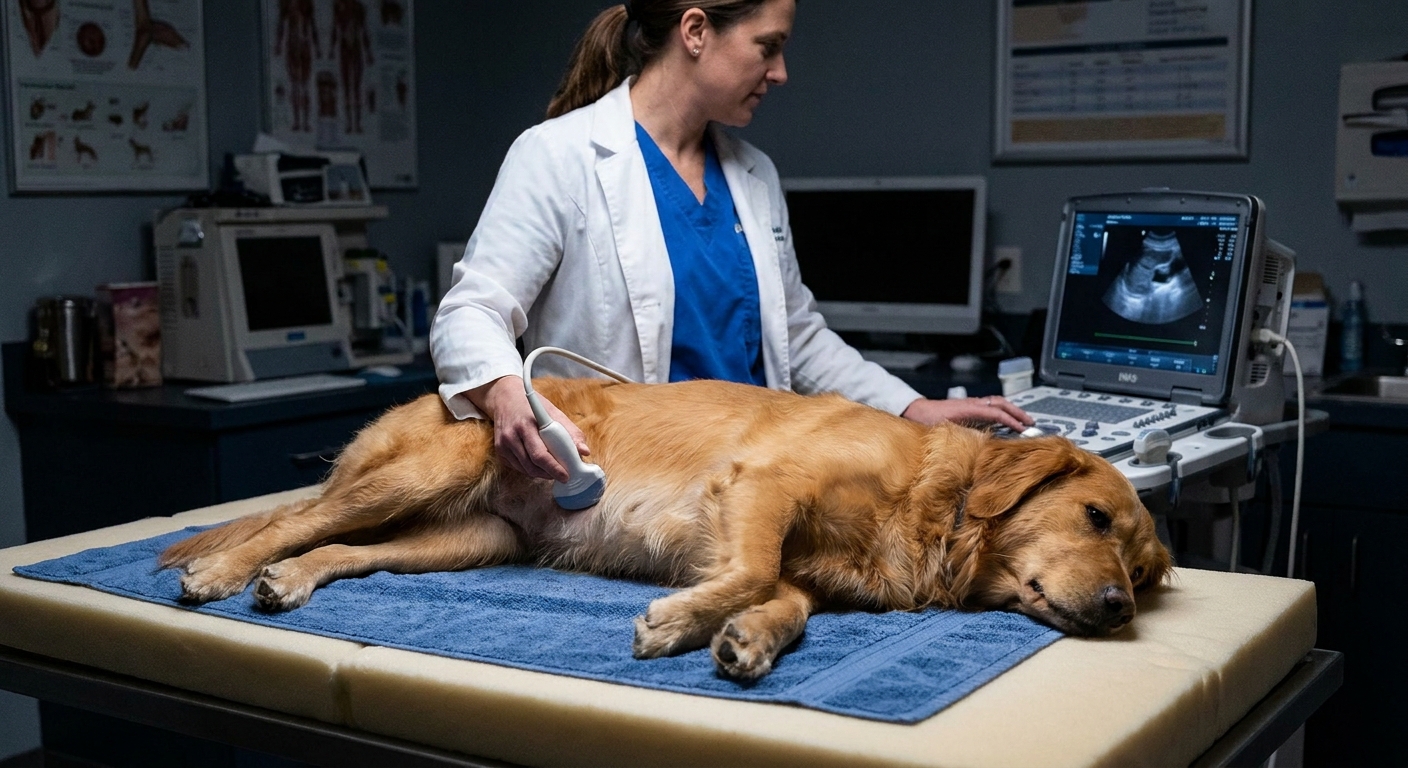
Abdominal ultrasound is a common next step. It helps the vet evaluate:
- Prostate size and shape
- Presence of cysts or fluid pockets
- Changes that look more consistent with inflammation, abscess, or tumor
- Other abdominal causes of straining
X-rays are sometimes used too, especially when constipation, stool changes, or pelvic anatomy are part of the concern.
BPH vs prostatitis
BPH and bacterial prostatitis can overlap in symptoms, but they are not the same problem.
Typical BPH pattern
- Intact adult or senior male
- Often bright, with a normal appetite
- May have blood-tinged discharge
- May have thin stool or constipation
- Prostate may feel enlarged but often not extremely painful
Typical bacterial prostatitis pattern
- Can be acute (sudden) or chronic (long-running)
- More likely to include fever, lethargy, reduced appetite
- May show pain in the rear abdomen or when sitting
- May come with urinary tract infection signs
- Testing may find bacteria on culture
Why this matters: antibiotics are central for bacterial infection, but they do not “fix” hormone-driven enlargement. And the prostate can be a tricky organ for medication to penetrate, especially in chronic prostatitis, so vets choose antibiotics carefully and treat long enough to actually clear the infection.
BPH vs perineal hernia
Perineal hernia is a different issue that is also more common in intact older males. Instead of the prostate enlarging, the muscles of the pelvic diaphragm weaken, and abdominal contents can bulge into the area beside the anus.
Clues that can suggest a perineal hernia
- Visible swelling next to the anus (often one-sided)
- Marked straining to defecate
- Thin or ribbon-like stool
- Sometimes trouble urinating if the bladder is displaced in severe cases
How vets tell them apart
A vet may suspect hernia based on the external appearance and rectal exam, and confirm with imaging. In some dogs, both problems exist at the same time. That is one reason a thorough exam matters when stool shape changes.
Treatment
BPH is driven by hormones from the testicles, so the most effective long-term solution is usually neutering (castration).
What neutering does
- Reduces the hormone signals that cause enlargement
- Often leads to noticeable prostate shrinkage within a few weeks, with continued improvement over the following month or two
- Commonly improves spotting, straining, and stool shape as pressure decreases
- Helps lower the risk of future prostate problems linked to intact status (while not preventing every possible prostate condition)
Your vet can tell you what to expect for your specific dog, including how quickly symptoms should improve.
If neutering is not possible right away
Some dogs cannot be neutered immediately for medical reasons, breeding plans, or timing. In those cases, a veterinarian may discuss prescription options that reduce hormonal stimulation of the prostate, such as GnRH agonist implants or other hormone-modulating medications. These choices are vet-guided for a reason: what is appropriate depends on your dog, your goals, and what is available where you live.
When more treatment is needed
Not every enlarged prostate is “simple” BPH. Depending on exam and imaging, a vet may also treat or address:
- Secondary infections
- Prostatic cysts
- Abscesses
- Other causes of obstruction or pain
When to call the vet urgently
Some prostate-related problems can escalate quickly, especially if urination becomes difficult.
Seek urgent veterinary care if your dog has:
- Repeated straining to urinate with little or no urine produced
- Swollen belly, restlessness, or signs of severe pain
- Fever, sudden lethargy, vomiting, or collapse
- Large amounts of blood from the penis or in urine
- Sudden inability to poop with distress
If you are seeing blood drops or thin stool in an intact male, it is worth calling your vet even if your dog seems otherwise cheerful. The goal is to confirm the cause and make sure you are not dealing with infection, hernia, stones, or urinary blockage.
At-home support
Home care does not replace diagnosis, but you can make the visit smoother and keep your dog comfortable.
- Take notes: When did symptoms start? Any straining to pee or poop? Any changes in appetite or energy?
- Bring a urine sample if your clinic requests it. Use a clean container and collect as fresh as possible.
- Prevent constipation: Ensure fresh water access. Do not add supplements or laxatives unless your vet recommends them.
- Limit intense activity if your dog seems uncomfortable, and keep bathroom breaks calm and frequent.
- Do not give human pain meds: many are dangerous for dogs.
FAQ
Can BPH cause blood without a urinary tract infection?
Yes. BPH can cause bloody discharge or spotting even when the dog does not have a bladder infection. Your vet will still often check urine to make sure infection is not part of the picture.
Does BPH always cause pain?
Not always. Many dogs with BPH seem normal at home, which is why small blood drops can be so surprising. Pain is more suggestive of inflammation, infection, or complications, but it is not a perfect rule.
Will neutering stop the symptoms right away?
Neutering often leads to prostate shrinkage over time, not instantly. Many dogs improve within a few weeks, with continued improvement over the next month or two. The timeline depends on how enlarged the prostate was and whether there are complications like cysts or infection.
Can a neutered dog get prostate problems?
Yes. Neutering makes benign enlargement much less likely, but other prostate conditions can still occur. New urinary or stool symptoms should always be checked.