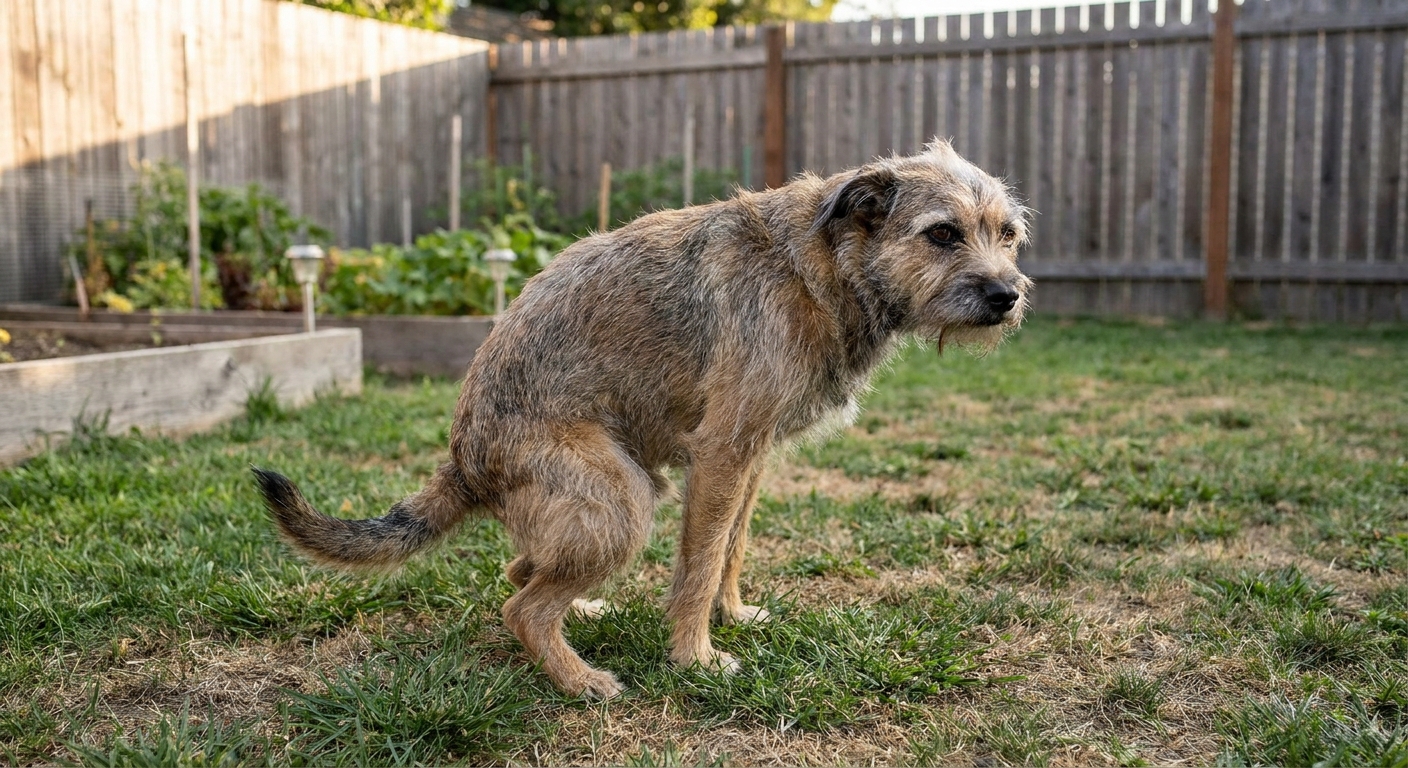
I’ve met plenty of sweet dogs in clinic who looked “constipated” at first glance. They were squatting, straining, and clearly uncomfortable. But when we checked the back end, the problem was not inside the belly at all. It was right there at the exit.
If the fur around your dog’s anus is severely matted and packed with dried stool, it can act like a plug. Your dog may push and push, but nothing can pass. In veterinary medicine, you may hear this described as pseudocoprostasis, and I see it most often in long-haired breeds, seniors, overweight dogs, and dogs who had diarrhea that stuck to the coat.
What is pseudocoprostasis?
Pseudocoprostasis literally means “false stool blockage.” The intestines may be doing their job, but the dog cannot pass feces because something at the anus is physically blocking the opening. Not every clinic uses the exact same term, but the idea is the same: a dog can look constipated when the real problem is external matting and dried feces at the exit.
Most often, it happens when:
- Loose stool or diarrhea gets into the hair
- It dries and hardens
- The stool clumps together with hair and undercoat
- The mat forms a tight ring or crust over the anus
That seal can be surprisingly firm. Some dogs can pass a tiny amount of soft stool around the edges, but many cannot pass anything at all.
How it looks at home
Pet parents usually describe one or more of these signs:
- Repeated squatting or “trying to poop” with little or no stool produced
- Crying, yelping, or jumping up mid-strain
- A strong fecal odor that seems stuck in the coat
- Visible poop stuck to the hair under the tail
- Swollen, irritated skin around the anus
- Licking the rear end more than usual
- Dragging or scooting (sometimes)
One important clue is that the dog may seem like they need to go urgently and often, but the result is either nothing or a very small smear. That is different from most “true constipation,” where dogs tend to poop less often overall and pass hard, dry stools when they finally go.
Why this can become urgent
I know it can feel awkward to talk about, but I want you to hear this clearly: a fecal mat sealing the anus is not just a grooming issue. It can quickly turn into a medical problem.
Skin damage under the mat
When stool and hair stay stuck against the skin, the area stays moist and contaminated. Underneath that mat, we often find:
- Raw, inflamed skin (moist dermatitis)
- Pressure sores from the tight pull of the mat
- Small wounds or tears from straining and friction
- Fly strike risk in warm months (maggots can develop in soiled coat and wounds)
Straining is hard on the body
When dogs strain repeatedly, they can become exhausted, nauseated, and stressed. Straining can also look similar to urinary trouble, and urinary blockage is a true emergency. If you are not sure whether your dog is trying to poop or pee, it is safest to call your veterinarian right away.
How pseudocoprostasis differs from constipation
These problems can look similar from a distance. Here are the practical differences I use when I am helping a family sort it out.
Pseudocoprostasis (blocked at the exit)
- Often a visible mat or crusted stool under the tail
- Dog strains but cannot pass stool at all, or only smears
- May happen suddenly after diarrhea, messy stools, or missed grooming
- Fix involves sanitary clipping and cleaning plus treating irritated skin
True constipation (problem inside the colon)
- Little stool output over one to several days
- When stool appears, it is often hard, dry, and difficult to pass
- May come with decreased appetite, lethargy, or belly discomfort
- Fix may involve vet evaluation, hydration plan, diet changes, or medications, depending on cause
Bottom line: if you can clearly see stool and mats sealing the anus, treat it as a blockage first, not as “just constipation.”
How it differs from anal gland trouble
Anal glands are two small scent glands near the anus. When they are full, inflamed, or infected, dogs often show:
- Scooting or rubbing the rear on the floor
- Licking the rear end
- A fishy odor
- Discomfort sitting
- Swelling near the anus (sometimes on one side)
Anal gland issues can be very painful, but they do not usually create a hair-and-stool seal over the anus. A dog can have both problems at the same time, especially if diarrhea caused both gland irritation and a messy coat. If you see swelling, pus, bleeding, or a painful lump near the anus, skip home care and get veterinary help.
Other serious look-alikes
If your dog is straining and you do not see a fecal mat under the tail, do not assume it is minor. Persistent straining can also be caused by problems inside the rectum or colon (like a foreign body, severe constipation or obstipation, pelvic narrowing, perineal hernia, or a mass). The safest move is a veterinary exam, especially if your dog seems painful or unwell.
What to do right now
I am going to keep this focused on what you need to decide next, not detailed dematting technique. A tight fecal mat is easy to underestimate, and it is very easy to accidentally cut delicate skin if you try to snip it off with scissors.
1) Check the area safely
- Lift the tail in good light if your dog will allow it.
- Look for a hard crust, mat, or clump covering the anus or pulling the skin tight.
- If your dog is painful, panicking, or trying to bite, stop and call a professional.
- If you have limited mobility or cannot safely restrain your dog, do not force it. Get help.
2) Choose the safest help
- Call your vet if your dog is in pain, the skin looks raw or bleeding, your dog is elderly or medically fragile, you suspect constipation plus blockage, or you are not sure if your dog is trying to pee.
- Call a professional groomer if your dog is stable but the mat is significant and you cannot remove it gently.
3) Avoid the high-risk mistakes
- Do not use scissors close to the anus. The skin there is thin and can be pulled up into the mat and cut very easily.
- Do not give human laxatives or give an enema at home just because your dog is straining. If the exit is sealed, you can create more pressure and discomfort without fixing the real problem. If constipation is still a concern once the area is clear, ask your veterinarian what is safe for your dog.
- Do not wait if your dog cannot pass stool and keeps straining. Repeated attempts with little to no output is a same-day call.
What a vet or groomer will do
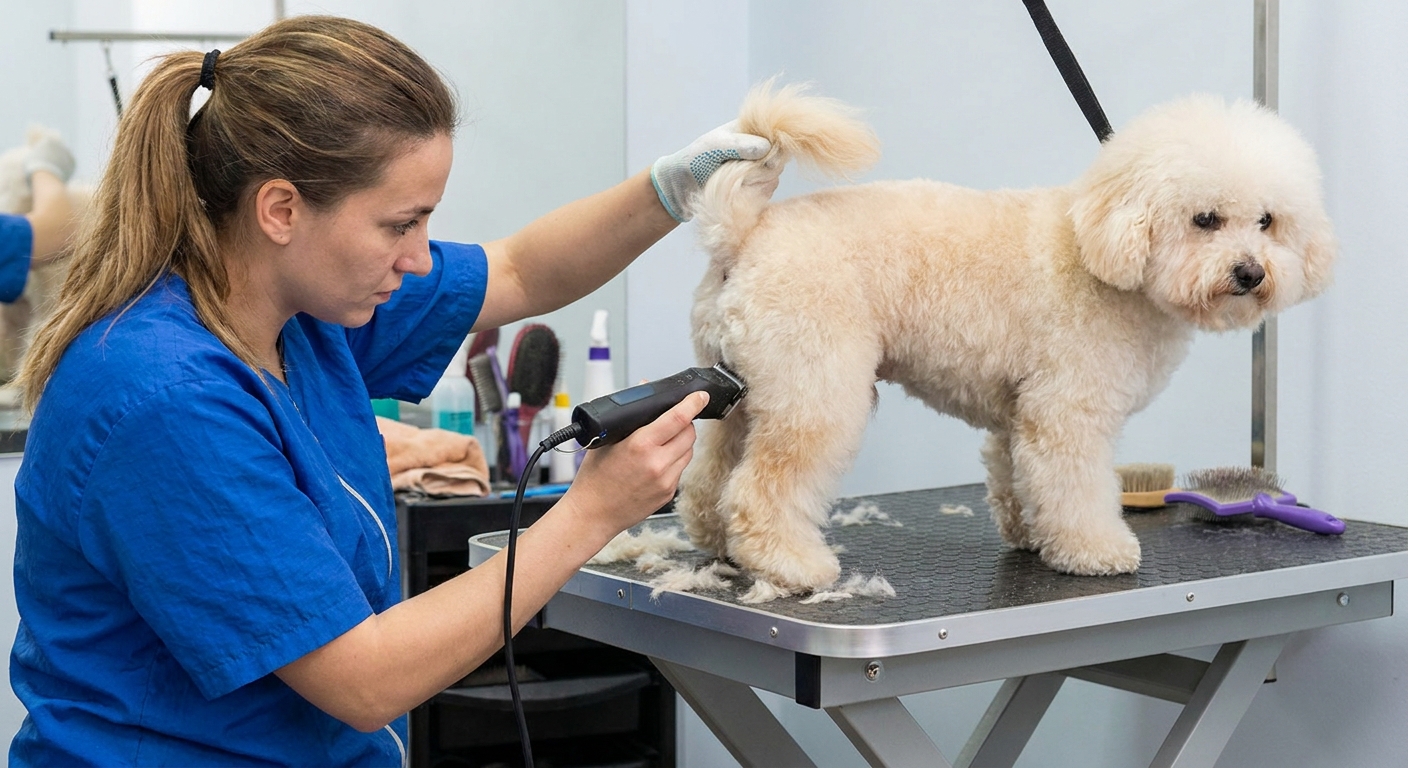
In most straightforward cases, the solution is a sanitary clip with clippers, then gentle cleaning. The professional should also check the skin underneath for wounds or infection and recommend treatment if it is inflamed.
Some dogs need this done at the veterinary clinic because they are too painful, too anxious, or the skin is already damaged. In those cases, we may use pain control, anxiety medication, or sedation so it can be done safely, and we may also check for dehydration or true constipation if the history fits.
When to treat this as urgent
Please contact your veterinarian the same day, or go to urgent care, if you notice any of the following:
- Repeated straining with no stool produced, especially if it has been going on for a few hours
- Vomiting, refusal to eat, or marked lethargy
- Bloody stool or bleeding around the anus
- Swelling, heat, pus, or a lump near the anus (possible anal gland infection or abscess)
- You suspect your dog is trying to urinate but cannot
- Signs of severe pain, trembling, or collapse
- Maggots, foul odor, or heavily soiled coat suggesting advanced skin infection
If you are ever unsure whether your dog is blocked from pooping or blocked from peeing, assume it could be urinary and call a vet immediately.
How to prevent fecal mats
Prevention is much easier on your dog and your budget than fixing a painful blockage later. These habits help a lot:
- Regular sanitary trims for long-haired dogs, curly-coated dogs, and seniors who get messy
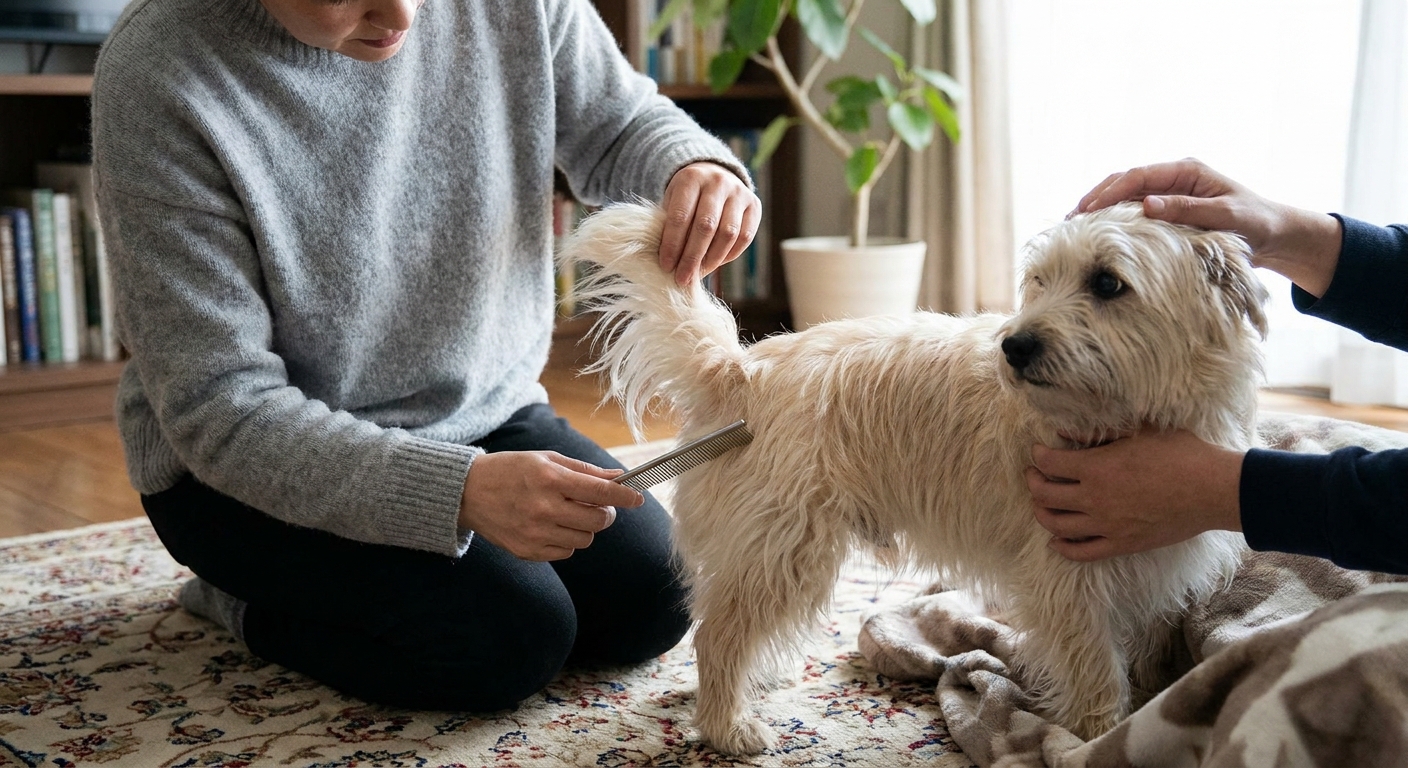
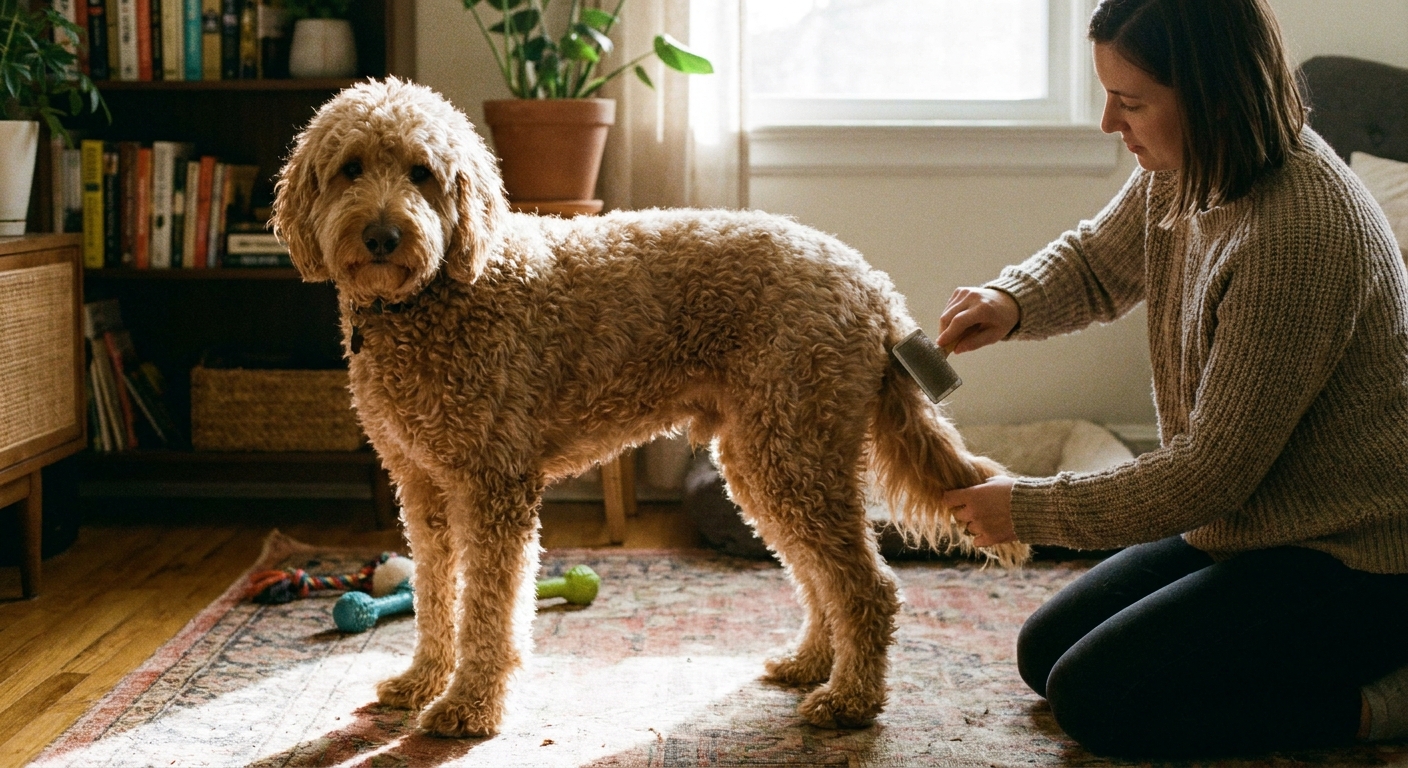
- Brush and comb the rear area routinely, especially after outdoor play
- Quick clean-up after diarrhea or soft stools using pet-safe wipes or a warm damp cloth, then drying the area
- Address chronic diarrhea with your veterinarian so stool does not keep sticking to the coat
- Weight management, since overweight dogs often have a harder time grooming themselves and may get fecal staining more easily
FAQ
Can matted fur really stop a dog from pooping?
Yes. When stool hardens in the coat and mats tighten, it can form a physical seal over the anus. The dog may strain repeatedly but cannot pass feces.
My dog is squatting and nothing comes out. Is that constipation?
It could be constipation, but if there is also a fecal mat at the anus, that is an external blockage and needs to be addressed first. If you do not see a mat, or your dog seems sick, call your veterinarian to evaluate constipation and other causes of straining.
Could this just be anal glands?
Anal gland issues can cause scooting and licking, but they typically do not block the anus with hair and stool. Swelling, pain, discharge, or a lump near the anus deserves a veterinary exam.
Should I cut the mat off with scissors?
I do not recommend scissors around the anus. The skin can be pulled up into the mat and cut very easily. Clippers used by a groomer or veterinary team are usually much safer.
The takeaway
If your dog is straining but cannot poop and the fur around the anus is matted with stool, the problem may be what veterinarians call pseudocoprostasis, meaning the stool cannot physically exit. It is uncomfortable, it can damage the skin quickly, and it often needs prompt sanitary clipping and gentle clean-up to relieve the blockage.
When in doubt, especially if your dog seems painful or unwell, call your veterinarian. You are not overreacting. You are protecting your dog from a small problem turning into a big one.