I have worked with a lot of worried pet parents here in Texas, and one of the scariest calls is some version of: “My dog was fine this morning, and now he can barely stand.” When that weakness seems to creep from the back legs forward, I always want people to think about one urgent possibility: tick paralysis.
Tick paralysis is not a tick-borne infection like Lyme disease or ehrlichiosis. It is a toxin reaction that can progress quickly. The good news is that many dogs improve dramatically once the tick is found and removed, but you still want veterinary guidance because breathing trouble can happen, and improvement alone does not answer every question.
One important note for Texas readers: tick paralysis is real in the U.S., but it is not the most common cause of sudden hind-end weakness. The ticks that can cause paralysis, and how often it happens, vary by region. So I keep it on the emergency checklist, but I do not want you to assume it is the only explanation.

What is tick paralysis?
Tick paralysis happens when certain ticks attach and feed long enough to release a neurotoxin in their saliva. That toxin interferes with normal nerve signaling to muscles. The result can look like a dog is “losing strength” in their body.
Not every tick can cause paralysis, and not every dog reacts the same way. But when it happens, it is considered an emergency because it can affect the muscles needed for breathing.
Why weakness moves upward
One of the hallmark patterns is ascending weakness. That simply means the weakness often starts in the rear end and moves forward:
- Early: wobbliness, reluctance to jump, dragging toes, hind leg weakness
- Progressing: trouble standing, collapsing, weak bark, reduced head control
- Advanced: difficulty swallowing, gagging, labored breathing, full paralysis
This back-to-front pattern is one reason tick paralysis can be confused with other neurologic problems. A dog may look a little “off” at first, and then worsen over hours.

How fast can it get dangerous?
The timeline varies, but tick paralysis can move fast. Signs often begin after a tick has been feeding for several days, but onset depends on the tick species, how long it has been attached, how many ticks are present, and how sensitive the dog is.
The most serious turning point is when the toxin affects the muscles of the chest and throat. That is when you may see:
- Rapid or effortful breathing
- Noisy breathing or a “strained” sound
- Coughing or gagging, especially with water
- Blue or gray gums
- Very pale gums (not specific to tick paralysis, but still an emergency)
- Extreme lethargy, inability to lift the head
If you see any breathing changes, treat it as an emergency and contact an ER vet immediately.
Why finding the tick matters
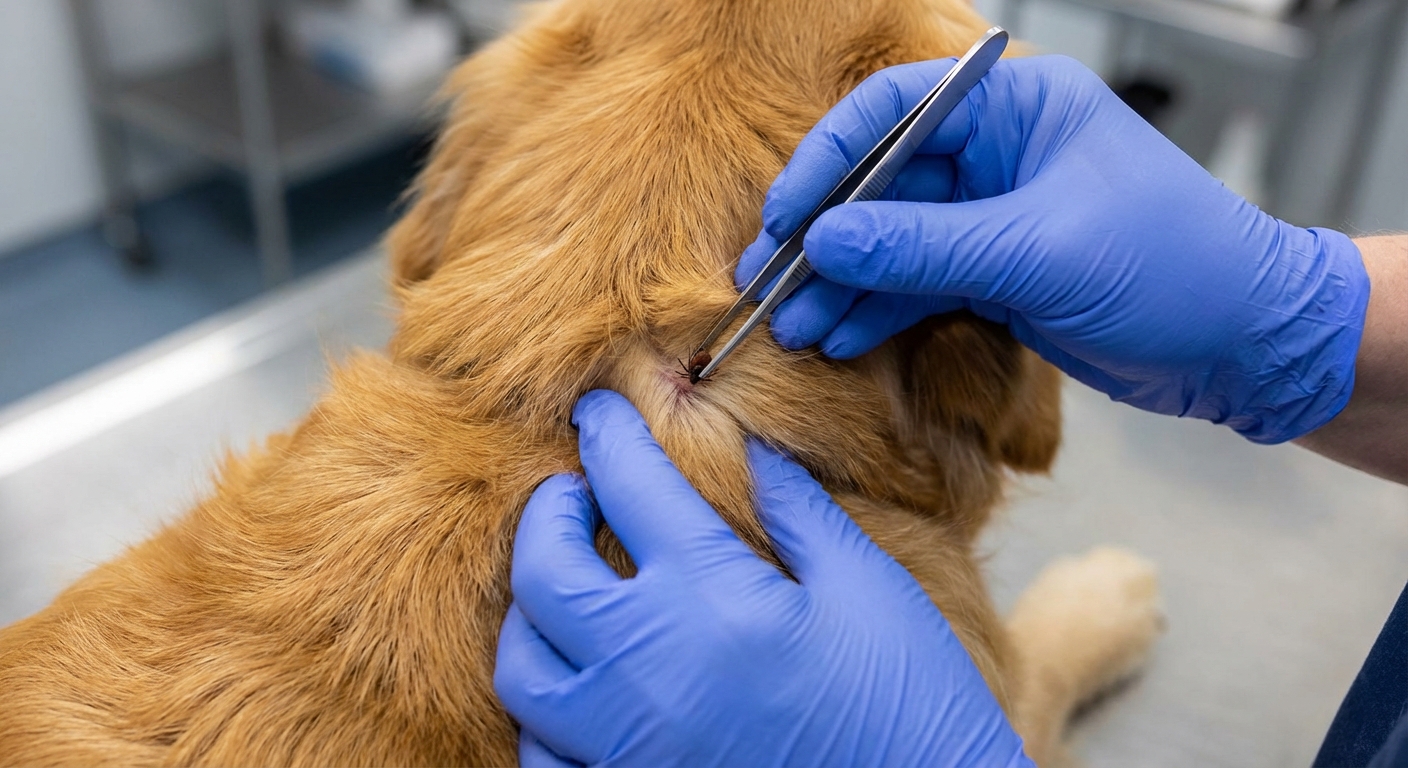
With tick paralysis, the tick is not just the “source” of a disease organism. The tick is actively delivering toxin while feeding. That means the sooner the tick is removed, the sooner toxin delivery stops.
In practical terms, finding the tick can be the difference between:
- a dog who recovers with close monitoring and supportive care, and
- a dog who needs hospitalization, oxygen support, or mechanical ventilation
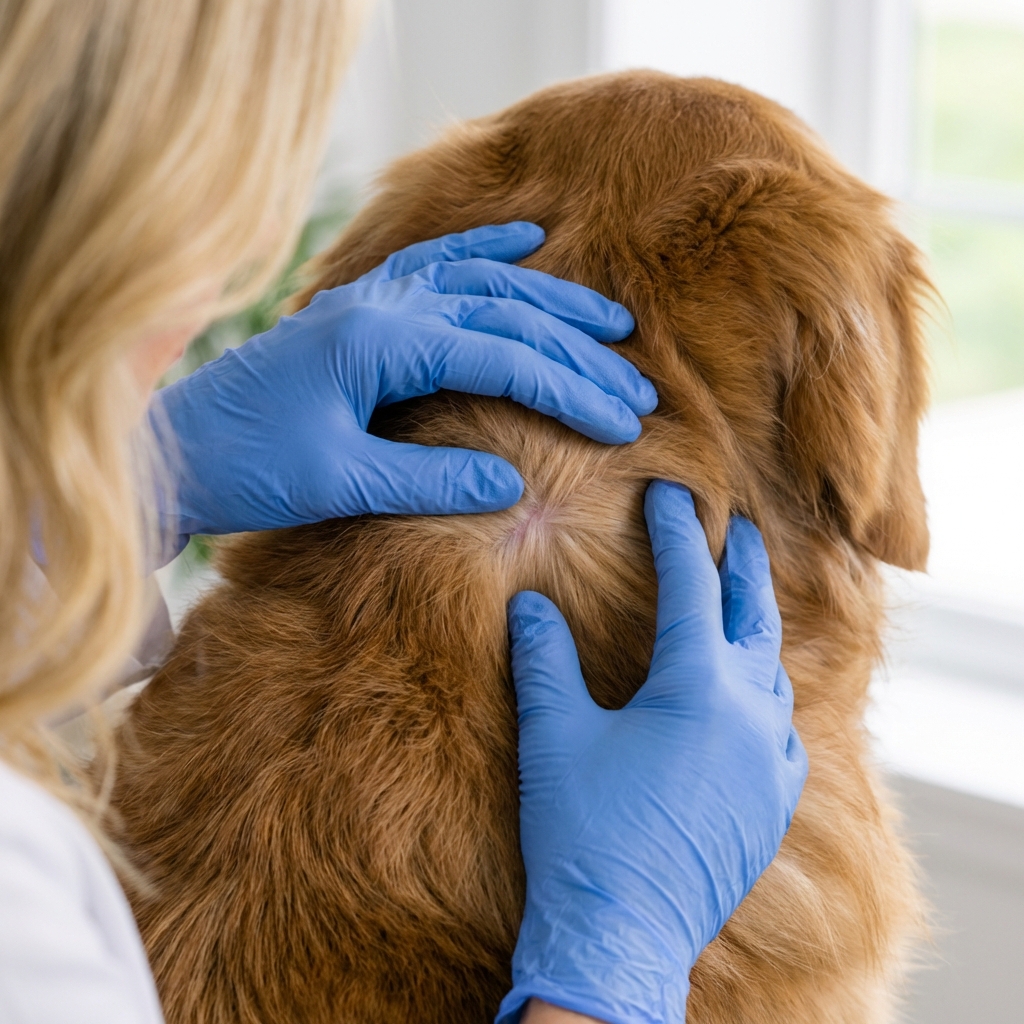
Ticks often hide where we do not notice them right away, especially on fluffy dogs or dogs with undercoats. Common hiding spots include the head and neck, around the ears, under collars, between toes, in the armpits, groin, and under the tail.
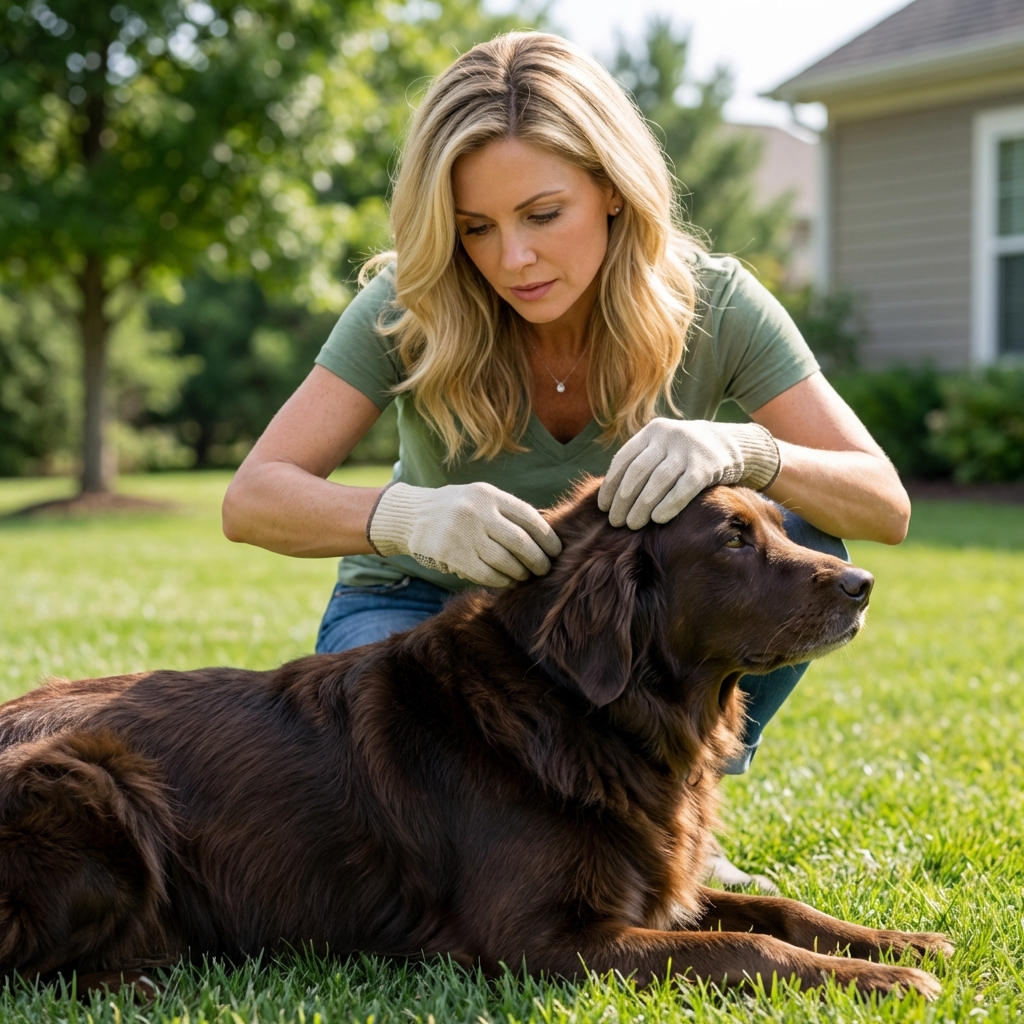
If you are struggling to find one, use bright light and run your fingertips all the way down to the skin, parting fur as you go. A flea comb can help on thick coats. If your dog is painful, snappy, or too weak to handle safely, let a veterinary team do the search.
Important: I am keeping tick removal technique off this page on purpose. This article is about what paralysis is and why speed matters. If you need step-by-step removal help, use a dedicated tick removal guide or call your veterinary team for direction.

What improvement does and does not mean
This is a big one, because it is easy to assume “my dog improved after we removed a tick, so that must have been the whole problem.” Sometimes that is true. Sometimes it is not.
Improvement can suggest tick paralysis
Many dogs with true tick paralysis start to improve after the tick is removed, often within hours to 24 hours. Full recovery may take longer depending on how weak the dog became and whether breathing was affected.
But improvement does not prove it
Dogs can coincidentally improve for other reasons, especially if they were also rested, cooled down, rehydrated, or treated for pain. Also, a dog may have more than one issue happening at once.
So even if your dog perks up after a tick is removed, you still want to watch closely and consider veterinary evaluation, especially if:
- your dog had marked weakness or collapse
- you are not sure you found the only tick
- your dog has any breathing, gagging, or swallowing changes
- your dog is very young, senior, pregnant, or has underlying heart or lung disease
No quick improvement does not rule it out
Some dogs take longer to recover. If paralysis has progressed, supportive care may be needed while the toxin clears. A dog that is still weak after tick removal still deserves prompt veterinary assessment.
Other problems that can look similar
This is another reason I take sudden weakness seriously. Conditions that can look a lot like tick paralysis, especially early on, include:
- intervertebral disc disease or other spinal cord problems
- toxin exposures (including botulism)
- myasthenia gravis
- severe vestibular disease
- metabolic issues like low blood sugar
Some of these need very different treatments, and some get worse if a dog is handled or exercised the wrong way. If you are not sure what you are seeing, it is safest to involve a veterinarian promptly.
Tick paralysis vs tick-borne infections
One quick way to think about it is toxin versus infection:
- Tick paralysis: toxin effect, often rapid onset of weakness and wobbliness, may improve after tick removal
- Tick-borne infections: caused by bacteria or parasites, signs often include fever, low appetite, swollen joints, bruising or bleeding, and symptoms that do not resolve quickly just because a tick was removed
A dog can also have a tick-borne infection and not show signs until days or weeks later. So if your dog was exposed to ticks, talk with your veterinarian about what monitoring or testing makes sense for your area and your dog’s history.
What to do if you suspect it
If your dog is suddenly weak and you suspect a tick may be involved, these are the priorities:
- Take breathing seriously. If breathing looks difficult, your dog cannot stay upright, or you see blue, gray, or very pale gums, go to an emergency vet.
- Do a careful tick check. Use good lighting and run your fingers down to the skin, especially around the head, neck, and ears.
- Call your veterinarian. Describe the pattern of weakness and when it started.
- Limit activity. Weak dogs can fall, panic, or overheat more easily.
If your dog is unable to walk, seems to be getting weaker, or is showing any airway or swallowing concerns, it is safer to have your dog evaluated right away rather than wait and see.
How vets treat tick paralysis
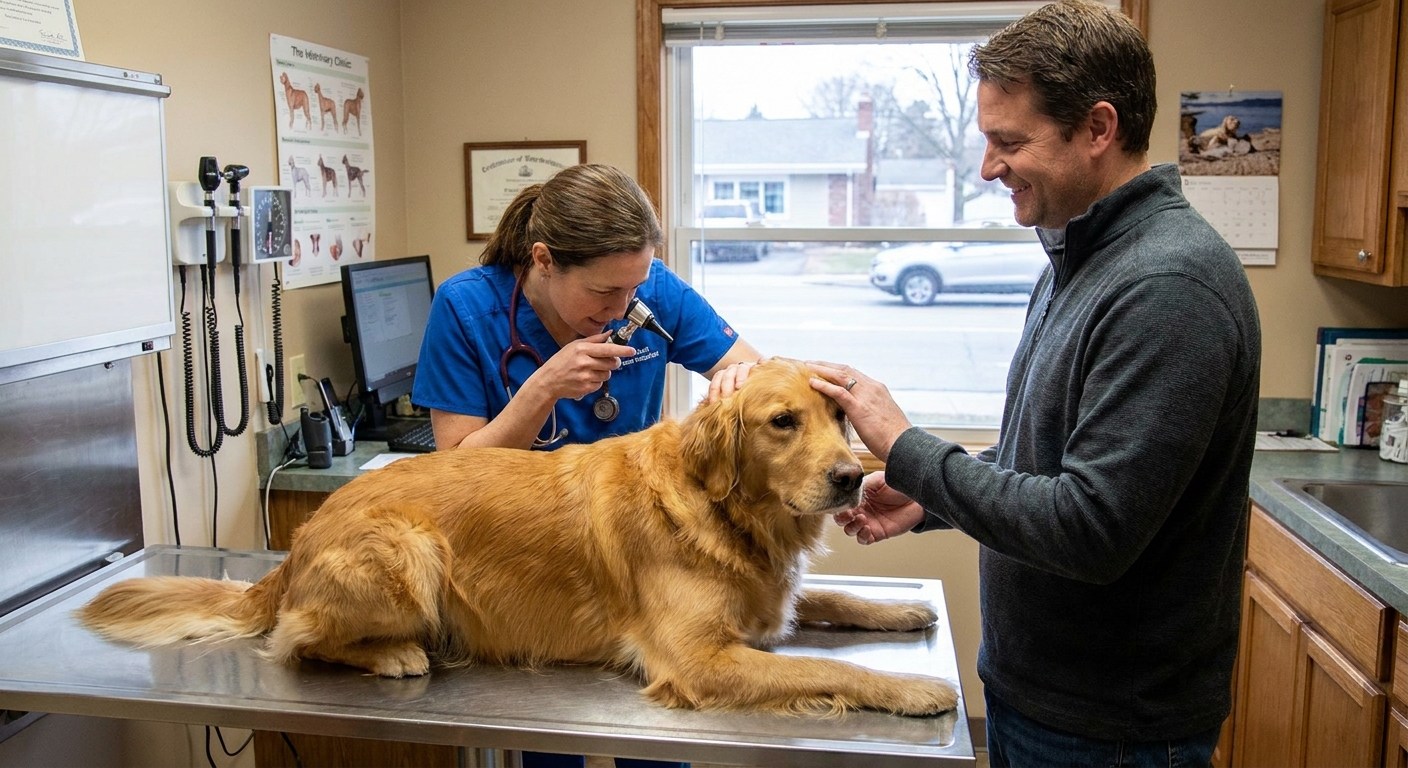
Treatment depends on severity. The foundation is removing the tick and providing supportive care while the toxin effect wears off. In a clinic or hospital setting, that may include:
- Monitoring breathing and oxygen levels
- Oxygen supplementation if needed
- IV fluids if dehydrated or unable to drink safely
- Temperature support, because weak dogs can get too hot or too cold
- Help with nutrition and preventing aspiration if swallowing is weak
Dogs who are very weak may need hospitalization until they can breathe and swallow normally and stand safely. In the most severe cases, sedation and assisted ventilation may be needed while the toxin clears.
Because the ticks involved can differ by region, specific therapies and protocols can vary. Your veterinarian will tailor treatment to what they are seeing in front of them, and what is most likely where you live.
Can it be prevented?
Prevention is always easier than an emergency. The most practical steps are:
- Use veterinarian-recommended tick preventives consistently during tick season, and year-round in higher-risk areas.
- Do tick checks after hikes, tall grass, wooded areas, or dog parks with brushy edges.
- Keep coats maintained if your dog has long or dense fur. Regular brushing helps you notice hitchhikers sooner.
- Manage the yard by keeping grass trimmed and leaf litter reduced where possible.
If you are not sure which preventive is a good fit, your veterinarian can help you choose based on your dog’s age, health history, and local tick risks.
When this is an emergency
Please do not wait at home if your dog has:
- trouble breathing, noisy breathing, or blue, gray, or very pale gums
- inability to stand, rapid worsening, or full-body weakness
- repeated gagging, drooling, or trouble swallowing water
- collapse, extreme lethargy, or unresponsiveness
Tick paralysis can be reversible, but it is only reversible if we keep the airway safe and remove the source of toxin exposure quickly.
Quick FAQ
How long does it take to go away?
Many dogs show noticeable improvement within hours to 24 hours after the tick is removed, but full recovery can take longer, especially if weakness was severe.
Can my dog die from it?
Unfortunately, yes, if breathing muscles become too weak and the dog is not supported in time. That is why breathing changes are an emergency.
If I removed a tick and my dog is better, do I still need the vet?
It depends on how severe signs were and whether you are confident all ticks are gone. If there was collapse, significant weakness, or any breathing or swallowing concern, I would still call your vet the same day for guidance.
Does it mean my dog has Lyme disease?
No. Tick paralysis is toxin-related, not a bacterial infection. However, tick exposure can still put a dog at risk for infections, so talk with your veterinarian about follow-up based on your region.