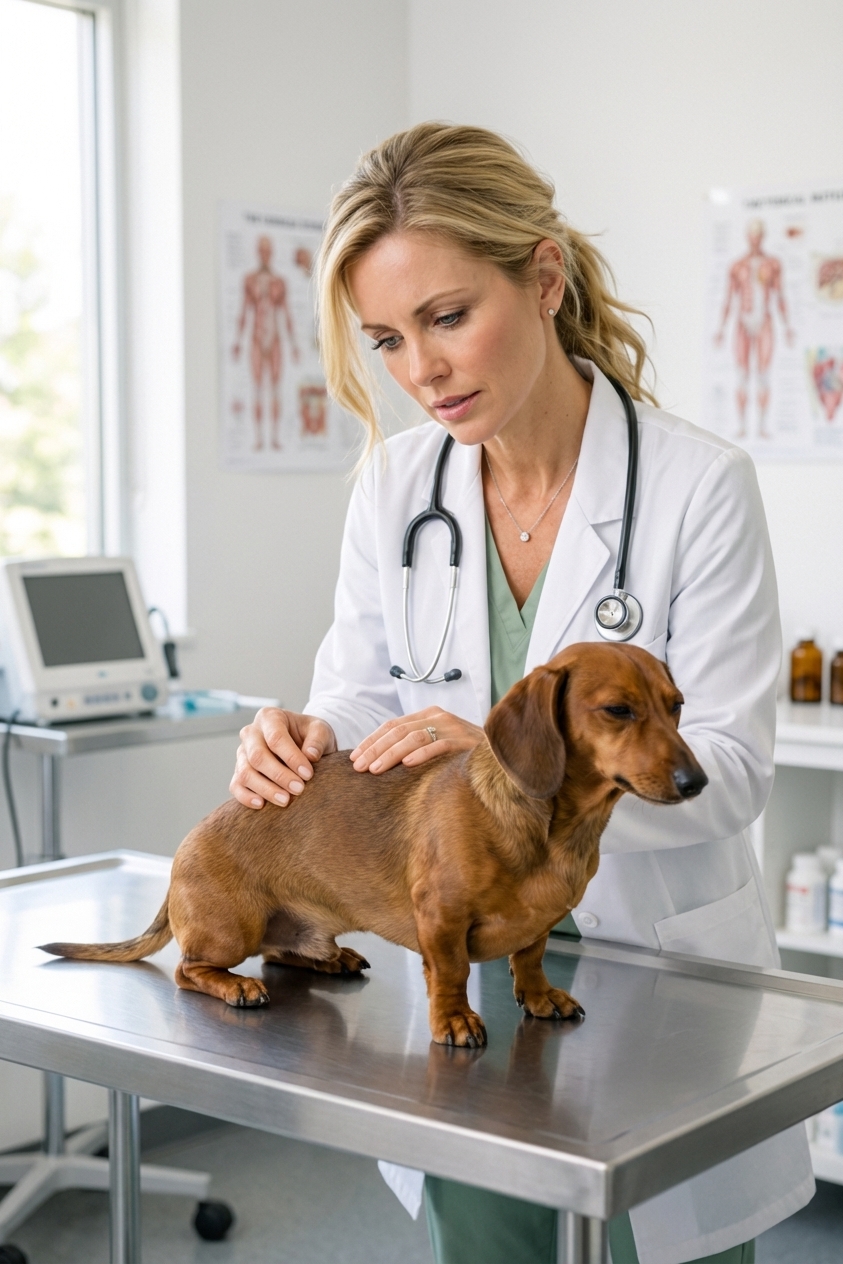
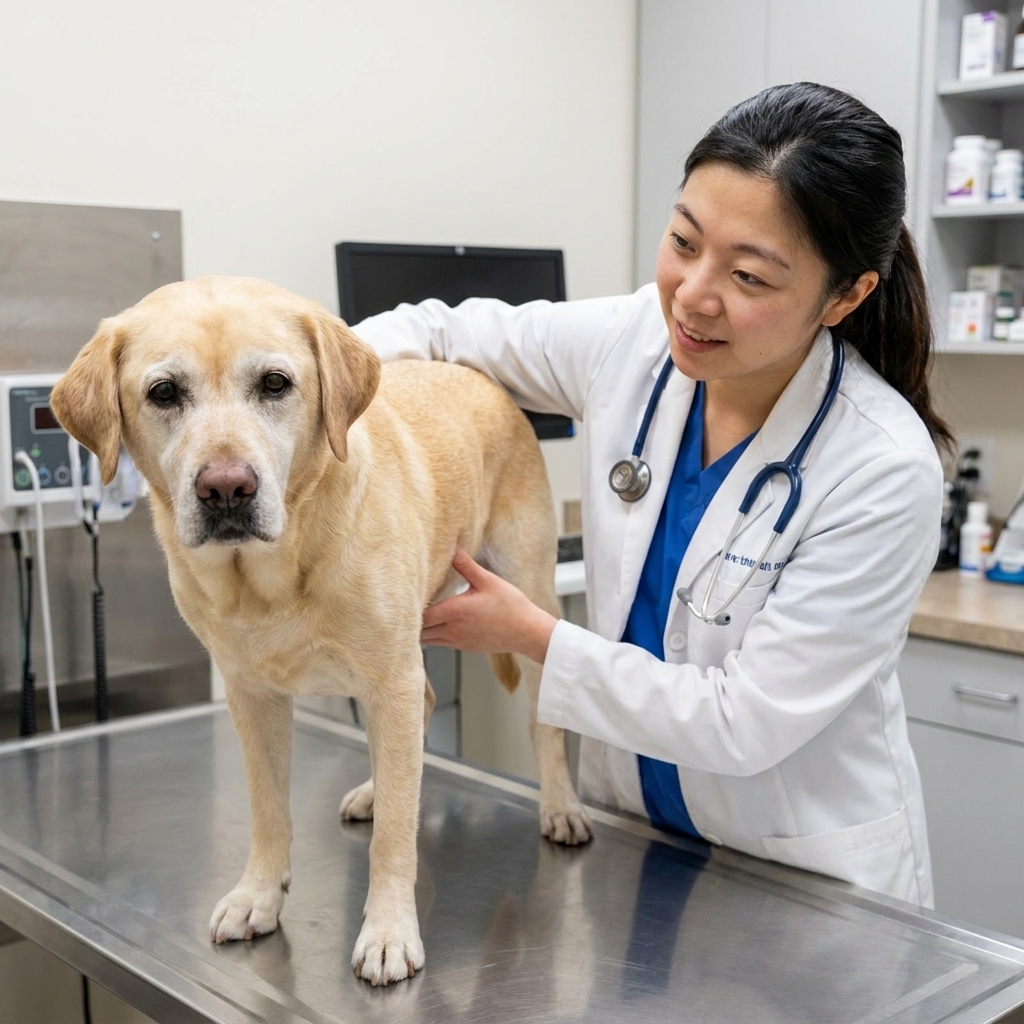
Intervertebral disc disease (IVDD) can feel scary because symptoms can change quickly. As a veterinary assistant, I have seen how much easier it is for families to make good decisions when they understand the stage (neurological grade) their dog may be in and what that usually means for treatment.
This guide walks you through IVDD stages 1 through 5 in plain language: what you may notice at home, how mobility is affected, and the most common treatment paths. It also covers what cannot wait, because timing matters with spinal cord injuries.
Important: IVDD is not something to “watch for a few days” if your dog is worsening, cannot walk, or loses bladder control. Call your veterinarian or an emergency hospital right away.
Quick safety note: IVDD grading and treatment decisions require an in-person neurologic exam. Do not do toe pinch or “deep pain” checks at home. You can accidentally hurt your dog or misread a reflex as sensation.
What an IVDD stage means
Many veterinarians use a 1 to 5 grading scale to describe how much the spinal cord is affected. It is based on neurologic function, not the size of the disc problem on an image. Grading language can vary a bit by hospital or specialist, but the overall progression is similar.
- Stage 1: pain only
- Stage 2: walking but weak or wobbly
- Stage 3: cannot take independent weight-bearing steps (non-ambulatory)
- Stage 4: paralysis with deep pain sensation still present
- Stage 5: paralysis with loss of deep pain sensation
IVDD most often affects the neck (cervical) or mid-back (thoracolumbar). Neck IVDD can look a little different, often with intense pain and a very stiff posture.
Also, not every “wobbly dog” has IVDD. Other conditions can look similar, including orthopedic pain (like a cruciate ligament injury), arthritis, tick-borne paralysis, fibrocartilaginous embolism (FCE), and more. Your veterinarian’s exam is the best way to sort this out.
Stage 1: Pain only
What you may notice
- Yelping when picked up or when jumping off furniture
- Reluctance to climb stairs, play, or jump
- Tense belly, hunched posture, or “guarding” the back
- Shivering or trembling (often pain)
- Neck IVDD signs: head held low, crying when turning head, may refuse food or water if lowering the head is painful
Mobility
Your dog can still walk normally, but may move carefully or slowly. They might seem “fine” between painful moments.
Common treatment path
Many Stage 1 dogs do well with conservative treatment when started early:
- Strict crate rest (more on what “strict” means below)
- Pain control prescribed by your vet (often a combination approach)
- Anti-inflammatory medication when appropriate
- Stomach protection if your veterinarian recommends it
If pain is not improving quickly, or returns as soon as meds taper, your vet may recommend referral, advanced imaging, or discussing surgery depending on severity and location.
Stage 2: Wobbly walking
What you may notice
- Wobbliness in the back legs (ataxia)
- Knuckling over (toes folding under)
- Scuffing nails, dragging toes, or crossing legs
- Slow to rise, weak rear end
- Pain may still be obvious or may seem milder than expected
Mobility
Your dog is still able to walk, but gait is abnormal. This stage tells us the spinal cord is being affected, not just painful.
Common treatment path
Stage 2 can sometimes be managed conservatively, especially if signs are stable and improving. Your veterinarian may recommend:
- Strict crate rest plus meds
- Recheck exams to ensure neurologic function is not declining
- Referral to a neurologist if worsening, severe, or recurrent
Escalate quickly if your dog worsens from wobbly walking to being unable to take steps, or if bladder control changes.
Stage 3: Cannot take steps
What you may notice
- Back legs too weak to support weight
- Falling, collapsing, or trying to stand but sinking down
- Dragging the rear end
- May still wag tail and react to happy talk, but cannot get around independently
Mobility
Your dog may be able to move the legs, but cannot take independent, weight-bearing steps. This is a big turning point for many families.
Common treatment path
Stage 3 is where your veterinarian often strongly recommends advanced imaging and a surgical consultation, especially if signs are getting worse. Some Stage 3 dogs can recover with conservative care, but the risk of worsening is real.
If your dog is Stage 3, ask your veterinarian directly:
- Do you recommend neurologist referral today?
- Is my dog stable, improving, or worsening?
- Do you think surgery would significantly improve odds of walking again?
- Should we discuss bladder care support if urination becomes difficult?
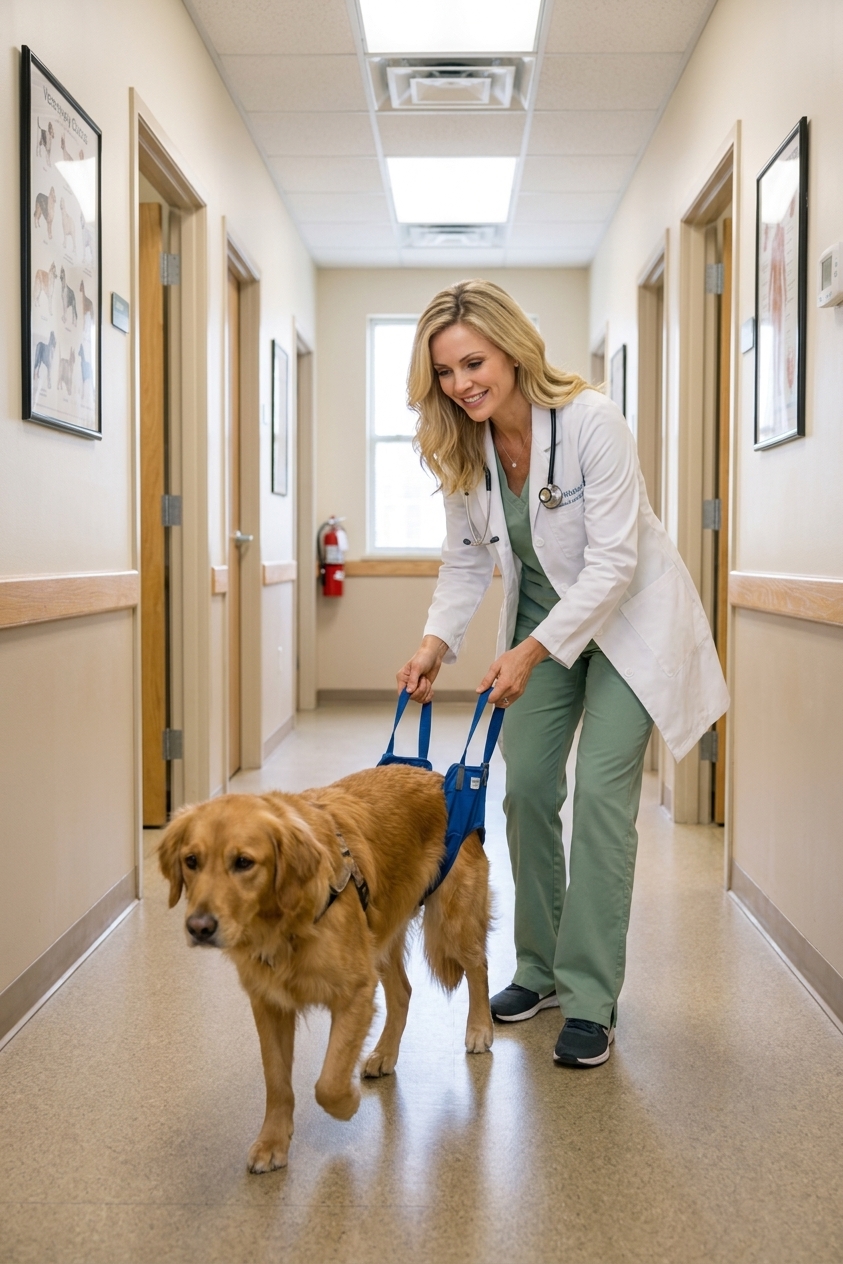
Stage 4: Paralysis
What you may notice
- Cannot stand or walk on the affected limbs
- May drag the body if trying to move
- Bladder control may be reduced or lost
- Deep pain sensation may still be present when tested by a trained veterinary professional
Mobility
This is paralysis of the affected limbs. In many thoracolumbar cases, the front legs walk but the back legs do not.
Common treatment path
Stage 4 is typically considered an urgent situation. Surgical decompression is often recommended because outcomes are generally better when the spinal cord is relieved sooner rather than later.
If surgery is not possible, strict conservative management can still be attempted, but it requires close veterinary guidance and realistic expectations.
At-home bladder support (only if taught)
If your dog cannot urinate normally, your veterinary team may need to teach you manual bladder expression or discuss temporary catheter options. Please do not guess or “try it” without hands-on instruction. An overfull bladder is painful and can lead to complications, including urinary tract infections.
Stage 5: No deep pain
What you may notice
- Complete paralysis of affected limbs
- No response to deep pain testing performed by a trained veterinary professional
- Often loss of bladder control
- May have reduced tail movement
Mobility
This is the most severe grade on the common scale. It indicates profound spinal cord injury.
Common treatment path
Stage 5 is a true emergency. If surgery is an option, earlier intervention is generally associated with better outcomes, and your neurologist may consider the situation time-sensitive. Ask your veterinary team how timing affects prognosis for your dog’s specific case.
At-home note: Deep pain sensation is not the same as a reflex. Dogs can pull a leg back due to a spinal reflex even when deeper sensation is absent. That is why this should be assessed by a veterinary professional.
Conservative vs surgical care
When conservative care is often considered
- Stage 1 and many Stage 2 cases
- Stable or improving neurologic signs
- First-time episode, mild deficits
- Owner can truly commit to strict rest and follow-ups
When surgery is often recommended
- Stage 3 with significant deficits, progression, or severe compression suspected
- Stage 4 or 5
- Recurrent episodes that keep returning
- Severe neck pain that cannot be controlled medically
Imaging such as MRI or CT helps confirm location and severity and helps surgeons plan treatment. Your veterinarian will also consider your dog’s overall health, age, and anesthetic risk.
What to expect at the vet
Most appointments include a pain assessment and a neurologic exam (walking, paw placement, reflexes, and sensation). Your veterinarian may recommend:
- Pain control and strict activity restriction right away
- X-rays in some cases, mainly to rule out other problems (X-rays often cannot “see” the disc material itself)
- Referral for MRI or CT when deficits are significant, worsening, or surgery is on the table
If your dog cannot walk or cannot urinate normally, your vet may also talk with you about nursing care needs at home (safe lifting, skin care, and bladder management).
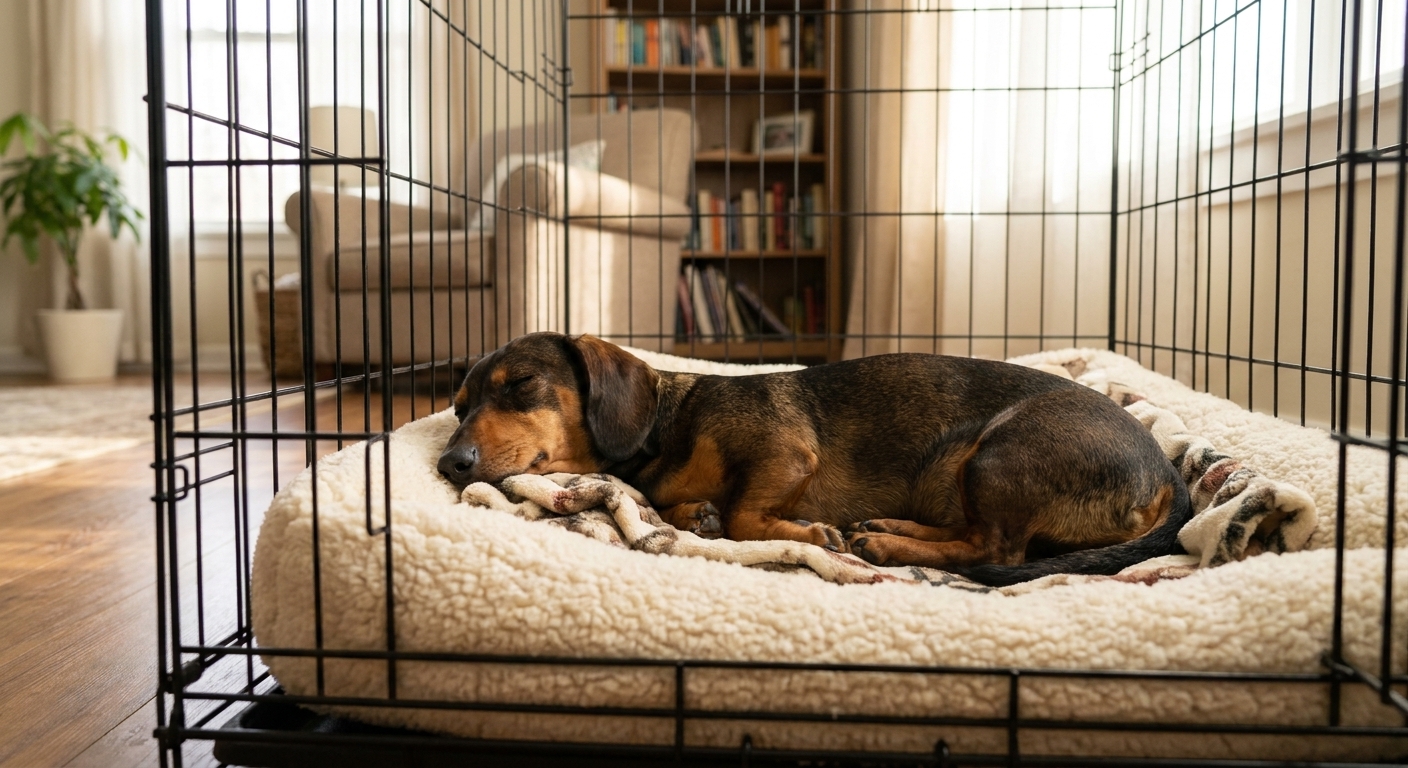
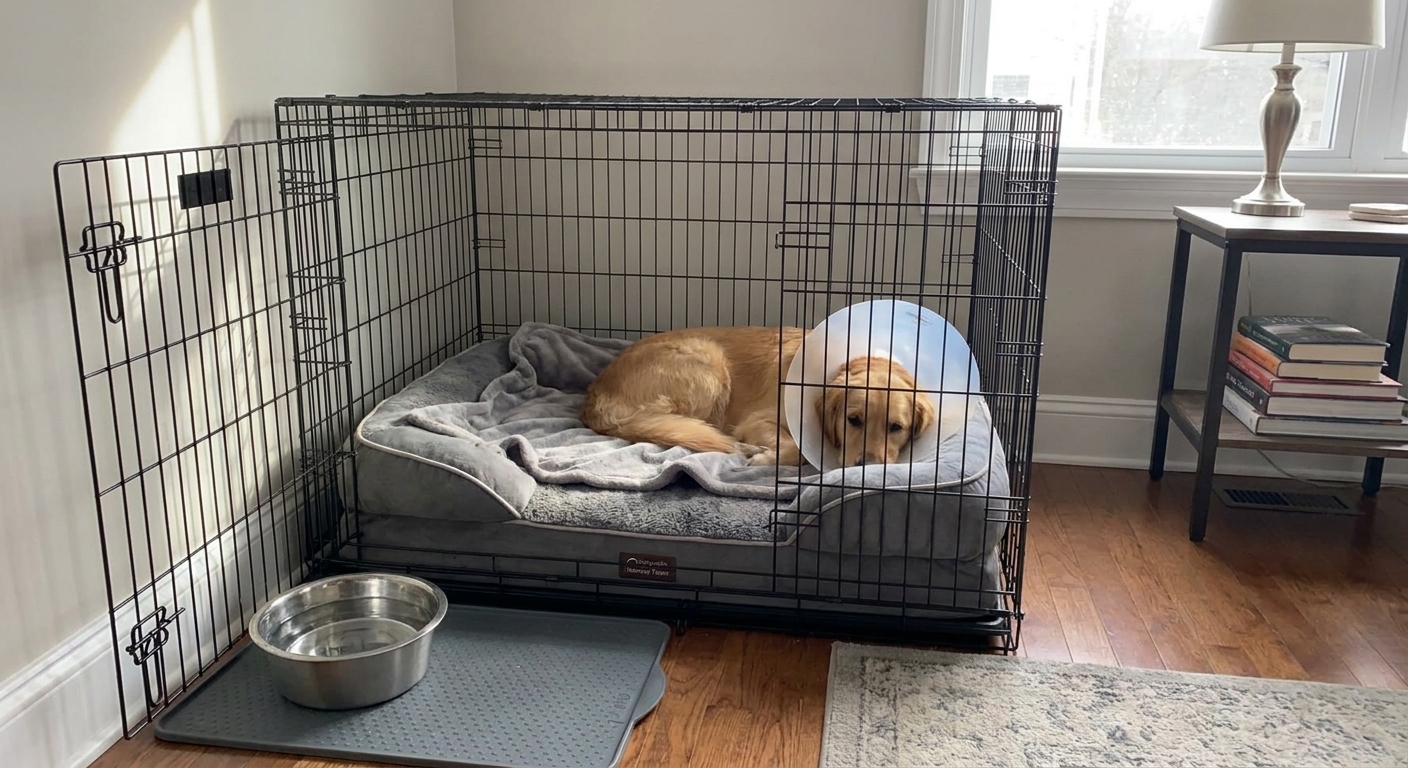
Strict crate rest
Crate rest is not optional. It is a medical restriction. The goal is to limit spinal movement so inflammation can settle and tissues can stabilize.
Typical expectations
- Duration: often about 6 to 8 weeks for conservative management, but follow your veterinarian’s plan
- Potty breaks: short, controlled, on leash, no wandering
- No: jumping on furniture, stairs, rough play, zoomies, wrestling, or free roaming
- Use: a harness for leash walks, not a neck collar (especially if neck IVDD is suspected)
Helpful setup tips
- Crate or pen large enough to stand, turn, and lie down comfortably
- Non-slip bedding
- Water within easy reach
- Food puzzles that do not trigger twisting or lunging
Call right now if
If your dog has suspected or confirmed IVDD, seek urgent veterinary help if you notice:
- Worsening weakness or wobbliness over hours to a day
- Sudden inability to walk
- Loss of bladder or bowel control, or inability to urinate
- Dragging legs with raw toes or nails
- Severe pain that breaks through medication
- New symptoms after a slip, jump, or fall
- Neck IVDD with stumbling, weakness in multiple limbs, or trouble breathing
When it comes to spinal cord function, the trend matters. Getting worse is more concerning than staying the same.
Recovery and rehab
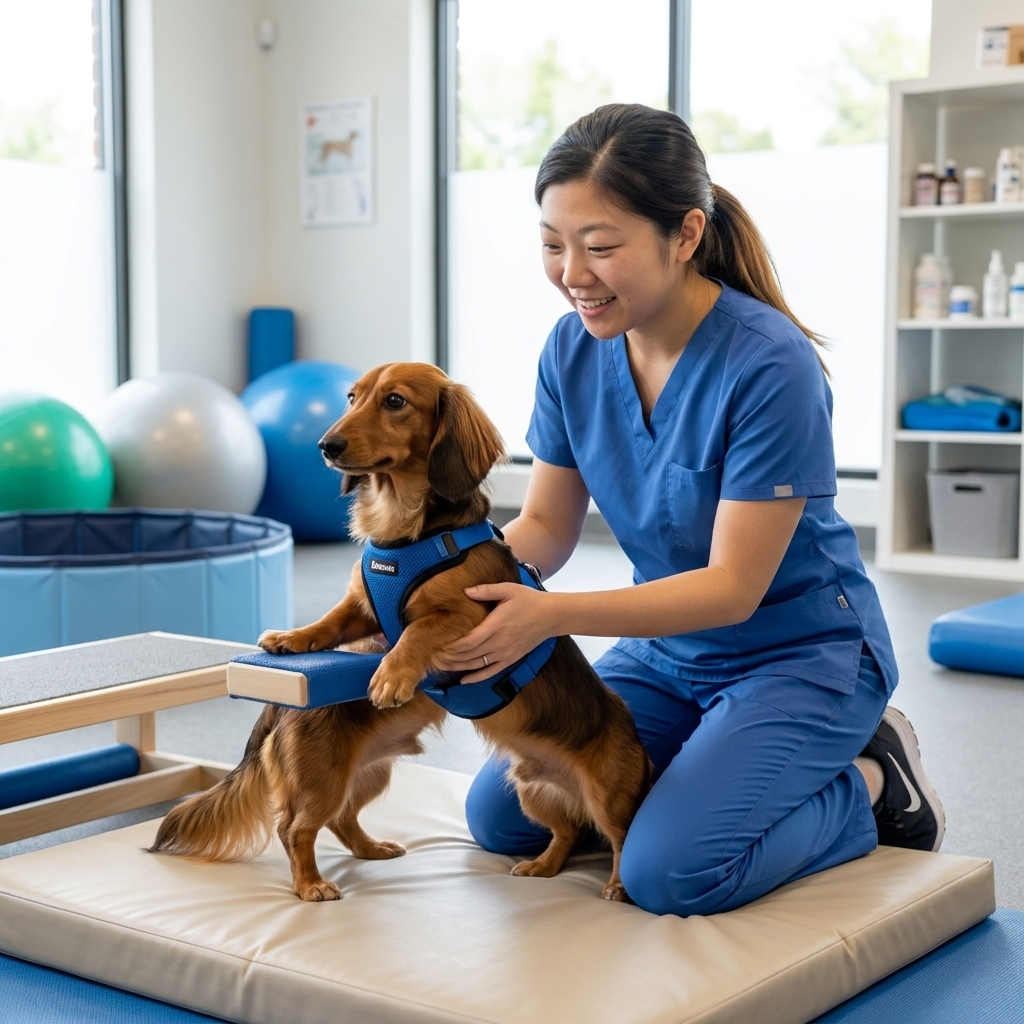
Healing from IVDD is rarely a straight line. Some dogs improve quickly, some take weeks, and some need long-term management. Your veterinarian may recommend rehabilitation therapy when it is safe, which can include guided exercises, underwater treadmill, and other modalities recommended by your rehab team. Evidence varies by therapy type, device, and protocol, so it is worth asking what is most appropriate for your dog.
Signs your dog may be improving
- Less pain and more comfort at rest
- More stable steps
- Better paw placement, less knuckling
- Improving ability to stand or take controlled steps
- Return of voluntary urination if it was impaired
Common at-home supports
- Non-slip runners or yoga mats
- Harness and rear support sling when recommended
- Weight management and muscle maintenance
- Medication as directed, never “as needed” unless your vet says so
- For non-ambulatory dogs: frequent bedding changes, skin checks, and nail and toe protection to prevent sores and scrapes
Safety reminder: Never give human pain medications unless your veterinarian specifically directs you. Many are toxic to dogs.
FAQ
Can a dog jump stages?
Yes. Some dogs go from pain-only to unable to walk in a short window, especially after an activity that increases spinal pressure like jumping or twisting.
Does wagging the tail mean it is not serious?
Not necessarily. Tail wagging can still happen even with serious back-leg weakness. What matters most is walking ability, bladder control, and veterinarian-assessed sensation.
Will my dog need surgery?
Many Stage 1 and some Stage 2 dogs recover without surgery. Stages 3 to 5 are more likely to need a surgical consult. Your veterinarian can help you weigh prognosis, timing, costs, and recovery needs.
How do I carry my dog safely?
Support the chest and hindquarters, keeping the spine level. Avoid bending the back. If you are unsure, ask your veterinary team to demonstrate for your dog’s size and condition.
What if my dog cannot pee?
Call your veterinarian promptly. Some dogs need manual bladder expression (taught by a veterinary professional) or other support. Do not wait for it to “work itself out.”
Takeaway
IVDD stages are a practical way to describe how much the spinal cord is affected. If you remember just one thing, remember this: pain-only cases often have more time, but loss of walking or bladder control is urgent. When in doubt, call your veterinarian, because early decisions can protect long-term mobility.
If you are navigating IVDD right now, you are not alone. With a clear plan, strict rest when indicated, and fast escalation when needed, many dogs go on to live happy, active lives.