A curious nose. A very waggy welcome.
Most of the time, a spay closes the chapter on uterine infections. But there is a rare, sneaky exception that can show up months or even years later: stump pyometra.
It can start as something that looks almost ordinary, like new discharge spots where she slept, a little less appetite, or a mild tummy upset. Then it can turn into a real emergency fast. Let’s sniff out what it is, what it looks like, and what to do next.
What stump pyometra is
Pyometra is an infection of uterine tissue that fills with pus. Many people are told “spay removes the uterus,” and in an ovariohysterectomy, that is true: the ovaries and uterus are removed.
In some regions, many “spays” are ovariectomies, where the ovaries are removed and the uterus is left behind. Even then, a pyometra is still very unlikely because the hormone source is gone. But infections in remaining uterine tissue can still happen under the right conditions.
In stump pyometra, there is residual uterine tissue left behind after surgery, often called the uterine stump or uterine remnant. If that leftover tissue is exposed to reproductive hormones, it can behave like uterine tissue during a heat cycle and become infected.
So even though your dog is “spayed,” the combination of leftover uterine tissue plus hormone influence can create the conditions for an infection.
Why it can happen long after a spay
Stump pyometra is not a normal spay recovery issue. It is a later problem that may show up:
- Months after surgery
- Years after surgery
- Seemingly out of nowhere, after a long stretch of normal life
Most often, the reason is that a dog still has hormone-producing ovarian tissue in her body. This can happen if a tiny piece of ovary was unintentionally left behind or if there is an unusual bit of ovarian tissue elsewhere in the abdomen.
More rarely, certain hormone medications (like progestins used for heat suppression or some skin and behavior conditions) can also contribute by stimulating uterine tissue. Either way, hormones can wake up remaining uterine tissue, and bacteria can take advantage of the changed environment.
Signs you might notice at home
Stump pyometra can look different from dog to dog, but these are common warning signs:
- Vaginal discharge (often creamy, yellow, green, brown, or bloody, sometimes smelly)
- Fever or feeling warm, with low energy
- Increased thirst and drinking more than usual
- Increased urination
- Loss of appetite
- Vomiting or nausea
- Belly discomfort, restlessness, or a “tight” painful posture
- Lethargy that feels out of character
Any combination of discharge plus feeling sick is worth a same-day call to your vet.
And a quick reminder: discharge or wet spots on bedding in a spayed dog can have other causes too, including a urinary tract infection, vaginitis, vulvar skin irritation, anal gland leakage, urinary incontinence, or even diarrhea that got misread in the moment. You do not have to diagnose it at home. You just need to take it seriously.
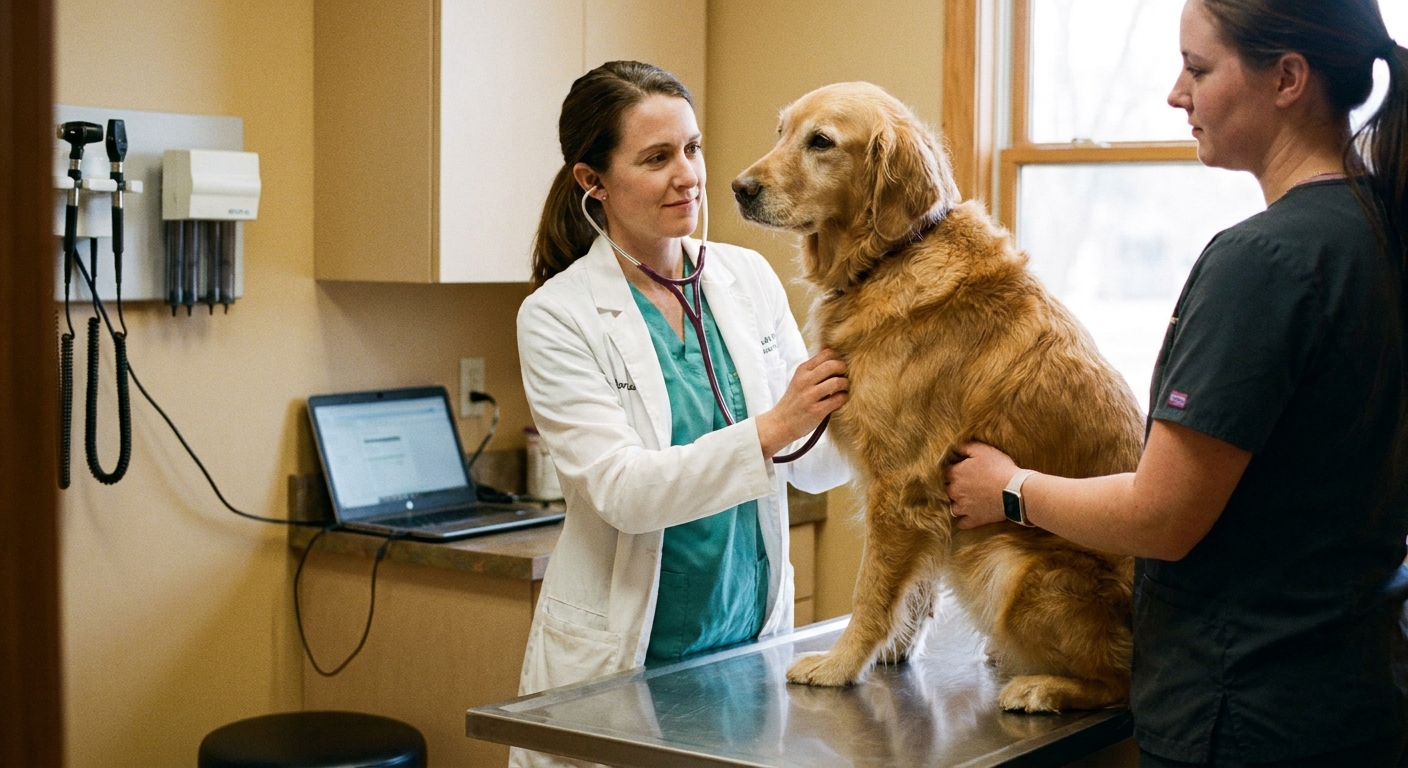
Open vs. closed stump pyometra
Open stump pyometra
If there is a pathway for infected fluid to drain, you may see discharge. That discharge is not “good,” but it can be a visible clue that something is wrong.
Closed stump pyometra
If there is no drainage, infected material can build up inside the uterine stump or uterine remnant. This is dangerous because pressure and toxins can rise quickly, and dogs can become severely ill.
If the infected stump ruptures, infection can spill into the abdomen, which is a life-threatening emergency.
Go to an emergency vet immediately if you see any of these, even without discharge:
- Bloated or painful abdomen
- Repeated vomiting
- Weakness, collapse, or very low energy
- Pale gums
- Rapid breathing or panting at rest
- Signs of severe dehydration despite drinking
Normal healing vs. a problem
Right after a spay, it is normal to be extra alert about any swelling, discharge, or licking. But stump pyometra is a late complication, not a typical first-week recovery issue.
More typical in the first days
- Mild sleepiness for 24 to 48 hours after anesthesia
- Mild incision bruising or slight swelling
- A small amount of clear, pink-tinged seepage from the incision the first day or two (your clinic may call this “serosanguinous”)
Not typical and worth a vet call
- Thick yellow, green, or foul-smelling fluid anywhere
- Fever, vomiting, or worsening lethargy after the first day
- Increasing swelling, heat, or pain at the incision
- Vaginal discharge days to years later in a spayed dog
If your dog was spayed recently and something looks “off,” your vet can help you sort out whether it is incision trouble, a vaginal issue, a urinary issue, or a deeper abdominal problem.
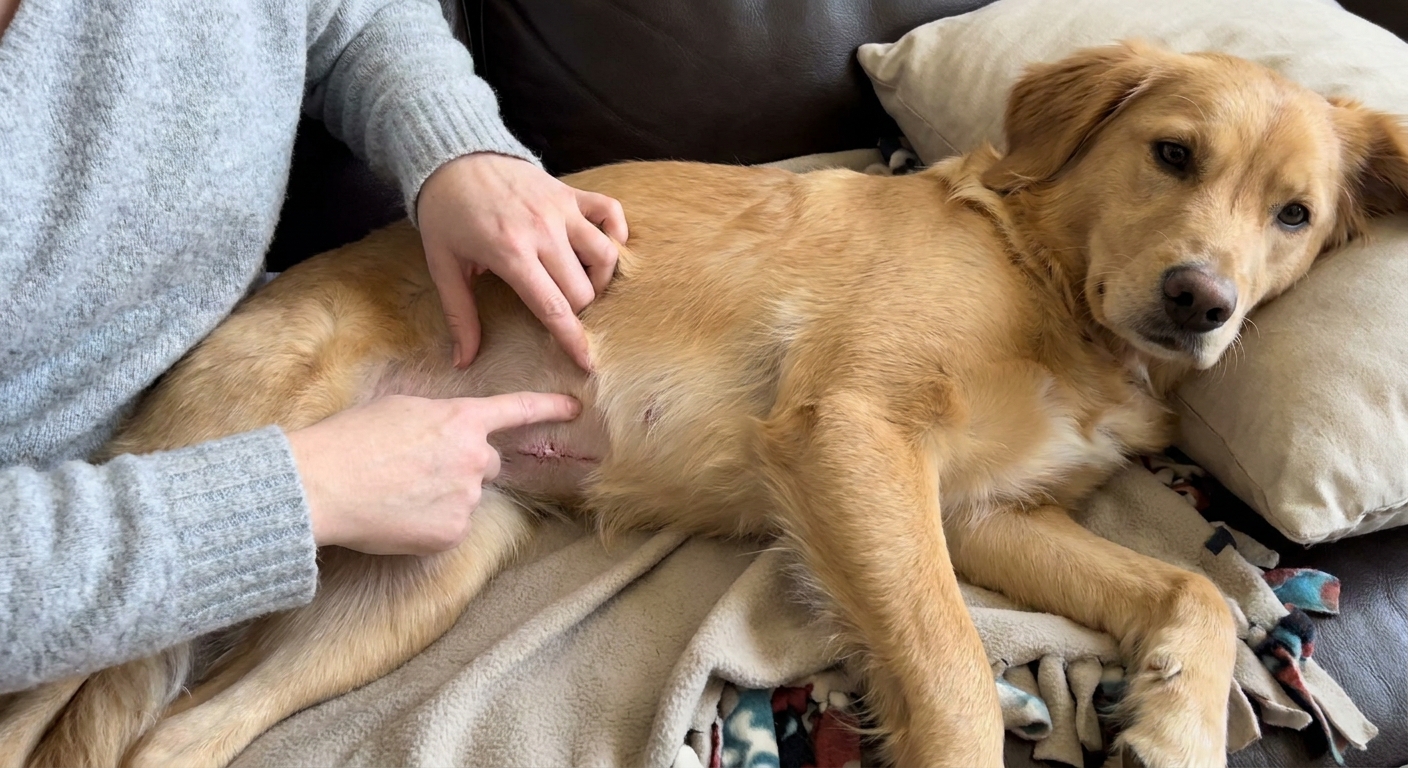
Stump pyometra vs. ovarian remnant
There is another issue that can happen after a spay: ovarian remnant syndrome (ORS). ORS is when ovarian tissue remains and continues to produce hormones.
ORS can cause heat-like signs in a spayed dog, such as:
- Swollen vulva
- Spotting or discharge that may look like a heat cycle
- Flagging (tail held to the side), flirting, or behavior changes
- Male dogs showing strong interest
Here is the key difference: ORS is about hormones and heat-like behavior. Stump pyometra is an infection. They can be connected because hormones from ORS can stimulate leftover uterine tissue, but they are not the same thing.
If your spayed dog seems to be going into heat and also looks sick, that combination is a big red flag for stump pyometra.
Diagnosis: what your vet may do
Because stump pyometra is uncommon, diagnosis usually involves combining your dog’s history with testing. Your vet may recommend:
- Physical exam (including checking the vulva, abdomen, hydration, and temperature)
- Bloodwork to look for infection, inflammation, dehydration, and organ stress
- Urinalysis to check kidney function and rule out urinary tract problems
- Ultrasound to look for a fluid-filled stump or infected tissue
- X-rays in some cases, especially if the abdomen is painful or swollen
- Hormone testing if ovarian tissue is suspected
Try to bring helpful details: when you first saw discharge, changes in thirst, any vomiting, and whether male dogs have shown interest recently.
Treatment: what fixes it
Stump pyometra typically needs more than a simple antibiotic course. Treatment often includes:
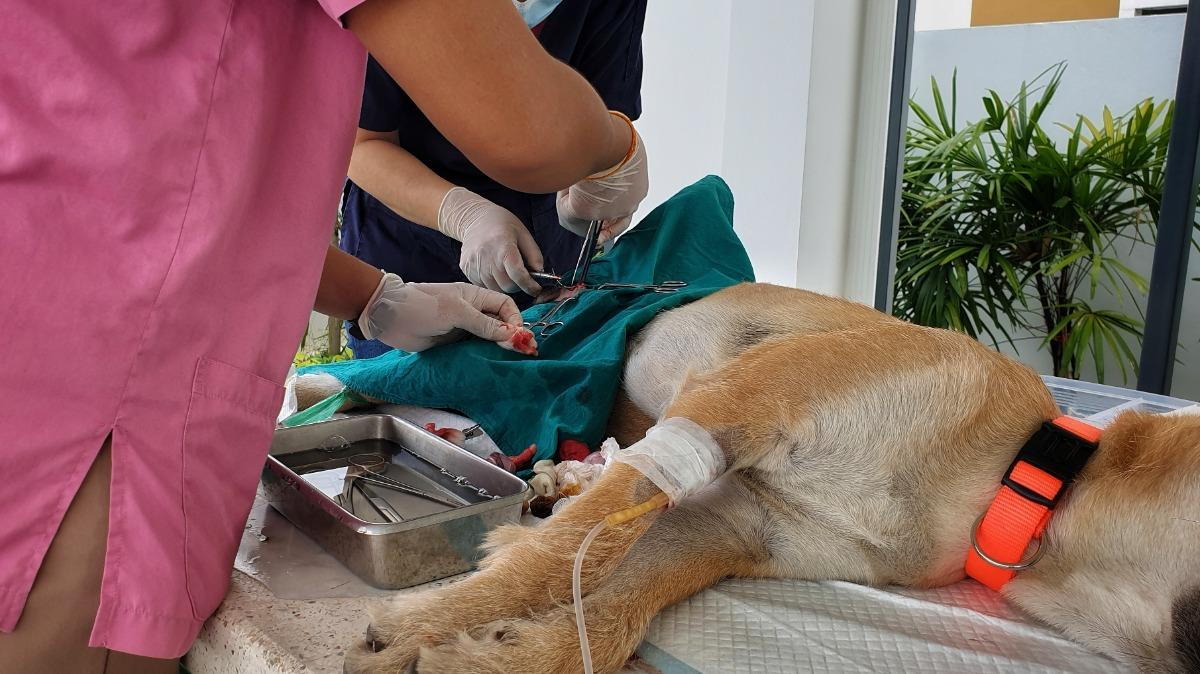
- Surgery to remove infected stump tissue
- Removal of any remaining ovarian tissue if found
- IV fluids and supportive care if your dog is dehydrated or systemically ill
- Antibiotics based on your vet’s judgment, sometimes adjusted after culture results
- Pain control and monitoring during recovery
In closed cases or severe illness, stabilizing in the hospital may be needed before or after surgery.
Prognosis: outcomes are often good with prompt treatment. The risk goes up if a dog is very sick, septic, or if the infected tissue ruptures.
Can you prevent it?
Because stump pyometra is tied to leftover tissue, prevention mainly comes down to surgical technique and complete removal of reproductive tissue during the spay. As a pet parent, you cannot control what has already happened inside the abdomen, but you can do two very powerful things:
- Take discharge seriously in a spayed female dog, even if it seems minor.
- Act quickly if your dog shows fever, vomiting, belly pain, or sudden lethargy.
If your dog has repeat heat-like episodes after spay, ask your vet about evaluation for ovarian remnant syndrome. Addressing the hormone source can lower the odds of uterine stump trouble later.
When to call vs. go now
Call your vet today
- Any vaginal discharge in a spayed dog
- New excessive thirst and urination
- Low appetite plus lethargy
- Heat-like behavior in a spayed dog
Go to emergency care now
- Vomiting that repeats or will not stop
- Distended or painful abdomen
- Weakness, collapse, or severe lethargy
- Pale gums, fast breathing, or signs of shock
- High fever or your dog seems rapidly worse
If your spayed dog has discharge and seems unwell, it is safer to treat it like an urgent medical problem until your vet says otherwise.
Quick questions
Can a spayed dog get pyometra?
A spayed dog is very unlikely to get a classic pyometra, especially if her ovaries were fully removed. But a dog can get a stump pyometra or infection in residual uterine tissue if uterine tissue remains and is stimulated by hormones.
What does the discharge look like?
It can be creamy, yellow, green, brown, or bloody, sometimes with a strong smell. Some dogs have no discharge if the stump is closed.
Could it just be a urinary tract infection?
It could be, and your vet will often check urine. But discharge plus fever, vomiting, belly pain, or a dog who just seems “off” raises concern for a deeper problem. Let your vet sort it out with an exam and testing.
Is this contagious to other dogs?
No. Stump pyometra is an internal infection. The bacteria involved are usually common organisms, not something that spreads through normal household contact.
Bottom line
Stump pyometra is rare, but it is one of those conditions where speed matters. A spayed dog who develops vaginal discharge, fever, increased thirst, vomiting, or belly pain needs veterinary attention, even if the spay was years ago.
If something feels weird in your gut, trust that instinct. I am a puppy-scout, and my favorite job is noticing small clues before they become big problems.