I am Shari Shidate, a veterinary assistant in Frisco, Texas, and I want to gently prepare you for something that can be startling the first time you see it. If your dog is treated with Stelfonta for a mast cell tumor, the tumor often breaks down and sloughs out, leaving an open wound that can look worse before it looks better. The good news is that for the right tumor in the right location, this “controlled tissue breakdown” is expected, and many dogs heal beautifully with the right home care and close veterinary guidance.
This article walks you through what the wound commonly looks like day by day, how long healing usually takes, and which symptoms should trigger a same-day call or visit to your veterinarian.
What Stelfonta is and why it can create an open wound
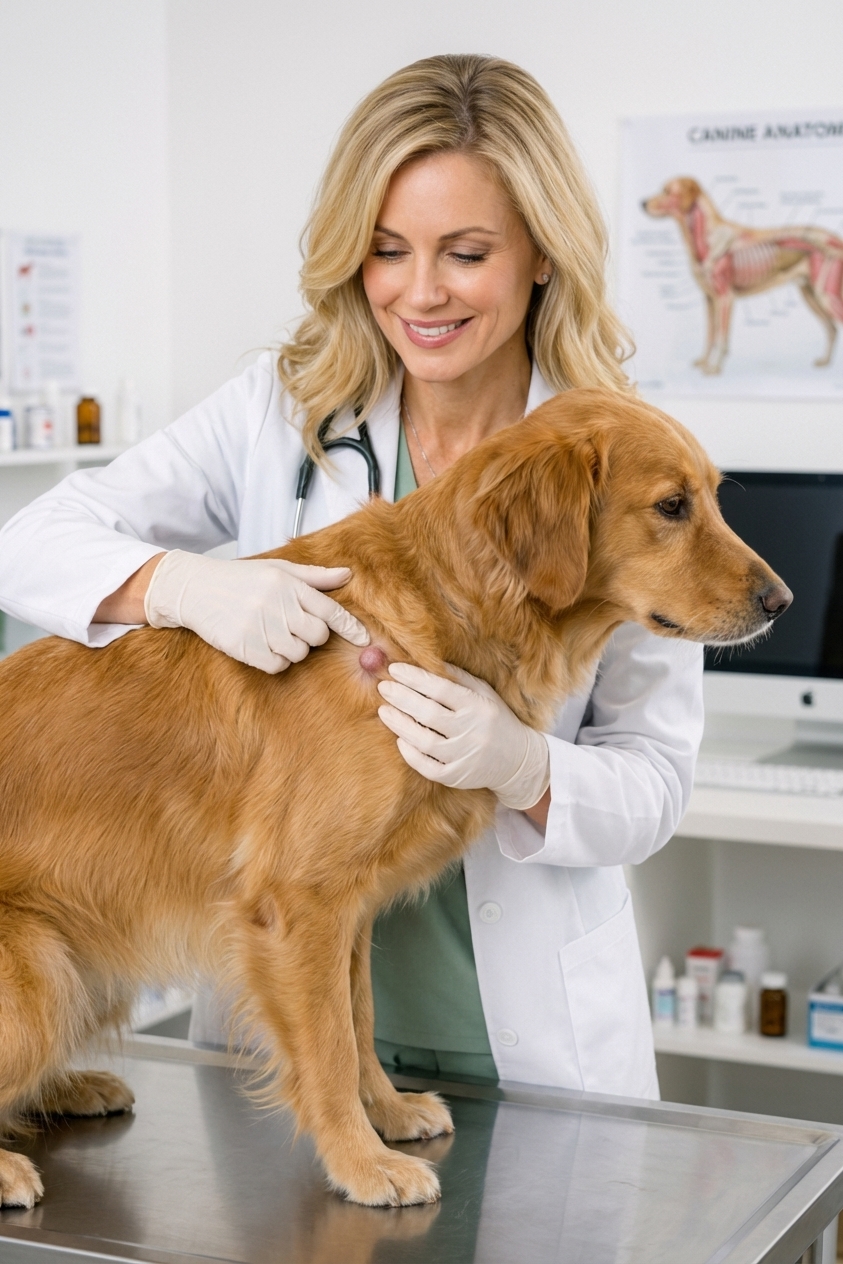
Stelfonta is the brand name for tigilanol tiglate, an anti-cancer injection placed directly into certain canine mast cell tumors (MCTs). It is designed for specific, localized tumors that are accessible for injection, and it is not appropriate for every dog or every tumor.
Instead of surgically removing the mass, Stelfonta causes rapid tumor cell death and a strong local inflammatory response. The tumor often becomes swollen, then breaks down and separates from the surrounding tissue. That is why an ulcer or crater-like wound can form at the site.
Important: Candidacy depends on tumor size, location, and staging. Your veterinarian may recommend a lymph node check or other staging steps to look for spread before deciding if Stelfonta is a good fit. Many dogs are also given pre-treatment medications (often antihistamines, and sometimes stomach protectants) because mast cell tumors can release histamine and other inflammatory chemicals.
Wound timeline day by day
Every dog is different, and the timeline can shift based on tumor size, tumor location (limb vs trunk vs head), your dog’s overall health, and whether there is licking, rubbing, or infection. Not every case sloughs dramatically, either. Some wounds look more like a shallow ulcer than a big “hole,” and that can still be normal.
Day 0 (injection day)
- What you may see: A small injection site, mild redness, or no obvious change right away.
- What your dog may do: Some dogs act completely normal. Others are sleepy from sedation, or mildly sore at the site.
- What is normal: Mild swelling and tenderness can begin within hours.
Days 1 to 3 (swelling phase)
- Appearance: Swelling often increases noticeably. The area can look puffy, tight, and warm. Bruising can appear. The tumor may look larger at this stage.
- Skin changes: The overlying skin may become red, darker, or begin to look “angry.”
- Comfort level: Many dogs are tender, especially if the site is bumped or if it is near a joint.
Call your vet the same day if swelling is rapidly expanding, very firm and painful, or if it starts affecting your dog’s ability to walk, breathe, eat, urinate, or poop (depending on location).
Days 3 to 7 (ulceration and sloughing)
- Appearance: This is often the most alarming stage. The skin over the tumor may open. You may see a wet, raw crater, grayish tissue, or a plug of dead tissue separating.
- Drainage: Serosanguinous fluid (watery pink or blood-tinged) is common. Small clots or scabs can also happen as the area changes.
- Odor: Some odor can occur when dead tissue is present. If you notice a new smell or a worsening smell, call your vet. It is hard to judge “mild” versus “foul” at home.
Owners often tell me, “It looks like a hole.” Yes, that can be normal with Stelfonta. The goal is for the tumor to detach and leave healthy tissue behind to heal from the bottom up.
Days 7 to 14 (early healing)
- Appearance: The wound bed often looks beefy red or pink and slightly bumpy. That is granulation tissue, and it is a good sign.
- Drainage: Drainage often decreases, though mild seepage can continue.
- Edges: The wound edges may begin to contract inward.
During this stage, preventing licking is huge. Even a few minutes of licking can traumatize fragile new tissue and set healing back.
Weeks 2 to 4 (shrinking and closing)
- Appearance: The open area typically shrinks steadily. You may see scabbing at the edges and a smaller central opening.
- Itchiness: As skin starts to close, some dogs get itchy. That itch can lead to licking, scratching, or rubbing.
Weeks 4 to 8 (late healing)
- Appearance: Many wounds are closed or nearly closed by this point, especially smaller ones. The area can look hairless, shiny, or slightly thickened.
- Scarring: Scarring can happen. Hair regrowth is variable and depends on depth and location.
Some dogs heal faster, and some take longer. Larger tumors and wounds on lower legs can take more time because the skin is tighter and blood supply can be less robust.
How long healing takes
If you are feeling whiplash from how fast things change in the first week, you are not alone. The early phase can look dramatic, then healing often becomes more steady and predictable.
In many dogs, the wound is substantially improved by 3 to 4 weeks, with continued remodeling over the following weeks. A reasonable general expectation is:
- Small to moderate wounds: often 3 to 6 weeks to close.
- Larger wounds or tricky locations (lower limbs, areas of movement): may take 6 to 8 weeks, sometimes longer.
Your veterinarian will give you the best estimate based on tumor size, location, and your dog’s medical history. Rechecks are commonly scheduled during the first couple of weeks, so keep all follow-ups even if things seem to be going well. If the wound seems “stuck” with no improvement for several days in a row, that is a great time for a recheck.
What changes are normal
It helps to think in categories, because the wound can look intense even when healing is on track.
Often normal (still mention at a recheck)
- Swelling for the first several days, sometimes dramatic.
- Bruising around the site.
- Watery pink drainage or small amounts of blood-tinged fluid.
- Gray or tan tissue during the sloughing stage.
- Red, bumpy granulation tissue starting about a week in.
Same-day call signs
- Thick yellow, green, or creamy discharge, especially if increasing.
- New or worsening odor.
- Rapidly worsening redness spreading away from the wound.
- Sudden increase in swelling after it had been improving.
- Bleeding that does not stop with gentle pressure, or bleeding that soaks a bandage quickly.
- Black tissue expanding at the wound edges (could indicate additional tissue necrosis).
If you are unsure, take a quick photo in good light and call your veterinary team. Photos can look more dramatic depending on lighting and angles, so try to take them from the same distance each day. In clinics, we would rather reassure you early than treat a bigger problem later.
Pain after Stelfonta
Some soreness is common, especially early on and during the ulceration phase. Your vet may prescribe prescription pain control or an anti-inflammatory medication as directed. Follow directions exactly, and never give human pain medications unless your veterinarian specifically instructs you to.
Expected discomfort
- Flinching if the area is touched.
- Restlessness for a day or two.
- Mild decrease in activity.
Same-day vet visit signs
- Crying out, guarding, or inability to settle even after prescribed pain meds.
- Not eating for more than 24 hours or refusing water.
- Limping that is severe or worsening, especially for leg tumors.
- Vomiting, diarrhea, facial swelling, hives, or sudden weakness (possible mast cell mediator effects or medication reaction).
Home care basics
Your veterinarian’s instructions come first, because each wound and each dog is different. But these are the most common “big wins” I see for smooth healing.
1) Prevent licking and rubbing
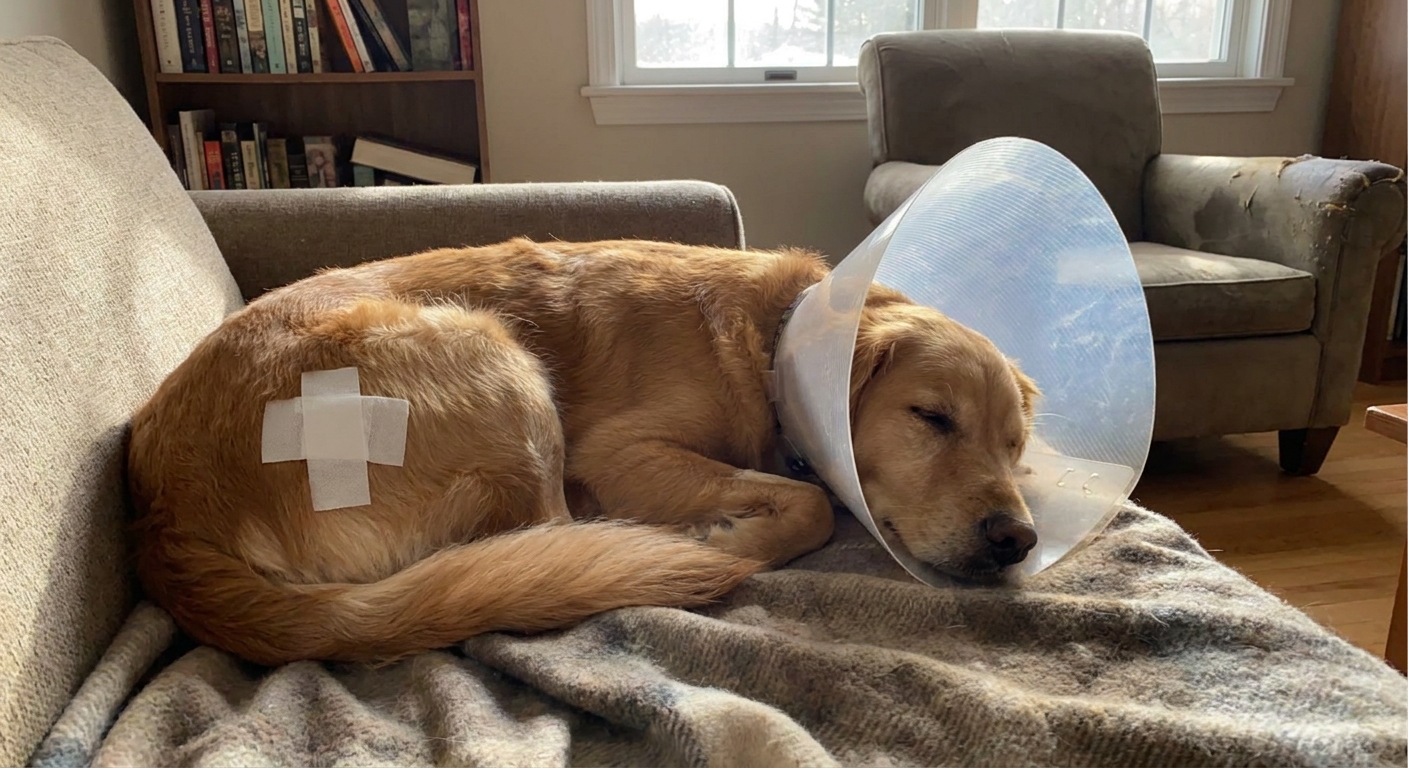
- Use an e-collar or protective recovery collar as recommended.
- Keep it on even if your dog “only licks a little.” A little can do a lot of damage.
2) Follow wound care directions
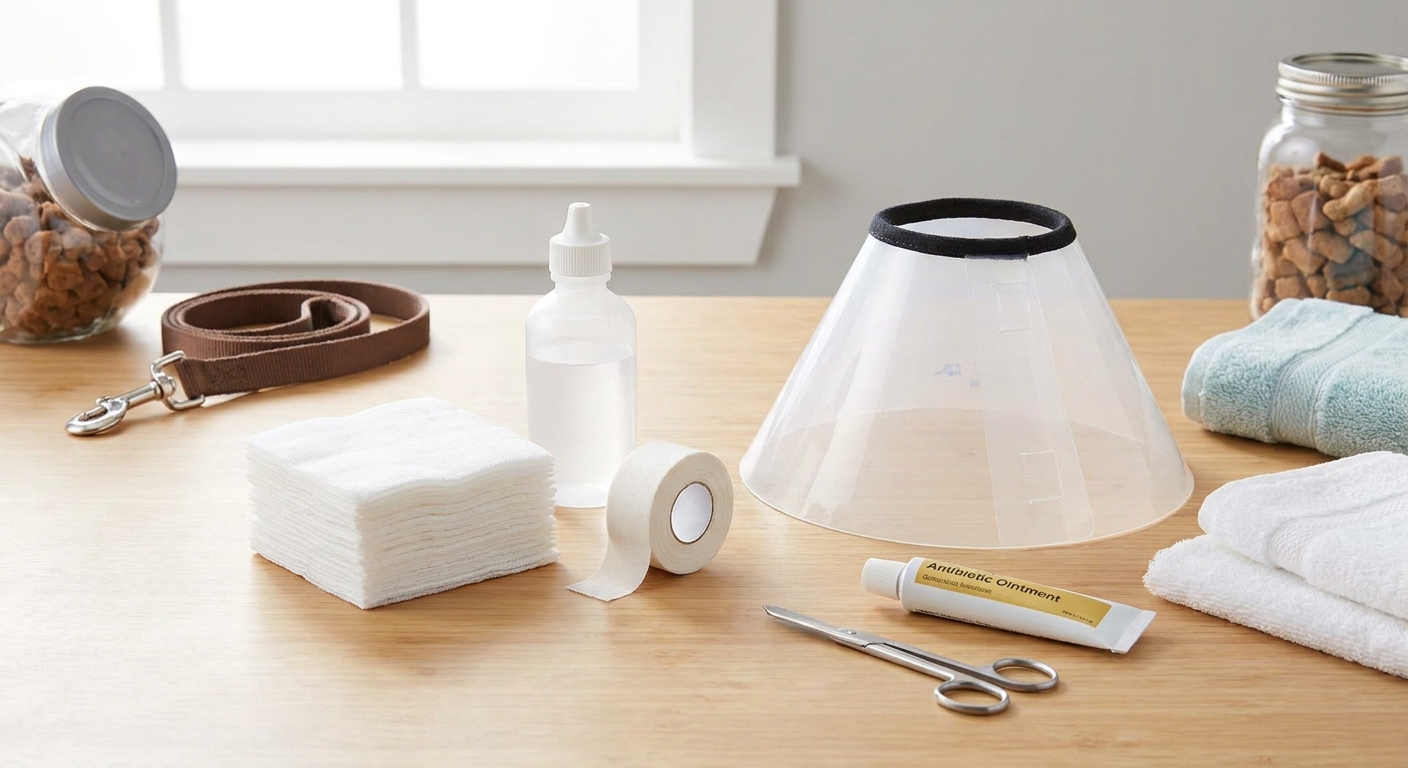
- Some wounds are managed open to air, others need a light bandage, and some need specific topical products.
- Do not apply ointments, sprays, peroxide, alcohol, or “natural salves” unless your veterinarian approves them for this wound.
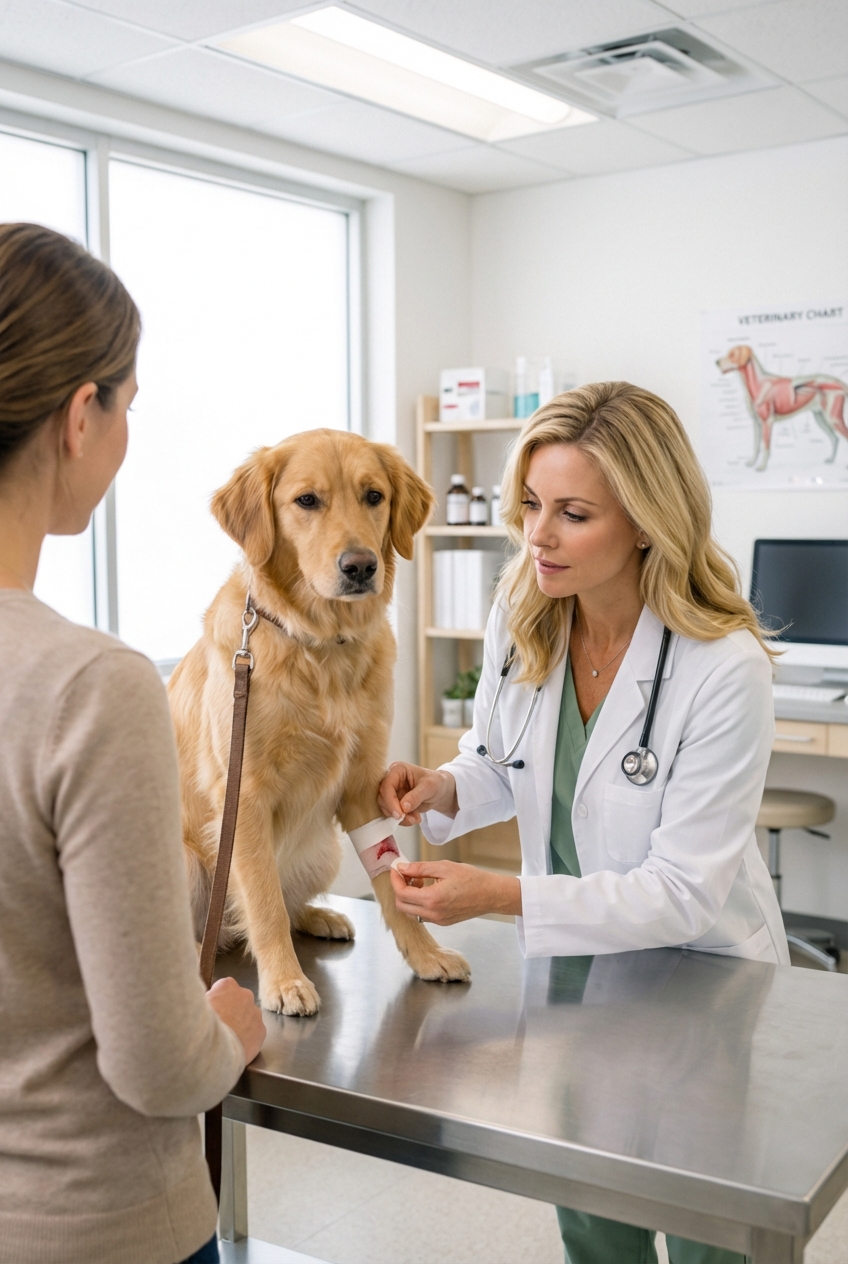
3) If you have a bandage, protect it
- Keep it clean and dry, and prevent chewing.
- Call your vet right away if the bandage slips, gets wet, smells bad, or if you notice swelling of the toes or limb above or below the bandage.
- Do not tighten, add extra layers, or replace a bandage unless your veterinary team has shown you how for your dog’s specific wound.
4) Keep activity controlled
- Leash walks only until your vet clears more activity.
- Avoid swimming, mud, and rough play while the wound is open.
5) Watch the whole dog, not just the hole
Track appetite, energy, stool quality, and sleeping comfort. With mast cell tumors, systemic signs matter too.
When to seek urgent care
Use this as a practical after-hours and emergency checklist.
- Bleeding that will not stop after 10 minutes of gentle, steady pressure with clean gauze or a clean cloth.
- Sudden large swelling at the site or swelling that affects function (walking, eating, breathing).
- Signs of infection: increasing heat, spreading redness, thick discharge, strong odor, or fever (if measured). If your dog feels hot and is unusually lethargic, that also counts.
- Uncontrolled pain despite prescribed meds.
- Repeated vomiting or diarrhea, black tarry stool, weakness, collapse, or pale gums.
- Any wound on the face, mouth area, armpit, groin, or near the anus that is interfering with normal function. These locations can become complicated quickly and need prompt attention.
If it is after hours, call your emergency clinic for guidance. It is always appropriate to say, “My dog had Stelfonta and the wound looks different today,” and describe what changed.
Common questions
Is it normal if the tumor looks bigger at first?
Often yes. Early swelling can make the area look larger for several days. What matters is the overall trajectory. After the peak swelling period, you generally want to see gradual improvement.
Why does it look like a crater?
Because the tumor tissue is breaking down and separating. That open area is frequently part of the expected process, and the body then fills it in with healthy granulation tissue.
Should I bandage the wound?
Only if your veterinarian tells you to. Some Stelfonta wounds do well with a specific bandage plan, and others heal best with minimal coverage. Incorrect bandaging can trap moisture, increase infection risk, or cause skin damage.
Can my dog sleep without the cone?
Most dogs do their sneakiest licking at night or when you are distracted. If your vet recommends an e-collar, it is usually safest to keep it on full-time until the wound is clearly past the fragile stage.
A gentle final note
Stelfonta wounds can look intense, even when everything is going right. I always encourage pet parents to take one clear photo per day in the same lighting and from the same distance. It helps you see progress you might miss day to day, and it gives your veterinary team useful information if you call with concerns.
You are not overreacting if you feel anxious about an open wound. You are being a good advocate. When in doubt, call your veterinarian, describe what you see, and ask, “Is this expected for today’s stage, or do you want to recheck?”