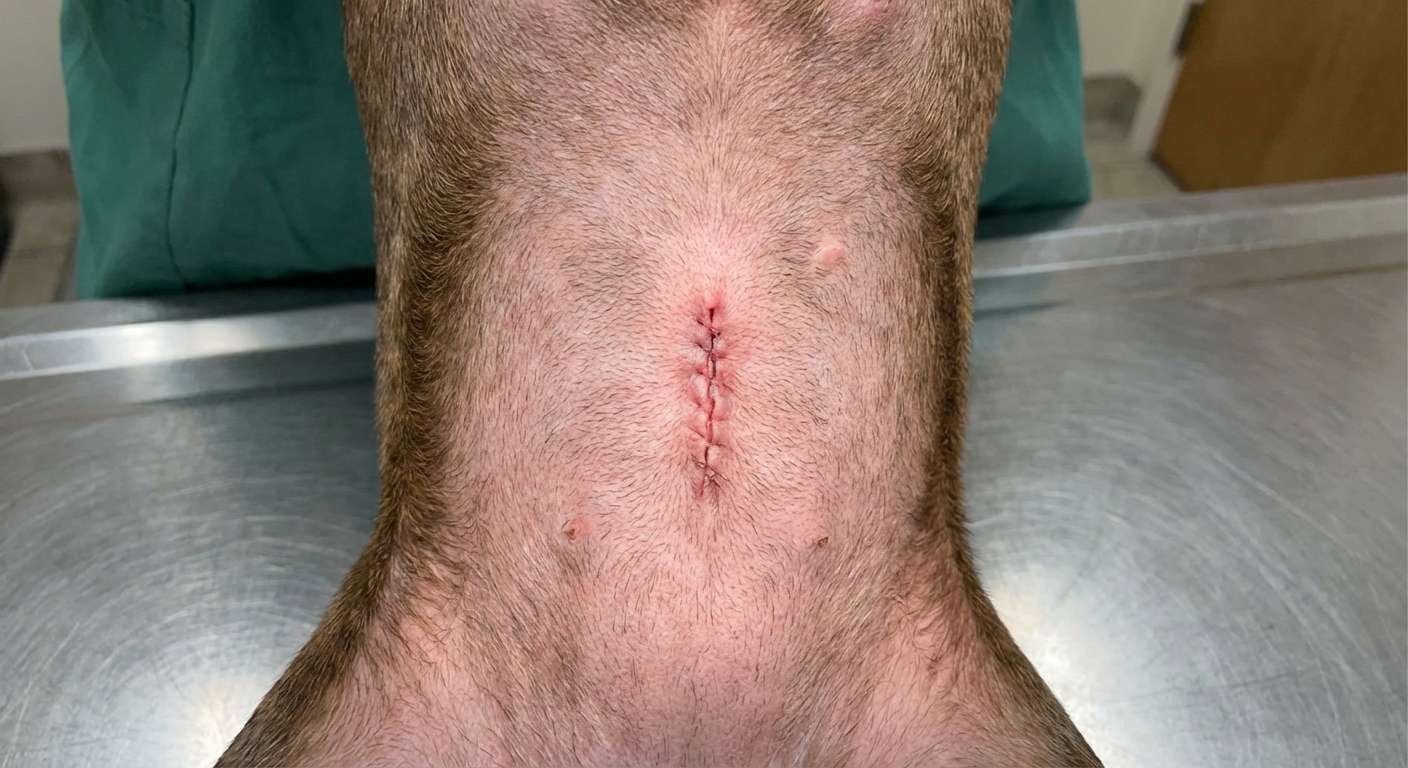
If you’ve looked at your dog’s belly after her spay and thought, “Wait, why is there a squishy little water balloon under that incision?”, you are not alone. As a veterinary assistant here in Frisco, Texas, this is one of the most common post-spay worries I hear.
The good news is that a soft, fluid-filled lump near a spay incision is often a seroma, and many seromas improve with time and strict rest. The important part is knowing when it is likely a simple seroma and when the swelling could be something more serious, like an infection, a hernia, or internal bleeding.
What is a seroma after a spay?
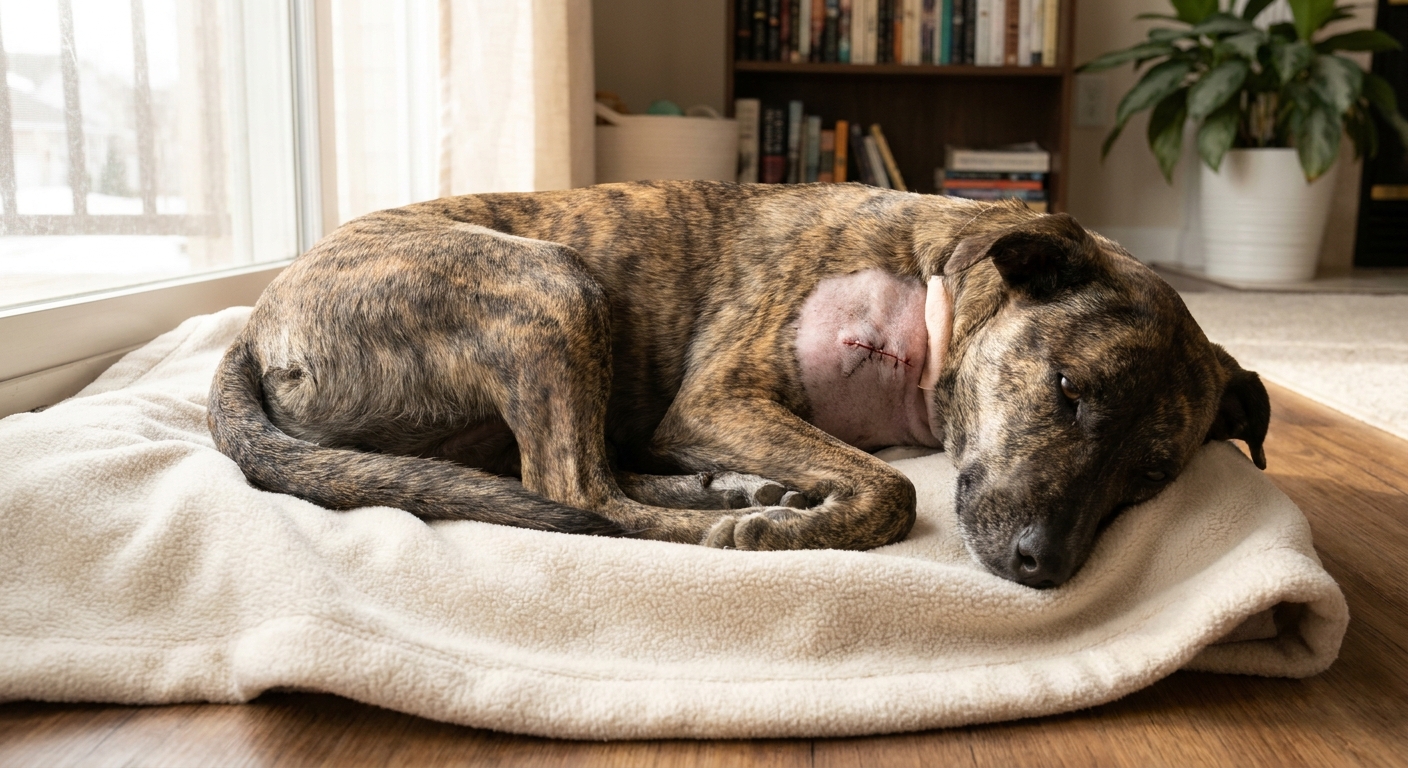
A seroma is a pocket of fluid that collects under the skin near a surgical site. It is often clear to slightly blood-tinged (serosanguinous) and is usually sterile at first, meaning it is not infected when it starts. Think of it like fluid your body sends to an area that was handled during surgery. The body is trying to heal, and sometimes that fluid has nowhere to go, so it pools.
Seromas can happen after any surgery, but we see them fairly often after spays because:
- The abdomen is moving constantly with walking, sitting, and getting up.
- Young dogs often feel better quickly and become active before tissues are fully sealed.
- Licking, jumping, stairs, and rough play can create extra “shear” under the incision.
Timing: Seromas often show up a few days after surgery, commonly around days 3 to 7, but they can appear earlier or later depending on activity level and healing.
One more helpful note: Not every post-spay bump is a seroma. Some dogs get a small, firm knot at or near the incision from normal healing or a suture reaction (sometimes called a suture granuloma). These tend to feel more like a pea or a little ridge than a water balloon, and they often shrink over time. If you are not sure what you are feeling, your clinic can help you sort it out quickly.
What a typical seroma looks and feels like
While every dog is different, many uncomplicated seromas share a few traits:
- Soft or squishy swelling under or near the incision
- Fluid-like feeling, sometimes like a water balloon
- Usually not very painful when touched (your dog may not care much)
- Skin is not hot compared to surrounding skin
- Incision itself is closed, with minimal redness along the line
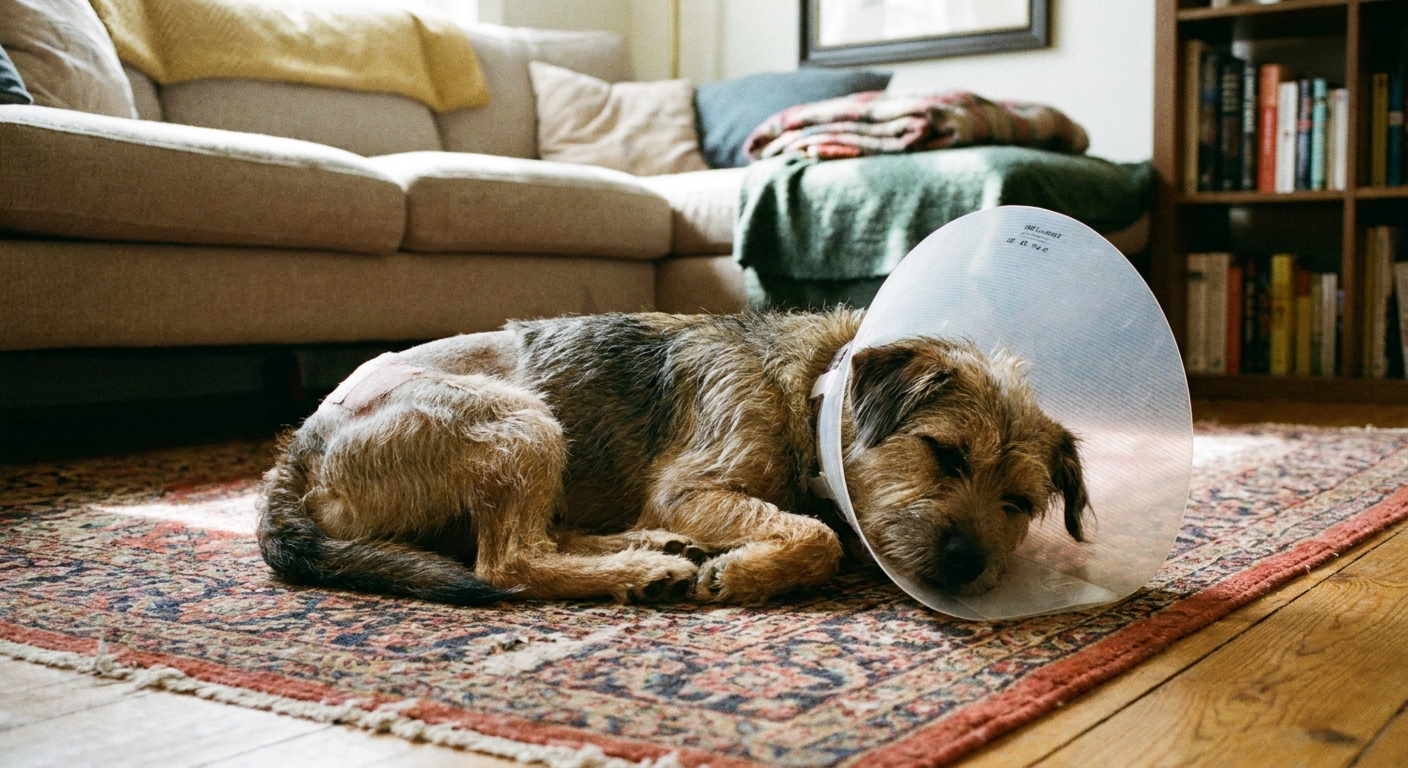
You might notice the lump changes slightly depending on how your dog is standing or lying down. Some seromas look bigger at night after a day of movement.
It can also help to know what can be normal early on: mild redness right along the incision line and some bruising (especially in light-skinned dogs) can be normal in the first few days. What concerns me more is redness that is spreading, heat, increasing pain, or any discharge.
Seroma vs infection
Infection and seroma can look similar at first glance because both can involve swelling. Here are the clues that push my concern more toward infection than a simple seroma.
More consistent with a seroma
- Swelling is soft and fluid-like
- Incision is dry
- Mild bruising can be present, especially in fair-skinned dogs
- Your dog feels okay overall and is eating, drinking, and acting pretty normal
More consistent with infection (call your clinic)
- Increasing redness spreading beyond the incision line
- Heat from the skin over the incision
- Thick discharge (yellow, green, creamy), or foul odor
- Incision edges gap open, look wet, or are actively oozing
- Pain when touched, flinching, guarding the belly
- Fever, lethargy, not eating, vomiting, or just “not herself”
If you see discharge or a suddenly more inflamed-looking incision, it is wise to contact your vet right away. Infections can escalate quickly, and early treatment is much easier than late treatment.
Seroma vs hernia
A hernia after a spay is less common, but it matters because it can involve tissue pushing through a deeper body wall layer. Not every post-op bulge is a hernia, but here is what raises suspicion.
Signs that can fit a seroma
- Soft, shifting fluid pocket under the skin
- Size slowly improves with rest
Signs that can fit a hernia (exam recommended)
- Firmness or a bulge that feels like more than fluid
- Bulge that gets larger when your dog strains (barking, pooping)
- Odd shape or a distinct “defect” feeling under the swelling
- Discomfort, especially if the belly is tense
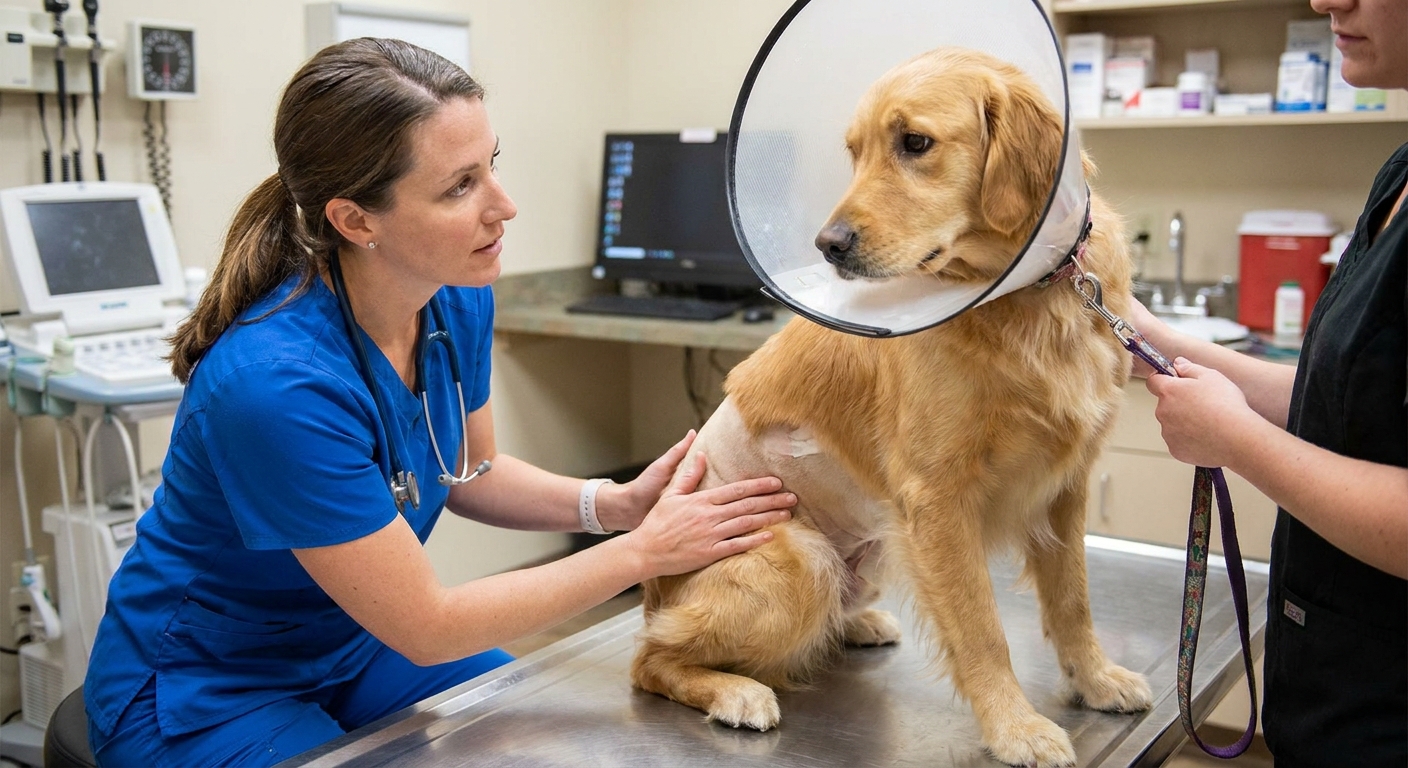
Because it is hard to diagnose a hernia accurately at home by feel alone, any swelling that seems firm, rapidly enlarging, or painful deserves a vet exam.
Location note: Most spays are done through a midline incision on the belly, so swelling is usually there. Some spays are done through a flank incision on the side, and the “lump” will match that incision location. If you are unsure what technique was used, your operating clinic can tell you.
Seroma vs internal bleeding
A seroma is a surface-level fluid pocket under the skin. Internal bleeding is bleeding inside the abdomen and is an emergency. A belly that looks “puffy” can worry people, so I want to give you clear red flags.
Seek urgent veterinary care if you notice:
- Pale or white gums (instead of a healthy bubblegum pink)
- Weakness, collapse, or extreme lethargy
- Rapid breathing or breathing that looks labored
- Distended abdomen that looks progressively bigger
- Severe pain, trembling, or restlessness (can’t get comfortable)
- Repeated vomiting or a dog who just seems significantly unwell, especially paired with weakness or a painful belly
Those signs are not typical for a simple seroma. If you are unsure, call your veterinary hospital immediately. If it is after hours, go to an emergency clinic.
What vets usually advise
For an uncomplicated seroma, veterinary guidance often focuses on protecting the incision and reducing motion so your dog’s body can reabsorb the fluid.
Common recommendations
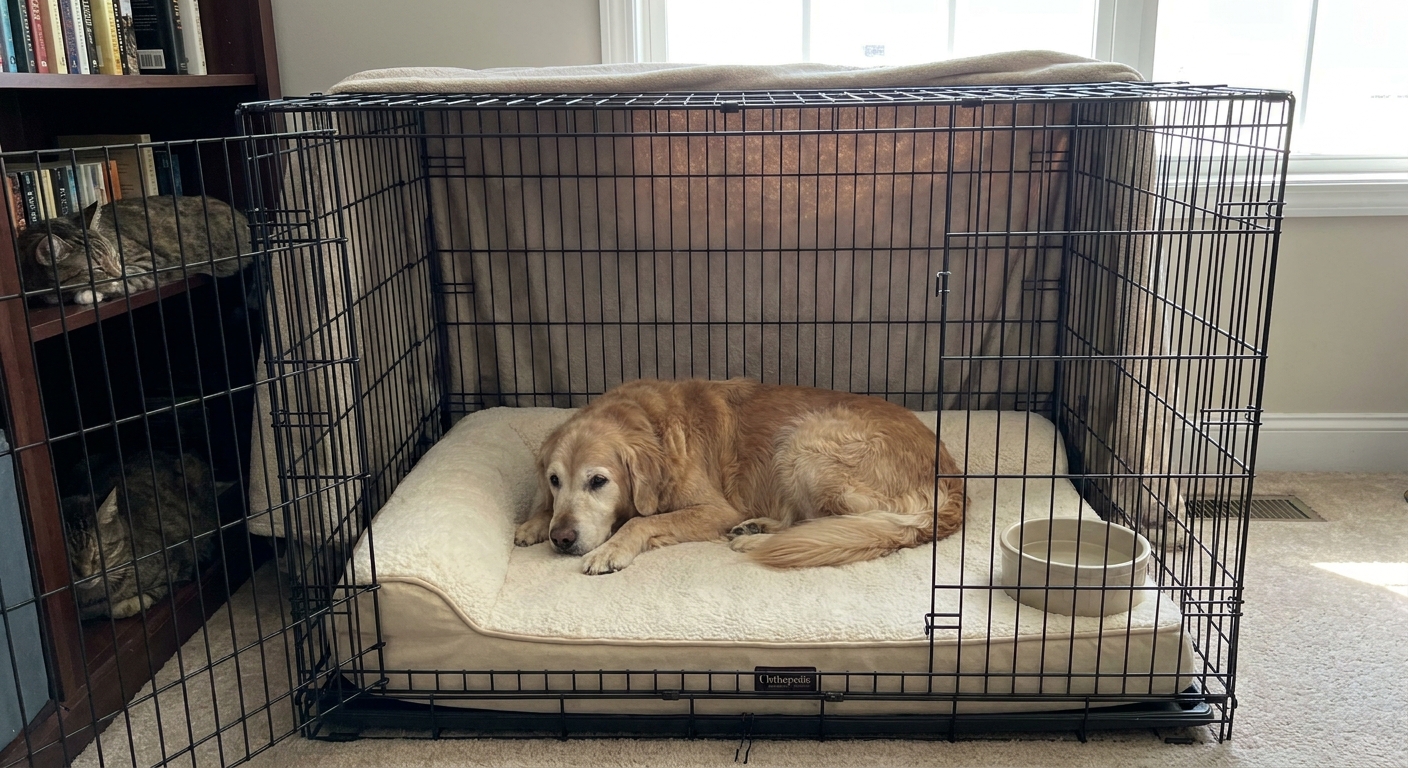
- Strict activity restriction for 10 to 14 days, sometimes longer: no running, jumping on furniture, stairs, or rough play.
- Leash walks only for potty breaks.
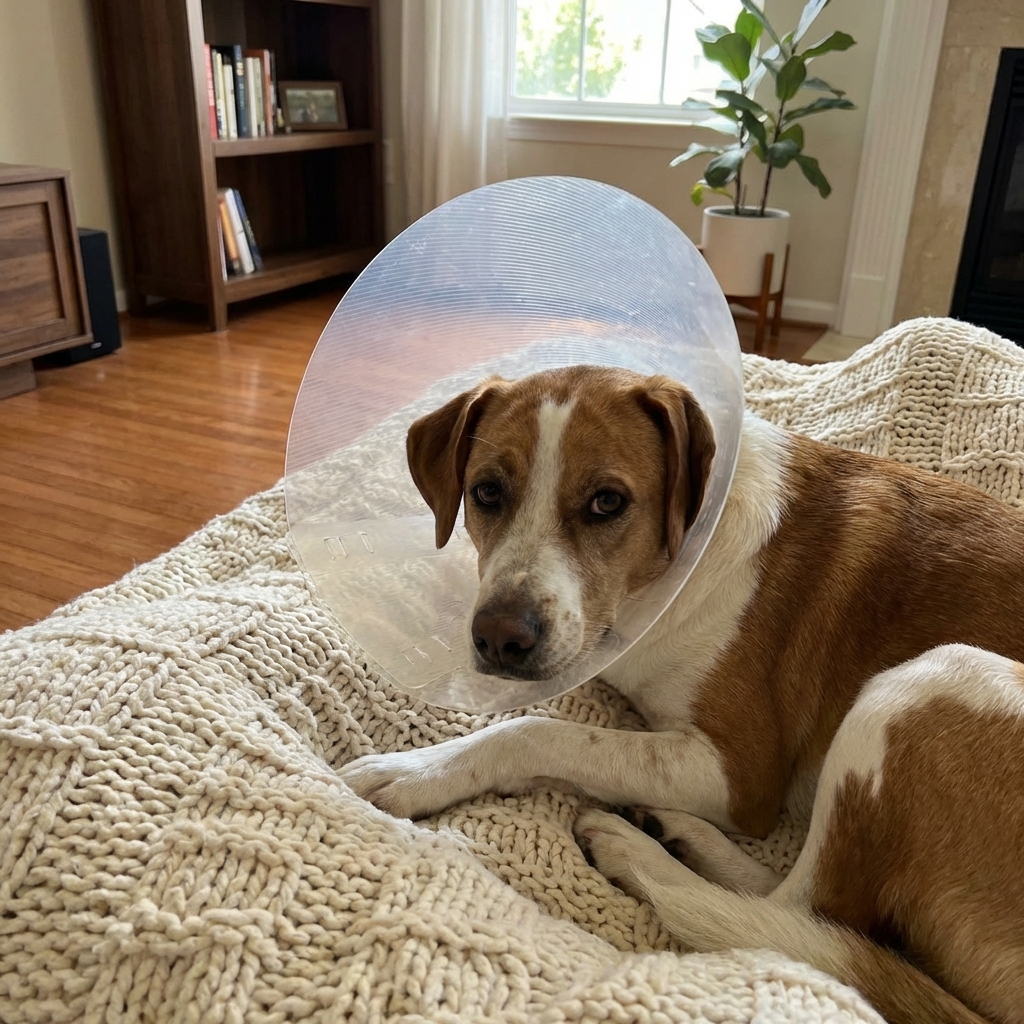
- E-collar or surgical suit to prevent licking, even “just a little.” Licking can inflame tissue and make a seroma larger.
- Cold compress in the first 24 to 48 hours only if your clinic approves, then sometimes warm compresses later to encourage reabsorption. Always confirm timing with your clinic.
- Recheck if the swelling is large, changing quickly, or your dog is uncomfortable.
Why many vets avoid draining it
Owners are often surprised to hear, “We usually do not want to stick a needle in it.” The reason is that aspiration can add infection risk, and it often does not solve the underlying problem (a bit of “dead space” where fluid can keep re-accumulating). Also, some seromas refill after being drained unless activity is tightly controlled.
That said, large, tense, or persistent seromas sometimes are drained by a veterinarian, or managed with bandaging and closer monitoring. The right plan depends on your dog’s size, comfort level, and how the incision looks.
Quick tip: When in doubt, contact the clinic that did the surgery first. They know your dog’s incision location, closure pattern, and whether there are internal dissolvable sutures, skin glue, staples, or external stitches, which changes what “normal” looks like.
Changes that need a recheck
If I could put one “trust your gut” section on every spay aftercare page, it would be this. Contact your vet promptly and ask whether your dog should be seen if you see any of the following:
- Swelling that grows quickly over hours
- Any discharge from the incision (especially thick, yellow, green, bloody, or smelly)
- Incision edges separating, missing sutures/staples, or a new open spot
- Skin that is hot to the touch or redness that is spreading
- Moderate to severe pain, crying, trembling, guarding, or snapping when you look
- Lethargy, not eating, repeated vomiting, or feverish behavior
- Pale gums, weakness, collapse, rapid breathing, or a very swollen abdomen
- Any licking or chewing episode that you suspect damaged the incision
You are never “overreacting” by asking your vet to take a look. Early checks prevent big problems.
At-home monitoring
If your dog is otherwise acting normal and your vet agrees it looks like a seroma, your job becomes calm, consistent monitoring.
Simple steps I recommend to many owners
- Take a clear photo once a day in similar lighting and angle. It is the easiest way to notice subtle change.
- Check gum color once or twice daily for the first few days post-op.
- Track appetite and energy: eating, drinking, peeing, pooping, and overall comfort.
- Prevent all jumping: use baby gates, keep your dog on one floor, leash to go outside.
- Keep the incision clean and dry: no bathing, swimming, or licking.
Please skip home remedies like ointments, alcohol, hydrogen peroxide, or “herbal disinfectants” on the incision unless your veterinarian specifically prescribed them. Many products delay healing and irritate tissue.
How long does a seroma last?
Many seromas gradually improve over about 1 to 3 weeks with strict rest, but the timeline varies. Small ones may resolve faster. Larger seromas can take longer, and some can recur if a dog gets active too soon.
If the bump is not improving, is getting larger, or keeps coming back, your vet may want to recheck the incision, assess for infection, and discuss additional options.
FAQ
Is a seroma after spay normal?
It is a fairly common post-op complication, especially in active dogs. It is not “ideal,” but many seromas are manageable and resolve with time and rest.
Can my dog sleep without the cone if she seems calm?
Most licking happens when no one is watching, including overnight. If your vet instructed a cone or surgical suit, keep it on unless your clinic tells you otherwise.
My dog’s lump is soft but looks bigger at night. Is that bad?
It can happen because movement during the day encourages more fluid shifting. Still, any overall trend of growth, increasing redness, heat, pain, or discharge should be checked.
Should I massage a seroma?
Do not massage unless your veterinarian specifically instructs you to. Pressure can irritate tissue and potentially worsen swelling.
Bottom line
A soft, fluid-filled bump under a spay incision is often a seroma, especially if your dog is bright, eating, and the incision is closed and dry. The two big keys are strict rest and knowing the red flags.
If the swelling is rapidly increasing, painful, hot, leaking, or your dog seems unwell in any way, it deserves a prompt call to your clinic and likely an exam. When it comes to post-op healing, quick reassurance is a wonderful thing, and quick treatment when needed can be lifesaving.