I am Shari Shidate, a veterinary assistant in Frisco, Texas, and one of the toughest patterns I see in young cats is the “ear infection that just will not quit.” A kitten gets ear gunk on one side, maybe a funky smell, maybe a head tilt, and the usual ear mite treatment or medicated drops help for a week or two, then everything comes roaring back.
When that happens, I want cat parents to at least know about a very treatable condition that can hide in plain sight: nasopharyngeal polyps.
What is a nasopharyngeal polyp?
A nasopharyngeal polyp is a benign (non-cancerous) inflammatory growth in a young cat’s ear and upper throat region. These polyps often arise from the mucosa associated with the middle ear or Eustachian tube. (The middle ear sits inside a bony chamber called the tympanic bulla.)
From there, a polyp can extend:
- Up into the ear canal, where it may look like a smooth pink mass.
- Back into the throat (the nasopharynx), where it can partially block airflow and swallowing.
These polyps are most common in kittens and young cats, often under a couple of years old.
What causes polyps?
This is the honest answer I give in the exam room: we do not always know. Current thinking is that inflammation plays a big role. Some cats may develop polyps after early upper respiratory or ear inflammation, and some may have a congenital tendency. Regardless of the original trigger, the end result is the same: a soft tissue growth in a space where even a small amount of swelling can cause big symptoms.
What does it look like?
When a polyp is visible, it often looks like a smooth, fleshy, pink to reddish “grape-like” mass. Depending on location, you might see it:
- In the ear canal during an exam, sometimes with wax, debris, or discharge around it.
- At the back of the throat if a veterinarian looks behind the soft palate, often under sedation.
It can be easy to miss at home. Many cat parents never see the mass directly. What they notice are the symptoms.
Common signs in young cats
Polyps can cause ear signs, throat signs, or both. A common clue is that symptoms are mostly on one side and keep recurring.
Ear-related signs
- One-sided ear discharge (brown, yellow, or sometimes pus-like)
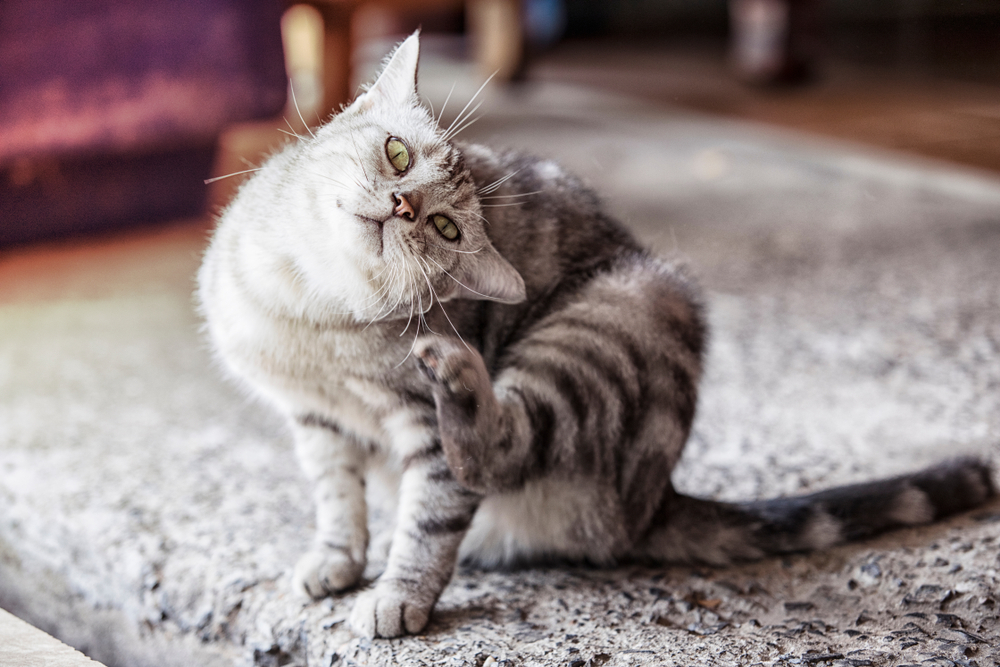
- Head shaking or pawing at one ear
- Bad odor from one ear
- Head tilt
- Balance issues, stumbling, or circling
- Horner’s syndrome on the affected side (small pupil, droopy eyelid, sunken-looking eye, raised third eyelid)
Throat and airway signs
- Noisy breathing that sounds like snoring or congestion
- Snorting fits or sudden noisy inhalation episodes
- Gagging or retching
- Trouble swallowing or reduced appetite
- Nasal discharge, often worse on one side
If your cat has a head tilt plus upper respiratory noise, that combination is especially worth discussing with your veterinarian.
If you have been treating “ear mites” or “an ear infection” for weeks, and it keeps coming back on the same side, it is time to ask your vet, “Could this be a polyp?”
Why polyps get mistaken for mites or infections
Ear mites, yeast, and bacteria can all cause debris, odor, irritation, and scratching. The tricky part is that a polyp can:
- Trigger secondary infection by disrupting the ear’s normal environment.
- Cause inflammation and drainage that looks like a routine ear problem.
- Temporarily improve when treated with anti-inflammatory medications or antibiotic ear drops, then flare again because the growth is still there.
A polyp also interferes with normal ventilation and drainage of the ear and upper airway. That is why it can feel like you are “clearing it up,” but it keeps returning.
Not every one-sided ear issue is a polyp
I am a big fan of keeping polyps on the radar, but I also do not want anyone to get tunnel vision. Other problems can look similar, including:
- Foreign material in the ear canal
- Otitis media (middle ear infection) without a polyp
- Ear canal narrowing or other anatomic issues
- Other masses (less common in kittens, but still possible)
The takeaway is not “it is definitely a polyp.” The takeaway is “it deserves a good exam when the usual treatment is not sticking.”
How treatment differs from mites or infection care
This is the heart of it: polyps are a structural problem. Ear mites and most routine ear infections are primarily medical problems.
Ear mites
Ear mites are parasites. Treatment is usually a veterinarian-prescribed antiparasitic (often a topical medication applied to the skin), plus cleaning guidance and sometimes treatment of all pets in the home if recommended.
If mites are the issue, you expect steady improvement once the right product is used correctly.
Bacterial or yeast infection
These cases are typically treated with:
- Ear cytology (looking at the debris under a microscope) to identify yeast, bacteria, and inflammation
- Targeted ear medications (antifungal, antibiotic, steroid combinations)
- Recheck exams to be sure the infection truly cleared
Nasopharyngeal polyp
With a polyp, drops alone rarely solve the problem long-term. Medications can reduce swelling and calm a secondary infection, but they do not remove the polyp’s attachment in the middle ear or throat, which is why symptoms often return.
Treatment usually involves physical removal, which may include:
- Traction and avulsion: the veterinarian gently grasps the polyp and removes it by pulling it away from its attachment, typically under anesthesia.
- Bulla osteotomy (in some cases): a surgical procedure to open and clean out the middle ear, especially when polyps recur or imaging suggests significant middle ear involvement.
After removal, many cats still need medications for comfort and inflammation, and sometimes antibiotics if there is infection present. But the major difference is that the vet is addressing the source, not only treating symptoms.
How veterinarians diagnose polyps
Your veterinarian may suspect a polyp based on age, mostly one-sided symptoms, and exam findings. Common diagnostic steps include:
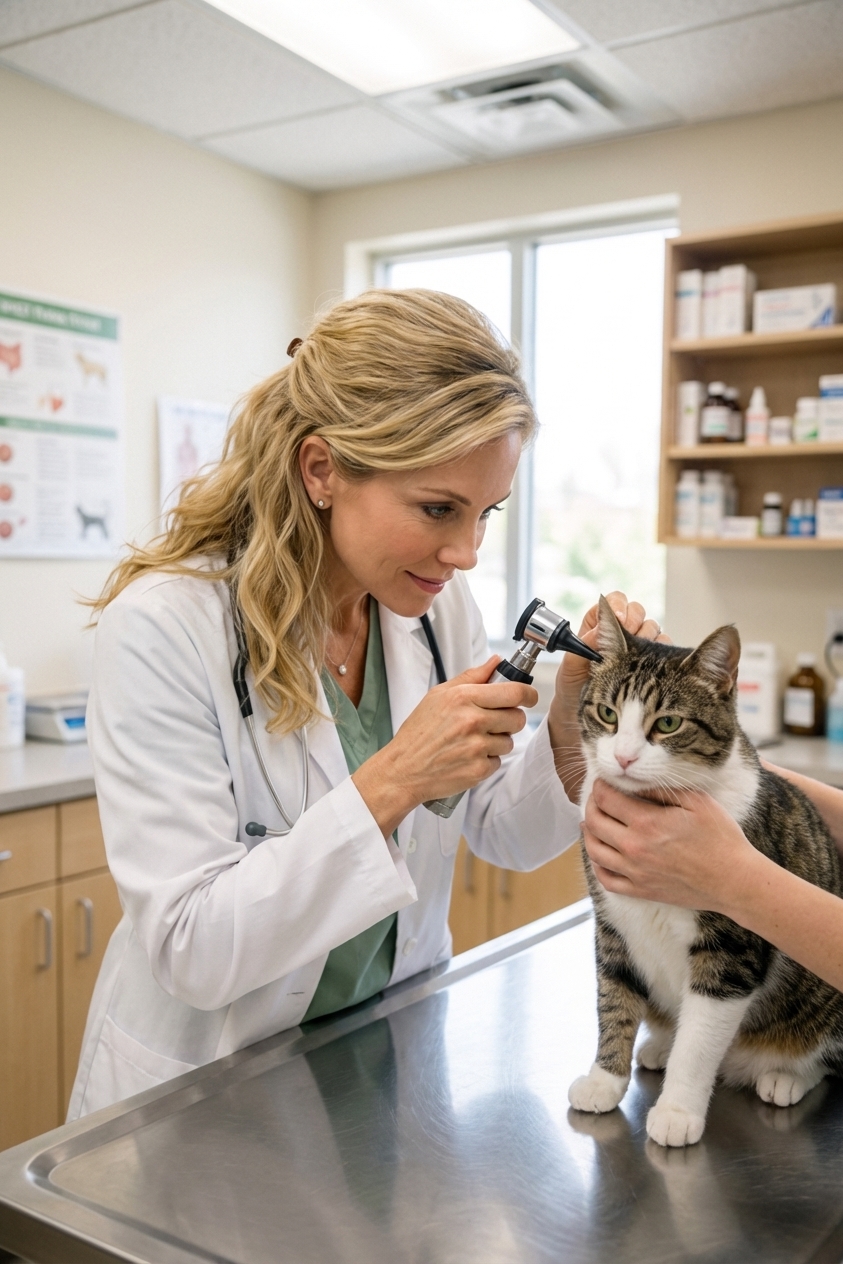
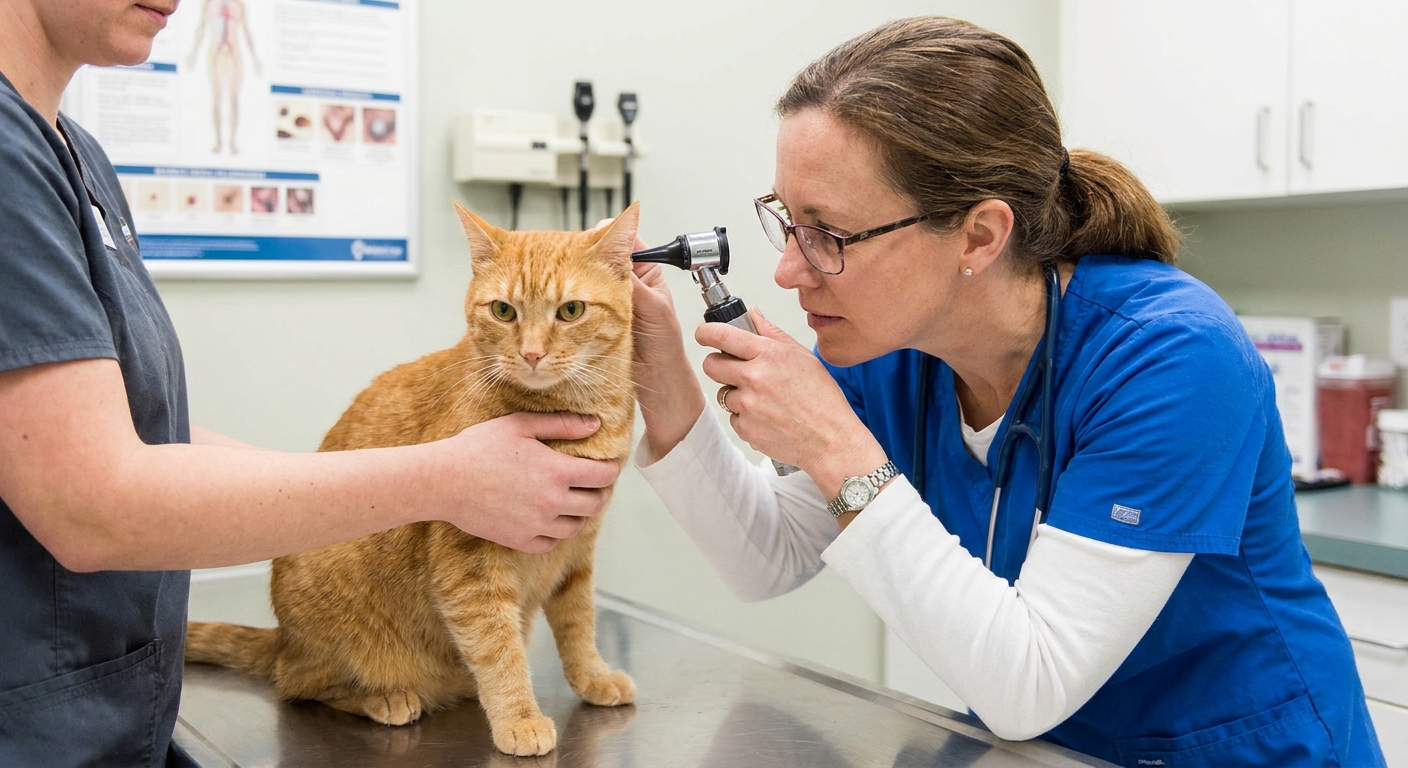
- Otoscope exam of both ears to look for a visible mass, heavy debris, or changes to the eardrum.
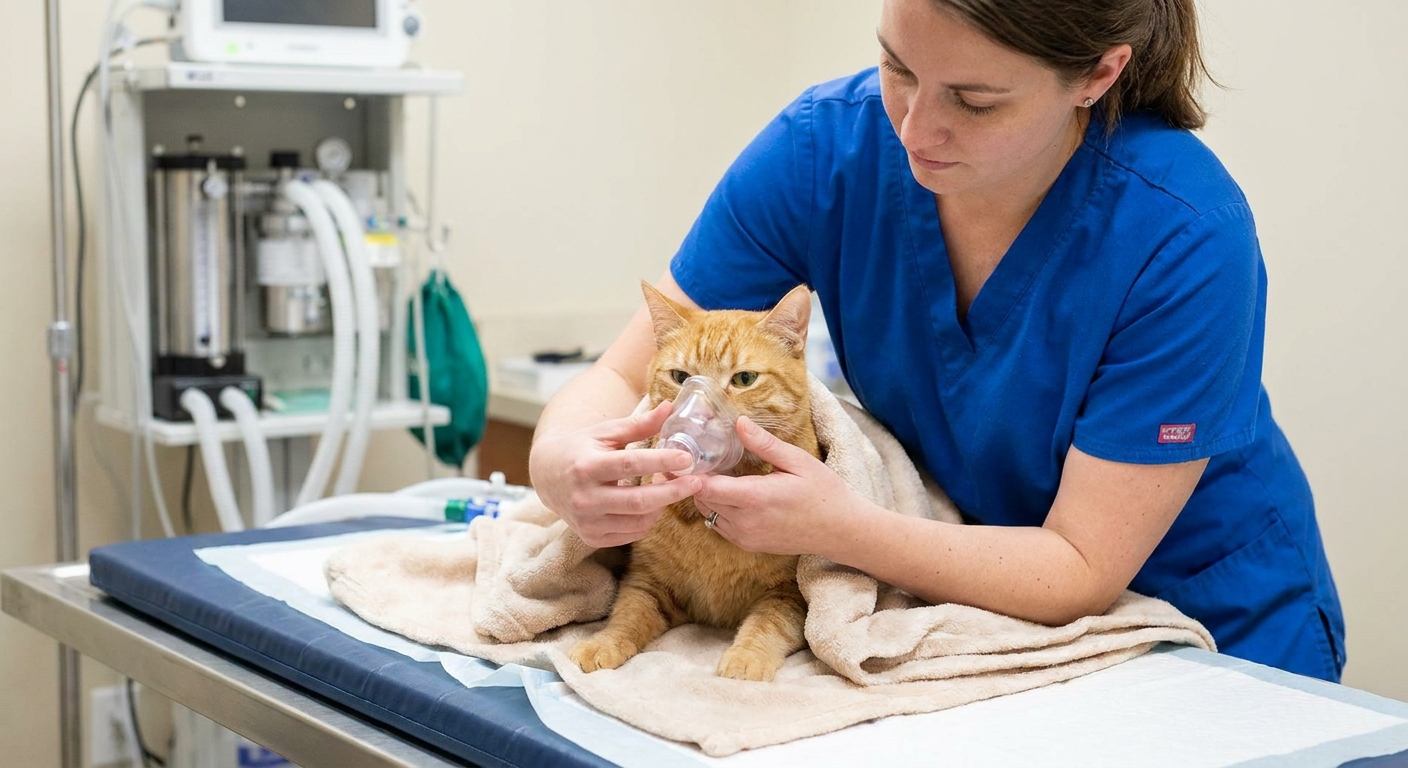
- Oral exam of the nasopharynx, often under sedation, to look behind the soft palate.
- Ear cytology to check for yeast or bacteria that may be complicating the case.
- Imaging (skull radiographs, CT scan, or MRI) in select cases to evaluate middle ear disease and plan surgery.
If your veterinarian mentions a “bulging” eardrum, they are often concerned about pressure, fluid, or infection behind it in the middle ear. That can happen with polyps, and it can also happen with other middle ear problems.
If your cat is painful, very wiggly, or has a lot of debris, a thorough exam may not be possible while awake. That is not your cat being “bad.” It is a safety and comfort issue, and sedation is sometimes the kindest route.
What to expect at the appointment
For many young cats with chronic ear issues, the visit looks something like this:
- A detailed history, including what worked briefly and what did not
- An ear exam, sometimes limited by pain or debris
- Ear cytology, and sometimes ear cleaning
- Discussion of sedation for a deeper ear and throat exam
- Depending on findings, discussion of removal, imaging, or referral for surgery
If you feel overwhelmed, you are not alone. Bringing videos and a short timeline of symptoms can make the appointment much smoother.
Recovery and prognosis after removal
Many cats feel better surprisingly quickly once the obstruction is gone, especially if breathing was affected. At home, recovery commonly includes:
- Keeping your cat indoors and calm while they heal
- Giving all medications exactly as prescribed
- Watching for renewed discharge, scratching, or wobbliness
- Returning for recheck exams
One important note: some polyps can recur, particularly if the base in the middle ear remains. Your veterinarian will discuss recurrence risk and whether additional surgery is recommended based on your cat’s situation.
It is also worth being emotionally prepared for a few issues that can happen after removal, even when everything went well. Some cats have temporary Horner’s syndrome or a temporary head tilt or dizziness during recovery. Most improve with time and supportive care, but they are still important to report to your clinic.
When to seek urgent care
Please contact a veterinarian urgently or go to an emergency clinic if your cat has:
- Severe trouble breathing, open-mouth breathing, or blue or pale gums
- Sudden severe balance issues, falling, or inability to stand
- Rapidly worsening head tilt or other neurological signs
- Not eating for 24 hours (or less for kittens), especially with lethargy, vomiting, or signs of dehydration
Polyps are usually not an emergency by themselves, but breathing difficulty and severe vestibular signs are always a “do not wait” situation.
What you can do at home while you wait
I know it is tempting to reach for home remedies, especially if you have dealt with ear mites before. With suspected polyps, your safest home steps are supportive:
- Do not put random liquids in the ear. If the eardrum is damaged, certain products can cause serious pain and complications.
- Prevent trauma. Trim nails if needed and consider an e-collar if your cat is scratching until they bleed.
- Take videos. Record noisy breathing, gagging, head tilt, or stumbling. Those clips help your veterinarian tremendously.
- Bring your medications. Take photos of anything you have already tried, including OTC ear products.
If you are already using a veterinarian-prescribed ear medication, do not stop without guidance. But if your cat seems more painful or symptoms are worsening, call your clinic before giving another dose.
FAQ
Are nasopharyngeal polyps cancer?
No. They are generally benign inflammatory growths. Even so, they can cause major symptoms because of their location.
Can a polyp cause a head tilt?
Yes. If the polyp affects the middle ear or inner ear balance structures, it can cause head tilt and other vestibular signs.
Will antibiotics cure a polyp?
Antibiotics can help a secondary bacterial infection, but they do not remove the polyp itself. That is why symptoms often come back.
Can I treat this at home like ear mites?
Ear mites are a parasite problem. Polyps are a tissue growth. Home mite treatments and routine drops usually do not solve a polyp, and delaying can mean prolonged discomfort for your cat.
The takeaway
If your young cat has chronic, mostly one-sided ear discharge, recurring “ear infections,” a head tilt, or noisy breathing that sounds like congestion or snoring, a nasopharyngeal polyp deserves a spot on the short list of possibilities. The good news is that once properly diagnosed, many cats do wonderfully after removal and finally get relief.
If you are not sure what to ask at your appointment, try this simple sentence: “Could this be a nasopharyngeal polyp, and can we check the back of the throat and the middle ear?”