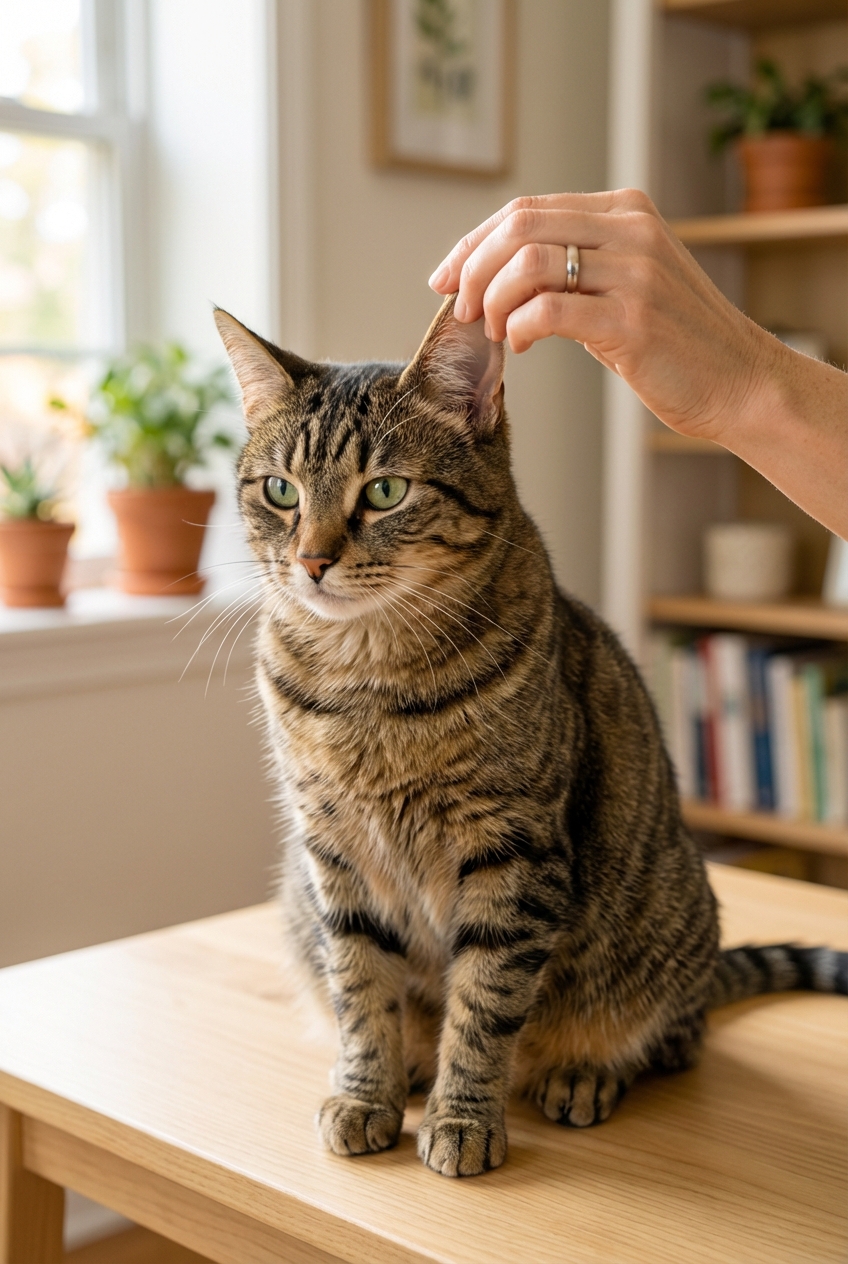
The quick answer
In most households, humans do not truly “catch” ear mites from cats in a way that leads to an ongoing infestation. The most common ear mite in cats and dogs, Otodectes cynotis, is adapted to live on pets. That said, people can occasionally get temporary itching or a small rash after close contact with an infested pet, especially if mites crawl onto the skin for a short time.
As a veterinary assistant, I like to frame it this way: ear mites spread easily among pets, but they are usually a short-lived nuisance for people, not a long-term problem. Rare human cases are reported, so if you have persistent symptoms, it is worth getting checked out.
What are ear mites (Otodectes) and why do they spread so easily?
Otodectes cynotis are tiny mites that live on the surface of the skin, most often in the ear canal of cats, kittens, dogs, and ferrets. They feed on epidermal debris and tissue fluids and can trigger intense itchiness and inflammation.
They spread easily because they:
- Move by direct contact, like cuddling, grooming, or play fighting between pets.
- Can survive for short periods in the environment, so shared bedding and spaces can contribute to reinfestation, even though direct pet-to-pet contact is the main driver.
- Often involve “silent carriers”, where one pet shows obvious symptoms and another pet has a mild case that goes unnoticed.
Can ear mites live on humans?
Ear mites are not well suited to live and reproduce on human skin long-term. In most cases, if a mite ends up on a person, it cannot maintain a full life cycle there. This is why persistent, spreading infestations in people from household ear mites are considered uncommon.
However, it is possible for people to experience short-term skin irritation from exposure, especially with frequent handling of an infested pet. When exposure stops and the pets are treated, human itching typically fades on its own, but you should involve your clinician if symptoms persist or worsen.
If you’re itchy, what could it mean?
If your cat has confirmed or suspected ear mites and you develop itching, it is usually one of these scenarios:
- Brief contact irritation: a few mites temporarily crawl on skin, causing itching that resolves once pets are treated and bedding is cleaned.
- Allergic-type reaction: some people react to mite proteins similarly to how we react to other insect bites.
- Something else entirely: flea bites, contact dermatitis, scabies (from human-to-human spread), or other rashes can look similar.
Typical reports from pet owners include small itchy bumps on the arms, neck, or torso after close snuggling with an infested cat. The good news is that this generally improves once the pets in the home are treated and you reduce exposure.
When to call your doctor
Consider medical care if you have severe itching, a spreading rash, signs of skin infection (oozing, crusting, increasing redness, warmth), fever, or if symptoms persist even after the pets have been treated. And if you have ear pain or ear drainage, get evaluated promptly.
How ear mites move among pets
This is the part that trips up many families: ear mites are a household problem, not just a “one cat” problem. If you have multiple pets, mites can cycle through them even if only one pet is scratching.
Common ways mites move around a home include:
- Cat-to-cat contact, especially between kittens or bonded pairs who groom each other.
- Cat-to-dog contact in mixed households, particularly when pets share couches, beds, or crates.
- Shared soft items like beds, blankets, and cat trees where skin debris accumulates.
- Ferret exposure in multi-pet homes, since ferrets can carry and spread Otodectes too.
- Foster or shelter exposure, where a new pet brings mites into the home before symptoms are obvious.

What to do at home during treatment
You do not need to turn your home upside down, but you do want to stop the mite merry-go-round. These steps are safe, practical, and genuinely helpful while your veterinarian treats the animals.
1) Treat all pets as exposed
If one cat has ear mites, assume other cats, dogs, and ferrets in the home may also have them, even if they look fine. Your vet will advise who needs treatment and whether anyone needs an ear exam.
2) Wash the soft stuff
- Wash pet bedding, blankets, and washable slipcovers in hot water if the fabric allows.
- Dry thoroughly on high heat when possible.
- If an item cannot be washed, consider sealing it in a bag for a short period while treatment starts, or replace it if it is heavily soiled.
3) Vacuum and tidy pet zones
Vacuum rugs, carpets, and furniture where pets spend time. Pay attention to cat trees and favorite nap corners. This helps remove shed skin debris and any mites that wandered off.
4) Skip close face-to-face snuggling for now
I know this is the hardest one. While treatment is underway, try to avoid letting an itchy cat sleep against your face or neck. If you are handling ears or doing any cleaning your vet instructed, wash your hands afterward.
5) Keep grooming supplies pet-specific
Do not share ear wipes, cotton pads, or grooming brushes between pets during an active issue. If you use reusable tools, wash them well between pets.
6) Avoid over-the-counter and home remedies
Avoid essential oils or over-the-counter and home remedies not recommended by your vet, especially in ears. Cats are especially sensitive to certain compounds, and putting the wrong product into a painful ear can make things worse. Do not put anything into your pet’s ear unless your veterinarian has instructed you to.

How long does it take to stop the cycle?
Once all affected pets are treated appropriately and you do some basic cleaning, many households see the itching and head-shaking calm down within a couple of weeks after effective treatment begins. Some pets feel better sooner, and others take longer, especially if the ears are very inflamed or there is a secondary infection.
If symptoms keep returning, it is usually because one of these happened:
- Not all pets in the home were treated or examined.
- Treatment was stopped too soon.
- There is another cause of ear irritation (yeast, bacteria, allergies, polyps, foreign material).
Signs your pet might have ear mites
This article is about household risk, not step-by-step treatment, but it helps to recognize the common red flags. Contact your vet if you notice:
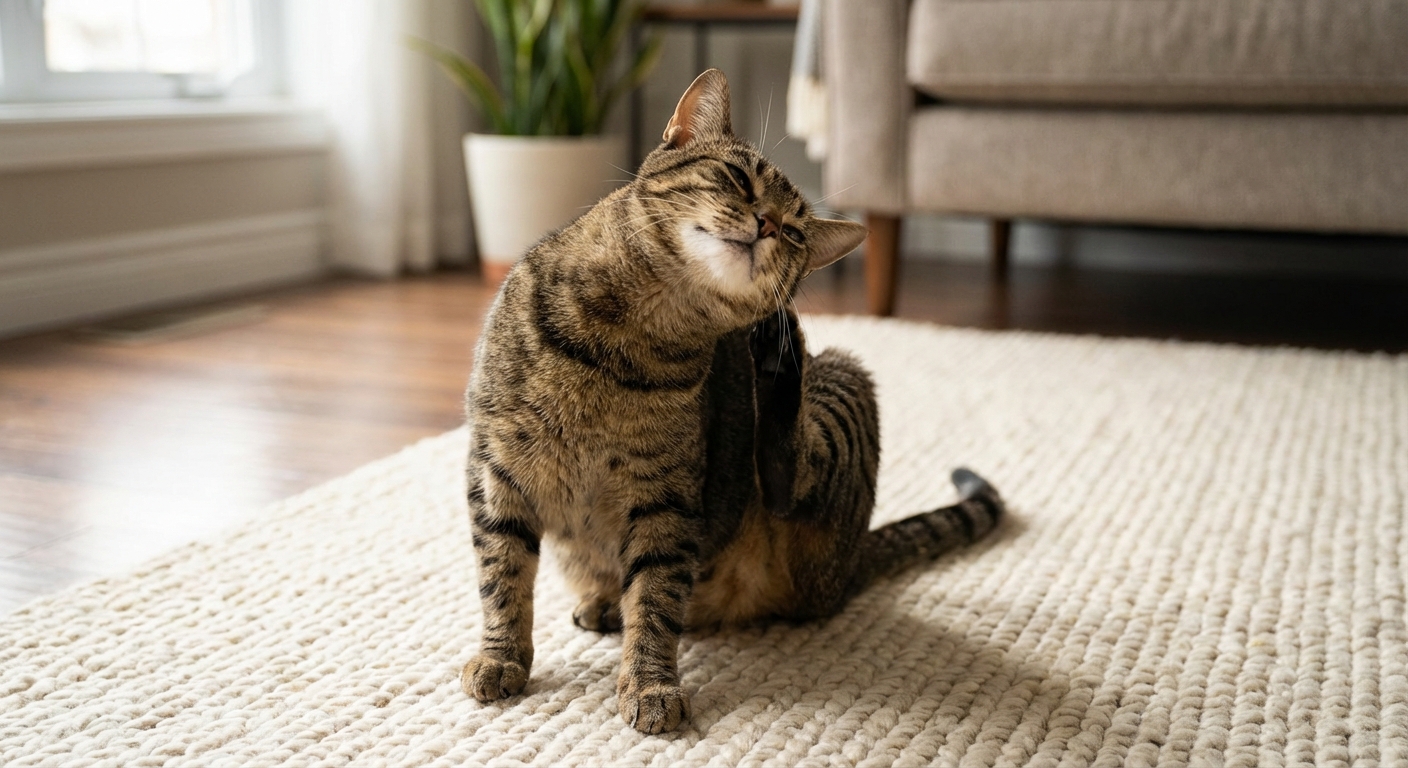
- Intense ear itching, head shaking, or ear rubbing on furniture.
- Dark, crumbly ear debris that can resemble coffee grounds.
- Ear odor, redness, swelling, or pain.
- Scabs around the ears or neck from scratching.
- New symptoms in other pets in the home.
Also, kittens can become miserable fast. If a kitten is shaking its head nonstop, cries when ears are touched, or stops eating, get help quickly.
How vets confirm ear mites
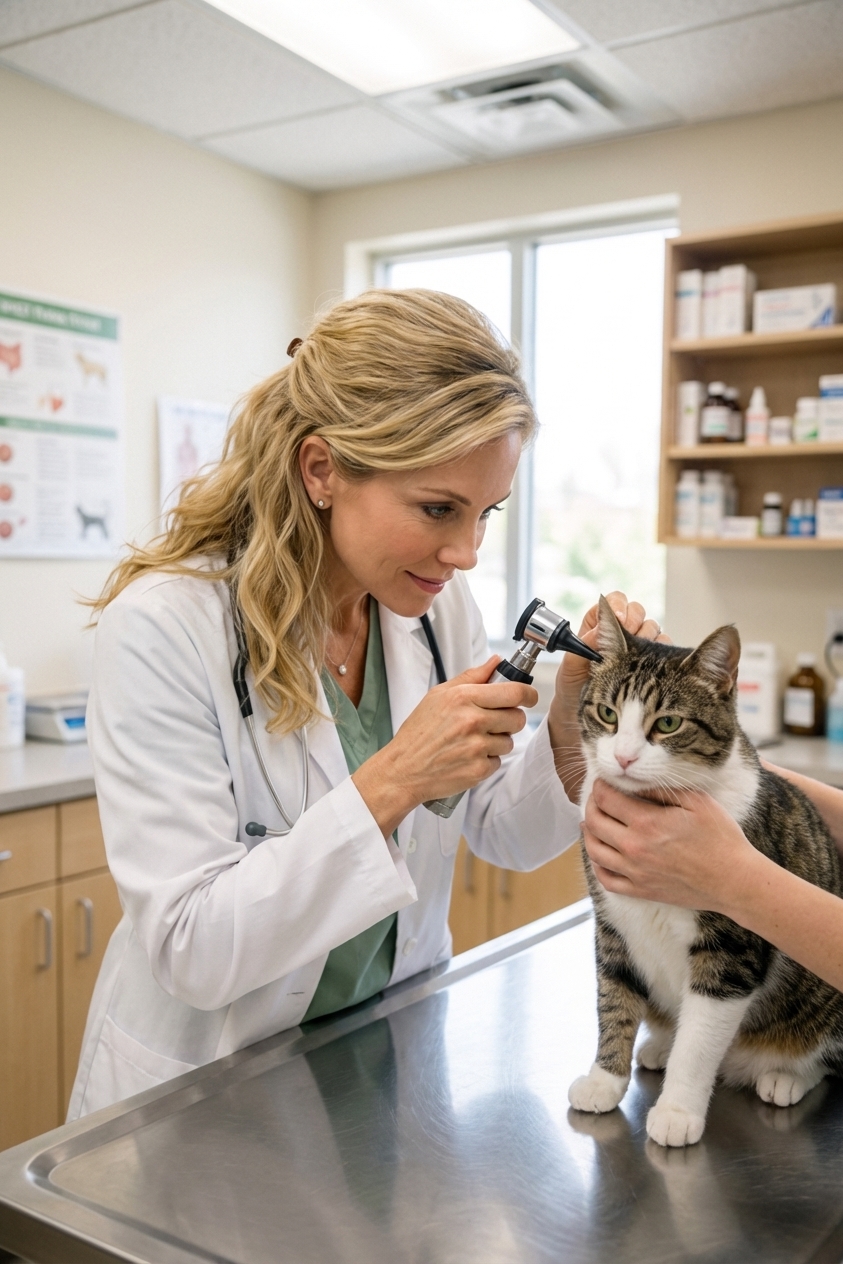
“Coffee-ground” debris is suggestive, but it is not definitive. Ear mites are commonly confirmed by an ear swab and microscopy, and your vet will also check for yeast or bacteria that may need separate treatment.
FAQ
Can I get ear mites in my ear from my cat?
It is uncommon for Otodectes to establish a lasting ear infestation in humans, but rare cases are reported. If you have ear itching, pain, or drainage, get checked by a clinician since many other issues can cause similar symptoms and those need the right diagnosis.
Do I need to disinfect my whole house?
No. Focus on washing bedding, vacuuming pet areas, and treating all exposed pets under veterinary guidance. Over-disinfecting is usually unnecessary and can introduce irritants that make pets itchier.
Can my dog catch ear mites from my cat?
Yes. Ear mites can move between cats and dogs in the same home. If one pet is diagnosed, ask your vet whether other pets should be checked or treated.
My cat has ear mites. Should I keep my kids away?
You do not usually need strict separation, but I recommend reducing face-to-face snuggling until treatment is underway, encouraging handwashing after handling the cat, and keeping the cat out of kids’ beds for a short time. If anyone develops an itchy rash, call your pediatrician for advice.
Bottom line
Humans rarely develop a true, ongoing ear mite infestation from cats, but temporary itching or a mild rash can happen with close exposure. The bigger risk is mites spreading to other pets in the household, which is why treating the affected animals and doing simple, targeted cleaning makes such a difference.
If you are unsure whether it is ear mites or something else, you are not alone. Ear problems can look similar across many causes, and a quick vet exam can save a lot of frustration.