A curious nose. A very whiskery welcome.
I am Bramble, and today we are talking about a not fun, very important skill: CPR for cats. If your cat is not breathing or has no heartbeat, you do not have time to wonder what the perfect move is. You need a simple plan you can follow right now, while someone else calls an emergency vet.
Quick note before we begin: CPR is for a cat who is unresponsive and not breathing normally. If your cat is breathing, even with trouble, focus on getting to an emergency clinic right away instead of starting compressions.
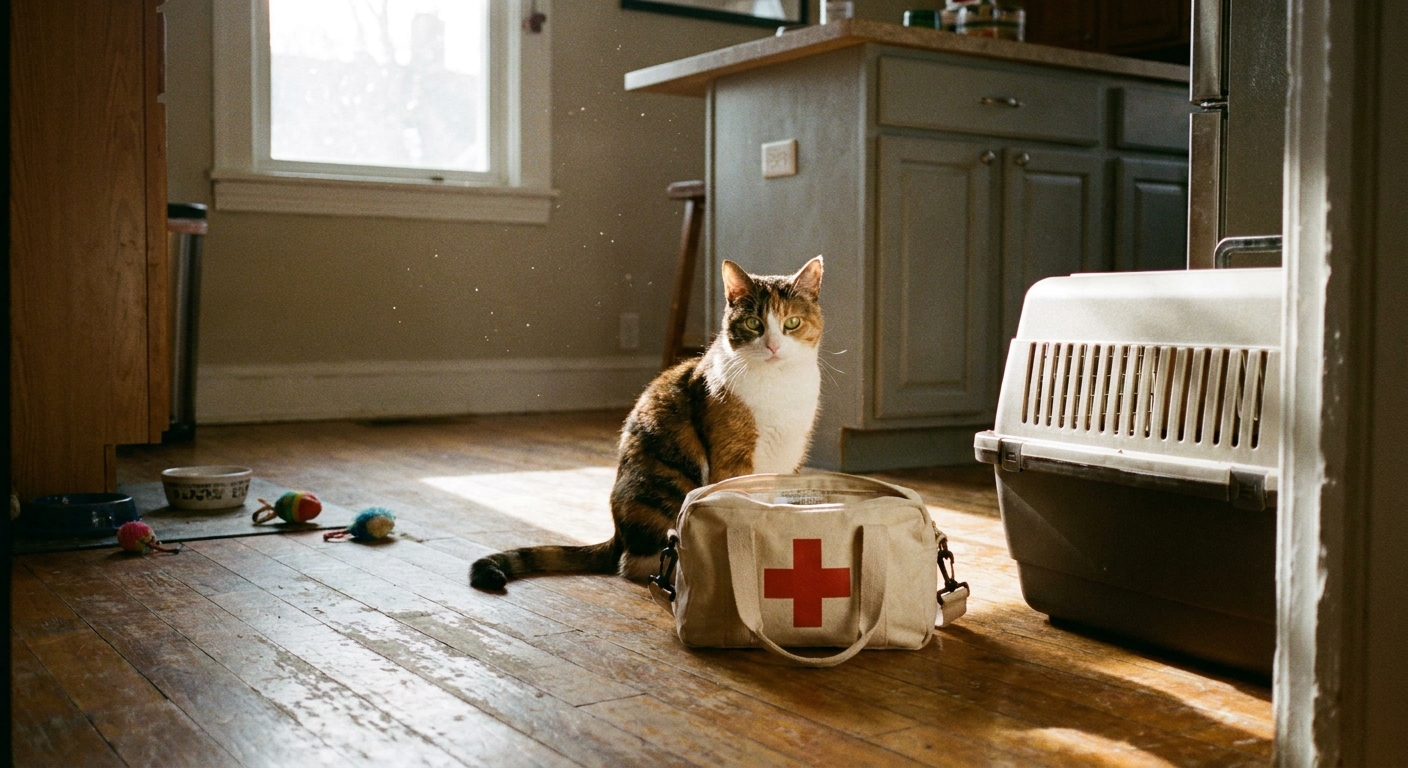
Safety first, then speed
Cats can bite or scratch when they are scared or in pain. Even an unconscious cat may clamp down reflexively if you put fingers near the mouth. Move quickly, but protect yourself and your cat.
Fast safety checklist
- Call for help: If someone is with you, have them call the nearest emergency veterinary clinic and start driving preparations right away.
- Check the area: No traffic, no electrical hazards, no smoke, no loose dogs, nothing that adds danger.
- Use a towel if needed: If your cat is responsive and panicking, a towel wrap can reduce scratches while you assess. If your cat is unresponsive, do not waste time wrapping unless it is necessary to move them safely.
- Keep your face back: Position the head and check for breathing without putting your face directly in front of the mouth.
When to start CPR
Start CPR if your cat is unresponsive and you find no normal breathing or no heartbeat.
What “not breathing” can look like
- No chest rise.
- No air movement felt at the nose.
- Gasping, occasional snorts, or irregular gulps that do not look like steady breathing. If your cat is unresponsive, these can happen in cardiac arrest and still require CPR.
How to check responsiveness
- Call your cat’s name.
- Tap the shoulder or gently rub the chest.
- If there is no response, move immediately to breathing and pulse checks.
Step 1: Check breathing and open the airway
Lay your cat on their side on a firm, flat surface if possible. (Many people choose the right side, but the key is a stable side-lying position.) Firm matters because compressions do not work well on a couch cushion.
Check breathing (5 to 10 seconds)
- Look for chest movement.
- Place your hand lightly on the ribs to feel for rise and fall.
- Bring your cheek near the nose to feel airflow without putting your face in front of the mouth.
Open the airway
- Gently extend the neck so the head and spine are in a straight line.
- Open the mouth and look for an obvious obstruction near the front of the mouth.
- Only remove what you can clearly see and grasp. Do not sweep a finger deep in the throat. You can push an object farther back.
If there is water, vomit, or foam at the nose or lips: Wipe away what you can see with a cloth or gauze and keep the head and neck aligned. Do not do a deep finger sweep.
Step 2: Check for a heartbeat or pulse
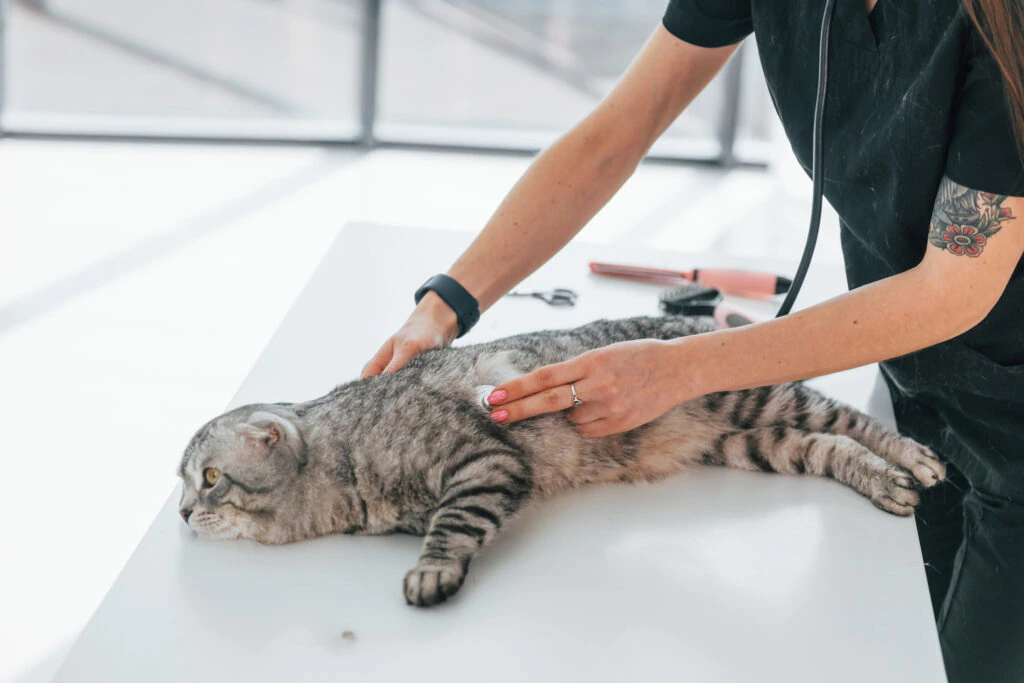
If your cat is not breathing normally, check for a heartbeat. Keep this quick. If you are unsure, start compressions.
Where to check
- Heartbeat: Place your hand on the chest just behind the front elbow.
- Femoral pulse: Feel on the inner thigh where the leg meets the body.
Time rule: If you cannot confidently find a pulse within about 10 seconds, begin CPR.
Step 3: Chest compressions for cats
For most cats, compressions are done with the cat lying on their side. Your goal is to pump blood to the brain and heart until you can reach emergency care.
Where you press can vary slightly by body shape. A practical target for many cats is the chest wall just behind the front elbow, over the heart. In rounder, barrel-chested cats, you may be a touch higher over the widest part of the ribcage. If you are not sure, start just behind the elbow and focus on good rhythm and recoil.
Hand placement
- Place your hand over the cat’s chest, just behind the elbow.
- Keep pressure centered on the chest wall, not the belly.
One-hand technique (common for cats)
- Place the heel of one hand on the chest.
- Keep your fingers lifted slightly so you are pressing with the heel of your hand, not poking with fingertips.
- Lock your elbow and compress using your upper body, not just your wrist.
Two-hand technique (for larger cats or stronger rescuers)
- Stack your hands, one on top of the other, over the same chest location.
- Use controlled force. Cats are smaller than dogs, so avoid excessive pressure.
Compression depth and rate
- Depth: Compress the chest about one-third to one-half of its width.
- Rate: Aim for about 100 to 120 compressions per minute.
- Let the chest fully recoil between compressions. Recoil is how the chest refills with blood.
Bramble note: In the moment, perfect is not the goal. Steady, centered compressions are.
Step 4: Rescue breaths for cats
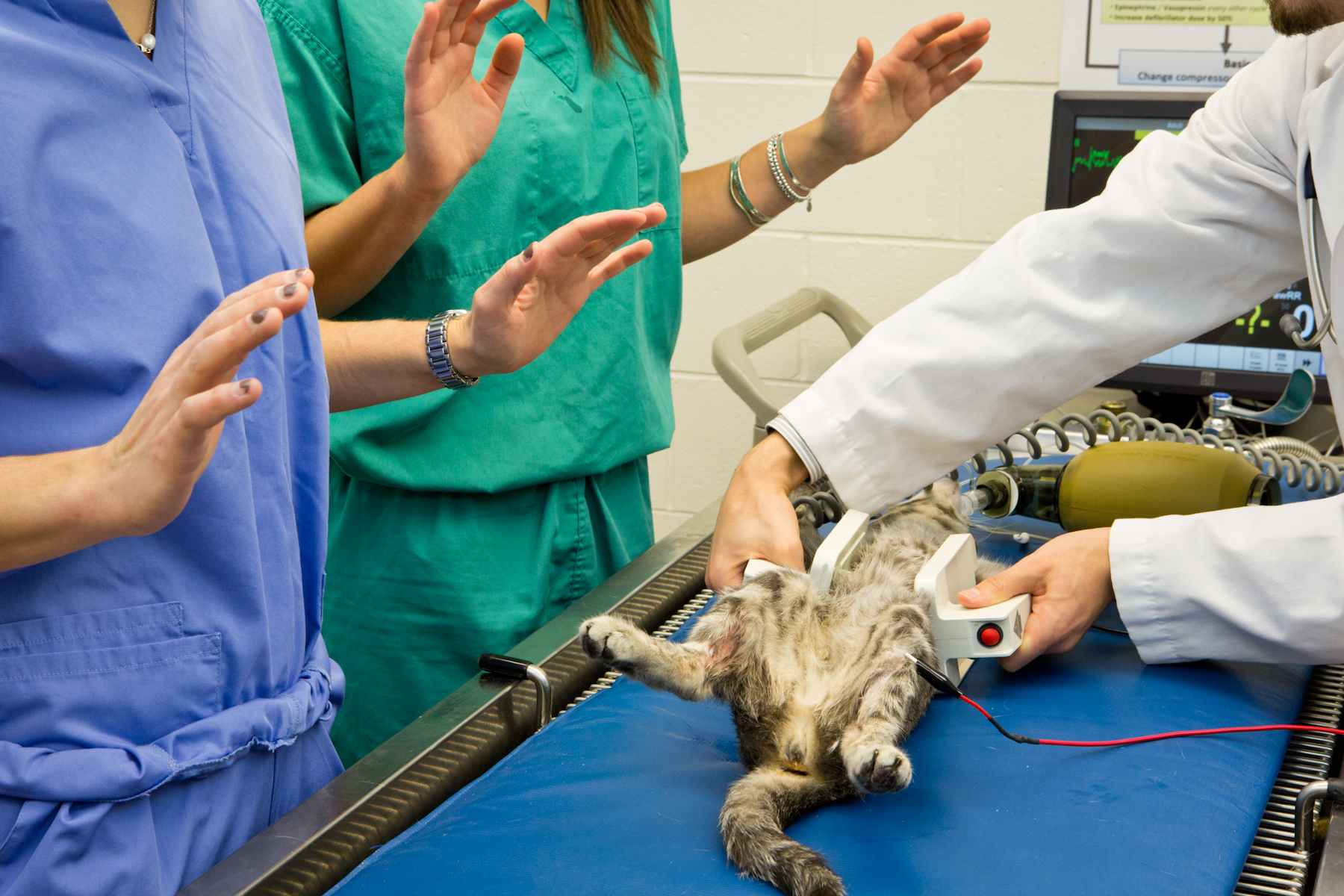
If your cat is not breathing, rescue breaths can help get oxygen into the lungs while compressions circulate blood. Breaths are especially important in situations like near-drowning and smoke inhalation, but the same gentle technique applies.
How to give a rescue breath
- Keep the head and neck in a straight line, gently extended.
- Close the cat’s mouth.
- Seal your mouth over the cat’s nose (cats have small muzzles, so you usually cover the nose rather than both mouth and nose).
- Blow a small, steady breath for about 1 second, just enough to see the chest rise.
- Let the air out and watch the chest fall.
Too much air can hurt. Use gentle breaths. Think “small lungs” and “small puff,” not a big exhale.
If the chest does not rise
- Reposition the head and neck and try again.
- Check quickly for a visible obstruction at the front of the mouth.
- Resume compressions if you cannot fix the airway immediately.
Putting it together: Cat CPR steps
- Confirm unresponsive and call an emergency vet or have someone call.
- Lay the cat on their side on a firm surface.
- Open airway, look for obvious obstruction you can safely remove.
- Check breathing for 5 to 10 seconds.
- Check pulse for up to 10 seconds.
- If no normal breathing or no pulse, start compressions at 100 to 120 per minute, depth one-third to one-half of chest width.
- Add rescue breaths if you can. One commonly taught approach for solo pet parents is 30 compressions, then 2 gentle breaths, then back to compressions.
- If two people are present, have one person focus on steady compressions while the other gives gentle breaths at regular intervals, or follow the emergency clinic’s instructions on speakerphone.
- Recheck briefly about every 2 minutes, or sooner if the cat starts moving or breathing.
- Go to an emergency clinic as soon as possible, even if your cat starts breathing again.
When to stop CPR
This is the part I wish I never had to type, but it matters.
Stop CPR if
- Your cat starts breathing normally and has a detectable pulse.
- A veterinarian or trained responder takes over.
- You are physically unable to continue.
If you are alone and must transport, call the emergency clinic on speaker, place your cat in a carrier or on a stable surface, and get moving. If another person is available, have one person continue CPR while the other drives.
If you suspect trauma
If your cat was hit by a car, fell, or you suspect a serious injury, move as little as possible while still acting fast. Try to keep the head, neck, and spine aligned as you position them on their side and as you transport. If you can slide your cat onto a firm board, tray, or the bottom of a carrier without bending them, do it. Then keep going to emergency care.
After breathing returns
CPR is not the finish line. It is a bridge to emergency care.
- Keep your cat warm with a light towel or blanket, but keep the airway clear.
- Position on the side if possible, with the head and neck aligned.
- Watch breathing and gum color. Pale, blue, or gray gums are an emergency sign.
- Go in immediately, even if your cat seems “better.” The underlying cause still needs treatment.
Common mistakes
- Waiting too long to start: If you cannot confirm a pulse quickly, start compressions.
- Compressing the belly: Compressions belong on the chest.
- Too much force: Cats are small. Use controlled pressure and correct depth.
- Too slow: A steady 100 to 120 per minute matters.
- Big breaths: Gentle breaths only, just to see chest rise.
- Stopping once they breathe: Head to the emergency vet anyway.
FAQ
Can I do CPR on a kitten the same way?
The overall steps are similar, but kittens are much more fragile. Use lighter pressure and smaller breaths. If you can, get guidance from an emergency vet over the phone while you act.
Should I do compressions if my cat has a heartbeat but is not breathing?
If you are sure there is a heartbeat, focus on rescue breathing and get to an emergency clinic. If you are not sure, start compressions and breaths.
What if my cat’s jaw is clenched?
Do not force it open. Focus on positioning the head and neck to open the airway and try rescue breaths over the nose. If you cannot ventilate, continue compressions and head for emergency care.
Is it better to do compressions only or compressions plus breaths?
For cats, breaths are important because many emergencies involve breathing problems. If you can do both, do both. If you cannot safely give breaths, do compressions and get to the vet fast.
A last, practical suggestion
If you have a cat, consider taking a pet first aid class that includes feline CPR practice. In a real emergency, your hands will do what they have practiced.
And if you are here because something is happening right now: call an emergency veterinary clinic immediately, start the steps above, and keep going until help takes over.