A curious nose. A very waggy welcome.
CPR is one of those skills you hope you never need. But if your dog is truly unresponsive, not breathing, and has no heartbeat, CPR can buy precious time while you get to emergency care.
Important: This page is about CPR for a dog with no pulse. If your dog still has a heartbeat, the response is different. CPR chest compressions are for when circulation has stopped.
When dog CPR is needed
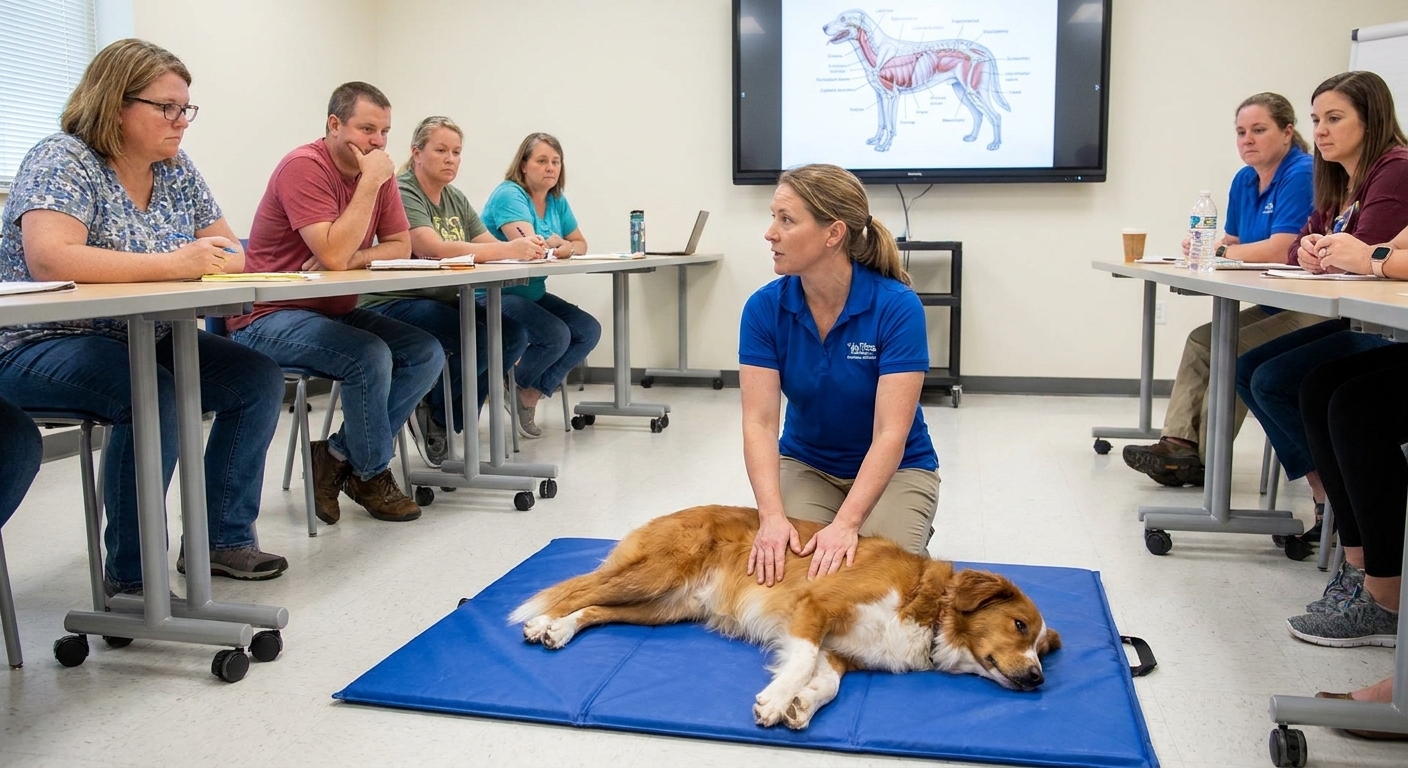
Dog CPR is only for the most severe emergency: your dog is unconscious or unresponsive, not breathing, and has no pulse.
Situations where CPR may be needed include near drowning, severe trauma, electrocution, smoke inhalation, or collapse from a serious medical event. Whatever the cause, the next step after starting CPR is the same: get to an emergency veterinary clinic immediately.
Before you start: safety and a fast check
1) Make sure the scene is safe
If there is traffic, live electricity, aggressive animals, thin ice, smoke, or anything else dangerous, move yourself and your dog only if you can do so safely.
2) Check responsiveness
Say your dog’s name, clap once, and gently touch them. Look for any purposeful movement, eye tracking, or a head lift.
3) Check breathing
- Watch the chest for rise and fall.
- Hold your cheek close to the nostrils to feel airflow.
- Listen for breath sounds.
If you see no breathing or only gasping, treat it as not breathing. Gasping can look like a sudden snorty inhale or a few weak, irregular breaths, and it is not effective breathing.
4) Check for a pulse (10 seconds or less)
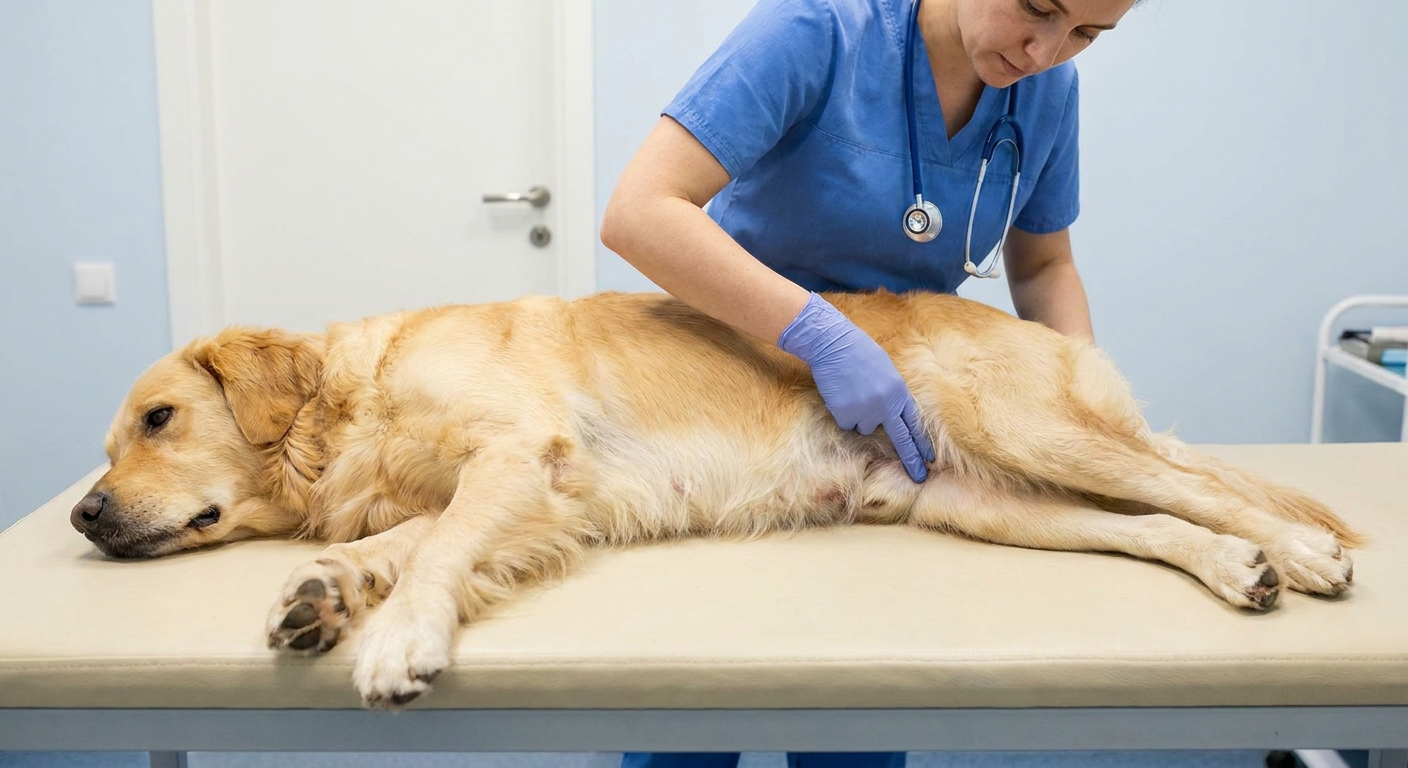
The quickest pulse to find on most dogs is the femoral artery on the inside of the thigh.
- With your dog on their side, lift the top hind leg slightly.
- Place two fingers high on the inner thigh where the leg meets the body.
- Press gently and feel for a steady beat.
You can also feel over the chest for a heartbeat by placing your hand behind the left elbow, but the femoral pulse is often clearer.
If your dog is not breathing and you cannot find a pulse quickly, start CPR. Do not spend a long time searching.
If you are not alone, have someone call the nearest emergency vet (or 911 if that is your local route to animal emergency response) while you begin CPR.
Dog CPR basics: compressions plus breaths
CPR has two jobs:
- Chest compressions to push blood through the body when the heart is not beating effectively.
- Rescue breaths to move oxygen into the lungs when the dog is not breathing.
In most situations, compressions come first because circulation is urgent. If there are two people, one can do compressions while the other gives breaths.
Step-by-step: chest compressions
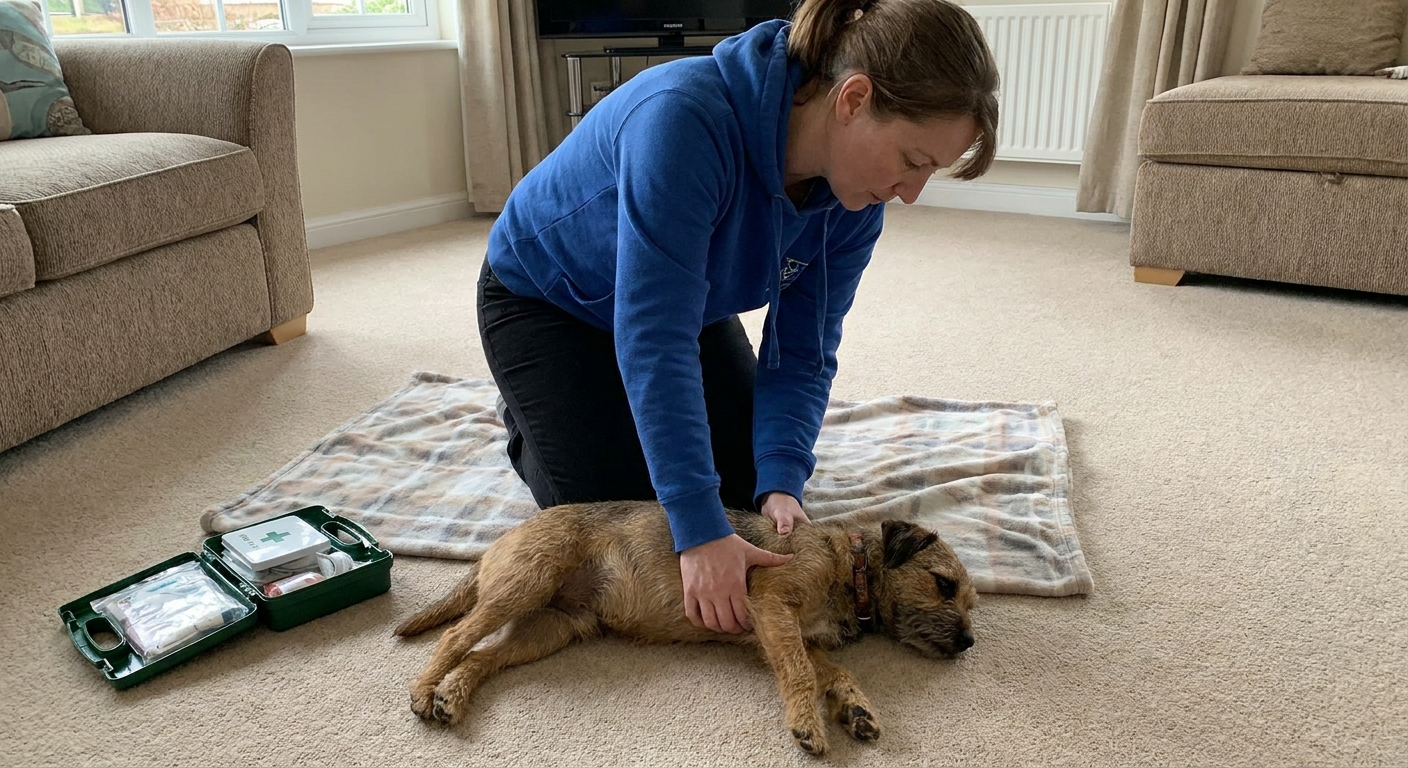
Lay your dog on a firm surface if possible. CPR on a soft couch is much less effective.
Hand placement, simplified
- Most dogs: Place your hands over the widest part of the ribcage.
- Deep-chested dogs (like Greyhounds, Dobermans): Place hands a bit higher on the chest, closer to the elbow, where the heart is easier to compress.
- Broad or barrel-chested dogs (like Bulldogs): You may get better compressions with your dog on their back, pressing on the breastbone. Only do this if you can position them quickly and start compressions right away.
- Very small dogs and puppies: Use one hand, or thumb and fingers, to compress the chest gently but firmly.
Compression technique
- Keep your elbows straight and shoulders over your hands.
- Compress the chest about one third to one half of its width.
- Let the chest fully recoil between compressions. Do not keep constant pressure.
- Aim for 100 to 120 compressions per minute, a quick, steady rhythm.
Do not stop frequently. Good CPR is consistent CPR. If you are alone, stick to a simple rhythm and keep going while arranging transport.
Step-by-step: rescue breaths
Rescue breaths are given only when your dog is unresponsive and not breathing. The goal is to make the chest rise, not to blast air in.
How to give a rescue breath
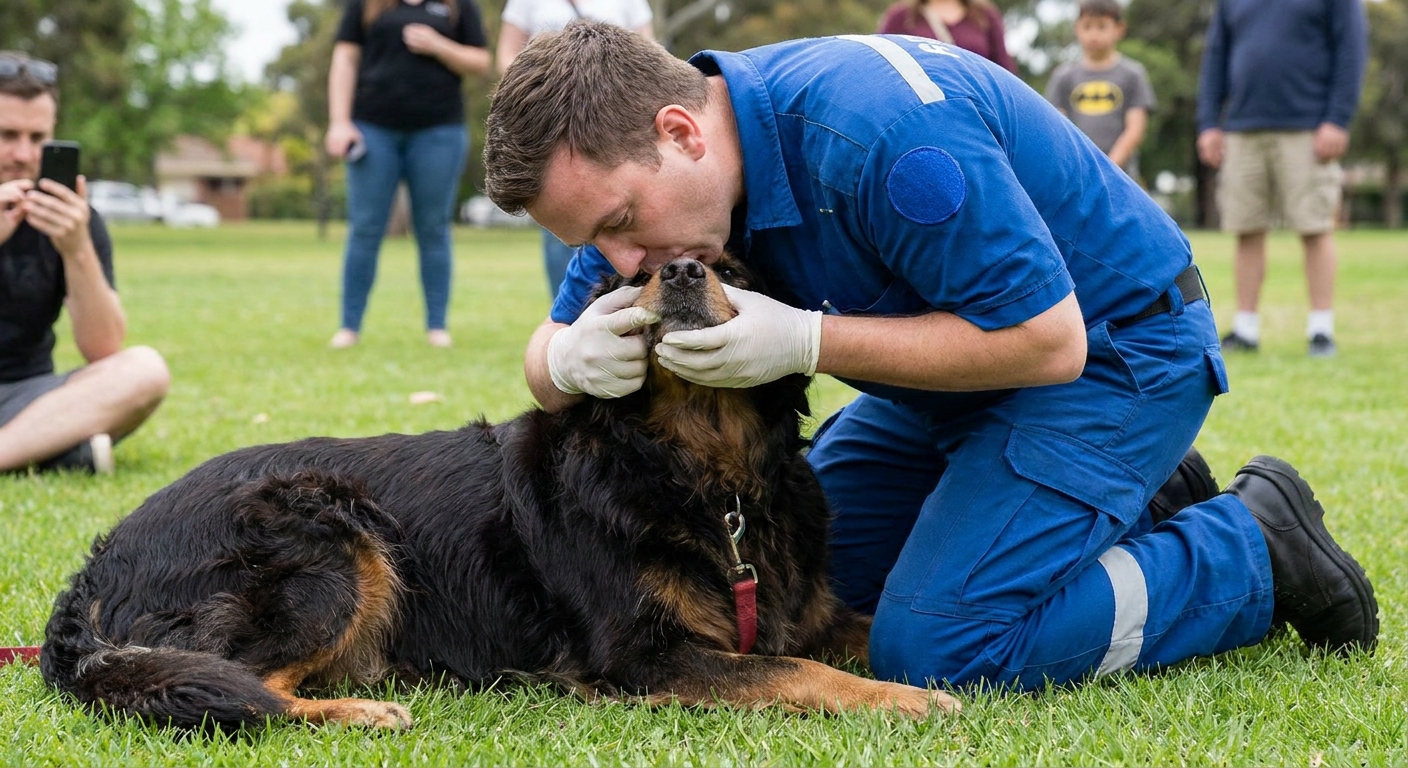
- Gently extend your dog’s head and neck to straighten the airway. If you suspect a major neck injury (hit by car, big fall), be as gentle as possible and use the smallest adjustment that helps air move.
- Close the mouth gently.
- Seal your mouth over the dog’s nose (for larger dogs, cover the nose tightly; for small dogs, you may cover both nose and mouth if you can make a seal).
- Blow just enough to make the chest rise, then remove your mouth and let the air flow back out.
If the chest does not rise, reposition the head and try again. If it still does not rise, there may be an airway problem, but CPR should continue while you head for emergency care.
Putting it together: a CPR cycle
If you are alone and do not have advanced equipment, a commonly taught field cycle is:
- 30 chest compressions at a pace of 100 to 120 per minute.
- 2 rescue breaths, just enough to make the chest rise.
- Go right back to compressions and repeat.
If two people are available, one person can focus on compressions while the other handles breaths, switching roles if someone gets tired. Fatigue makes compressions shallow, and shallow compressions do not move enough blood.
When to reassess
About every 2 minutes (or after several cycles), do a very quick check for breathing and a pulse, then get right back to CPR if there is still no breathing and no pulse. Keep pauses as short as you can.
What not to do
- Do not perform CPR on a dog with a pulse. If the heart is beating, compressions can cause harm.
- Do not confuse CPR with choking first aid. CPR is for no breathing and no heartbeat. Choking first aid is for a dog who still has circulation.
- Do not delay transport. CPR is a bridge to veterinary treatment, not a replacement.
- Do not assume a dog is “fine” after they start breathing. They still need emergency evaluation.
Go to the emergency vet, even if your dog wakes up
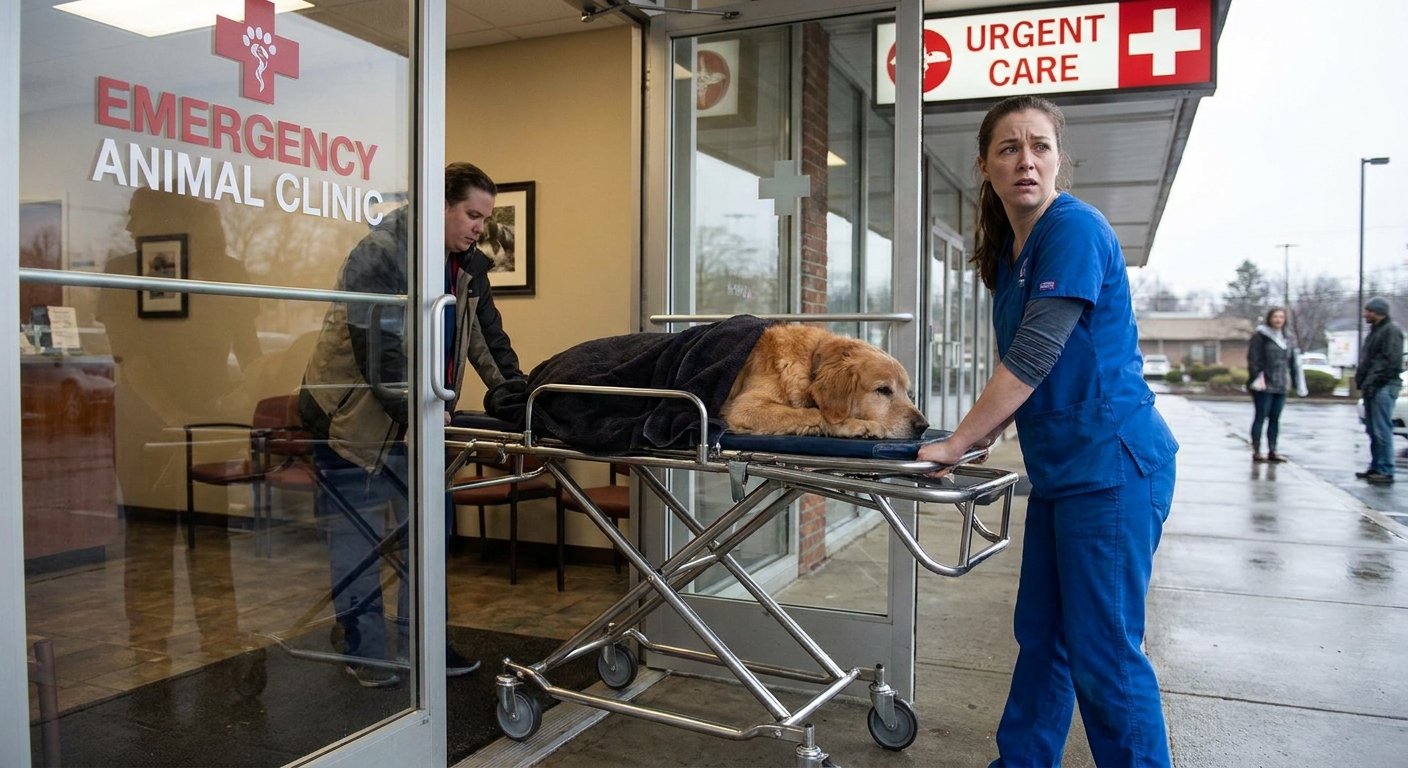
If your dog needed CPR, they need a veterinarian right away. Causes like aspiration, internal bleeding, heart rhythm problems, toxin exposure, heat stroke, and head trauma can look improved for a moment, then crash again.
While you travel:
- Call the ER clinic so they can prepare.
- Keep your dog warm with a light blanket, but do not overheat them.
- Continue CPR if they lose breathing or pulse again.
An emergency clinic may use advanced airway tools and defibrillation if it is needed. Your job is to keep oxygen and blood moving until you get there.
CPR practice tips
This is the part I love as a puppy-scout: getting ready before you need it.
- Save your nearest 24/7 emergency vet in your phone, plus a backup clinic.
- Ask your veterinarian about local pet first aid and CPR classes.
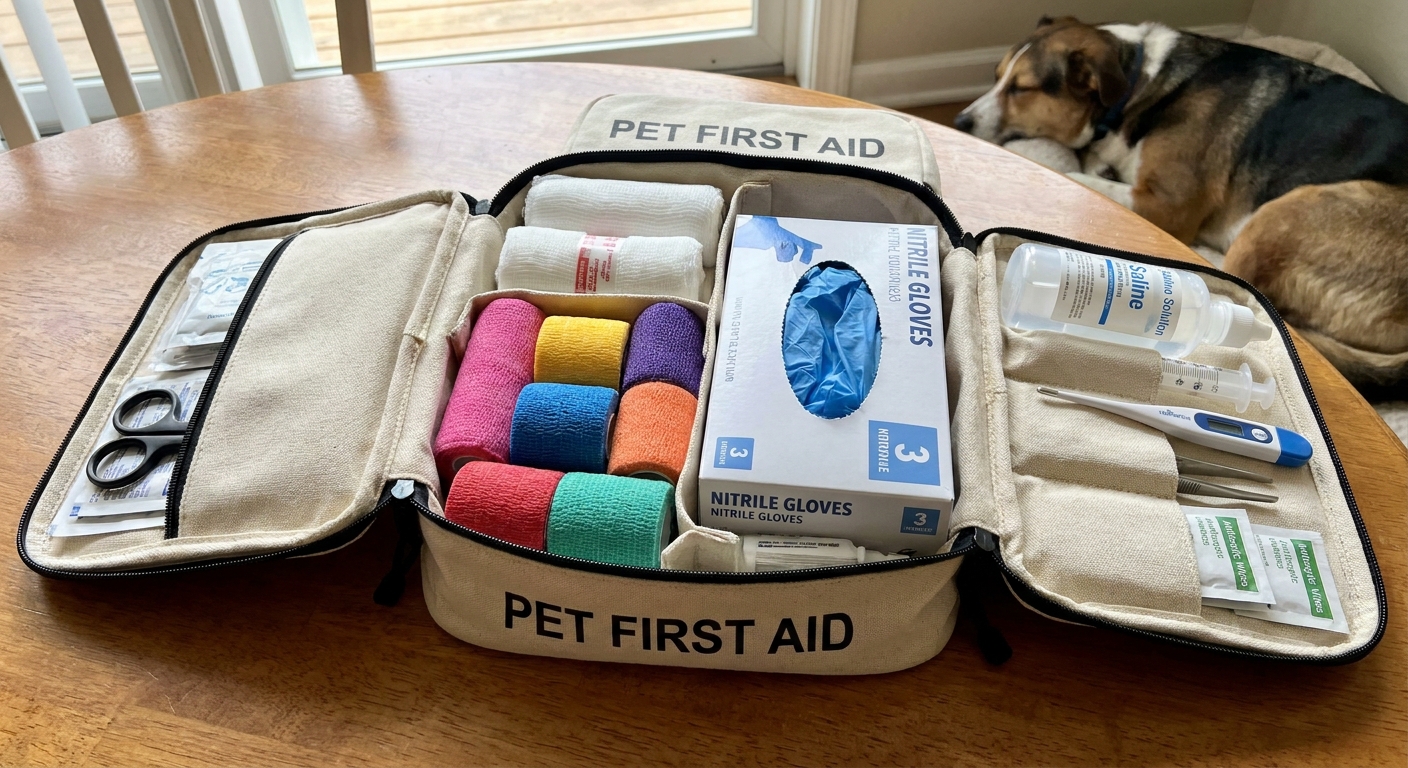
- Keep a pet first aid kit stocked and easy to grab.
- Learn your dog’s normal: resting breathing rate, gum color, and energy level. “Normal” makes “not normal” easier to spot.
Dog CPR FAQ
How do I know if my dog is dead or just unconscious?
It can be very hard to tell in the moment. If your dog is unresponsive, not breathing (or only gasping), and you cannot find a pulse quickly, start CPR and head to emergency care.
Can I hurt my dog by doing CPR?
Chest compressions can cause injuries like bruising or broken ribs, especially in small dogs. But if there is no heartbeat, CPR is a last-resort lifesaving attempt. The bigger risk is waiting too long.
Should I do rescue breaths, or compressions only?
For dogs, breaths matter because many emergencies involve breathing failure first. If you can safely do both compressions and breaths, that is generally preferred while you rush to the vet.
What if my dog has a heartbeat but is not breathing?
This is not full CPR. A dog who has a pulse but is not breathing still needs emergency care immediately. Focus on getting to an ER clinic fast and follow veterinary guidance by phone if available.