Skunk spray on a cat is one of those emergencies that feels more "gross" than dangerous, until you remember one big cat fact: cats groom fast. And that means whatever you put on the fur can end up in the mouth, and skunk spray itself can irritate eyes and airways.
I am a veterinary assistant in Frisco, Texas, and I have walked plenty of families through de-skunking at home. The safest plan is gentle, cat-specific, and focused on two goals: remove as much oily skunk residue as you can, and keep your cat from licking anything that could make them sick.
First, keep your cat safe
Before you chase the smell, set up a safe, calm bathroom or laundry room and focus on preventing exposure to eyes, mouth, and lungs. In general, the sooner you remove skunk oils, the easier it is to get the odor under control.
Do this right away
- Move your cat into a small, warm room with a door you can close. Skunk odor spreads quickly through a home.
- Protect yourself with old clothes, gloves if you have them, and good ventilation.
- Stop grooming by using an Elizabethan collar (cone) if you have one. If not, a soft cone or inflatable collar works. In a pinch, close supervision and wrapping your cat in a towel burrito between steps helps.
- Check eyes, mouth, and breathing. If your cat is squinting, pawing at the face, drooling, gagging, coughing, or wheezing, skip home remedies and call your vet.
- Do not force a bath if it is not safe. If your cat is panicking or trying to bite and scratch, you can both get hurt. Call your vet or an experienced groomer who handles cats, or ask about a same-day appointment for a sedated or assisted bath.
If your cat was sprayed directly in the face, got spray in the eyes, or is showing breathing trouble, that is not a wait-and-see situation.
What not to use on cats
Many popular skunk fixes are made for dogs or for inanimate surfaces. Cats are more sensitive to many chemicals, and they ingest residue when they groom.
Avoid these high-risk options
- "Skunk-off" products labeled for dogs only. If the label does not explicitly say it is safe for cats, do not use it on a cat.
- Essential oils of any kind on the coat, including "natural" deodorizing blends. Cats have unique metabolism pathways and are prone to toxicity from many oils.
- Tea tree oil (melaleuca), even diluted.
- Citrus oils (orange, lemon, grapefruit).
- Peppermint, eucalyptus, clove, cinnamon, wintergreen, pine oils.
- Phenol-containing disinfectants used on fur (some household cleaners). These are not pet shampoos.
- Human shampoo, strong degreasers, or routine dish soap baths. These can irritate skin and lead to more licking.
If you are unsure, read the label. Cats need cat-specific instructions on the bottle.
The cat-only de-skunk plan
Skunk spray contains oily, sulfur-smelling compounds (thiols and related compounds) that cling to the coat. The goal is to lift the oil safely, rinse thoroughly, and keep your cat warm afterward. Plan on doing this once, then reassessing rather than repeating harsh washing over and over.
Supplies to gather
- Elizabethan collar or inflatable collar
- 2 to 4 towels you can sacrifice
- Rubber gloves (optional but helpful)
- Cat-safe shampoo, preferably fragrance-free or very lightly scented
- Sterile saline eyewash (plain saline) if eyes need gentle flushing
- A cup or gentle sprayer for rinsing
- A warm room for drying (space heater only if supervised, safely placed, and never aimed at your cat)
Step 1: If the face was sprayed
Do not scrub the face. Skunk oil can burn, and aggressive rubbing can push it closer to the eyes.
- Eyes: If your cat is squinting or you see redness, gently flush with sterile saline. If the cat cannot open the eye, pain seems significant, or redness is worsening, go to the vet.
- Mouth: Wipe the lips and chin with a damp cloth. Do not force water into the mouth.
- Ears: Do not put water, peroxide, vinegar, or cleaners into the ear canals. If you notice head shaking, ear pain, or a strong odor coming from inside the ears, call your vet.
Step 2: Blot, do not rub
Use a towel to blot sprayed areas. Rubbing spreads the oil and drives it deeper into the coat.
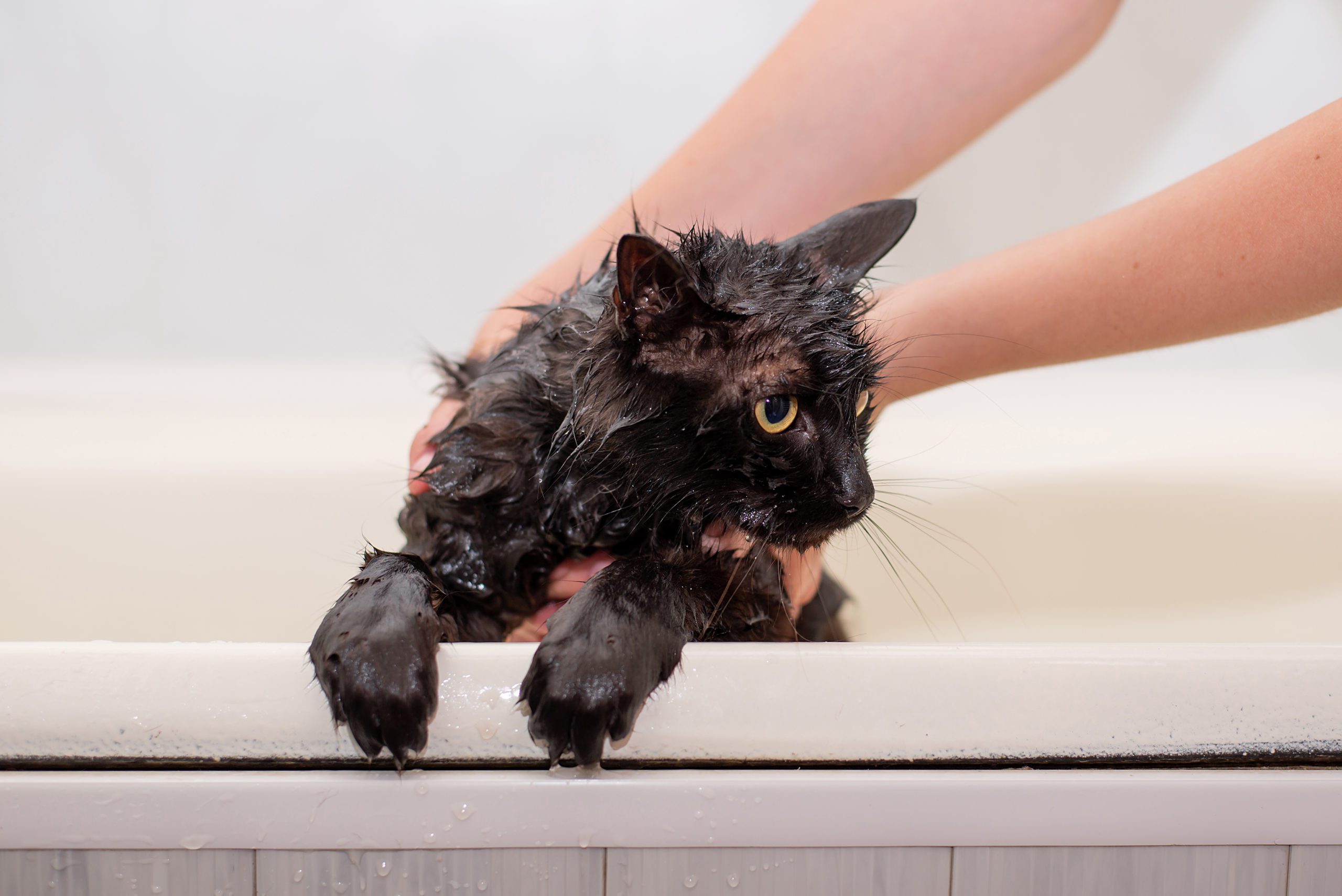
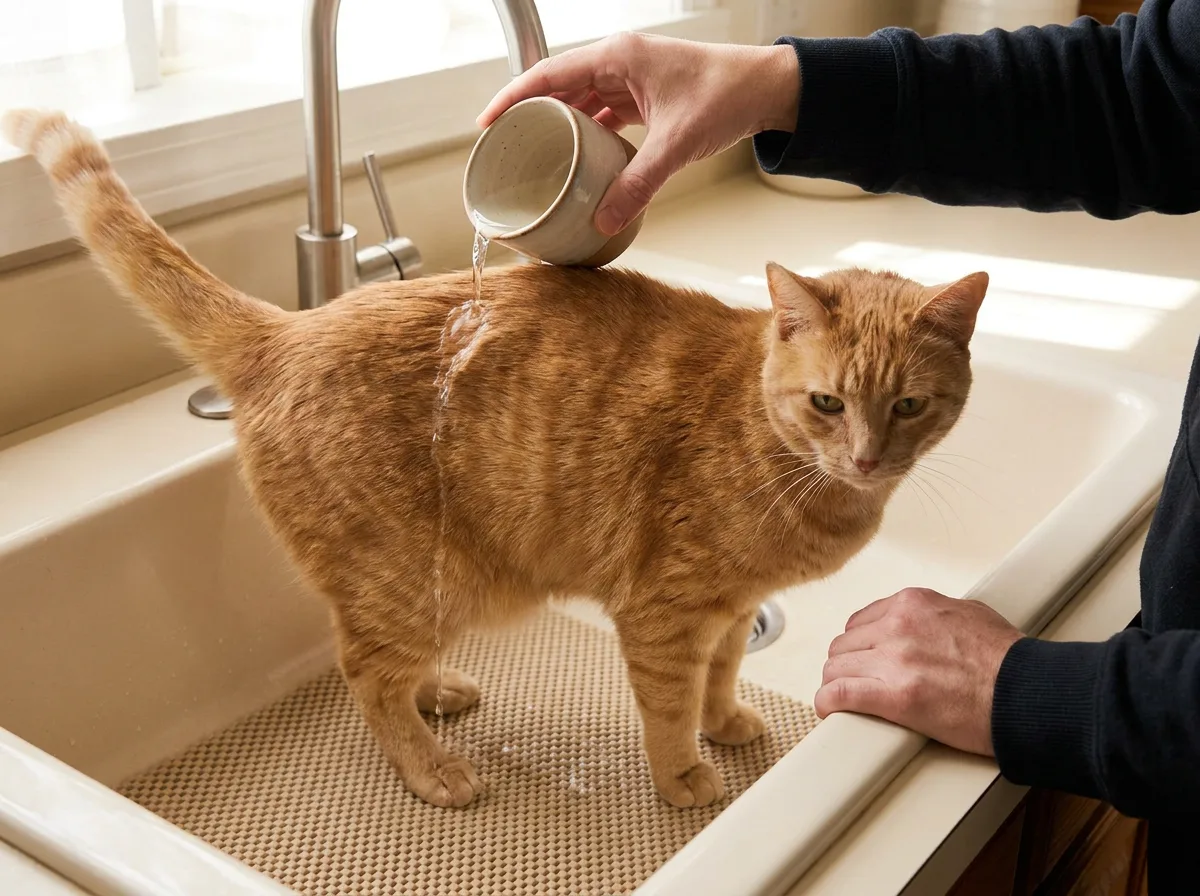
Step 3: Shampoo with lukewarm water
Use lukewarm water, not hot. Wet your cat from the neck down first, then the chest and shoulders, avoiding the face, ears, and nose.
- Lather cat shampoo into the coat, focusing on the sprayed areas.
- Let the lather sit for the contact time on the bottle, usually a few minutes. Keep hands on your cat the entire time.
- Rinse thoroughly. Leftover residue is what triggers licking and skin irritation.
Step 4: Repeat once if needed
If the smell is still intense after a complete rinse, you can shampoo one more time. More than that increases the risk of dry, inflamed skin, and it still may not remove all odor the same day. A faint smell can linger and fade over several days as the coat oils normalize.
Step 5: Towel-dry and keep warm
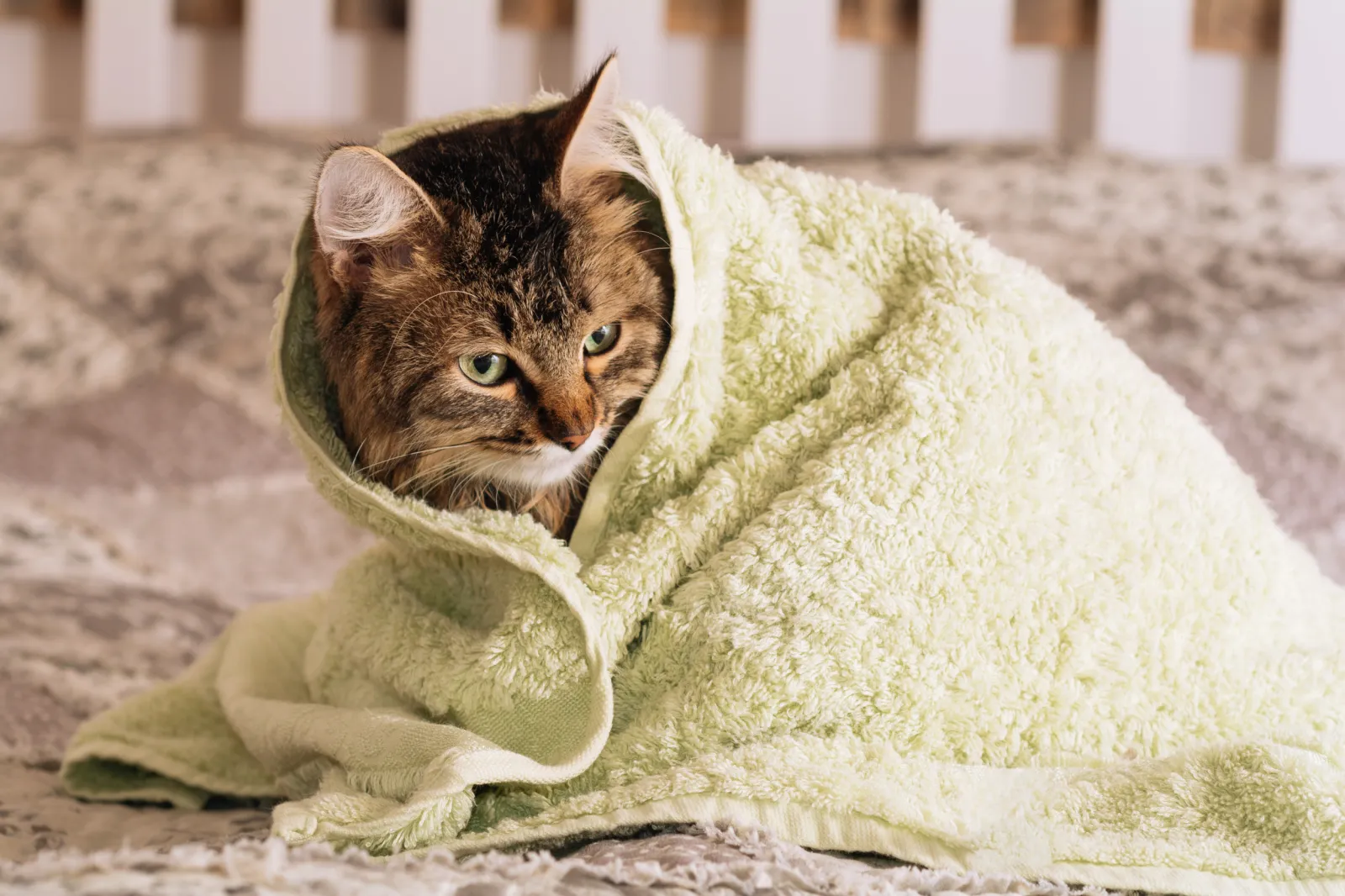
Cats chill easily, especially when stressed and wet. Wrap your cat in a towel and gently press to remove moisture. Swap towels as needed.
- Keep your cat in a warm, draft-free room while drying.
- If you use a hair dryer, use the lowest heat and lowest airflow and keep it far from the body. Many cats panic at dryers, so skip it if your cat is frightened.
Step 6: Prevent licking until fully dry
This is the part many people underestimate. Even cat shampoo can upset a stomach if a stressed cat grooms aggressively. Keep the cone on until your cat is dry and calm, and you are confident there is no product residue.
If you have no cat shampoo
If you truly cannot access cat shampoo right away, ask your veterinarian what they recommend. In some situations, a very small amount of mild, unscented dish detergent used once, followed by very thorough rinsing, may be suggested to help cut oily residue, but it is not ideal for cats and you must prevent licking. If your cat has sensitive skin, asthma, or was sprayed in the face, I would call your vet first.
About the peroxide mix
You may have seen a popular skunk recipe online that uses hydrogen peroxide and baking soda (often with dish soap). That approach is widely shared for dogs, and some veterinarians will use carefully measured versions in specific cases.
For cats, I do not recommend doing it without veterinary guidance. Cats are more likely to lick their coat, and peroxide can irritate skin and mucous membranes, especially if used incorrectly, left on too long, or repeated. If the odor is severe and cat shampoo is not making a dent, call your veterinarian for a product plan that is explicitly cat-safe.
When to call the vet
Skunk spray can cause more than a smell problem. It can irritate eyes and airways, and the stress of the event can trigger issues like vomiting, dehydration, or an asthma flare in sensitive cats. Contact your veterinarian promptly if you notice any of the following.
Go urgently for
- Spray directly in the eyes, persistent squinting, redness, swelling, or pawing at the face
- Trouble breathing, wheezing, open-mouth breathing, repeated coughing, or bluish gums
- Continuous drooling, vomiting, or signs your cat swallowed a lot of spray or shampoo
- Lethargy, weakness, collapse, or hiding and not responding normally
- Kittens, seniors, pregnant cats, or cats with asthma or heart disease
- Skin burns, hives, facial swelling, or intense itchiness after any product application
- Ear pain, head shaking, or discharge after a skunk incident or bath
Also call your vet if your cat will not allow bathing safely. There is no shame in choosing professional help.
Aftercare for 48 hours
Even after a good wash, you may still notice odor when the coat gets damp again. That does not mean you failed. It is normal for skunk compounds to linger in skin oils and release over time.
What helps most
- Keep your cat indoors and separated from other pets until they are fully dry and calm.
- Offer water and a small meal. Stress can cause nausea and appetite changes.
- Watch for overgrooming or skin redness, especially along the back, neck, and shoulders.
- Wash bedding and towels in hot water with regular detergent. Avoid adding essential oils or strong scent boosters.
- Ventilate the home. Open windows when weather allows and run fans to move air out.
- Prevent repeat encounters. If a skunk is active in your area, keep cats indoors at dusk and overnight and check before letting pets out.
FAQ
Can I use tomato juice on a cat?
Tomato juice does not chemically neutralize skunk oil, and it can create a sticky mess that encourages more grooming. It is not a good option for cats.
Can I use vinegar on my cat?
I do not recommend vinegar on cat fur as a deodorizer. It can irritate skin, and the smell does not reliably solve the underlying oily residue. Stick with cat-safe shampoo and thorough rinsing.
Should I bathe my cat right away?
If your cat is stable, not sprayed in the eyes, and you can do it safely, yes. The sooner you remove the oils, the less they soak into the coat and spread around your home. If your cat is panicking, aggressive, or showing eye or breathing issues, call your vet instead of forcing it.
What if the skunk smell comes back after bathing?
That can happen as natural oils recoat the hair shaft, especially after humidity, rain, or your cat licking. If your cat is otherwise acting normal, you can give it time. If the odor is strong and persistent, call your vet for a cat-safe skunk product recommendation.
Can skunk spray make a cat sick?
Yes, especially if the cat was sprayed in the face, swallowed a lot while grooming, or has asthma. Eye irritation, drooling, vomiting, and breathing issues are reasons to involve your veterinarian.
Bottom line
The safest way to de-skunk a cat is gentle, cat-specific bathing with excellent rinsing, strict licking prevention, and careful protection of the eyes, mouth, and ears. Skip essential oils and dog-only skunk products, keep your cat warm while drying, and trust your instincts. If your cat was sprayed in the face, seems unwell, or will not tolerate bathing safely, a vet visit is the kindest next step.