I have had cat parents come into the clinic absolutely panicked because their cat’s ear suddenly looked like a puffy pillow. If you are seeing a swollen, fluid-filled ear flap, you may be looking at an ear hematoma (also called an aural hematoma). It looks dramatic, and it can be uncomfortable, but it is treatable. The key is understanding what caused it in the first place.
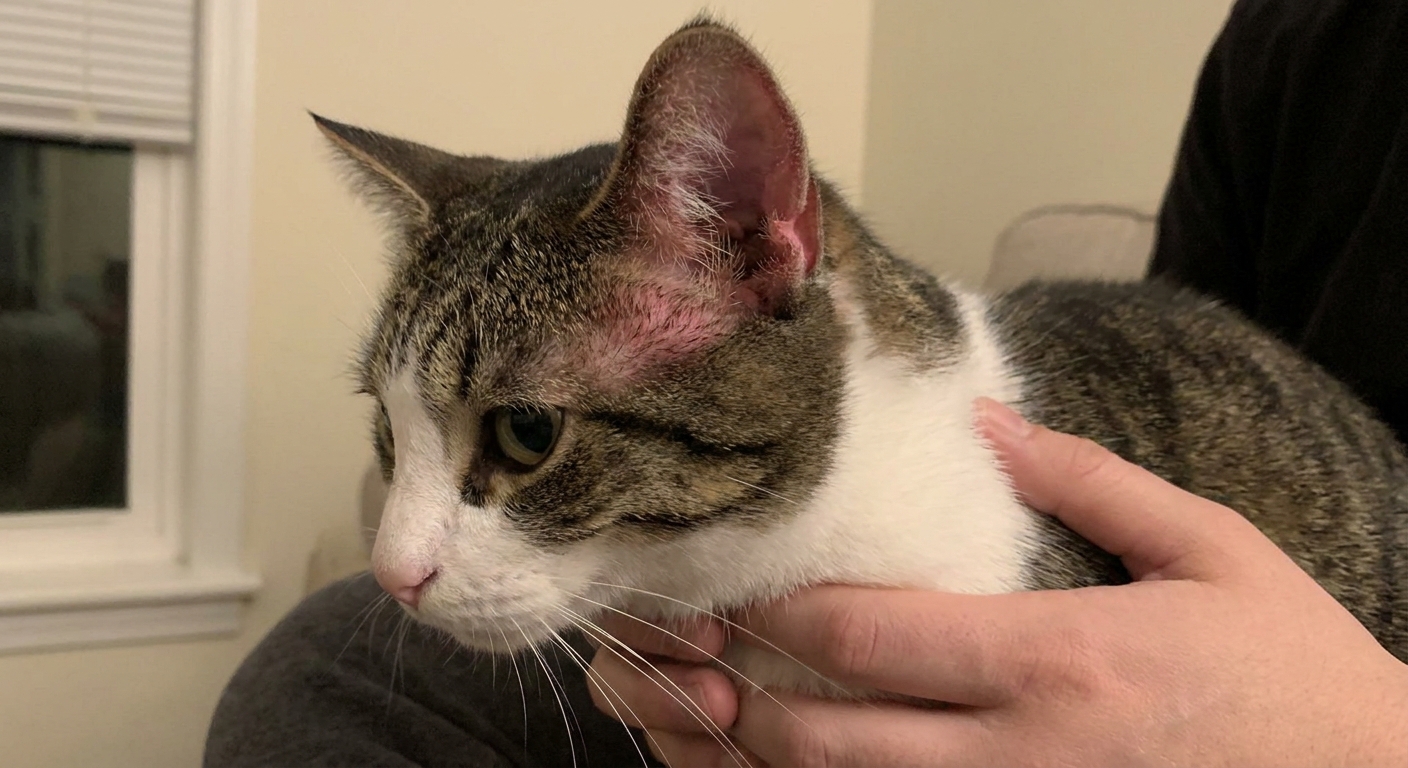
What is an ear hematoma in a cat?
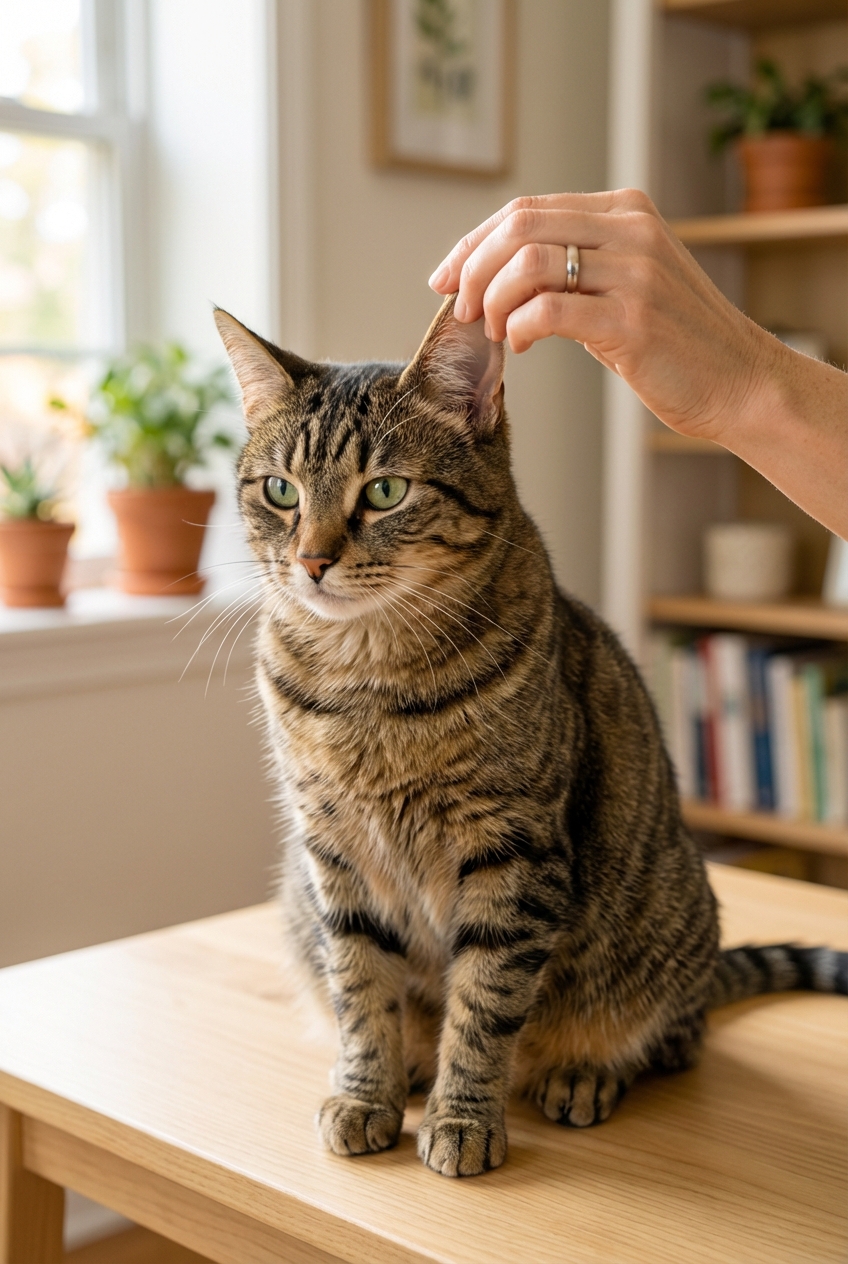
An ear hematoma is a pocket of fluid that forms inside the ear flap (the pinna, also called the ear flap). It usually happens when tiny blood vessels break and leak between layers of ear tissue. The result is a soft, squishy, sometimes warm swelling that can make the ear look thick, folded, or misshapen.
Even though people often call it a “blood blister,” the fluid inside can be blood, serum, or a mix. The swelling can be small and localized or involve most of the ear flap.
Why it happens
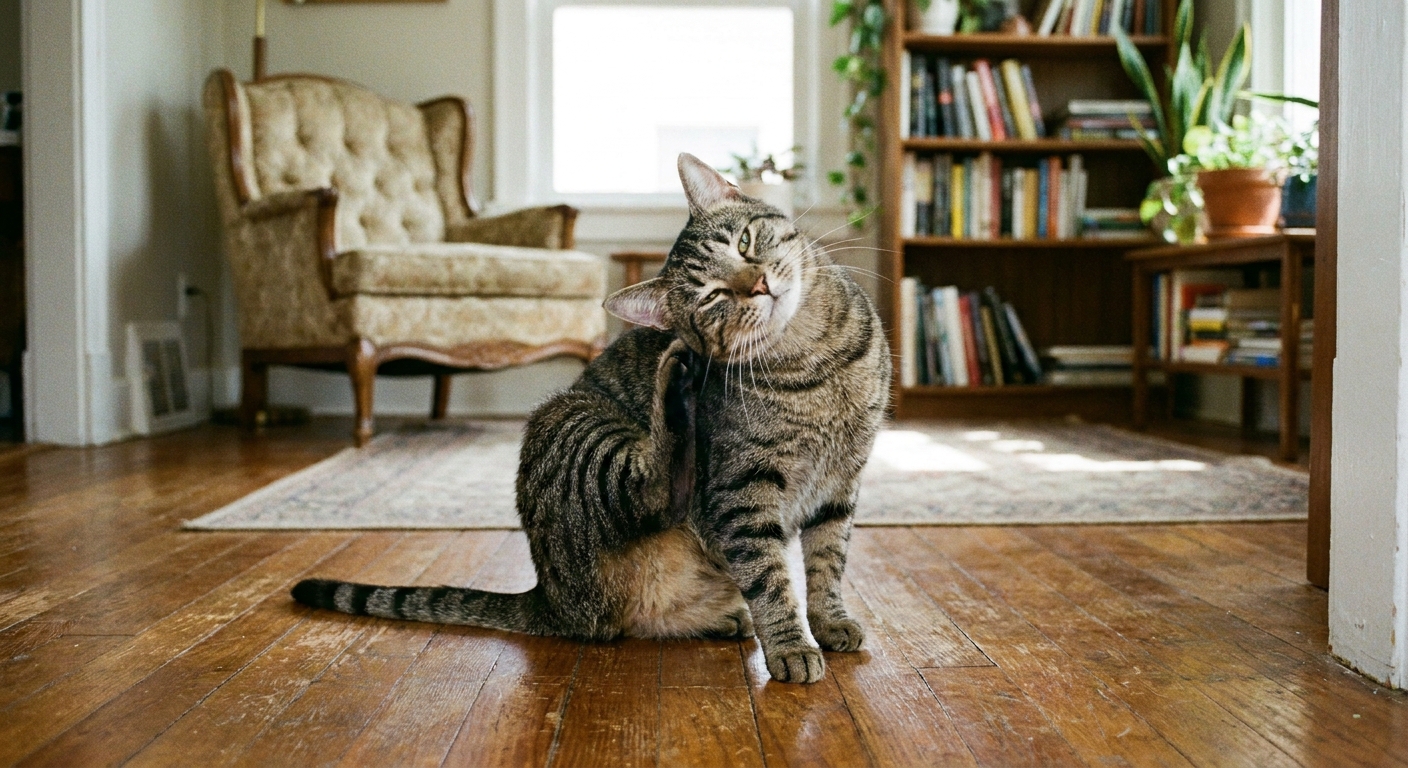
Most feline ear hematomas are not random. They are often the end result of repeated trauma from head shaking or vigorous scratching.
Common triggers include:
- Ear mites (very itchy ears, often with dark debris)
- Ear infections (yeast or bacterial otitis externa)
- Allergies (food or environmental allergies can inflame ears and skin)
- Foreign material in the ear canal (uncommon in cats, but possible)
- Wounds or bites to the ear flap
- Ear polyps or other masses in some cats, especially with recurrent ear issues
More rarely, your veterinarian may also think about issues like significant trauma or a clotting problem, especially if bruising is present elsewhere or the swelling occurred without much scratching or shaking.
The important takeaway is this: treating the hematoma without addressing the underlying ear itch is a setup for recurrence.
What it looks like
Cats can be subtle about pain, so the ear shape change is often what grabs your attention first. You might notice:
- A soft, squishy swelling on the ear flap
- An ear that looks thicker or folded over
- Head shaking or ear scratching that started before the swelling
- Sensitivity when you touch the ear
- Ear held at an odd angle
- Ear discharge, odor, or visible debris in the canal (suggests infection or mites)
If the hematoma is large, some cats seem painful, hide, stop grooming, or become less social.
Is it an emergency?
Most ear hematomas are not “rush to the ER right now” emergencies, but they are time-sensitive. The sooner your veterinarian evaluates it, the better the odds of preserving the ear’s normal shape and preventing ongoing pain.
Go in urgently (same day if possible) if you notice any of the following:
- The ear is rapidly enlarging over hours
- Your cat is lethargic, not eating, or seems very painful
- There is active bleeding, a deep wound, or a bite injury
- The ear looks very hot, very red, or there is thick discharge that suggests a more severe infection or an abscess
- Neurologic-type signs like a persistent head tilt, stumbling, or abnormal eye movements
If you do nothing, some hematomas eventually shrink, but that can come with downsides like ongoing discomfort, thickened scar tissue, and a permanently wrinkled ear flap.
How vets diagnose it
Diagnosis is often based on the look and feel of the swelling, but a good exam matters because your veterinarian also needs to find why the hematoma formed.
Common steps include:
- Physical exam of the ear flap and surrounding skin
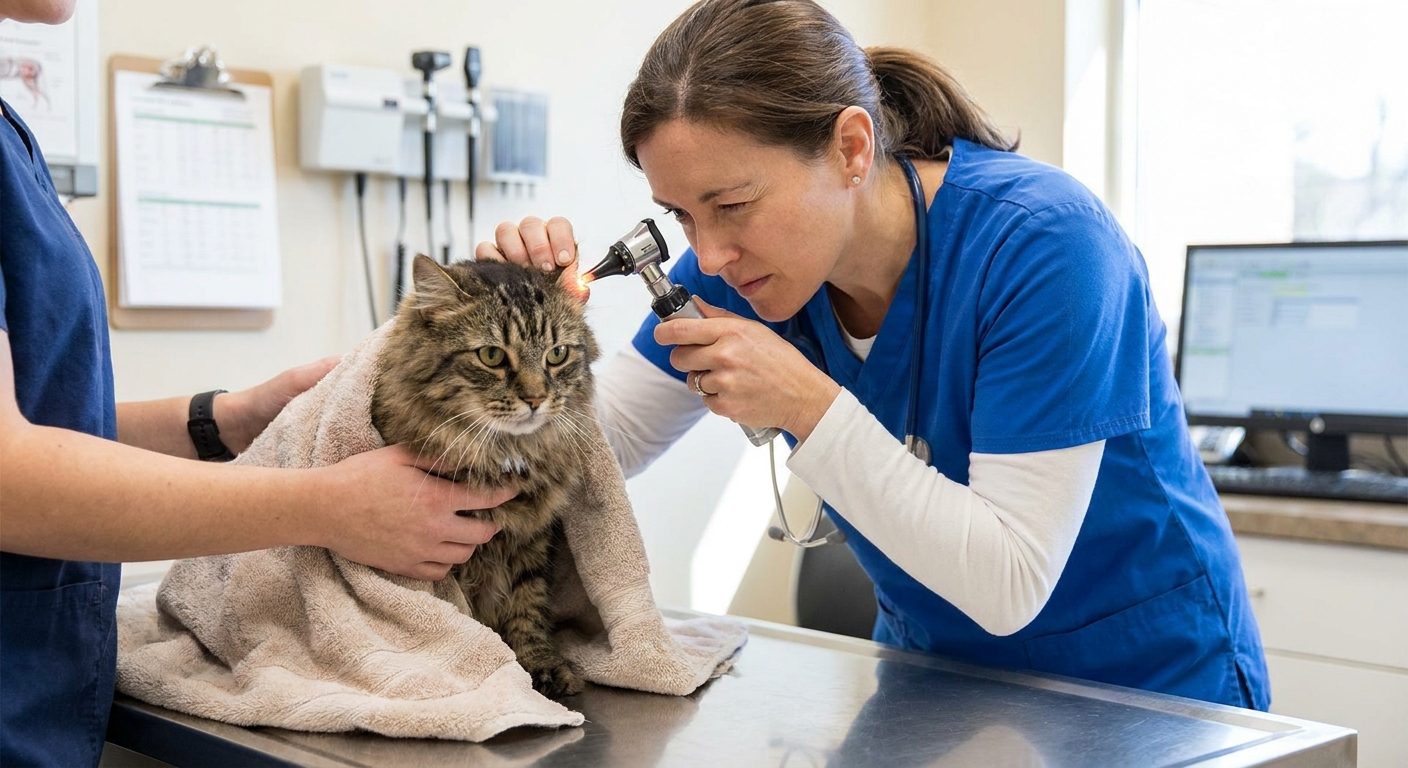
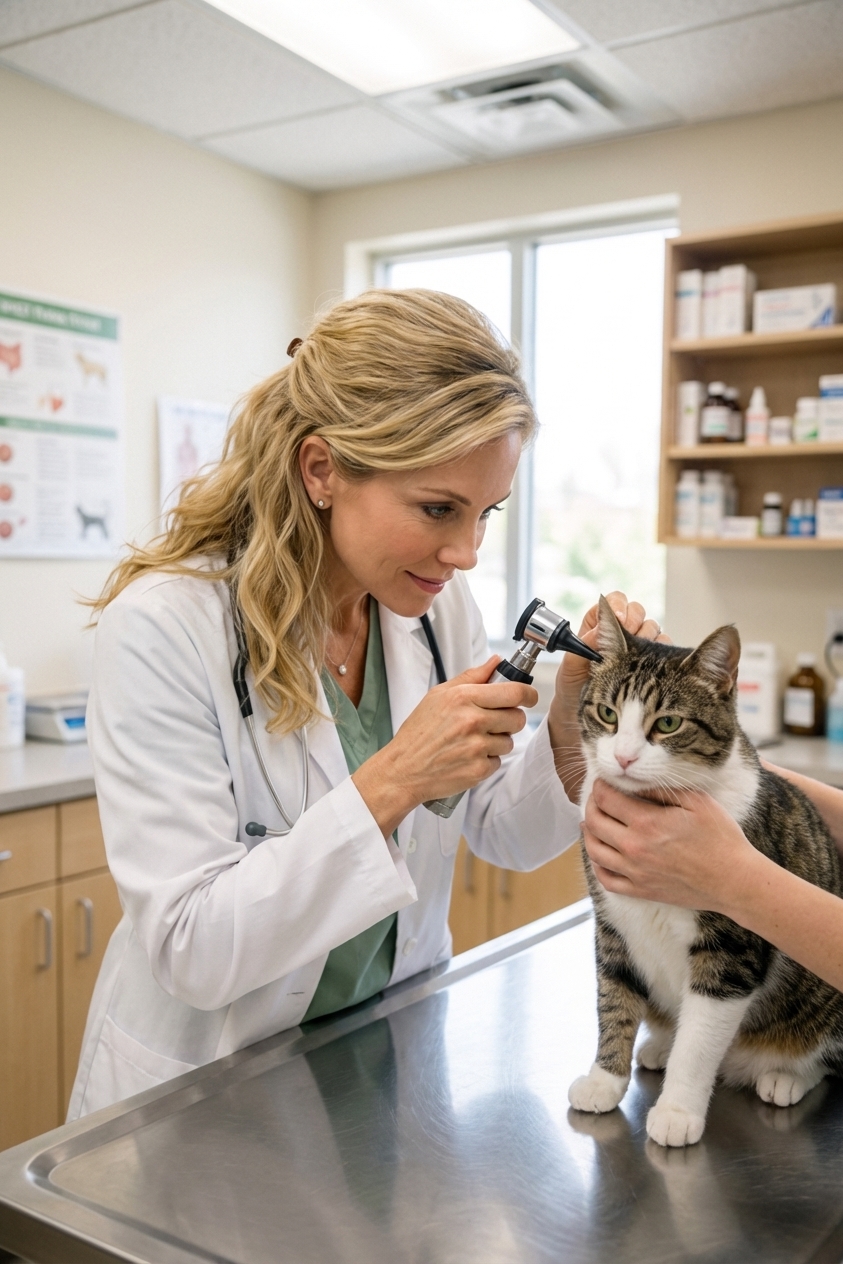
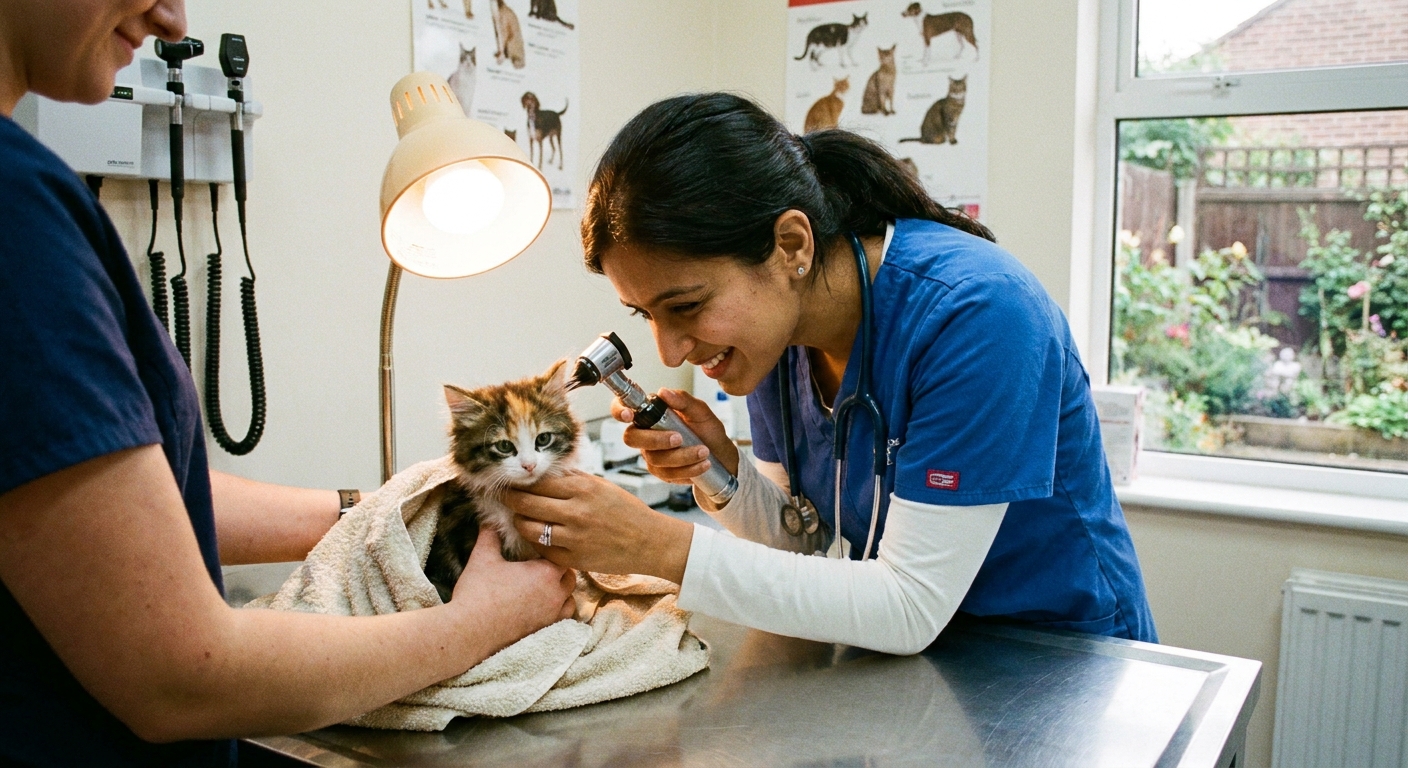
- Otoscope exam to look down into the ear canal
- Ear cytology (microscope check of wax and debris for yeast, bacteria, inflammation)
- Mite evaluation when needed, often by otoscopic visualization and/or a mineral oil prep of ear debris, since mites can be missed on routine cytology
- Aspirating a small amount of fluid in some cases to confirm it is a hematoma and not an abscess or mass
Some cats need sedation for a complete ear exam, especially if the ear is painful or the cat is stressed. That is normal and often kinder for the cat.
Treatment options
There is no one-size-fits-all plan. Treatment depends on the size of the hematoma, how long it has been there, what caused it, and your cat’s temperament and overall health.
1) Treat the underlying cause
If mites or infection are driving the head shaking, your veterinarian will address that with appropriate prescription products and, if needed, anti-inflammatory and pain control medications. For mite and infection treatment details, follow your veterinarian’s instructions and dosing plan, especially in multi-cat households.
2) Conservative management
Very small hematomas sometimes resolve on their own, but there are tradeoffs. If the fluid sits in the ear flap for too long, the body can form scar tissue, and the ear may heal wrinkled or thickened.
Your veterinarian might recommend monitoring when:
- The hematoma is small and stable
- Your cat is not very painful
- The underlying itch is being controlled
- Surgery or repeated visits would be especially stressful or risky
3) Needle aspiration
A veterinarian can drain the fluid, but aspiration alone often refills, sometimes within a day or two, because the space inside the ear flap still exists. It may be paired with medication, a plan for repeat drains, or other strategies to reduce refilling.
This approach can be useful in select cases, but many cats do not tolerate repeated ear handling well.
4) Surgical repair
For many moderate to large hematomas, surgery is the most reliable option. The goal is to remove the fluid and close down the pocket so it cannot refill.
There are a few techniques, but commonly your veterinarian will:
- Drain the hematoma
- Place multiple small sutures to tack the ear layers together
- Sometimes place a drain temporarily
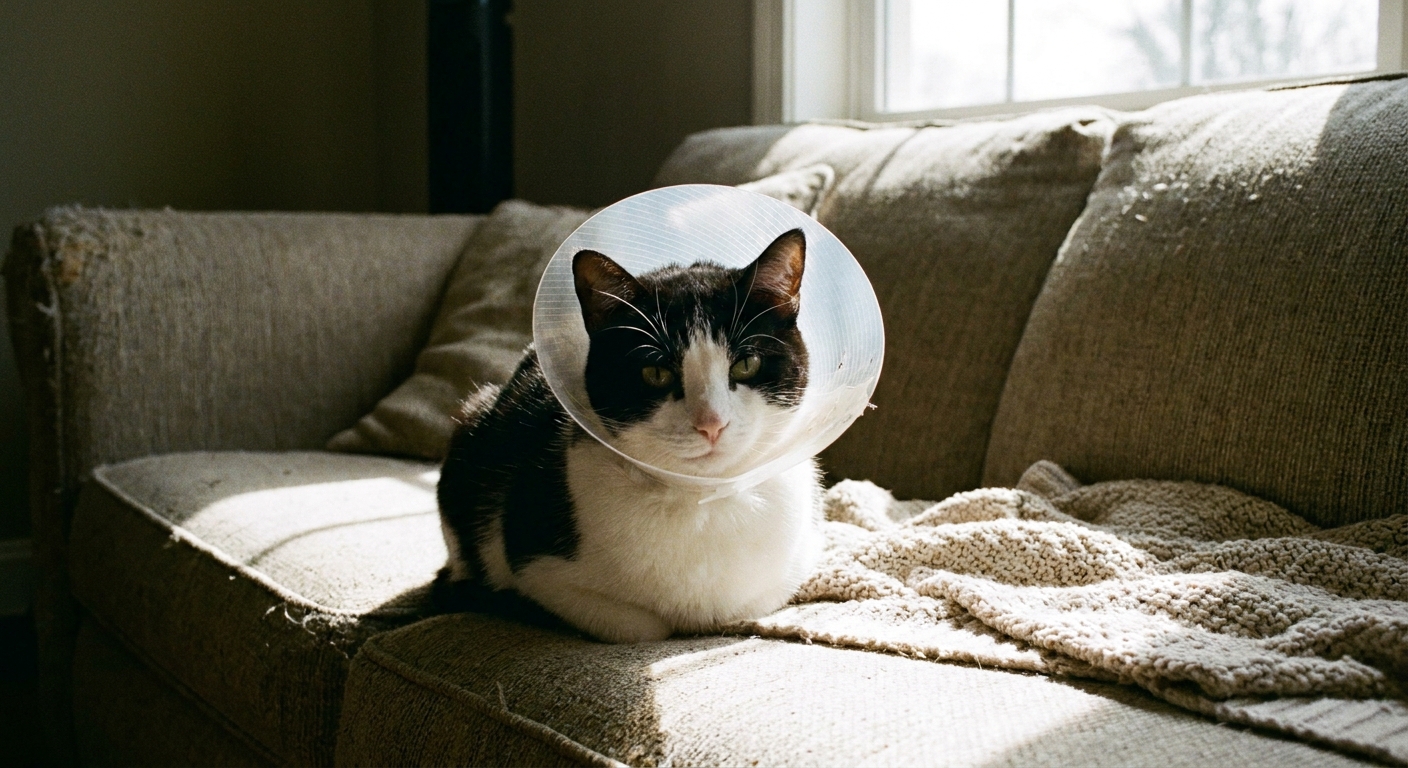
- Often send home an e-collar to prevent scratching
Surgery typically gives the best chance of a flatter, more normal-looking ear, especially when done early.
5) Pain control and stress reduction
Cats experience pain but may hide it. Your veterinarian may prescribe pain medication and, in some cases, short-term calming support for easier recovery. Please do not give human pain relievers. Many are toxic to cats.
Cats vs dogs
You might read a dog-focused hematoma article and wonder why your veterinarian is approaching your cat differently. Here are the big practical differences I see in real life:
- Cats often need sedation sooner. Many cats will not allow a thorough otoscope exam or repeated draining while awake, especially when the ear is painful. Stress matters in cats, and a safe, calm exam is part of good medicine.
- Bandages are harder in cats. Head bandages that sometimes work in dogs can be difficult to keep on cats. They can also slip, cause rubbing or skin injury, or interfere with eating or breathing if applied incorrectly.
- Repeat visits can be tougher for cats. Dogs may tolerate frequent rechecks and repeated aspiration better than many cats. Because aspiration can refill, the “multiple drains over time” plan is often less ideal for a cat who hates handling.
- Underlying causes can differ. Ear mites are common in cats, especially kittens and multi-cat households. Cats can also have inflammatory ear disease or polyps that require a different workup than the typical dog hematoma case.
- Cosmetic outcome is not always the top priority. With cats, the priority is comfort and stopping the itch. Some cats will heal with a thicker ear flap, and that can be acceptable if the cat is pain-free and the ear canal problem is resolved.
Can it heal on its own?
Yes, it can, but “heal” does not always mean “go back to normal.” If the pocket of fluid is not corrected, the body can lay down fibrous tissue and the ear can heal with a permanent crinkle or thickening, sometimes called a cauliflower-like ear. Some cats do fine with that. Others have ongoing discomfort, recurrent hematomas, or repeated ear infections if the underlying ear disease is not addressed.
What not to do at home
I completely understand wanting to help your cat right away, but these are the big at-home mistakes that can make things worse:
- Do not try to lance or drain the ear yourself. It is painful, infection risk is high, and it often refills without proper technique and follow-up.
- Do not tightly wrap the ear. Bandages can slip, cause rubbing or skin injury, or interfere with eating or breathing if placed incorrectly.
- Do not use leftover ear medication unless your veterinarian instructs you to. Some ear products can be dangerous if the eardrum is not intact.
- Do not give human pain meds. Cats are very sensitive to many over-the-counter medications.
Aftercare
After treatment, most cats need a little extra support for about 1 to 3 weeks, depending on the method used and how much inflammation is present. Your plan may include:
- E-collar to prevent scratching and head shaking
- Recheck visits to make sure swelling is resolving
- Ear medication for infection or inflammation, if present
- Keeping your cat indoors during healing, if they normally go out
If surgery was performed, you may see small sutures along the ear flap. Mild swelling is expected early on, but worsening redness, odor, discharge, or sudden swelling should be reported.
Will my cat’s ear go back to normal?
Sometimes it does, especially with early treatment and good control of the underlying itch. Sometimes the ear stays a bit thicker or slightly wrinkled. What matters most is that your cat is comfortable and the ear canal problem is solved so the hematoma does not return.
FAQ
Is an ear hematoma the same as an ear infection?
No. An ear infection is inflammation and overgrowth of yeast or bacteria in the ear canal. An ear hematoma is fluid trapped inside the ear flap. But an infection can trigger head shaking that leads to a hematoma.
Can ear mites cause an ear hematoma in cats?
Yes. Ear mites are intensely itchy. That itching leads to scratching and head shaking, which can rupture small blood vessels in the ear flap.
Can an ear hematoma come back?
It can, especially if the underlying cause is not controlled or if the hematoma pocket was not fully eliminated. This is why treating the ear mites, infection, allergies, or other trigger is just as important as fixing the swelling.
Should I clean my cat’s ears when there is a hematoma?
Only if your veterinarian instructs you to, and only with a cat-safe ear cleaner. Cleaning the ears incorrectly can be painful and can worsen inflammation.
The bottom line
A swollen, fluid-filled ear flap is often an ear hematoma, and in cats it is frequently linked to head shaking from ear mites, ear infection, or allergies. The best outcomes happen when you address both pieces: the ear flap swelling and the reason your cat is shaking their head. If your cat’s ear suddenly looks puffy, call your veterinarian and get a plan in place. You and your cat will both feel better once the itch and pain are under control.