A curious nose. A very waggy welcome.
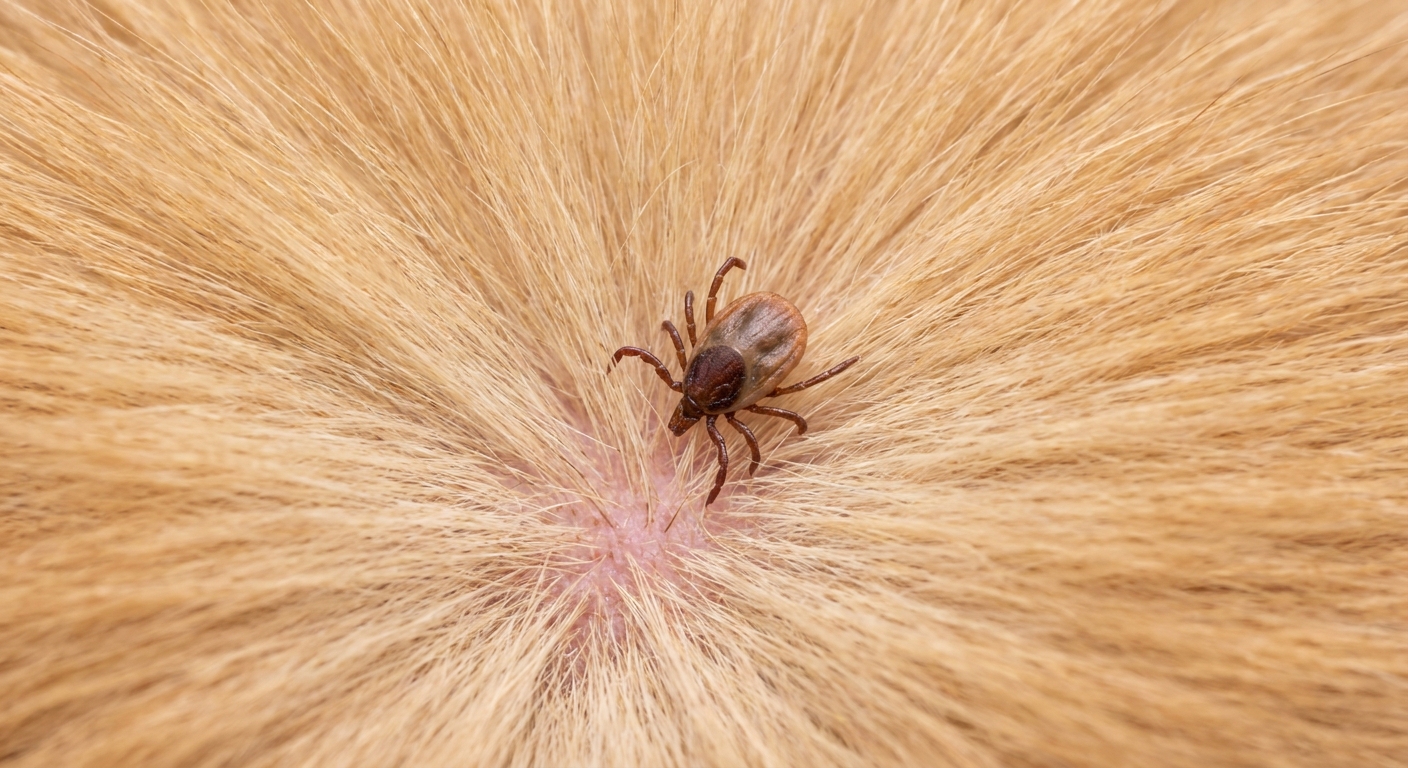
If you have already pulled a tick off your dog (nice job, human hands), the next big question is usually: what kind was it? Ticks can look annoyingly similar, especially when they are tiny or when they have been feeding. But there are a few visible clues that can help you make a solid best-guess between a deer tick (also called a blacklegged tick) and a brown dog tick after removal.
Quick note on names and geography: “Deer tick” is a common nickname for blacklegged ticks (Ixodes species). In much of the eastern and central U.S., that usually means Ixodes scapularis. On the West Coast, the close cousin is Ixodes pacificus. They look similar enough that the same general ID tips apply, but local species and disease risk can vary.
This guide sticks to what you can see and what it means. If you are unsure, treat it like a possible exposure and ask your vet or local extension office for help identifying it.
Quick ID: easiest clues first
Before you zoom in on tiny tick anatomy, start with these fast, practical checks.
1) Overall color and pattern
- Brown dog tick: often appears fairly uniform brown (reddish-brown to chocolate-brown). Some individuals have subtle patterning on the shield near the head, so do not treat “plain brown” as a guarantee.
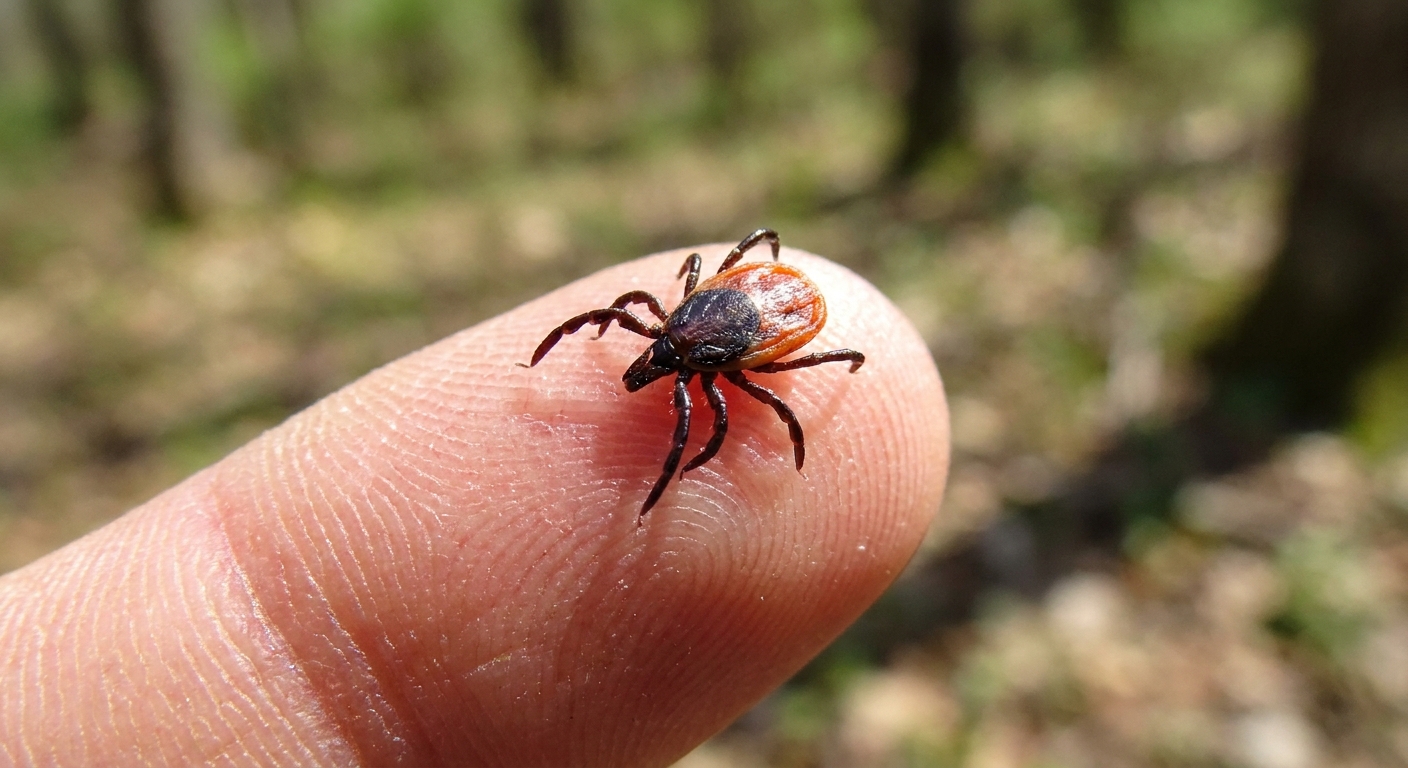
- Deer tick (blacklegged tick): often looks darker overall. Adult females commonly show a dark head and legs with a contrasting reddish-orange rear when unfed.
2) Size, especially when unfed
Size overlaps a lot, but unfed deer ticks are famously small.
- Deer tick nymphs: very tiny, often described as poppy-seed sized.
- Brown dog ticks: more often look like a slightly larger, sturdier tick in the stages most people notice on dogs.
Important: Once a tick has fed, both kinds can swell and become harder to judge by size alone.
3) Where you found it
This is not foolproof, but it is a helpful nudge:
- Brown dog ticks love living where dogs live. They can infest homes, kennels, and shelters, and they may show up even without much wildlife around.
- Deer ticks are more tied to outdoor habitats with wildlife hosts, especially brushy edges, wooded areas, and leaf litter.
What to check on the tick (after removal)
If you saved the tick in a small container or bag (excellent thinking), you can use these features to narrow it down. Good light helps. A phone camera zoom can help too.
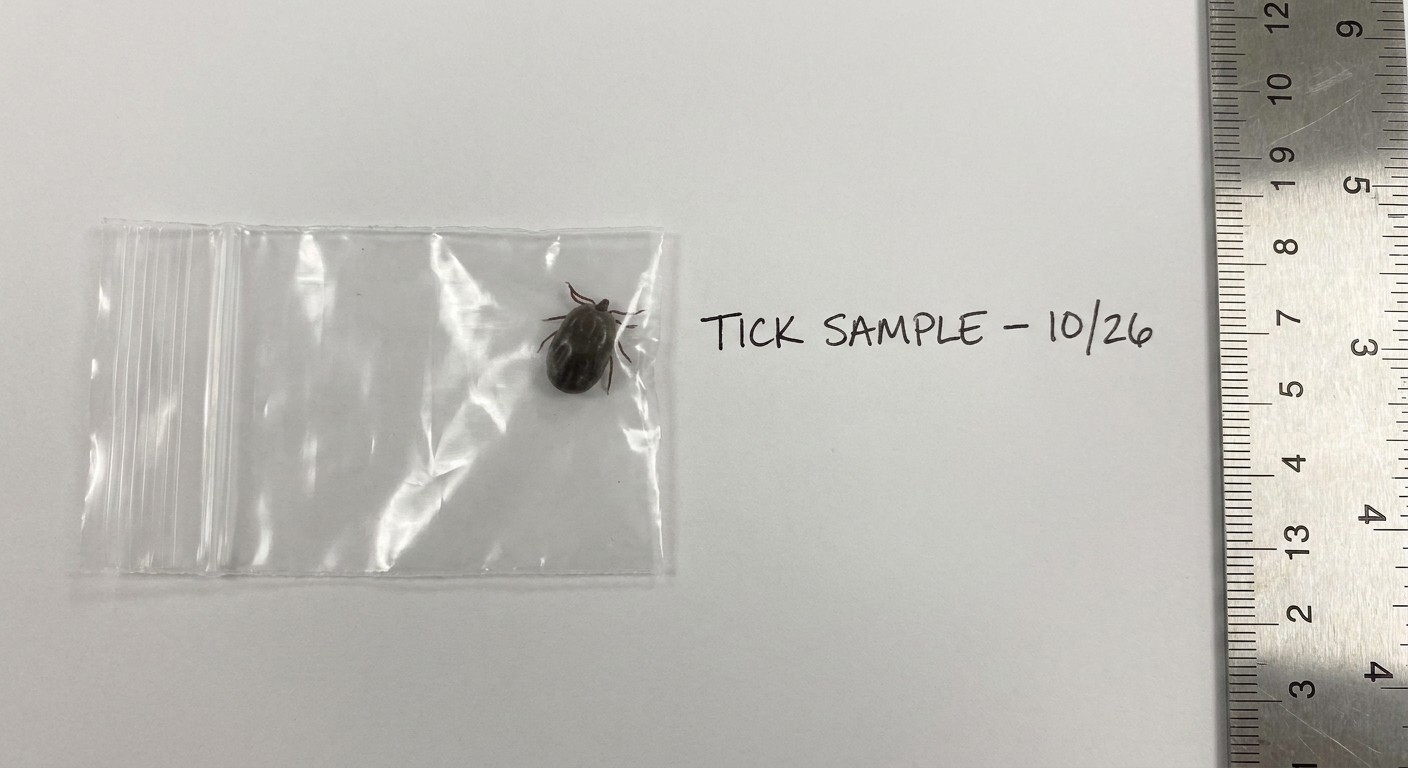
Store it for ID (without crushing)
If you still have the tick, place it in a sealed container or zip bag with the date and where your dog was (yard, trail, trip location). Avoid smashing it if you want a clearer ID.
Body shape: sleeker vs more compact
- Brown dog tick: often looks a bit more oval and stout.
- Deer tick: can appear sleeker and flatter when unfed, especially in nymph stages.
Leg color: “blacklegged” is a hint
Deer ticks are nicknamed blacklegged ticks for a reason. Their legs often appear darker than the body.
- Deer tick: legs frequently look dark brown to black.
- Brown dog tick: legs are typically brown, often blending with the body.
Shield (scutum): subtle, sometimes useful
Ticks have a harder “shield” near the head. On some ticks, that shield can show patterning.
- Brown dog tick: often looks fairly plain, though mild mottling can happen.
- Deer tick: also lacks flashy ornamentation, but adult females often show that two-tone look (dark front, warmer rear) more clearly.
Front end shape: a better “tiny detail” cue than mouthparts
If you can get a clear view of the tick’s front end (where the mouthparts attach), it can help:
- Brown dog tick: the base behind the mouthparts can look a bit more angular.
- Deer tick: the same area often looks a bit more rounded.
This is still a small-detail clue, but it is often more useful than trying to judge mouthpart length with the naked eye.
Note: If the tick was crushed during removal, or if you only have pieces, identification gets much tougher. In that case, it is safer to focus on monitoring symptoms and talking with your vet or healthcare provider about risk.
Common mix-ups
Engorged ticks can fool you
When a tick feeds, it swells like a tiny gray or tan bean. At that point, color and shape shift a lot. A fully engorged deer tick can lose that crisp dark-and-reddish contrast. A fully engorged brown dog tick can look paler too.
Life stage matters
Nymphs and larvae can be so small that most of the “classic” features are hard to see. Deer tick nymphs are a big reason people miss deer ticks entirely.
Not every brown tick is a brown dog tick
Depending on where you live, other ticks can show up on dogs that are not deer ticks or brown dog ticks. If your tick does not fit either description, your vet or local extension office may be able to help, or your area may offer tick ID services. Comparing your tick to a university or extension tick ID chart can also be surprisingly helpful.
Disease risks: deer tick vs brown dog tick
Tick-borne disease risk depends on where you live, what pathogens are circulating locally, and how long the tick was attached. Still, species identification can help focus your “what now?” plan.
Deer tick (blacklegged tick) concerns
In many parts of the U.S., blacklegged ticks are best known for transmitting:
- Lyme disease (Borrelia burgdorferi in many regions)
- Anaplasmosis (Anaplasma phagocytophilum)
- Babesiosis (Babesia microti in many regions)
Depending on region, blacklegged ticks can also be involved with other illnesses. If your dog has been in blacklegged tick habitat, your veterinarian may recommend screening tests based on local risk.
Brown dog tick concerns
Brown dog ticks are often linked with:
- Ehrlichiosis (especially canine ehrlichiosis in many parts of the world)
- Babesiosis in some regions
- Rocky Mountain spotted fever (the brown dog tick has been implicated in transmission in certain outbreak settings)
One extra reason we take brown dog ticks seriously is their ability to live indoors and build up in the environment, which can raise repeat exposure risk for dogs in the home.
If you are not 100 percent sure which tick it was, treat the situation like a “possible exposure” and focus on monitoring and prevention. The tick does not have to come with a name tag to cause trouble.
After ID: what to watch
Even with a confident ID, there are still a few steps that matter for both dog health and human health.
For your dog: watch for these signs
Call your vet if you notice:
- Lameness or shifting-leg limp
- Fever or feeling warm and listless
- Low energy that is not your dog’s normal vibe
- Loss of appetite
- Swollen joints or reluctance to move
- Unusual bruising, nosebleeds, or pinpoint red spots on gums or skin
- Vomiting or diarrhea that does not quickly resolve
Many tick-borne illnesses can look like general “not feeling good” at first. The earlier your vet evaluates symptoms, the easier it is to decide whether testing and treatment are needed.
At the bite site: normal irritation vs red flags
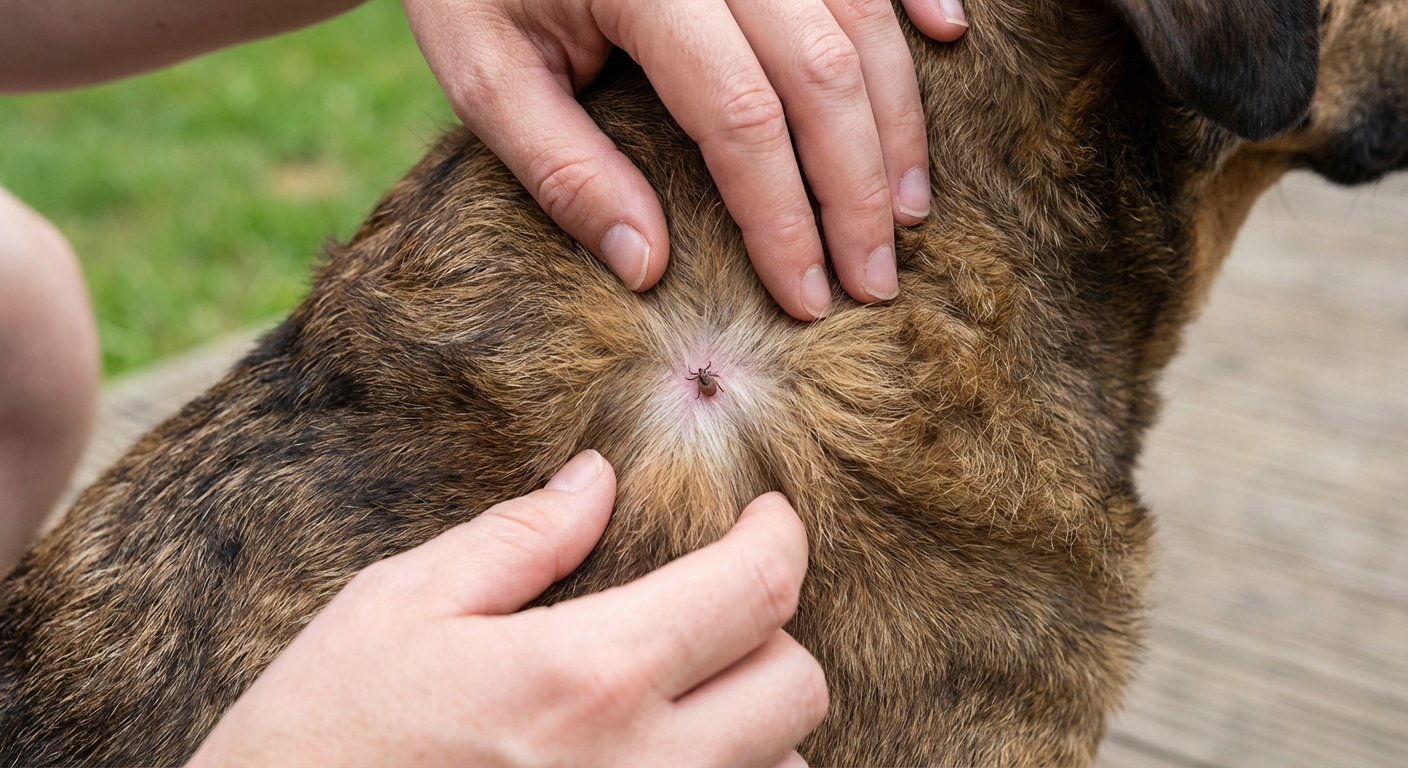
It is common to see a small scab or a little redness where the tick was attached.
- Usually normal: a small pink bump, mild tenderness, a tiny scab.
- Get help: expanding redness, swelling, oozing, significant pain, or a bite site that keeps worsening after 24 to 48 hours.
For your household: do a quick tick check too
If the tick was found after a hike, yard time, or a trip, do a head-to-toe check on people and other pets. Blacklegged ticks especially can be easy to miss in hairlines, behind ears, and skin folds.
When to ask for help
Sometimes the best tool is not a magnifying glass. Ask for help if:
- The tick was crushed or you only have pieces.
- Your dog is showing symptoms already.
- You live in an area with multiple similar tick species.
- The tick looks unusual, or you suspect it might not be a deer tick or brown dog tick.
Your veterinarian can advise you on next steps for your dog. For people, a healthcare provider can advise based on your region and your health history.
FAQ
Are deer ticks always black?
No. Deer ticks can look dark, especially on the legs and the front half, but adult females often have a warmer reddish-orange rear section when unfed. After feeding, color can become more grayish or tan as the body swells.
Is a “dog tick” the same as a brown dog tick?
Not always. People use “dog tick” casually for several tick species that bite dogs. The brown dog tick is one specific species, and it is different from the deer tick.
If I found a tick indoors, is it automatically a brown dog tick?
Not automatically, but indoor finds raise suspicion. Brown dog ticks are especially known for surviving indoors and creating infestations. Still, ticks can hitchhike inside on clothing, dogs, or gear.
Does identifying the tick replace vet care or testing?
No. Identification helps you understand likely risks, but symptoms, local disease prevalence, and your dog’s medical history guide what happens next. If your dog seems unwell after a tick bite, talk to your vet even if you feel confident about the species.