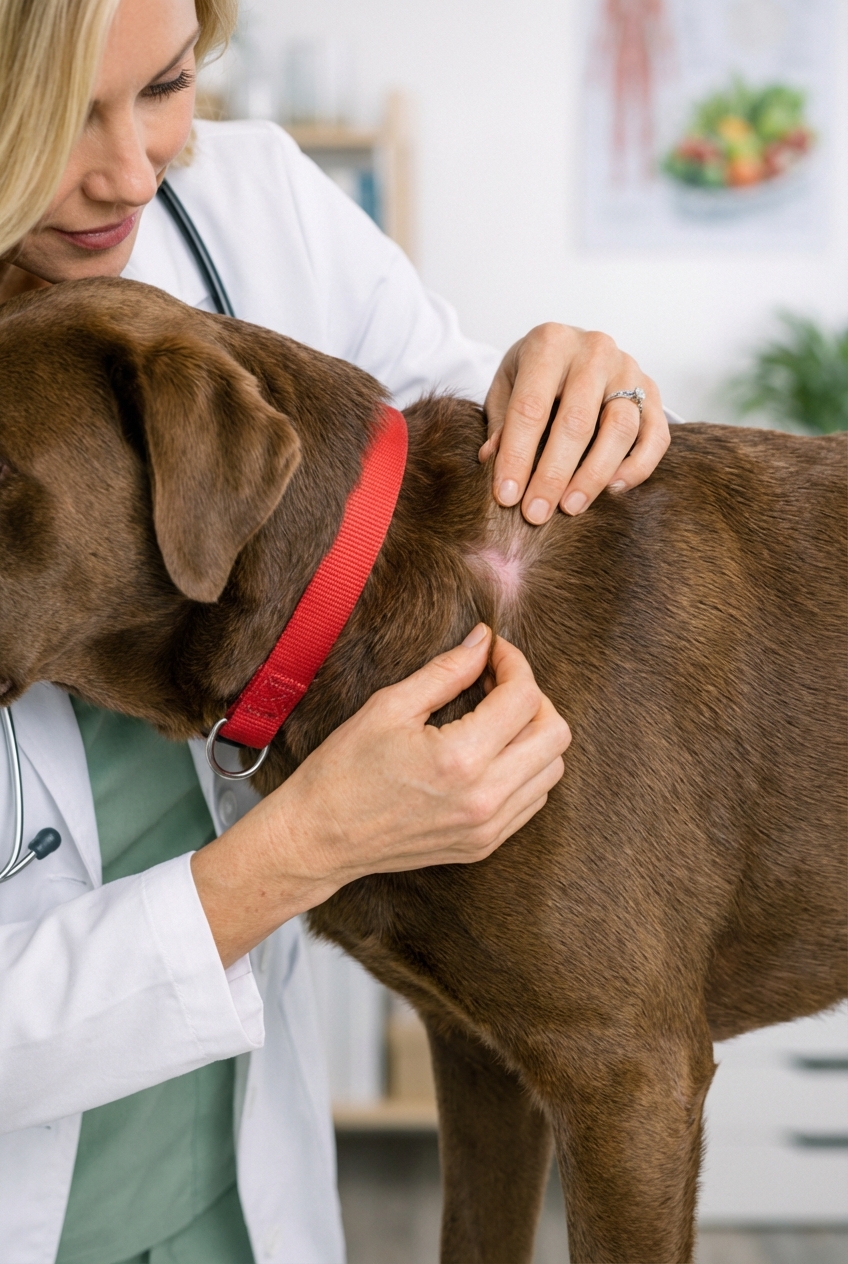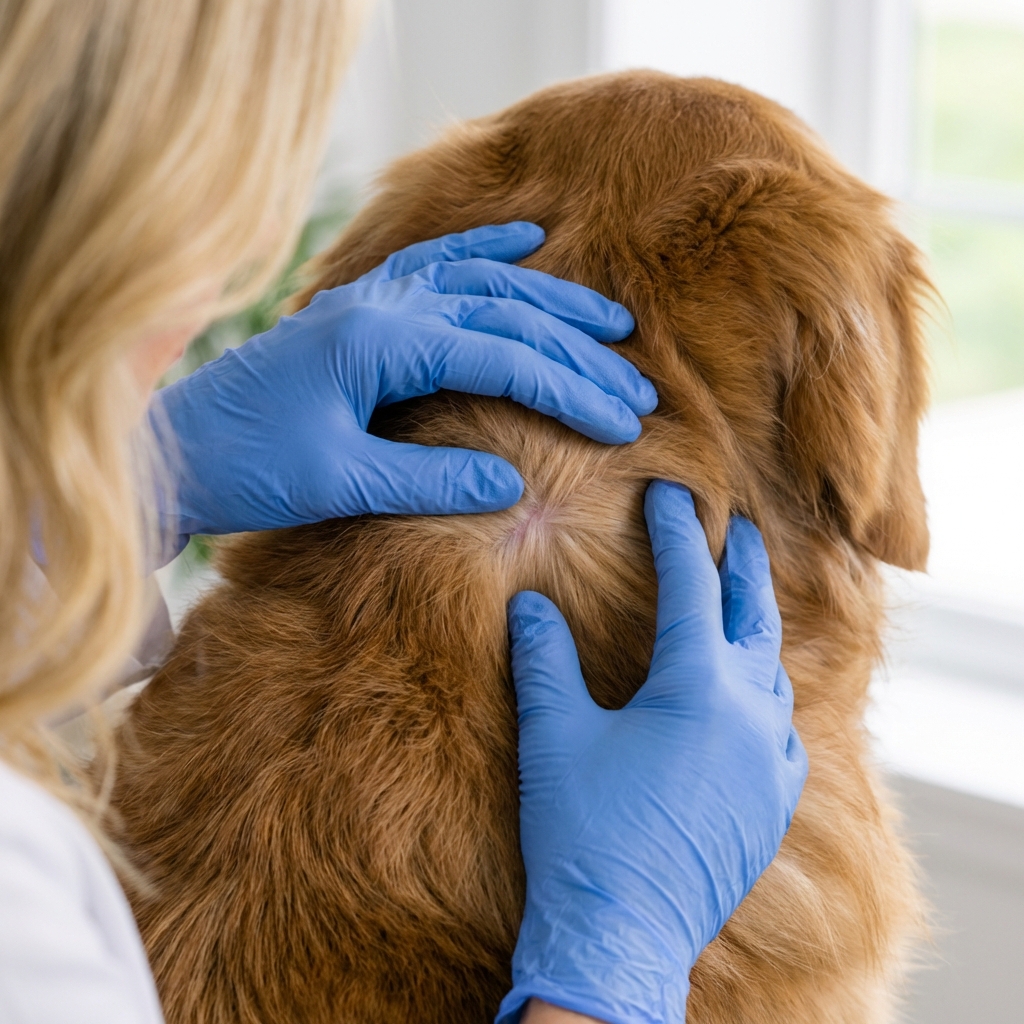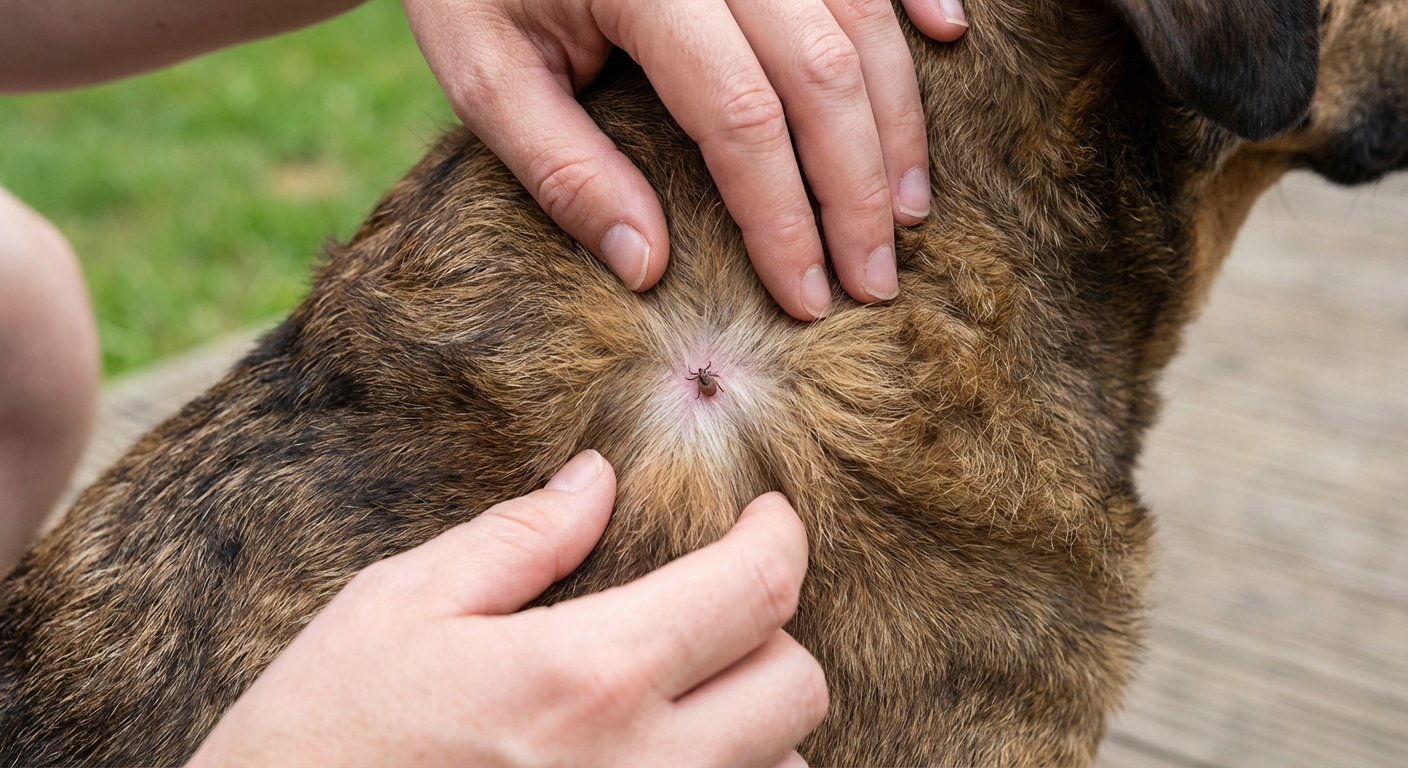
If you have ever found a tick on your dog, you know that sinking feeling. I see it all the time as a veterinary assistant here in Frisco, Texas. The first question almost every pet parent asks is the same: “How long was it on my dog… and is Lyme disease now a real concern?”
Timing matters a lot with Lyme disease, but it is not the only factor. Let’s walk through what we know about the attachment window, what still has to happen inside the tick before Borrelia burgdorferi can be transmitted, and what you should do next even if you removed the tick quickly.

The Lyme transmission window
For Lyme disease, most transmission risk increases when an infected blacklegged tick (often called a deer tick) has been attached and feeding for a sustained period. The most evidence-based way to think about it is simple: the longer the tick feeds, the higher the chance of transmission.
In general, veterinary and public health guidance commonly frames the risk like this:
- Under 24 hours: Transmission is considered unlikely in most cases, especially if the tick is found and removed promptly.
- 24 to 36 hours: Risk can begin to rise, but it is still generally thought to be lower than later windows.
- 36 to 48+ hours: Risk meaningfully increases, particularly if the tick is an infected Ixodes tick and is feeding well.
You will sometimes hear “36 hours” or “48 hours” quoted as a practical cutoff. Real life is messier than that. There is no magic stopwatch that guarantees safety, and rare earlier transmission has been reported under certain conditions.
Important nuance: Not every tick carries Lyme. And not every bite from an infected tick leads to infection. But longer attachment times tilt the odds in the wrong direction.
Why time matters biologically
Lyme disease is caused by a spiral-shaped bacterium called Borrelia burgdorferi. For it to move from tick to dog, a few things typically have to line up.
1) It has to be the right tick
In the U.S., Lyme is most commonly associated with blacklegged ticks (Ixodes species), especially Ixodes scapularis in the eastern and central U.S. and Ixodes pacificus on the West Coast. Other ticks may bite your dog, but they are not the primary drivers of Lyme transmission.
2) The tick must be infected
If the tick is not carrying Borrelia, Lyme cannot be transmitted. (And even in areas where Lyme exists, many ticks are not infected.)
3) Feeding has to progress long enough
Borrelia bacteria are generally in the tick’s midgut. As feeding continues, the bacteria typically undergo changes and move toward the salivary glands. That process takes time, which is a big reason early removal lowers risk.
Does an engorged tick mean long attachment?
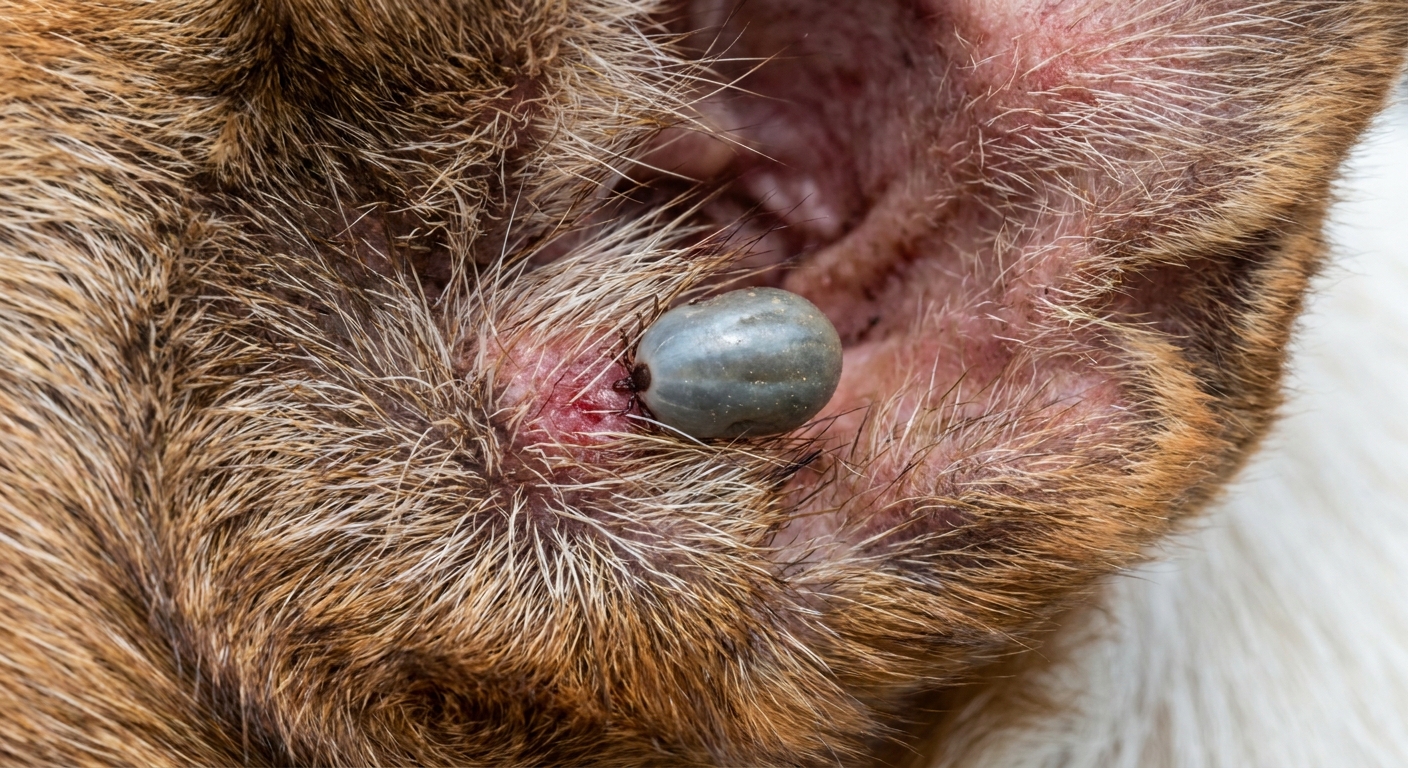
An engorged tick often means it has been feeding for a while, which can increase concern for transmission. That said, engorgement is not a perfect clock.
- Different tick life stages and sexes engorge differently.
- Partial feeding can occur if the tick is disturbed or if removal is attempted.
- Visual estimation is unreliable when you are stressed and working through fur.
If you suspect the tick was on for more than a day or two, it is reasonable to be more vigilant and to talk with your veterinarian about what they recommend based on your region and your dog’s risk factors.
How to remove a tick safely
If you have not removed the tick yet, do not panic. The goal is to get it off cleanly and quickly.
- Use fine-tipped tweezers (or a tick removal tool).
- Grab as close to the skin as possible, right at the tick’s mouthparts.
- Pull straight out with steady pressure. Try not to twist, crush, or jerk.
- Clean the bite site with soap and water or pet-safe antiseptic, and wash your hands.
- Avoid “home remedies” like burning, smothering with petroleum jelly, essential oils, or alcohol while the tick is attached. Those methods can delay removal and may increase irritation.
If a small piece looks like it stayed behind, call your veterinarian for guidance. Do not dig aggressively at the skin.
If you can, save the tick in a sealed bag or container with the date and where you think your dog picked it up. In some areas, tick identification or testing may be available, but it is not always recommended or helpful in every case. Your veterinarian can tell you what makes sense locally.
Why quick removal is not the whole plan
Even when a tick is found early, I encourage pet parents not to mentally file the event away as “done.” Here is why symptom monitoring still matters:
- Attachment time is often a guess. Many ticks are missed for a day or more, especially in thick coats or on darker skin.
- Ticks can carry more than Lyme. Some other tick-borne infections have different transmission dynamics, such as anaplasmosis, ehrlichiosis, or babesiosis.
- Lyme signs can be delayed. Dogs may show illness weeks to months later, and signs can be vague at first.
So yes, removing a tick promptly is excellent. It meaningfully lowers risk. But it does not guarantee zero risk.
What to do after a tick bite
Once the tick is off, think in two tracks: documentation and observation.
Document what you can
- Write down the date you found the tick and the general location on your dog’s body.
- Note what it looked like (flat or engorged).
- Think back on recent exposure: hikes, tall grass, dog parks, boarding, wooded areas, or travel.
This helps your veterinarian make better recommendations if questions come up later.
Watch for symptoms over the next several weeks
Lyme disease in dogs often shows up as a mix of “not quite right” signs. Contact your veterinarian if you notice:
- Limping that shifts from leg to leg
- Stiffness, soreness, or reluctance to move
- Fever or acting warm and tired
- Decreased appetite
- Swollen lymph nodes
- Unusual lethargy
Rarely, Lyme can be associated with serious kidney complications in some dogs (often discussed as Lyme nephritis or protein-losing kidney disease). It is uncommon, but it is urgent. If you see vomiting, increased drinking and urination, weight loss, or a sudden decline, call your veterinarian right away. These signs can overlap with other diseases too, which is another reason to get your dog checked promptly.

FAQ: timing questions
If I removed the tick within 12 hours, can my dog still get Lyme?
It is unlikely in most situations, because Lyme transmission usually requires longer attachment. Still, “unlikely” is not the same as impossible, and you may not know the true attachment start time. Keep a symptom watch.
What if the tick was attached for about 24 hours?
Risk is still generally considered lower than if it was attached for 36 to 48 hours, but it is not zero. Note the date and monitor your dog over the next few weeks.
What if it was attached for 48 hours or more?
At that point, Lyme transmission becomes a more realistic concern if the tick was an infected blacklegged tick. Call your veterinarian to discuss next steps based on your dog’s health, local tick risks, and prevention status.
Should I test my dog right away?
Many common Lyme screening tests detect antibodies, and antibodies take time to develop. That means testing immediately after a bite can be falsely negative even if exposure occurred. Your veterinarian can advise on the best testing window for your situation, especially if symptoms develop later.
Regional risk matters
Because I work in North Texas, I also like to add one calming reality check: Lyme risk varies a lot by region. In the U.S., it is more common in the Northeast, Upper Midwest, and parts of the Mid-Atlantic and West Coast. Texas still has ticks and tick-borne diseases, but Lyme is generally less common here than in more endemic areas. Your veterinarian is the best source for what is most likely in your county and travel history.
Lowering risk going forward
Because timing is hard to pin down, the goal is to reduce tick attachment in the first place and shorten how long any tick can stay hidden.
- Use veterinarian-recommended tick prevention consistently, not just during “tick season.”
- Do daily tick checks, especially after outdoor time. Focus on ears, around the collar, armpits, groin, toes, and under the tail.
- Keep grass trimmed and remove brush piles where ticks like to hang out.
- Ask your veterinarian about Lyme vaccination if you live in or travel to higher-risk areas.
The bottom line: for Lyme disease, a tick generally needs time to feed before transmission becomes likely, often after 36 hours and especially past 48 hours. But since we rarely know the exact attachment time, prompt removal plus a calm symptom watch is the safest, most practical approach.