A curious nose. A very waggy welcome.
If your dog has paralysis after a spinal disc injury, it is completely normal to stare at those little dog wheelchairs and think: Is this the answer, or am I just trying to wish-wag my way out of a scary situation?
A cart can be a wonderful tool for many dogs with back-leg weakness or paralysis. But it is not a spine fixer, not a pain meter, and not a substitute for bladder care. Let’s separate what a wheelchair can do from the other big medical decisions, so you can ask your vet and rehab team the right questions.
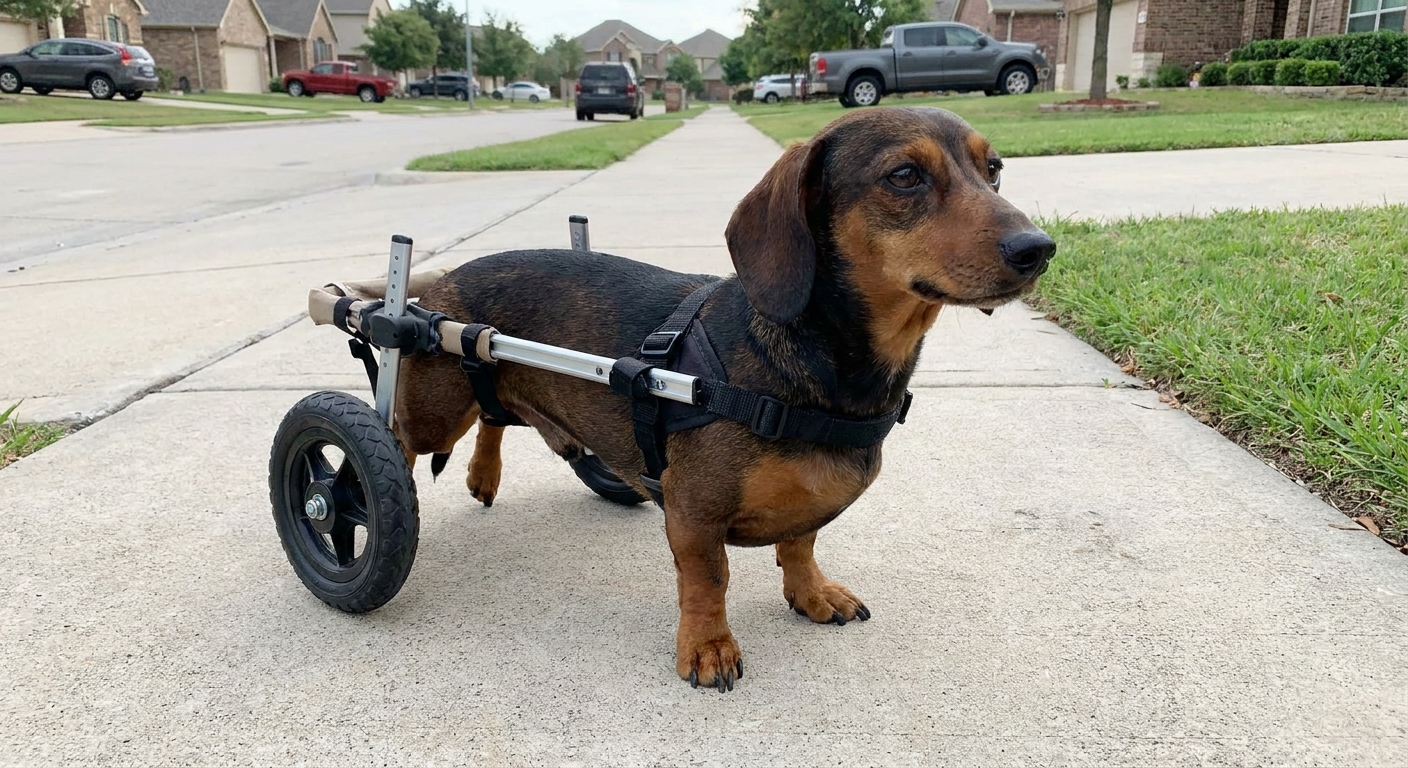
What a wheelchair can do after a disc injury
A dog wheelchair, also called a cart, is mobility equipment. Its job is to support the parts of the body that cannot bear weight safely, so your dog can move around without dragging, falling, or overloading the front end and shoulders.
When people say “disc injury,” they are often talking about IVDD (intervertebral disc disease). It is a common cause of back pain, weakness, or paralysis, especially when a disc problem affects the spinal cord.
It can restore safe movement and mental spark
- Gets your dog upright so they can explore, sniff, and rejoin household life.
- Prevents dragging injuries on tops of paws, knees, ankles, and thighs.
- Helps maintain muscle and joint flexibility in the front end, and sometimes in the rear with assisted stepping if your rehab plan includes it.
- Supports weight more comfortably when properly fitted and introduced gradually, which can reduce fatigue and frustration for both dog and human.
It can protect the skin and paws from friction
After paralysis, “just scooting around” can quickly turn into rug burns, abrasions, and pressure sores. A properly fitted cart can lift the rear end off the ground, reducing scraping and keeping skin safer.
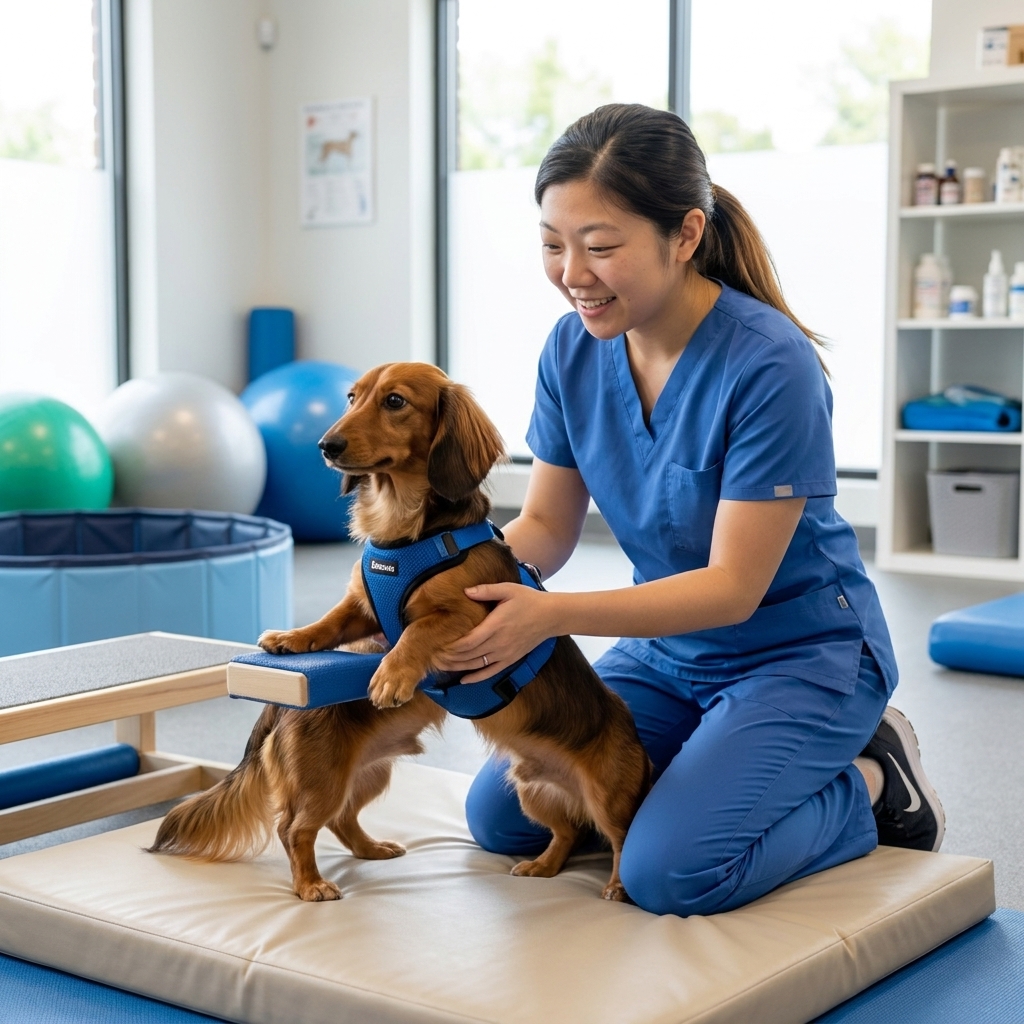
It can be part of rehabilitation, not just a replacement for walking
Some dogs use a cart as their primary way to get around. Others use it as a temporary bridge while nerves heal or while they rebuild strength. The right answer depends on your dog’s neurologic function, pain control, and your veterinarian’s guidance.
What a wheelchair cannot do
This is the part my puppy-scout brain wants to double-check with extra questions, because hope is powerful and carts look so promising.
It will not heal the disc or spinal cord
A cart does not repair a disc injury, reduce spinal cord compression, or speed up nerve regeneration on its own. Think of it like a supportive pair of wheels, not a cure.
It will not tell you whether your dog needs crate rest or surgery
Wheelchair usefulness is an equipment question. Crate rest versus surgery is a medical decision that depends on what your veterinary team sees in your dog’s pain level, neurologic function, imaging, and overall health. You can use a cart later, regardless of which medical route your vet recommends, but the cart decision should not be used to shortcut the medical conversation.
It will not replace bladder and bowel care
Paralysis from a disc injury often affects bladder function. Even if your dog looks joyful and mobile in a cart, they may still be unable to empty their bladder fully. That matters because retained urine can lead to urinary tract infections, bladder overstretching, and discomfort.
If your vet has taught you to express the bladder or your dog is on a specific schedule, keep following that plan. Wheels do not equal bathroom control.
It will not automatically make pain go away
A dog can be unable to use their back legs and still feel pain from the spine, or pain from secondary issues like skin sores, urinary problems, or shoulder strain. A cart should be introduced with your vet’s blessing and with careful observation for signs of discomfort.
When a wheelchair helps most
Many paralyzed dogs can use a cart successfully, but timing and body mechanics matter.
Good candidates often include dogs who:
- Have stable paralysis or significant weakness in the back legs, with a veterinarian guiding care.
- Can comfortably bear weight on their front legs without collapsing or severe fatigue.
- Have good attitude and curiosity, meaning they want to move and engage.
- Have a home setup that can accommodate safe cart time, such as flat areas, ramps, or controlled outdoor spots.
Extra caution is needed if your dog has:
- Ongoing uncontrolled pain or a spine that is not medically stabilized yet.
- Strict crate rest orders or is fresh post-op, unless your surgeon or vet rehab plan specifically clears cart time.
- Front-leg or shoulder disease that makes weight-bearing risky.
- Severe pressure sores, skin infections, or wounds where straps would sit.
- Heart or respiratory disease that makes exertion unsafe.
Your veterinarian or a canine rehab professional can help you decide whether the cart should be introduced now, later, or in shorter sessions only.
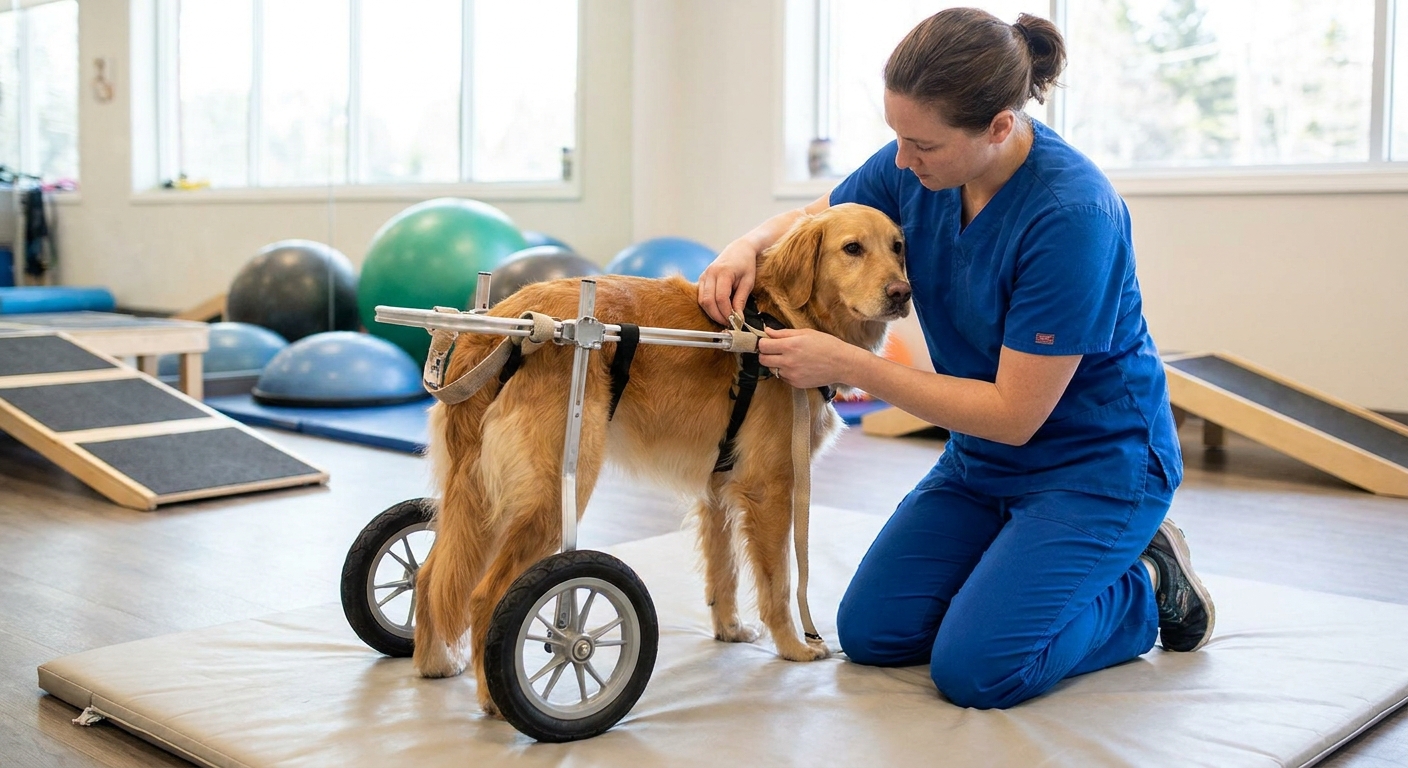
Rear vs quad carts
Many IVDD cases are thoracolumbar, meaning the problem is in the mid-to-lower back. In that common pattern, the back legs are affected more than the front. That is why many dogs start with a rear-support cart, which supports the pelvis and hind end while the front legs do the walking.
Not all disc problems follow that script, though. Cervical (neck) IVDD and other neurologic issues can change what is safe, especially for the shoulders and front legs.
Rear-support carts
- Designed for hind-limb weakness or paralysis.
- Allow sniffy walks and outdoor time while keeping rear paws from dragging. Depending on your rehab plan, the rear feet may be held up, lightly touching, or placed in a controlled way.
- Usually lighter and easier to maneuver than four-wheel carts.
Four-wheel (quad) carts
- Used when a dog needs front and rear support, such as when weakness affects all limbs.
- Can be helpful for some dogs, but they are bulkier and can be harder to fit and navigate in tight homes.
Your dog’s neurologic pattern matters here. If front-leg weakness is present, a quad cart or a different mobility strategy might be safer than asking the shoulders to do all the work.
Fit mistakes to avoid
A cart that fits well looks almost boring. Straight frame, centered body, smooth stride, no rubbing, no twisting. That “boring” is the goal.
Common fitting issues
- Too narrow: pinches hips or ribs, causes rubbing, makes your dog feel trapped.
- Too wide: lets the dog sway side to side, increasing friction and making steering harder.
- Too long or too short: changes how weight is distributed, which can overload shoulders or leave the pelvis unsupported.
- Saddle or harness in the wrong position: can press on the belly, genitals, or bony points and cause sores.
- Wheel height off: rear end too high can tip weight forward; too low can still allow dragging.
Ordering basics
Every manufacturer has their own measuring instructions, but common measurements include:
- Your dog’s weight
- Height at the groin (rear cart) or shoulder (varies by design)
- Body length (often shoulder area to rear or hip area, depending on the cart)
- Body width at the widest point (often hips or ribcage)
If you are between sizes, ask the company and your rehab team before you order. A small mismatch can turn “freedom wheels” into a shoulder workout nobody asked for.
A quick “looks right” checklist
- The spine looks level, not arched up or sagging down in the cart.
- The chest harness does not choke, rub armpits, or restrict breathing.
- The hind end is supported without pressure on sensitive areas.
- The dog can move forward with a smooth, confident rhythm.
If you are unsure, film a short clip from the side and from behind and share it with your vet or rehab team. Small adjustments can make a big comfort difference.
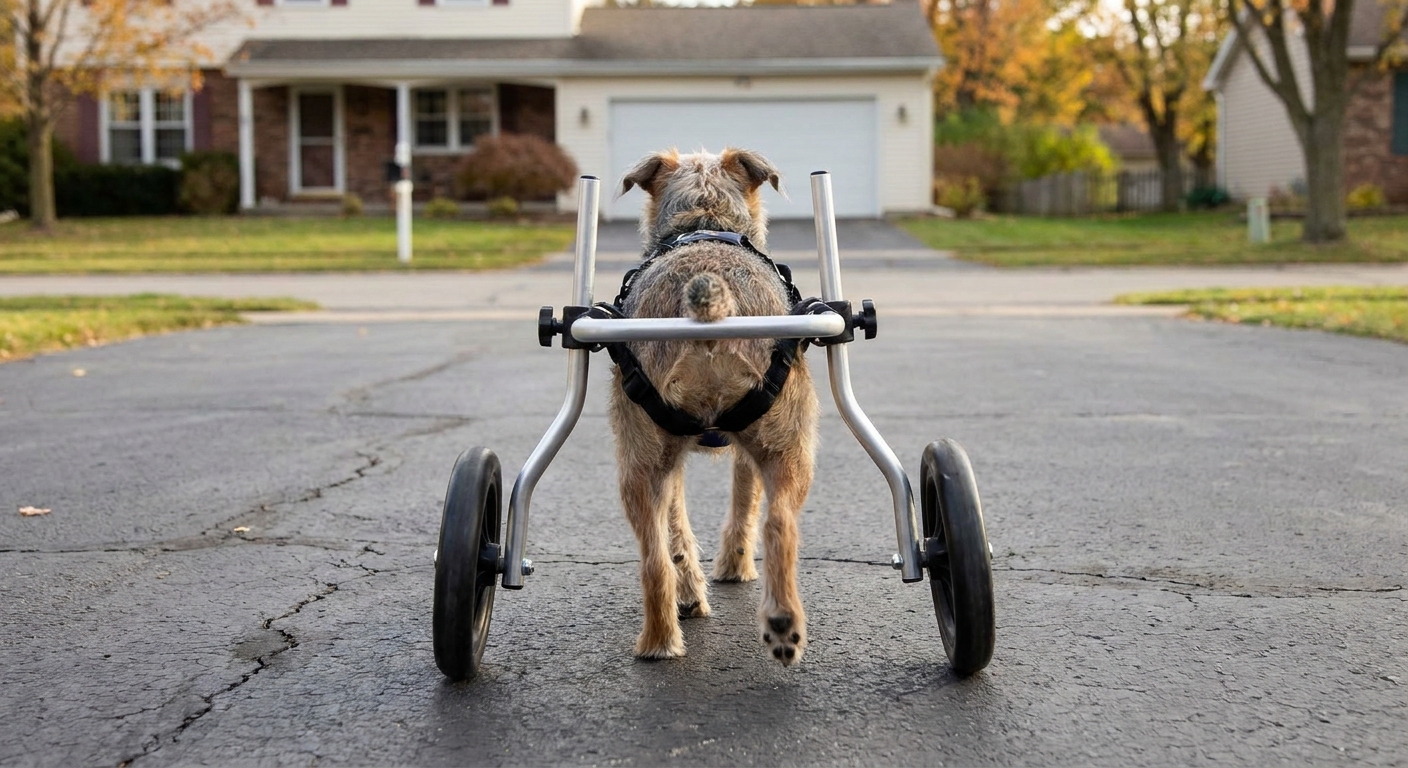
Skin care and toe drag
Paralyzed dogs can have reduced sensation in the hind end, which means they may not react to rubbing until skin is already damaged. That makes proactive skin checks extra important.
Where to check every time
- Armpits and chest where the front harness sits
- Groin and inner thighs
- Hips and bony points along the pelvis
- Lower belly where a sling or saddle may touch
- Paws and nails if any part of the rear foot contacts the ground
What you are looking for
- Pink, irritated, or shiny skin
- Hair loss where straps rub
- Moisture buildup (especially with urine leakage)
- Swelling, scabs, or any open sore
Simple prevention habits
- Start with short sessions and increase gradually, especially in the first week.
- Keep the harness clean and dry. If it smells like urine, it is time to wash and fully dry it.
- Use vet-approved padding if needed, but avoid bulky DIY wraps that shift and create new pressure points.
- Trim nails and keep paw fur tidy to reduce snagging and friction.
If your dog knuckles or drags toes, ask your vet or rehab pro about protection options such as booties, a drag bag, or a brace. The goal is protection without trapping moisture or creating pressure points.
If you find broken skin or a hot spot, pause cart use and contact your veterinarian. Do not “push through” with straps over a sore.
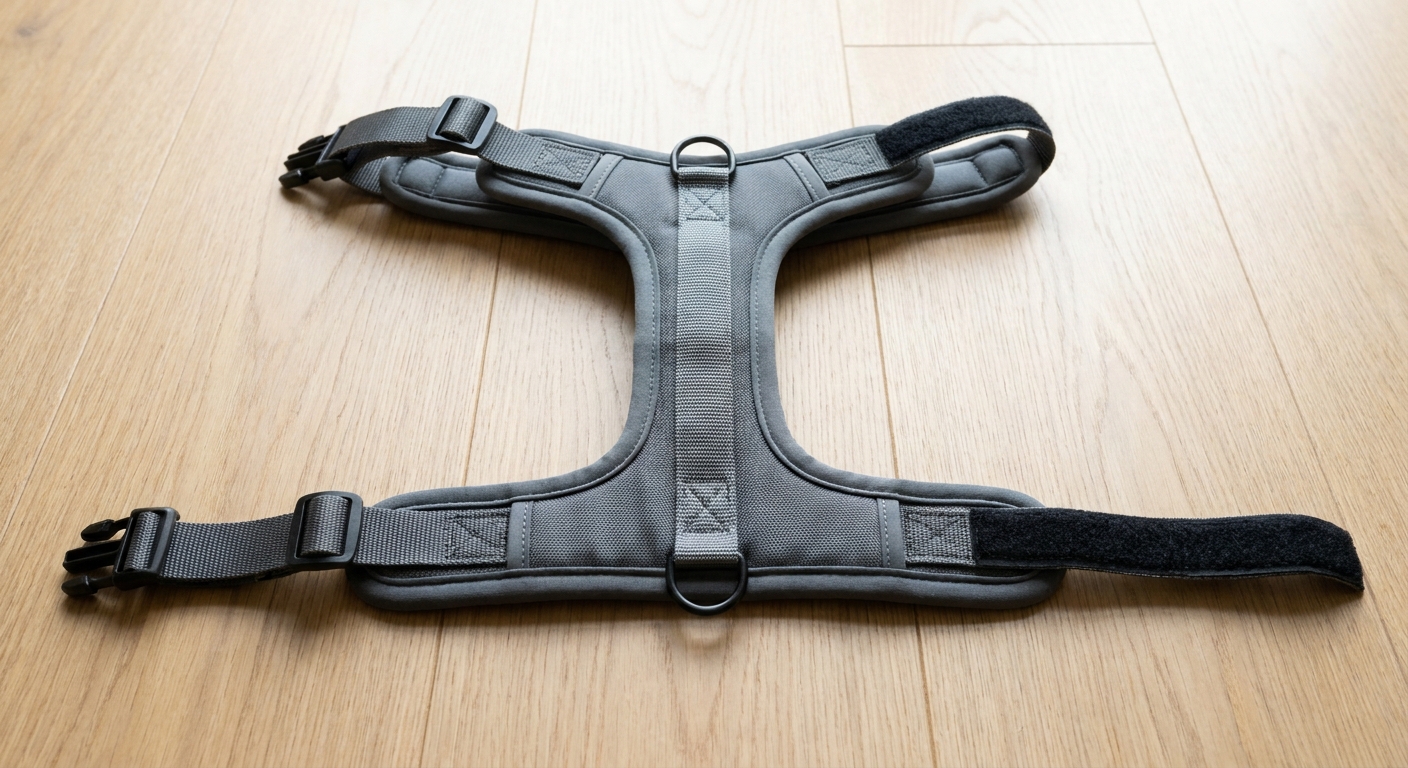
Bladder care still matters
This part is unglamorous, but it is one of the biggest quality-of-life pillars for paralyzed dogs.
A cart can make your dog look “back to normal” on a walk. Meanwhile, the bladder may still be:
- Not emptying fully without assistance
- Leaking urine, which increases skin irritation and infection risk
- Hard to feel or express, depending on muscle tone and nerve function
Follow the plan your veterinarian gave you for bladder management, and ask for a refresher demonstration if you are unsure. If you notice strong urine odor, blood-tinged urine, new pain, lethargy, fever, or sudden worsening leakage, call your vet promptly.
Getting started calmly
Some dogs hop right in like they have been issued official puppy-scout gear. Others need a slower introduction.
How to introduce a cart
- Let your dog sniff the cart first. Reward curiosity.
- Practice in a quiet, familiar space with good traction, like a rug or rubber mat.
- Do a short first session, even if it goes well. End on a win.
- Watch shoulders and front paws for fatigue, slipping, or soreness.
- Use a leash and a steady hand at first to prevent tipping on turns or thresholds.
Outdoor time is usually the big payoff, but start on flat ground. Curbs, stairs, gravel, sand, and thick grass can be surprisingly challenging early on.
Home setup tips
- Traction: Add runners or foam mats on slick floors.
- Thresholds: Use small ramps or threshold strips to reduce tipping and jolts.
- Safe potty routine: Choose a flat area that is easy to clean and easy to reach.
- Resting spots: Provide supportive bedding and repositioning help if your dog cannot shift themselves.
- Supervision: Many dogs should not be left alone in a cart, especially at first.
Is a wheelchair giving up?
No. Using a cart is often a way of saying: you still get to be a dog.
Some dogs regain function over time and eventually use the cart less. Some use it for life. Either way, a wheelchair can protect the body, reduce frustration, and give your dog safe freedom while you and your veterinary team manage the bigger medical picture.
When to call the vet first
Check in promptly if you notice:
- New or worsening pain, trembling, yelping, or a tense, hunched posture
- Sudden change in neurologic function, such as weaker front legs or a new loss of coordination
- Blood in urine, foul urine odor, lethargy, fever, or repeated straining
- Open sores, swelling, or persistent redness under straps
- Labored breathing or extreme fatigue during short sessions
A cart is supposed to make life easier, not create new problems.
FAQ
How long can a paralyzed dog stay in a wheelchair?
It depends on fitness, skin tolerance, and front-end strength. Many dogs start with minutes, not hours, then build up gradually. Your veterinarian or rehab professional can help you set a safe schedule.
Can my dog sit or lie down in the cart?
Most rear-support carts are designed for active use, not resting. Many dogs need to be removed from the cart to fully lie down comfortably and to avoid pressure points.
Will the cart help my dog build back-leg muscle?
A cart can prevent dragging and keep your dog active, but muscle return depends on nerve function and your rehab plan. Some setups allow supported paw contact or assisted stepping, but this should be guided by a professional to avoid injury.
My dog knuckles their paws. Is a cart enough?
A cart can help prevent scraping, but knuckling often needs additional protection like booties, a drag bag, or a vet-approved brace, plus careful skin checks. Ask your vet what is safest for your dog’s sensation and reflexes.
Are wheelchairs only for Dachshunds?
No. Disc injuries and paralysis can happen in many breeds and mixes. The key is matching the cart style and fit to your dog’s body shape, strength, and medical needs.