Periodontal disease is common and often hidden. Learn the 4 stages, at-home warning signs, how dental cleanings work, typical costs, and prevention steps to ...
Article
•
Designer Mixes
Yorkie Behavior and Health Guide

Shari Shidate
Designer Mixes contributor
Yorkshire Terriers are tiny dogs with big opinions. If you live with a Yorkie, you already know they can be affectionate, alert, and surprisingly bold for their size. The tricky part is that behavior and health are tightly connected in this breed. A Yorkie who suddenly becomes snappy, withdrawn, or extra vocal might not be “acting out” at all. They might be uncomfortable, anxious, under-stimulated, or dealing with a common small-dog health issue.
This guide connects everyday Yorkie behaviors with the health and wellness basics that help these little dogs thrive. I am writing as a veterinary assistant from Frisco, Texas, and I will keep things warm, practical, and evidence-based.
Quick note: This is educational and not a substitute for veterinary diagnosis or treatment.

What normal Yorkie behavior looks like
Many Yorkie traits are completely normal, even if they feel intense at times. Understanding what is typical helps you spot when something changes.
Common Yorkie traits
- Alertness and watchdog barking: Yorkies were developed as ratters, and many still have that on-duty, vocal, “did you hear that?” energy.
- Velcro tendencies: Many bond closely to one person and follow them from room to room.
- Boldness: Yorkies often act much larger than they are, which can create safety risks around bigger dogs.
- High energy bursts: Short zoomies are common, especially in young Yorkies.
- Sensitivity to handling: Because they are small, they can be easily startled or hurt by rough touch.
If your Yorkie is generally playful, curious, eating well, and resting normally, those big feelings are often just part of the package.
Behavior changes that can signal health problems
A key skill as a Yorkie parent is noticing patterns. Dogs may hide pain or compensate in subtle ways, especially when they are small. If your Yorkie’s behavior changes suddenly or progressively, consider a vet visit sooner rather than later.
Red flags to take seriously
- New irritability or snapping when being picked up, brushed, or touched on the back, neck, or mouth
- Hiding, restlessness, or sleep changes that last more than a day or two
- Sudden house-training regression in an adult dog
- Clinginess plus trembling, or shaking that seems unrelated to cold
- Decrease in play, reluctance to jump, or avoiding stairs
- Changes in appetite, chewing style, or dropping food
Behavior is communication. When a Yorkie “misbehaves,” I always ask two questions first: Is there pain? And are their basic needs being met?
Top Yorkie health issues that influence behavior
Yorkies are generally long-lived, but they do have a few common conditions that can show up as behavior changes. This does not replace veterinary care, but it can help you know what to look for.
Dental disease (very common)
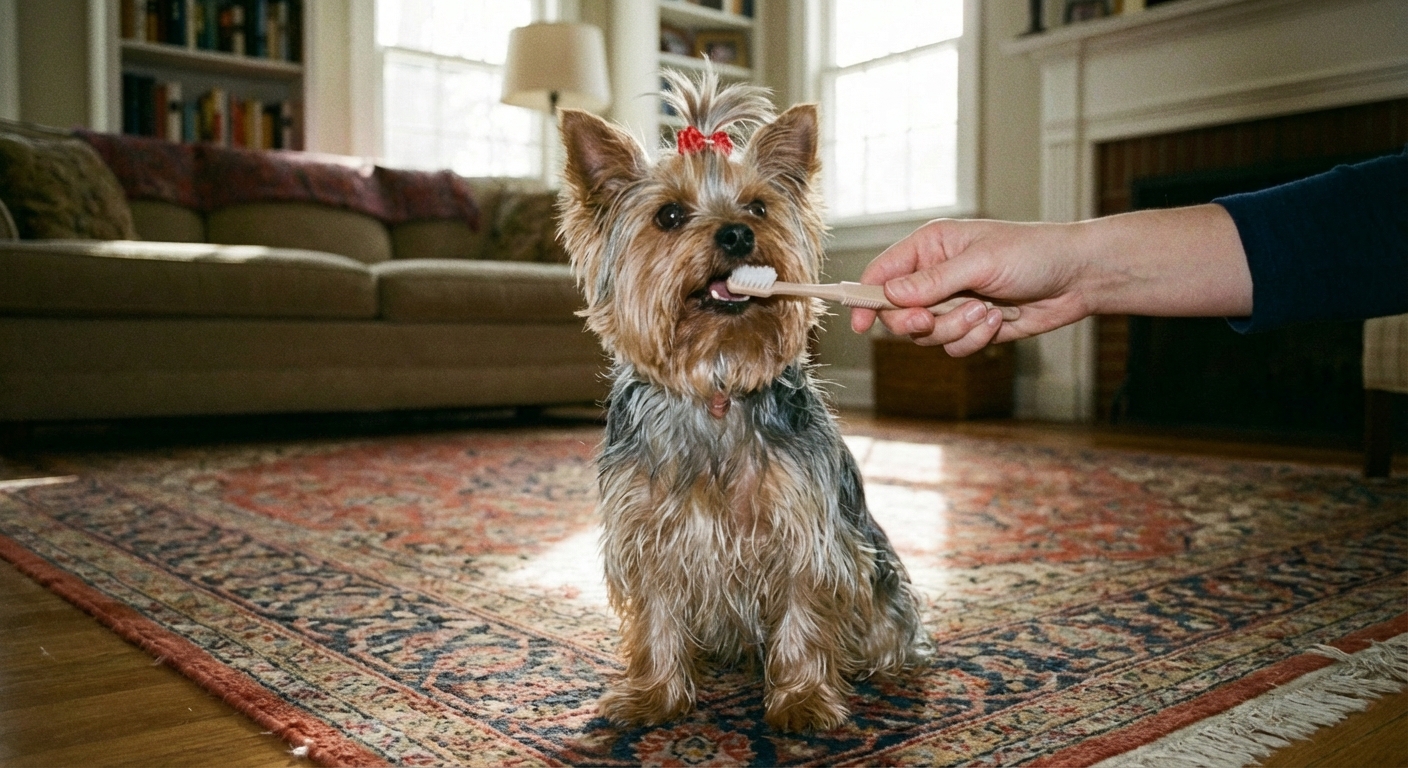
Yorkies are prone to tartar buildup and periodontal disease. Mouth pain can look like fussiness, picky eating, decreased toy play, pawing at the face, or avoiding being touched around the head.
- Watch for: bad breath, red gums, drooling, teeth “chattering” (can happen for several reasons), dropping kibble
- What helps: daily tooth brushing, vet dental cleanings as recommended, VOHC-accepted dental products
Tracheal collapse
A honking cough, gagging after excitement, or coughing when pulling on a collar can point to airway irritation. Dogs who feel short of breath can become anxious or avoid activity. A “honking” cough can also have other causes, so it is worth getting checked.
- Watch for: honking cough, worse with excitement, pulling, heat, or smoke
- What helps: switch to a harness, maintain a lean weight, avoid irritants, ask your vet about an exam and possible imaging and medications if needed
Hypoglycemia (especially in puppies or tiny adults)
Low blood sugar can cause weakness, tremors, disorientation, and behavior that looks like panic. Yorkie puppies, very small adults, and dogs that skip meals are at higher risk.
- Watch for: sudden weakness, wobbliness, tremors, glassy eyes, unusual quietness
- What helps: regular meals, avoiding long fasting
Safety note: Suspected hypoglycemia can become an emergency. If your Yorkie is weak, disoriented, or collapsing, contact your veterinarian or an emergency clinic right away, especially if episodes are recurring.
Patellar luxation (kneecap issues)
Knee discomfort can show up as reluctance to jump, a “skip” in the gait, or irritability when handled. Some Yorkies avoid play because it hurts, not because they are being stubborn.
- Watch for: hopping on three legs, skipping, stiffness after rest
- What helps: keep nails trimmed, maintain lean weight, vet evaluation for pain control or surgical options
Skin allergies and itch
Chronic itch is exhausting. Dogs who are itchy can be restless, reactive, or distracted in training.
- Watch for: paw licking, face rubbing, ear debris, recurring ear infections
- What helps: vet-directed allergy plan, parasite prevention, gentle bathing schedule if recommended
Other conditions to ask your vet about
If something feels “off” and the basics do not explain it, these are a few Yorkie-relevant issues worth discussing with your vet:
- Portosystemic shunt (liver issues): can show up as poor growth, GI signs, behavior changes, or neurologic episodes
- Pancreatitis and GI sensitivity: appetite drops, nausea, painful belly, low energy, “not themselves” behavior
- Legg-Calvé-Perthes disease: hip pain and limping, often in young small-breed dogs
- Eye issues: dry eye, cataracts, and vision changes can affect confidence and reactivity
Why Yorkies bark and what to do
Barking is normal for Yorkies. The goal is not silence. The goal is a dog who can settle and who feels safe.
Common barking triggers
- Alarm barking: doorbells, hallway noises, people passing the window
- Demand barking: attention, food, play
- Fear barking: unfamiliar dogs, sudden handling, children running
- Boredom barking: not enough enrichment
Strategies that work
- Meet needs first: a short walk, sniff time, and a small training session often reduce barking more than correction does.
- Teach a “quiet” cue: mark and reward calm pauses. Start in low-distraction moments.
- Manage the environment: close blinds at peak trigger times, use white noise, or give a stuffed food puzzle away from windows.
- Reward what you want: calm behavior gets attention, barking does not.
In clinic, I see it all the time: barking improves when we address pain, anxiety, and boredom. Training sticks best when your Yorkie feels comfortable and secure.
Handling sensitivity and snapping
Because Yorkies are so small, they often experience the world as unpredictable. Being scooped up quickly or grabbed around the chest can feel scary, even if you mean well.
Yorkie-friendly handling tips
- Ask for consent: offer your hand and let your Yorkie approach before lifting.
- Support the whole body: one hand under the chest, one supporting the rear end.
- Pair handling with treats: gentle touches, then a tiny treat. Repeat in short sessions.
- Rule out pain: if snapping is new or escalating, schedule an exam. Dental pain and back pain are common culprits.

Separation stress in Velcro dogs
Many Yorkies adore being close. That bond is sweet, but it can tip into separation-related distress if they never practice being alone.
Simple prevention tips
- Practice short absences: step out briefly, come back before panic starts, and build gradually.
- Make alone time predictable: a safe space, a comfy bed, and a special chew or food puzzle.
- Keep greetings low-key: calm arrivals and departures help your Yorkie learn that comings and goings are normal.
If your Yorkie is vocal, destructive, or having accidents only when alone, talk with your vet. Anxiety is treatable, and a plan can make life calmer for everyone.
Nutrition and weight
Yorkies do best when they are lean, well-muscled, and on a consistent feeding routine. Excess weight can worsen knee issues and breathing concerns. Underfeeding or irregular meals can contribute to low blood sugar, especially in very small dogs.
Practical feeding habits
- Choose a complete and balanced diet that meets AAFCO nutrient profiles for your dog’s life stage.
- Keep treats small, like pea-sized. Yorkies do not need large treats for training to work.
- Stick to a schedule, especially for puppies or tiny adults that get “shaky” when meals are delayed.
- Track weight monthly and ask your vet to help you assess body condition score.
If you are interested in fresh or homemade food, that can be a wonderful direction, but it needs to be balanced for calcium, phosphorus, and essential vitamins and minerals. I always recommend working with your veterinarian or a board-certified veterinary nutritionist when moving beyond simple toppers.
Exercise and enrichment
Yorkies are smart. Many “behavior problems” improve fast when you add structured enrichment. The key is consistency, not intensity.
Enrichment ideas that fit
- Sniff walks: 10 to 20 minutes of slow sniffing can tire a dog out more than a brisk march.
- Food puzzles: use kibble in a puzzle toy or scatter feed on a snuffle mat.
- Micro-training sessions: 3 to 5 minutes, 1 to 3 times a day. Sit, touch, place, and recall games.
- Safe indoor games: gentle fetch down a hallway, hide-and-seek with treats, or “find it” games.
If your Yorkie is coughing easily, limping, or tiring quickly, scale back and check in with your vet. Exercise should build confidence, not create discomfort.
Grooming and coat care
Yorkie hair can mat easily, and mats can pull painfully at the skin. That pain often shows up as sudden grooming intolerance, fidgeting, or even growling when you reach for the brush.
Grooming routine basics
- Brush lightly but often: short sessions a few times per week prevent mats.
- Check ears weekly: Yorkies can be prone to ear issues, especially if allergies are present.
- Use positive reinforcement: brush one small area, treat, pause. Keep it calm and predictable.
- Prioritize nail trims: overgrown nails can change gait and stress joints.

Socialization and safety
Yorkies often get labeled “yappy,” but many are simply under-socialized or overwhelmed. Because they are small, a single scary experience can make a big impact.
Confidence-building tips
- Choose calm exposures: let your Yorkie observe new people and dogs from a comfortable distance.
- Advocate in public: do not let strangers scoop your dog up. Ask for gentle petting only if your dog approaches.
- Use secure gear: a well-fitted harness reduces neck strain and helps prevent escapes.
- Protect from big-dog play: even friendly large dogs can accidentally injure a Yorkie.
Baseline checklist
If you are trying to figure out whether something is a “quirk” or a real change, it helps to know your Yorkie’s normal. Here are a few quick baselines to track:
- Eating and drinking: normal appetite, no new pickiness, no sudden thirst changes
- Stool and vomit: stool consistency and frequency, any vomiting or gagging
- Energy and sleep: playful bursts, normal naps, not pacing all night
- Breathing and cough: how often coughing happens, what triggers it
- Movement: willingness to jump, use stairs, play, and go on walks
- Comfort with touch: brushing, lifting, mouth handling, and back sensitivity
When to call the vet
Trust your gut. If your Yorkie is “just not themselves,” it is worth a call. Early care is often simpler, less expensive, and kinder to your dog.
Call promptly if you notice
- Labored breathing, blue or gray gums, or repeated honking cough episodes
- Collapsing, severe weakness, or disorientation
- Not eating for 24 hours or vomiting repeatedly
- Sudden severe pain, crying out, or refusal to move
- Rapid behavior changes, especially aggression that is new
Bring notes to your appointment. When did it start? What triggers it? Any changes in food, treats, schedule, new pets, visitors, or stressors? That little timeline helps your veterinary team put the puzzle together.