If you have ever cleaned the litter box and thought, “Wait, what is that?” you are not alone. Intestinal parasites are common in cats, especially kittens, outdoor cats, and any cat that hunts. The good news is that most worms and protozoal infections are treatable, and you do not have to guess. With the right test and the right medication, you can usually get your cat feeling better quickly.
This page covers the most common “worm” concerns cat parents search for: roundworms, tapeworms, hookworms, and Giardia-like intestinal upset. I will keep it practical, focused on what you might see at home, and when it is time to call your vet.
Quick comparison: common parasites in cats
| Parasite | What owners often notice | How cats commonly get it | Typical vet test | Treatment theme (vet-directed) |
|---|---|---|---|---|
| Roundworms (Toxocara) | Pot-bellied kitten, vomiting, diarrhea, “spaghetti-like” worms in stool or vomit | From mom to kittens (most often via nursing), swallowing eggs from environment, eating prey | Fecal exam (microscope) | Oral dewormer, repeat dosing, treat all pets as advised |
| Tapeworms (Dipylidium, Taenia) | Rice-like segments on fur near tail or in bedding, mild scooting | Swallowing fleas, eating rodents | Often diagnosed by seeing segments; fecal test may miss | Tapeworm-specific dewormer plus flea control |
| Hookworms (Ancylostoma) | Diarrhea that may be dark or bloody, pale gums, low energy, weight loss | Can be from skin penetration or ingestion, contaminated soil; kittens may be exposed while nursing (varies by parasite and region) | Fecal exam; bloodwork if anemia suspected | Prescription dewormer, supportive care if anemic |
| Giardia (protozoa) | Soft, greasy, foul-smelling diarrhea, gas, weight loss, symptoms come and go | Drinking contaminated water, shared litter boxes, grooming cysts off fur | Fecal antigen test and/or PCR; sometimes multiple samples | Targeted medication, bathing, environmental cleaning |
| Coccidia (protozoa) | Watery diarrhea in kittens, mucus, poor weight gain; sometimes no other signs | Exposure to contaminated feces, crowded kitten environments, stress, shelters | Fecal exam and/or PCR (may need repeat testing) | Prescription anticoccidial medication, sanitation, supportive care |
Important note: “Deworming” is not one-size-fits-all. Medications are parasite-specific. A product that treats roundworms may not treat tapeworms, and protozoa like Giardia and coccidia are not technically worms at all.
Quick clue, not a diagnosis: If you are seeing rice-like segments, that strongly points toward tapeworms, and flea control needs to be part of the plan. Your vet can confirm and choose the right medication.
Common signs of worms in cats
Some cats show obvious symptoms. Others look totally fine and still shed eggs or cysts into the environment. These are the most common things cat parents notice:
- Changes in stool: diarrhea, mucus, soft stool, or stool that smells much worse than usual
- Vomiting, sometimes with visible worms (more common with roundworms)
- Weight loss or poor growth in kittens
- Pot-bellied appearance in kittens
- Dull coat, flaky skin, or overall “not thriving” look
- Scooting or excessive licking near the rear (often tapeworm segments causing irritation)
- Low energy or pale gums (a red flag for anemia, possible with hookworms)
Roundworms in cats
What they are
Roundworms are one of the most common intestinal parasites in cats, especially kittens. They look like pale spaghetti strands when visible.
What you might see at home
- Worms in vomit or stool
- Pot-bellied kitten
- Diarrhea and/or intermittent vomiting
- Slow weight gain
How cats get roundworms
- Kittens can be infected from their mother, most often through nursing. (Unlike dogs, transplacental transmission is not considered typical in cats.)
- Adult cats can pick up eggs from contaminated soil or litter, or by eating infected prey.
How vets diagnose and treat
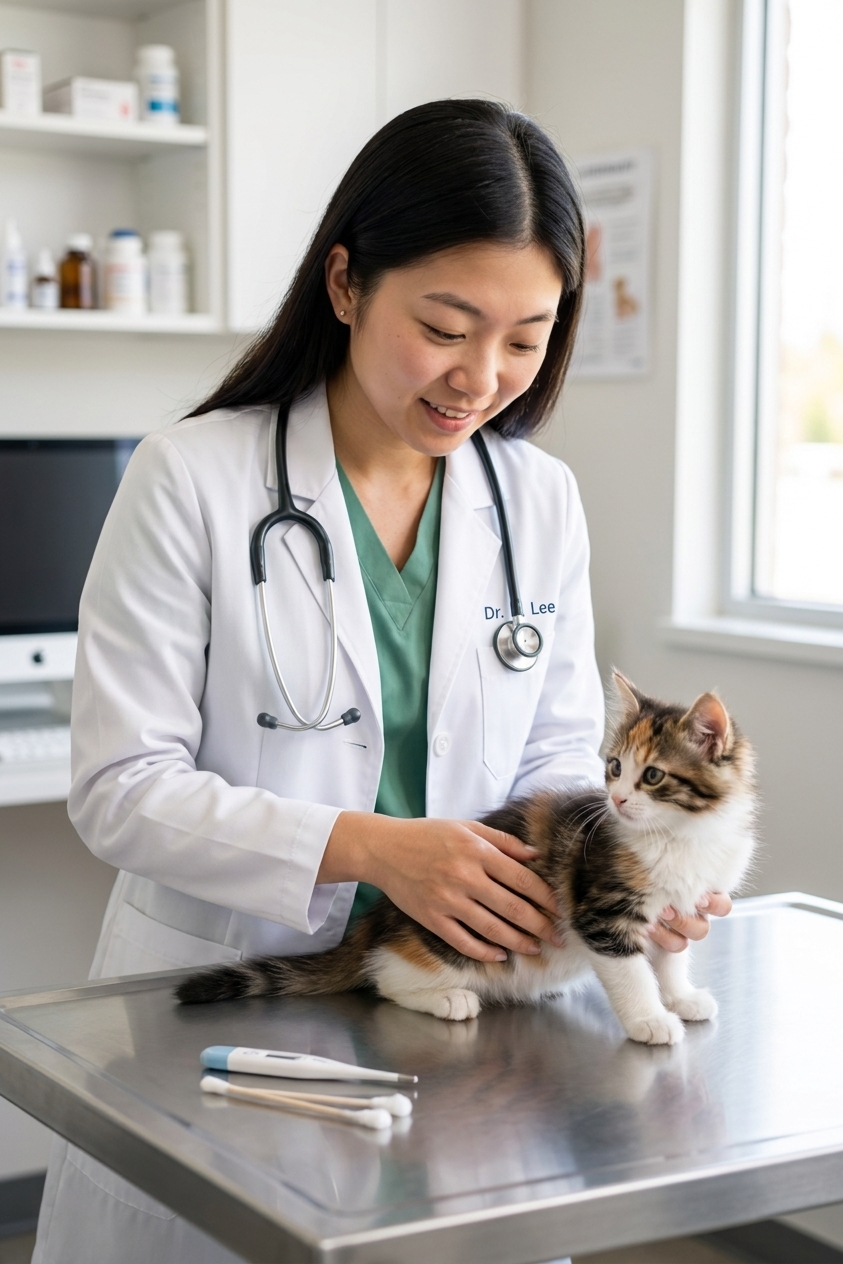
Diagnosis is usually through a fecal test. Treatment is typically an oral dewormer given in a series, because many products kill adult worms but do not kill every immature stage. Your vet may recommend rechecks and repeat dosing.
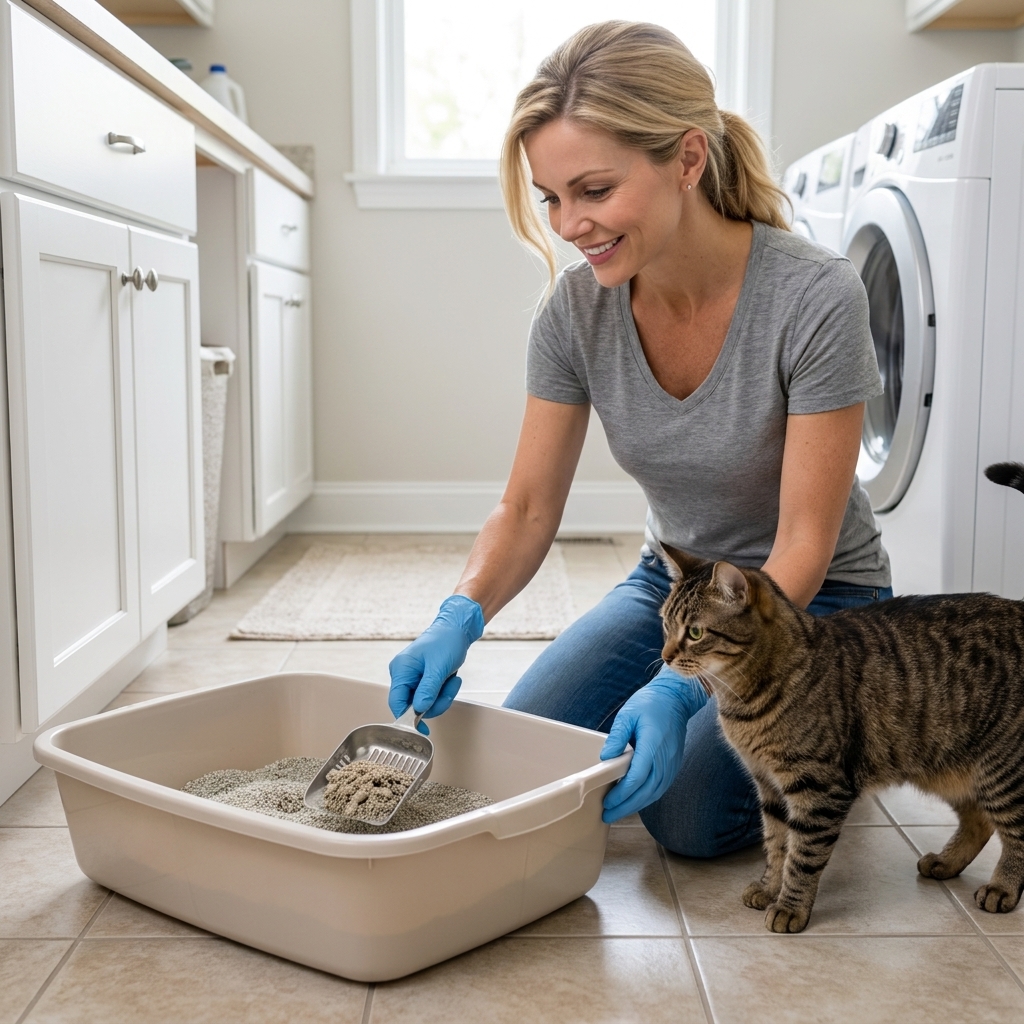
Human health note: Roundworm eggs can be a concern for people, especially young children, if litter box hygiene is poor. Scoop daily, wash hands, and keep kids away from litter boxes.
Tapeworms in cats
What they are
Tapeworms are flat intestinal parasites that shed segments. Those segments look like grains of rice or cucumber seeds.
What you might see at home
- Small rice-like pieces stuck to fur under the tail
- Segments in the litter box or where your cat sleeps
- Mild scooting or irritation around the rear
- Often, your cat otherwise acts normal

How cats get tapeworms
- Fleas: Cats get the most common tapeworm (Dipylidium) by swallowing an infected flea during grooming.
- Hunting: Eating rodents can transmit certain tapeworm species.
How vets diagnose and treat
Many times, the diagnosis is made because you saw segments. Fecal tests can miss tapeworms since eggs are not always evenly distributed in stool. Treatment requires a tapeworm-specific prescription dewormer. And just as important, your vet will want you on reliable flea control, or the cycle can start right back up.
Human health note: The risk to people from common cat tapeworms is low, but it is not zero. It typically requires accidental ingestion of an infected flea. Good flea prevention and handwashing after handling pets or bedding are simple, effective safeguards.
Hookworms in cats
Why hookworms matter
Hookworms attach to the intestinal lining and feed on blood. In kittens or small cats, they can contribute to anemia and weakness. Hookworms are not equally common everywhere, and not every cat with hookworms looks sick at first, which is why routine fecal testing matters.
What you might see at home
- Diarrhea that may be dark, tarry, or bloody
- Weight loss and poor appetite
- Low energy
- Pale gums (urgent)
How vets diagnose and treat
Vets diagnose hookworms via fecal exam and may recommend bloodwork if anemia is suspected. Treatment is a prescription dewormer, sometimes with repeat dosing. If a cat is dehydrated or anemic, supportive care may be needed.
Human health note: Some hookworm larvae can penetrate human skin and cause an itchy, winding rash (cutaneous larva migrans). Wearing gloves while gardening, avoiding barefoot contact with contaminated soil, and good litter box hygiene help reduce risk.
When to call right away: If your cat has pale gums, weakness, collapse, or significant bloody diarrhea, call your vet or an emergency clinic the same day.
Giardia and Giardia-like diarrhea
What it is
Giardia is a microscopic protozoan, not a worm. But from an owner’s perspective, it often shows up as persistent, messy diarrhea that does not fully resolve. Plenty of other issues can look similar, so testing is the only way to know.
What you might see at home
- Soft stool that can be watery or greasy
- Very foul smell, gas, and abdominal gurgling
- Weight loss or decreased appetite in some cats
- Symptoms that improve, then return
How vets diagnose and treat
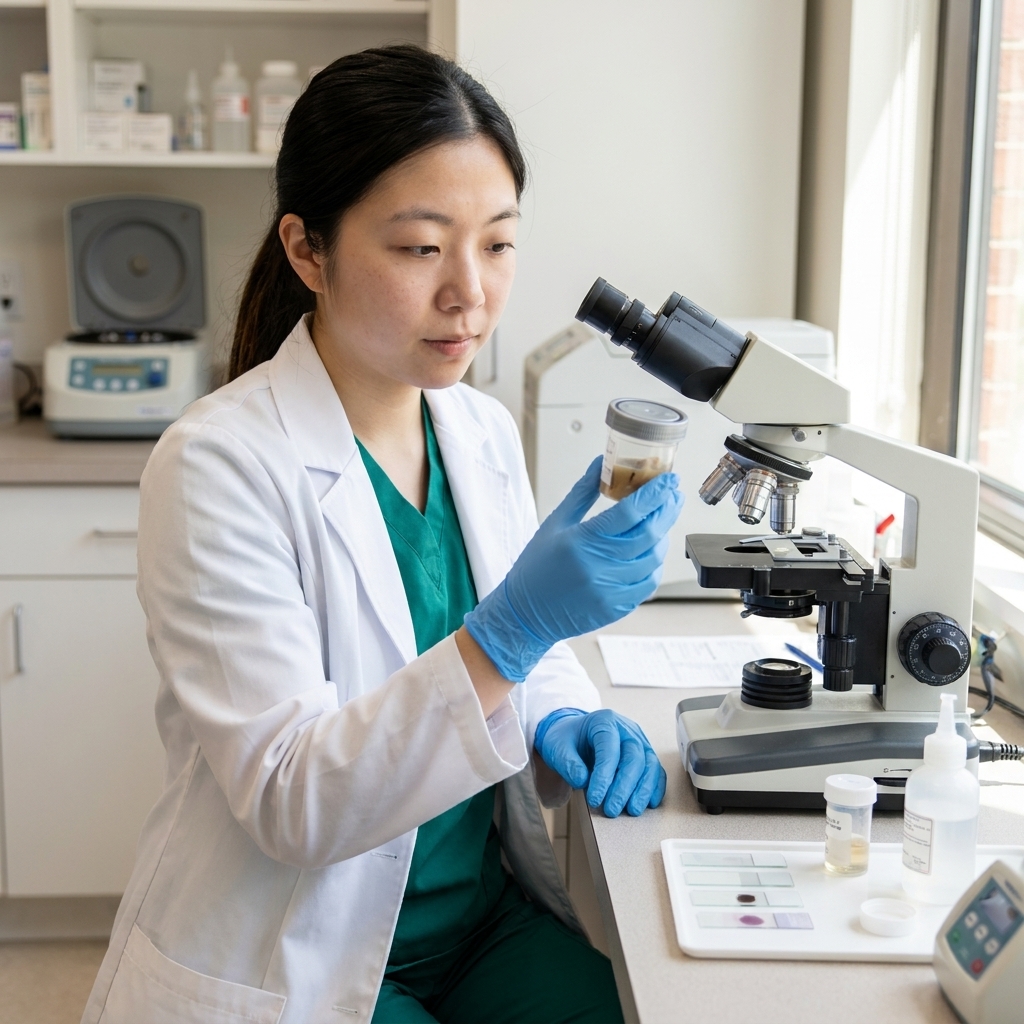
Giardia can be tricky because shedding may be intermittent. Your vet may request a fresh stool sample and may use fecal antigen tests and/or PCR testing for better accuracy.
Treatment often includes targeted medication and practical hygiene steps, such as bathing your cat to remove cysts from the coat, daily litter box cleaning, and washing bedding. Environmental disinfection can be challenging because cysts are hardy, so your vet may emphasize thorough cleaning plus drying, and may recommend specific methods for your situation.
Coccidia in kittens
Why it comes up so often
Coccidia is another very common protozoan, especially in kittens, shelter kittens, and multi-cat environments. It is a frequent cause of diarrhea that can look like “just a sensitive stomach,” at least at first.
What you might see at home
- Watery diarrhea, sometimes with mucus
- Dehydration risk in small kittens
- Poor weight gain
How vets diagnose and treat
Diagnosis may be via fecal exam and/or PCR testing, and sometimes more than one sample is needed. Treatment is typically a prescription anticoccidial medication plus supportive care if your kitten is dehydrated or not eating well.
What you might see at home
- Long spaghetti-like worms: more suggestive of roundworms.
- Small rice-like pieces near the tail: strongly suggestive of tapeworm segments.
- Black, tarry stool: can signal digested blood, possible hookworm or other GI bleeding.
- Mucus and strong odor: can show up with several parasites, including Giardia and coccidia.
These visual clues are helpful, but they are not a diagnosis. Different GI problems can look similar, and more than one parasite can show up at the same time.
If you see something unusual, it helps to take a clear photo and bring a fresh stool sample to your appointment. Do not handle parasites with bare hands.
When to call the vet
Call your veterinarian promptly if:
- Your cat is a kitten with diarrhea, vomiting, or a pot-bellied look
- You see worms or tapeworm segments more than once
- There is blood in stool, black tarry stool, or severe diarrhea
- Your cat seems lethargic, is not eating, or is losing weight
- You have a multi-cat household and diarrhea is spreading
- Your cat is pregnant, nursing, elderly, or has a chronic condition
Same-day urgent signs: pale gums, repeated vomiting, dehydration (sunken eyes, sticky gums), collapse, or a kitten that is not nursing well.
Tests your vet may recommend
- Fecal flotation and microscopy: looks for eggs or organisms.
- Fecal antigen tests: can improve detection for Giardia and some other parasites.
- PCR stool testing: identifies parasite DNA, helpful in stubborn or unclear cases.
- Bloodwork: if dehydration, inflammation, or anemia is a concern.
If the first test is negative but symptoms continue, your vet may retest. That is not uncommon, especially with intermittent shedding parasites.
Bringing a stool sample
- Fresh is best: same-day is ideal.
- If you have to wait: seal it in a clean container or bag and refrigerate it until your appointment.
- Do not freeze: freezing can damage some organisms and reduce test accuracy.
- Label it: include your cat’s name and the time you collected it, especially in multi-cat homes.
Safe deworming basics
What “vet-directed” usually looks like
- Confirm the parasite when possible, because treatment choice matters.
- Use the right medication at the right dose for your cat’s weight and age.
- Repeat doses if the parasite lifecycle requires it.
- Recheck if symptoms persist or if your vet advises a follow-up fecal test.
- Address the source: flea control for tapeworms, sanitation for Giardia and coccidia, and limiting hunting when possible.
Please avoid these common mistakes
- Do not use dog dewormers on cats unless your veterinarian specifically prescribes it.
- Do not guess based on one symptom. Diarrhea can be parasites, diet changes, stress, inflammatory disease, or infections.
- Do not skip flea prevention if tapeworms are suspected.
- Do not use “natural parasite cleanses” as a substitute for proven medication. They can delay treatment and your cat can keep shedding parasites.
As a veterinary assistant, I have seen how fast cats can bounce back once they get the correct medication and a little supportive care. You do not have to fight this alone.
Home hygiene that helps
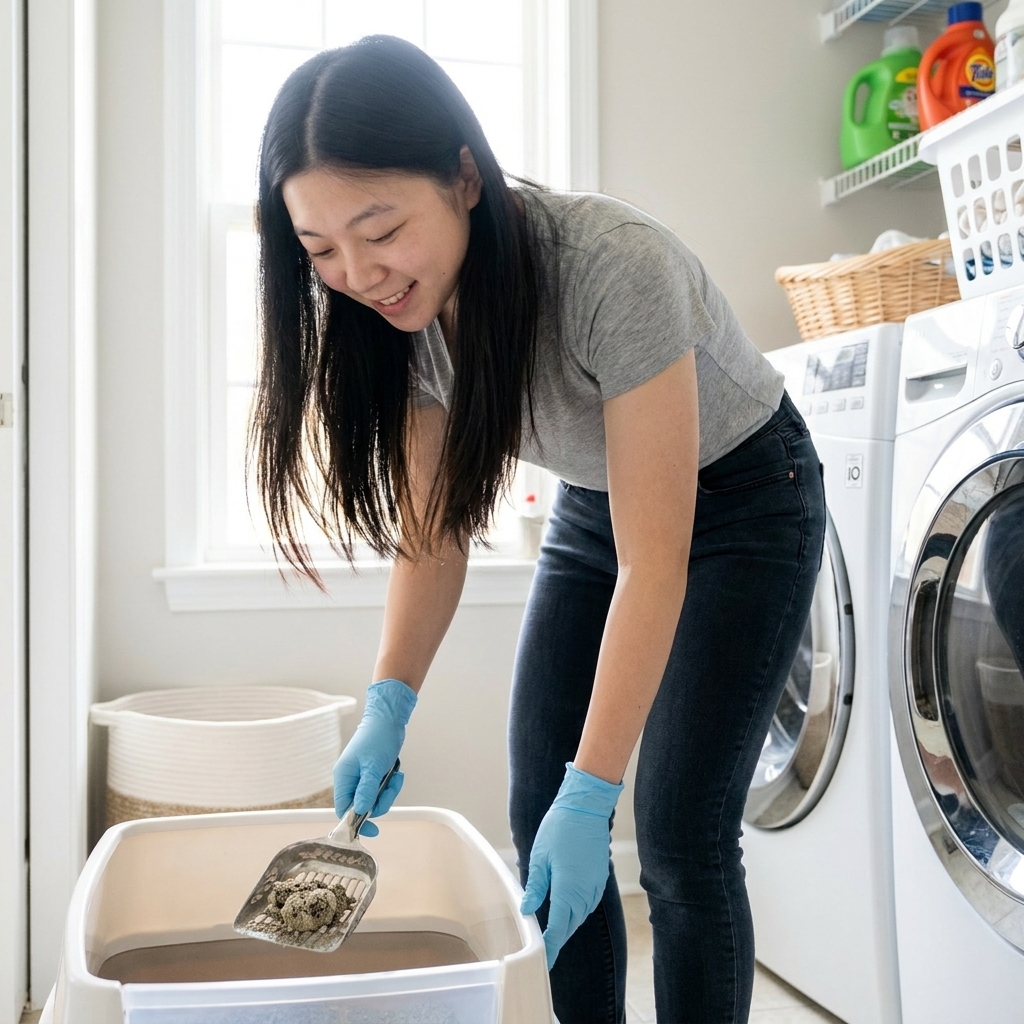
- Scoop litter boxes daily and dispose of waste in a sealed bag.
- Wash hands after cleaning boxes or handling soil.
- Wash bedding and vacuum floors if you are seeing tapeworm segments or dealing with Giardia or coccidia.
- Control fleas consistently, not just when you see them.
- Keep routine wellness visits and fecal checks, especially for kittens and outdoor cats.
Prevention: the simple plan
- Kittens: follow your vet’s deworming schedule and bring stool samples as recommended.
- Adults: regular fecal testing based on lifestyle (indoor-only vs outdoor hunting).
- Parasite prevention: some monthly products help cover multiple parasites, but coverage varies widely. Ask your vet what your cat’s specific product does and does not cover.
- Flea control: essential for tapeworm prevention.
- Reduce hunting when possible to lower exposure risk.
If you are unsure what your cat needs, start with one step: schedule a visit and bring a stool sample. That single appointment can replace weeks of worry with a clear answer and a safe plan.
FAQ
Can indoor cats get worms?
Yes. Indoor cats can pick up parasites from fleas, from contaminated shoes or soil tracked into the home, or from newly adopted pets that are shedding eggs. Kittens can also start life infected via their mother.
Will I always see worms in the litter box?
No. Many parasites are microscopic at the egg stage, and some are shed intermittently. That is why fecal testing matters even when you do not see anything obvious.
Is deworming dangerous?
When prescribed correctly for your cat’s weight, age, and health status, deworming medications are generally very safe. Problems tend to happen with incorrect products, incorrect dosing, or treating the wrong parasite.
Should I treat all pets in the home?
Sometimes yes, especially with fleas, Giardia, coccidia concerns, or when multiple pets share spaces. Your veterinarian will guide you based on the parasite and each pet’s risk.
My best advice: trust what you observe, but do not rely on guesswork. A simple stool test and the right medication can be the difference between lingering stomach trouble and a cat who feels like themselves again.