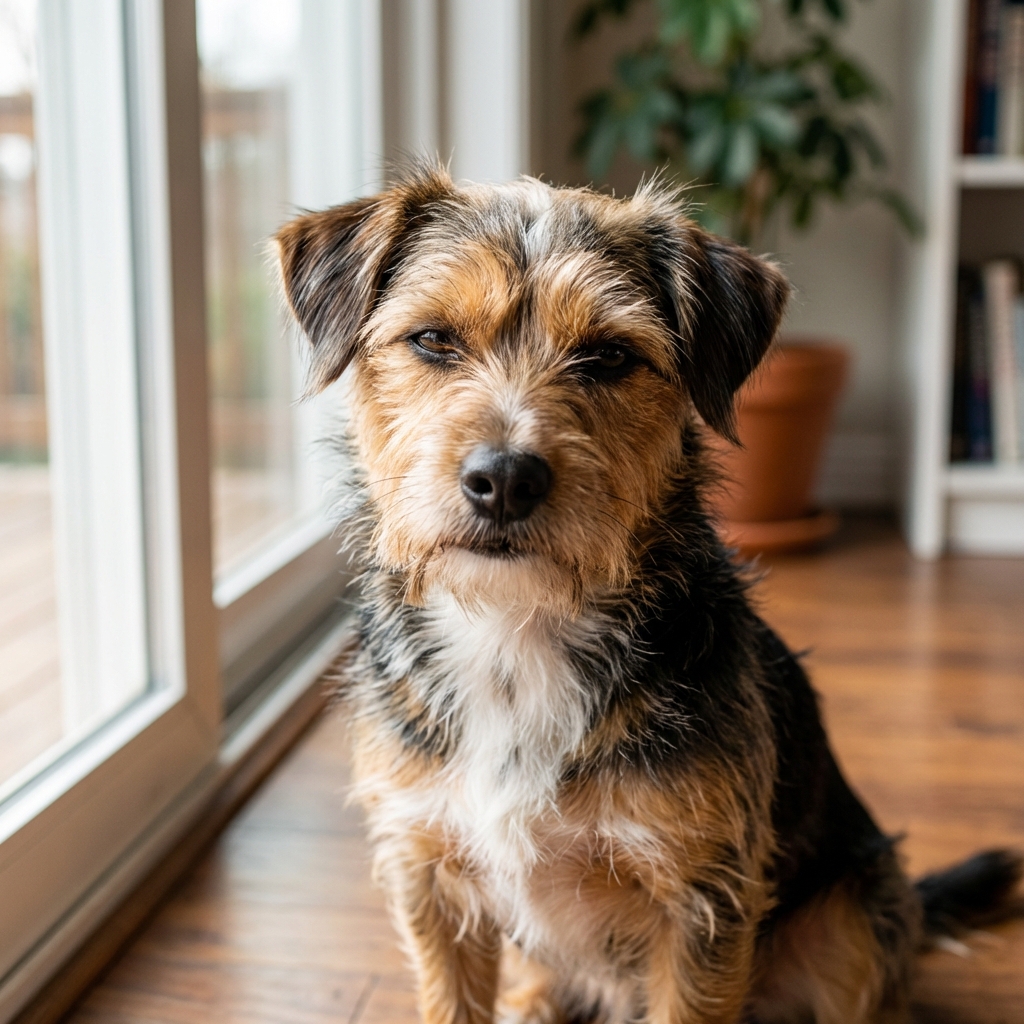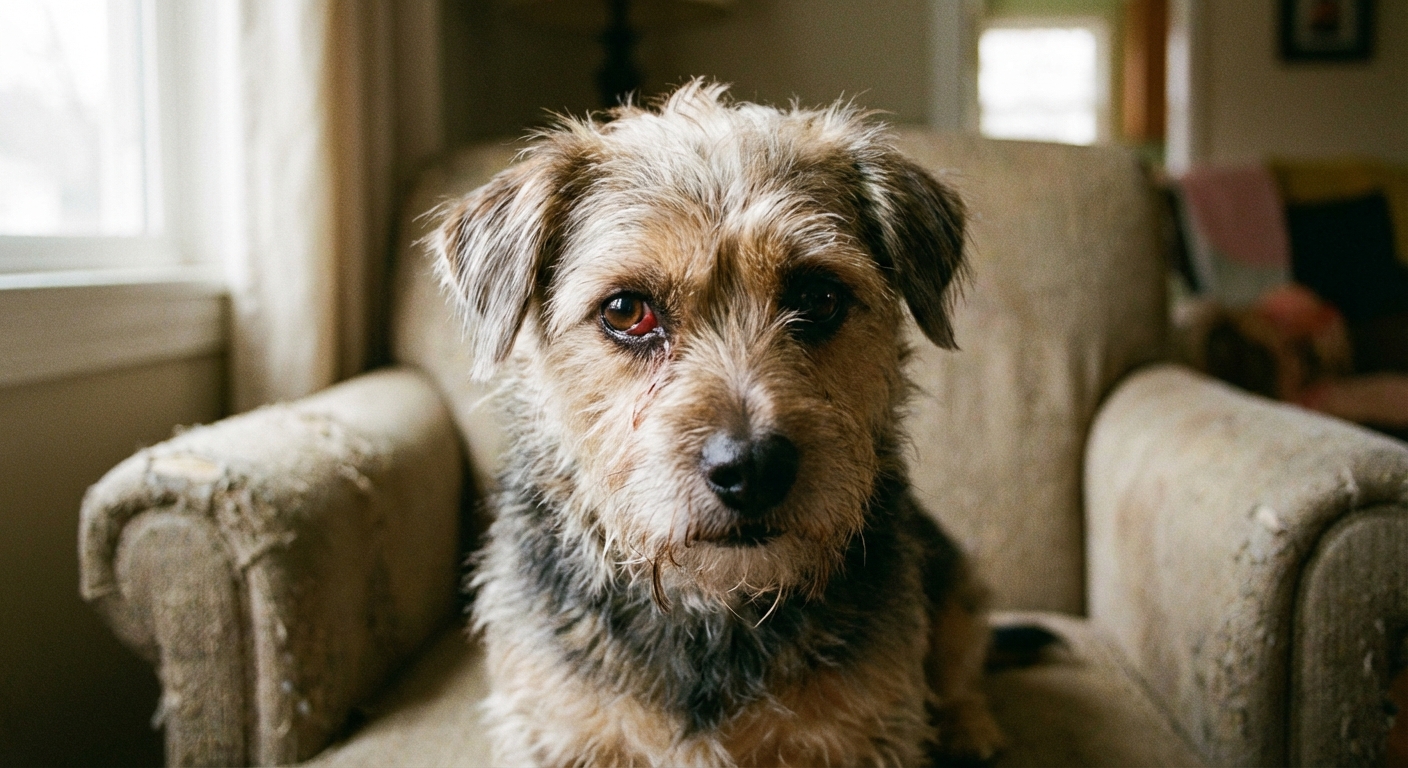
Track conjunctivitis symptoms in dogs from watery eyes to redness and green discharge. Learn safe at-home care, common causes, and urgent warning signs that ...
Article
•
Designer Mixes
Why Your Dog’s Eyes Water So Much

Shari Shidate
Designer Mixes contributor
If you’ve noticed wet streaks on your dog’s face, damp fur under the eyes, or constant tearing, you’re not alone. As a veterinary assistant here in Frisco, Texas, I hear this question all the time. The good news is that many causes of watery eyes are manageable once you understand what’s behind them. The important part is knowing when tearing is normal, when it’s a sign of irritation or infection, and when it needs a veterinarian’s help.
Quick note: I can share common causes and safe home steps, but I cannot diagnose your dog online. If tearing is one-sided, persistent, or your dog seems painful, an exam is the safest next step.
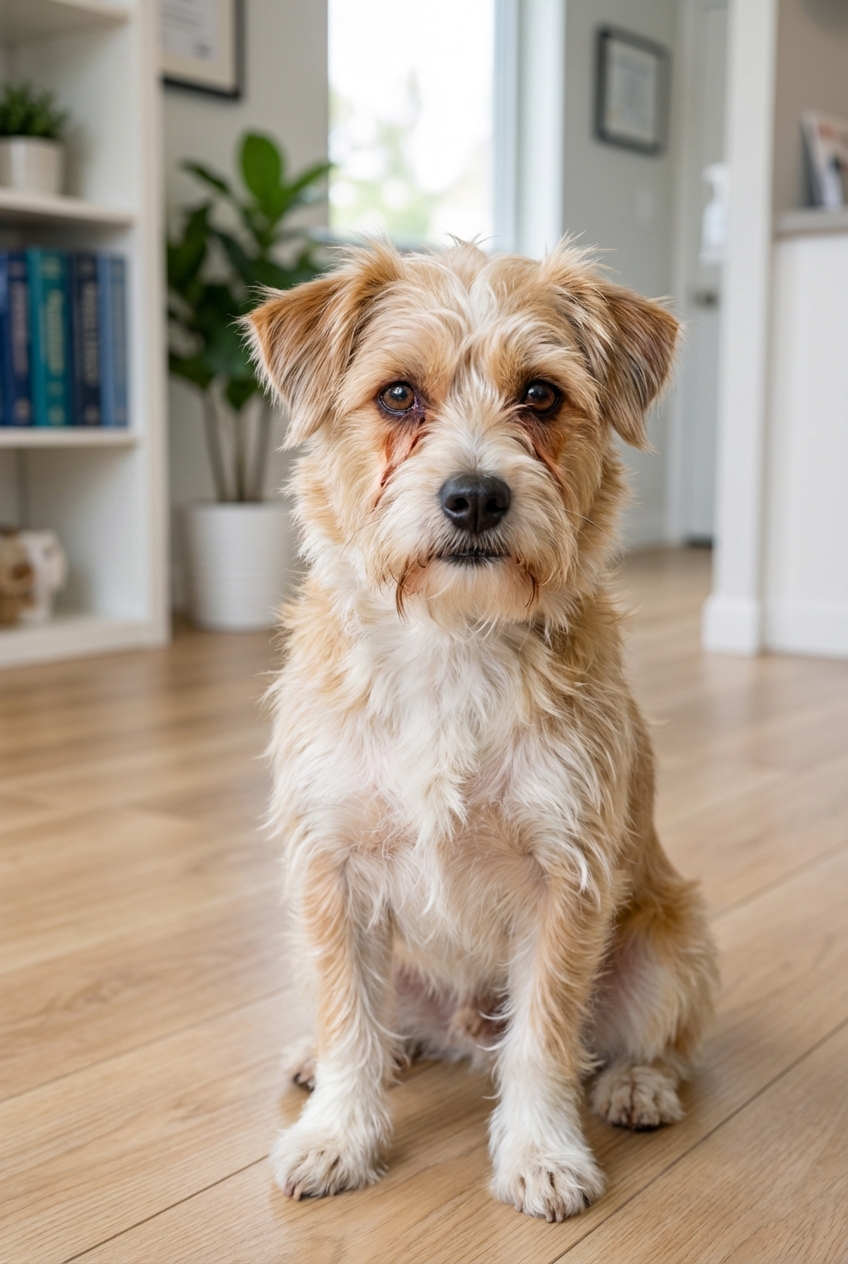
What watery eyes means
Watery eyes (also called epiphora) usually happen for one of two reasons:
- Too many tears are being produced (irritation, allergies, pain, inflammation).
- Tears are not draining correctly (blocked tear ducts, eyelid shape issues, hair rubbing the eye).
Tears should lubricate the eye, wash away debris, and protect the cornea. When that system is overwhelmed or blocked, tears overflow onto the face and can lead to tear staining.
Common reasons eyes water
1) Allergies and irritation
Seasonal allergies, dust, smoke, fragrances, grooming sprays, and even windy days can cause mild, clear tearing. In North Texas, we see tearing flare during high pollen seasons and after yard work when grass and dust get kicked up.
Typical clues: clear tears, mild redness, pawing at the face, sneezing, itchy skin or ears.
2) Hair rubbing the eye
Long facial hair or certain coat patterns can redirect tears and physically irritate the eye surface. Poodle mixes and other fuzzy-faced mixes can be especially prone when hair grows into the inner corner of the eye.
Typical clues: tearing that improves after grooming, squinting when hair is overgrown, staining in the inner corner.
3) Blocked or narrow tear ducts
Tears normally drain through tiny openings (puncta) into the nasolacrimal ducts. If these are blocked, narrow, inflamed, or malformed, tears spill over onto the face.
Typical clues: chronic tearing, tear staining, minimal redness, often worse in small breeds and flat-faced (brachycephalic) dogs.
4) Conjunctivitis (pink eye)
Conjunctivitis can be triggered by allergies, bacteria, viruses, irritants, or underlying eyelid issues. It commonly causes watery eyes early on and may progress to thicker discharge.
Typical clues: redness, swelling, squinting, discharge that becomes thicker, rubbing the face.
5) Dry eye (KCS)
This one surprises many pet parents. Keratoconjunctivitis sicca (KCS) means the eye is not producing enough healthy tears. The eye becomes irritated and inflamed, and some dogs will have reflex tearing, but the more classic signs are a dry, dull surface and thick, sticky discharge. KCS is more common in certain breeds, including Cocker Spaniels, and it can become painful if untreated.
Typical clues: thick or stringy mucus, dull-looking eyes, frequent blinking, redness, recurrent infections.
6) Foreign body
A small piece of plant material, sand, or a grass awn can get trapped under the eyelid and cause sudden, intense tearing. This is common after yard time, hiking, or playing in tall grass.
Typical clues: sudden tearing (often one eye), squinting, rubbing the face, sensitivity to light.
7) Corneal scratches or ulcers
If your dog gets a scratch from rough play, a plant, or even a cat, the eye can water intensely. Corneal ulcers are painful and can worsen quickly without treatment.
Typical clues: sudden tearing in one eye, squinting, holding the eye shut, sensitivity to light.
8) Eyelid and eyelash problems
Conditions like entropion (lid rolling inward) or abnormal eyelashes can rub the cornea every time your dog blinks.
Typical clues: chronic tearing, squinting, recurring corneal irritation, one eye worse than the other.
9) Dental disease (upper teeth)
In some dogs, infection or inflammation around the upper teeth can affect the tear duct area and contribute to drainage problems.
Typical clues: bad breath, chewing on one side, tartar, pawing at the mouth, watery eye on the same side as the dental issue.
10) Urgent causes to know
Most tearing is not an emergency, but a few eye problems can be serious and time-sensitive.
- Glaucoma (high pressure in the eye) can cause tearing, redness, cloudiness, and significant pain.
- Uveitis (inflammation inside the eye) can cause tearing, squinting, redness, and light sensitivity.
Typical clues: a very painful eye, sudden squinting, a cloudy or blue-looking cornea, a very red eye, or a pupil that looks different than the other side.
Clear tears vs discharge
- Clear, watery tears often point to allergies, irritation, hair rubbing, or drainage issues.
- White or stringy mucus can show up with dry eye or chronic irritation.
- Yellow or green discharge can indicate infection or significant inflammation, and it should be examined promptly.
- Bloody tears are a reason to call your veterinarian the same day in most cases, especially if there is squinting, swelling, or trauma.
Safe at-home care
These steps are gentle and low-risk for most dogs. They are not a substitute for veterinary care if your dog is squinting, painful, or worsening.
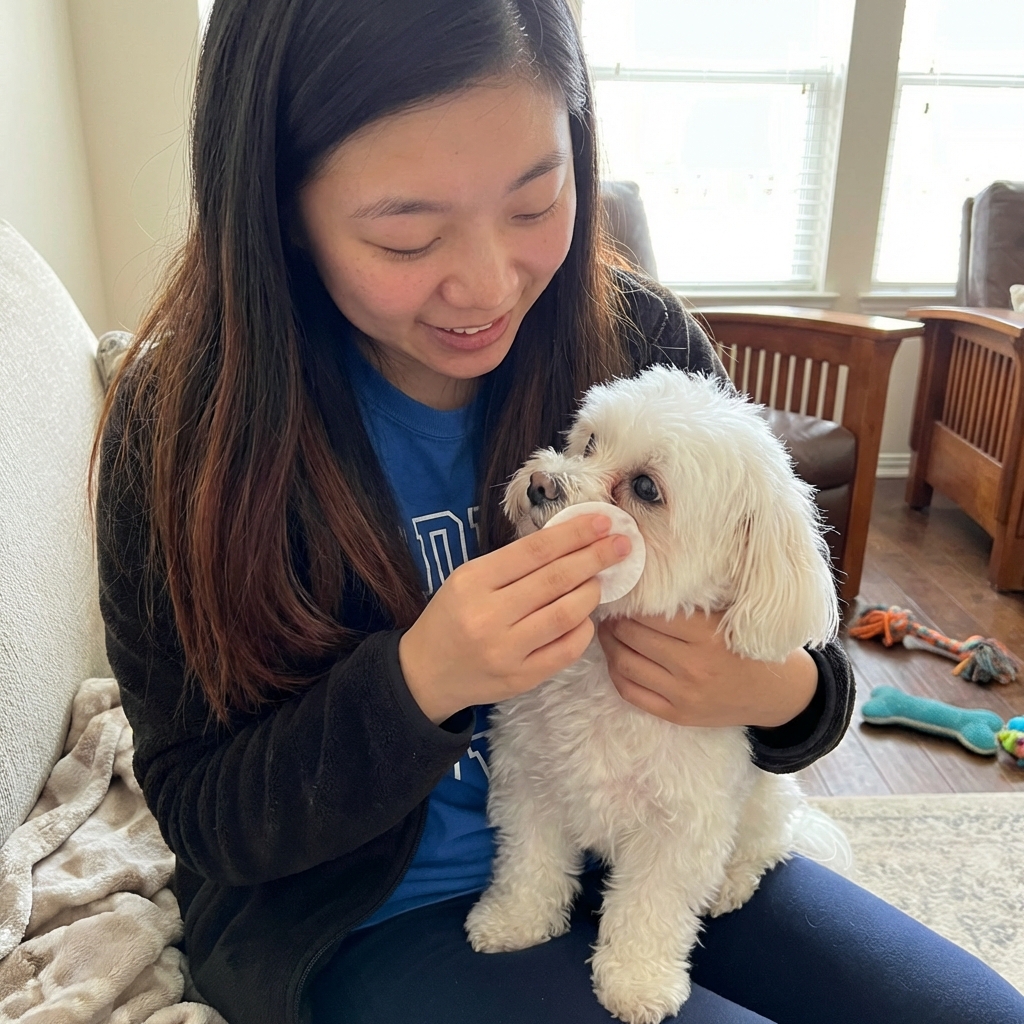
Clean the area
- Use a soft cotton round or clean gauze with sterile saline or a veterinarian-approved eye wipe.
- Wipe from the inner corner outward, using a fresh pad for each eye.
- Avoid hydrogen peroxide, alcohol, essential oils, or human eye drops unless your vet specifically told you to use them.
Keep hair off the eyes
- If your dog’s face hair is poking the eyes, schedule grooming or ask your clinic about a safe face or eye trim.
- If your dog is wiggly, skip scissors at home. Eye injuries happen quickly.
Reduce irritants
- Skip scented candles, plug-ins, strong cleaners, and heavy perfumes.
- After walks, gently wipe the face to remove pollen and dust.
- During high-wind days, consider shorter walks and avoid tall grass.
Support comfort
- Make sure your dog is hydrated and eating a balanced diet.
- If your vet approves, some dogs benefit from omega-3 fatty acids for skin and allergy support.
Important medication caution
- Do not use leftover prescription eye meds without veterinary direction.
- Avoid any leftover steroid eye drops unless your vet has confirmed there is no corneal ulcer. Steroids can make ulcers worse.
- Skip human redness-relief drops unless your veterinarian instructs you to use a specific product.
When to call the vet
Eye issues can move fast. Contact your veterinarian urgently if you notice any of the following:
- Squinting, holding the eye closed, or obvious pain
- Redness that is increasing or a very bloodshot eye
- Yellow, green, or thick discharge
- Cloudiness, a blue or white film, or a visible spot on the cornea
- Sudden tearing in one eye, especially after rough play or yard time
- Swelling around the eye or eyelids
- Any trauma, including a scratch, bite, or chemical exposure
- A bulging eye or unequal pupil sizes
If your dog is squinting, assume it is painful until proven otherwise. It is almost always safer to have an eye checked than to wait and hope.
What your vet may do
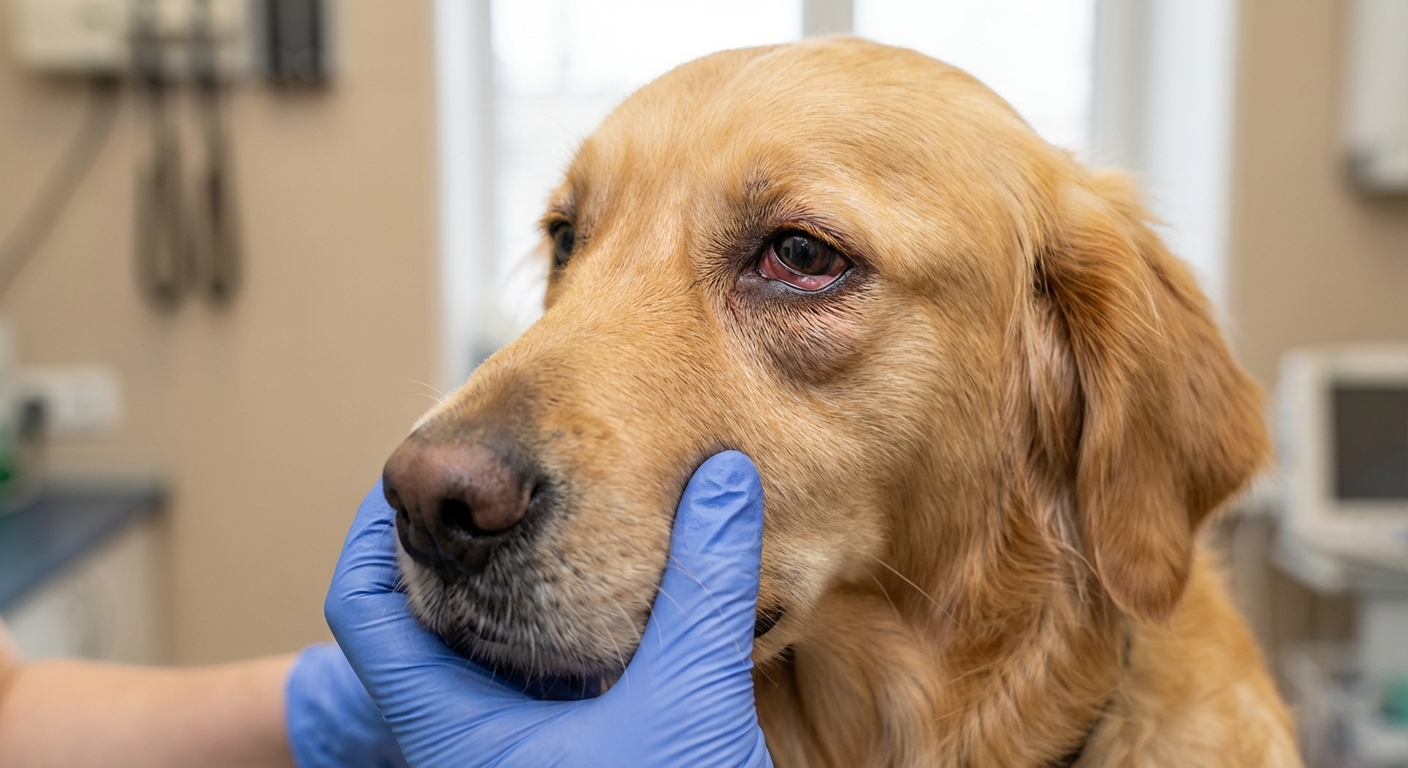
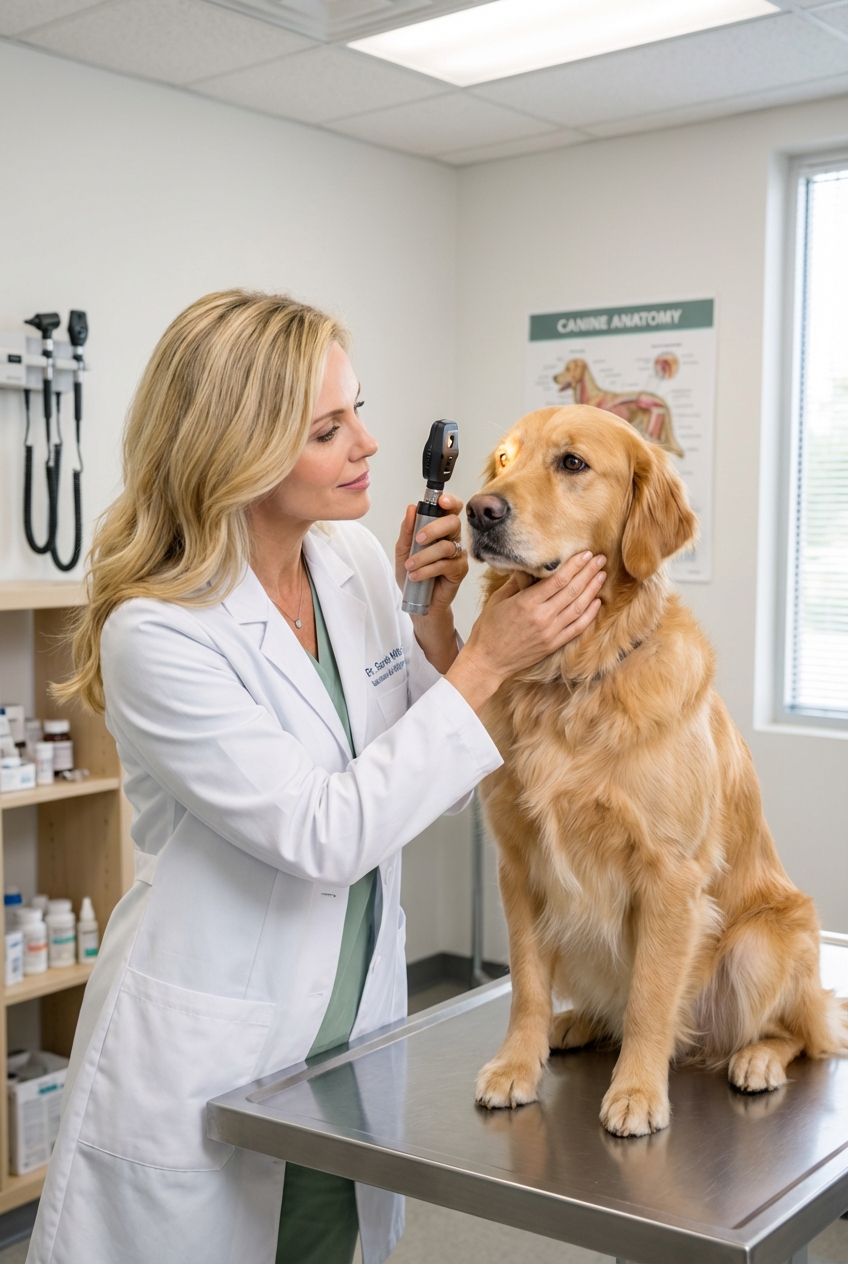
At the clinic, your veterinarian will typically look for both tear overproduction and drainage problems. Common tests include:
- Fluorescein stain to check for corneal scratches or ulcers
- Schirmer tear test to measure tear production (helps diagnose dry eye)
- Eye pressure check if glaucoma is a concern
- Eyelid and lash exam to find hairs rubbing the cornea
- Nasolacrimal flush in some cases to assess or clear drainage
Treatment depends on the cause and may include medicated drops or ointments, allergy management, tear-stimulating medications for dry eye, or surgical correction for certain eyelid issues.
Tear staining
Tear staining is common in light-coated dogs and dogs with chronic tearing. The discoloration is partly from porphyrins and other compounds in tears that sit on fur and oxidize, plus moisture that can encourage yeast and bacteria on the skin.
What helps
- Control the cause first (allergies, hair rubbing, duct issues). Cleaning without treating the cause is frustrating for everyone.
- Keep fur short and dry under the eyes.
- Clean daily with a gentle, pet-safe product and pat dry.
- If the skin looks irritated or smells yeasty, ask your vet about safe topical options that will not harm the eye.
Be cautious with stain-remover products that promise dramatic results. If anything stings your dog, causes redness, or gets into the eye, stop and call your veterinarian.
A simple routine
If your dog struggles with tearing often, consistency helps more than fancy products.
- Morning: quick wipe with sterile saline, hair check around the eyes, then pat dry.
- After outdoor time: gentle face wipe to remove pollen and dust.
- Evening: re-check for redness, squinting, or new discharge.
If you track symptoms for one week (weather, walks, grooming, diet changes), you will often spot patterns you can share with your veterinarian.
Bottom line
Watery eyes (epiphora) are common, especially in many designer mixes and flat-faced breeds, but they are not something to ignore. Clear tearing can be as simple as allergies or hair irritation, while squinting, cloudy eyes, one-sided symptoms, or colored discharge can signal a problem that needs prompt treatment. Start with gentle cleaning, reduce irritants, keep face hair from rubbing, and do not hesitate to get a veterinary exam if your dog looks uncomfortable. Healthy eyes should be bright, open, and calm.