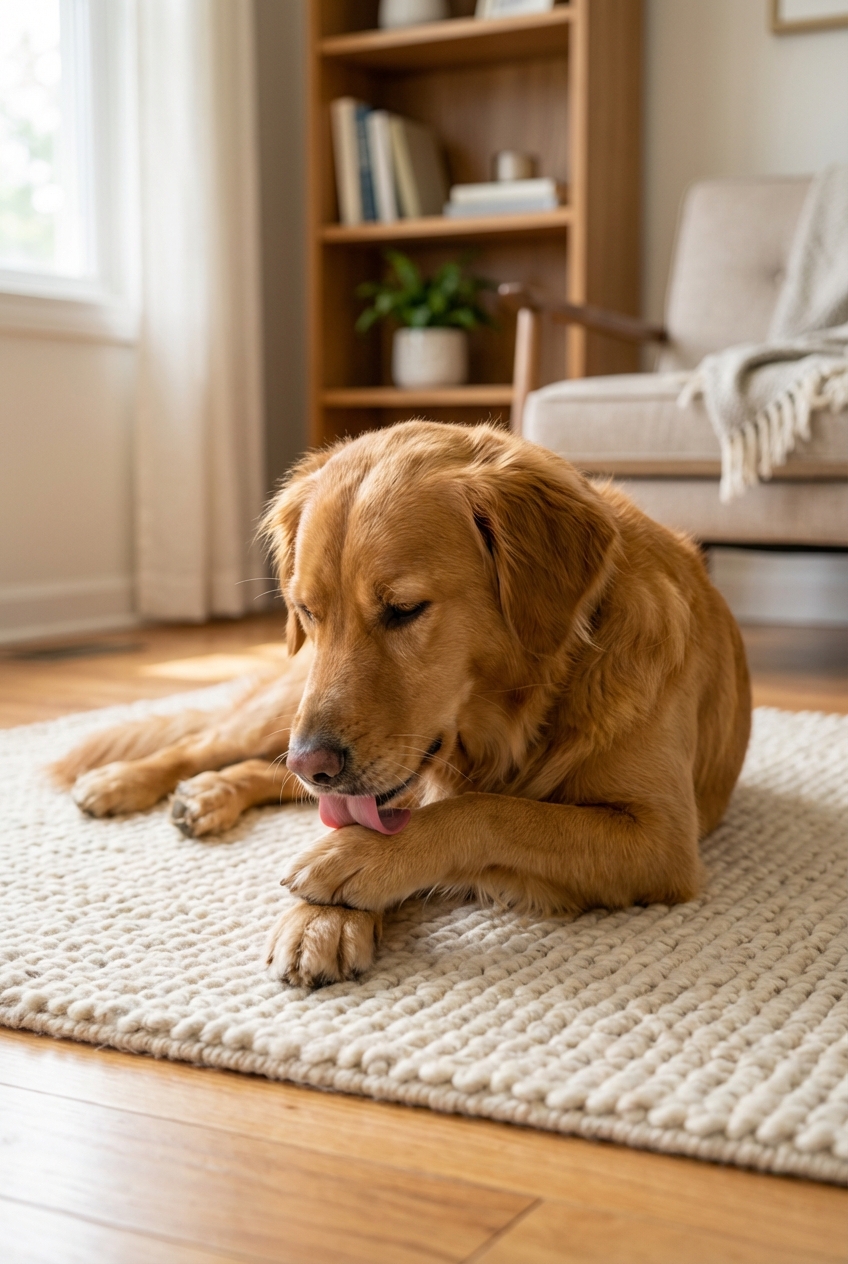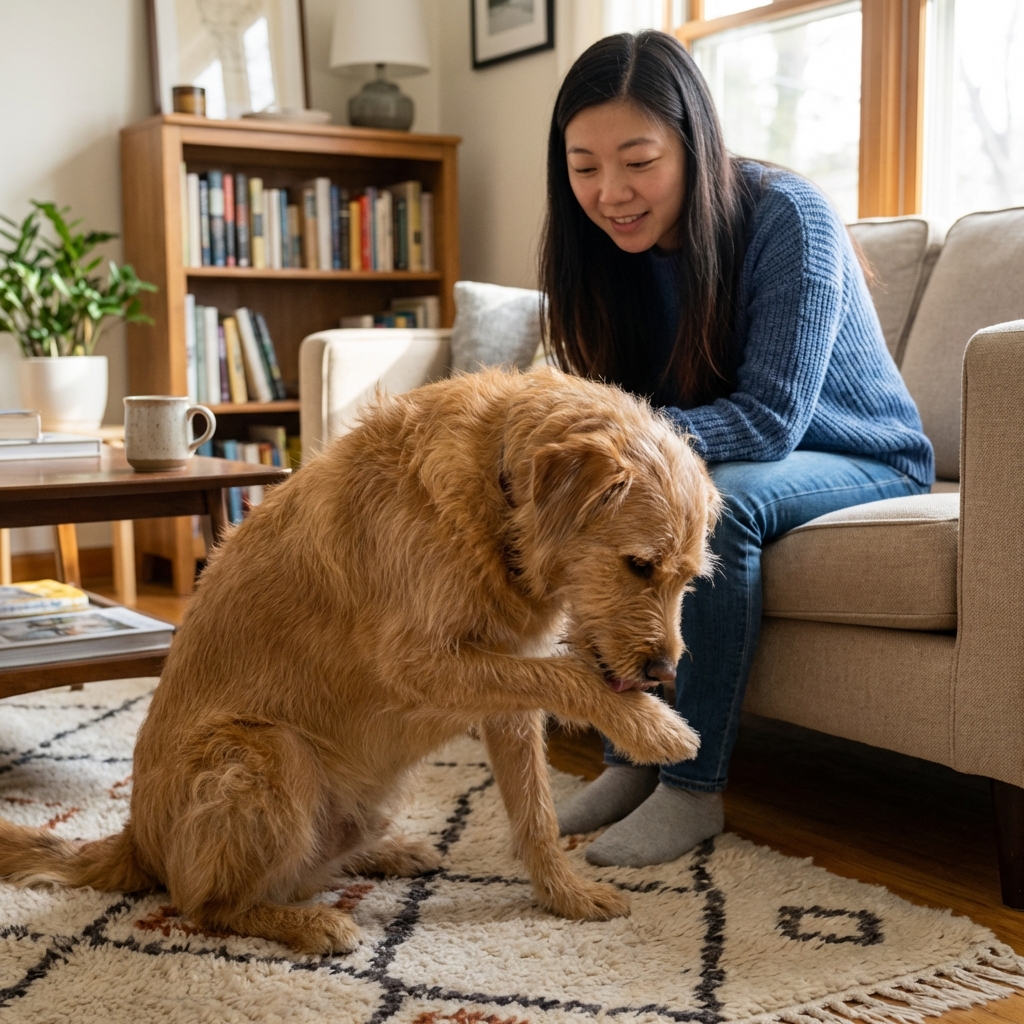
From allergies and yeast to injuries and anxiety, discover the most common reasons dogs lick their paws. Follow a quick paw-check routine, safe home tips, an...
Article
•
Designer Mixes
Why Your Dog Licks His Paws Every Day

Shari Shidate
Designer Mixes contributor
Daily paw licking is a common reason pet parents bring their dogs into the clinic. And I get it, it is unsettling to watch, especially when it turns into noisy slurping, constant chewing, or pink-stained fur between the toes.
A helpful way to think about paw licking is this: it is usually a symptom, not a “bad habit.” Sometimes it truly is grooming or self-soothing. But when it happens every day, we need to look for an underlying trigger like allergies, skin infection, pain, parasites, or anxiety.
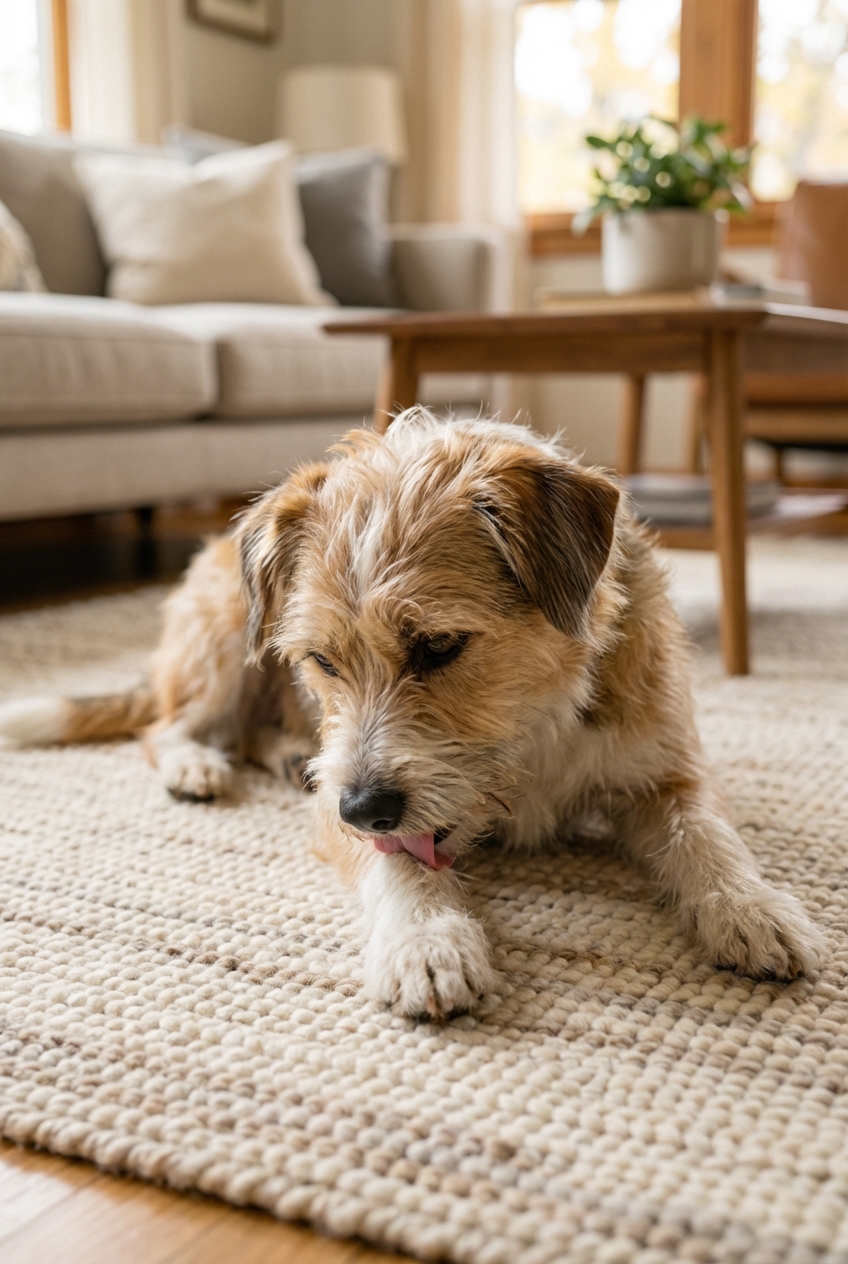
Normal vs. not normal
When paw licking can be normal
- After a walk to clean off dirt or water.
- After meals as part of general grooming.
- Occasional, brief licking that does not cause redness, odor, or hair loss.
When daily paw licking is a red flag
- Licking is frequent (multiple times a day) or hard to interrupt.
- Red, swollen toes or paw pads.
- Brown or rust staining between toes from saliva.
- Odor that smells yeasty or “corn chip-like” (a clue, not a diagnosis).
- Hair loss, thickened skin, cracks, scabs, or bleeding.
- Limping, sensitivity when you touch the paw, or one paw targeted more than the others.
Top reasons dogs lick their paws every day
1) Environmental allergies (atopy)
This is a big one in many regions, especially during high pollen seasons or in warm, humid climates with lots of grasses and molds. Unlike many people, dogs with environmental allergies more often show itchy skin than respiratory symptoms like sneezing.
Clues: licking all four paws, rubbing face, itchy ears, seasonal flare-ups, and recurring skin issues.
2) Food sensitivities or food allergy
Food-related itch can look exactly like environmental allergy, and paws are often involved. True food allergies are less common than people think, but they are real. Triggers are often proteins (like beef or chicken), not grains, but any ingredient can be the culprit in an individual dog.
Clues: itching year-round, digestive upset in some dogs (gas, loose stool), and symptoms that do not track with season.
3) Yeast or bacterial infection
When paws stay moist or inflamed, yeast and bacteria can overgrow. This creates a cycle: itch leads to licking, licking adds moisture and irritation, and infection gets worse.
Clues: strong odor, greasy skin, redness between toes, brown discharge around nails, or the skin looks shiny and irritated. Your vet can confirm what is going on with a quick in-clinic test.
4) Contact irritation
Some dogs react to what they walk on: lawn chemicals, cleaning products on floors, ice melt, mulch, or even certain grasses. It can be a true allergy or simple irritation.
Clues: licking starts after walks, after being in a certain yard, or after mopping.
5) Pain, injury, or something stuck
A foxtail, thorn, small cut, cracked pad, nail bed injury, interdigital cyst, or arthritis can all cause focused licking. Dogs are excellent at hiding pain, so this can be easy to miss.
Clues: one paw gets most of the attention, limping, reluctance to jump, or flinching when you spread the toes.
6) Parasites
Fleas are the classic culprit, but mites and other skin parasites can also contribute to intense itch in some dogs. You do not always see the parasite to have a problem.
Clues: sudden itch, recurrent skin flare-ups, itching that seems out of proportion to what you see, or other pets in the home also scratching.
7) Anxiety, boredom, or compulsive behavior
Licking can be self-soothing. Some dogs develop a repetitive pattern, especially during stress (storms, changes in routine) or when under-exercised and under-stimulated.
Clues: licking happens most at night, when you leave, or during downtime, and the paws may look fairly normal at first.
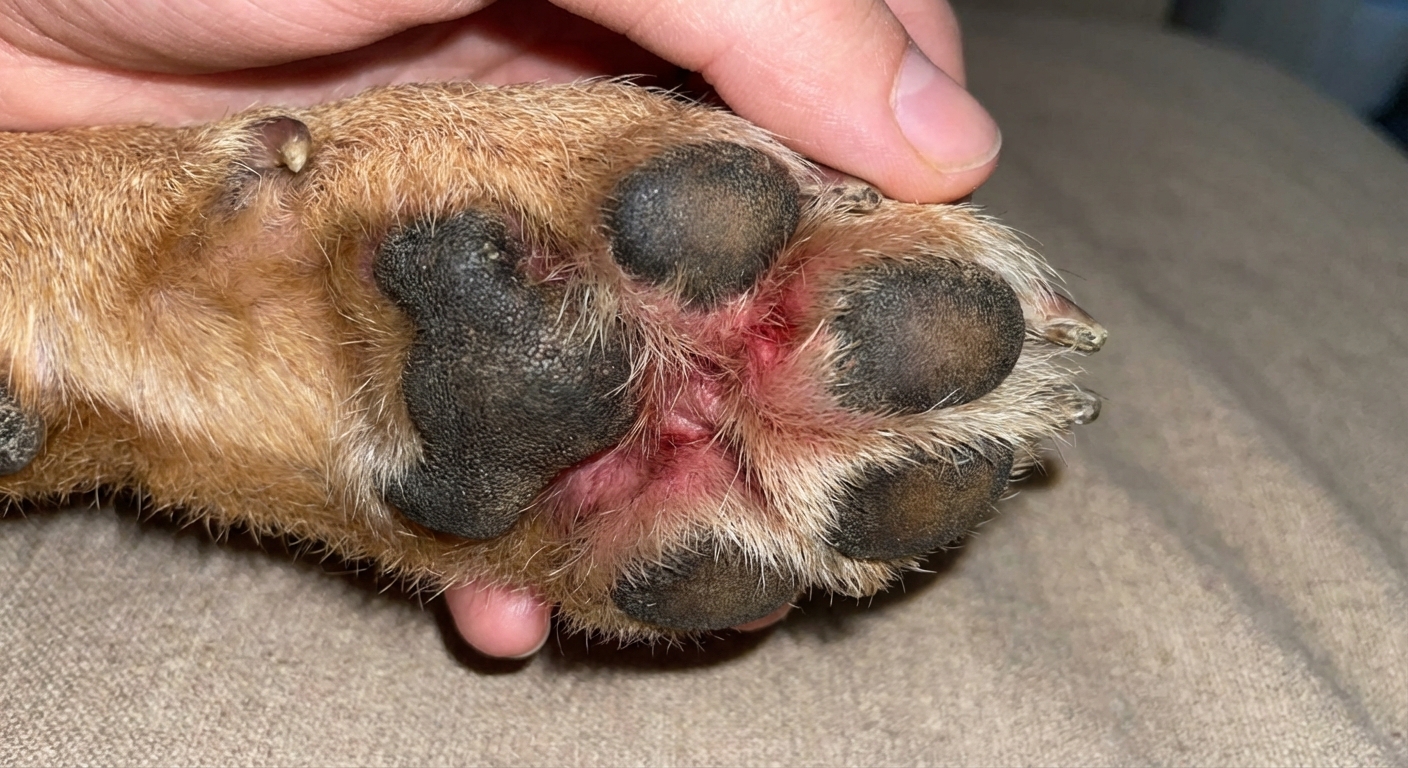
At-home paw check: a 2-minute routine
You do not need fancy tools to gather helpful clues for your vet. Try this once a day for a few days.
- Smell the paws: a strong musty odor can point toward yeast or bacteria.
- Look between toes: check for redness, discharge, tiny scabs, or swelling.
- Check the nails: cracked nails or inflamed nail beds can be very painful.
- Inspect pads: look for cracks, burns, or abrasions.
- Compare all four paws: one paw being worse often suggests injury or localized infection.
If your dog is uncomfortable with handling, go slowly and reward with a treat. The goal is information, not a wrestling match.
What you can do today (safe, practical steps)
Rinse and dry after outdoor time
For many allergy dogs, this simple habit helps a lot. Use lukewarm water or pet-safe, fragrance-free wipes, then dry thoroughly between toes. Moisture feeds yeast, and frequent wiping with harsh or scented products can irritate sensitive skin.
Prevent licking while you investigate
If paws are already raw, continued licking can quickly create hotspots or open sores.
- Use an e-collar (cone) short-term if needed.
- Try a breathable bootie for outdoor walks, but remove it at home so paws do not stay damp.
Address the environment
- Avoid freshly treated lawns and harsh floor cleaners.
- Consider a doormat and quick paw rinse station at the door.
- During heavy pollen days, wipe paws and belly after walks.
Support the skin barrier with nutrition
Skin health is not just “skin deep.” If your dog has chronic itch, ask your vet about an evidence-based plan that may include:
- Omega-3 fatty acids (EPA and DHA) to support skin and reduce inflammation.
- A diet with consistent, high-quality protein and minimal unnecessary additives.
If you are exploring homemade or fresh foods, do it thoughtfully: balanced recipes matter, especially for long-term feeding. A board-certified veterinary nutritionist can be a wonderful partner for dogs with chronic skin trouble.
Avoid common at-home irritants
Skip peroxide, alcohol, essential oils, and heavily scented products on paws. They can sting, worsen inflammation, or be unsafe if licked. When in doubt, ask your vet before applying anything medicated.
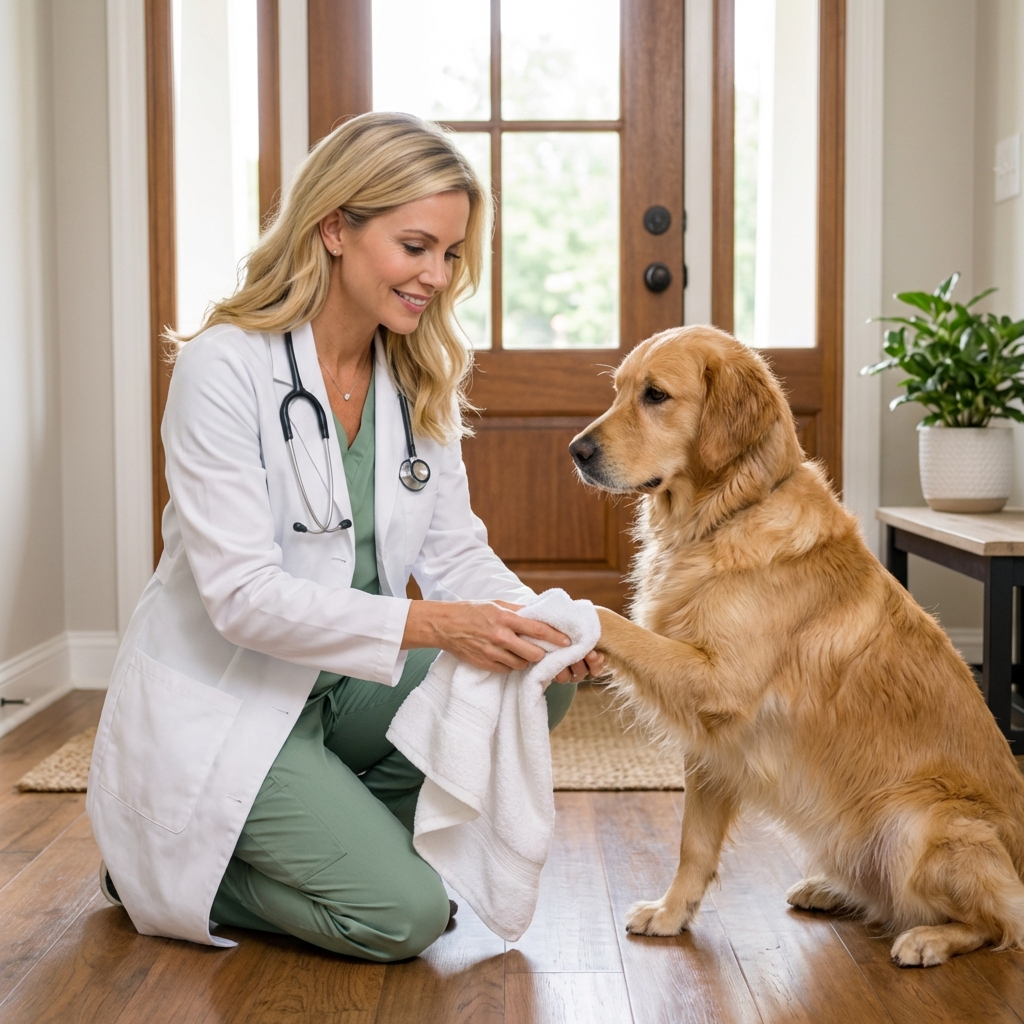
When to call the vet (and what to ask for)
Daily licking that persists more than a week or two, or any licking with redness, odor, swelling, or pain, deserves a veterinary visit. The goal is to treat the true cause, not just the licking.
Seek prompt care if you notice
- Bleeding, open sores, or rapidly worsening redness
- Swelling between toes, limping, or a suspected foreign body (like a foxtail)
- Pus, foul odor, or severe pain
- Your dog seems lethargic or not eating normally
Helpful diagnostics your vet may recommend
- Skin cytology (quick microscope check) to look for yeast and bacteria
- Parasite check and prevention review even if you do not see fleas
- Allergy management plan (medications, topical therapy, immunotherapy in some cases)
- Food elimination trial if a food allergy is suspected
If you take one thing from this: chronic paw licking is often very treatable once you identify the driver. You are not overreacting by investigating it, you are advocating for your dog’s comfort.
Common mistakes to avoid
- Waiting too long while the skin barrier breaks down. Early treatment is easier.
- Using human creams without guidance. Some ingredients can irritate skin or be unsafe if licked.
- Skipping parasite prevention. Flea allergy dermatitis can cause intense itch with very few visible fleas.
- Assuming it is “just anxiety”. Many dogs labeled anxious actually have itchy, infected, or painful paws.
Quick daily plan (simple and realistic)
- Morning: quick paw check, note redness or odor.
- After walks: rinse or wipe, then dry thoroughly.
- Evening: redirect licking with a chew or enrichment toy; use a cone if the skin is damaged.
- Within 7 to 14 days: if it is still daily, schedule a vet visit for cytology and an allergy workup discussion.
Your dog’s paws do so much work every day. With a little detective work and the right treatment plan, most dogs can get back to comfortable, quiet feet.