Wondering if your cat loves you? A vet assistant explains 12 bond and trust signals—slow blinks, bunts, purring, greetings, sleep habits—plus stress look...
Article
•
Designer Mixes
Why Your Cat Head-Butts You

Shari Shidate
Designer Mixes contributor
If your cat walks up and gently bumps their forehead into your hand, leg, or face, it can feel like you have been chosen. More accurately, many cats do this most often with people they trust. This adorable behavior is often called head-butting or bunting, and in most cases it is a friendly, normal way cats communicate. As a veterinary assistant, I love helping families understand what their pets are really saying, because once you get it, your bond gets even stronger.
What it means
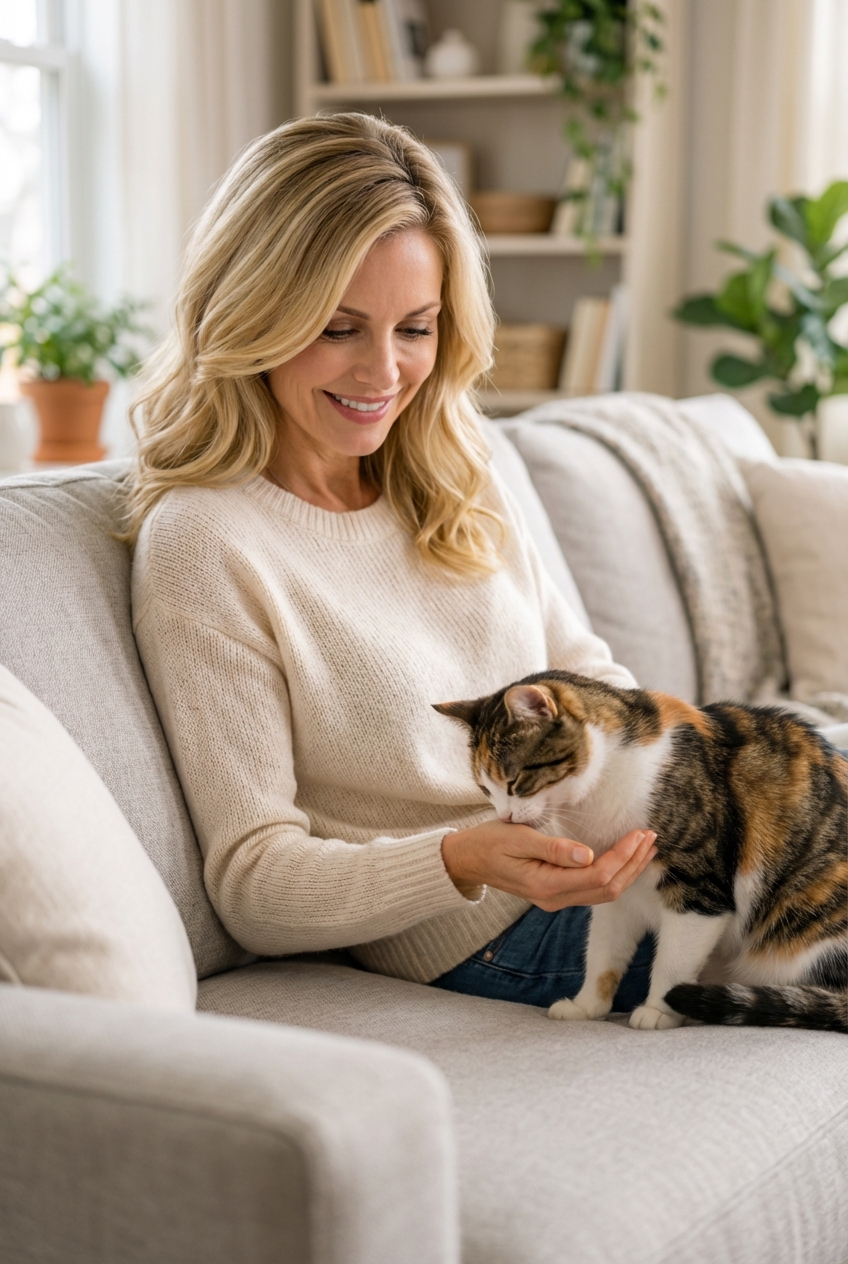
Head-butting is not only “random affection” the way we tend to think of it. It is a form of social and scent-based communication. Cats have scent-producing glands on the face and head, especially around the cheeks and temples, lips, chin, and forehead. When they rub, they are often doing two things at once.
- Marking you as safe and familiar: Cats use scent (including pheromones and skin oils) to label people, pets, and places as part of their trusted circle.
- Reinforcing shared scent: In multi-cat homes, cats often rub on each other and on shared objects, which may help maintain a consistent “family” scent.
The science behind the rub
Cats rely heavily on smell. Facial glands deposit pheromones and other scent cues that help cats feel oriented and secure in their environment. When your cat bunts you, it often signals comfort, familiarity, and social connection.
This is also why some cats will rub door frames, furniture corners, and your shoes when you first walk in. It can be a quick way to refresh a familiar scent map.
Common reasons
1) Affection and trust
In a healthy, relaxed cat, bunting is a social greeting. Many cats combine it with purring, slow blinking, or gently kneading nearby. It is one of the clearest signs your cat feels comfortable with you.
2) A request for attention
Sometimes it is love, and sometimes it is a very polite demand. Cats learn quickly that head-butting often results in petting, talking, or treats. If it happens at predictable times like when you sit down, after work, or near the food bowl, your cat may be initiating a routine.
3) Stress relief and reassurance
Rubbing familiar scents can be calming. If there has been a recent change such as moving, new people, a baby, construction noise, or a new pet, you might see more rubbing than usual. Think of it as your cat re-centering themselves.
4) Social bonding in multi-pet homes
In homes with multiple cats, you might see cats rub each other’s faces, cheeks, or bodies as they pass. When your cat does this to you, they are extending that social bond to their favorite human.
5) Personality differences
Some cats are big bunters, and some barely do it at all. That can be perfectly normal. Personality, early socialization, and comfort level all play a role in how physically expressive a cat is.
Bunting vs. head pressing
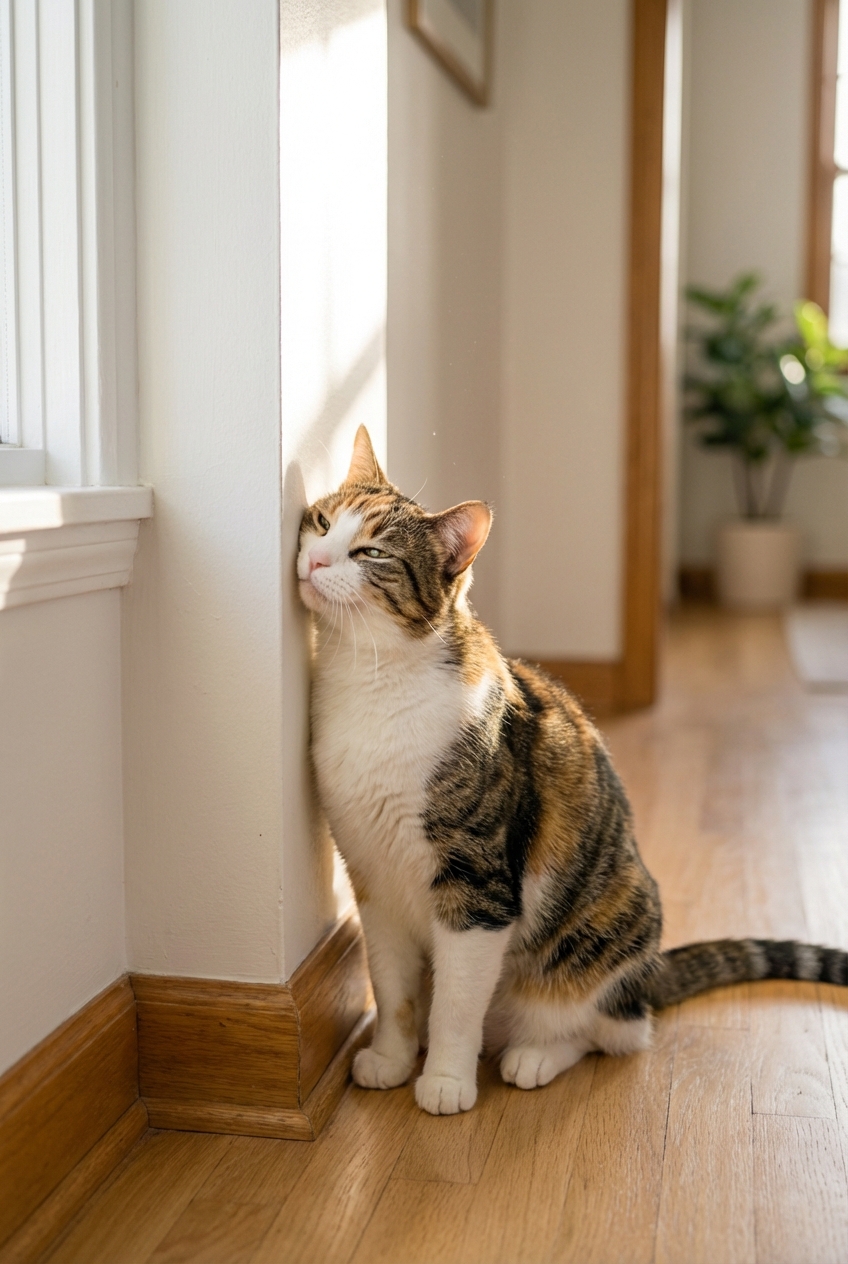
Most bunting is gentle and brief, with a relaxed body and normal behavior afterward. But there is a different behavior called head-pressing that can signal a medical problem.
- Head-butting (bunting): A gentle bump or rub, often paired with purring, relaxed ears, normal walking, and social engagement.
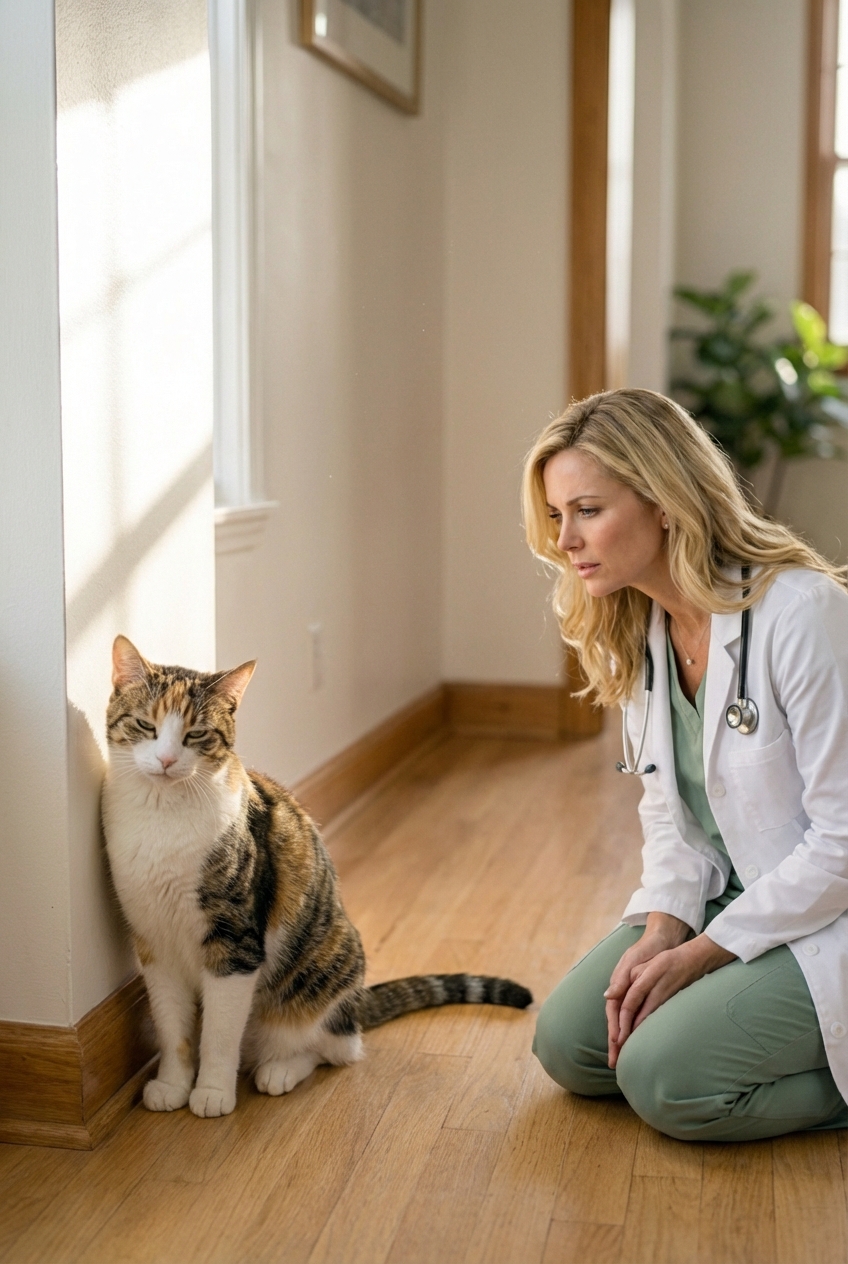
- Head-pressing: The cat pushes their head firmly against a wall, floor, or furniture and may hold it there. This is often a sign of neurologic disease or other serious illness (for example toxins or metabolic disease) and needs prompt veterinary evaluation.
If you are ever unsure, it is completely appropriate to call your veterinarian. Trust your instincts, especially if the behavior is new or your cat seems off.
When to call your vet
Head-butting is typically normal. Still, contact your veterinarian if you notice any of the following, especially if the change is sudden, escalating, or paired with other symptoms. This article is not a substitute for veterinary care.
- Head pressing against walls or corners
- A sudden increase in rubbing that seems frantic or compulsive
- Sudden behavior changes, hiding, disorientation, or unusual aggression
- Lethargy or acting “not themselves”
- Loss of balance, stumbling, circling, or weakness
- Seizures or tremors
- Vision changes, unequal pupils, or bumping into objects
- Persistent vocalizing that sounds distressed
- Vomiting, appetite changes, or weight loss
How to respond
You do not need to correct this behavior. Instead, use it as a chance to reinforce comfort and trust.
- Offer calm petting: Many cats prefer cheek scratches, chin rubs, and gentle strokes along the head and neck.
- Let your cat lead: If they rub and then walk away, that is still a successful greeting.
- Keep routines steady: Consistent feeding and play times reduce stress and can reduce bumping that is driven by attention seeking.
- Support scent comfort: If you recently washed blankets or cleaned heavily, consider leaving one familiar item unwashed for a bit so your cat still has a home-base scent.
Action tip: If your cat loves bunting, place a sturdy cat-friendly brush or grooming arch in a favorite walkway. Many cats will self-rub on it, which provides enrichment and can reduce stress.
Quick FAQ
Do cats head-butt to show dominance?
Not usually. Bunting is more about bonding and shared scent than dominance. A cat that is relaxed and friendly while doing it is typically seeking connection.
Why does my cat head-butt me and then bite?
Sometimes cats get overstimulated by petting. If you notice tail flicking, skin twitching, ears rotating sideways, or sudden tension, pause petting and give them space. Try shorter sessions focused on cheeks and chin rather than long full-body strokes.
My cat only rubs their face on me, not on other people. Why?
Cats choose their preferred social partners. If you feed them, play with them, speak gently, or simply feel predictable and safe, you may be their favorite person to rub on.
The bottom line
In most homes, head-butting is one of the sweetest compliments a cat can give. It is often a sign your cat feels comfortable with you and wants to reinforce that bond. Enjoy it, respond gently, and keep an eye out for any signs that the behavior looks more like head pressing or is paired with other symptoms.