Your cat isn’t “mean”—petting bites are often overstimulation, pain, stress, or playful energy. Learn the warning signs, safer petting tips, and a si...
Article
•
Designer Mixes
Why Your Cat Gently Nips While Petting

Shari Shidate
Designer Mixes contributor
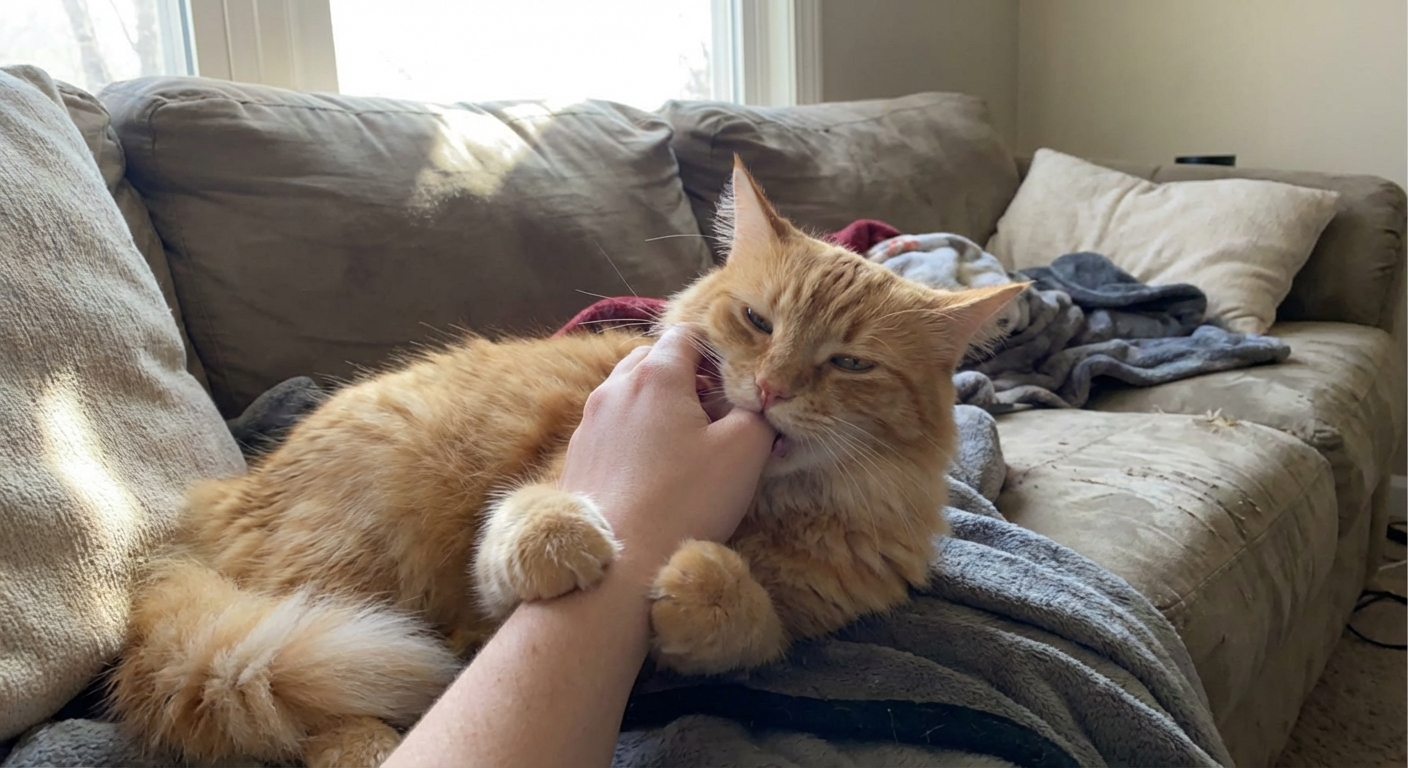
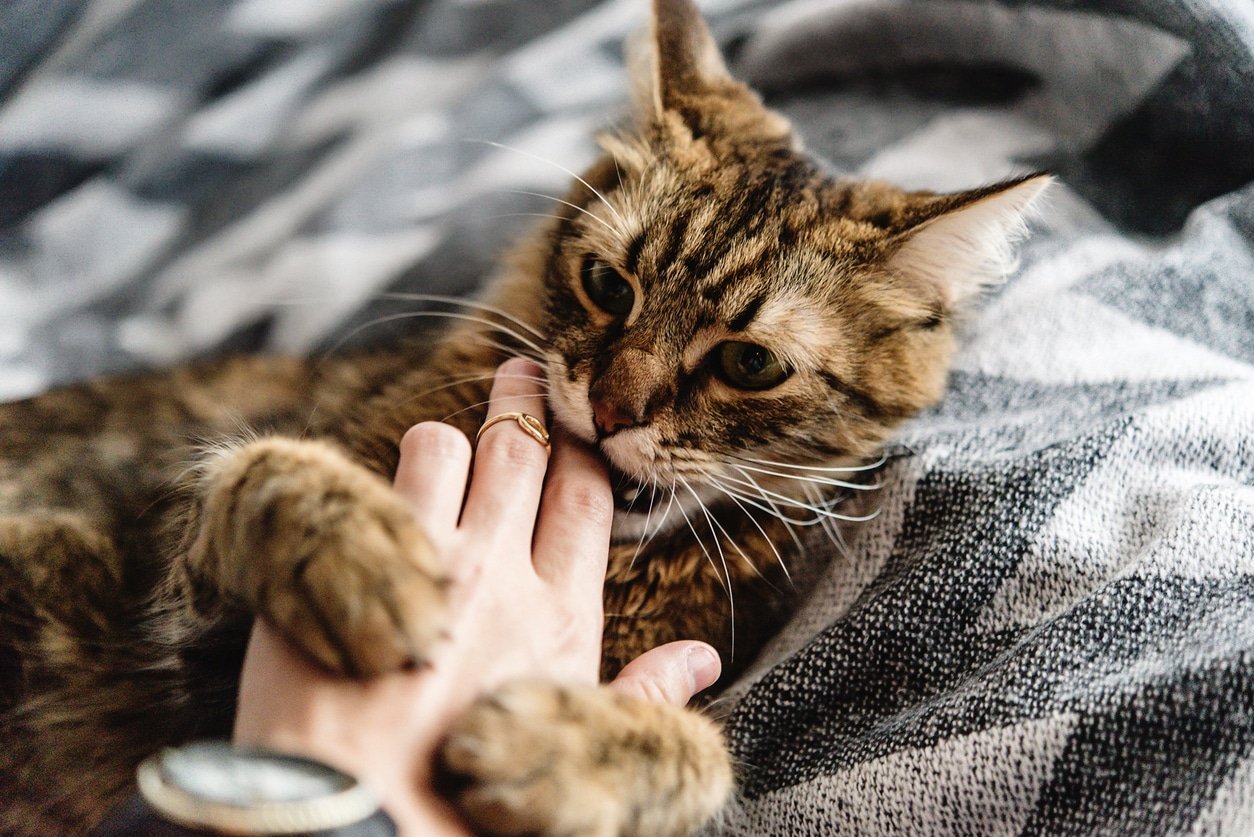
If you have ever been cuddling your cat and suddenly felt a little nip, you are not alone. Many cats give what people call “love bites” during petting. Sometimes it is playful. Sometimes it is a polite (or not so polite) way of saying, “That’s enough.” The good news is that gentle nipping is usually normal feline communication, and you can often prevent it once you learn your cat’s signals.
Quick takeaway
- Watch tail, ears, and skin for early signs
- Pause petting before the nip happens
- Redirect to a toy if your cat is getting playful
- Keep sessions short and let your cat choose “more”
What “love bites” usually mean
Cats cannot use words, so they use body language and their mouth to communicate. A gentle nip during petting can mean:
- Affection mixed with excitement: Some cats get overaroused quickly during intense petting, even if they started out relaxed.
- Play behavior: Petting can flip their brain into hunting mode, especially if hands move fast or wiggle near the belly.
- Overstimulation: Nerves in the skin can become too stimulated, and the cat responds with a nip to make it stop.
- A boundary reminder: Cats sometimes tolerate touch longer than they enjoy it, then communicate they want space.
- Attention seeking: A cat may nip to restart interaction, redirect your hand, or ask for food or play.
In multi-cat homes, gentle nips are also a normal part of social behavior. Some cats groom and nibble each other as a bonding routine. With humans, the same pattern can show up during petting.
Petting overstimulation
One common reason a cat nips while being petted is petting-induced overstimulation. This happens when pleasant touch turns into “too much,” even if your cat still looks like they are enjoying it. It is not your cat being mean. It is your cat’s nervous system hitting a limit.
Overstimulation tends to happen more when:
- Petting is long and continuous without breaks
- You pet sensitive areas (lower back, base of tail, belly)
- Your cat is already keyed up (zoomies, high energy, visitors, stress)
- Your cat has a lower tolerance for handling due to personality or past experiences
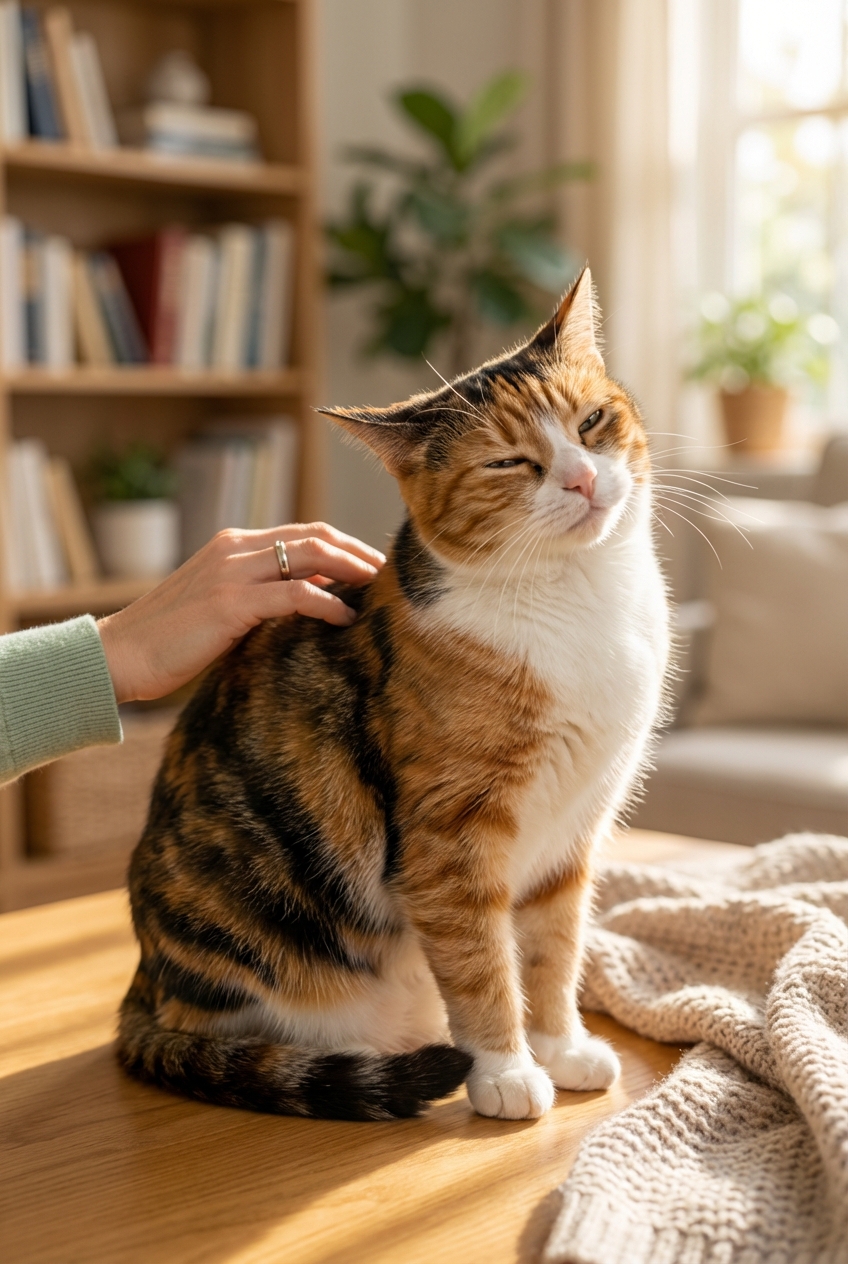
Key point: Overstimulation is often predictable. Most cats give subtle warning signs before they nip, but the signals can be very quick or easy to miss.
Signs a nip is coming
Cats often show small cues before they bite. The signals can be subtle, so it helps to watch closely while you pet.
Common cues
- Tail twitching or thumping
- Skin rippling along the back
- Ears rotate sideways or flatten slightly
- Sudden stillness or freezing
- Pupils dilate (big, dark eyes)
- Head turns toward your hand as if tracking it
- Whiskers push forward (may signal rising arousal or intense focus)
If you see any of these, pause petting and give your cat a chance to reset. Often, that is all it takes to prevent the nip.
What to do in the moment
If your cat gently nips you, your response matters. Many people instinctively jerk away, yell, or push the cat. That can increase arousal, startle your cat, or turn it into a game.
Try this
- Freeze your hand for a second or two, then slowly remove it (avoid jerking away).
- Stop petting immediately and look away to remove attention.
- Give space so your cat can calm down.
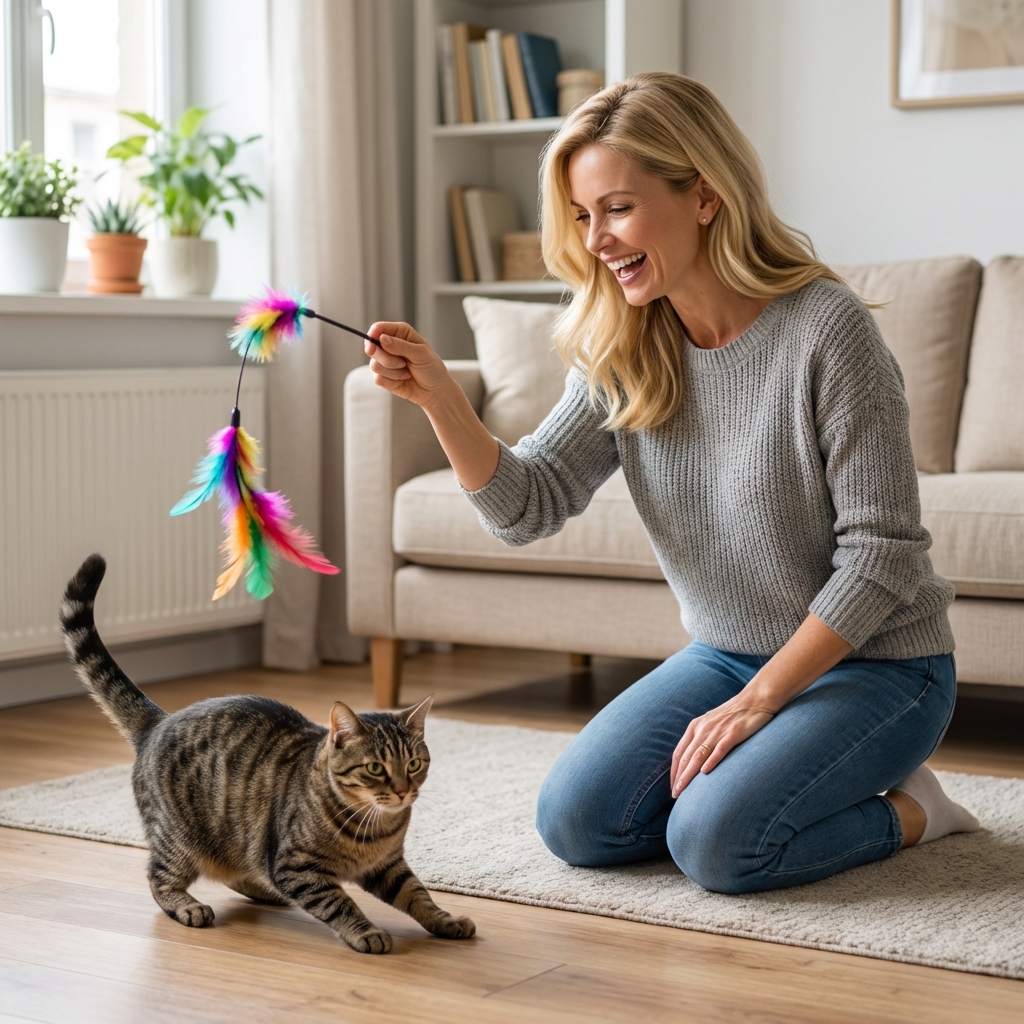
- Redirect to an appropriate outlet like a wand toy if your cat seems playful.
For cats that nip as part of play, teaching “hands are not toys” is huge. Keep a toy nearby so you can smoothly redirect that hunting energy.
How to prevent nips
You do not have to stop petting your cat. You just want to pet in a way your cat can comfortably enjoy.
Keep it short
- Pet for 3 to 5 seconds, then pause.
- Let your cat decide if they want more by leaning in, head-butting, purring, or staying close.
- If your cat moves away or looks tense, respect the “no.”
Safer petting zones
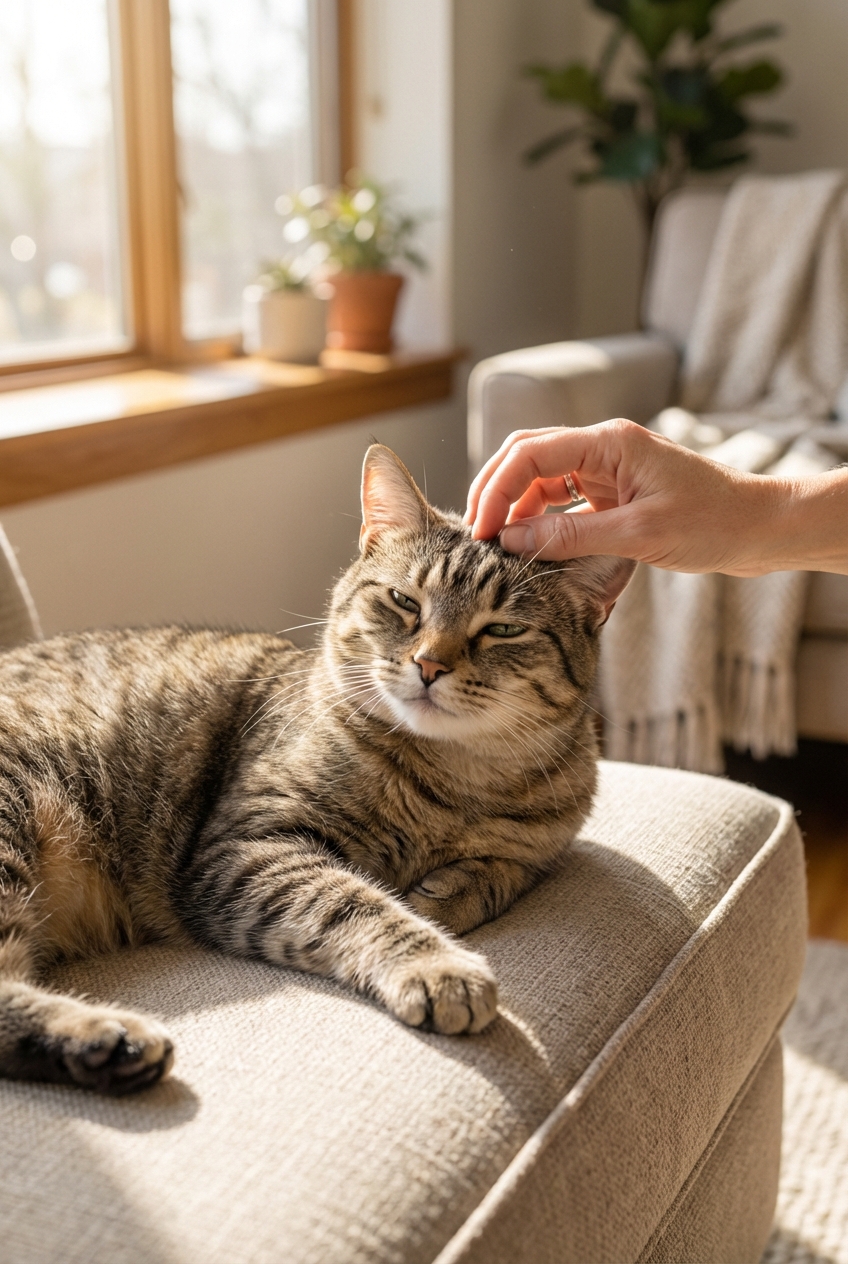
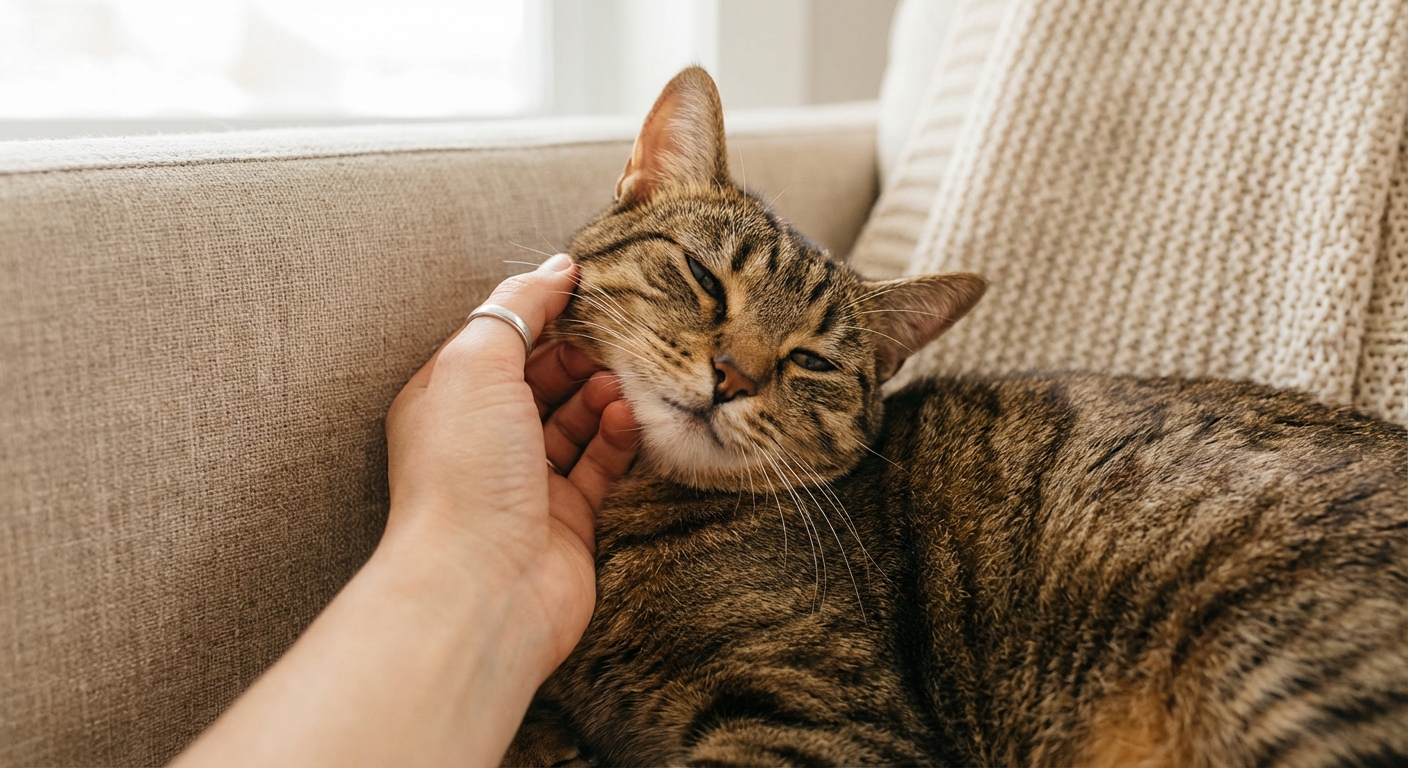
Many cats prefer:
- Cheeks
- Chin
- Top of the head
- Neck and shoulders
Areas more likely to trigger nips (for many cats) include the belly, lower back, and the base of the tail. Some cats love those spots, but if your cat nips, consider those areas off-limits for now.
Daily play helps
Especially for young cats, high-energy cats, and indoor-only cats, daily play is strongly recommended. A couple of short play sessions can reduce nipping during petting because your cat has a healthy outlet for hunting behavior.
A good starting point is 5 to 10 minutes, 1 to 2 times a day, adjusted to your cat’s age and energy level.
Reward calm behavior
If your cat accepts a short pet without nipping, calmly praise them and consider offering a tiny treat. You are teaching that gentle interactions pay off.
Nip vs hard bite
A “love bite” is usually a quick, controlled nip that does not break skin. A harder bite is different and deserves a closer look.
Get help sooner if you see
- Bites that break skin or leave deep punctures
- Stalking, ambushing, or repeated biting during everyday interactions
- Growling, hissing, yowling, or a stiff body
- Piloerection (fur standing up) or intense, prolonged staring
- Unable to interrupt the behavior with a pause and a toy
If this pattern is new, escalating, or scary, talk with your veterinarian. They can rule out medical causes and may refer you to a qualified behavior professional if needed.
When it is not affectionate
Sometimes nipping is a sign of discomfort or pain, not bonding. If your cat’s behavior changes, it is worth considering health even if no other signs are obvious.
Call your veterinarian if you notice
- Nipping that is new or suddenly worse
- Biting paired with hiding, growling, or yowling
- Sensitivity when touched in one area (back, hips, belly)
- Changes in appetite, litter box habits, grooming, or activity
- Skin issues like dandruff, sores, hair loss, or fleas
Dental disease, arthritis, skin allergies, and fleas can all make a cat less tolerant of touch. Pain can turn “normally affectionate” into “please do not touch me there” very quickly.
Bite safety
If a bite breaks the skin, wash the area thoroughly with soap and running water. Keep an eye out for redness, swelling, warmth, worsening pain, drainage, or fever. Cat bites can get infected, so contact a healthcare professional promptly if you notice any of those signs, or if the wound is deep.
Quick FAQs
Should I punish my cat for gentle nipping?
No. Punishment can increase fear and make biting worse. Instead, stop petting, give space, and redirect to a toy if your cat is playful.
Is it okay if my cat lightly bites but does not break skin?
It is common, but it is still useful feedback. Your cat is communicating a limit. Use it as a cue to change how long or where you pet.
My cat bites only one person. Why?
Often it is differences in petting style, pressure, speed, or whether that person keeps petting through early warning signals. Have everyone use the same short-session approach and avoid sensitive zones.
The bottom line
A gentle nip during petting is usually a communication tool, not a character flaw. With a little observation and a few simple changes, you can keep the bonding and reduce the biting. Watch for early signals, pet in short sessions, redirect playful energy, and check in with your veterinarian if the behavior is new, escalating, or paired with other changes. Your cat is talking. Once you learn their language, life gets a lot more peaceful.