If your cat urinates on the bed, it’s usually stress, discomfort, or litter box issues—not spite. Learn urgent medical red flags, how to clean urine full...
Article
•
Designer Mixes
Why Would a Cat Pee on Your Bed?

Shari Shidate
Designer Mixes contributor
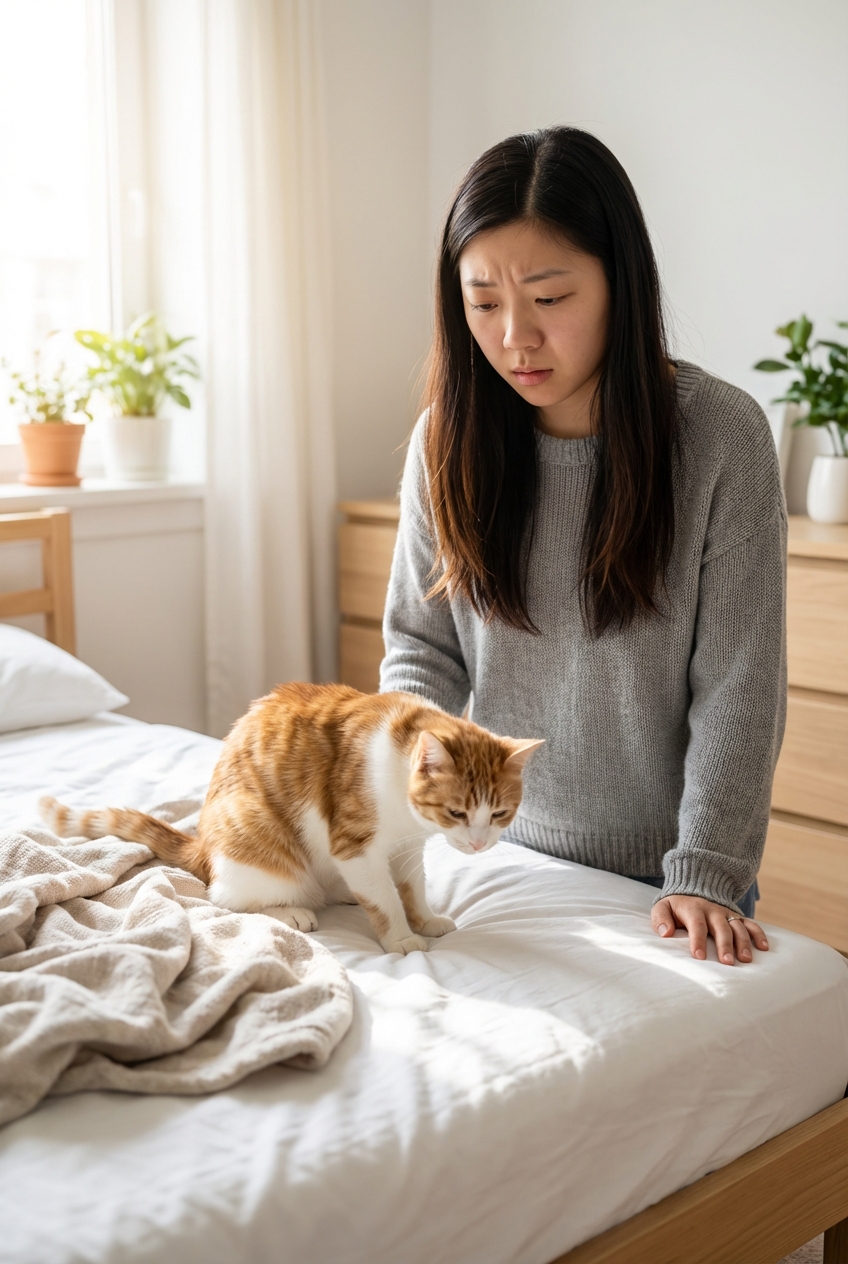
Finding cat urine on your bed is upsetting, and it can feel personal. I promise, it usually is not. In my work as a veterinary assistant in Frisco, Texas, I have seen this happen in the sweetest cats. When a cat urinates on the bed, it is often their way of saying: “Something is wrong, and I need help.” The fastest path to fixing it is figuring out whether the cause is medical, behavioral, or both.
Quick note: if you are not sure it is urine, sniffing is not your job. Urine usually smells sharp or ammonia-like and leaves a yellow stain. If you are unsure, treat it like urine for cleaning purposes and mention it to your vet.
What peeing on the bed can mean
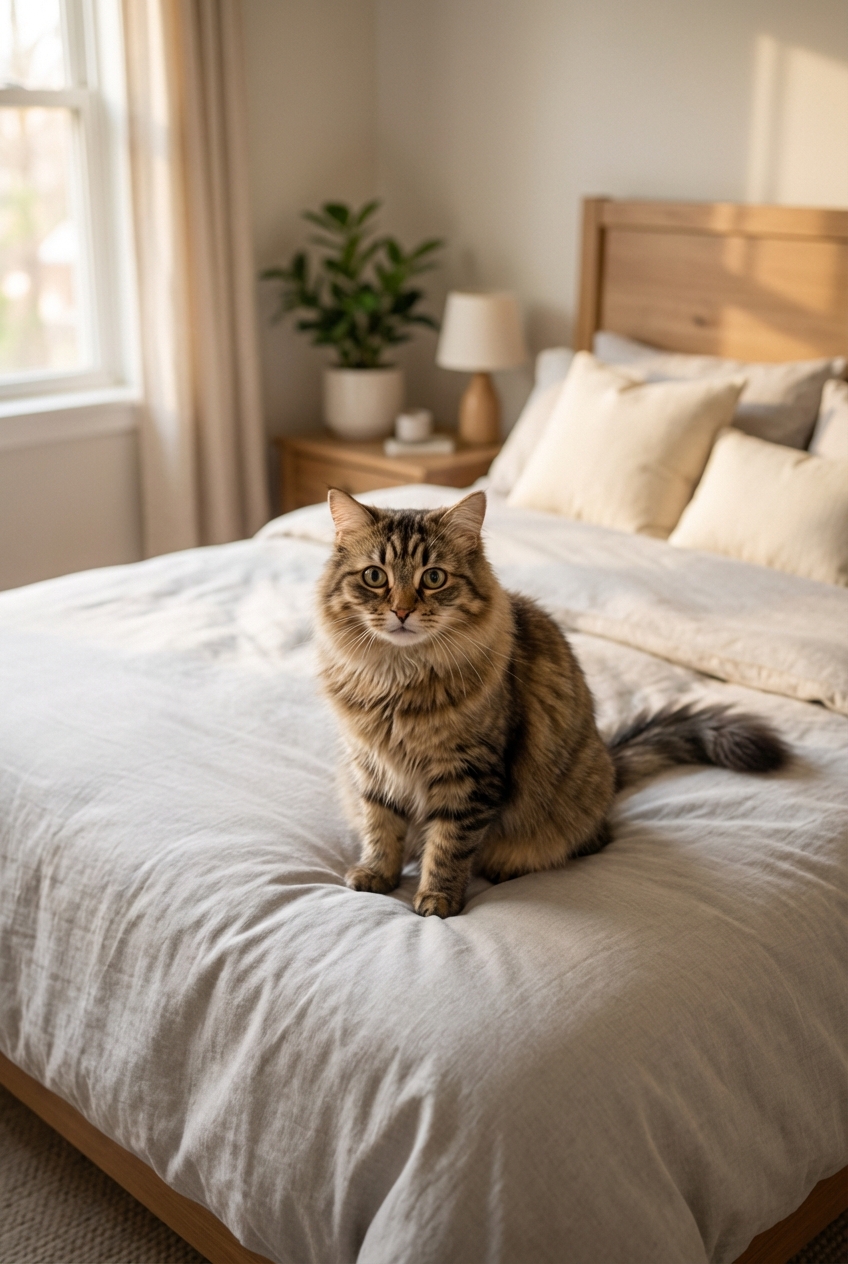
Cats choose beds for specific reasons. A bed smells strongly like you, it is soft, and it is usually in a quieter, more protected part of the home. When a cat is stressed, in pain, or struggling with their litter box setup, the bed can become the place that feels most comforting, or the place most likely to get your attention.
There are two common scenarios:
- Urination (pee): typically a puddle on horizontal surfaces like bedding.
- Spraying (marking): usually a small amount on vertical surfaces, but some cats do spray on a bed, especially if it is piled with blankets.
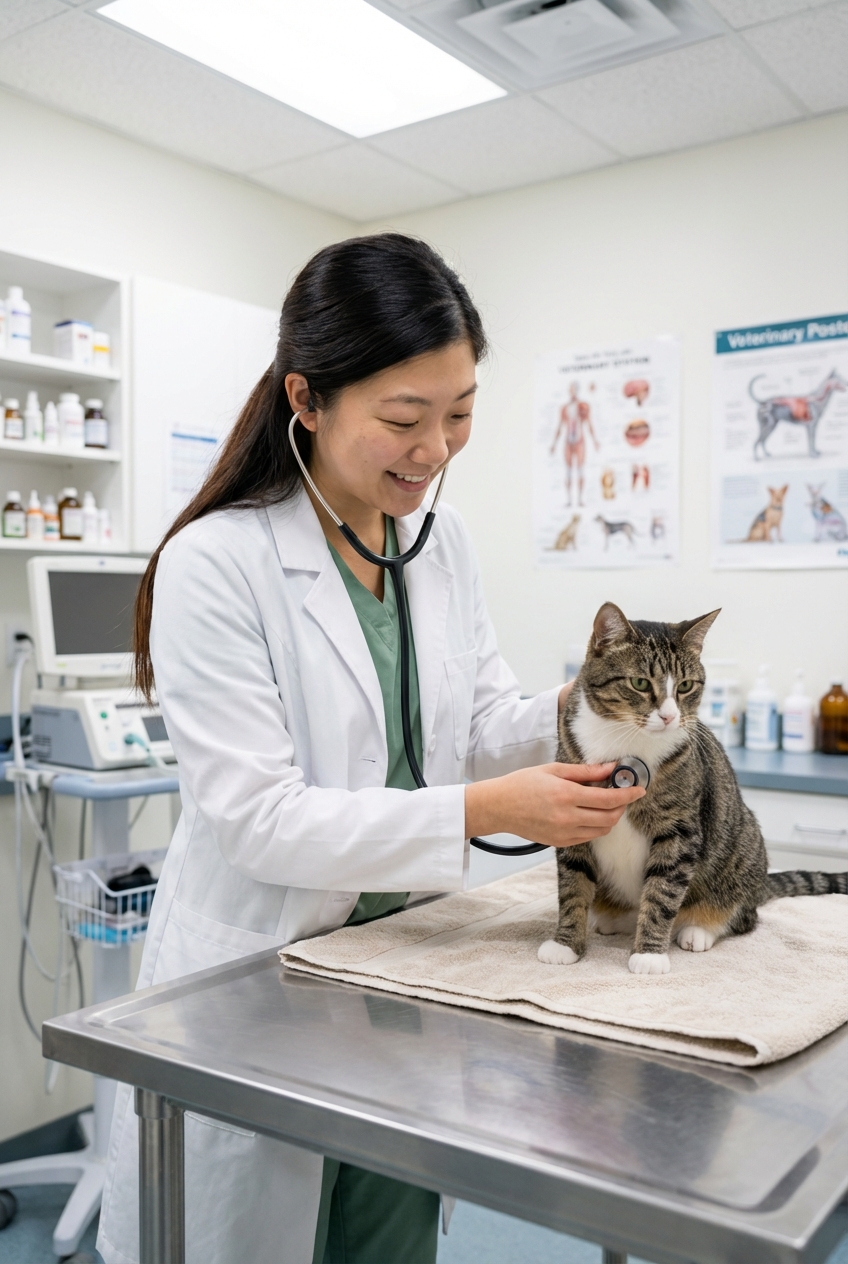
Rule out medical causes first
If your cat suddenly starts peeing on the bed, treat it like a medical issue until your veterinarian rules it out. Many cats with urinary discomfort will avoid the litter box because they associate it with pain.
1) Feline lower urinary tract disease (FLUTD)
FLUTD is an umbrella term for several issues that cause bladder and urethral irritation. It can lead to urgency, frequent trips, and accidents. Some cats will squat anywhere when the urge hits.
2) Urinary tract infection (UTI)
True bacterial UTIs are less common in young adult cats but are more likely in seniors or cats with other health conditions. Testing usually starts with a urinalysis. If infection is suspected, your vet may recommend a urine culture (often from a cystocentesis sample) to confirm bacteria and choose the right antibiotic.
3) Bladder stones or crystals
Crystals can irritate the bladder, and stones can cause pain or blockage risk. Crystals in urine do not always mean disease by themselves, so your vet will interpret results alongside symptoms, urine concentration, and inflammation. Diet, hydration, and genetics all play roles. Your veterinarian may recommend imaging plus urine testing.
4) Pain, arthritis, or mobility issues
If the litter box is hard to step into, located downstairs, or has a lid that requires crouching, a sore cat may choose the bed instead. Beds are easy to access and gentle on joints.
5) Kidney disease, diabetes, or hyperthyroidism
Conditions that increase thirst and urine volume can overwhelm litter box habits, especially if boxes are not cleaned frequently or are inconveniently placed.
When it is an emergency
Call an emergency vet right away if you see any of the following, especially in male cats:
- Straining with little or no urine produced
- Crying out while trying to pee
- Frequent trips to the box with minimal output
- Painful, firm, or distended abdomen, lethargy, vomiting, hiding
The single biggest red flag is unable to pass urine. A urethral blockage can become life-threatening quickly.
Behavior and environment triggers
Once medical causes are addressed or ruled out, the next step is looking at your cat’s routine and environment. Cats are detail-oriented. Small changes can matter.
1) Litter box setup problems
This is the most common non-medical issue I see in practice. Helpful checkpoints:
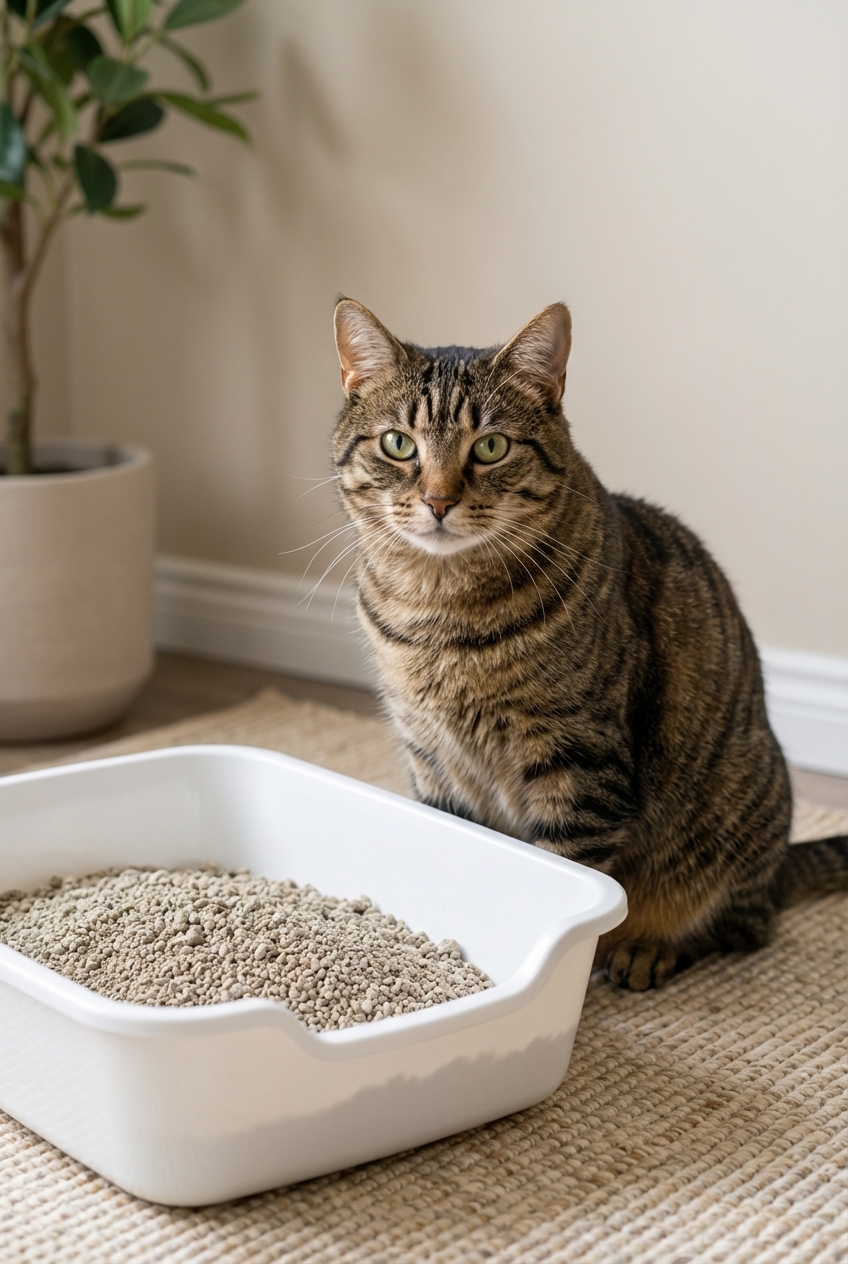
- Number of boxes: Aim for one box per cat, plus one extra.
- Placement: Easy to reach, not tucked into a dead-end where another pet can ambush. In multi-story homes, offer boxes on more than one level.
- Cleanliness: Scoop daily. Many cats will protest a dirty box.
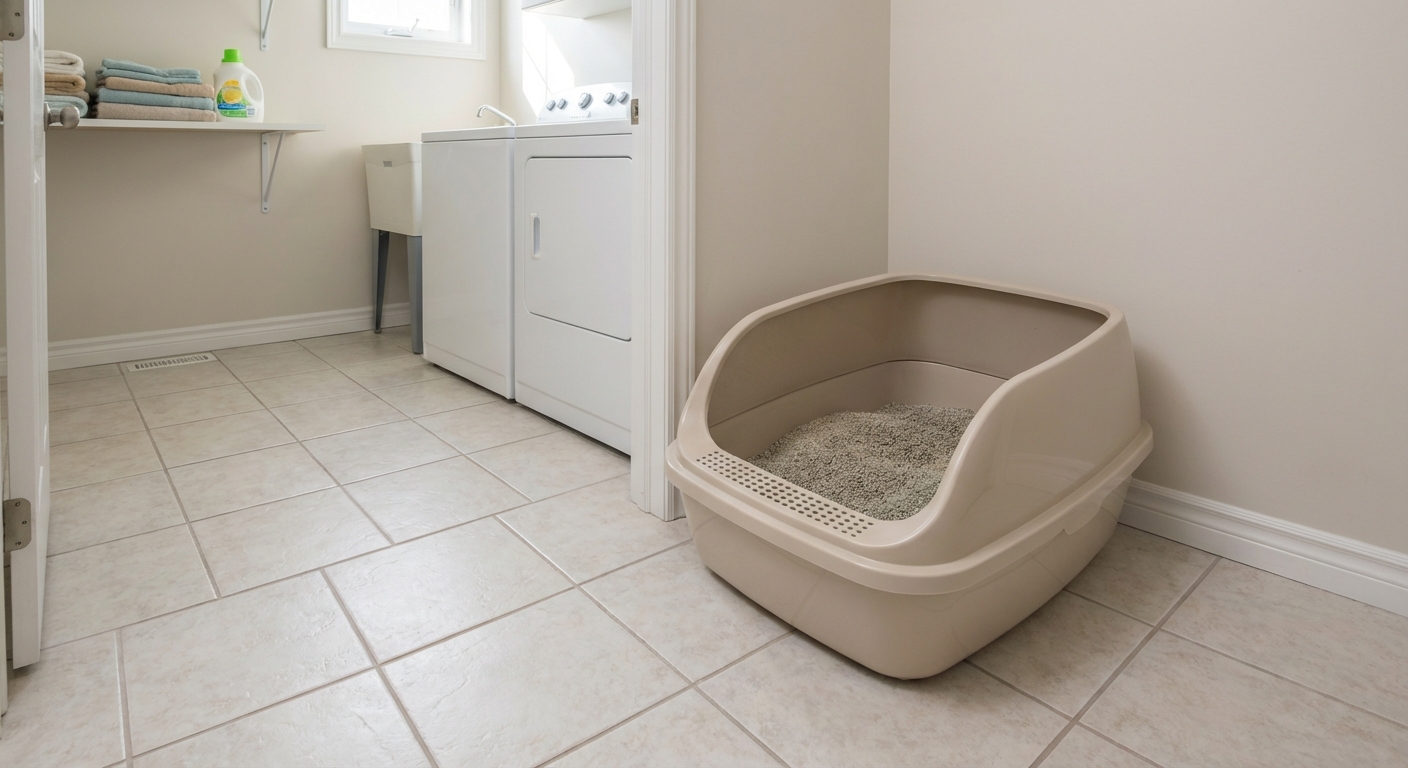
- Box style: Some cats hate lids. Seniors may need low-entry boxes. Many cats prefer large boxes with plenty of room to turn.
- Litter type: Scented or dusty litters can be a dealbreaker. Try an unscented, fine-grain clumping litter if your cat is picky.
2) Stress, anxiety, or territory conflict
Stress can trigger inappropriate urination. Common triggers include:
- New pet or baby
- House guests, construction, moving
- Outdoor cats seen through windows
- Conflict between cats in the home
The bed, because it smells like you, can become a comfort spot, or a place your cat urinates to mix their scent with yours.
3) Separation-related distress
Some cats become anxious when their favorite person’s routine changes. If accidents happen shortly after you leave or during schedule shifts, separation distress may be part of the picture.
4) Negative litter box association
If your cat experienced pain while urinating (even briefly), they may begin to avoid the box. This is one reason rapid vet care matters. The longer it continues, the more learned the avoidance can become.
5) Marking and spay or neuter status
Spraying is more common in intact cats, and spaying or neutering often helps reduce it (though it is not a guarantee). Even neutered cats can spray when stressed or when they feel their territory is threatened.
6) Multi-cat resource guarding
In homes with multiple cats, accidents can happen when one cat is blocking access to the litter box or making another cat feel unsafe. Helpful fixes include:
- Set up separate litter box stations in different areas, not all in one room
- Add visual barriers (screens, furniture placement) so a cat can enter and exit without feeling trapped
- Spread out key resources like food, water, scratching posts, and resting spots
What to do today
1) Book a vet visit and bring details
Tell your veterinarian:
- When it started and how often it happens
- Whether it is a large puddle or small spots
- Any straining, blood, frequent licking, or box hovering
- Diet changes, new stressors, or household changes
If possible, bring a fresh urine sample in a clean container, but follow your clinic’s instructions on collection. Many clinics prefer a sterile sample for certain tests.
2) If your vet wants a urine sample
Ask your clinic what method they prefer. For at-home collection, some vets may suggest temporarily using non-absorbent litter or a clean, empty box, then transferring the urine with a clean syringe or spoon into a clean container. Refrigerate it and deliver it promptly, but follow your clinic’s timing guidelines.
3) Protect the bed for now
Until you solve the cause, set your cat up for success:
- Close the bedroom door if you can
- Use a waterproof mattress protector
- Cover bedding with a washable, water-resistant blanket
4) Clean correctly with an enzymatic cleaner
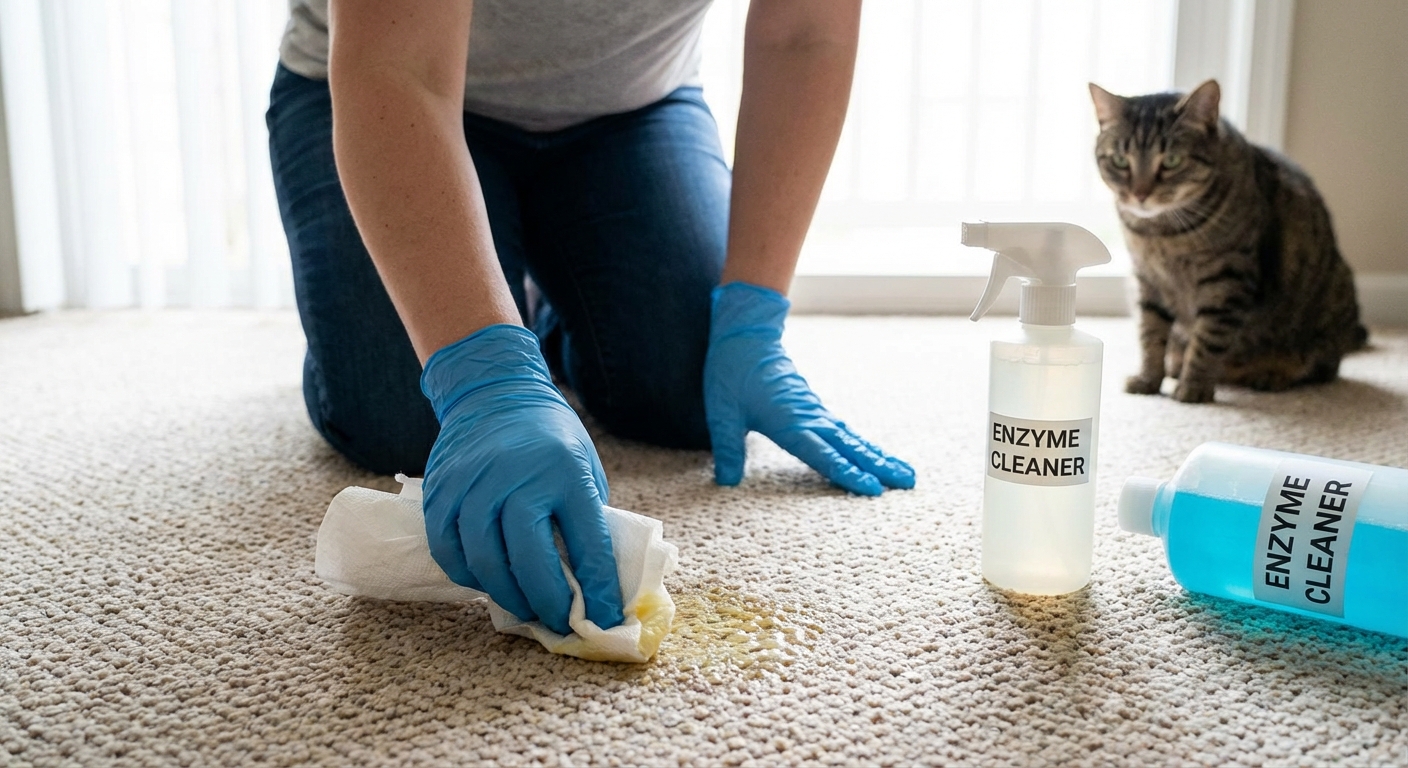
Regular soap does not fully remove urine odor. Cats have incredible noses, and lingering scent can invite repeat accidents. Use an enzymatic cleaner made for pet urine and follow the soak time on the label. You may need more than one application, especially on a mattress. Let the area dry fully.
Avoid ammonia-based cleaners. To some cats, ammonia smells similar to urine and can make the spot more tempting.
5) Make the litter box easy to use
- Scoop daily, and consider twice daily during retraining
- Offer one large, uncovered box in a low-traffic, easy-to-reach area
- Keep food and water in a separate zone from the box
- Try a litter attractant if your vet says it is appropriate
6) Reduce stress with practical changes
- Add a cat tree or safe perch
- Create a retreat room during busy times
- Use predictable feeding and play schedules
- Consider veterinarian-recommended pheromone diffusers for temporary support
7) Ask about medication when it fits
If pain is part of the problem, treating pain matters. If anxiety or conflict is driving the behavior, some cats benefit from anti-anxiety medication or other supports. This should always be discussed with your veterinarian so the plan is safe and tailored to your cat.
What not to do
- Do not punish or scold. Cats do not connect punishment with the earlier accident. It increases fear and stress, which can worsen the behavior.
- Do not rub their nose in it. This is harmful and does not teach the right behavior.
- Do not change everything at once. If you are testing litter types or locations, make changes gradually so you can see what helps.
If it keeps happening
If your cat has had more than one bed accident, plan on a two-track approach:
- Medical: urinalysis, and culture when indicated, plus vet-guided treatment and diet or hydration support if recommended.
- Behavior: optimize the litter box setup and reduce stressors, especially in multi-cat homes.
If your cat is anxious, multi-cat dynamics are tense, or you are seeing spraying, ask your veterinarian about a referral to a board-certified veterinary behaviorist or a qualified cat behavior consultant. Getting expert eyes on your home setup can be a game-changer.
Your cat is not being “bad.” They are communicating the only way they know how. With the right steps, most cats can return to consistent litter box use.
Quick checklist
- Sudden change? Treat it like a medical issue first.
- Watch for straining or low urine output. Seek urgent care if present.
- Clean with enzymatic cleaner and avoid ammonia-based products.
- Add boxes, scoop daily, and keep boxes easy to access on each level of the home.
- Identify stress triggers and create calm, predictable routines.