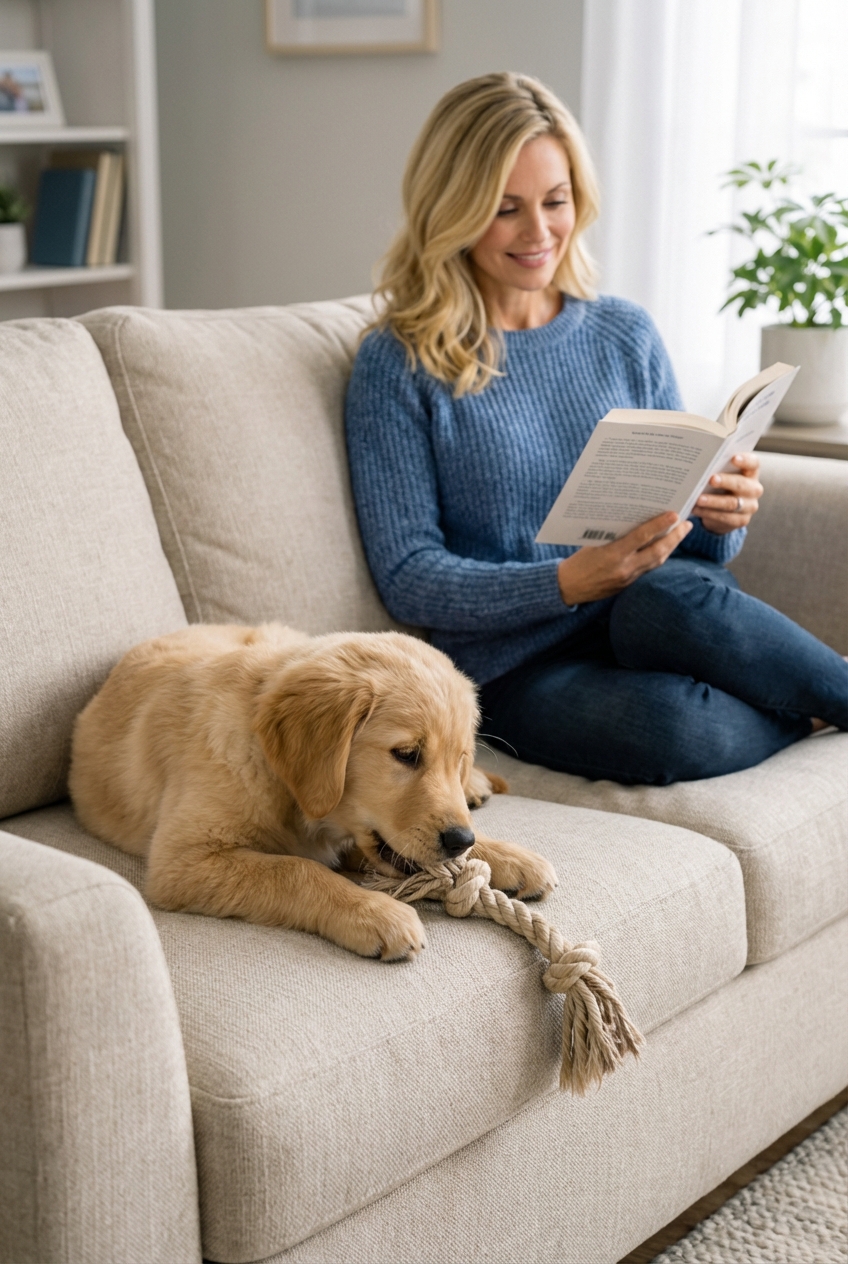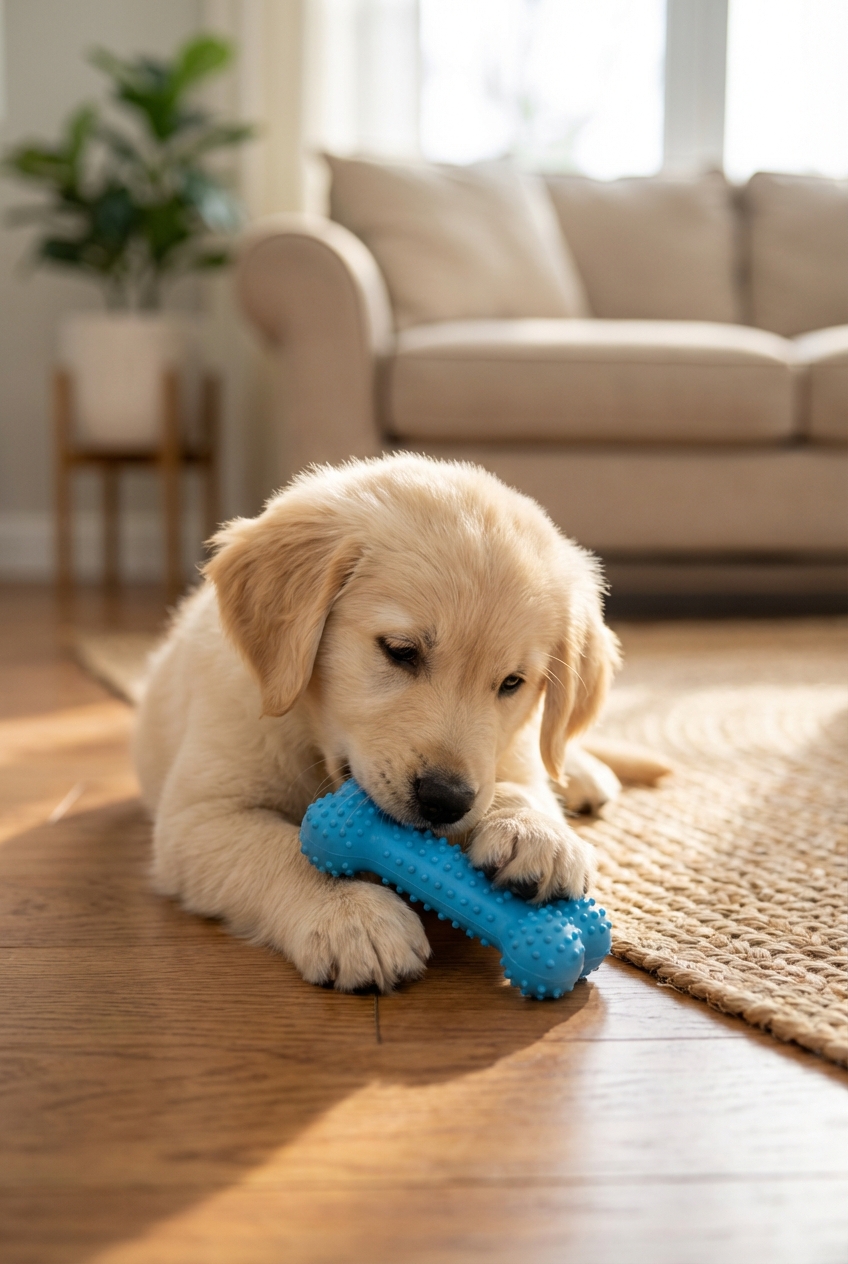
Puppy biting is usually normal. Learn why it happens and how to reduce it fast with redirects, reverse time-outs, calm breaks, naps, enrichment, and teething...
Article
•
Designer Mixes
Why Puppies Bite

Shari Shidate
Designer Mixes contributor
Puppy biting can feel personal, especially when those tiny teeth find your ankles at full speed. But in most cases, biting is a normal part of puppy development. Puppies explore the world with their mouths, learn social rules through play, and go through teething phases that make chewing feel extra satisfying.
The good news: you can absolutely teach bite inhibition and good manners without harsh punishment. The goal is not a puppy who never uses their mouth. The goal is a puppy who learns gentle mouth behavior and chooses appropriate things to chew.
Is puppy biting normal?
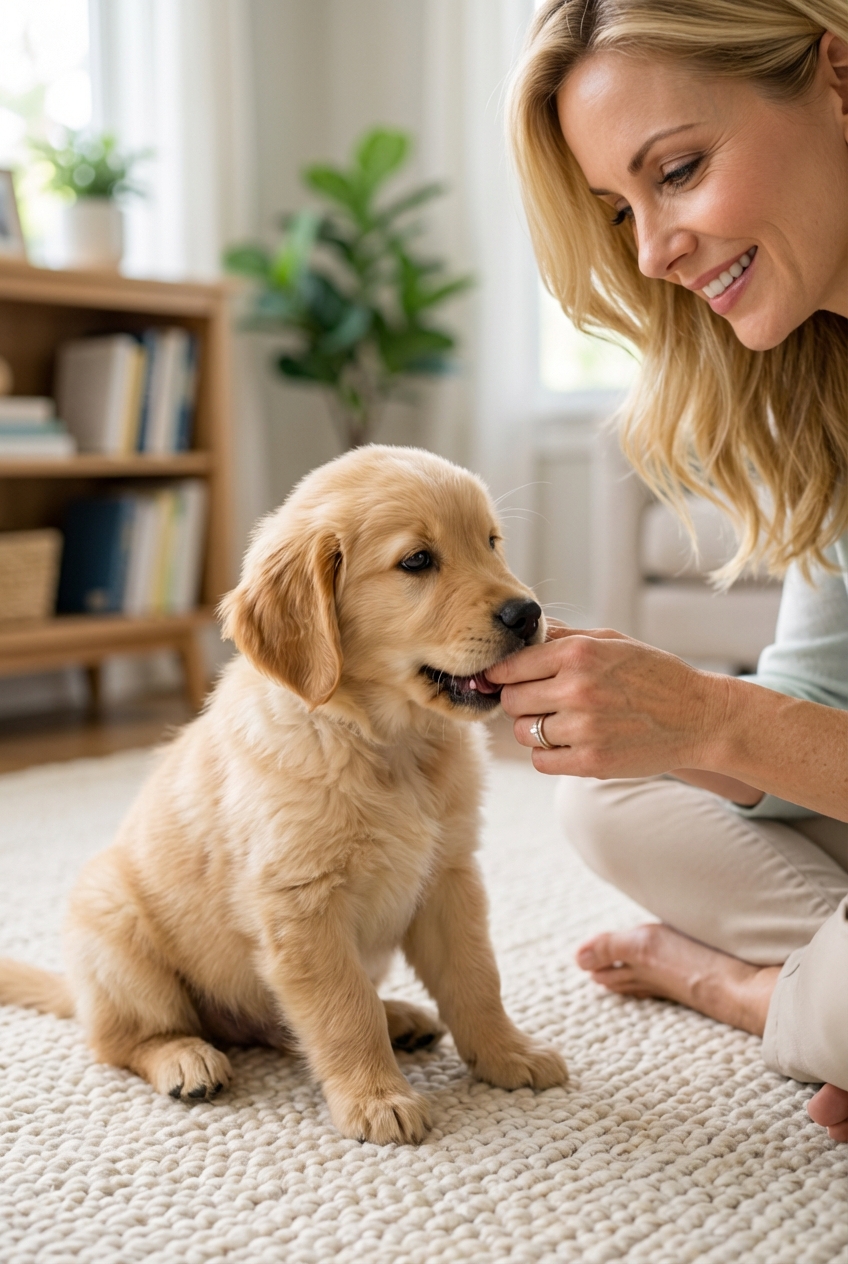
Yes. Nearly all puppies bite at least sometimes. It is a combination of instinct, learning, and biology. In my experience as a veterinary assistant, many families notice a big spike in nipping in early puppyhood (often around 8 to 16 weeks), and then another wave during teething. That timing can vary a lot by individual.
Puppies bite for a few main reasons:
- Exploration: mouths are like hands for puppies.
- Play: they bite littermates during play and learn limits.
- Teething discomfort: sore gums drive chewing.
- Overtired or overstimulated: puppies get “bitey” when they need a break.
- Attention-seeking: biting works if it makes you react.
- Herding genetics: some mixes are more likely to nip heels.
What biting means
Before you correct the behavior, take a moment to read the context. The same “bite” can mean very different things.
Play nipping
This is fast, bouncy, and often paired with play bows and zoomies. It usually gets worse if kids squeal or hands move quickly.
Teething and chewing
Teething often ramps up around 3 to 7 months as adult teeth come in. You may see more chewing on furniture, baseboards, and hands. Mild gum bleeding can happen, but persistent bleeding, swelling, a foul smell, or refusing food should be checked by your veterinarian.
Overtired “land shark” mode
Many puppies bite hardest when they are exhausted. Like toddlers, they can melt down instead of settling. If biting spikes in the evening, you may be looking at an overtired puppy who needs a nap, not more play. Many puppies need roughly 18 to 20 hours of sleep a day, especially in the early months.
Fear or pain
Warning signs include a stiff body, freezing, whale eye, growling, backing away, or biting when touched in a specific spot. If you suspect pain or fear, stop the interaction and talk to your vet and a qualified trainer. Medical issues like ear infections, GI discomfort, dental pain, or orthopedic pain can make puppies reactive to handling.
How to stop puppy biting
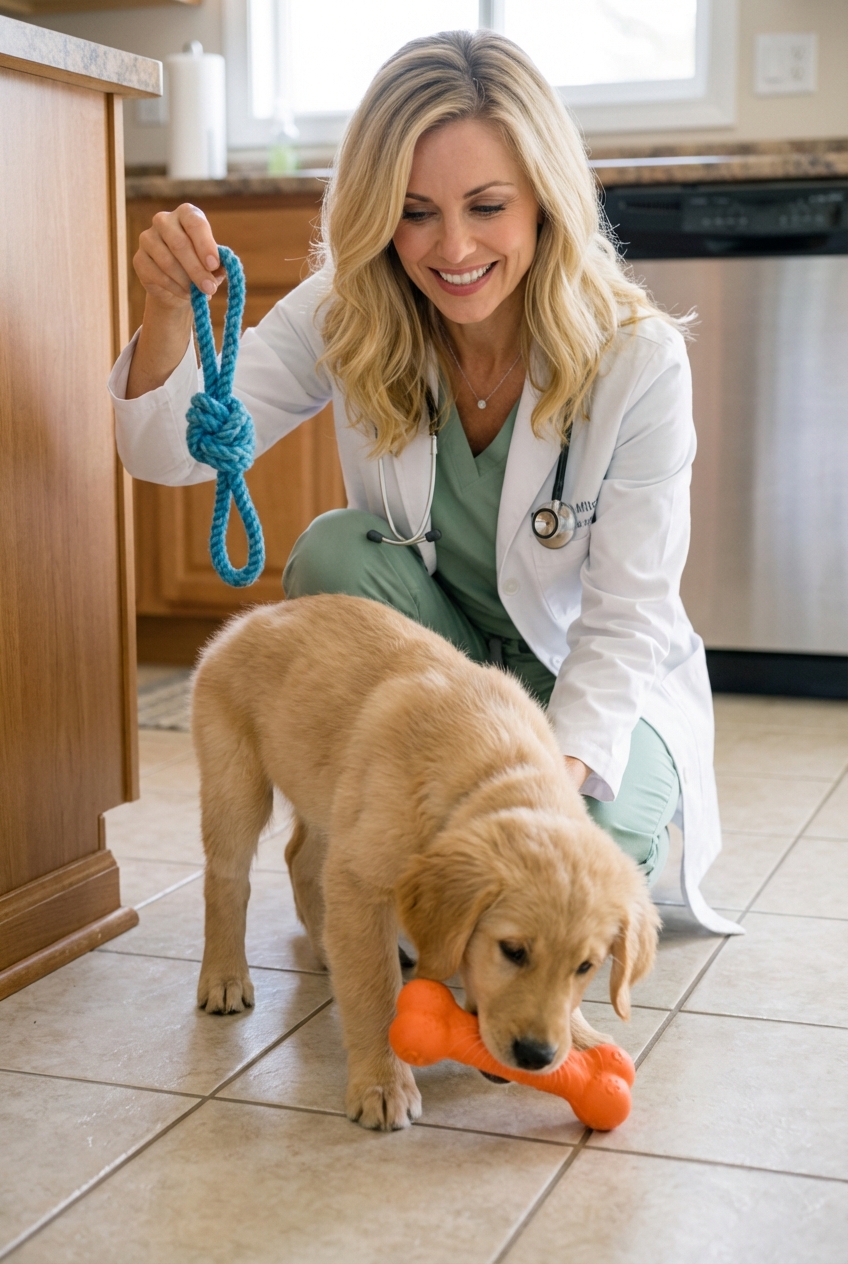
Think of this as a simple training plan: teach your puppy what to bite, how hard is too hard, and what to do instead.
1) Keep a toy close
If your puppy bites your hands, calmly trade your skin for a toy. You are not “rewarding biting.” You are teaching the correct target.
- Keep toys in every room your puppy plays in.
- Use toys that encourage distance, like a tug toy, not tiny chew pieces that keep teeth near your fingers.
2) Teach bite inhibition
Puppies learn bite inhibition from littermates. You can teach it too. Expect this to be a two-step process for many puppies: first you get a softer mouth, and later you work toward no teeth on skin.
- If the bite is too hard, immediately stop play for 5 to 15 seconds.
- “Become boring” means: freeze, fold your arms, look away, and do not talk. If needed, step behind a gate or out of reach.
- When the puppy calms, restart with low-arousal play using a toy (gentle tug, slow wiggle, or a short chew session).
- Consistency matters. If biting ends the fun every time, puppies learn quickly.
3) Use short time-outs
If your puppy keeps coming back with teeth, they may need a reset.
- Calmly place the puppy behind a baby gate or in a puppy-safe pen for 30 to 60 seconds.
- No scolding. The goal is to lower arousal, not frighten.
- Then offer a chew or a calm activity.
4) Add naps and structure
Overtired puppies nip more. Many young puppies do best with a rhythm of play, potty, then rest.
- Use a crate or pen for planned naps if your puppy will not settle.
- Offer a safe chew (with supervision) to help them decompress.
5) Reward what you want
Catch your puppy being good.
- Mark and reward moments when your puppy is sitting, licking gently, or chewing their own toy.
- Teach simple cues like “sit,” “touch,” and “leave it.” These give your puppy a job when they get excited.
6) Manage kids and guests
Puppies often bite moving targets, and children move fast. Management protects everyone while training catches up.
- Have kids use toys to play, not hands.
- Avoid squealing, running, and roughhousing with a nippy puppy.
- Use gates so the puppy can watch calmly without rehearsing biting.
7) Use smart management
Every time biting “works,” it gets practiced. Reduce opportunities while your training catches up.
- Puppy-proof your main living area and block off trouble spots.
- Use a playpen or gated zones to create calm, predictable spaces.
- Consider a lightweight drag line indoors (supervised) so you can guide your puppy without grabbing at their collar.
8) Handling and gear without bites
Some puppies bite during harness, collar, or leash handling because they are wiggly, uncomfortable, or worried.
- Pair handling with treats: touch collar, treat; clip leash, treat; lift harness, treat.
- Go slowly and keep sessions short. Aim for calm cooperation, not wrestling.
- If your puppy bites when a certain body part is touched, stop and check with your vet to rule out pain.
Chews and toys for teething
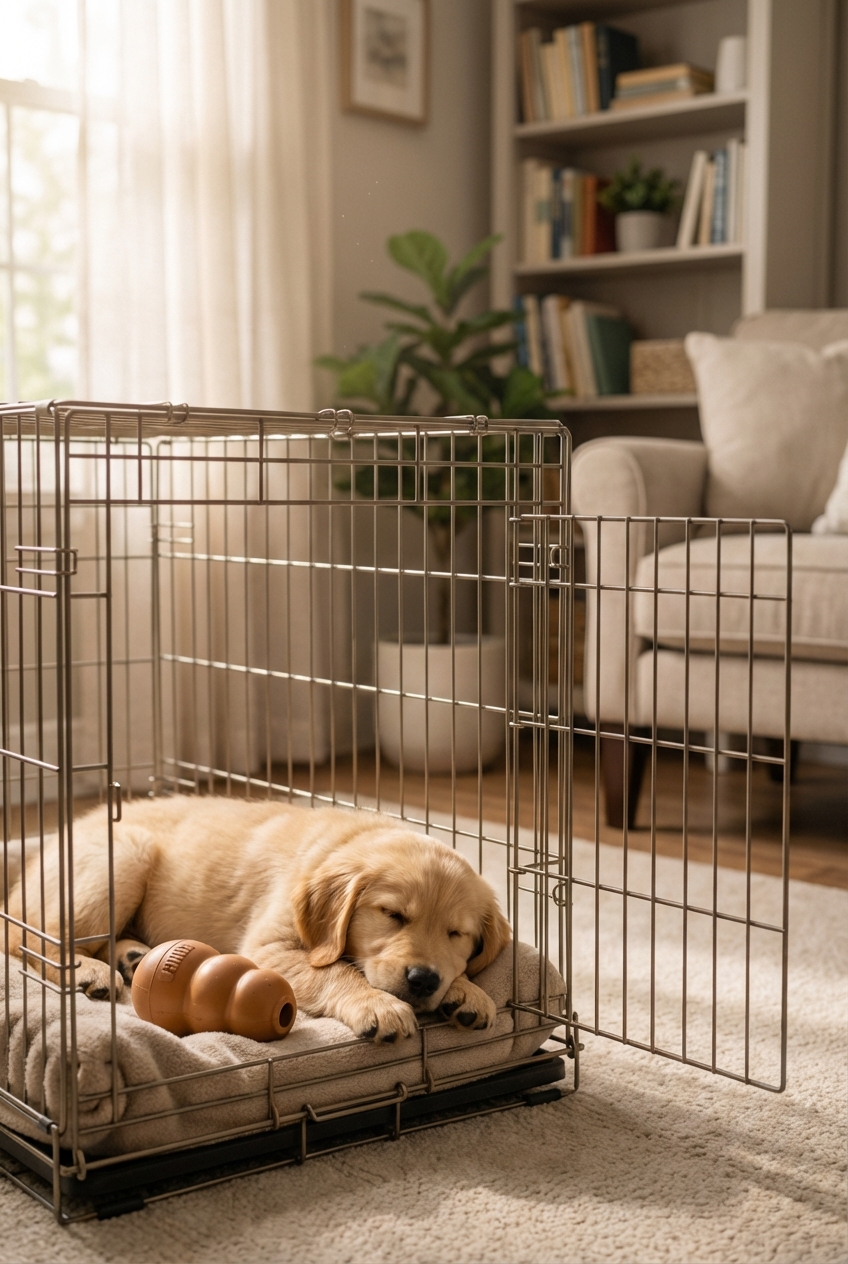
Chewing is a real need during teething. The safest plan is to provide appropriate outlets and rotate them so they stay interesting.
Often helpful
- Rubber chew toys sized appropriately for your puppy.
- Food-stuffed toys for calming enrichment (use your puppy’s regular food to avoid tummy upset).
- Wet, twisted, frozen washcloth for sore gums (supervise and remove if your puppy shreds fabric).
- Veterinarian-approved dental chews that match your puppy’s age and chewing style.
Use caution or skip
- Very hard chews that can crack teeth (slab fractures are a real risk). Practical rules of thumb: if you cannot dent it with a fingernail, or if you would not want to hit your kneecap with it, it may be too hard for many puppies.
- Items that splinter or break into sharp pieces.
- Rawhide and similar chews if your puppy tends to gulp pieces. The bigger concern is choking or GI obstruction, and digestibility varies widely by product.
If you are unsure what is safest for your specific puppy, ask your veterinarian. Breed, jaw strength, and chewing intensity really matter.
Mistakes to avoid
- Waving hands away or pulling back fast: movement triggers chase and nip.
- Rough play with hands: it teaches that human skin is a toy.
- Yelling or physical punishment: it can increase fear, frustration, and biting intensity.
- Outdated “alpha” tactics like muzzle grabbing, pinning, or “scruff shakes”: these can escalate fear and create handling sensitivity.
- Overusing “ouch” if it revs your puppy up: for some puppies it acts like a squeaky toy. If it makes biting worse, go silent and end play instead.
- Inconsistent rules: if biting sometimes works, your puppy will keep trying.
- Too much freedom too soon: puppies need supervision and safe spaces.
When to get help
Most puppy biting improves with time and training. But you should get extra support if you see any of the following:
- Biting that breaks skin frequently.
- Growling, freezing, or guarding around handling, food, or toys.
- Sudden biting that is new or out of character.
- Biting that happens when you touch a specific body part (possible pain).
- Your puppy cannot settle and is constantly escalating.
A veterinary check can rule out pain or medical issues, and a positive reinforcement trainer can tailor a plan for your household. Early help is one of the best investments you can make in your puppy’s future.
Simple daily routine
If you like simple checklists, here is a realistic daily approach many families can stick with:
- Morning: potty, short training session (3 to 5 minutes), breakfast in a food toy, nap.
- Midday: potty, gentle play with a tug toy, practice “sit” and “drop it,” nap.
- Afternoon: sniff walk or backyard exploring, supervised chew time, nap.
- Evening: calm enrichment (lick mat or stuffed toy), early bedtime to prevent overtired biting.
Biting is information. Your puppy is either learning, teething, tired, or overwhelmed. When you meet the need and teach a better option, the behavior changes.
With consistency, most puppies become noticeably gentler within a few weeks. Keep sessions short, set your puppy up to succeed, and remember: you are raising a baby dog. Progress is built one calm repetition at a time.