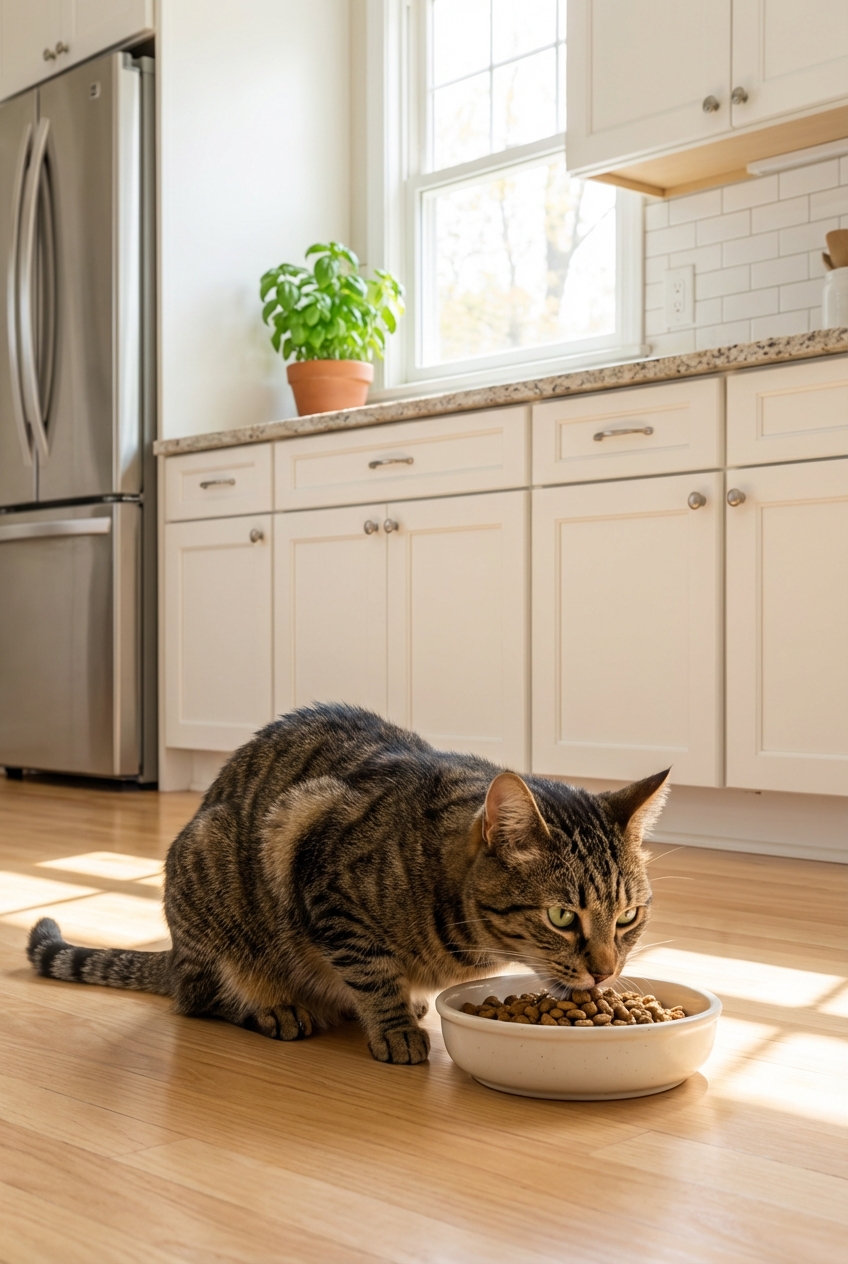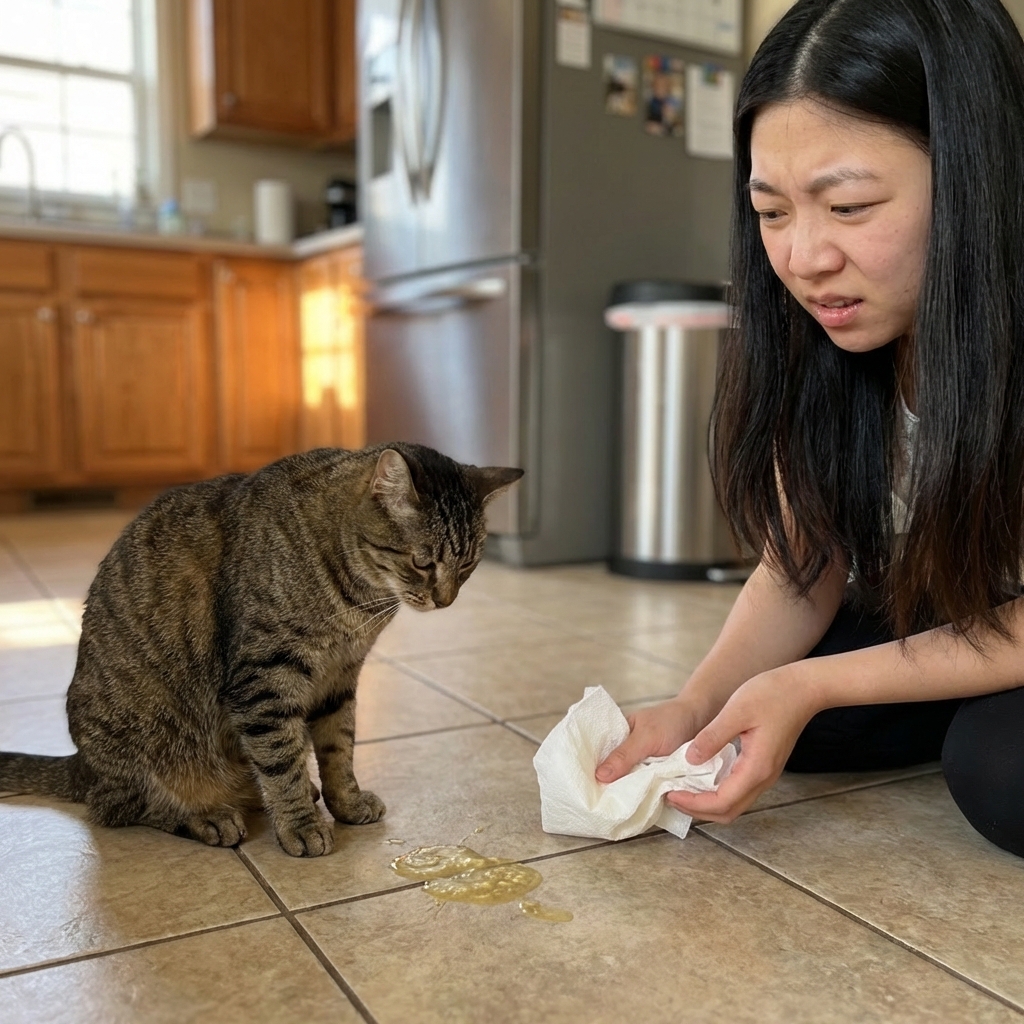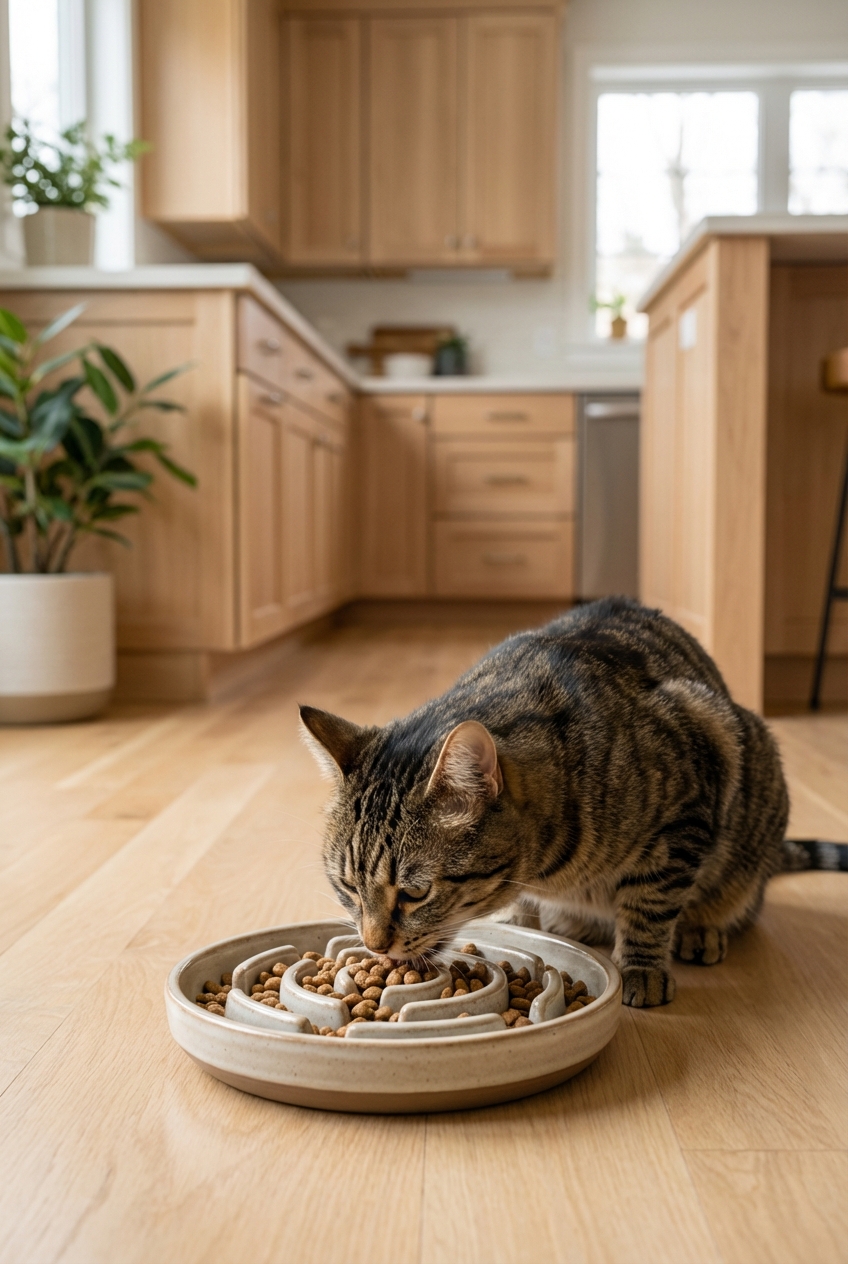
Is your cat inhaling food and vomiting after meals? Learn why cats eat too fast and how to slow them safely with smaller meals, slow feeders, puzzles, wet fo...
Article
•
Designer Mixes
Why My Cat Vomits After Eating

Shari Shidate
Designer Mixes contributor
If you have ever watched your cat eat and then promptly throw up, you are not alone. As a veterinary assistant, I see this concern all the time, and I want you to know two things: many causes are manageable, and a few are urgent. The key is noticing patterns and knowing when to call your veterinarian.
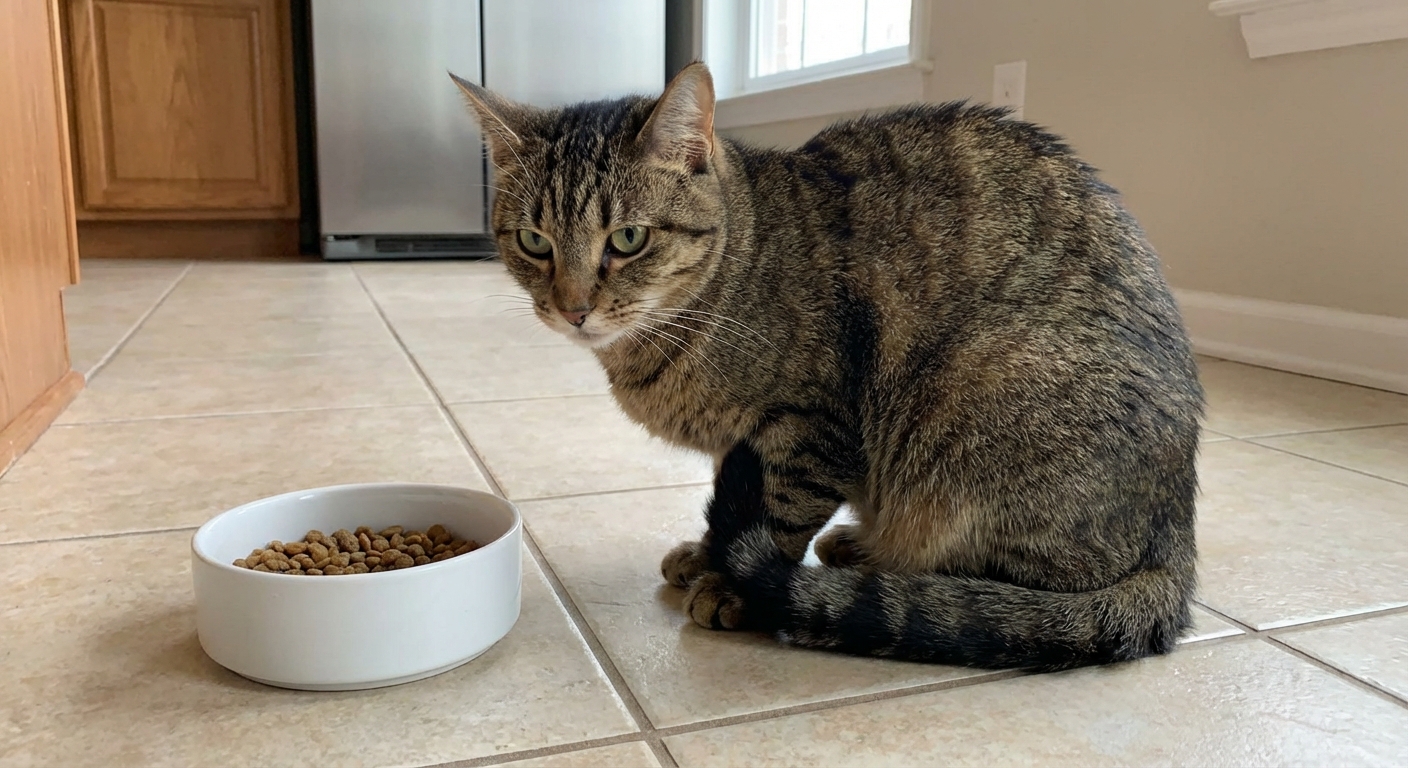
Post-meal throw-up can look different from one cat to another. Some cats bring up undigested food within minutes. Others vomit later with partially digested food, foam, or yellow fluid. Those details matter, because they can help point us toward different causes.
Vomiting vs. regurgitation
These two are easy to mix up, but they can suggest different problems. The timing and effort involved are often the biggest clues.
- Regurgitation usually happens soon after eating, with little warning and little effort. Food often looks undigested and may come up in a tube-like shape, but it is not always perfectly formed. This can be seen with eating too fast, esophagus irritation, or other upper GI issues.
- Vomiting typically involves nausea signs like drooling, lip-smacking, gulping, or heaving. The material may be partially digested and can include foam or bile. Vomiting can also happen soon after a meal, so do not rely on timing alone.
If you can safely take a quick photo after it happens, that can be surprisingly helpful for your vet.
Common reasons cats throw up after eating
Eating too fast
This is a common explanation, especially in multi-cat homes or cats who act like every meal is a race. When cats gulp food, they can swallow extra air and overfill the stomach, which may trigger vomiting or regurgitation shortly after meals.
Hairballs
Hairballs do not always look like a neat tube of fur. Some cats vomit food or foam first, then produce a hairball later, or never bring it up at all. Frequent episodes plus heavy grooming, shedding, or a history of hairballs can point in this direction.
Food sensitivity or food allergy
Some cats react poorly to certain proteins, rich foods, or sudden diet changes. This can cause vomiting and may also come with soft stool or diarrhea. Some cats develop skin or coat changes (itchiness, over-grooming) and, less commonly, ear inflammation. Signs vary, which is why a vet-guided diet trial can be so helpful.
Diet changes or rich treats
Cats can be sensitive to abrupt diet changes. Switching foods too quickly, offering high-fat table foods, or introducing new treats can trigger stomach upset.
Stomach or intestinal inflammation
Gastritis (stomach irritation) and inflammatory bowel disease can cause vomiting around meals, decreased appetite, weight loss, or diarrhea. These cases often need veterinary diagnostics and a structured plan.
Parasites
Intestinal parasites are less common in strictly indoor adult cats, but they are still possible. Vomiting can be one sign, especially in kittens or newly adopted cats.
Foreign material or string
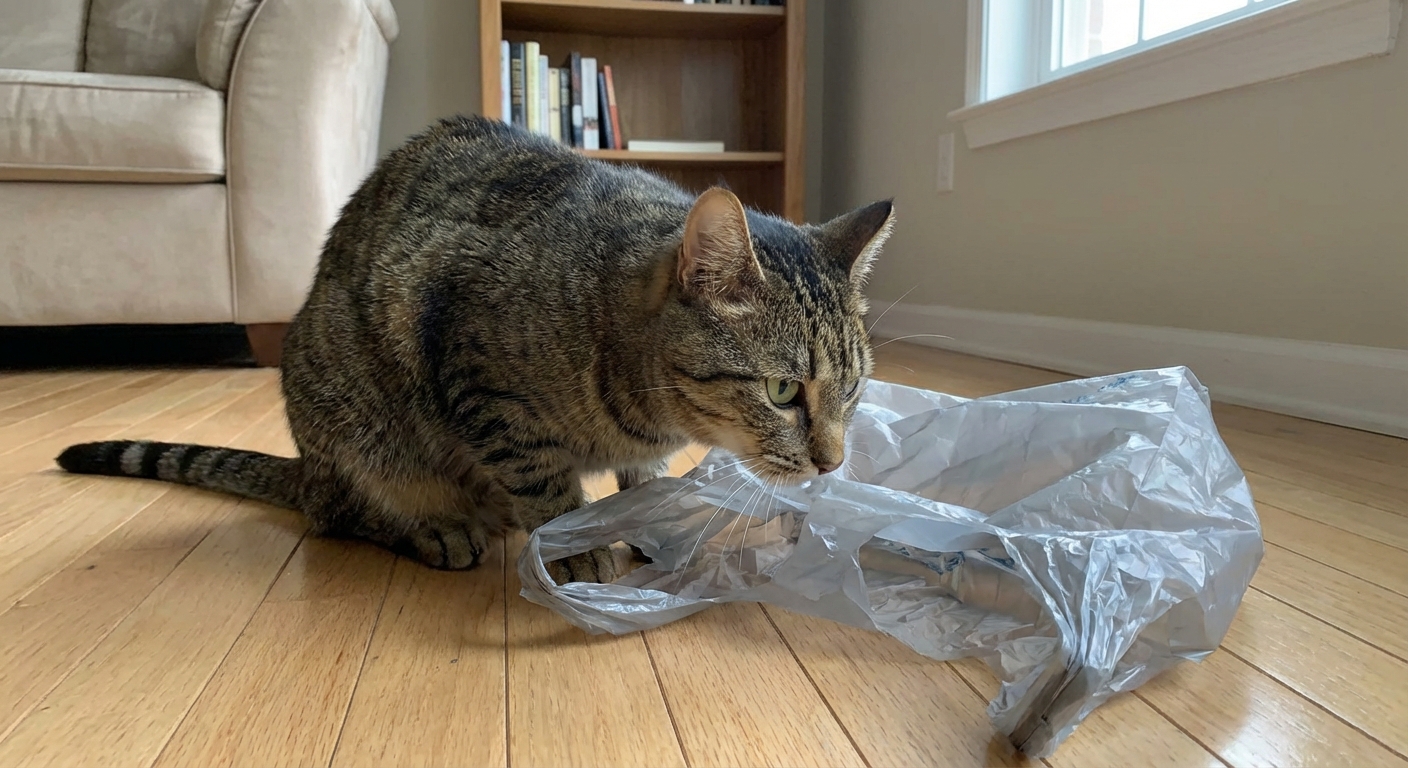
Cats love chewing. String, ribbon, dental floss, toys, and plastic can irritate or obstruct the GI tract. Vomiting after eating can be an early clue, and it can become an emergency quickly.
Other medical causes
Persistent post-meal vomiting can also be linked to conditions like pancreatitis, kidney disease, hyperthyroidism, diabetes, liver disease, or GI tumors, especially in older cats.
Medications and toxins can also be involved. Some antibiotics and other prescribed medicines can upset the stomach, and cats may vomit after exposure to certain toxic plants, lilies, household chemicals, essential oils, or human medications.
One extra note on yellow fluid: it is often bile. Bile can show up when the stomach is empty or irritated, but it is not diagnostic on its own.
When to call the vet right away
Please contact your veterinarian or an emergency clinic the same day if you notice any of the following:
- Repeated vomiting (more than 2 to 3 times in 24 hours)
- Unable to keep water down
- Blood in vomit, vomit that looks like coffee grounds, or black tarry stool
- Severe lethargy, collapse, or obvious pain
- Swollen or tense belly
- Suspected string, ribbon, or foreign object ingestion
- Possible toxin exposure (for example: lilies, cleaners, essential oils, human medications)
- Vomiting plus no appetite for 24 hours (or 12 hours in kittens)
- Weight loss, increased thirst/urination, or vomiting that continues more than a couple days
Cats can hide illness until they cannot, so trusting your instincts is always a good move.
What you can do at home
Slow the eating down
- Feed smaller meals more often (for example, 3 to 5 mini-meals)
- Use a puzzle feeder or slow-feed bowl designed for cats
- Spread kibble on a large plate or baking sheet so your cat cannot gulp
- If you have multiple cats, feed separately to reduce competition
Check the food setup
Some cats eat more comfortably with wide, shallow, whisker-friendly dishes. A slightly elevated bowl may help certain cats as well, though results can vary.
Transition food slowly
If you are changing diets, aim for a gradual transition over 7 to 10 days:
- Days 1 to 3: 75% old, 25% new
- Days 4 to 6: 50% old, 50% new
- Days 7 to 9: 25% old, 75% new
- Day 10+: 100% new
Support hairball control
- Brush regularly, especially for long-haired cats
- Ask your vet about a hairball gel or diet if hairballs are frequent
- Make sure your cat is hydrated, since dehydration can worsen constipation and hairball issues
Track patterns like a detective
Write down:
- How soon after meals it happens
- What it looks like (food, foam, bile, hair)
- What was eaten (brand, flavor, treats)
- Any other signs (diarrhea, appetite changes, weight loss)
This simple log can save time and money at the vet because it narrows the possibilities.
Important safety notes
- Do not give OTC human medications unless your veterinarian tells you to. Many are unsafe for cats.
- Do not fast your cat at home without veterinary guidance. Going without food can be risky for cats, especially overweight cats.
What your vet may recommend
Depending on your cat’s age, symptoms, and exam findings, your veterinarian may suggest:
- Fecal testing for parasites
- Bloodwork to check kidney, liver, thyroid, blood sugar, and hydration
- X-rays or ultrasound to look for obstruction, inflammation, or masses
- A diet trial (limited ingredient or hydrolyzed protein)
- Anti-nausea medication, stomach protectants, or probiotics, depending on the case
- Hairball or constipation management if that is part of the picture
My best evidence-based advice is this: if vomiting is new, recurrent (for example, more than once a week, or happening on and off for weeks), or paired with any change in appetite or energy, do not wait it out.
Key takeaway
Watching your cat throw up after eating is upsetting, but you do not have to guess your way through it. Start with the simple fixes like slowing meals and tracking patterns, and loop in your veterinarian if it persists or comes with red flags. With the right plan, many cats go from frequent post-meal vomiting to comfortable, confident eating again.