Cat suddenly not using the litter box? Learn urgent medical warning signs, common causes like FLUTD, arthritis, stress or marking, and practical steps to fix...
Article
•
Designer Mixes
Why Isn’t My Cat Using the Litter Box?

Shari Shidate
Designer Mixes contributor
If your cat has stopped using the litter box, it can feel confusing, stressful, and honestly a little heartbreaking. As a veterinary assistant, I want you to know two important things: this is common, and it is usually fixable. The key is to treat it like a health and comfort issue, not a behavior problem to punish.
This guide cannot diagnose your cat, but it can help you triage what is urgent and improve the litter box setup while you schedule a veterinary visit.
In this guide, we will walk through veterinarian-approved reasons cats avoid the box, what to check at home, when it is an emergency, and how to get your cat back to reliable litter box habits at any age.
First, rule out a medical cause
Cats are masters at hiding pain. When a cat urinates or poops outside the box, it is safest to assume something hurts, feels urgent, or feels difficult, even if it looks like “misbehavior.”
Even if you strongly suspect a litter or stress issue, schedule a vet visit. Many medical problems look exactly like a litter box problem at home.
Common medical reasons
- Bladder inflammation (cystitis) and FLUTD: frequent trips, small amounts of urine, crying in or near the box, licking the genital area. In younger adult cats, cystitis is often not caused by bacteria.
- Urinary tract infection (UTI): true bacterial UTIs are more common in older cats and cats with other conditions, but they can occur. Signs can look similar to cystitis.
- Urinary crystals or bladder stones: pain, blood in urine, straining.
- Constipation: hard stools, straining, and avoiding the box because it becomes linked with discomfort.
- Diarrhea or inflammatory bowel disease: urgency means they may not make it to the box.
- Arthritis or mobility pain (very common in adult and senior cats): they may avoid high-sided boxes or stairs.
- Cognitive dysfunction in seniors: confusion and changes in routines.
- Diabetes, kidney disease, hyperthyroidism: increased urination can lead to accidents if box access or cleanliness is not keeping up.
When it is an emergency
If your cat is straining to urinate, producing little to no urine, crying, vomiting, hiding, or seems weak, treat it as an emergency. Male cats can develop a life-threatening urinary blockage that needs immediate veterinary care.
Important note: straining can look like constipation or urinary trouble. Either way, if your cat is straining repeatedly, acting painful, or not producing normal urine or stool, get urgent veterinary help.
When GI signs are urgent
Seek urgent care if your cat has diarrhea with lethargy, repeated vomiting, blood or black tarry stool, severe straining, belly pain, not eating, or if a kitten or senior cat develops diarrhea or dehydration quickly.
Common non-medical reasons
Once medical issues are addressed or while you are waiting for your appointment, these are the “big three” litter box triggers I see over and over: cleanliness, location, and litter or box preferences.
1) The box is not cat-clean
Cats have a much stronger sense of smell than we do. A box that seems fine to you may be unacceptable to your cat.
- Scoop at least once daily, ideally twice.
- Dump and wash boxes about weekly, or more often as needed for your household and litter type. Use mild soap and warm water (avoid strong fragrances and harsh chemicals).
- Replace old plastic boxes regularly. Scratches hold odor.
Cleaning tip: Avoid ammonia-based cleaners on accident spots. The smell can resemble urine and may draw cats back.
2) The location feels unsafe
Cats want privacy, but they also need an easy escape route. If a cat feels cornered while using the box, they may choose a “safer” spot.
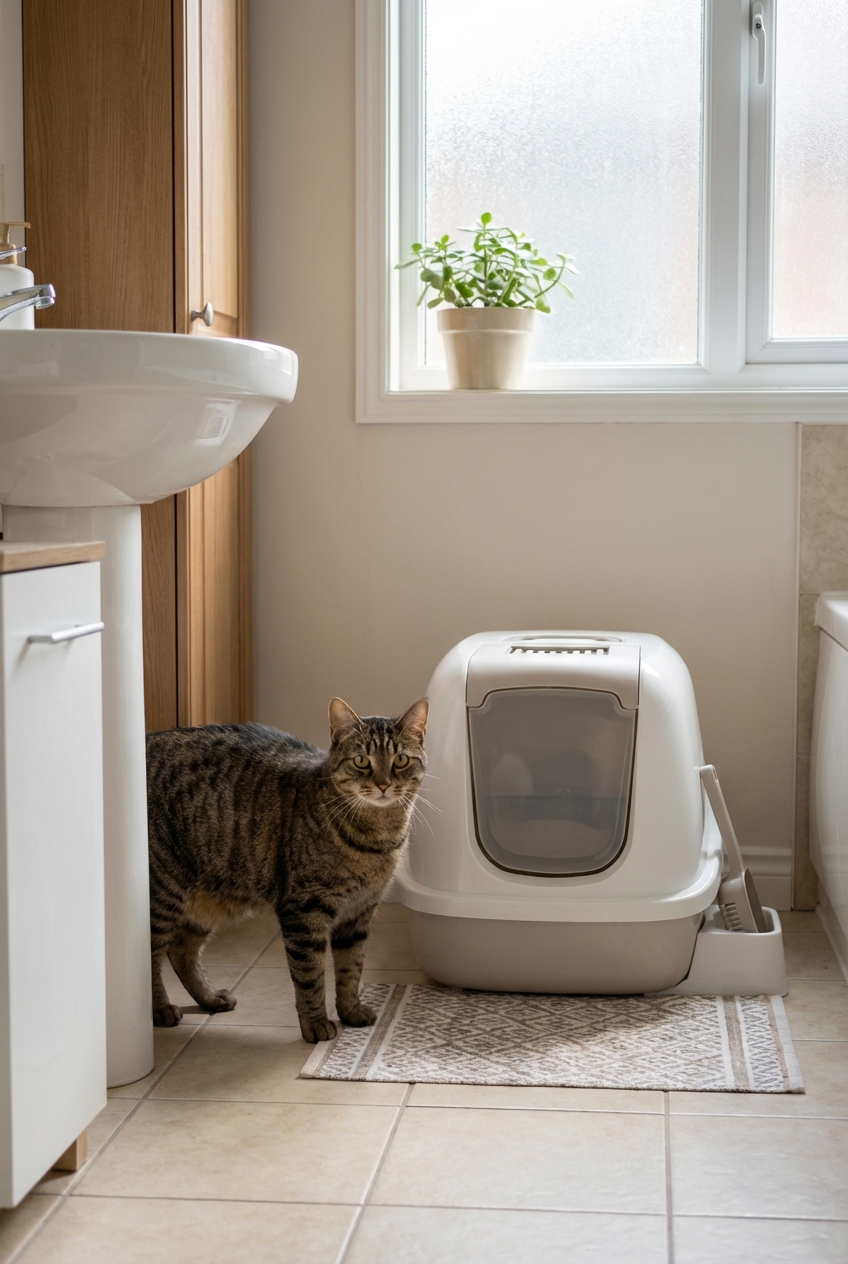
- Keep boxes in quiet, low-traffic areas.
- Avoid placing boxes next to loud appliances like washers or furnaces.
- Make sure your cat cannot be ambushed by another pet in tight hallways.
- For multi-level homes, provide boxes on each floor.
- In multi-cat homes, spread boxes out. Avoid putting all boxes in one room where one cat can guard the area.
3) The litter or box style is not a match
Many cats have strong preferences. If you recently changed litter, added scented litter, switched box style, or introduced liners, that alone can trigger avoidance.
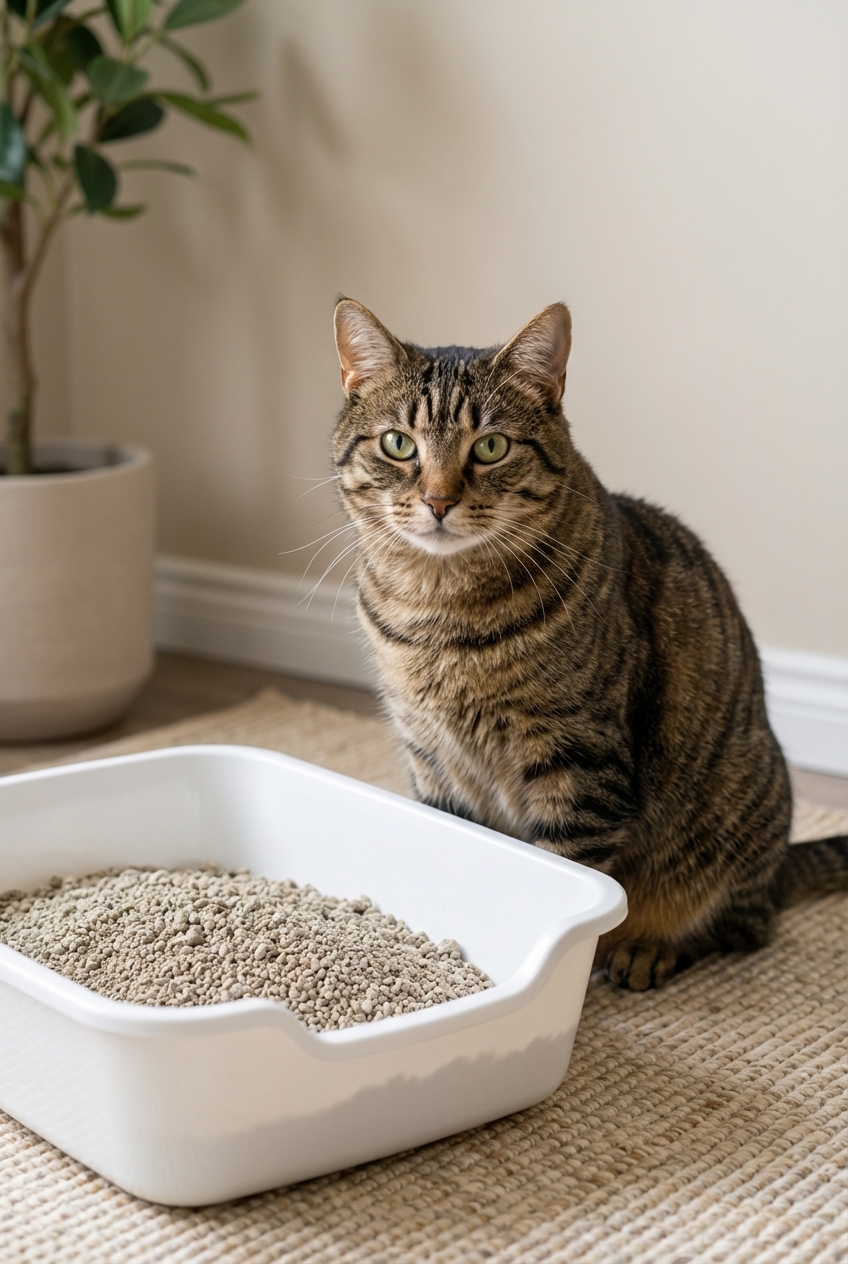
- Many cats do best with unscented, fine-grain clumping litter.
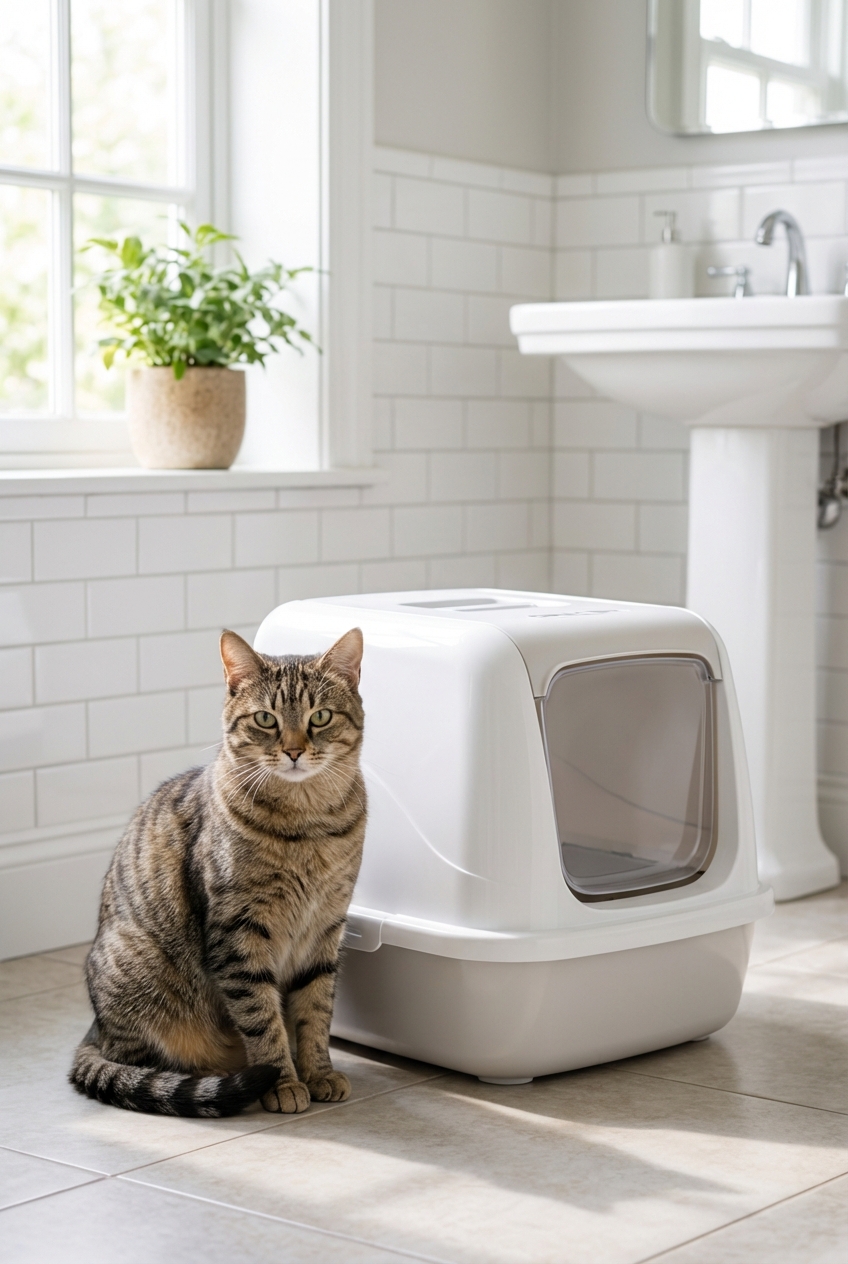
- Some cats dislike covered boxes because ventilation is reduced and odors can build up. Some may also feel trapped.
- High-sided boxes can be hard for kittens, seniors, or cats with arthritis.
- Choose a large, open box. Many cats prefer more space than standard “cat” boxes provide. A clean storage tote (with a low entry cut-out if needed) can work well.
- Litter depth varies by cat. A good starting point is about 2 inches, then adjust up or down based on what your cat prefers.
Age-by-age tips
Kittens
Kittens can miss the box simply because they are learning, distracted, or the box is too hard to access.
- Use a low-entry box.
- Keep them in a smaller area temporarily (like a kitten-safe room) with a box nearby.
- Clean accidents thoroughly with an enzymatic cleaner made for pet urine.
Adult cats
Adults are often affected by stress, territory issues, or subtle medical problems.
- Do not change litter suddenly. If you need to switch, blend it over 1 to 2 weeks.
- For stress, add predictable routines and consider pheromone diffusers.
- Make sure you have enough boxes. The classic rule is one per cat plus one extra.
- In multi-cat homes, reduce “resource guarding” by separating key resources: multiple litter areas, water stations, feeding areas, and resting spots.
Senior cats
Seniors may truly want to use the box but struggle physically or cognitively.
- Try a large, low-entry box with easy access.
- Add a night light near the box.
- Discuss arthritis pain control with your veterinarian. Comfortable cats make better choices.
Marking vs. avoidance
This matters because the plan is different. Also, sudden changes in urination habits, including marking, still deserve a medical check.
Clues it may be urine marking
- Urine is on vertical surfaces like walls, furniture, curtains.
- Smaller amounts of urine.
- Often triggered by stress, new pets, outdoor cats seen through windows, or household changes.
- Spaying and neutering can reduce marking risk, but it can still happen in fixed cats.
Clues it may be box avoidance
- Urine is on horizontal surfaces like rugs, bedding, laundry piles.
- Larger puddles, as if they emptied the bladder.
- May happen near the box, which suggests the cat tried but could not tolerate it.
Stool outside the box
When poop is the main issue, medical causes like constipation, diarrhea, and pain still come first. If your vet rules those out, these non-medical triggers are common:
- Box size: the box may be too small for comfortable turning and digging.
- Not enough boxes: especially in multi-cat homes.
- Litter texture aversion: some cats will urinate on one surface but refuse to poop on it.
- Privacy and safety: a noisy or high-traffic area can make a cat avoid the box for longer “sit time” activities like pooping.
What to do this week
1) Book a vet visit and bring details
Share when it started, whether the issue is urine, stool, or both, any diet changes, stressors, and any signs like straining or blood. If possible, bring a fresh stool sample.
2) Add boxes and simplify
- Add at least one extra box.
- Use uncovered boxes temporarily.
- Use unscented clumping litter and start with about 2 inches, then adjust if your cat seems to dislike it.
3) Make access easy
- Place boxes in quiet, easy-to-reach areas.
- Avoid dead ends where another pet could block them.
- Use low-entry boxes for cats with mobility issues.
4) Clean accidents the right way
Use an enzymatic cleaner. Regular household cleaners often leave odor behind that cats can still detect. If urine has soaked into carpet padding, professional cleaning or replacement may be needed.
5) Reduce stress
- Maintain feeding and play schedules.
- Give cats vertical space like cat trees or shelves.
- Separate resources for multi-cat homes: multiple water stations, feeding areas, and resting spots.
If you try five different things at once, it is hard to know what worked. Start with a medical check plus litter box basics. Then adjust one variable at a time.
What the vet may do
Your vet will tailor testing based on symptoms and age, but a typical plan may include:
- Physical exam including abdominal palpation.
- Urinalysis to check concentration, blood, crystals, and signs of inflammation or infection.
- Urine culture if infection is suspected.
- Bloodwork especially for senior cats or increased urination.
- X-rays or ultrasound if stones, constipation, or other concerns are suspected.
Evidence-based treatment depends on the cause, and can include diet changes, pain relief, constipation support, stress reduction, and environmental adjustments.
Quick checklist
- Is your cat straining or crying to urinate? If yes, emergency.
- Is your cat straining to poop, vomiting, lethargic, or not eating? If yes, urgent.
- Did you recently change litter, box type, or location?
- Are boxes scooped daily and deep-cleaned about weekly or as needed?
- Do you have enough boxes for your number of cats?
- Are boxes spaced out so one cat cannot guard them?
- Is there a bully cat or dog blocking access?
- Could stairs or high sides be painful to climb?
- Are accidents near laundry, rugs, or soft bedding (common with urinary discomfort)?