Worried about a vomiting dog? Learn when vomiting is an emergency, how to offer small sips safely, and the best bland foods (chicken/rice, turkey, pumpkin, e...
Article
•
Designer Mixes
Why Is My Puppy Throwing Up?

Shari Shidate
Designer Mixes contributor
Seeing your puppy throw up can be scary, especially when they are so small and everything feels urgent. The good news is that many causes are mild and short-lived. The important part is knowing what is normal, what needs quick veterinary care, and what you can safely do at home.
As a veterinary assistant in Frisco, Texas, I have seen puppy vomiting range from simple overeating to serious emergencies like intestinal blockage. This handbook will help you sort through the most likely causes and take the next right step.
First, is it vomit or regurgitation?
These look similar but often mean different things.
- Vomiting is an active event. You may see drooling, lip-licking, pacing, retching, and belly contractions. The material may include bile (yellow foam), food, or liquid.
- Regurgitation is more passive. Food or fluid “falls out” shortly after eating, often tube-shaped, and your puppy may act normal right after.
Important: Repeated regurgitation is not something to ignore. It can raise concerns about the esophagus (and there is a risk of inhaling material into the lungs). If it happens more than once, call your vet.
If you are unsure, try to note what you see right before it happens and share that detail with your vet. It is surprisingly helpful.
Red flags: call a vet now
Puppies can get dehydrated and weak faster than adult dogs. Contact your veterinarian or an emergency clinic now if you notice any of these:
- Repeated vomiting (especially more than once, worsening, or happening over several hours)
- Cannot keep water down or vomits after drinking
- Vomiting plus diarrhea, especially if watery
- Blood in vomit (red streaks or coffee-ground appearance)
- Bloated or painful abdomen, hunched posture, crying, or guarding the belly
- Extreme lethargy, collapse, weakness, or acting “not themselves”
- Pale gums, difficulty breathing, or excessive drooling
Go urgently (or call poison control or your emergency clinic on the way) if you suspect:
- Toxin exposure (medications, xylitol gum, chocolate, grapes or raisins, rodent bait, cannabis, nicotine, certain plants)
- Foreign body (chewed toy pieces, socks, corn cobs, bones, rope toys)
Extra caution: Call sooner if your puppy is very young (especially under 12 to 16 weeks), very small, or not fully vaccinated.
Trust your gut. If your puppy looks “off,” it is okay to call. A quick conversation can prevent a big emergency.
What to write down for your vet
If you call or go in, these details help your vet triage faster:
- When it started and how many times it happened
- Vomit vs. regurgitation (what it looked like and what your puppy did right beforehand)
- What was eaten in the last 24 hours (food, treats, table scraps, chews)
- Any chance of toxins or chewed objects
- Any diarrhea, appetite changes, or behavior changes
- Vaccination status and last deworming (if known)
Common reasons puppies throw up
1) Eating too fast or overeating
Puppies are enthusiastic eaters. A full stomach plus fast gulping can trigger vomiting soon after meals. This is often the simplest explanation if your puppy otherwise acts normal.
Helpful fixes: smaller meals, a slow feeder bowl, food puzzles, or spreading kibble on a snuffle mat.
2) Diet change or food intolerance
Switching foods too quickly can upset the stomach. So can rich treats, table food, or dairy. Puppies’ digestive systems are still maturing.
Helpful fixes: transition foods over 7 to 10 days, reduce treats, avoid fatty foods, and keep chews simple.
3) Eating something they should not
Puppies explore with their mouths. Garbage, cat food, mulch, dead critters, and random yard finds can all cause vomiting.
What to watch for: vomiting that keeps happening, belly pain, no appetite, straining, or a “stuck” look (trying to vomit but producing little). Those can suggest blockage.
4) Parasites
Roundworms and other intestinal parasites are common in puppies. Some puppies vomit worms or have a pot-bellied look, soft stool, or poor weight gain.
Helpful next step: bring a fresh stool sample to your vet for testing and deworming guidance.
5) Viral and bacterial infections
Puppies can pick up gastrointestinal viruses, and unvaccinated puppies are at risk for serious infections like parvovirus. Vomiting with diarrhea, lethargy, fever, or refusal to eat needs prompt care.
6) Motion sickness
Car rides can trigger drooling and vomiting, especially in young pups.
Helpful fixes: short positive rides, fresh air, and ask your vet about safe anti-nausea options.
7) Stress or excitement
New homes, new people, and new routines can upset a puppy’s stomach. Stress vomiting is usually occasional and improves as the puppy settles.
8) Serious causes to keep on the radar
- Foreign body obstruction (toy pieces, socks, bones, corn cobs, rope toys)
- Toxins (human medications, xylitol, rodent bait)
- Pancreatitis (less common in young pups but possible with very fatty foods)
- Congenital issues (less common, but some puppies have anatomical or metabolic conditions that cause ongoing vomiting)
What the vomit can tell you
It is not glamorous, but details matter. If you can safely observe, here is what may be suggested:
- Undigested food right after eating: eating too fast, overeating, regurgitation, or sudden excitement after meals
- Yellow foam (bile): empty stomach, reflux, or mild stomach irritation. Also seen with many illnesses, so context matters
- White foam: stomach irritation, nausea, or reflux
- Green fluid: sometimes bile or eating grass, but can also be more concerning if it is persistent or paired with lethargy, pain, repeated vomiting, or not eating. When in doubt, call your vet
- Red blood: irritation, ulcers, toxin, foreign body, or more serious bleeding. Needs veterinary guidance
- Coffee-ground material: digested blood from the stomach. This is urgent
- Worms visible: parasites. Save a photo or sample if you can and call your vet
Timing can be a clue: vomiting first thing in the morning on an empty stomach can look like yellow foam bile, while vomiting soon after meals may point toward eating too fast, overeating, or regurgitation. Either way, patterns help your vet.
Safe home care for mild vomiting
If your puppy vomited once, is acting normal, has no diarrhea, and has no red flags, many veterinarians recommend conservative home care. Because puppies can crash quickly, when in doubt, call your vet.
Step 1: Ask before fasting
Resting the stomach is often helpful, but do not fast very young puppies or toy-breed puppies without veterinary guidance. They can be at higher risk for low blood sugar. If you are considering skipping a meal, call your vet and ask what is safest for your puppy’s age and size.
Step 2: Offer small amounts of water
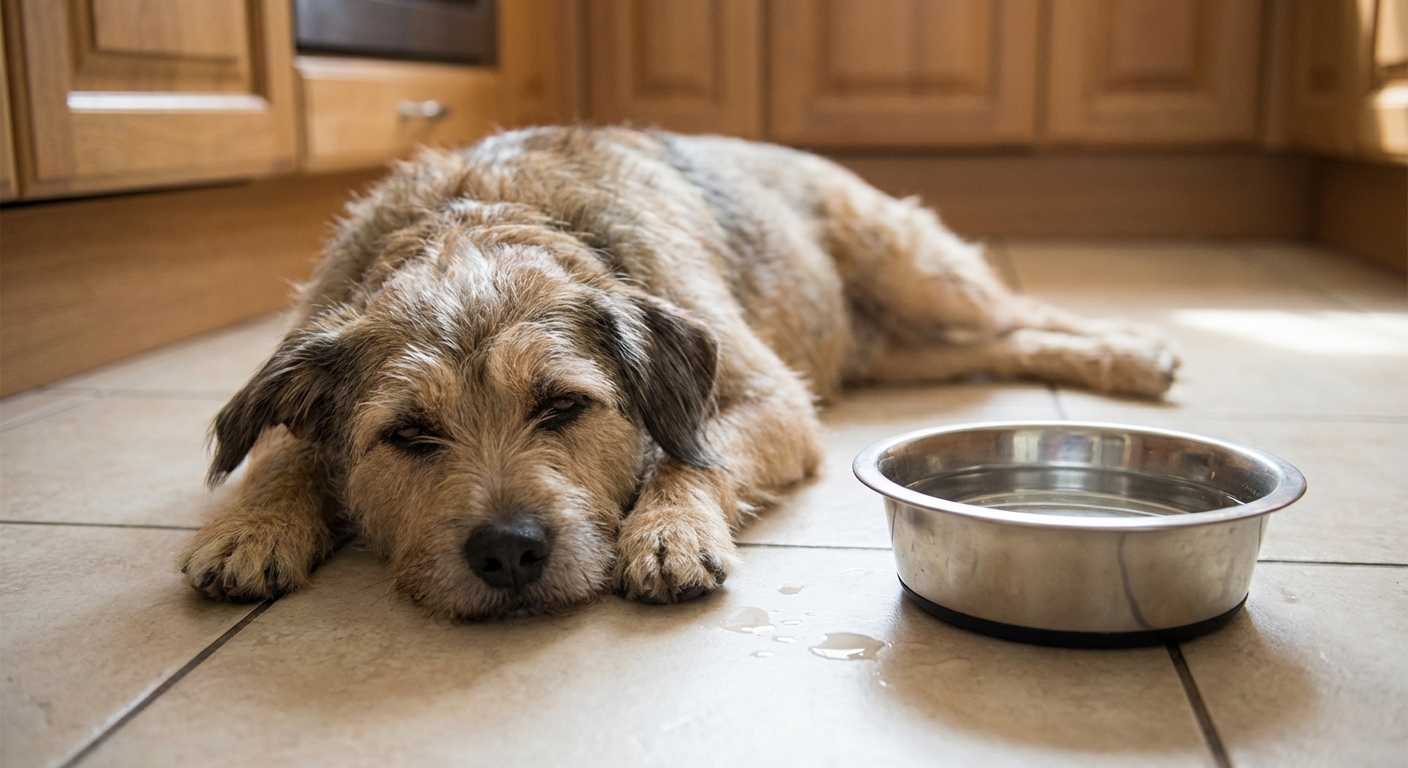
Let your puppy take small sips. Gulping a full bowl can trigger more vomiting. If your puppy vomits after drinking, that is a reason to call your vet promptly.
Step 3: Restart with a short-term bland option
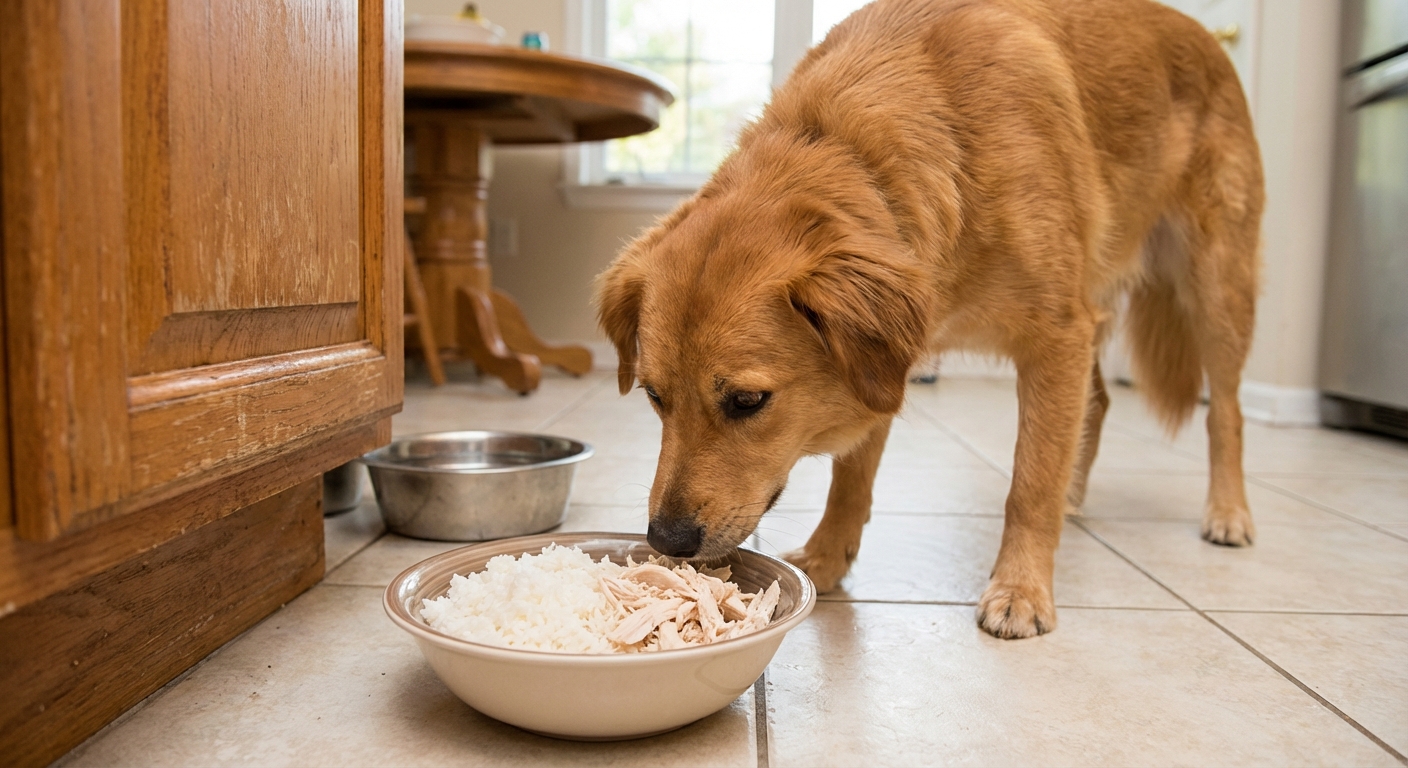
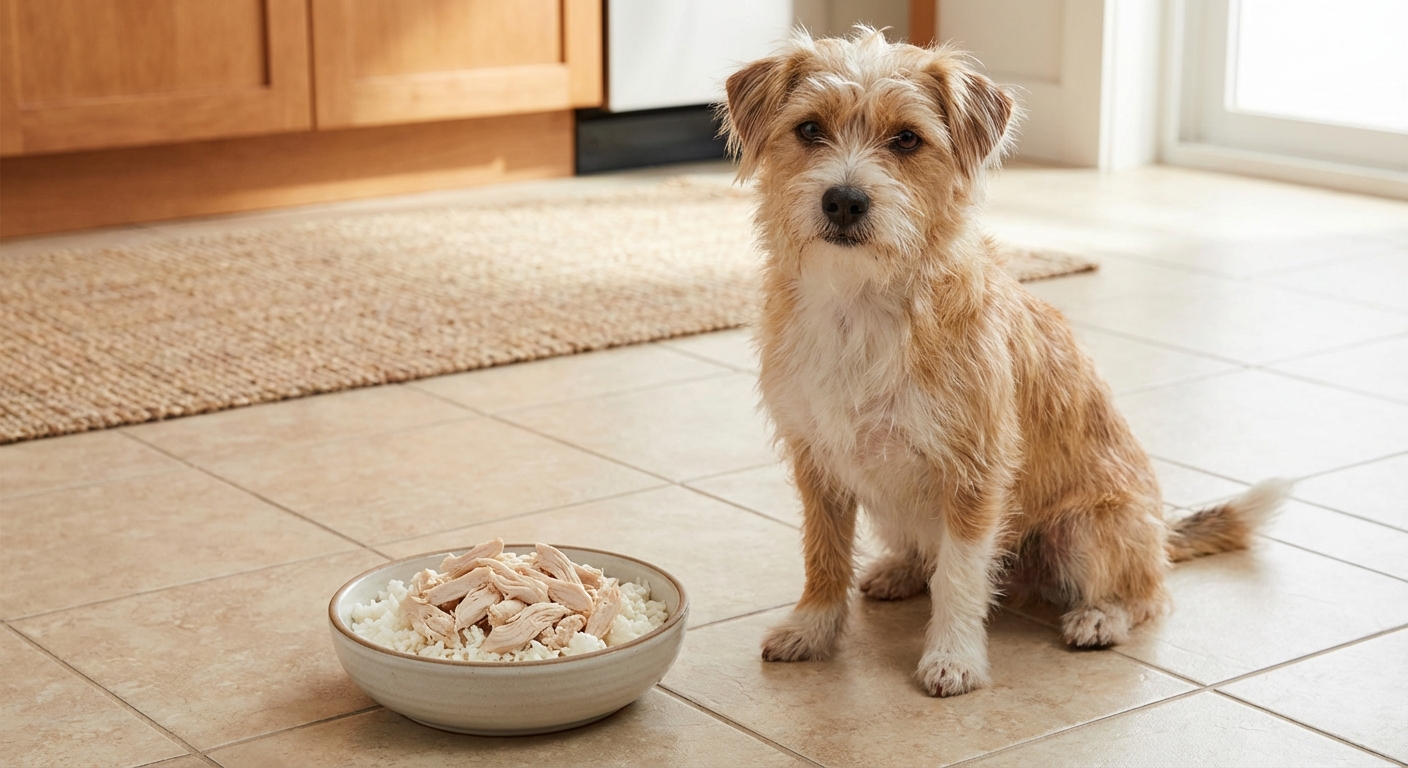
For 24 to 48 hours, many vets suggest an easy-to-digest diet in small portions. Common options your vet may recommend include:
- Boiled skinless chicken breast with white rice
- Lean ground turkey with white rice
- A veterinary GI canned diet (often preferred because it is complete and balanced)
Note: Home bland diets are not nutritionally complete long-term. Use them short-term only and transition back to a complete puppy food as your vet advises.
Step 4: Skip treats and chews temporarily
Even “healthy” chews can irritate a tender stomach. Keep it simple until stools and appetite are normal again.
Do not induce vomiting or give human meds
Do not try to make your puppy vomit at home unless a veterinarian or poison control specifically instructs you. Also avoid human medications unless your veterinarian tells you exactly what to give and how much. Some human medications can be dangerous for dogs, and correct dosing depends on your puppy’s weight, age, and health status.
When to stop home care
Home care is only for mild cases. Call your vet (same day) if:
- Vomiting happens again
- Diarrhea starts
- Your puppy will not eat, seems painful, or becomes lethargic
- Symptoms do not improve within about 12 to 24 hours (sooner for very young or tiny puppies)
Dehydration check at home
Dehydration is a big risk with vomiting. Two simple checks:
- Gums: should be moist, not tacky or dry.
- Skin tent test: gently lift skin over the shoulders and release. It should snap back quickly. Slow return can suggest dehydration.
These checks are not perfect, but if you notice dryness, sticky gums, sunken eyes, or weakness, call your vet.
What your vet may do
The best treatment depends on the cause. Common veterinary steps include:
- History and exam: diet, chewing habits, vaccination status, vomiting frequency, stool changes
- Fecal test: to look for parasites
- Parvo test: especially in young or not fully vaccinated puppies
- X-rays or ultrasound: to look for obstruction or abnormal gas patterns
- Bloodwork: to assess hydration, electrolytes, inflammation, organ function
- Fluids: under the skin or IV, depending on severity
- Anti-nausea medication: to help stop vomiting and protect hydration
- Prescription GI diet: to support gut recovery
- Probiotics (sometimes): your vet may suggest a specific product, since benefits vary by strain and quality
Evidence-based care matters here because stopping vomiting is not just about comfort. It is about preventing dehydration, electrolyte imbalance, and complications.
Prevention
- Puppy-proof your home: pick up socks, kids’ toys, hair ties, and anything chewable.
- Trash security: use a lidded can and keep compost out of reach.
- Slow down meals: slow feeder bowl, smaller portions, more frequent feedings.
- Transition food slowly: increase the new food a little each day for 7 to 10 days.
- Keep treats simple: avoid fatty human foods and limit rich chews.
- Stay current on vaccines and deworming: especially during the puppy series.
- Supervise outdoor time: many puppies snack on grass, sticks, and mystery objects.
Quick decision guide
If you want a simple way to decide what to do next, use this:
- One vomit, acting normal, no diarrhea: monitor closely, offer small sips of water, keep meals small, consider a short-term bland option, call your vet if it happens again.
- Vomiting more than once or worsening: call your veterinarian the same day.
- Any red flag signs or suspected toxin or foreign body: go to an emergency clinic.
You do not need to figure it out alone. A quick call to your vet with specific details can save time, money, and stress.