Puppy biting is usually normal. Learn why it happens and how to reduce it fast with redirects, reverse time-outs, calm breaks, naps, enrichment, and teething...
Article
•
Designer Mixes
Why Is My Puppy Biting Me?

Shari Shidate
Designer Mixes contributor
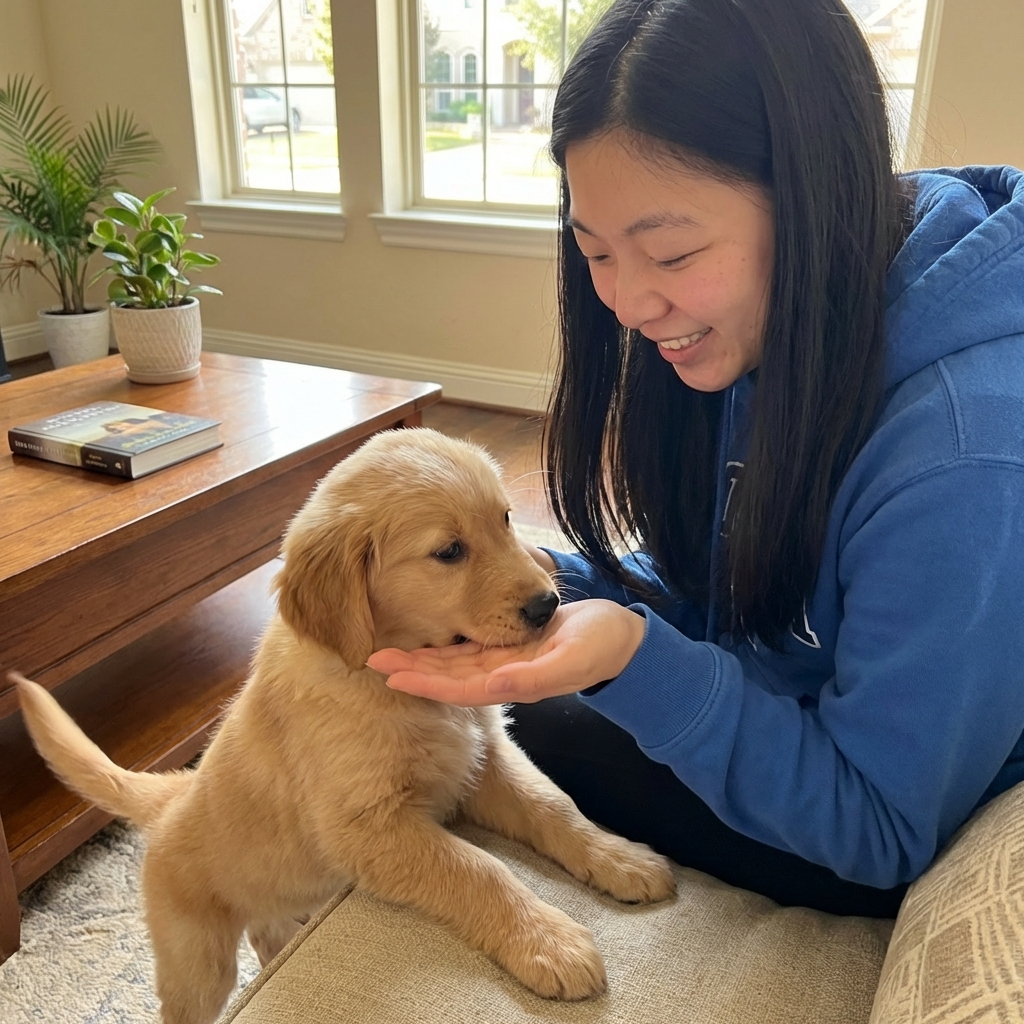
Puppy biting can feel personal, but it almost never is. In my work as a veterinary assistant here in Frisco, I see this concern all the time. The good news is that mouthing is a normal puppy behavior, and with a few simple steps you can teach your pup what is and is not okay.
Think of this guide as your game plan: why it happens, what to do in the moment, and how to prevent it from becoming a long-term habit.
Quick note: This article is general education and is not a substitute for individualized advice from your veterinarian or a qualified trainer or behavior professional.
The quick answer
Your puppy is biting because they are:
- Exploring the world with their mouth, like a toddler uses hands.
- Teething and looking for pressure relief.
- Trying to play the only way they know how.
- Overtired, overstimulated, or frustrated and losing self-control.
- Repeating what worked before because biting got a reaction (attention, movement, eye contact, talking, even “No!”).
Normal biting vs. a problem
Most puppy biting is normal
For many puppies, the peak “land shark” stage happens often between 8 weeks and 6 months, especially during teething. That said, every pup is different. Some puppies mouth less, some mouth more, and some keep working on it well past 6 months. What you want to see over time is softer and less frequent mouthing, not perfection overnight.
Call your vet or a qualified trainer if you see these red flags
- Growling, stiff body, hard staring before or during bites
- Biting that breaks skin repeatedly or seems to be escalating
- Guarding behaviors around food, toys, or resting spots
- Sudden behavior change (pain, illness, or fear can be behind it)
- Kids or vulnerable family members are at risk
If you are unsure, it is always okay to ask for help early. Early support is faster, safer, and usually cheaper than trying to fix a habit later.
Why puppies bite
1) Teething discomfort
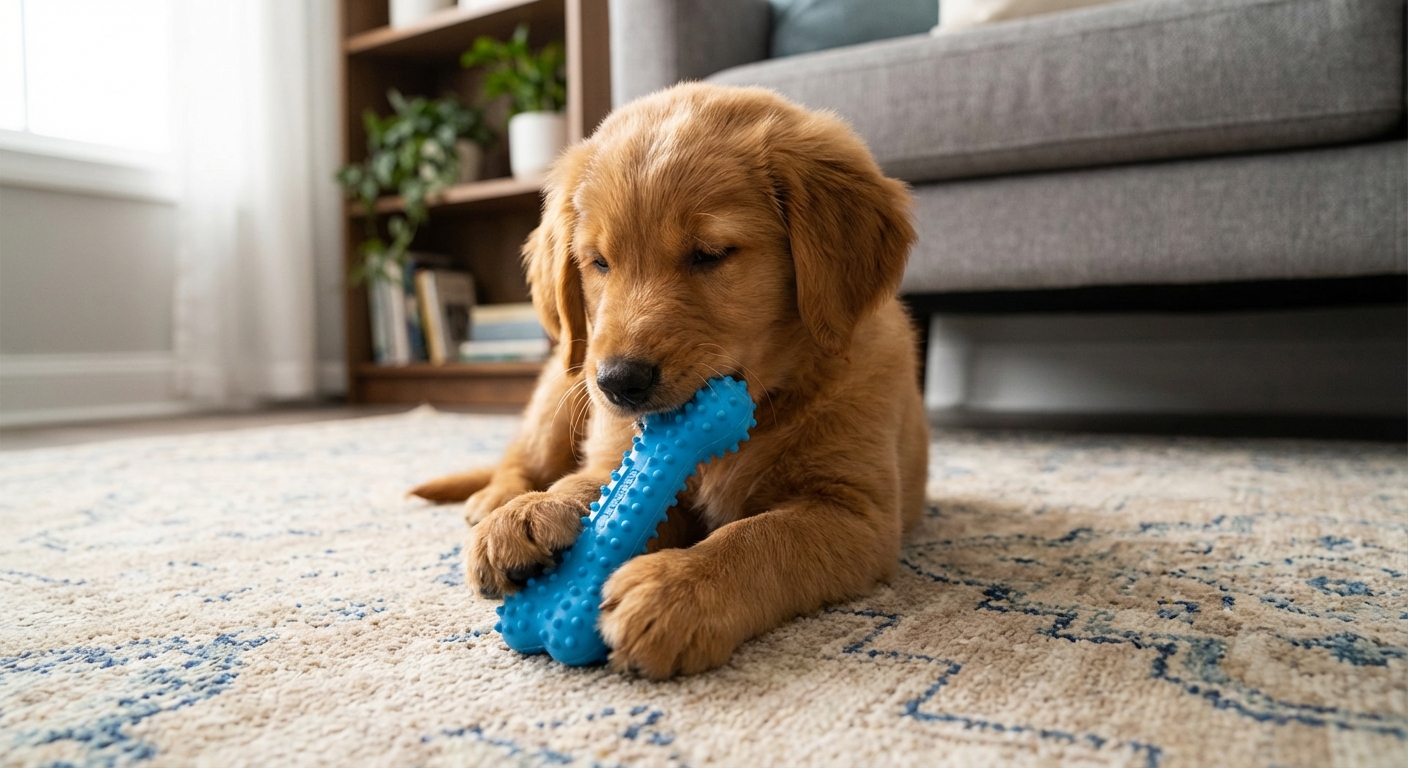
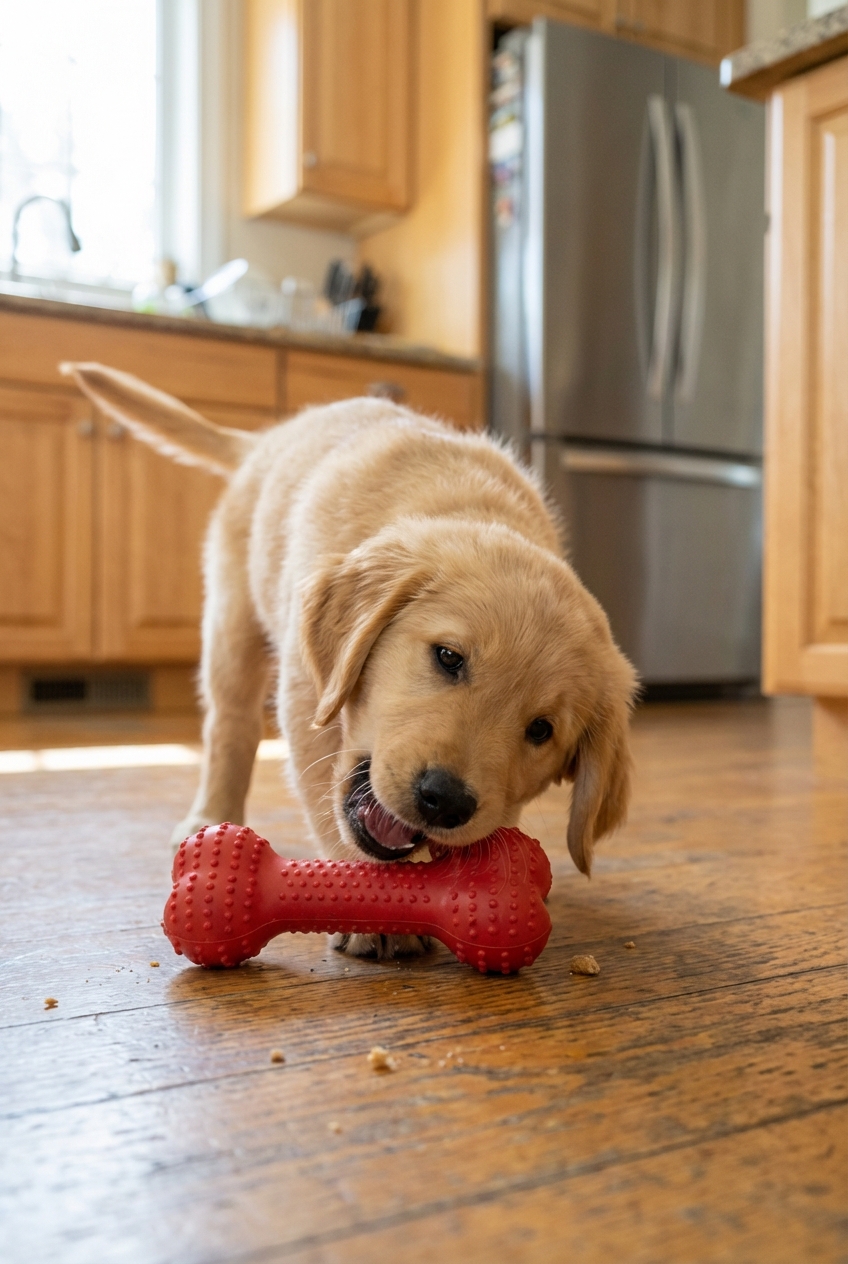
Puppies lose their baby teeth and grow adult teeth, and chewing helps relieve that pressure. This is why they target hands, sleeves, shoelaces, and ankles: they move and feel interesting.
2) Play and social learning
Puppies often learn bite control by playing with other dogs. If they bite too hard, play may stop or the other dog may correct them. Some dogs tolerate rougher play, so humans still need to teach house rules and reward gentle choices.
3) Overstimulation and the evening crazies
That evening zoomie-bitey chaos is common. Many pups are not being “bad,” they are tired. Overtired puppies bite more, listen less, and struggle to calm down.
In the clinic, I hear the same line every week: “He is an angel all day, but after dinner he turns into a tiny piranha.” Most of the time, it is a mix of big feelings and not enough rest.
4) Under-exercise or boredom
Puppies need age-appropriate activity plus brain work. Without outlets, they create their own fun, and your hands may become the best toy in the house.
5) Food arousal or discomfort
If your puppy gets extra nippy right before meals or seems frantic around food, they may need a steadier feeding routine or more calm training around mealtimes. Occasionally, discomfort can also make a puppy crankier. If biting comes with vomiting, diarrhea, poor appetite, or lethargy, check in with your veterinarian.
What to do now
The core method: Freeze, redirect, then remove access if needed. Use the same calm routine every time so your puppy can learn the pattern.
Step 1: Freeze and get boring
When teeth touch skin or clothing, go still. Keep your hands still at your sides or gently folded against your body. Avoid squealing or yanking away fast, because that can trigger chasing and harder biting.
Step 2: Redirect to an appropriate chew
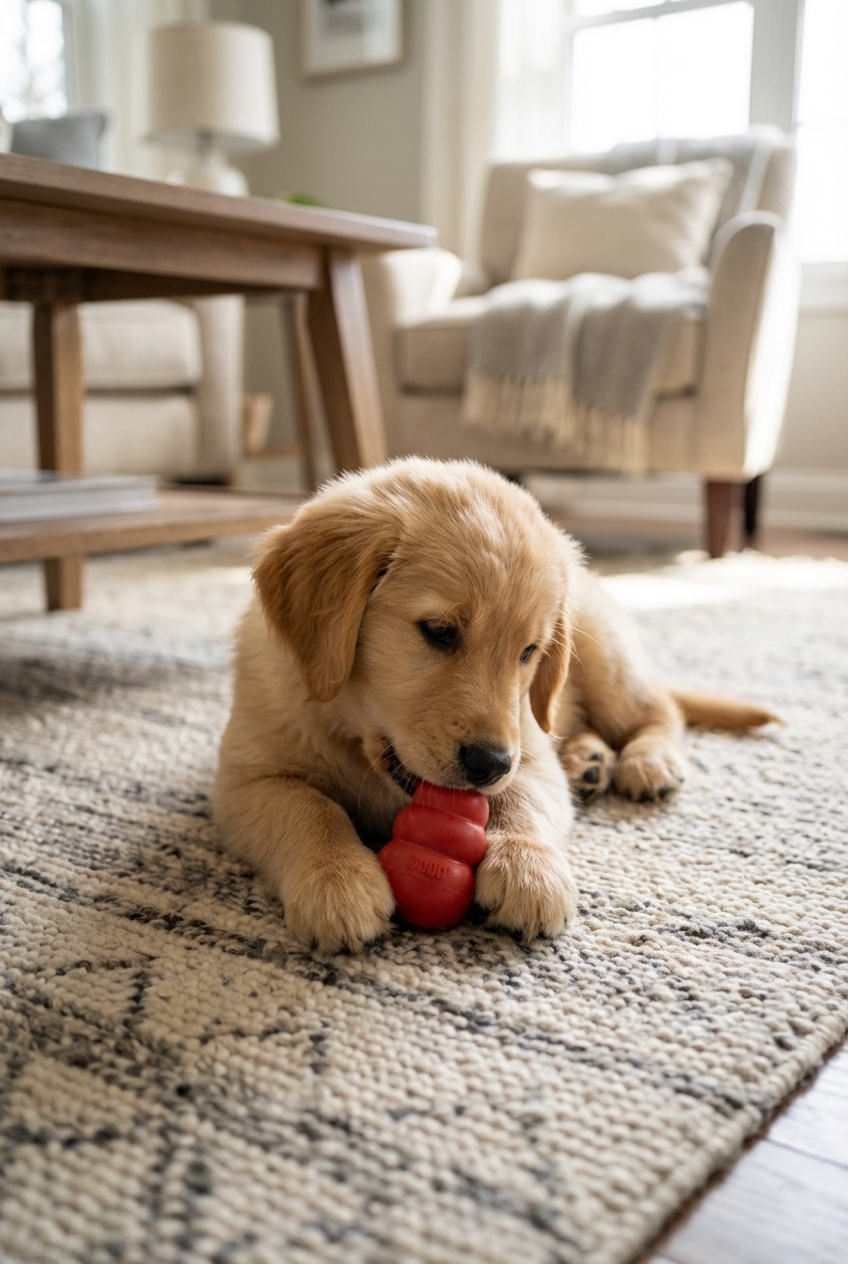
Keep a toy within reach in the rooms you spend time in. Offer it calmly. When your puppy takes the toy, mark it with a calm “Good” and praise softly. If petting revs your pup up, skip the petting and let the chewing be the reward.
- Good options: rubber chew toys, puppy-safe teething rings, stuffed Kongs, long-lasting chews designed for puppies
- Tip: rotate toys so they stay “new” and exciting
Step 3: If biting continues, remove access to you
Instead of “punishing,” you are teaching a clear rule: biting makes fun stop. Choose one:
- Reverse timeout: calmly step behind a baby gate or door for 10 to 20 seconds.
- House line: use a light “drag leash” indoors while your puppy is supervised, so you can calmly guide them away without grabbing at their collar. Safety note: remove the line when you cannot supervise to prevent tangles.
Come back and offer a toy. Repeat consistently. Puppies learn through repetition, not lectures.
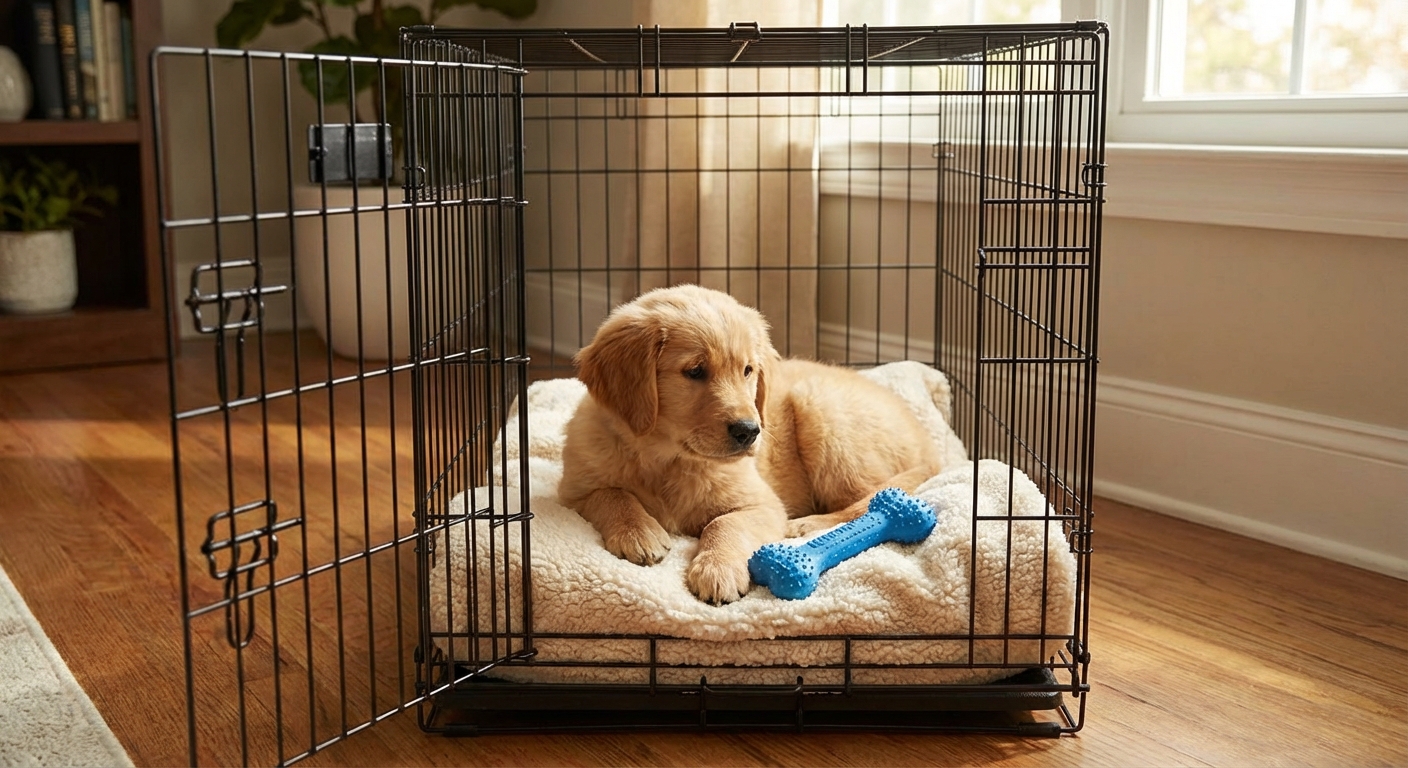
Step 4: If your puppy is wild, try a nap
A calm, safe confinement break can help. Many puppies need about 16 to 20 hours of sleep per day, give or take. If your pup gets extra mouthy after play, it may be an exhaustion sign.
How to prevent biting
Teach what to do
- Trade hands for toys: make toys the main event during play.
- Reward calm: toss a treat when your puppy is sitting quietly or chewing an appropriate item.
- Teach a simple cue: “Sit” or “Touch” (nose to hand) can interrupt nippy moments.
- Build bite inhibition: your goal is not “never mouth,” especially early on. Your goal is a puppy who learns to be gentle, then gradually mouths less.
Use structured play
Short, predictable play sessions help puppies stay regulated.
- Play for 3 to 5 minutes
- Ask for a sit
- Give a chew or scatter a few treats to sniff out
- End the session before your puppy gets frantic
Add brain work
- Food puzzles or a stuffed Kong for meals
- Snuffle mats or treat scatter in the grass
- Mini training sessions: 2 minutes, a few times a day
Set up your space
Management prevents your puppy from practicing the behavior all day.
- Use gates, playpens, and puppy-safe zones so you can step away quickly for reverse timeouts.
- Keep chew options in every main area so redirection is easy.
- Supervise closely during high-energy times (often evenings).
Keep chews safe
Puppies chew hard. Choose items designed for puppy mouths and monitor chewing.
- Pick a size that your puppy cannot fit fully in their mouth.
- Avoid chews that splinter or crack into sharp pieces.
- Supervise, and discard items when they start to break down.
If you are ever unsure what is safe for your specific breed mix, ask your veterinarian.
What not to do
These approaches often backfire, increase fear, or accidentally reward biting:
- No hand slapping, muzzle grabbing, or “alpha” tactics
- No harsh scolding if it turns into a fun attention game
- No forcing kids to “deal with it” because they can get hurt and your puppy can learn bad habits faster
- Avoid aversive gear or punishment-based tools (for example, prong collars, shock collars, spray collars) unless you are working directly with a credentialed professional who prioritizes humane, least-intrusive methods
Age expectations
8 to 12 weeks
Lots of mouthing. Focus on gentle redirection, short play, and a predictable nap schedule.
3 to 6 months
Teething often peaks. Chewing increases. Provide safe chews, keep toys everywhere, and be consistent with reverse timeouts.
6 months and up
Biting should usually be improving, but it can still pop up with adolescence, excitement, or unmet needs. If it is not improving over time, it is time to involve a trainer and your veterinarian to rule out pain, anxiety, or gaps in training.
When kids are involved
If you have children, management is your best friend while training is underway.
- Use gates and playpens so kids can move safely.
- Teach “be a tree”: stand still, arms tucked, eyes away if puppy mouths.
- Adults run the play: kids can toss treats or roll a ball instead of wrestling with the puppy.
Common questions
Should I yelp like a puppy?
Sometimes it helps, but for many pups it revs them up. If yelping makes your puppy bite harder, skip it and use the freeze, redirect, and reverse timeout method.
Is my puppy being aggressive?
Most puppy biting is not aggression. It is developmental behavior. Still, if you see guarding, intense growling, stiff posture, or repeated skin-breaking bites, get professional help promptly.
How long until it stops?
With consistency, many families see improvement in a few weeks, with big progress after teething ends. Some puppies take longer. The key is preventing rehearsal of the behavior every day and rewarding calm, gentle choices.
How do I find a qualified trainer?
Look for professionals who use humane, reward-based methods and have credentials such as CPDT-KA (CCPDT), KPA-CTP (Karen Pryor Academy), or IAABC certification. For more complex cases, ask your veterinarian about a board-certified veterinary behaviorist (DACVB).
Your 7-day plan
- Day 1: Put a toy in every main room so you can redirect instantly.
- Day 2: Start reverse timeouts for any teeth on skin, every time.
- Day 3: Feed one meal using a puzzle feeder or stuffed Kong.
- Day 4: Add two mini training sessions (2 minutes each).
- Day 5: Schedule an extra nap break before the evening “witching hour.”
- Day 6: Practice calm greetings, no hand wrestling.
- Day 7: Review progress and adjust. If there is no improvement, book a trainer consult.
Consistency beats intensity. A calm, predictable response teaches your puppy faster than any big reaction.
Final encouragement
If your puppy is biting you, you are not failing. You are living with a baby animal learning how to be part of a human household. With safe chews, clear boundaries, and a routine that supports sleep and enrichment, most puppies grow out of the worst of the biting stage and become wonderfully gentle companions.