Puppy whining is usually normal communication. Use a quick needs check, reward quiet moments, build positive crate routines, and spot red flags that need a vet.
Article
•
Designer Mixes
Why Is My Dog Whining? Common Causes and Solutions

Shari Shidate
Designer Mixes contributor
Dog whining can be one of the most confusing sounds for pet parents. It can mean excitement, discomfort, anxiety, or a simple request for attention. The key is to look at the full picture: your dog’s body language, the timing, and any recent changes in routine, environment, or health.
Important note: This article is educational and not a substitute for veterinary care. If your dog’s whining is sudden, intense, or paired with signs of illness or pain, contact your veterinarian.
What whining is telling you
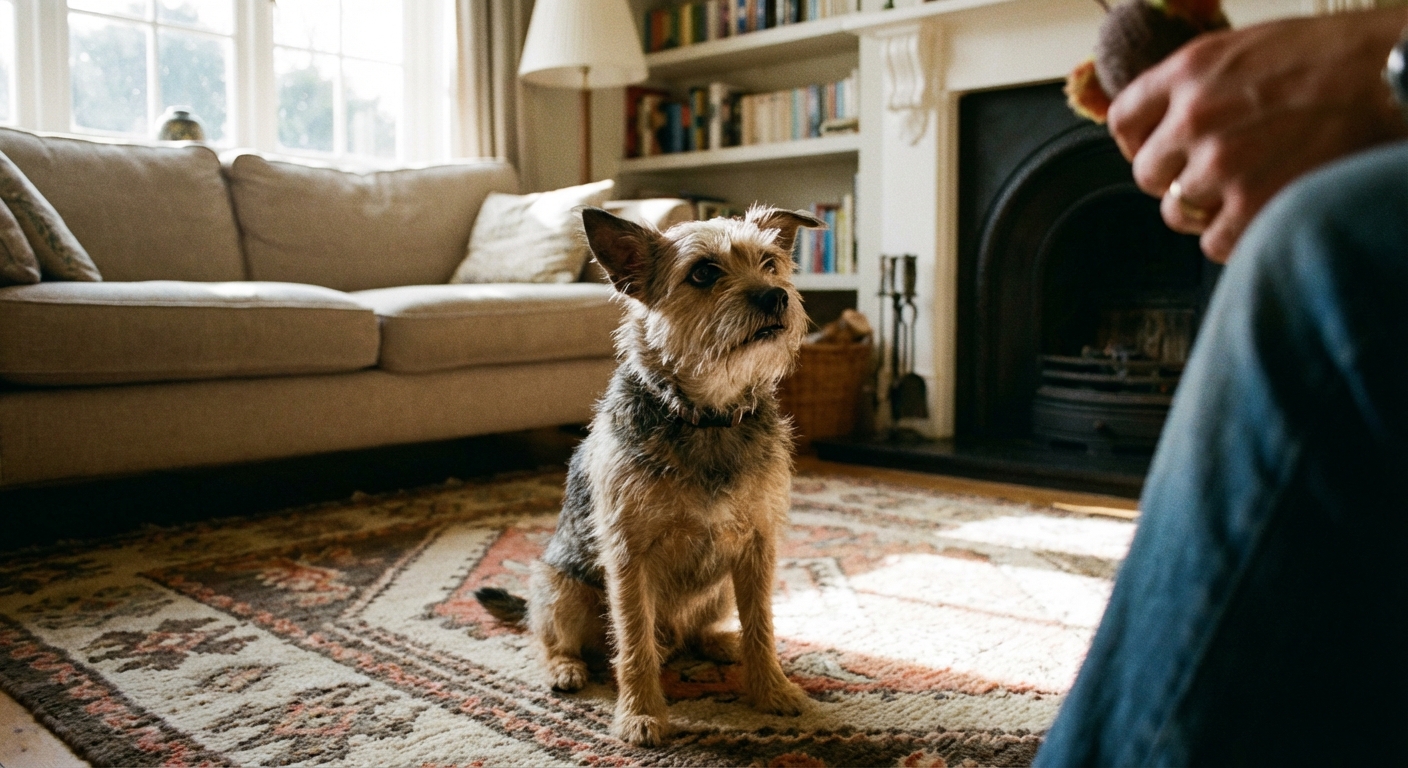
Whining is a normal canine communication tool. Puppies use it to get care, and adult dogs may use it to express needs or emotions. Whining becomes a problem when it is frequent, persistent, or out of character, especially if it signals pain or distress.
As a general rule, treat whining like a clue, not “bad behavior.” Your goal is to identify the cause, meet the true need, and avoid accidentally reinforcing attention-seeking whining.
Also keep in mind: some dogs are simply more vocal than others due to temperament, breed tendencies, and early learning. Your job is to spot what is normal for your dog and what is new or escalating.
Common causes of dog whining
1) Attention-seeking or learned behavior
If whining reliably results in petting, treats, being picked up, or getting on the couch, dogs learn quickly that whining works. This is especially common when you are on the phone, cooking, or sitting down after a busy day.
- Typical signs: Whining stops as soon as you engage, your dog looks directly at you, paws at you, or hovers near the treat jar.
2) Excitement or anticipation
Some dogs whine when they know something fun is coming, like a walk, a car ride, or dinner. This is often paired with wagging, pacing, and alert ears.
- Typical signs: Happens around predictable events and stops once the activity begins.
3) Anxiety, stress, or fear
Whining can be a stress signal. Common triggers include separation anxiety , changes at home, guests, loud noises, or unfamiliar environments.
- Typical signs: Panting, pacing, trembling, tucked tail, lip licking, yawning, hiding, following you closely, or destructive behavior when alone.
4) Pain or physical discomfort
Pain-related whining is one of the most important categories to take seriously. Dogs may whine due to arthritis , an injury, dental pain, an ear infection, gastrointestinal discomfort, or other medical issues.
- Typical signs: Whining when moving, jumping, climbing stairs, being touched, or when settling down to rest. You may also see limping, licking a specific area, reduced appetite, or unusual aggression.
5) Needing to go outside
Whining at the door or restlessness can be your dog’s way of saying they need a potty break. Sudden urgency can also signal digestive upset or a urinary issue.
- Typical signs: Circling, sniffing, going to the door, waking you at night, or frequent squatting with little urine.
6) Hunger, thirst, or schedule changes
Dogs thrive on routine. A shift in mealtime, less water access, increased activity, or a new feeding plan can lead to whining.
- Typical signs: Whining near the food bowl, treat area, or kitchen, especially around normal mealtimes.
7) Cognitive changes in senior dogs
Older dogs may whine due to confusion, altered sleep-wake cycles, vision or hearing loss, or canine cognitive dysfunction.
- Typical signs may include: Nighttime whining, staring at walls, getting “stuck” in corners, increased clinginess, or changes in house training.
8) Social needs and under-stimulation
Dogs are social and active. If a dog is bored, under-exercised, or lacking enrichment, whining can become a way to release frustration.
- Typical signs: Whining with pacing, bringing toys repeatedly, or attention-seeking during quiet times.
9) Frustration during training or barrier frustration
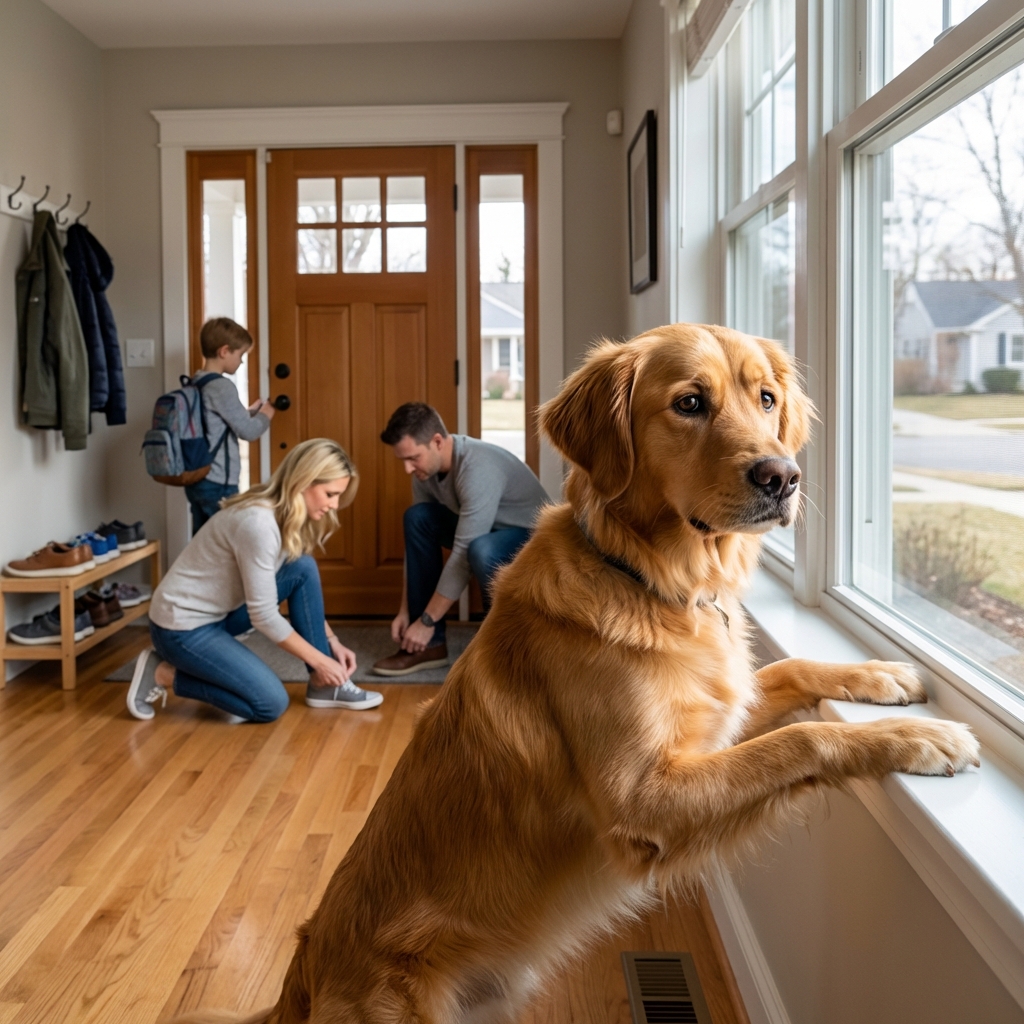
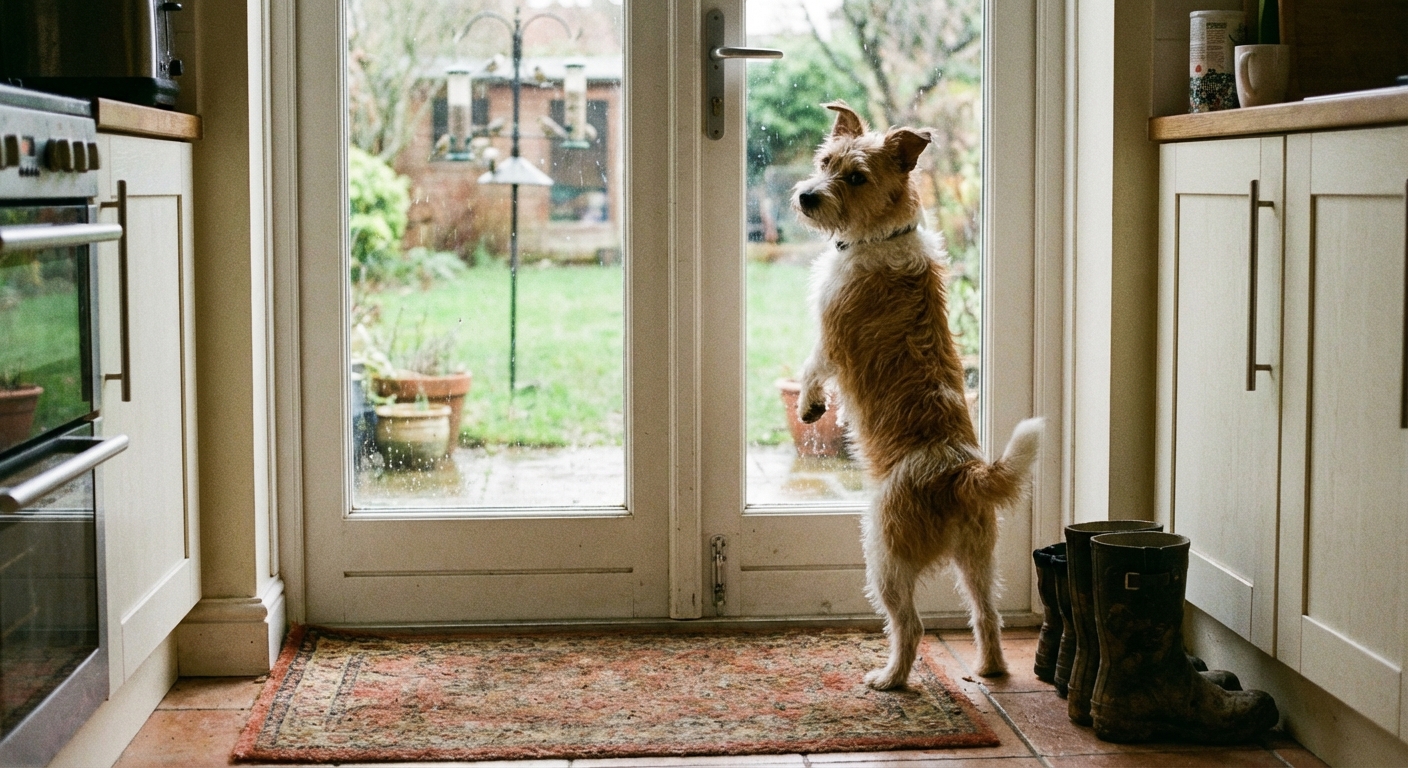
Some dogs whine when they are trying hard but cannot get what they want, like reaching another dog behind a fence, greeting a person on leash, or figuring out a new cue. This is not “being stubborn.” It is often frustration plus excitement.
- Typical signs: Whining near a barrier (window, gate, fence), pulling toward something while vocalizing, or whining during a training pause when rewards are delayed.
10) Social tension or conflict
Whining can show up around other pets due to uncertainty, stress, or tension. This can happen during greetings, around high-value items (food, chews, toys), or in tight spaces.
- Typical signs: Whining with stiff posture, hovering, blocking, freezing, whale eye, growling, or guarding behavior.
Safety note: If you suspect conflict or guarding, avoid forcing interactions. Separate pets calmly and contact a qualified trainer for help.
How to decode whining
Once you have the common causes in mind, the next step is narrowing down which one fits your dog. Before you try to fix whining, gather quick information. A simple pattern check often reveals the cause.
- When does it happen? Morning, night, before meals, when you leave, after exercise, during storms.
- Where does it happen? At the door, by the food bowl, in the crate , near stairs, on the couch.
- What is your dog doing? Licking, limping, panting, yawning, pacing, tail tucked, ears back.
- What changed recently? New food, new schedule, travel, guests, fireworks, a new pet, less walking time.
If you can, take a short video for your veterinarian or trainer. It can be surprisingly helpful for pinpointing whether the whining looks more like anxiety, pain, frustration, or habit.
What to do next
For attention-seeking whining
- Reward calm, not noise: Give attention, treats, or play when your dog is quiet and settled.
- Use a cue for what you want: Teach “place” (go to bed) or “sit” as an alternative behavior.
- Be consistent: If whining sometimes works, it tends to get louder and more persistent over time.
For excitement whining
- Build a calm routine: Ask for a sit before the leash goes on, before opening doors, and before meals.
- Practice short pauses: Clip the leash, pause until quiet, then proceed. Repeat calmly.
For anxiety or fear-based whining
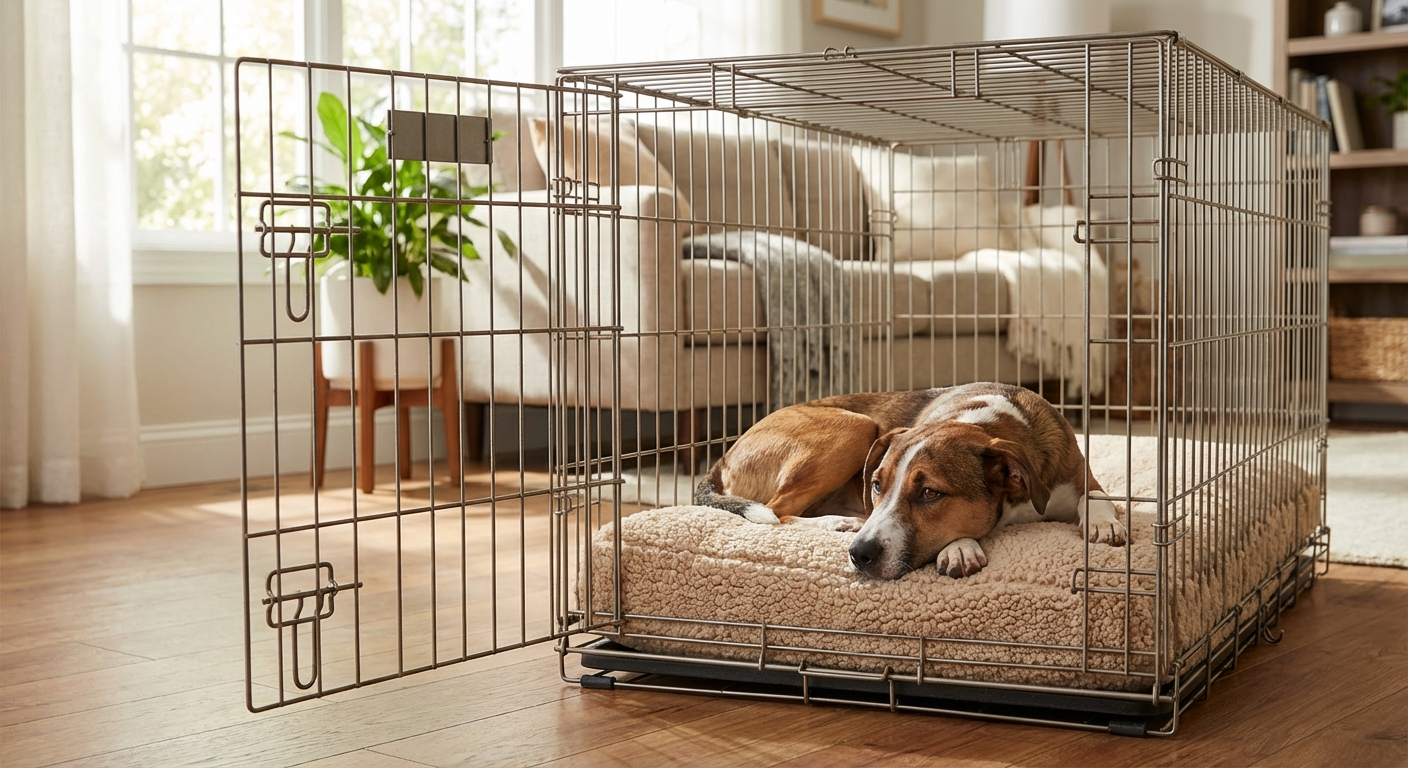
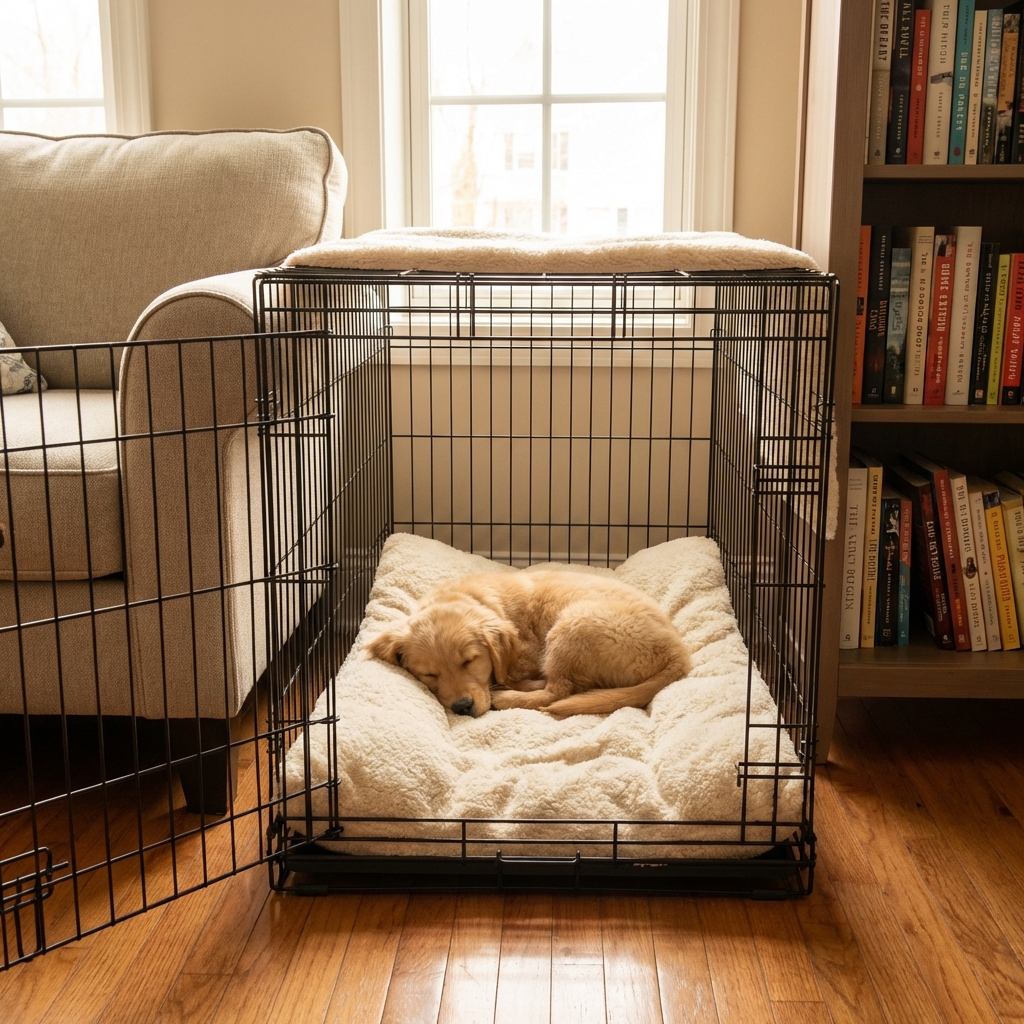
- Create a safe zone: A quiet room can help. If you use a crate or covered crate, introduce it gradually and make it a positive, choice-based space .
- Do not confine a panicking dog: If your dog is frantic, drooling heavily, trying to escape, or injuring themselves, stop crate confinement and get professional help. This is common with true separation anxiety .
- Use predictable enrichment: Food puzzles, lick mats, and long-lasting chews can lower stress.
- Use desensitization and counterconditioning: For noise fears, start at a low intensity and pair it with treats or play.
- Avoid flooding: If exposure is too intense, fear often gets worse. Go slower than you think you need to.
- Get support early: A certified trainer or veterinary behaviorist can make a big difference, especially for separation anxiety .
For possible pain or discomfort
- Schedule a veterinary check: Especially if whining is new, worsening, or linked to movement or touch.
- Limit risky activity: Avoid jumping, rough play, and slippery floors until your dog is assessed.
- Do not give human pain meds: Many common human pain medicines (including ibuprofen, naproxen, and acetaminophen) can be dangerous or toxic to dogs. Use only veterinarian-directed options.
For potty-related whining
- Offer more frequent breaks: Particularly for puppies, seniors, and dogs on diuretics.
- Watch for medical clues: Straining, accidents, blood in urine, or frequent small urinations need prompt veterinary evaluation.
For boredom and under-stimulation
- Meet exercise needs: Aim for daily walks plus sniff time, not just quick bathroom trips.
- Add mental work: Hide-and-seek treats, basic training sessions, and scent games can reduce vocalization.
- Rotate toys: Keeping only a few out and swapping weekly maintains novelty.
For frustration whining
- Lower the difficulty: Make training easier for a few reps so your dog can succeed and earn reinforcement.
- Teach an alternative: Reward “look at me,” “touch,” or a hand target when your dog wants something.
- Increase distance from triggers: If your dog whines at dogs behind fences or at the window, create more space and reward calm observation.
What not to do
- Do not punish whining: Yelling or harsh corrections can increase anxiety and can suppress important pain signals.
- Avoid aversive tools: Shock, spray, or prong collars can worsen stress and reactivity.
- Do not force crate time for distress: If your dog panics, prioritize safety and get help.

When whining is a red flag
Call your veterinarian urgently if whining is paired with any of the following:
- Sudden, persistent whining that is unusual for your dog
- Loss of appetite, vomiting, diarrhea, or a swollen abdomen
- Limping, yelping, reluctance to move, or sensitivity to touch
- Labored breathing, pale gums, or collapse
- Repeated attempts to urinate with little output, or signs of urinary pain
- Disorientation, seizures, or significant behavior changes
Trust your instincts. You know what is normal for your dog, and “something feels off” is a valid reason to seek help.
A simple 3-step plan
If you want a practical place to begin, here is what I recommend to most pet parents:
- Rule out health issues: If there is any chance of pain or illness, book a vet visit.
- Identify the pattern: Note the time, trigger, and body language for 3 days.
- Meet the need and reinforce calm: Provide potty breaks, exercise, and enrichment, then reward quiet behavior consistently.
Small, consistent habits compound into remarkable results over time, for you and for your dog. With a little detective work and the right support, most whining improves significantly.
Quick FAQs
Why does my dog whine at night?
Common reasons include needing to potty, anxiety, discomfort, temperature changes, or age-related cognitive changes. If nighttime whining is new or escalating, a veterinary check is a smart first step.
Why is my dog whining while lying down?
This can signal pain, reflux or nausea, or difficulty getting comfortable. It is especially suspicious if your dog is older, recently injured, or reluctant to move.
Should I ignore whining?
Ignore attention-seeking whining only after you have met basic needs and ruled out medical issues. Otherwise, you risk missing an important signal.