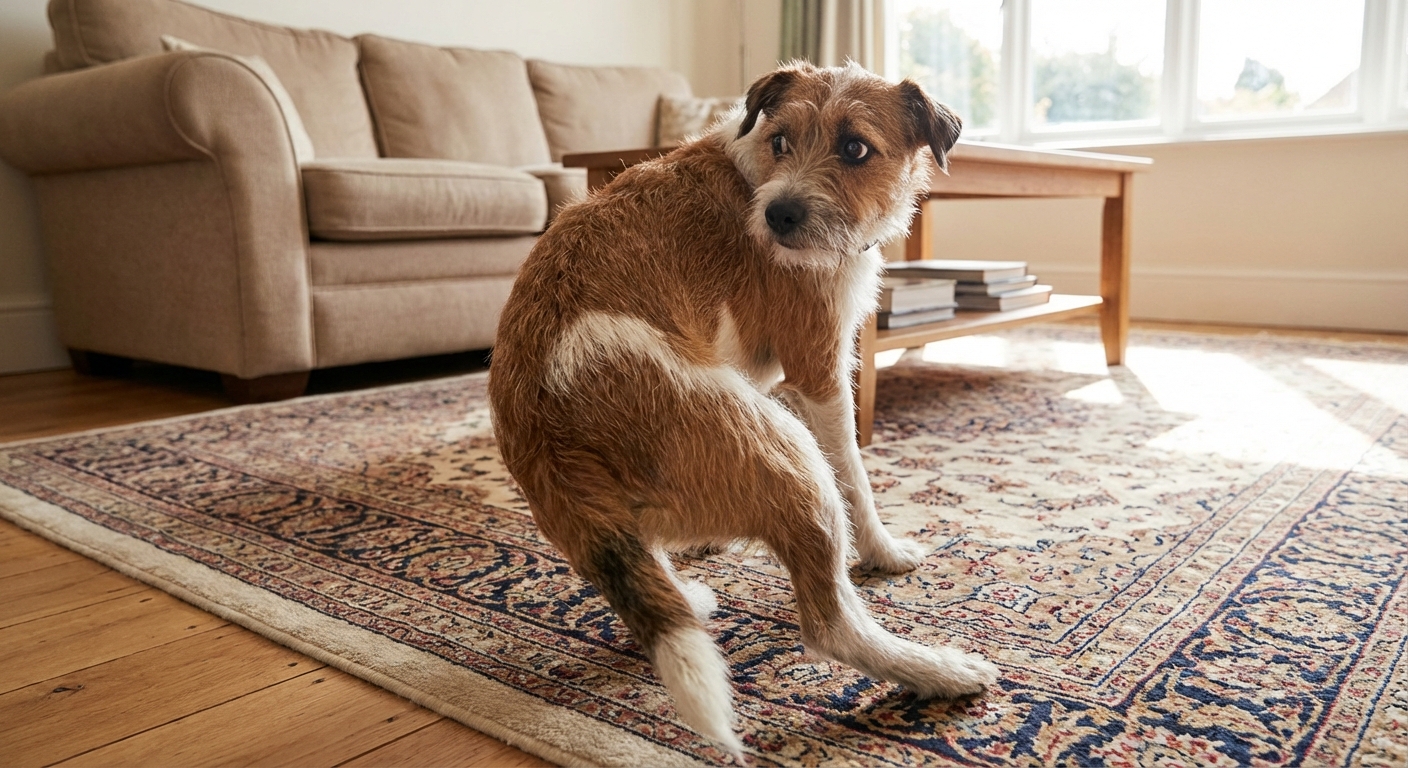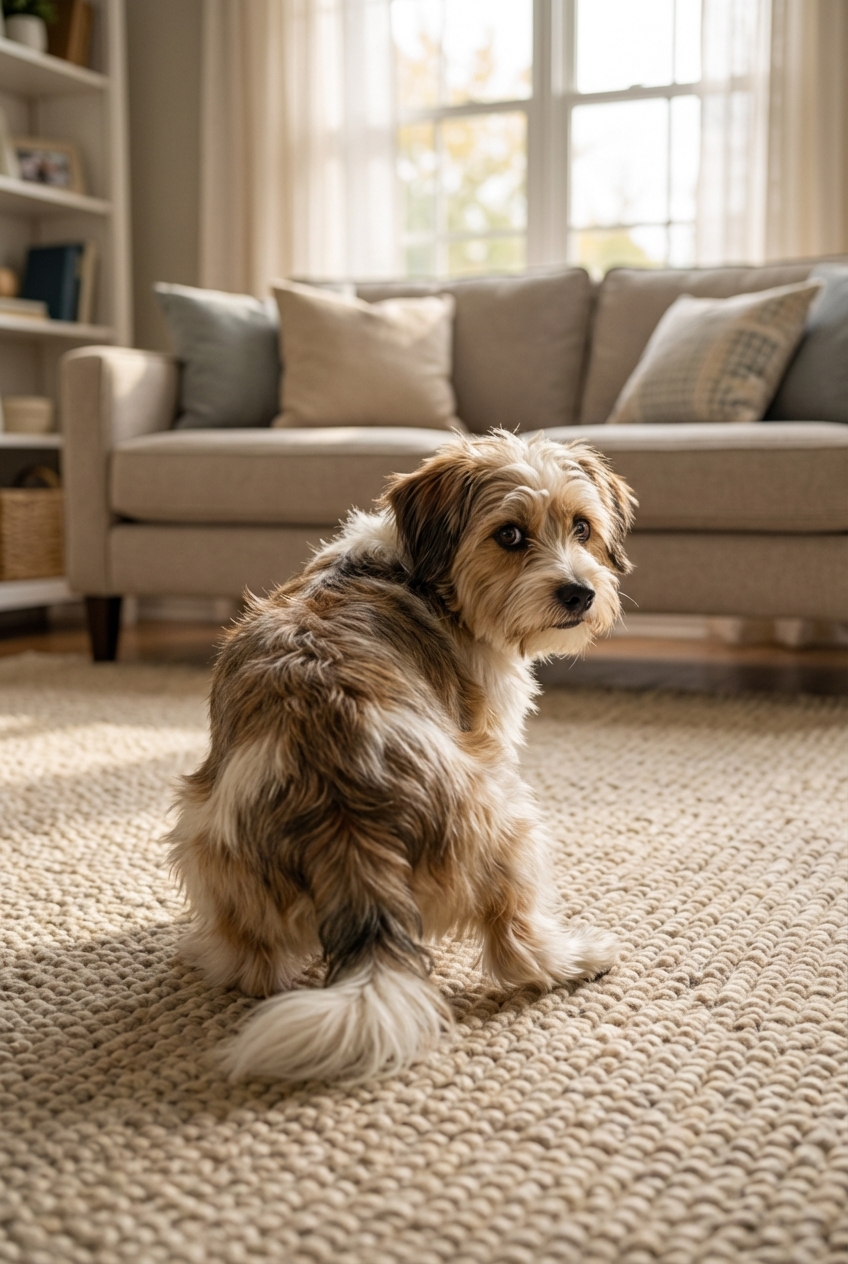
Dog scooting isn’t just funny—it signals itch, pressure, pain, or something stuck. Learn common causes like anal glands, allergies, worms, and stool issu...
Article
•
Designer Mixes
Why Is My Dog Rubbing His Butt on the Floor?

Shari Shidate
Designer Mixes contributor
When a dog “scoots” its rear end across the carpet, it can look silly, but it is usually your dog’s way of saying: something back there feels itchy, full, irritated, or painful. As a veterinary assistant in a clinical setting, I can tell you scooting is one of the most common concerns pet parents bring up, and the good news is that many causes are fixable once you know what to look for.
Below is an evidence-based, step-by-step guide to help you understand the most likely reasons, what you can safely do at home, and when it is time to call your veterinarian.
Quick check: what scooting can mean
Scooting is commonly linked to one of these issues:
- Anal gland problems (full, impacted, inflamed, infected, or abscessed glands)
- Itchy skin or allergies affecting the rear, tail base, or paws
- Intestinal parasites such as tapeworms
- GI upset or stool changes that leave residue or irritation
- Something stuck (dried stool, matted fur, foreign material)
- Less common causes like perianal fistulas (anal furunculosis), rectal prolapse, rectal polyps, perianal tumors, urinary issues, or orthopedic pain
Because several conditions can look the same, you do not need to diagnose from scooting alone. The goal at home is to gather clues, keep your dog comfortable, and get help quickly if you see red flags.
A very common culprit: anal glands
Most dogs have two small anal sacs located around the anus (roughly at the 4 o’clock and 8 o’clock positions). Passing a firm, well-formed stool often helps express a small amount of fluid from these glands, but not every dog empties them efficiently. If the glands do not empty well, they can become overfull or impacted, which can feel like pressure or itchiness.
Signs anal glands may be involved
- Scooting plus licking or chewing around the anus
- A fishy or musky odor (sometimes on bedding)
- Sudden discomfort when sitting
- Swelling, redness, or a painful look around the anus
- Yelping when pooping or reluctance to poop
When anal glands are urgent
Call your vet promptly if you notice:
- Blood, pus, or a draining hole near the anus
- A hot, swollen lump beside the anus
- Severe pain, lethargy, fever, or loss of appetite
Those signs can suggest an anal gland abscess, which needs veterinary treatment.
Should you express anal glands at home?
Many groomers and veterinary teams express glands when needed. At home, I recommend caution. Improper expression can be painful, messy, and may contribute to irritation. If your dog has recurring issues, ask your vet to show you safe technique or create a plan that focuses on the underlying cause (often stool quality, allergies, body condition, or chronic skin inflammation).
Parasites: tapeworms and other itch triggers
Parasites can cause rear-end itching or irritation. One of the most recognizable is tapeworm. Keep in mind that many intestinal parasites will not be visible to the naked eye, so a normal-looking stool does not always rule them out.
Clues that point to tapeworm
- Small white pieces near the anus or in stool that look like grains of rice
- Scooting and licking the rear
- History of fleas (tapeworms are commonly spread by swallowing an infected flea)
If you suspect tapeworm, your dog needs a dewormer that specifically targets tapeworm. Not all “dewormers” cover it, and home remedies are unreliable. Your vet may ask for a stool sample and will also recommend flea control so it does not come right back.
Allergies and itchy skin
Skin allergies are another big reason dogs scoot, especially if the anal glands are not the issue. Dogs can itch at their rear due to environmental allergies (pollens, dust mites) or food sensitivities. Flea allergy dermatitis can also cause intense itchiness around the tail base even with minimal flea exposure.
Common allergy clues
- Frequent licking of paws or belly
- Recurring ear infections
- Red, inflamed skin, hot spots, or a musty odor
- Scooting that comes and goes seasonally
Allergies are very manageable, but they are rarely solved by a single shampoo or supplement. Your vet can guide you through options like strict flea prevention, diet trials, anti-itch medications, and targeted therapies for secondary yeast or bacterial infections.
Stool problems and irritation
Loose stool and frequent bowel movements can cause irritation around the anus, leaving residue that makes your dog want to rub.
What to look for
- Soft stool or diarrhea
- Straining or constipation
- Stool stuck in long fur, especially in doodle mixes and other fluffy coats
- Recent diet change, new treats, rich foods, or table scraps
Firm, well-formed stool can help keep the area cleaner and may help some dogs naturally empty anal glands. For adult dogs who are bright, eating, and drinking, a mild bout of soft stool can sometimes be monitored briefly at home. However, if stool issues persist beyond 24 to 48 hours, or if there is vomiting, blood, weakness, dehydration, or your dog is not acting normal, call your veterinarian.
Puppies, seniors, and dogs with other medical conditions can get dehydrated more quickly, so it is wise to contact your vet sooner if diarrhea shows up.
Something stuck back there
Sometimes the cause is simple: a bit of dried stool, litter, burrs, or a small foreign material caught in fur. This is especially common in dogs with thick coats or long hair around the hind end.
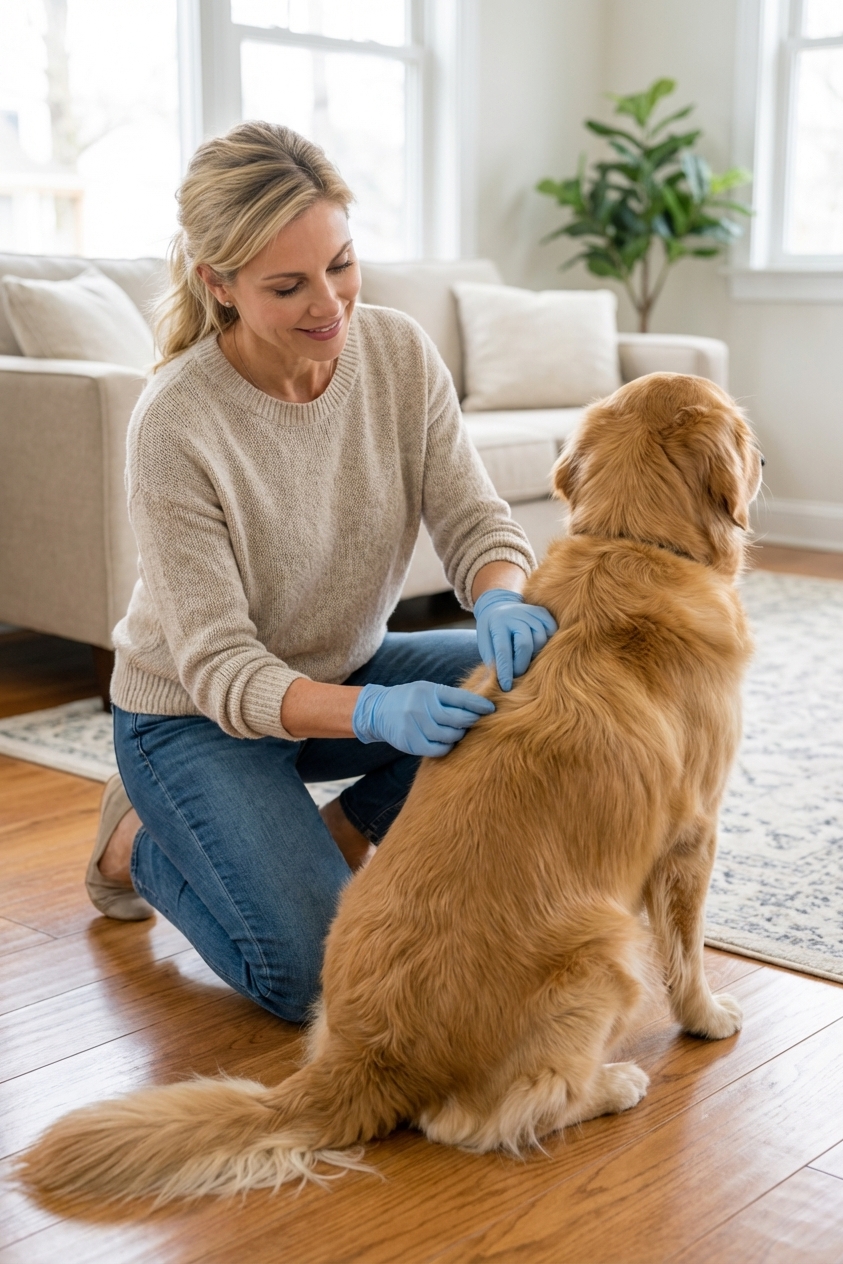
Safe at-home check
- Use good lighting and look under the tail.
- If you see dried stool on fur, trim carefully with blunt-tip grooming scissors or use pet-safe wipes.
- If your dog is painful or will not let you look, stop and call your vet or groomer.
Do not pull on anything string-like (thread, hair ties, fabric). If anything appears to be stuck in or protruding from the rectum, that is a veterinary visit.
What not to do
- Do not apply human hemorrhoid creams or numbing products unless your vet specifically tells you to. The issue is usually not “hemorrhoids,” and some ingredients can irritate pets or be unsafe if licked.
- Avoid essential oils, harsh antiseptics, or alcohol-based products on sensitive skin.
- Do not repeatedly express anal glands on a schedule unless your veterinarian recommends it for your dog.
Red flags: call the vet today
Scooting is not always urgent, but these signs are:
- Swelling next to the anus
- Bleeding, pus, or a foul-smelling discharge
- Sudden severe pain, yelping, or hiding
- Straining to poop with little or no stool produced
- Vomiting, lethargy, fever, or not eating
- Repeated scooting multiple times daily for more than 1 to 2 days
What you can do today
1) Track the pattern
- How often is the scooting happening?
- Any licking, odor, swelling, or stool changes?
- Any “rice” segments seen in stool or on bedding?
2) Check flea prevention
Even indoor dogs can get fleas. Use consistent, vet-recommended flea control, especially if scooting is paired with tail-base itchiness.
3) Support healthy stool
If your dog’s stool is consistently soft, talk to your vet about safe fiber options and diet adjustments. For many dogs, improving stool quality reduces anal gland flare-ups.
4) Keep the area clean and trimmed
For long-coated mixes, routine sanitary trims can prevent fecal buildup and irritation.
5) Schedule a vet exam if it is recurring
Chronic scooting is often a sign of an underlying issue such as allergies or recurrent anal gland inflammation. A quick exam can prevent a painful abscess later.
What your vet may do
Depending on your dog’s signs, your veterinarian may:
- Perform a rear-end exam and express anal glands to check the fluid and look for impaction
- Recommend cytology or culture if infection is suspected
- Run a fecal test and prescribe targeted deworming
- Discuss allergy management including flea control, a diet trial, and anti-itch medication
- Treat abscesses with pain relief, antibiotics, warm compresses guidance, or drainage if needed
Preventing future scooting
- Maintain a healthy weight: excess weight can be associated with anal gland problems in some dogs.
- Prioritize stool quality: firm stools can help some dogs empty glands more effectively.
- Stay consistent with parasite prevention: deworming and flea control go hand in hand.
- Groom with intention: sanitary trims and regular baths reduce irritation from buildup.
- Address allergies early: recurring itch is easier to control before the skin barrier becomes chronically inflamed.
If your dog scoots once, it might be a minor irritation. If your dog scoots repeatedly, smells fishy, licks constantly, or seems painful, it is time to get eyes and hands on the problem with your vet.
Frequently asked questions
Is scooting always anal glands?
No. Anal glands are a very common cause, but parasites, allergies, and irritation from soft stool can look identical at home.
Can I just change my dog’s food?
Sometimes improving diet and stool consistency helps, but if there is pain, swelling, bleeding, or persistent scooting, you should not wait on a food change alone.
Is it normal for puppies to scoot?
Puppies can scoot from parasites, soft stool, or irritation. Because young dogs are more prone to intestinal parasites and dehydration, it is smart to discuss fecal testing and deworming with your vet.